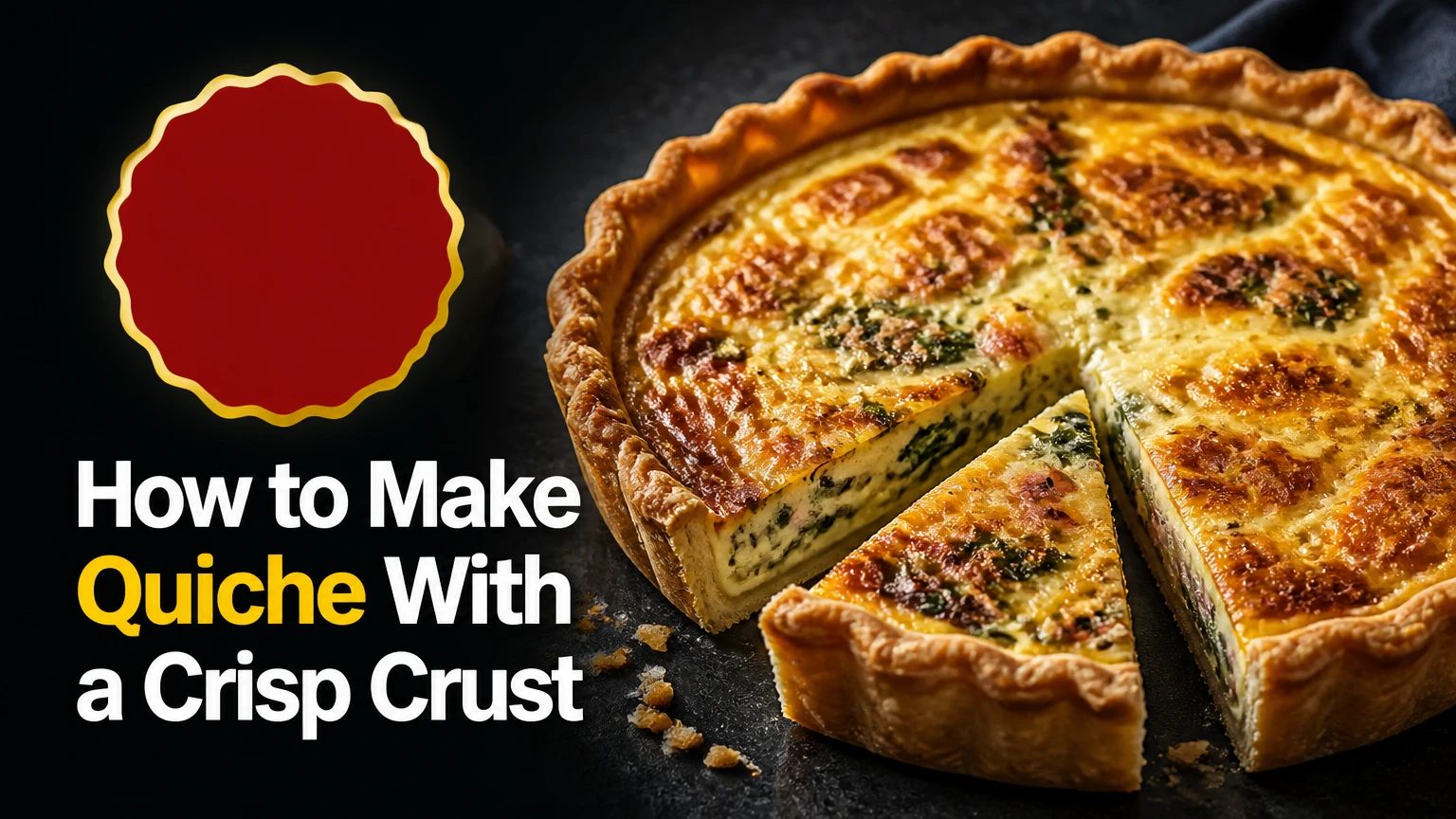
Quiche is made by blind-baking a pastry shell, filling it with cooked ingredients and an egg-dairy custard, then baking at moderate heat until the edges set and the center gently jiggles. A reliable 9-inch quiche uses 4 large eggs with 2 cups of half-and-half or cream, fully dried fillings, and a 20-30 minute rest before slicing.
Key Facts at a Glance
A 9-inch quiche normally uses 4 large eggs and 480 milliliters, or 2 cups, of dairy.
Blind-bake homemade pastry at 190-200°C, or 375-400°F, until the base feels dry.
Cook vegetables, bacon, mushrooms, and seafood before adding them to the custard.
Bake the assembled quiche at about 165°C, or 325°F, until the center reaches 74-77°C, or 165-170°F.
Rest quiche for 20-30 minutes because carryover heat finishes setting the custard.
A 9-inch quiche makes 6 moderate slices or 4 large main-course portions.
What Is Quiche?
Quiche is a savory French tart made from a pastry crust, an egg custard, and additions such as cheese, bacon, seafood, herbs, or vegetables. Quiche Lorraine traditionally combines bacon with cheese, while modern versions range from spinach and mushroom fillings to crustless egg bakes.
The custard works through controlled coagulation. Heat causes egg proteins to unwind and bond into a network that holds water and fat; dairy dilutes that network, so the eggs set softly instead of becoming dense and rubbery. High heat tightens the protein network too quickly, which explains curdled edges, cracks, and liquid released from an overbaked center.
Use dairy containing meaningful fat whenever possible. Half-and-half contains roughly 10-18% milk fat depending on the product and country, while heavy cream commonly contains 30-36%; both produce a more tender custard than skim milk. Whole milk works, but the finished quiche is less rich and less forgiving.
Why Does Quiche Curdle?
Quiche curdles when egg proteins overheat and contract, forcing water out of the custard. A hot oven, a shallow pan, overbaking, or an overly lean dairy mixture can create a firm, grainy edge before the center is set.
A gentle bake protects the texture. Pull the quiche when the center has a uniform wobble rather than waiting for a completely rigid surface, then let the residual heat finish the set. The USDA Food Safety and Inspection Service advises, “Cook eggs until both the yolk and white are firm,” so use a thermometer and avoid serving a visibly liquid center.
Before You Start
A standard 9-inch quiche takes about 35 minutes to mix and assemble, 25-30 minutes to blind-bake the crust, 35-45 minutes to bake the filling, and 20-30 minutes to rest. Total elapsed time is typically 2 hours when homemade pastry includes a one-hour chill.
| Requirement | Typical specification | Practical alternative |
|---|---|---|
| Pan | 9-inch, 1.5-2-inch deep pie dish | 9-inch tart pan with removable base |
| Eggs | 4 large eggs, about 200 g without shells | 5 medium eggs, weighed if possible |
| Dairy | 480 ml half-and-half or cream | 240 ml cream plus 240 ml whole milk |
| Pastry | 160 g flour, 115 g butter, 45-60 ml water | 1 refrigerated 9-inch pie crust |
| Oven | 190°C then 165°C, conventional setting | 180°C then 160°C for a fan oven |
| Tools | Rolling pin, baking parchment, pie weights, whisk | Dry rice or beans as temporary weights |
| Typical cost | $10-$22 for six servings | $6-$12 with seasonal vegetables |
Weigh the eggs and dairy if you are scaling the recipe. The dependable ratio is approximately 1 large egg, about 50 g, to 120 ml, or 1/2 cup, of dairy. This ratio gives a tender slice that holds its shape without resembling a firm frittata.
How to Make Quiche Step by Step
Step 1: Make and Chill the Pastry
Combine 160 g all-purpose flour with 3 g fine salt. Cut in 115 g cold unsalted butter, cut into 1-centimeter cubes, until the largest pieces resemble small almonds. Add 45 ml ice water first, then add up to 15 ml more until the dough holds when pressed.
Form the dough into a flat disk rather than a ball, wrap it, and refrigerate for 60 minutes. A flat disk chills evenly and rolls with fewer cracks.
You will know it worked when: the dough bends slightly without cracking and contains visible butter pieces.
Common mistake: Adding all the water automatically. Excess water develops gluten and makes the crust tough or shrink during baking.
Step 2: Roll and Fit the Dough
Heat the oven to 190°C, or 375°F. Roll the chilled pastry on a lightly floured surface to about 3 mm thick and 30 cm wide, which gives enough material for a 9-inch pan and a 2-inch side wall.
Lift the dough over the pan without stretching it. Press it into the corner with your fingertips, trim the rim, and chill the lined pan for 20-30 minutes. Dock the base lightly with a fork, making holes about 2-3 centimeters apart.
You will know it worked when: the pastry sits relaxed against the pan and the rim remains above the intended filling line.
Common mistake: Pulling the dough upward to fit the sides. Stretched pastry contracts in the oven, reducing the wall height and leaving exposed filling.
Step 3: Prepare the Oven and Weights
Place a rack in the lower-middle position and put a sturdy baking sheet inside while the oven heats. The hot sheet transfers heat directly to the pastry base, which improves browning and reduces the chance of a damp bottom.
Line the cold pastry with parchment, pressing it into the corners, and fill it to the rim with ceramic pie weights. Dry rice or dried beans also work, although they need to cover the sides as well as the base.
You will know it worked when: the parchment reaches every side and the weights prevent the base from inflating.
Common mistake: Using too few weights. A thin layer controls the center but allows the side walls to slump.
Step 4: Blind-Bake the Crust
Bake the weighted shell at 190°C for 15-20 minutes. Remove the parchment and weights, then bake for another 5-8 minutes until the base looks dry and pale golden.
For stronger moisture protection, brush the hot crust with a thin layer of beaten egg white and return it to the oven for 1-2 minutes. The egg white forms a protein film that slows custard seepage into the pastry.
You will know it worked when: the base feels firm and dry, with no glossy raw dough in the center.
Common mistake: Pouring custard into an underbaked shell. A pale, soft base rarely becomes crisp once surrounded by wet filling.
Step 5: Cook and Dry the Filling
Cook 150-225 g of filling before assembly. Fry 150 g bacon or lardons until browned, then drain thoroughly. Sauté 225 g sliced mushrooms until their released liquid has evaporated. Wilt 150 g spinach, cool it, and squeeze it nearly dry before chopping.
Cool hot fillings for several minutes before combining them with cheese or custard. Excess surface water is the main reason a quiche becomes watery, while large hot ingredients can partially cook the eggs before the pan reaches the oven.
| Filling | Starting quantity | Preparation before assembly |
|---|---|---|
| Bacon or lardons | 150 g | Fry, drain, and cool 5 minutes |
| Mushrooms | 225 g raw | Sauté until pan is dry, about 8-12 minutes |
| Fresh spinach | 150 g | Wilt, squeeze dry, and chop |
| Frozen spinach | 250 g package | Thaw, press dry, and weigh after draining |
| Shrimp | 225 g peeled | Cook until opaque, drain, and chop |
| Cherry tomatoes | 200 g | Roast or sauté until visibly collapsed |
| Leeks or onions | 200 g | Cook slowly until tender and moisture reduces |
You will know it worked when: no liquid pools on the plate holding the cooked filling.
Common mistake: Adding raw zucchini, tomatoes, or mushrooms. These ingredients continue releasing water inside the custard.
Step 6: Build the Custard and Assemble
Whisk 4 large eggs with 480 ml half-and-half, 1/2 teaspoon fine salt, 1/4 teaspoon black pepper, and a pinch of grated nutmeg. Add 100-150 g grated cheese, depending on the saltiness of the filling. Gruyère, Swiss cheese, cheddar, goat cheese, feta, and Parmesan each change the salt and moisture balance.
Scatter the cooked filling and cheese across the warm crust. Pour the custard slowly, stopping about 5 mm below the rim. Pouring over the fillings instead of stirring everything in the bowl distributes solids more evenly and reduces spills while transferring the pan.
You will know it worked when: the cheese and filling are submerged, but the pastry rim remains dry and visible.
Common mistake: Salting the custard heavily before adding bacon, feta, or Parmesan. Taste the cooked filling first because cured meats and aged cheeses may supply most of the needed sodium.
Step 7: Bake, Check, and Rest
Reduce the oven to 165°C, or 325°F, and place the quiche on the preheated baking sheet. Bake for 35-45 minutes, rotating once only if your oven heats unevenly.
The edges should be set, while the center should move as one soft mass when the pan is nudged. For a precise check, insert a digital thermometer into the center without touching the pan; remove the quiche at approximately 74-77°C, or 165-170°F.
Rest the quiche on a wire rack for 20-30 minutes before slicing. Cutting immediately releases steam and makes a tender custard appear wetter than it will be after setting.
You will know it worked when: the center jiggles slightly but does not ripple like liquid, and a knife inserted near the middle comes out with moist crumbs rather than raw custard.
Common mistake: Waiting for the top to become deeply brown. A dark surface can indicate overcooked proteins even when the center is still unsettled.
Which Crust Should You Use?
Homemade pâte brisée gives the best balance of buttery flavor and structural strength, but refrigerated pastry is the most practical shortcut. Puff pastry creates dramatic flakes, yet its laminated layers can become greasy or soggy under a deep, wet custard.
| Crust option | Preparation time | Typical bake behavior | Best use |
|---|---|---|---|
| Homemade pâte brisée | 75-90 minutes including chill | Crisp, tender, stable walls | Classic weekend quiche |
| Refrigerated pie crust | 10-15 minutes | Reliable if blind-baked | Weeknight dinner |
| Puff pastry | 15-20 minutes | Flaky, lighter structure | Shallow tart with dry fillings |
| Crustless | 5-10 minutes | Soft edges, fragile slices | Low-carbohydrate or gluten-free meal |
A crustless quiche needs a heavily buttered 9-inch dish and a slightly shorter bake, commonly 30-40 minutes at 165°C. It is not a pastry substitute: the finished dish has no crisp base and releases more cleanly after a longer rest.
Which Fillings Work Best?
The best quiche fillings are pre-cooked, well-drained, and limited to about 150-225 g for a 9-inch shell. Ingredients should contribute concentrated flavor rather than raw water, because the custard already supplies most of the dish’s moisture.
| Quiche style | Filling quantity | Cheese and seasoning | Bake profile |
|---|---|---|---|
| Lorraine | 150 g bacon or lardons | 100 g Gruyère, black pepper | Rich, salty, deeply savory |
| Florentine | 150 g squeezed spinach | 100 g Swiss, nutmeg | Earthy, delicate, moisture-sensitive |
| Mushroom and leek | 225 g cooked vegetables | 100 g cheddar, thyme | Sweet, woodsy, moderately rich |
| Shrimp and dill | 225 g cooked shrimp | 75 g Gruyère, 2 tbsp dill | Delicate, seafood-forward |
| Goat cheese and pepper | 200 g roasted peppers | 100 g goat cheese, basil | Tangy, colorful, lower-moisture |
| Broccoli and cheddar | 200 g steamed broccoli | 120 g cheddar, mustard | Firm, family-friendly, filling |
For seafood, cook shrimp or crab separately and drain it before assembly. For frozen vegetables, thaw them completely and squeeze them in a clean towel. For tomatoes, roasting at 200°C until collapsed concentrates flavor and removes water more effectively than adding them raw.
Can You Use Milk Instead of Cream?
Whole milk can replace some or all of the cream, but a quiche made with whole milk sets more firmly and has a less rich mouthfeel. Use 480 ml whole milk with 4 eggs, or use 240 ml whole milk plus 240 ml heavy cream for a balanced custard.
Avoid replacing the dairy with water, stock, or low-fat milk alone when texture matters. These liquids provide less fat to moderate egg coagulation, so the edges can become rubbery before the center finishes.
Common Mistakes and How to Fix Them
| Problem | Likely cause | Immediate correction | Prevention |
|---|---|---|---|
| Soggy bottom | Underbaked shell or wet filling | Reheat slices on a rack at 180°C for 8-12 minutes | Blind-bake until dry; drain fillings |
| Watery center | Overbaking or raw vegetables | Chill, drain released liquid, and reheat gently | Use dry fillings; remove at 74-77°C |
| Shrinking walls | Stretched dough or insufficient chill | Patch exposed areas with baked pastry | Rest fitted dough 20-30 minutes |
| Puffy, cracked top | Oven too hot or bake too long | Cool fully; texture cannot be restored | Bake at 160-170°C |
| Bland flavor | Underseasoned custard or mild fillings | Add seasoned herbs or a sharp garnish after baking | Salt according to cheese and meat |
| Broken crust rim | Thin dough or excessive trimming | Serve in wedges from the pan | Roll to 3 mm and leave a substantial rim |
A puffy quiche is not necessarily undercooked. Eggs expand as they heat, and a high oven can make the custard rise like a soufflé; the surface then collapses and may crack as it cools. Low, steady heat produces a flatter surface and a more tender slice.
A watery quiche also has two different causes. Liquid around the filling usually indicates vegetables or seafood released moisture, while a grainy custard with clear liquid at the edges indicates overheating. The remedies differ, so inspect the texture before changing the recipe.
How Long Does Quiche Keep?
Refrigerate cooked quiche within 2 hours, keeping it covered at 4°C, or 40°F, or colder. Properly refrigerated quiche generally keeps for 3-4 days under USDA leftovers guidance, provided it cooled promptly and remained cold.
Reheat individual slices at 160-175°C for 10-15 minutes on a baking sheet or rack. Microwave reheating takes about 60-90 seconds per slice at medium power, but it softens the crust and can tighten the eggs.
Freeze a fully cooled quiche for up to 2 months for best texture. Wrap it tightly, freeze it uncovered until firm, then add a second layer of foil or a freezer bag. Reheat from frozen at 160°C for about 35-50 minutes, checking that the center reaches 74°C.
Can You Make Quiche Ahead?
Quiche can be made one day ahead, refrigerated, and reheated before serving. For the crispest crust, blind-bake the shell and prepare the cooked filling in advance, then combine them with freshly whisked custard shortly before baking.
A fully assembled unbaked quiche can rest in the refrigerator for several hours, but the custard gradually softens the pastry. Do not leave raw egg custard at room temperature while preparing other dishes.
How Much Does Homemade Quiche Cost?
A typical homemade 9-inch quiche costs about $10-$22 for six slices in the United States, depending on cheese, bacon, seafood, and whether the crust is homemade. Seasonal vegetables and refrigerated pastry reduce labor and cost, while crab, Gruyère, and heavy cream raise the total.
| Version | Typical ingredient cost | Active time | Servings |
|---|---|---|---|
| Spinach and cheddar | $8-$13 | 30-40 minutes | 6 slices |
| Bacon and Gruyère | $13-$20 | 35-45 minutes | 6 slices |
| Shrimp and dill | $17-$28 | 40-50 minutes | 6 slices |
| Crustless vegetable | $6-$11 | 15-25 minutes | 6 slices |
These are typical planning ranges, not fixed retail prices. Regional food costs, package sizes, and pantry staples can change the total substantially.
Expert Rules for Consistent Results
- Use the pan temperature as a cue, not only the clock. A dark metal pan browns pastry faster than glass, while a ceramic dish may require several extra minutes for the base to dry.
- Keep the filling below the custard’s surface. Exposed bacon or cheese browns quickly and can create a dry, salty patch before the eggs finish.
- Avoid aggressive whisking. Foam introduces air, which expands in the oven and creates a pocked surface; whisk only until the yolks and whites are fully blended.
- Reserve a little cheese for the top only when using a dry variety. Parmesan browns well, but a thick layer of moist mozzarella can trap steam and soften the crust.
- Slice after the rest, not after the timer. A 20-minute rest often improves structure more than an additional five minutes of baking, which usually harms custard texture.
Frequently Asked Questions
Can I Make Quiche Without Blind-Baking the Crust?
You can, but the bottom crust will be less crisp and more likely to absorb custard. Blind-baking is especially important for deep quiche, glass dishes, wet vegetables, and refrigerated pastry. If skipping it, preheat a metal sheet pan and bake the assembled quiche on that hot surface.
Why Is My Quiche Rubbery?
Rubbery quiche usually results from excessive heat, too little dairy, or baking beyond the point where the center sets. Use approximately 1 large egg per 120 ml dairy, bake near 165°C, and remove the quiche at 74-77°C in the center.
Should Quiche Be Covered While Baking?
Do not cover quiche during the first part of baking because foil traps steam and prevents the surface from setting. If the crust rim browns before the custard is ready, place a loose foil ring over the pastry edge during the final 10-15 minutes.
Can I Use a Cake Pan for Quiche?
A cake pan works if it is 9 inches wide and at least 2 inches deep, but removing the quiche can be difficult. Line the base with parchment only when the pan design permits it, and serve directly from the pan if the sides are not removable.
How Do I Scale Quiche for a Larger Pan?
For a 10-inch deep-dish pan, increase the pastry by about 25% and use 5 eggs with 600 ml dairy. Start checking doneness at 40 minutes because the larger volume may need 45-55 minutes at 165°C, depending on depth and filling.
Can I Reheat Quiche Without Making It Soggy?
Reheat quiche on a rack or preheated baking sheet at 160-175°C rather than in a covered dish. Ten to fifteen minutes restores more crust texture than microwaving, while a short microwave burst is useful only when speed matters.
The Bottom Line
To make quiche successfully, blind-bake a 3 mm pastry shell, dry every filling, mix 4 eggs with 480 ml dairy for a 9-inch pan, and bake gently at about 165°C. Remove the quiche at 74-77°C, then rest it for 20-30 minutes. How to make quiche well is mainly a lesson in moisture control and restrained heat.