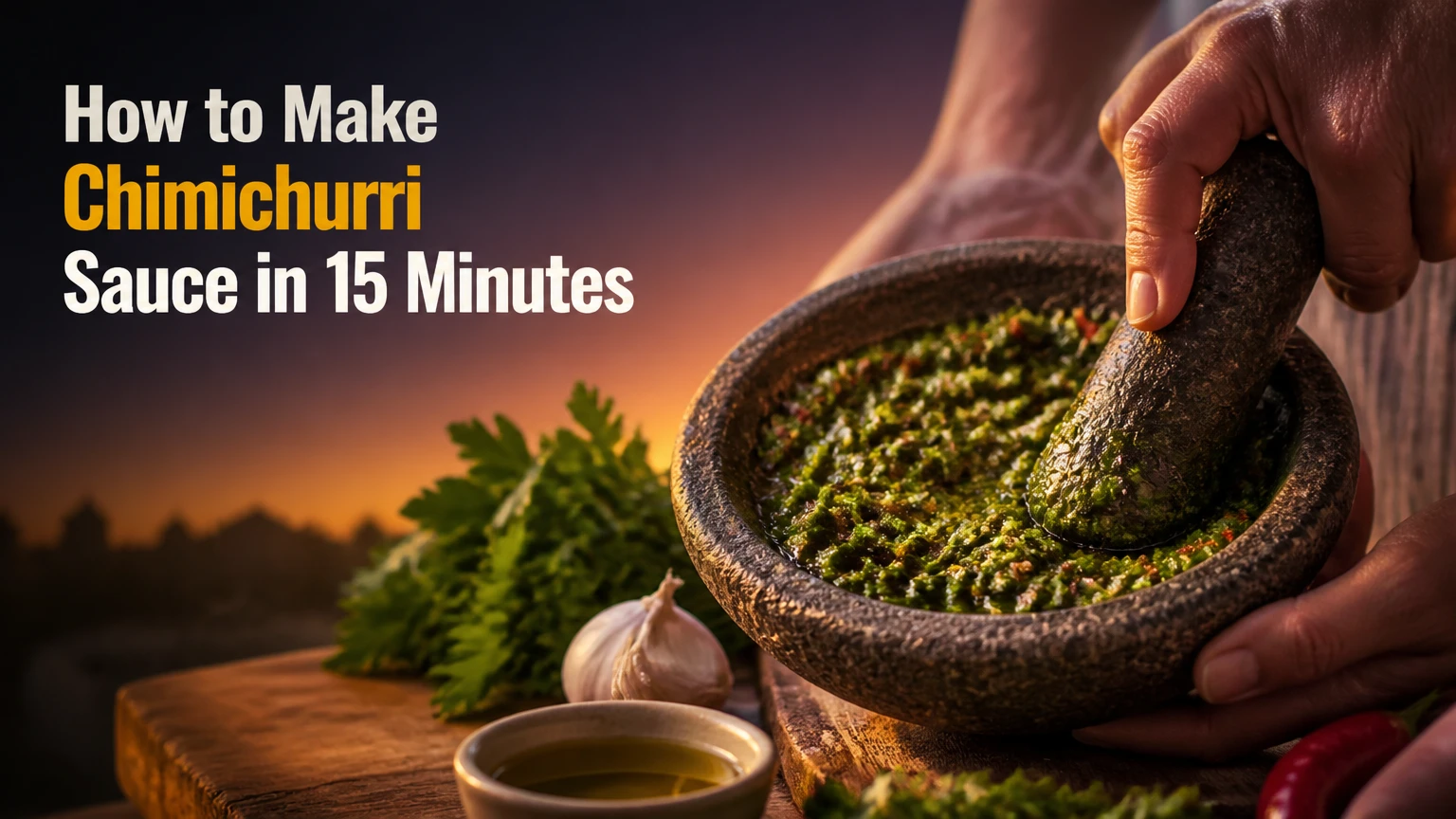
To make chimichurri sauce, finely chop fresh parsley and garlic, combine them with dried oregano, red wine vinegar, chili, salt, and extra-virgin olive oil, then rest the mixture before serving. A balanced batch takes about 15 minutes to prepare, yields approximately 1 cup, and tastes best when the herbs remain distinct rather than blended into a puree.
Key Facts at a Glance
A practical small-batch formula uses 1 cup parsley, 1/2 cup olive oil, and 1/4 cup red wine vinegar.
Hand-chopping preserves a loose, spoonable texture and reduces the risk of bitter herb puree.
Chimichurri needs 10-15 minutes of preparation and benefits from a 20-30 minute flavor rest.
Fresh garlic submerged in oil should be refrigerated promptly and used within 4 days.
Classic green chimichurri pairs especially well with grilled beef, sausages, chicken, mushrooms, and potatoes.
Homemade chimichurri typically costs about $3-$6 per cup, depending on herb and oil prices.
What Is Chimichurri Sauce?
Chimichurri is an uncooked herb sauce associated with Argentina and Uruguay, traditionally made from parsley, garlic, oregano, vinegar, oil, salt, and chili. Chimichurri is served as a finishing condiment or marinade for grilled foods, but its bright acidity also works with roasted vegetables, eggs, beans, and fish.
The sauce is usually loose rather than creamy. The oil carries fat-soluble aromas from garlic, herbs, and chili, while vinegar contributes sharpness that offsets rich foods. Salt does more than season the mixture: it draws some moisture from the chopped herbs and helps distribute flavor through the oil and acid.
The famous 2:2:1 ratio in the supplied overview is a reasonable starting framework for herbs, oil, and acid, but it is not a fixed historical standard. Parsley density changes dramatically depending on whether a cup is packed, loosely filled, or measured after chopping, so a measured recipe produces more reliable results than a ratio alone.
What Does Chimichurri Taste Like?
Classic chimichurri tastes herbal, garlicky, acidic, salty, and lightly hot. The flavor should be assertive enough to season grilled meat, yet the parsley should remain fresh and recognizable instead of tasting like pesto or salad dressing.
A balanced sauce has a clear vinegar note without tasting harsh. If the oil dominates, add vinegar by the teaspoon; if vinegar overwhelms the herbs, add oil and parsley rather than sugar. Sugar can conceal imbalance, but it does not correct the underlying proportions.
What Ingredients Do You Need?
A one-cup batch requires 1 packed cup finely chopped flat-leaf parsley, 1/2 cup extra-virgin olive oil, 1/4 cup red wine vinegar, 3 medium garlic cloves, 1 teaspoon dried oregano, 1/2 teaspoon red pepper flakes, and 3/4 teaspoon kosher salt. The parsley should be dry before chopping because surface water weakens flavor and encourages separation.
| Ingredient | Quantity | Function | Practical substitute |
|---|---|---|---|
| Flat-leaf parsley | 1 packed cup, 30-35 g | Fresh herbal body | 3/4 cup parsley plus 1/4 cup cilantro |
| Extra-virgin olive oil | 1/2 cup, 120 ml | Carries aroma and softens acidity | Mild olive oil or avocado oil |
| Red wine vinegar | 1/4 cup, 60 ml | Acidity and palate contrast | Sherry vinegar, 45-60 ml |
| Fresh garlic | 3 medium cloves, 9-12 g | Savory pungency | 1 teaspoon garlic paste |
| Dried oregano | 1 teaspoon, 1 g | Earthy, slightly bitter depth | 1 tablespoon fresh oregano |
| Red pepper flakes | 1/2 teaspoon, 1 g | Controlled heat | 1 finely minced Fresno chili |
| Kosher salt | 3/4 teaspoon, 3-4 g | Seasoning and moisture extraction | 1/2 teaspoon fine salt |
Flat-leaf parsley gives a stronger, less grassy flavor than curly parsley, although curly parsley works when chopped finely. Extra-virgin olive oil adds peppery bitterness, so a mild oil may suit delicate fish better. Red wine vinegar is traditional in many common versions, while sherry vinegar gives a rounder, nuttier edge.
How Much Chimichurri Does This Recipe Make?
This formula makes about 1 cup, enough for 6-8 servings at 2 tablespoons per person. For a steak dinner, plan on 2 tablespoons per 8-ounce steak, while a sandwich or vegetable platter may need 1 tablespoon per serving.
| Servings | Parsley | Oil | Vinegar | Garlic | Finished yield |
|---|---|---|---|---|---|
| 2-3 | 1/2 cup | 1/4 cup | 2 tablespoons | 1-2 cloves | 1/2 cup |
| 6-8 | 1 cup | 1/2 cup | 1/4 cup | 3 cloves | 1 cup |
| 12-16 | 2 cups | 1 cup | 1/2 cup | 6 cloves | 2 cups |
| 20-24 | 3 cups | 1 1/2 cups | 3/4 cup | 9 cloves | 3 cups |
Before You Start
Chimichurri preparation takes 10-15 minutes, followed by a 20-30 minute rest for improved flavor. The task is easy, costs typically $3-$6 per batch, and requires a cutting board, sharp knife, measuring spoons, a bowl, and a clean refrigerator-safe container.
Ingredients and equipment
- 1 packed cup flat-leaf parsley
- 1/2 cup olive oil
- 1/4 cup red wine vinegar
- 3 garlic cloves
- 1 teaspoon dried oregano
- 1/2 teaspoon red pepper flakes
- 3/4 teaspoon kosher salt
- Chef’s knife, cutting board, bowl, spoon, and lidded container
Wash the parsley under cool running water, then spin or blot it until no visible moisture remains. The herbs do not need to be bone-dry in a technical sense, but excess water dilutes the vinegar-oil mixture and makes the sauce separate quickly.
How to Make Chimichurri Sauce Step by Step
Step 1: Wash and Dry the Parsley
Wash 1 packed cup of flat-leaf parsley, remove thick stems, and dry the leaves thoroughly with a salad spinner or clean towels. Keep tender stems if they are thin because they contain flavor, but discard woody lower stems.
You will know this step worked when the parsley leaves feel dry and do not leave water on the towel. Wet leaves produce a thinner sauce and reduce its usable storage life.
Common mistake: Chopping damp parsley directly into the bowl. Shake or spin the leaves first, then blot remaining water before cutting.
Step 2: Finely Chop the Herbs and Garlic
Pile the parsley on the cutting board and chop it into pieces approximately 2-3 millimeters wide. Mince 3 garlic cloves separately, using a sharp knife and a rocking motion rather than crushing them into a paste.
You will know the texture is right when the parsley remains visibly granular and can be lifted with a spoon. Chimichurri should not resemble a smooth green puree.
Common mistake: Chopping the parsley too coarsely. Large leaves deliver uneven bites, while repeated chopping after adding oil can bruise the herbs and darken them.
Step 3: Bloom the Dry Seasonings in Vinegar
Place the garlic, 1 teaspoon oregano, 1/2 teaspoon red pepper flakes, 3/4 teaspoon kosher salt, and 1/4 cup red wine vinegar in a nonreactive glass or stainless-steel bowl. Stir and rest the mixture for 10 minutes.
This short vinegar rest softens dried oregano and distributes salt through the liquid before the oil is added. The garlic remains raw, so the step improves flavor but does not make garlic-in-oil safe for unrefrigerated storage.
You will know the mixture is ready when the oregano looks hydrated and the salt is mostly dissolved. Common mistake: Adding oil immediately, which leaves the dry seasonings concentrated in isolated pockets.
Step 4: Add the Parsley
Stir the chopped parsley into the seasoned vinegar until the leaves are evenly coated. Mixing the herbs with acid before oil gives the parsley a consistent seasoning and prevents dry clumps from floating on top.
You will know this step worked when every visible parsley piece looks lightly moistened, with no dry mound in the center. Common mistake: Pressing the parsley into a compact paste, which makes the final sauce dense instead of loose.
Step 5: Stir in the Olive Oil
Pour 1/2 cup olive oil into the bowl while stirring continuously with a spoon or small whisk. Chimichurri does not need a stable mayonnaise-like emulsion, so gradual addition improves distribution but is not mandatory.
You will know the sauce is ready when oil, vinegar, herbs, and aromatics remain evenly dispersed for at least 30 seconds. A thin oil layer on top is normal and can be stirred back in before serving.
Common mistake: Using an immersion blender to force a creamy texture. The resulting sauce loses the chopped-herb character that distinguishes chimichurri from pesto or green dressing.
Step 6: Rest, Taste, and Adjust
Cover the chimichurri and rest it for 20-30 minutes in the refrigerator or at cool room temperature before tasting. Stir once, then adjust salt, vinegar, oil, and chili in small increments.
You will know the sauce is balanced when it tastes slightly stronger than you want to eat alone, because grilled meat and vegetables dilute its impact. Add 1 teaspoon oil for excessive sharpness, 1 teaspoon vinegar for flatness, or a pinch of salt for muted flavor.
Common mistake: Judging the sauce immediately after mixing. Garlic and oregano become more integrated after resting, so adding large corrections too early can make the finished sauce overly salty or acidic.
Should You Hand-Chop or Use a Food Processor?
Hand-chopping produces the best traditional chimichurri texture, while a food processor is acceptable when speed matters and the operator pulses briefly. A processor should never run continuously with oil and parsley because high-speed blades create a smooth puree and can make the sauce taste harsh.
| Method | Active time | Texture | Best use | Main drawback |
|---|---|---|---|---|
| Chef’s knife | 10-15 minutes | Loose, 2-3 mm pieces | Steak and sausage | Requires knife work |
| Mini chopper | 5-7 minutes | Uneven, 3-6 mm pieces | Large batches | Easy to over-process |
| Food processor | 3-5 minutes | Fine, 1-3 mm pieces | Speed-focused preparation | Can make a bitter puree |
| Blender | 2-4 minutes | Smooth, pourable | Marinade or dressing | Least traditional texture |
If using a food processor, pulse dry parsley and garlic 4-6 times, transfer them to a bowl, and stir in vinegar and oil by hand. Do not blend the oil aggressively. Oil bitterness is not inevitable, but over-processing parsley, garlic, and oil can create a muddier flavor and less attractive color.
Which Chimichurri Style Should You Make?
Classic chimichurri verde is the best first batch for grilled beef because parsley, vinegar, garlic, and oregano cut through beef fat without covering the meat’s browned flavor. Chimichurri rojo adds smoked or warm spices for pork and lamb, while herb substitutions create useful versions for fish and vegetables.
| Style | Additional ingredients | Flavor profile | Best pairing | Typical preparation change |
|---|---|---|---|---|
| Verde | Parsley, oregano, red pepper flakes | Sharp, herbal, garlicky | Ribeye, skirt steak, chorizo | Use the base recipe |
| Rojo | 1 teaspoon smoked paprika, 1/2 teaspoon cumin | Smoky, earthy, warm | Pork, lamb, chicken thighs | Reduce chili flakes to 1/4 teaspoon |
| Cilantro-lime | 3/4 cup parsley, 1/4 cup cilantro, lime juice | Citrusy, green, fresh | Shrimp, tacos, grilled corn | Replace half the vinegar with lime |
| Mint-herb | 3/4 cup parsley, 1/4 cup mint | Cool, aromatic, sweet-herbal | Lamb, zucchini, eggplant | Use sherry vinegar |
| Mild family style | No chili flakes, 2 garlic cloves | Savory and lightly acidic | Potatoes, chicken, bread | Keep vinegar at 1/4 cup |
Roasted red pepper creates a softer, sweeter red sauce, but it also introduces water and shortens storage quality. Add only 2 tablespoons finely minced roasted pepper per cup of finished chimichurri, and refrigerate the batch promptly.
What Foods Pair Best With Chimichurri?
Chimichurri pairs best with grilled foods that have browned surfaces and moderate to high richness. The sauce is especially effective after cooking, when its raw herbs and vinegar remain distinct rather than losing their freshness over direct heat.
| Food | Serving amount | When to add it | Why it works |
|---|---|---|---|
| Skirt steak | 2 tablespoons per 8 oz | After slicing | Vinegar balances beef fat |
| Ribeye | 1-2 tablespoons per 8 oz | At the table | Parsley offsets rich marbling |
| Chorizo | 1 tablespoon per link | Inside a roll or on top | Acid cuts sausage richness |
| Grilled chicken | 2 tablespoons per breast | After resting meat | Oil protects lean texture |
| Salmon or shrimp | 1 tablespoon per 5 oz | After cooking | Herbs brighten oily fish |
| Mushrooms | 1-2 tablespoons per cup | After roasting | Garlic deepens umami |
| Potatoes | 1 tablespoon per cup | While warm | Oil coats starch and vinegar lifts it |
Chimichurri is less suitable as the only seasoning for delicate poached fish, sweet desserts, or long simmered sauces. Extended cooking dulls parsley, and the raw garlic can become sharp or bitter when boiled for a prolonged period.
Is Chimichurri a Marinade or a Finishing Sauce?
Chimichurri can function as both a marinade and a finishing sauce, but the two uses should be separated for flavor and food safety. Reserve a clean portion before it touches raw meat, then use the reserved portion at the table.
For marinating, coat 1 pound of beef, chicken, or pork with 1/3 cup chimichurri for 30 minutes to 2 hours in the refrigerator. Longer exposure to vinegar can make the outer layer of small or thin pieces taste cured and slightly mushy, although it does not tenderize thick meat deeply.
Do not use leftover marinade as a table sauce unless you boil it first. The USDA FSIS states, “When in doubt, throw it out,” a useful rule when a marinade has contacted raw poultry or meat and its handling history is uncertain.
How Should You Store Chimichurri Safely?
Refrigerate fresh garlic chimichurri in a clean, covered container within 2 hours of preparation, or within 1 hour when ambient temperatures exceed 90°F (32°C). For a conservative home-kitchen limit, use refrigerated garlic-in-oil chimichurri within 4 days rather than keeping it for two weeks.
Garlic stored under oil can create a low-oxygen environment associated with botulism risk. Vinegar adds acidity and improves flavor, but a typical home recipe is not a validated shelf-stable preservation method. The National Center for Home Food Preservation recommends refrigerating homemade garlic-in-oil mixtures and using them within 4 days.
A thin layer of oil on top does not indicate spoilage, and olive oil may become cloudy or solid at refrigerator temperature. Let the container sit at room temperature for 15-20 minutes, stir it, and return unused sauce to the refrigerator.
Can You Freeze Chimichurri?
You can freeze chimichurri for approximately 2-3 months, although parsley will soften and lose some raw freshness after thawing. Freeze the sauce in 1-tablespoon portions in an ice cube tray, then transfer the solid portions to a labeled freezer bag.
Thaw only the portion needed in the refrigerator or for a short period on the counter. Add 1 teaspoon fresh vinegar, chopped parsley, or olive oil after thawing if the flavor seems flat. Never refreeze a fully thawed batch.
Common Mistakes and How to Fix Them
The Sauce Tastes Too Sour
Add olive oil 1 teaspoon at a time, then taste after each addition. If the acidity is sharp but the sauce also tastes dull, add a small pinch of salt and another tablespoon of parsley rather than adding sugar.
The Sauce Tastes Bitter
Bitterness usually comes from excessive oregano, scorched garlic, a very bitter olive oil, or over-processing. Stir in 1-2 tablespoons fresh parsley and 1 tablespoon neutral oil, then let the mixture rest for 10 minutes; discard the batch if it tastes rancid or chemically harsh.
The Sauce Is Too Spicy
Add 2-3 tablespoons parsley and 1-2 tablespoons oil to dilute chili heat. Dairy served alongside the finished dish, such as plain yogurt with grilled chicken, can reduce perceived heat more effectively than adding sugar to the sauce.
The Sauce Is Watery
Drain excess water from the parsley, then add chopped herbs one tablespoon at a time. Watery chimichurri often results from un-dried leaves or fresh roasted peppers, not from too little oil.
The Sauce Turns Brown
Parsley naturally oxidizes after chopping, especially when exposed to air, heat, and metal-reactive residues. Use a sharp knife, keep the herbs cool, cover the container directly, and prepare the sauce on the same day for the cleanest green color.
Brown color alone does not prove spoilage, but discard chimichurri with mold, bubbling, swollen packaging, a foul odor, or an unusual slimy texture. Do not taste questionable food to test its safety.
The Oil Separates
Separation is normal because traditional chimichurri is a loose vinaigrette, not a permanent emulsion. Stir the sauce before serving; if the herbs sink heavily, add 1 teaspoon vinegar and whisk briefly to redistribute them.
How Can You Adapt the Recipe?
For a milder sauce, remove the pepper flakes and use two garlic cloves. For extra heat, add 1 finely minced Fresno chili or increase the flakes to 1 teaspoon, but make only one change at a time so the acid and salt remain balanced.
For a dairy-free creamy variation, stir 2 tablespoons chimichurri into 1/2 cup unsweetened plant yogurt immediately before serving. For a vegetable-focused version, replace one-quarter of the parsley with mint and use sherry vinegar, which has enough body for roasted eggplant and squash.
For fish, reduce vinegar to 3 tablespoons and replace 1 tablespoon with lemon juice immediately before serving. Citrus juice tastes brighter than vinegar but loses freshness faster, so citrus-heavy chimichurri is best used within 1-2 days.
Frequently Asked Questions
Can I Make Chimichurri Without Red Wine Vinegar?
Yes. Use sherry vinegar, white wine vinegar, or lemon juice in the same 1/4-cup quantity, then taste after resting. Sherry vinegar gives the deepest flavor, white wine vinegar is cleaner, and lemon juice creates a brighter sauce that works particularly well with shrimp, salmon, and grilled vegetables.
Should Chimichurri Be Smooth or Chunky?
Chimichurri should be chunky enough to show distinct parsley and garlic pieces, with oil and vinegar flowing around them. Pieces around 2-3 millimeters provide even distribution without creating a puree. A smooth green sauce is closer to a blended herb dressing or salsa verde than traditional chimichurri.
Can I Use Dried Parsley?
Dried parsley can produce an edible emergency sauce, but it lacks the fresh aroma and texture of flat-leaf parsley. Use 3 tablespoons dried parsley for 1 packed cup fresh, hydrate it in the vinegar for 10 minutes, and add 1 teaspoon fresh lemon zest to restore some brightness.
Do I Need to Cook the Garlic?
No. Raw garlic supplies the characteristic pungency of chimichurri, and cooking changes the sauce into a sweeter, softer condiment. If raw garlic tastes too aggressive, mince it finely and let it sit in the vinegar for 10 minutes, or reduce the quantity from three cloves to two.
Can Chimichurri Sit Out During Dinner?
Chimichurri can sit out briefly while food is served, but garlic-in-oil sauce should not remain at room temperature for several hours. Put the serving bowl out shortly before eating, refrigerate leftovers within 2 hours, and use a clean spoon rather than returning meat-contaminated sauce to the storage container.
Why Is My Chimichurri Not Bright Green?
Chimichurri loses green color when parsley is wet, bruised, overheated, or stored with prolonged air exposure. Dry the leaves, chop with a sharp knife, keep the sauce cool, and press plastic wrap onto the surface inside the container. Color loss does not automatically mean the sauce is unsafe.
The Bottom Line
The most reliable way to make chimichurri sauce is to dry and hand-chop parsley, bloom garlic and oregano in red wine vinegar, stir in olive oil, and rest the mixture for 20-30 minutes before serving. Use the sauce fresh, refrigerate garlic-containing leftovers promptly, and adjust the acid, oil, salt, and chili only after the flavors have integrated.