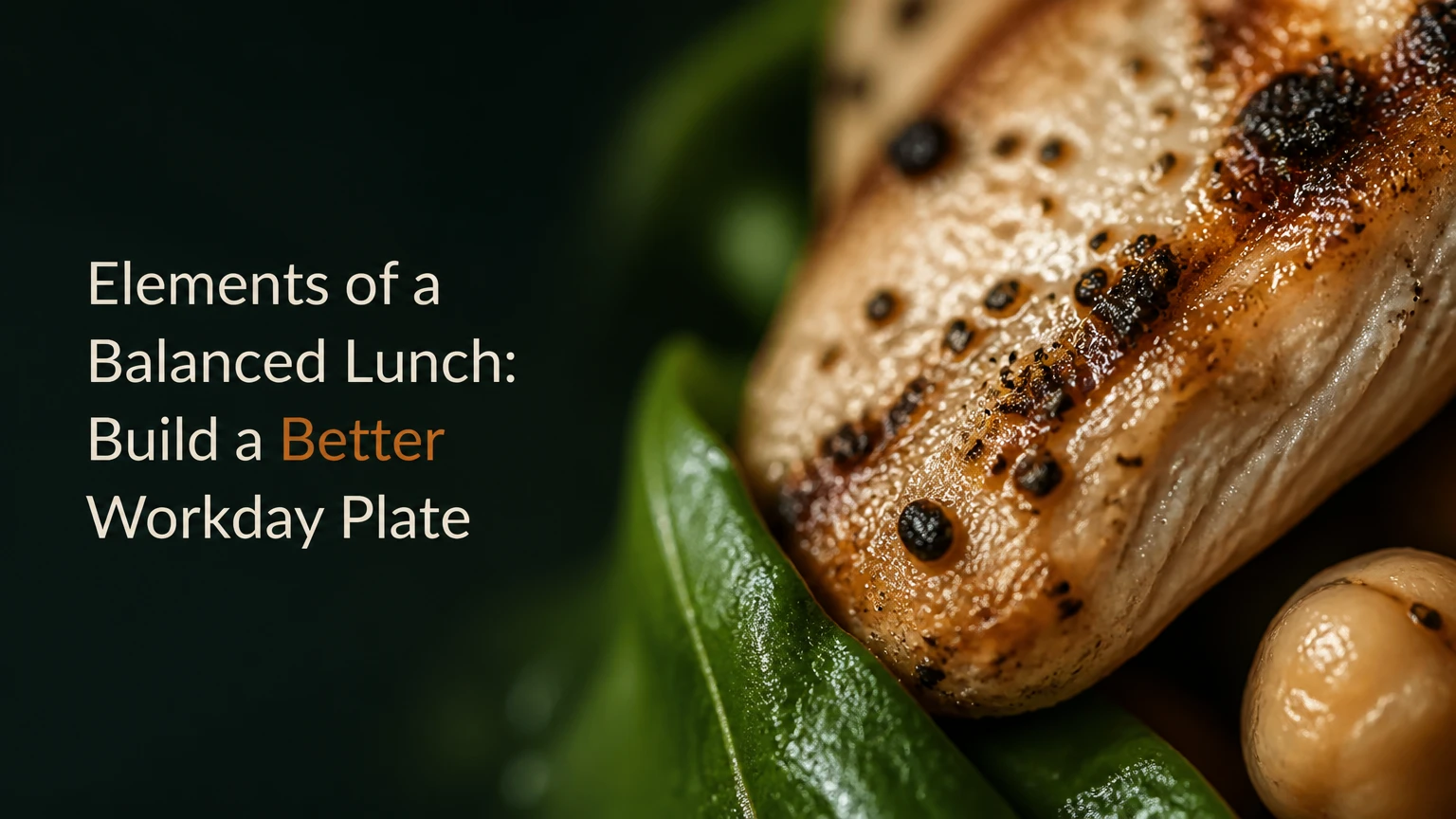
The elements of a balanced lunch are vegetables or fruit, a protein-rich food, a high-fiber carbohydrate, and a measured source of unsaturated fat. Together, these foods provide fiber, protein, essential fatty acids, vitamins, minerals, and usable energy, while portion sizes should match your body, activity, health needs, and total daily diet.
Key Facts at a Glance
- A practical balanced lunch usually contains produce, protein, a high-fiber carbohydrate, and unsaturated fat.
- The plate method places about half the plate in vegetables and fruit, one-quarter in protein, and one-quarter in whole-grain or starchy carbohydrate.
- A typical adult lunch may provide 400-700 calories, but that range is not appropriate for every person.
- A useful starting point is 20-35 grams of protein and 6-12 grams of fiber at lunch.
- Unsaturated fats from olive oil, avocado, nuts, seeds, and fish improve meal quality, but small portions provide substantial calories.
- Protein, fiber, food volume, hydration, sleep, and total meal size affect afternoon energy more than one ingredient alone.
What Are the Elements of a Balanced Lunch?
A balanced lunch combines food groups that perform different nutritional jobs. Vegetables and fruit supply potassium, folate, vitamin C, carotenoids, and fiber; protein foods provide amino acids; high-fiber carbohydrates support physical and mental activity; and unsaturated fats support cell membranes and absorption of vitamins A, D, E, and K.
The United States Department of Agriculture’s MyPlate model groups food into fruits, vegetables, grains, protein foods, and dairy or fortified soy alternatives. A lunch does not need all five groups in equal amounts, and no single plate diagram can account for every medical condition or energy requirement.
The most useful practical definition is therefore functional rather than visual: a balanced lunch should contain enough protein and produce to support fullness, enough carbohydrate to match activity, and enough fat to improve flavor and nutrient absorption without making the meal excessively energy-dense.
The Four Core Elements
| Element | Main contribution | Practical lunch foods | Starting portion |
|---|---|---|---|
| Vegetables and fruit | Fiber, potassium, folate, vitamins C and A | Broccoli, peppers, greens, carrots, berries, oranges | 1.5-3 cups |
| Protein food | Amino acids, iron, zinc, vitamin B12 in some foods | Chicken, eggs, tofu, beans, fish, yogurt | 3-5 oz cooked or ¾-1 cup |
| High-fiber carbohydrate | Glucose, glycogen, fiber, magnesium | Oats, brown rice, potatoes, corn, whole-grain bread | ½-1 cup cooked or 1-2 slices |
| Unsaturated fat | Essential fatty acids and fat-soluble vitamin absorption | Olive oil, avocado, walnuts, tahini, seeds | 1-2 teaspoons oil or 1-2 tablespoons nuts and seeds |
Dairy or fortified soy foods can be included as a protein, carbohydrate, or calcium-rich side. A cup of plain yogurt, fortified soy milk, or cottage cheese may replace part of another protein serving, depending on the product’s nutrition label.
How Does a Balanced Lunch Support Energy?
A balanced lunch supports steadier energy by combining carbohydrate with protein, fiber, and fat, which generally slow eating speed and digestion compared with a meal dominated by refined starch or added sugar. The effect is practical, not magical: the meal still contributes calories, and sleep, stress, caffeine, hydration, and activity influence afternoon alertness.
High-fiber foods tend to require more chewing and remain structurally intact longer than refined carbohydrates. Protein and fat can increase fullness, while beans, whole grains, vegetables, and fruit contribute fermentable fibers that support normal bowel function.
The common claim that a balanced lunch prevents all blood-glucose spikes is too strong. The glycemic response depends on the food, portion, cooking method, ripeness, meal composition, and individual physiology. The American Diabetes Association recommends considering total carbohydrate, fiber, and food quality rather than labeling every carbohydrate as harmful.
What Each Nutrient Does
- Carbohydrate: Supplies glucose and replenishes glycogen, especially for active people. Whole grains, beans, potatoes, corn, fruit, and dairy can all fit.
- Protein: Supports tissue maintenance and increases meal satiety. Protein needs vary by body size, age, training, pregnancy, and medical status.
- Fat: Adds energy and flavor while helping absorb vitamins A, D, E, and K. Unsaturated sources are preferred more often than butter, fatty processed meats, and shortening.
- Fiber: Supports stool regularity, fullness, and dietary quality. Increase fiber gradually if your current intake is low.
- Micronutrients: Produce, legumes, dairy or fortified alternatives, seafood, nuts, and seeds help supply calcium, potassium, iron, folate, magnesium, zinc, and vitamins.
The National Academies sets adult dietary fiber recommendations at 14 grams per 1,000 calories. That makes 6-12 grams at lunch a reasonable practical target for many adults, not a mandatory threshold.
How Much Food Should Each Element Provide?
A useful starting structure is half produce, one-quarter protein, and one-quarter high-fiber carbohydrate, with a small fat addition. The plate method is more reliable for everyday use than attempting to calculate exact macronutrient ratios at every meal, but athletes, children, people with diabetes, and people recovering from illness may need different proportions.
| Lunch target | Typical starting range | Increase when | Reduce or modify when |
|---|---|---|---|
| Energy | 400-700 kcal | Training, high body mass, physical work | Low activity or larger meals later |
| Protein | 20-35 g | Strength training, older age, long hunger intervals | Kidney disease only with clinical guidance |
| Fiber | 6-12 g | Constipation, low whole-food intake | Bloating, inflammatory flare, or sudden increase |
| Carbohydrate | 30-75 g | Endurance activity, active job, afternoon training | Lower-carb preference or glucose-management plan |
| Unsaturated fat | 5-15 g | Low-fat meal, poor satiety | Very energy-dense meal or gastrointestinal sensitivity |
These are planning ranges, not universal prescriptions. A 500-calorie lunch may be insufficient for a laborer and excessive for someone who snacks soon afterward. The total daily pattern matters more than whether one lunch reaches a precise protein or fiber number.
The Hand and Plate Method
Use visual measures when scales are impractical:
- Fill half the plate or container with non-starchy vegetables and add fruit if desired.
- Add one palm-sized serving of protein, usually 3-5 ounces cooked.
- Add one cupped-hand serving of grains, beans, pasta, or starchy vegetables.
- Add one thumb-sized serving of oil, nuts, seeds, avocado, or a similar fat.
A palm-sized portion varies with hand size, so the method works best as a starting point. Nutrition labels remain more useful for packaged foods, especially deli meat, dressings, protein bars, and prepared soups with substantial sodium.
How Do You Build a Balanced Lunch?
Build a balanced lunch in four steps: choose protein, fill half the container with produce, add a suitable high-fiber carbohydrate, and finish with a measured unsaturated fat. The process takes about 5-15 minutes when ingredients are prepared, and the carbohydrate portion is the main lever for adjusting energy needs.
Step 1: Choose the Protein Anchor
Select 3-5 ounces of cooked fish, poultry, lean meat, tempeh, tofu, or eggs, or use about ¾-1 cup of beans or lentils. Plant-based lunches may need larger portions or two complementary protein foods because legumes and grains contain less protein per bite than many animal foods.
Success checkpoint: The meal contains a recognizable protein serving rather than relying on a small garnish of cheese or seeds.
Common mistake: Treating a vegetable soup, fruit smoothie, or plain salad as a complete lunch. Add beans, tofu, yogurt, eggs, fish, or a prepared protein source.
Step 2: Add Produce for Volume and Micronutrients
Use at least 1-2 cups of vegetables, mixing raw and cooked options according to tolerance. Leafy greens, peppers, tomatoes, carrots, mushrooms, green beans, cabbage, and frozen vegetables all count.
Fruit can fill part of the produce allocation. An orange, apple, pear, kiwi, or cup of berries supplies fiber and a portable finish, but fruit juice does not provide the same intact fiber and chewing experience.
Success checkpoint: Produce occupies approximately half the container and includes at least two colors.
Common mistake: Choosing a large salad with no substantial protein or carbohydrate, then compensating with a calorie-heavy dressing or afternoon snack.
Step 3: Add a High-Fiber Carbohydrate
Choose ½-1 cup cooked quinoa, brown rice, barley, farro, whole-grain pasta, beans, or potatoes, or use one medium potato or one to two slices of whole-grain bread. Active people may need 1-1.5 cups around training, while a sedentary person may prefer the lower end.
Success checkpoint: The carbohydrate has a measured portion and contributes fiber, rather than arriving mainly as a large white-flour roll, sweet drink, or oversized pasta serving.
Common mistake: Removing all carbohydrates when the result is low energy, poor exercise performance, or compensatory snacking. Lower-carbohydrate lunches can be balanced, but carbohydrate needs do not disappear.
Step 4: Measure the Fat
Add 1-2 teaspoons of olive or canola oil, ¼ avocado, or 1-2 tablespoons of nuts, seeds, or tahini. Fats are nutritious but energy-dense, so free-pouring oil can change a moderate lunch into a much larger meal.
Success checkpoint: The fat source is visible and portioned.
Common mistake: Combining avocado, cheese, nuts, oil, and a creamy dressing without adjusting another portion. Each choice can be appropriate, but stacking several concentrated fats raises calories quickly.
Which Foods Make the Best Balanced Lunch?
The best foods are those that combine nutrient density, acceptable preparation time, affordability, and personal tolerance. A salmon bowl is not inherently better than a bean-and-potato meal if the latter provides comparable protein, produce, fiber, and appropriate energy.
| Lunch pattern | Protein anchor | Produce | High-fiber carbohydrate | Fat or calcium addition |
|---|---|---|---|---|
| Salmon grain bowl | 4 oz salmon, about 25 g protein | 2 cups spinach and tomatoes | ¾ cup quinoa | 1 tsp olive oil |
| Chicken wrap | 4 oz chicken, about 30 g protein | Lettuce, cucumber, peppers | Whole-grain tortilla | ¼ avocado |
| Lentil lunch box | 1 cup lentils, about 18 g protein | Carrots, greens, cherry tomatoes | 1 slice whole-grain bread | 1 tbsp tahini |
| Tofu rice bowl | 5 oz firm tofu, about 20 g protein | 1.5 cups broccoli and peppers | ¾ cup brown rice | 1 tsp sesame oil |
| Yogurt oat bowl | 1 cup Greek yogurt, about 20 g protein | 1 cup berries | ½ cup oats | 1 tbsp walnuts |
Nutrition values are typical estimates and vary by brand, recipe, cooking method, and serving size. Rinsing canned beans can reduce some surface sodium, while choosing no-salt-added versions provides greater control.
Are Vegetarian, Vegan, and Low-Carb Lunches Balanced?
Vegetarian, vegan, and low-carbohydrate lunches can all be balanced when they supply sufficient protein, produce, fiber, and appropriate energy. The dietary label does not determine meal quality; the actual ingredients and portions do.
Plant-Based Lunches
A vegan meal can use lentils, beans, tofu, tempeh, edamame, seitan, fortified soy yogurt, or soy milk. Pairing grains and legumes across the day supports adequate amino acid intake, although they do not need to appear in the same bite.
Vitamin B12 requires special attention in vegan diets because reliable natural plant sources are limited. Fortified foods or a supplement should be selected with advice from a qualified clinician or dietitian.
Lower-Carbohydrate Lunches
A low-carbohydrate lunch can use chicken, eggs, salmon, tofu, cheese, non-starchy vegetables, olives, avocado, and nuts. The meal remains balanced when it includes enough fiber and micronutrient-rich produce rather than replacing carbohydrate with unlimited bacon, butter, or creamy sauces.
Low-carbohydrate eating is not automatically appropriate for diabetes, pregnancy, kidney disease, or eating-disorder recovery. Medication and clinical conditions can change the risks of major carbohydrate restriction.
What Is the Most Practical Lunch for Work?
For work, the most practical balanced lunch is a chilled or shelf-stable combination that needs little assembly, remains safe during storage, and provides at least one clear protein serving. A three-minute lunch can combine a tuna pouch, whole-grain crackers, prewashed vegetables, hummus, and fruit, provided sodium and refrigeration requirements are considered.
| Lunch approach | Active time | Typical cost | Main control | Main limitation |
|---|---|---|---|---|
| Batch-cooked grain bowl | 10-20 min per serving | $2-$6 | Portion, oil, sodium | Needs refrigeration |
| No-cook packed lunch | 3-8 min | $3-$8 | Speed and ingredients | Packaged foods may be salty |
| Salad-bar purchase | 0-10 min | $9-$18 | Ingredient variety | Dressing and protein costs vary |
| Cafeteria plate | 5-15 min | $6-$14 | Immediate availability | Portions and cooking fats vary |
| Meal-delivery entrée | 2-5 min reheating | $9-$16 | Consistent calories | Packaging and sodium can be high |
Costs are typical United States ranges and change substantially by location, season, restaurant, and brand. The USDA Economic Research Service reported that food-at-home and food-away-from-home prices follow different cost patterns, so a fixed global lunch budget would be misleading.
Three-Minute Assembly Formula
Keep one item from each category available:
- Protein: tuna pouch, canned beans, cooked eggs, tofu, Greek yogurt, or rotisserie chicken.
- Produce: prewashed greens, baby carrots, frozen vegetables, tomatoes, or whole fruit.
- Carbohydrate: whole-grain bread, microwave brown rice, oats, potatoes, or whole-grain crackers.
- Fat: hummus, olive-oil dressing, avocado, walnuts, pumpkin seeds, or tahini.
Check the label on ready-to-eat protein foods. A convenient lunch can meet protein needs while providing more sodium than intended, especially when it combines deli meat, soup, pickles, cheese, and commercial dressing.
How Do You Choose a Balanced Lunch When Eating Out?
Choose a restaurant lunch by securing the protein and produce first, then selecting a moderate starch and requesting sauces separately. A grilled protein bowl, bean-based entrée, vegetable-rich sandwich, or salad with a full protein serving usually offers more control than a meal built around fried starch and a sweet drink.
Ask for:
- A palm-sized protein serving.
- Double vegetables when available.
- A whole-grain, bean, potato, or rice portion that matches activity.
- Dressing, mayonnaise, cheese, and sugary sauces on the side.
- Water, unsweetened tea, or another low-sugar beverage.
A salad is not automatically lighter or more balanced. Fried toppings, creamy dressing, cheese, candied nuts, and large portions can add substantial energy while the salad contains too little protein to remain filling.
What Causes Afternoon Sleepiness or Hunger?
Afternoon sleepiness after lunch usually reflects total meal size, refined carbohydrate quantity, alcohol, poor sleep, circadian rhythm, or individual glucose regulation rather than one universally bad food. Hunger within two hours usually indicates inadequate total energy, protein, fiber, meal volume, or eating speed.
| Symptom | Likely lunch issue | First adjustment | When to seek advice |
|---|---|---|---|
| Sleepiness within 1 hour | Very large or refined-starch-heavy meal | Reduce starch by ¼-½ cup and add vegetables | Repeated symptoms with thirst or dizziness |
| Hunger after 90-120 minutes | Low protein or low total energy | Add 10-15 g protein or a yogurt side | Persistent hunger with unexplained weight change |
| Bloating | Rapid fiber increase or large raw-vegetable portion | Use cooked vegetables and increase fiber gradually | Pain, bleeding, vomiting, or ongoing diarrhea |
| Thirst after lunch | High sodium meal or inadequate fluid intake | Compare labels and drink water regularly | Excessive thirst or frequent urination |
| Glucose swings | Carbohydrate portion or medication mismatch | Track meal composition with clinical guidance | Diabetes and recurrent high or low readings |
Water before or with lunch does not “dilute” digestion in a harmful way. People can drink according to thirst, weather, activity, and medical advice; those with fluid restrictions should follow their clinician’s plan.
How Should Different People Adapt Lunch?
Lunch portions should change with body size, movement, age, appetite, health conditions, and goals. The same plate may be appropriate for one person and inadequate for another, so fixed calorie targets should never replace clinical advice or attention to hunger and recovery.
Desk-Based Adults
Use the standard half-produce structure, 20-30 grams of protein, and approximately ½-¾ cup of a high-fiber carbohydrate. Include enough food to prevent late-afternoon grazing, because an overly small lunch often shifts intake toward sweets and convenience snacks.
Active Workers and Athletes
Increase carbohydrate to approximately 1-1.5 cups cooked around demanding activity and aim toward 25-40 grams of protein when the meal supports recovery. Keep fat moderate before intense exercise if slower digestion causes discomfort.
Children and Teenagers
Children need age-appropriate portions, not adult diet portions. Offer a protein food, fruit or vegetables, a grain or starchy food, and milk or a fortified alternative, then allow appetite to guide the amount without labeling foods as morally good or bad.
People Managing Diabetes
Prioritize consistent carbohydrate portions, non-starchy vegetables, protein, and minimally sweetened beverages. Blood-glucose targets and medication timing are individual, so a registered dietitian or diabetes clinician should guide major changes.
People With Kidney, Gastrointestinal, or Other Conditions
Protein, potassium, phosphorus, fiber, fat, and fluid may require medical modification. A generic balanced plate is not a safe treatment plan for chronic kidney disease, inflammatory bowel disease, food allergy, malabsorption, or medically prescribed diets.
What Are the Most Common Mistakes?
The most common balanced-lunch mistakes are underestimating concentrated fats, treating refined carbohydrates as the entire meal, and assuming a small portion is automatically healthier. Correcting the composition usually works better than eliminating a whole food group.
- Salad without protein: Add beans, eggs, tofu, fish, chicken, or yogurt.
- Oversized dressing portion: Measure 1-2 tablespoons or request dressing on the side.
- Liquid lunch only: Pair a smoothie with yogurt, tofu, oats, nut butter, or a solid meal component.
- No carbohydrate before activity: Add potatoes, oats, rice, fruit, or whole-grain bread.
- Excessive packaged food: Compare sodium, added sugar, fiber, and protein on labels.
- Unsafe storage: Refrigerate perishable food within two hours, or within one hour when temperatures exceed 90°F, according to USDA food-safety guidance.
A balanced lunch is not good for every purpose. It cannot compensate for chronic sleep deprivation, replace treatment for diabetes, or guarantee weight loss if total daily energy intake remains above personal needs.
Balanced Lunch Examples by Goal
| Goal | Example lunch | Approximate nutrition | Useful adjustment |
|---|---|---|---|
| Steady workday energy | Chicken, vegetables, ¾ cup brown rice, yogurt | 550-650 kcal, 35-45 g protein | Use ½ cup rice for lower energy needs |
| Budget control | Lentil stew, cabbage salad, whole-grain toast, fruit | 450-600 kcal, 20-28 g protein | Buy dried lentils and seasonal produce |
| Vegan eating | Tofu, edamame, broccoli, ¾ cup rice, sesame seeds | 500-650 kcal, 25-35 g protein | Use fortified soy yogurt for calcium |
| Pre-training meal | Turkey sandwich, banana, low-fat yogurt | 450-600 kcal, 25-35 g protein | Reduce fat if exercise begins soon |
| Lower carbohydrate | Salmon, roasted vegetables, lentils, avocado | 500-700 kcal, 30-40 g protein | Adjust lentils and avocado to energy needs |
These examples demonstrate structure rather than prescribe a complete diet. Recipes with sauces, marinades, restaurant ingredients, and packaged foods can differ by hundreds of calories and several grams of sodium.
Frequently Asked Questions
Is rice part of a balanced lunch?
Rice can be part of a balanced lunch, especially when paired with protein and vegetables. Brown rice, wild rice, or a mixed-grain blend provides more fiber than white rice, but white rice can still fit when the portion matches energy needs and the rest of the meal supplies vegetables, legumes, or another fiber source.
Can a sandwich be a balanced lunch?
A sandwich can be balanced when it contains a substantial protein filling, whole-grain bread, vegetables, and a measured spread. Choose chicken, tuna, eggs, tofu, beans, or turkey, then add fruit or a vegetable side. Large portions of processed meat, cheese, mayonnaise, and refined bread can raise sodium and energy.
Is soup enough for lunch?
Soup is enough only when it contains meaningful protein, vegetables, and sufficient energy. Lentil, bean, chicken, tofu, or fish soups can form a complete lunch, while thin vegetable broth usually needs a side such as whole-grain bread, yogurt, eggs, or fruit with nuts.
How many calories should lunch contain for weight loss?
There is no universal weight-loss lunch calorie target. A typical 400-700 calorie range may suit some adults, but the correct amount depends on total energy needs, other meals, snacks, activity, medications, and medical history. A measured plate with adequate protein and fiber is often more practical than aggressive restriction.
What is a balanced lunch without refrigeration?
Shelf-stable options include a tuna or bean pouch, whole-grain crackers, a whole fruit, single-serve nut butter, and roasted chickpeas. Use an insulated lunch bag with ice packs for perishable foods, because shelf-stable packaging does not make cooked meat, eggs, dairy, or cut produce safe at room temperature.
How can I increase lunch protein without eating meat?
Use lentils, beans, tofu, tempeh, edamame, seitan, Greek yogurt, cottage cheese, eggs, fortified soy foods, or a combination of legumes and grains. Check the label on plant-based products because protein content ranges widely, from approximately 5 grams in some meat substitutes to more than 20 grams per serving in others.
The Bottom Line
The elements of a balanced lunch are produce, protein, high-fiber carbohydrate, and a measured unsaturated fat, with portions adjusted for activity, appetite, health conditions, and total daily intake. Start with the half-produce, quarter-protein, quarter-carbohydrate plate, then adjust the carbohydrate and protein amounts rather than removing nutritious foods automatically.