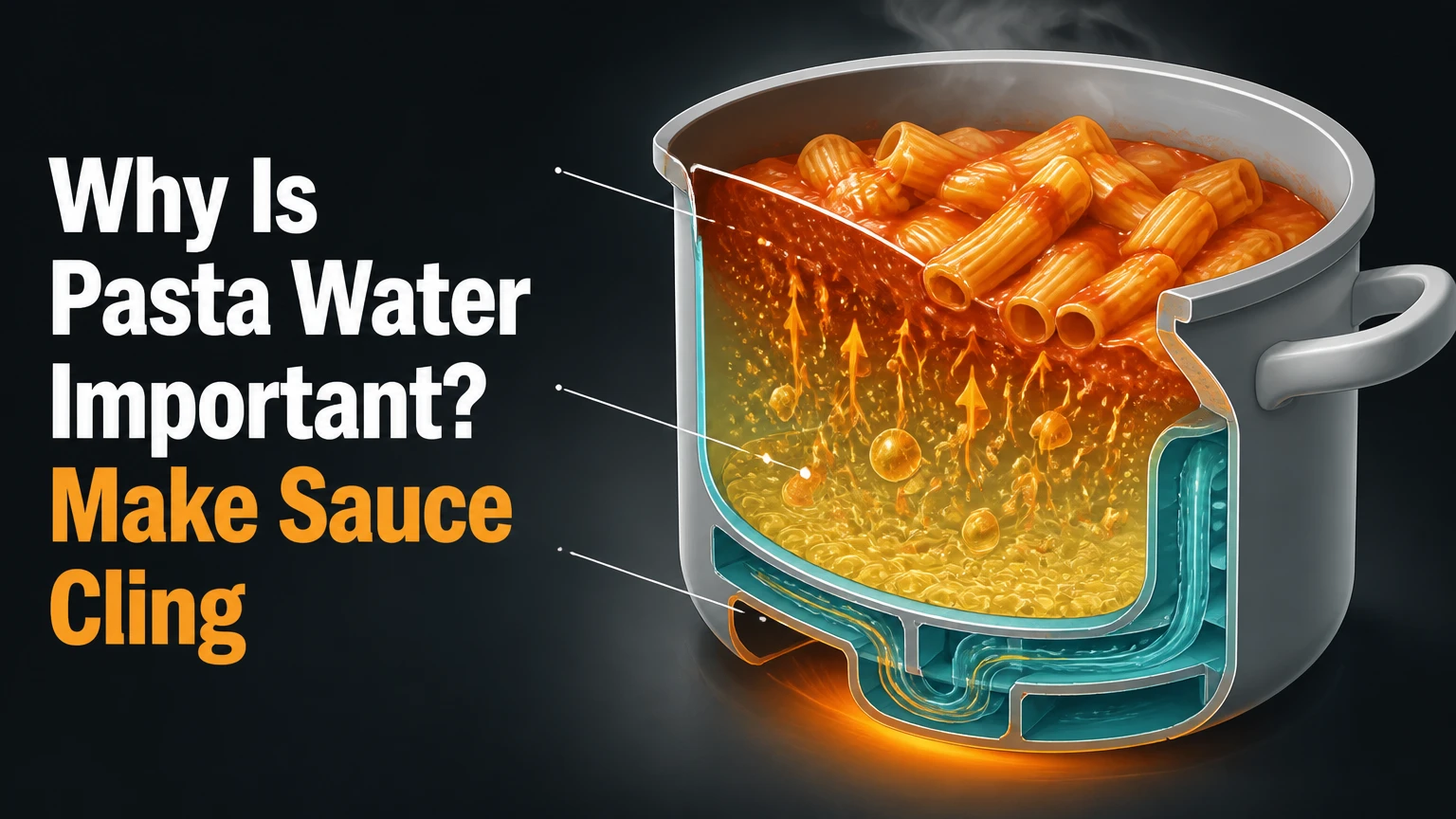
Pasta water is important because dissolved pasta starch helps water and fat combine into a smooth sauce that coats noodles instead of separating beneath them. Its heat also loosens sauce, finishes cooking the pasta, and melts cheese when agitation and temperature are controlled. Salted pasta water contributes seasoning, but starch creates the characteristic cling and gloss.
Key Facts at a Glance
- Pasta water contains gelatinized starch released from the pasta during boiling.
- Starch thickens sauce and helps stabilize mixtures of water, butter, olive oil, cheese, or rendered fat.
- Pasta water must be reserved before draining because cooked noodles cannot recreate the same liquid.
- A practical starting amount is 60-120 mL per serving, added gradually while tossing.
- Pasta water works best when hot and combined with vigorous agitation.
- Salt seasons pasta and sauce, but salt alone does not create an emulsion.
What Is Pasta Water?
Pasta water is the hot, salted cooking liquid left after dry or fresh pasta boils. The liquid contains water, dissolved salt, and starch particles released from the pasta surface, with concentration affected by pasta quantity, water volume, cooking time, and agitation.
The starch is most useful near the end of cooking, after the pasta surface has softened and released more soluble material. A small pot with 2-3 liters of water often produces more concentrated liquid than a large stockpot, although too little water can encourage sticking and uneven cooking.
Pasta water is not a complete sauce. It has little flavor beyond salt and wheat, and it supplies almost no fat, acidity, aromatics, or protein. Its role is structural: pasta water gives an existing sauce a fluid phase and starch body that help ingredients combine.
The liquid also carries seasoning into the finished dish. Because the water is reduced inside the sauce, adding heavily salted water late can make the plate excessively salty even when the pasta itself tastes properly seasoned.
Why Is Pasta Water Important?
Pasta water is important because its gelatinized starch increases viscosity and helps stabilize a sauce while heat and tossing disperse fat through the watery phase. That combination produces a thinner, glossier coating than plain water, while allowing the cook to control consistency without automatically adding cream or flour.
Oil and water naturally separate. Pasta starch does not chemically make them permanently identical, and calling starch a true emulsifier is an oversimplification. Instead, suspended and swollen starch granules increase the liquid’s thickness, slow separation, and help small fat droplets remain distributed during tossing.
Three actions determine the result:
- Heat keeps the sauce fluid and evaporates excess water.
- Agitation breaks fat into smaller droplets and spreads starch through the mixture.
- Reduction concentrates flavor and body as some water turns to steam.
The practical result is mantecatura, the Italian technique of finishing pasta by tossing it with sauce and a controlled amount of liquid. The noodles rub against the pan and each other, distributing starch while they absorb flavor.
What Starch Does in a Sauce
Pasta starch thickens the liquid phase rather than adding a dense paste-like texture. The effect is especially useful in sauces built from olive oil, butter, hard cheese, meat fat, or a small amount of tomato liquid.
| Sauce component | Function of pasta water | Typical starting amount per serving | Main risk |
|---|---|---|---|
| Extra-virgin olive oil | Disperses oil through a thinner sauce | 60-90 mL | Greasy texture if tossed weakly |
| Butter | Creates a smooth butter sauce | 30-60 mL | Excess water can dilute flavor |
| Pecorino Romano | Helps cheese form a fluid coating | 45-75 mL | High heat causes clumps |
| Guanciale or bacon fat | Carries rendered fat into sauce | 30-60 mL | Salt becomes concentrated |
| Tomato sauce | Loosens reduction and helps coating | 30-90 mL | Sauce can become thin |
| Egg-based sauce | Controls heat and fluidity | 15-45 mL | Scrambled egg if the pan is too hot |
Starch concentration varies, so these quantities are starting points rather than universal rules. A thick cacio e pepe may need several small additions, while a loose tomato sauce may need only a spoonful.
Does Salt Matter in Pasta Water?
Salt matters primarily because it seasons the pasta internally and gives the finishing liquid a savory baseline. Salt does not thicken pasta water, bind oil and water, or prevent sauce separation, so a salty pot cannot substitute for starch and proper tossing.
A common kitchen starting point is 8-12 grams of salt per liter of water, adjusted for the sauce and the saltiness of the cheese or cured meat. The often-repeated instruction that pasta water should taste like seawater is unreliable because seawater contains roughly 35 grams of salt per liter, far more than many home cooks need.
| Cooking setup | Water volume | Salt range | Dry pasta |
|---|---|---|---|
| One serving | 1.5-2 L | 12-20 g | 85-115 g |
| Two servings | 2-3 L | 16-30 g | 170-225 g |
| Four servings | 3-4 L | 24-48 g | 340-450 g |
| Cheese-heavy sauce | 2-4 L | 6-10 g/L | Any amount |
Kosher salt brands differ in crystal size and weight per tablespoon, so grams provide more reliable control than volume. Add salt after the water reaches a boil, then taste a cooled drop if you need to assess seasoning.
How Much Pasta Water Should You Add?
Add 60-120 mL of hot pasta water per serving as a practical starting range, then increase by 15-30 mL additions until the sauce looks fluid and coats the pasta. The correct amount depends on sauce thickness, pasta shape, pan temperature, and how much liquid the noodles absorb.
Reserve at least 240 mL for two servings and 480 mL for four servings. A measuring cup, ladle, or heatproof mug works, but a small container is safer than reaching into a deep pot while draining.
Use less liquid for already-loose sauces. Use more for dry cheese sauces, oil-based preparations, and pasta that finishes cooking in the pan. The sauce should look slightly looser than the desired plate texture because pasta continues absorbing liquid for several minutes.
A practical checkpoint is the pan bottom. When you tilt the skillet, a thin glossy film should move slowly rather than pooling like broth or sticking in dry patches.
How to Finish Pasta With Reserved Water
Finish pasta in the sauce for 1-3 minutes, using small additions of hot liquid and continuous tossing. The most important factor is not a fixed water ratio; it is matching heat and agitation to the sauce so the noodles absorb liquid while the fat remains dispersed.
Step 1: Reserve the Liquid
Scoop out 240-480 mL before draining. Reserve more when making cacio e pepe, carbonara, aglio e olio, or a large batch that must sit briefly before serving.
Success checkpoint: The liquid appears cloudy rather than completely clear.
Common mistake: Draining first and trying to replace the cooking liquid with tap water.
Step 2: Undercook the Pasta
Remove dried pasta 1-2 minutes before the package’s stated al dente time, especially when the pasta will finish in a hot skillet. Fresh pasta may need only 30-60 seconds in the sauce because its cooking time is shorter.
Success checkpoint: The center remains slightly firm, but the exterior bends easily.
Common mistake: Undercooking thick shapes by the same amount as thin spaghetti.
Step 3: Transfer Pasta Into the Sauce
Move the pasta directly into the skillet with tongs, a spider strainer, or a pasta basket. Keep the sauce at a gentle simmer rather than a violent boil.
Success checkpoint: Every noodle is coated before the first addition of water.
Common mistake: Draining pasta completely and allowing it to sit while the sauce cools.
Step 4: Add Water and Toss
Add 30-60 mL at a time, then toss or stir vigorously for 30-90 seconds. Agitation matters because it distributes starch and breaks fat into smaller droplets.
Success checkpoint: The sauce becomes glossy and clings to the pasta when lifted.
Common mistake: Pouring in a full cup immediately, which can leave the sauce watery.
Step 5: Finish Off Heat When Using Cheese
Turn off the burner before adding finely grated Parmigiano-Reggiano or Pecorino Romano. Add cheese gradually with a splash of water and toss until smooth.
Success checkpoint: The cheese forms a creamy coating without visible strings or pellets.
Common mistake: Adding cheese to a boiling pan, where concentrated proteins tighten and clump.
Which Sauces Need Pasta Water?
Oil-based and cheese-based sauces gain the most from reserved pasta water because they need help combining a fat phase with moisture. Tomato sauces also benefit, while cream sauces usually need less because cream already supplies water, fat, and body.
| Sauce style | Why pasta water helps | Add per serving | Best finishing temperature |
|---|---|---|---|
| Aglio e olio | Disperses olive oil and garlic flavor | 60-120 mL | Medium heat |
| Cacio e pepe | Hydrates and spreads grated cheese | 45-90 mL | Off heat |
| Carbonara | Loosens egg, cheese, and pork fat | 15-45 mL | Residual heat |
| Tomato sugo | Improves coating and loosens reduction | 30-90 mL | Medium heat |
| Pesto | Thins concentrated basil and oil | 15-45 mL | Off heat |
| Cream sauce | Adjusts thickness and helps pasta absorb flavor | 15-30 mL | Low heat |
Pesto should not be boiled because heat dulls fresh basil and can separate its oil. Toss pesto with pasta away from direct heat, adding just enough water to make the sauce spread.
Carbonara requires especially careful temperature control. The egg mixture should thicken from residual heat, not fry against the skillet surface. A small amount of starchy water gives the eggs room to coat the noodles.
Is Pasta Water Better Than Cream, Flour, or Stock?
Pasta water is better than cream or flour when the goal is a light, glossy sauce that preserves the flavor of olive oil, cheese, garlic, or cured pork. Cream is more forgiving and stable, while flour creates greater thickness but can mute delicate flavors.
| Thickening method | Primary ingredient | Typical result | Best use | Limitation |
|---|---|---|---|---|
| Pasta water | Starch and salted water | Glossy, fluid coating | Cacio e pepe, oil sauces | Requires active tossing |
| Heavy cream | Milk fat and water | Rich, stable sauce | Alfredo-style dishes | Adds substantial richness |
| Butter | Milk fat and water | Silky, emulsified finish | Buttered noodles, sage sauce | Can separate when overheated |
| Flour roux | Flour and butter | Dense, opaque body | Baked or cream-based pasta | May taste pasty |
| Stock | Meat or vegetable broth | Savory liquid | Ragù and braised sauces | Adds sodium and flavor |
| Cornstarch slurry | Cornstarch and water | Clear, strong thickening | Emergency correction | Can feel gel-like |
Pasta water also costs nothing beyond the cooking process, but its low starch concentration means it cannot rescue every sauce. A large quantity of oil, a badly split mayonnaise-like mixture, or an under-reduced cream sauce may need a different correction.
Should You Rinse Pasta?
Do not rinse pasta destined for a hot sauce because rinsing removes surface starch and cools the noodles before coating. Rinsing is appropriate for chilled pasta salads, cold noodle dishes, or recipes where the noodles must stop cooking immediately.
Surface starch helps sauce adhere to the pasta before the finishing liquid is even added. Rinsing also removes some salt and leaves water on the noodles, which can dilute a carefully balanced sauce.
For cold pasta salad, rinsing has a legitimate purpose: it removes excess surface starch that would make pieces stick together as they cool. Toss the cooled pasta with dressing soon afterward because rinsing does not replace the need for seasoning.
Why Did the Sauce Fail?
A watery sauce usually contains too much liquid or has not been reduced long enough; an oily sauce lacks sufficient water, starch, or agitation; clumped cheese usually encountered excessive heat. Each failure has a different correction, so adding random ingredients often makes the texture worse.
| Failure | Likely cause | Immediate fix | Prevention |
|---|---|---|---|
| Watery sauce | Excess water or weak reduction | Toss over medium-high heat for 30-60 seconds | Add liquid in 15-30 mL doses |
| Oil pooling | Insufficient agitation or water | Add 15-30 mL water and toss | Keep sauce moving |
| Cheese pellets | Pan too hot | Remove from heat and add water gradually | Add cheese off heat |
| Dry noodles | Pasta finished before sauce | Add water and toss for 60 seconds | Transfer pasta earlier |
| Sticky pasta | Pasta sat after draining | Loosen with hot water and sauce | Finish immediately |
| Bland sauce | Water or salt balance was wrong | Add measured salt, acid, or cheese | Taste before final reduction |
If the sauce is oily, remove the pan from direct heat before adding water. Vigorous tossing off heat often restores the texture more effectively than turning the burner higher.
If cheese has already clumped, a perfectly smooth recovery may be impossible because the proteins have tightened. You can still loosen the mixture with warm water, but prevention remains more reliable than repair.
What Changes for Different Pasta and Cooking Situations?
Pasta water works across most shapes, but thicker noodles and ridged shapes need more finishing time than thin strands. Small shapes can absorb liquid rapidly, while fresh pasta releases starch quickly and may turn soft if held in the pan.
Small Pots and Concentrated Water
Cooking 85-115 grams of pasta in 1.5-2 liters of water can produce concentrated liquid, provided the pasta has enough room to move. Stir during the first two minutes to reduce sticking, then monitor the water level if the pot is shallow.
Gluten-Free Pasta
Gluten-free pasta water can help, but its starch profile differs by brand and base ingredient. Rice, corn, quinoa, and legume pastas may release more surface starch or break down faster, so reserve the liquid and add it cautiously in 15 mL increments.
Fresh Egg Pasta
Fresh pasta often cooks in 1-4 minutes and needs less finishing time. Reserve water as soon as the noodles enter the pot, then transfer them while they remain flexible but not fully tender.
Large Batches
A large batch loses emulsion quality as it sits because the pasta keeps absorbing liquid and the sauce cools. Finish in a wide skillet when possible, or reserve extra water and refresh each portion separately.
How Long Can You Keep Pasta Water?
Use pasta water immediately for the best texture, or refrigerate it in a covered container for up to 3 days. Cool it promptly, refrigerate it below 4°C, and discard it if it has remained at room temperature for more than 2 hours.
Refrigerated pasta water may contain settled starch. Shake or stir it before use, then reheat it until steaming. It will not restore the same cooking heat as fresh water, so add it to a hot pan rather than relying on it to finish undercooked noodles.
Do not treat pasta water as a long-term stock. It has limited flavor, can ferment or spoil, and gains little culinary value from freezing unless you regularly prepare sauces that need a small amount.
The Bottom Line
Pasta water is important because hot, starchy liquid gives sauce body, helps disperse fat, and lets pasta finish cooking in a flavored coating. Reserve 240-480 mL, add 30-60 mL at a time, and toss actively until the sauce turns glossy. For cheese sauces, remove the pan from heat before adding grated cheese. The technique improves pasta most when liquid, heat, and agitation stay balanced.
Frequently Asked Questions
Can You Use Plain Water Instead of Pasta Water?
Plain hot water can loosen a sauce, but it lacks the starch that improves viscosity and slows fat separation. Use plain water only when the sauce already has enough body or when no pasta water remains. For cheese and oil sauces, plain water generally produces a thinner, less adhesive finish.
Why Is My Pasta Water Not Cloudy?
Clear pasta water usually means the water is dilute, the pasta has cooked briefly, or the pasta surface releases little starch. The liquid can still work, especially after reduction, but highly concentrated water is not guaranteed by appearance alone. Different wheat varieties and pasta-making methods release different amounts.
Can You Boil Pasta in Less Water for More Starch?
You can use less water to increase concentration, but the pasta must remain submerged and stirred frequently. A practical home range is 1.5-2 liters for 85-115 grams of pasta. Too little water increases sticking, slows reheating after pasta is added, and may produce uneven cooking.
Does Pasta Water Work With Gluten-Free Pasta?
Gluten-free pasta water can work as a sauce-thickening liquid, but results vary by rice, corn, quinoa, or legume formulation. Reserve it and add small amounts because some brands release a large quantity of starch quickly. Check the sauce after each 15 mL addition to avoid a gummy texture.
Is Pasta Water Safe to Drink?
Pasta water is generally safe when the pasta was cooked in potable water and the liquid is handled hygienically. Its high starch and salt content make it an unattractive beverage, and water used for cooking spoiled or contaminated ingredients should be discarded rather than saved.
Can You Reuse Pasta Water for Another Batch?
You can reuse fresh pasta water for another batch if it remains hot, clean, and sufficiently dilute. The liquid becomes saltier and more concentrated as it evaporates, so taste it before adding more salt. In a home kitchen, reuse it the same day rather than storing an open pot.