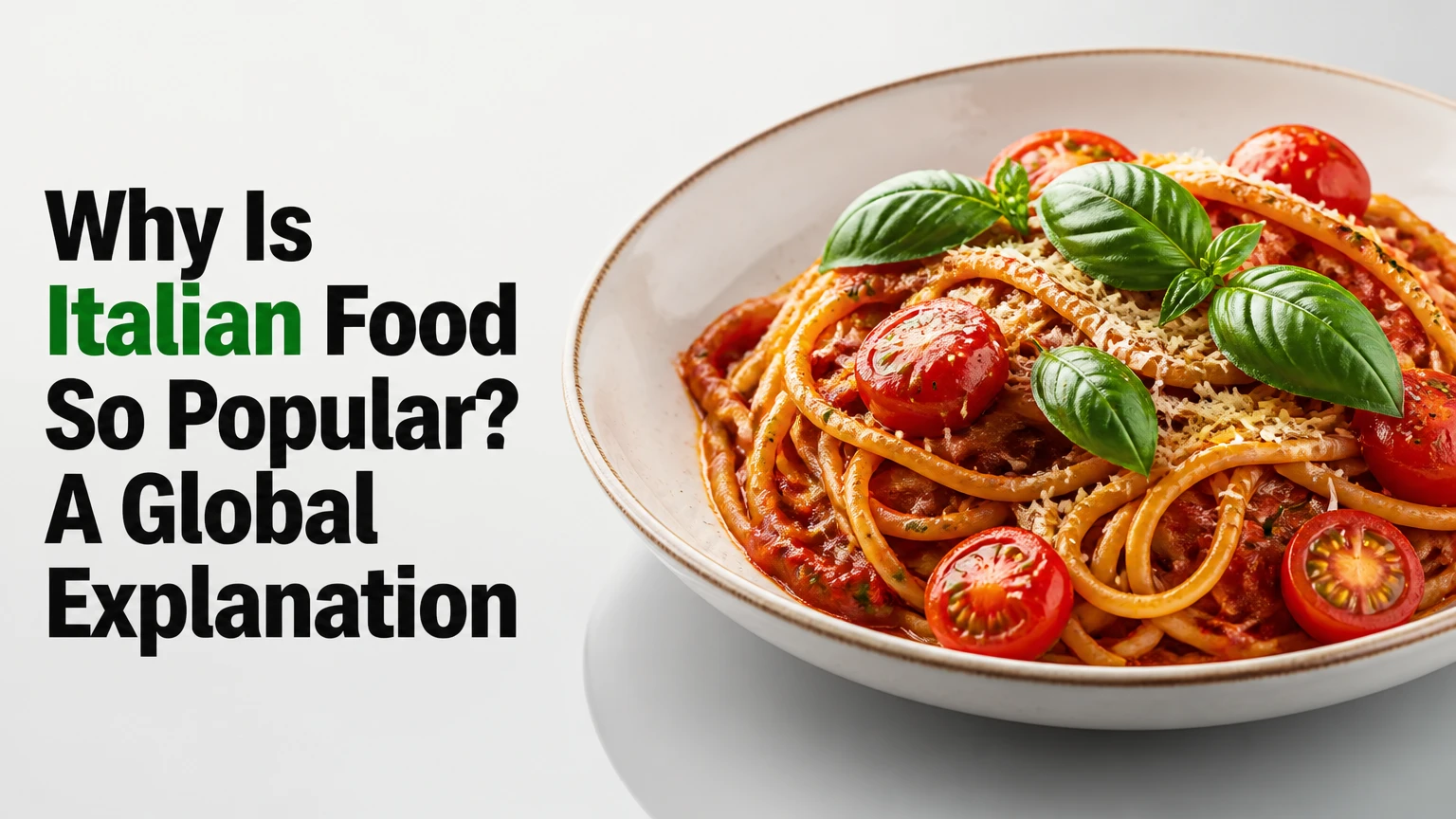
Italian food is popular because it combines recognizable flavors, accessible ingredients, flexible prices, and strong regional identity with techniques that are achievable at home. Pasta, pizza, tomato sauces, olive oil, cheese, and bread create satisfying meals, while Italian migration, restaurants, tourism, and local adaptation made those meals familiar across continents.
Key Facts at a Glance
Italy has 20 administrative regions, but its culinary map contains hundreds of local food traditions.
Italian cuisine rewards ingredient quality because many classic dishes use relatively few components.
Pasta and pizza travel well because dry pasta, flour, canned tomatoes, and cheese are widely available.
Italian-American food is related to Italian cuisine but includes dishes and portion styles developed outside Italy.
Italian food ranges from inexpensive pasta and pizza to long-aged cheeses, imported DOP products, and fine dining.
A Mediterranean-style Italian diet can be health-supportive, but not every Italian dish is low in calories, sodium, or saturated fat.
Why Is Italian Food So Popular?
Italian food is popular because it solves several dining problems at once: it tastes familiar, accommodates different budgets, works for families and groups, and offers enough regional variety to remain interesting. A Margherita pizza, a bowl of pasta al pomodoro, and a plate of grilled fish share a recognizable identity without requiring identical ingredients or techniques.
Its appeal is also cumulative. Italian food benefits from a large pantry of durable products, a clear meal structure, restaurant formats ranging from pizzerias to trattorie, and cultural associations with hospitality. The cuisine feels special enough for celebration but ordinary enough for a weeknight.
Italian dishes also have high substitution tolerance. A cook can replace guanciale with pancetta, use canned tomatoes outside tomato season, or choose dried pasta instead of fresh pasta while preserving the dish’s basic logic. That flexibility helped Italian food take root in places where the original ingredients were unavailable.
What Makes Italian Cuisine Different?
Italian cuisine is ingredient-led, regional, and technique-conscious without requiring elaborate equipment for many classic dishes. The central principle is not that every recipe must be simple, but that each ingredient should have a recognizable role and that technique should protect its flavor.
A Roman cacio e pepe depends on pasta starch, Pecorino Romano, black pepper, and controlled heat. A Ligurian pesto depends on basil, pine nuts, garlic, cheese, and olive oil. Neither recipe hides weak ingredients behind a large spice mixture.
The phrase cucina povera describes many dishes developed from limited resources, including ribollita, pasta e fagioli, polenta, panzanella, and various soups. These foods were economical because cooks used beans, grains, stale bread, preserved vegetables, offal, and small amounts of meat efficiently. Their modern appeal comes from flavor and texture, not from romanticizing poverty.
Italian simplicity has limits. A four-ingredient recipe can be harder to execute than a heavily seasoned stew because excess salt, poor pasta texture, rancid oil, or weak cheese remains exposed.
How Does Italian Food Create Such Broad Flavor Appeal?
Italian food creates broad appeal by combining carbohydrate-rich foundations with fat, salt, acidity, aroma, and savory depth. Pasta and bread provide chew and satiety; olive oil, butter, cheese, or cured pork add richness; tomatoes, wine, vinegar, citrus, and pickled ingredients prevent the meal from tasting flat.
The popular “fat, acid, and carbohydrate” explanation is useful as a flavor model, but it should not be treated as a proven three-part neurological law. Appetite depends on texture, aroma, familiarity, portion size, culture, and personal preference as well as macronutrients.
Why Do Italian Ingredients Taste So Distinctive?
Italian ingredients taste distinctive because preservation and maturation concentrate flavor, while protected regional products connect food to place. Parmigiano-Reggiano commonly ages for at least 12 months before sale, and longer aging produces a firmer texture and more pronounced savory notes. Prosciutto di Parma uses controlled curing, while balsamic vinegar from Modena may have substantially different production standards depending on its legal category.
Several ingredients contribute glutamates or other savory compounds, including aged cheese, tomatoes, mushrooms, anchovies, and cured meats. Their effect is practical: a small amount can deepen a sauce, broth, or finishing mixture.
| Ingredient | Main flavor role | Typical use | Practical constraint |
|---|---|---|---|
| Parmigiano-Reggiano | Salty, nutty, savory | Pasta, risotto, soups | High cost; grate from a wedge |
| Pecorino Romano | Sharp, salty, sheep’s-milk richness | Cacio e pepe, carbonara | Can overpower mild sauces |
| Extra virgin olive oil | Fruity bitterness and fat | Dressing, sautéing, finishing | Flavor declines with heat and age |
| Canned tomatoes | Acidity, sweetness, umami | Pasta sauces, pizza | Quality varies by brand and season |
| Anchovies | Salty savory depth | Bagna càuda, puttanesca, sauces | Disappear when melted, but increase salt |
| Dried porcini | Concentrated earthy aroma | Risotto, sauces, braises | Requires soaking and straining |
A practitioner rule matters here: use salt to build flavor in stages, but use cheese, cured meat, and anchovies as part of the salt calculation. Many disappointing Italian dishes contain good ingredients added without adjusting for their combined salinity.
How Does Regional Diversity Increase Its Appeal?
Regional diversity increases Italian food’s appeal because diners can find both familiarity and discovery within one national cuisine. Northern cooking often uses butter, rice, polenta, fresh egg pasta, and alpine cheeses; central cooking emphasizes legumes, pork, pecorino, herbs, and wheat; southern and island cooking more often features olive oil, dried pasta, tomatoes, vegetables, seafood, and citrus.
The north-south division is useful for orientation but too broad for serious culinary description. Bologna, Naples, Rome, Palermo, Genoa, and Milan do not represent interchangeable versions of Italian food.
| Area | Common ingredients | Representative dishes | Typical eating profile |
|---|---|---|---|
| Piedmont | Hazelnuts, butter, rice, truffles | Vitello tonnato, tajarin | Rich, aromatic, autumnal |
| Lombardy | Rice, butter, cornmeal, veal | Risotto alla Milanese, ossobuco | Creamy, hearty, northern |
| Emilia-Romagna | Egg, wheat, pork, aged cheese | Tortellini, lasagne, ragù | Rich, layered, celebratory |
| Lazio | Pecorino, guanciale, wheat | Carbonara, amatriciana | Salty, sharp, direct |
| Campania | Tomatoes, mozzarella, olive oil | Neapolitan pizza, pasta e patate | Bright, soft, acidic |
| Sicily | Citrus, eggplant, seafood, pistachio | Pasta alla Norma, arancini | Sweet-savory, Mediterranean |
| Sardinia | Semolina, sheep’s cheese, seafood | Malloreddus, fregula | Rustic, coastal, distinctive |
Italy contains 20 administrative regions, but culinary identity often operates at the level of provinces, towns, valleys, and coastlines. UNESCO describes the art of Neapolitan pizzaiuolo as “a culinary practice comprising four different phases,” including dough preparation and baking. That recognition supports the importance of technique and cultural transmission, not the idea that every Italian pizza follows one universal formula.
Regional variety also gives restaurants a durable story. A diner may start with pizza, return for Tuscan beans, then seek Ligurian pesto or Sicilian seafood without leaving the Italian category.
Why Do Pasta and Pizza Travel So Well?
Pasta and pizza travel well because their base ingredients are inexpensive, shelf-stable, adaptable, and easy to portion. Dried pasta can remain in a pantry for roughly 12-24 months when stored dry, while flour, yeast, canned tomatoes, and salt support pizza production in many countries.
Pasta also separates the cooking process into a transportable formula: boil a starch, prepare a sauce, combine at the correct texture, and finish with fat or cheese. Pizza uses a similar platform, but the dough can carry vegetables, meat, seafood, or regional cheeses.
| Food format | Core base | Typical service time | Typical US casual price |
|---|---|---|---|
| Pasta al pomodoro | Dried pasta, tomato, oil | 15-25 minutes | $12-$20 |
| Neapolitan pizza | Flour, water, yeast, tomato, cheese | 2-5 minutes baking | $14-$24 |
| Lasagne | Pasta sheets, ragù, béchamel or cheese | 45-90 minutes reheating or baking | $18-$32 |
| Risotto | Arborio or Carnaroli rice, stock, fat | 25-35 minutes | $20-$38 |
| Focaccia sandwich | Yeasted bread, filling, oil | 5-10 minutes assembly | $10-$18 |
Prices are typical US restaurant ranges, not universal standards. Labor, rent, imported products, city, portion size, and service style can change them substantially.
Italian food also scales technically. A basic pasta dish may use three or four principal ingredients, while a chef can introduce house-made broth, aged vinegar, seasonal produce, or hand-shaped pasta without abandoning the cuisine’s structure.
Why Does Italian Food Work at Almost Every Price?
Italian food works at almost every price because its core formats accept inexpensive staples and premium upgrades. A restaurant can sell pasta with beans, a $20 pizza, or a tasting menu built around white truffle, aged cheese, and handmade pasta while preserving recognizable Italian signals.
Typical food-cost percentages for independent restaurants often fall near 25%-35% of menu price, although actual margins depend on labor, waste, rent, delivery fees, and portion control. The supplied claim that every basic pizza or pasta dish costs only 15%-20% is possible in some operations but should not be treated as a general industry fact.
Dry goods also simplify inventory. Canned tomatoes, flour, dried pasta, beans, rice, and olive oil reduce dependence on daily fresh deliveries, while seasonal vegetables and seafood create menu variation.
How Did Italian Food Become Global?
Italian food became global through migration, urbanization, industrial food production, tourism, and restaurant entrepreneurship. Large Italian communities formed in the United States, Argentina, Brazil, Australia, Canada, and parts of northern Europe during major migration waves from the late nineteenth century into the twentieth century.
Migrants adapted recipes to local agriculture and available products. Italian-American cuisine developed dishes such as chicken parmigiana and large portions of spaghetti with meatballs, while Argentina developed strong pasta, pizza, and fainá traditions. These foods are not fraudulent copies. They are historical cuisines with Italian roots and local development.
Industrial production accelerated familiarity. Barilla, founded in Parma in 1877, helped make packaged pasta a global supermarket product. Tourism then reinforced a feedback loop: visitors encountered regional dishes in Italy, searched for them at home, and increased demand for Italian restaurants and ingredients.
The word “Italian” became a useful commercial category because consumers could recognize it without understanding every regional distinction. That recognition helps restaurants, but it can also flatten the difference between Neapolitan pizza, Roman pizza al taglio, Sicilian sfincione, and American-style pizza.
Is Italian Food Healthy?
Italian food can support a healthy eating pattern when meals emphasize vegetables, beans, whole grains, seafood, fruit, and moderate portions of olive oil, cheese, and meat. Italian food is not automatically healthy because pizza, fried foods, creamy desserts, cured meats, and oversized restaurant portions can be high in sodium, saturated fat, and calories.
The Mediterranean diet pattern has been associated with cardiovascular benefits in published research, but Mediterranean diet evidence does not mean every Italian restaurant meal produces those benefits. A bowl of bean soup with greens and olive oil has a different nutritional profile from a large four-cheese pizza.
| Choice | Typical portion | Main strengths | Main watchpoint |
|---|---|---|---|
| Pasta e fagioli | 1.5-2 cups | Beans, broth, fiber, moderate cost | Sodium in stock and pancetta |
| Grilled fish with vegetables | 4-6 oz fish | Protein, vegetables, unsaturated fat | Oil quantity and side portions |
| Minestrone | 1.5-2 cups | Vegetables, beans, hydration | Salt in stock or cheese |
| Margherita pizza | 10-12 inch pie | Tomato, fermented dough, moderate topping load | Sodium, refined flour, portion size |
| Carbonara | 1.5-2 cups pasta | Protein and strong flavor | Cured pork, cheese, calorie density |
| Eggplant parmigiana | 1-2 cups | Vegetable base, tomato, cheese | Frying oil and saturated fat |
For a lighter Italian meal, choose a vegetable or bean starter, grilled seafood, tomato-based pasta, or a shared pizza, then treat cheese, cured meat, and dessert as portion decisions rather than forbidden foods.
Italian food is less suitable for people who need low-sodium diets when the meal depends heavily on cured meat, salted cheese, olives, or preserved sauces. Gluten-free diners can choose risotto, polenta, beans, vegetables, and certified gluten-free pasta, but cross-contact remains a restaurant question.
How Does Italian Food Compare With Other Cuisines?
Italian food is usually easier to source and reproduce at home than French or Japanese cuisine, while Mexican cuisine can match it for affordability and adaptability. Italian food’s advantage is broad familiarity; its limitation is that pasta, bread, cheese, and cured meat can dominate meals if vegetables and legumes are neglected.
| Cuisine | Typical home barrier | Core flavor structure | Common cost pressure | Strongest advantage |
|---|---|---|---|---|
| Italian | Low to moderate | Olive oil, tomato, cheese, herbs | Imported DOP cheese and cured meat | Familiar, flexible formats |
| French | Moderate to high | Butter, stock, wine, reduction | Labor and specialty proteins | Sauce and technique depth |
| Mexican | Low to moderate | Chile, lime, corn, beans | Fresh chiles outside Mexico | Strong acid, heat, and value |
| Japanese | Moderate to high | Dashi, soy, rice, fermentation | Fish quality and specialty pantry items | Precision and ingredient clarity |
| Indian | Moderate | Spices, aromatics, legumes | Large spice inventory | Layered vegetarian cooking |
No cuisine wins every situation. Mexican food may offer better value for a spicy, bean-based meal; Japanese food may fit a diner seeking lighter rice, fish, and broth; French cooking may suit a technique-focused project. Italian food wins when a group needs recognizable choices with different price and dietary options.
Which Italian Foods Are Easiest to Start With?
The easiest Italian foods for beginners are pasta al pomodoro, frittata, minestrone, bruschetta, and sheet-pan vegetables with beans. These dishes teach heat control, seasoning, emulsification, and texture without requiring a pasta machine or a wood-fired oven.
Start with ingredients that are easy to evaluate: dried pasta with a firm texture, canned whole tomatoes, fresh garlic, extra virgin olive oil, and a wedge of Parmigiano-Reggiano or Pecorino Romano. A typical pasta al pomodoro takes 20-30 minutes and requires no specialized equipment.
For advanced projects, cacio e pepe takes about 15-20 minutes but demands temperature control because overheated cheese clumps. Carbonara has a similar timeframe and requires eggs to thicken through residual heat rather than direct high heat. Neapolitan pizza dough usually needs 24-72 hours of fermentation, and a slow ragù commonly takes 2-4 hours.
A useful rule is to master one texture at a time. Learn al dente pasta before attempting filled pasta, and learn dough fermentation before buying elaborate pizza equipment.
What Are the Most Common Problems?
The most common Italian cooking problems involve texture, heat, salt, and ingredient proportion rather than missing secret ingredients. Simple recipes expose errors, so cooks should correct the process before adding cream, extra herbs, or more cheese.
- Pasta is soft: Cook it 1-2 minutes below the package time, then finish it in the sauce.
- Cheese sauce clumps: Remove the pan from high heat, add hot pasta water gradually, and toss until the starch and fat emulsify.
- Sauce tastes flat: Add salt first, then assess acidity with tomato, wine, or a small amount of vinegar.
- Garlic tastes bitter: Lower the heat or remove browned garlic before it darkens.
- Pizza crust stays pale: Increase oven heat, preheat the surface longer, and avoid wet toppings.
- Ragù tastes thin: Reduce excess liquid and allow enough simmering time for fat, meat, and aromatics to integrate.
Never add oil to pasta water to prevent sticking. Oil floats on the water and does little for cooked pasta, while frequent stirring and adequate water reduce adhesion more effectively.
Cream is not automatically forbidden in Italian food, but it changes a recipe’s identity. Traditional Roman carbonara relies on eggs, cheese, pork, pepper, and pasta water; cream may produce a smooth sauce, but it is an adaptation rather than a requirement.
How Much Does Authenticity Matter?
Authenticity matters when it identifies a real regional method, ingredient, or protected product, but the term becomes misleading when used to reject every adaptation. DOP rules protect specific products such as Parmigiano-Reggiano and Prosciutto di Parma, while restaurant recipes outside Italy may reasonably respond to local ingredients and dietary needs.
A useful distinction separates three questions:
- Origin: Where did the dish or ingredient develop?
- Method: Which technique gives the dish its characteristic texture?
- Adaptation: What changed because cooks moved or ingredients differed?
A restaurant that labels a dish “Roman carbonara” should not needlessly add cream if it claims a traditional method. A home cook using bacon because guanciale is unavailable has made a substitution, not destroyed the entire category of pasta with egg and cheese.
Italian cuisine became influential partly because it adapted. Treating adaptation as a weakness ignores the migration history that helped create its global presence.
What Is Italian Food Not Good For?
Italian food is not the best automatic choice for every dietary, environmental, or cultural situation. A menu centered on cheese, cured meat, refined flour, and large pasta portions may not suit low-sodium, dairy-free, gluten-free, or lower-carbohydrate requirements without deliberate planning.
The cuisine also varies in environmental impact. Beans, seasonal vegetables, grains, and small portions of seafood generally create different resource demands from frequent beef, veal, imported cheese, or air-freighted specialty products. Italian identity does not require expensive imported ingredients for every meal.
Restaurant diners should ask specific questions rather than rely on labels. Confirm whether stock contains meat, whether pasta shares boiling water with wheat products, whether pesto contains cheese, and whether fried foods share oil with breaded items.
Italian food is also a poor fit for anyone expecting one standardized national flavor. A diner who dislikes tomato may still enjoy risotto alla Milanese, Ligurian farinata, Piedmontese tajarin, or Sardinian fregula.
Frequently Asked Questions
Why is Italian food popular with children?
Italian food is popular with children because many dishes offer familiar textures and adjustable components. Plain pasta, mild tomato sauce, bread, mozzarella, and pizza can be served separately, while adults add olives, anchovies, chili, herbs, or stronger cheese. That modular structure reduces conflict at shared meals.
Why is Italian food so popular in the United States?
Italian food became popular in the United States through Italian immigration, neighborhood restaurants, packaged pasta, pizza chains, and later interest in regional cooking. Italian-American dishes developed with local ingredients and preferences, so the US category includes both traditional Italian recipes and distinct American adaptations.
Why is Italian food more expensive at some restaurants?
Italian food becomes expensive when a restaurant uses imported DOP products, handmade pasta, long-fermented dough, fresh truffles, premium seafood, skilled labor, or extensive service. A simple ingredient list does not guarantee low operating costs, because preparation, rent, labor, and sourcing determine the final price.
Is Italian food always made with olive oil?
Italian food is not always made with olive oil. Northern cuisines commonly use butter, lard, and animal fats, while olive oil is especially prominent in central, southern, and island cooking. The correct fat depends on the region, dish, ingredient availability, and intended flavor.
Why does Italian restaurant food taste better than homemade food?
Italian restaurant food often tastes stronger because professional cooks control salt, heat, pasta texture, reduction, and finishing fat more consistently. Restaurants may also use more cheese, oil, and salt than a home cook expects. Better ingredients help, but process control usually creates the larger difference.
Can Italian food be vegetarian or vegan?
Italian food can be vegetarian or vegan because beans, lentils, vegetables, grains, tomato sauces, and olive oil support many traditional dishes. Check ingredients carefully because Parmigiano-Reggiano, Pecorino Romano, butter, eggs, anchovies, and meat stock appear in recipes that may otherwise look plant-based.
The Bottom Line
Italian food is popular because it combines cultural identity with practical flexibility. Its regional cuisines offer distinct ingredients and techniques, while pasta, pizza, bread, tomatoes, olive oil, cheese, beans, and seasonal vegetables make the broader category recognizable and adaptable.
The strongest explanation is not one flavor trick or an unsupported market-size claim. Italian food spread because migration, agriculture, preservation, restaurant economics, tourism, and home-cooking accessibility reinforced one another. That combination explains why Italian food remains easy to recognize, easy to modify, and difficult to exhaust.