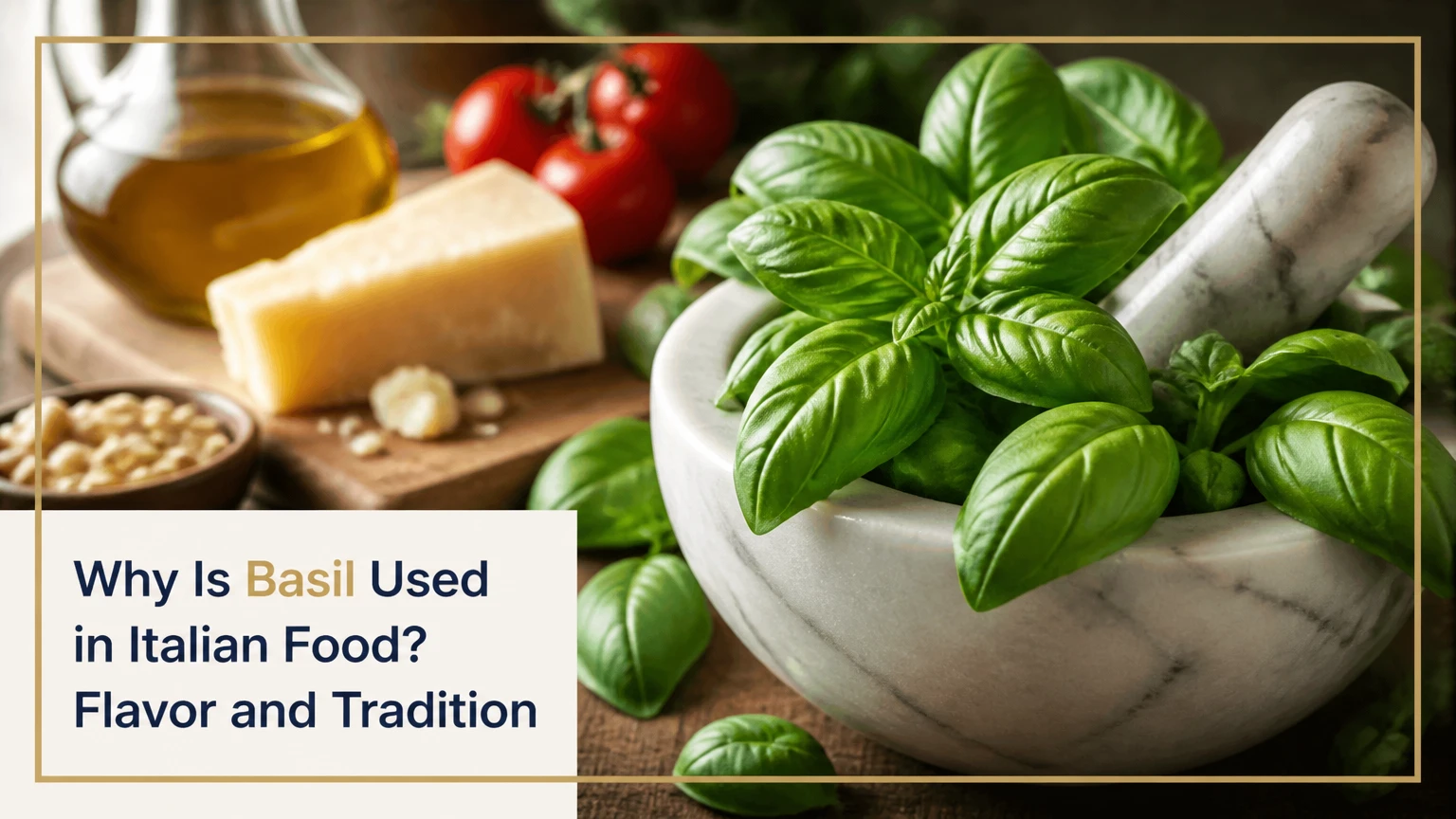
Basil is used in Italian food because its sweet, floral, lightly peppery aroma balances acidic tomatoes, rich olive oil, salty cheese, and savory garlic without overwhelming them. Italian cooks also value basil’s seasonal freshness, especially in Liguria, Campania, and Sicily, where local varieties became tied to pesto, tomato sauces, pizza, salads, and summer cooking.
Key Facts at a Glance
- Basil is an aromatic herb in the mint family, Lamiaceae, and Italian cuisine mainly uses sweet basil types.
- Basil’s linalool, eugenol, and estragole contribute floral, clove-like, peppery, and anise-like aromas.
- Fresh basil complements tomatoes through aroma and contrast, rather than chemically neutralizing tomato acid.
- Basilico Genovese has Protected Designation of Origin status for specific production areas and methods in Liguria.
- Fresh basil usually performs best when torn into raw dishes or added near the end of cooking.
- Whole fresh basil keeps longer at room temperature in water than in a cold refrigerator.
Why Is Basil Used in Italian Food?
Basil is used in Italian food because it connects several dominant Italian ingredients through aroma, freshness, and contrast. Its sweet, floral notes soften the perception of sharp tomato acidity, while its clove-like and peppery notes complement garlic, extra virgin olive oil, Parmigiano-Reggiano, mozzarella, and grilled vegetables.
The reason is cultural as well as sensory. Italy did not invent basil, which likely originated in tropical regions of Asia and Africa, but Italian regions developed distinctive culinary traditions around sweet basil after the plant reached the Mediterranean. Liguria made basil central to pesto, Campania paired it with tomatoes and mozzarella, and southern cooks used it with vegetables, pasta, and seafood.
Basil does not literally remove acid from tomatoes or make an acidic sauce chemically neutral. Instead, aroma changes how the brain interprets flavor. The combination of sweetness, floral fragrance, umami, salt, and acidity tastes more rounded because no single sensation dominates.
What does basil taste like?
Basil tastes primarily sweet, green, floral, and mildly spicy, with different cultivars adding clove, anise, citrus, or pepper notes. Fresh leaves provide high, volatile aromas that fade quickly with prolonged heat, while dried basil contributes a darker, more muted herbal flavor.
The main aromatic compounds vary by cultivar and growing conditions:
| Compound | Typical sensory impression | Culinary effect |
|---|---|---|
| Linalool | Floral, citrus-like, lightly woody | Gives fresh basil lift in salads and sauces |
| Eugenol | Clove-like, warm, faintly medicinal | Links basil with garlic, tomato, and cooked vegetables |
| Estragole | Sweet anise or licorice | Adds softness and depth in some sweet basil cultivars |
| 1,8-Cineole | Camphor-like, minty | More noticeable in some non-Italian basil types |
| Methyl eugenol | Spicy, sweet, clove-like | Contributes cultivar-specific warmth |
The exact balance depends on genetics, sunlight, maturity, and storage. “Italian basil” therefore describes a culinary family of related sweet basil forms more than one universal chemical profile.
How Does Basil Balance Italian Ingredients?
Basil balances Italian ingredients through aromatic contrast, fat-assisted aroma release, and the interaction of sweet, salty, sour, and savory tastes. Basil’s fragrance does not replace sugar or lower pH, but it can make a tomato dish seem less harsh and more complete.
Tomatoes bring water, acidity, glutamates, sweetness, and savory depth. Basil adds a high aromatic note that prevents tomato flavor from feeling one-dimensional. Salt increases perceived sweetness and suppresses some bitterness, while olive oil carries fat-soluble aromatic molecules across the palate.
Cheese changes the balance again. Mozzarella provides mild dairy richness, Parmigiano-Reggiano adds salt and umami, and pecorino contributes a sharper, sheep’s-milk character. Basil bridges those differences because its aroma is strong enough to remain noticeable but light enough for the primary ingredient to stay recognizable.
Why does basil pair so well with tomatoes?
Basil pairs with tomatoes because tomato acidity and basil’s sweet, floral aroma create contrast without competing flavors. The pairing works especially well when salt and olive oil are present, since salt heightens tomato sweetness and oil prolongs basil’s aromatic impression.
The tomato-basil relationship is also practical. Both ingredients peak during the warm growing season, require little processing, and appear in dishes where fresh flavor matters more than long cooking. A ripe tomato with torn basil needs no elaborate sauce structure.
A useful kitchen rule is to add basil in two layers. A small amount can flavor a sauce during the final minutes, while fresh leaves added after the heat is off preserve the brightest aroma. Adding every leaf at the beginning produces a weaker fragrance and darker leaves.
Which Basil Varieties Are Used in Italy?
Italian cooking mainly uses sweet basil cultivars, including Genovese basil, broad-leaf sweet basil, and Napoletano or lettuce-leaf basil. Purple basil can appear in contemporary cooking, but its color and stronger spice profile make it less typical for classic pesto, tomato sauce, and Caprese salad.
| Variety | Leaf and aroma profile | Typical Italian use | Main limitation |
|---|---|---|---|
| Genovese basil | Medium spoon-shaped leaves; sweet, floral, clove-like | Pesto alla Genovese, sauces, salads | Best flavor is seasonal and perishable |
| Italian sweet basil | Broad green leaves; sweet, mildly peppery | Tomato sauce, pizza, Caprese | Flavor varies widely by supplier |
| Napoletano basil | Large crinkled leaves; mild and soft | Salads, pizza, wrapping cheese | Less intense for concentrated pesto |
| Purple or Opal basil | Purple leaves; peppery, spicy, slightly anise-like | Vinegar, salads, decorative finishing | Color darkens with heat |
| Greek basil | Small leaves; concentrated, slightly spicy aroma | Garnishes, small salads, home gardens | Smaller leaves require more picking |
Is Genovese basil the same as sweet basil?
Genovese basil is a specific type of sweet basil, but “sweet basil” is a broader retail and botanical category. Basilico Genovese grown under the European PDO specification has defined geographic and production requirements, so ordinary supermarket sweet basil cannot automatically be called certified Genovese basil.
Protected Designation of Origin status concerns the product’s origin and production conditions, not merely the plant’s appearance. Traditional pesto from Genoa is associated with Genovese basil, pine nuts, garlic, hard cheese, and Ligurian olive oil, although household recipes vary.
Thai basil and holy basil are not direct substitutes. Thai basil has a stronger anise character and firmer leaves, while holy basil can taste peppery, clove-like, and camphoraceous. Both can work in fusion dishes, but they change the identity of a classic Italian sauce.
Where Is Basil Used in Italian Cooking?
Basil appears most often in fresh or lightly cooked dishes where its aroma can remain distinct. Regional Italian cooking uses basil in pesto, tomato sauces, pizza, salads, vegetable preparations, soups, and some seafood dishes, but the herb is not equally important throughout the country.
| Dish or preparation | Region or association | Typical basil amount | Best timing |
|---|---|---|---|
| Pesto alla Genovese | Liguria, especially Genoa | 40-60 g leaves per 4 servings | Crush raw with oil and cheese |
| Pasta al pomodoro | Across Italy | 6-12 leaves per 400 g tomatoes | Add during final 2-5 minutes and after heat |
| Pizza Margherita | Naples and Campania | 4-8 leaves per pizza | Add before baking, after baking, or both |
| Caprese salad | Campania | 6-10 leaves per 2 tomatoes | Tear immediately before serving |
| Minestrone | Northern and central Italy | 10-20 g per liter | Stir in near the end |
| Melanzane alla Norma | Sicily | 8-15 leaves per 2 servings | Finish with fried eggplant and ricotta salata |
| Focaccia or infused oil | Liguria and coastal regions | 5-10 leaves per 250 ml oil | Use fresh as a finishing infusion |
Basil is not a universal requirement in Italian food. Northern Alpine cooking often relies more on parsley, sage, rosemary, and marjoram, while many seafood recipes use parsley, garlic, lemon, or chili instead. A dish can be recognizably Italian without basil.
Is basil essential to authentic Italian tomato sauce?
Basil is traditional in many Italian tomato sauces, but it is not mandatory for authenticity. Italian tomato sauce changes by region, household, season, and dish, and some preparations rely only on tomatoes, olive oil, salt, onion, garlic, or chili.
For a simple four-serving tomato sauce, 8-15 medium leaves provide a noticeable fresh aroma. Use a small whole sprig during the final five minutes for background flavor, then add torn leaves after removing the pan from heat.
Basil is a poor choice when the sauce contains assertive ingredients that need to dominate, such as anchovy, smoked meat, heavy chili, or strongly spiced sausage. Parsley, oregano, or fennel seed may fit those dishes better.
When Should Basil Be Added to Italian Food?
Fresh basil should usually be added after cooking or during the final 1-5 minutes of cooking. Short exposure preserves floral top notes, while extended boiling drives off volatile compounds and turns the leaves dark, limp, or stringy.
Use this timing guide:
| Preparation | Heat exposure | Recommended method | Expected result |
|---|---|---|---|
| Caprese salad | 0 minutes | Tear over tomatoes | Bright aroma and clean texture |
| Finished pasta | 0-30 seconds | Add after tossing off heat | Fresh fragrance remains |
| Tomato sauce | 2-5 minutes | Add a sprig, then fresh leaves | Background depth plus top notes |
| Pizza | 0-10 minutes | Add before or after baking | Cooked sweetness or raw aroma |
| Pesto | 0 minutes | Crush without cooking | Green, concentrated fragrance |
| Soup | 1-2 minutes | Stir in immediately before serving | Herbal lift without bitterness |
Should basil be torn or chopped?
Tearing basil is usually preferable for rustic salads, pizza, and finishing sauces because it avoids excessive cutting and lets the leaves enter the dish quickly. A sharp knife remains appropriate when a clean chiffonade is needed, provided the basil is cut once and used immediately.
Basil darkens when damaged plant tissue meets oxygen. The discoloration results from enzymatic oxidation and does not automatically mean the leaves are unsafe, but blackened basil has poorer appearance and a flatter aroma.
A practitioner rule is simple: dry the leaves first, use a sharp blade, avoid repeated sawing, and dress or cook the cut basil without delay. A dull knife causes more crushing and leaves aromatic juices on the cutting board rather than in the food.
How Is Traditional Pesto Made?
Traditional pesto is made by crushing basil with garlic and salt, incorporating pine nuts, then blending in hard cheese and olive oil. A mortar and pestle gives the most traditional texture, while a food processor is faster and can produce excellent pesto if friction heat is controlled.
For approximately 300 g of pesto, use the following typical proportions:
| Ingredient | Typical quantity | Function |
|---|---|---|
| Basil leaves | 60-80 g | Main aroma and green color |
| Pine nuts | 25-35 g | Fat, texture, mild sweetness |
| Garlic | 1-2 cloves | Pungency and depth |
| Parmigiano-Reggiano | 35-45 g | Salt and umami |
| Pecorino or Fiore Sardo | 15-25 g | Sharper cheese flavor |
| Extra virgin olive oil | 120-160 ml | Emulsion and aroma carrier |
| Fine salt | 2-4 g | Seasoning and abrasion |
A mortar method takes approximately 15-25 minutes. Crush garlic and salt first, grind basil gradually, add pine nuts, then incorporate cheese and oil. Keep the mixture cool, because heat and oxygen accelerate browning.
A food processor takes 5-8 minutes. Pulse rather than run continuously, chill the bowl if practical, and add oil after the leaves are roughly broken. Pesto can be refrigerated under a thin oil layer for about 3-5 days or frozen in small portions for 2-4 months.
Pesto is not a cooked sauce. Boiling it causes the cheese to clump, the basil to lose its fresh aroma, and the oil to separate. Loosen pesto with pasta cooking water immediately before serving.
Fresh or Dried Basil: Which Is Better?
Fresh basil is better for pesto, Caprese salad, pizza, and quick tomato sauces because it supplies floral aroma and a soft green texture. Dried basil is better for long-cooked soups, braises, and pantry cooking where a lower, earthier herbal note can withstand extended heat.
| Attribute | Fresh basil | Dried basil |
|---|---|---|
| Typical retail cost | $2-$4 per bunch | $3-$8 per jar |
| Usable storage | 5-10 days with proper handling | 12-24 months for best quality |
| Best flavor zone | Raw or final 5 minutes | Sauces cooked 20-60 minutes |
| Texture | Soft, leafy, moisture-rich | Crumbled, dry, concentrated |
| Best dishes | Pesto, pizza, salad, pasta | Soup, stew, baked casseroles |
| Substitution ratio | 1 tablespoon fresh, reference amount | About 1 teaspoon dried |
Dried basil does not equal concentrated fresh basil. Drying changes the volatile profile, and older jarred basil may taste dusty, grassy, or faintly minty. Replace dried basil every 12-18 months for a stronger pantry result.
Do not use dried basil as the main ingredient in pesto or as a garnish on Caprese salad. It lacks the fresh texture and high aroma that define those preparations.
How Should Fresh Basil Be Stored?
Fresh basil should be stored upright at room temperature in a jar containing about 2-3 centimeters of water, with a loose bag over the leaves. The refrigerator often causes chilling injury, which turns basil leaves black, limp, or slimy within a day or two.
Change the water every 1-2 days and keep the jar away from direct sun, a hot stove, and strong drafts. Under typical home conditions, a healthy bunch lasts 5-10 days, although very delicate leaves may decline sooner.
Refrigeration is not always disastrous. Pesto, chopped basil mixed into oil, and sealed prepared sauces belong in the refrigerator because other ingredients require cold storage. The exception applies to whole living basil leaves, not every basil-containing product.
For freezing, blend clean dry leaves with enough olive oil to form a loose paste, then freeze 15-30 g portions in an ice-cube tray. Frozen basil works well in soup and sauce, but thawed whole leaves become soft and are unsuitable for salad presentation.
What Are the Best Basil Substitutes?
The best basil substitute depends on the dish, because no single herb reproduces basil’s sweet floral aroma, soft texture, and clove-like warmth. Parsley works in savory sauces, oregano suits pizza and tomato dishes, and arugula can replace basil’s fresh green volume in some pestos.
| Intended use | First substitute | Typical amount | Resulting flavor |
|---|---|---|---|
| Tomato sauce | Oregano | 1 teaspoon dried per 400 g tomatoes | More resinous and savory |
| Pesto | Parsley plus arugula | 60-80 g total leaves | Green, peppery, less sweet |
| Pizza | Oregano | 0.5-1 teaspoon dried | Stronger Mediterranean aroma |
| Caprese | Mint or parsley | 6-10 leaves | Cooler or more grassy |
| Vegetable soup | Marjoram | 1-2 teaspoons fresh | Soft, floral, lightly sweet |
| Seafood pasta | Flat-leaf parsley | 10-20 g per 2 servings | Clean, grassy, lemon-friendly |
Rosemary and sage are poor one-for-one replacements in delicate tomato dishes because their resinous aromas are much stronger. Use small quantities and taste before adding more.
What Common Basil Mistakes Affect Flavor?
The most common basil mistakes are exposing fresh leaves to prolonged heat, storing whole leaves in the refrigerator, cutting with a dull knife, and using too much dried basil. Each mistake either removes the herb’s volatile aroma or introduces an overly harsh herbal note.
Boiling fresh basil for too long
Fresh basil boiled for 20-30 minutes loses much of its high aroma and may develop a dull vegetal taste. Add a small sprig near the end for background flavor, then finish with raw leaves after the heat is off.
Refrigerating whole basil leaves
Cold storage below approximately 10°C can damage basil tissue. Keep intact basil on the counter in water, but refrigerate pesto and other prepared foods that contain oil, cheese, or garlic.
Washing basil and leaving it wet
Water left on leaves encourages bruising and dilutes oil-based dressings. Spin or pat basil dry before tearing it, especially for pesto, where excess water weakens texture and shortens storage life.
Adding too much basil
A practical starting point is 6-12 leaves for 400 g of tomatoes, 4-8 leaves per pizza, or 40-60 g leaves for four servings of pesto. Increase gradually, because mature basil can become medicinal or licorice-like at high amounts.
Confusing basil types
Thai basil, holy basil, lemon basil, and Italian sweet basil produce different aromatic profiles. Check the label before buying, particularly when making pesto or a classic Margherita-style pizza.
FAQ About Basil in Italian Food
Why is basil associated with the Italian flag?
Basil contributes the green color in the familiar visual combination of green basil, white mozzarella, and red tomato in pizza Margherita and Caprese-style presentations. The association is culinary and symbolic, although the exact origin story of pizza Margherita is disputed and should not be treated as the sole reason Italians use basil.
Does basil make tomato sauce sweeter?
Basil does not add enough sugar to materially sweeten tomato sauce, and it does not neutralize tomato acidity. Its floral and sweet-smelling aroma changes perceived balance, while salt, onion, carrot, ripe tomatoes, and cooking time determine the sauce’s actual sweetness.
Can you use basil stems in Italian cooking?
Tender basil stems can flavor a briefly simmered sauce, stock, or infused oil, but thick mature stems are fibrous and often more bitter than the leaves. Remove large stems before serving, especially in pesto, salad, and uncooked preparations.
Why does basil turn black after cutting?
Cut basil turns black because damaged cells expose oxidation enzymes and phenolic compounds to oxygen. Black leaves are usually a quality problem rather than an immediate safety problem, but discard basil that is slimy, moldy, sour-smelling, or waterlogged.
Can basil grow indoors for Italian cooking?
Basil can grow indoors when it receives at least 6 hours of strong light, warm temperatures above approximately 18°C, and evenly moist but well-drained soil. Pinch growing tips above a leaf pair rather than stripping lower leaves, which encourages branching and repeated harvests.
Is oregano more authentic than basil on pizza?
Neither herb is universally more authentic because pizza styles differ by region and recipe. Basil is central to Margherita and many fresh tomato pizzas, while oregano is common on marinara-style pizza and dried-herb preparations. Choose according to the named style, not a single rule about authenticity.
The Bottom Line
Basil is used in Italian food because its aromatic profile gives tomatoes, olive oil, cheese, garlic, and vegetables a balanced, fresh character. Italian cuisine made that pairing culturally important through regional dishes such as Ligurian pesto, Neapolitan pizza, Caprese salad, and pasta al pomodoro.
The best results come from treating basil as a delicate aromatic rather than a hard-wearing spice. Use fresh sweet basil raw or during the final minutes, choose Genovese basil for traditional pesto, store whole leaves at room temperature in water, and reserve dried basil for longer-cooked dishes. That explains both why is basil used in Italian food and why timing matters as much as the herb itself.