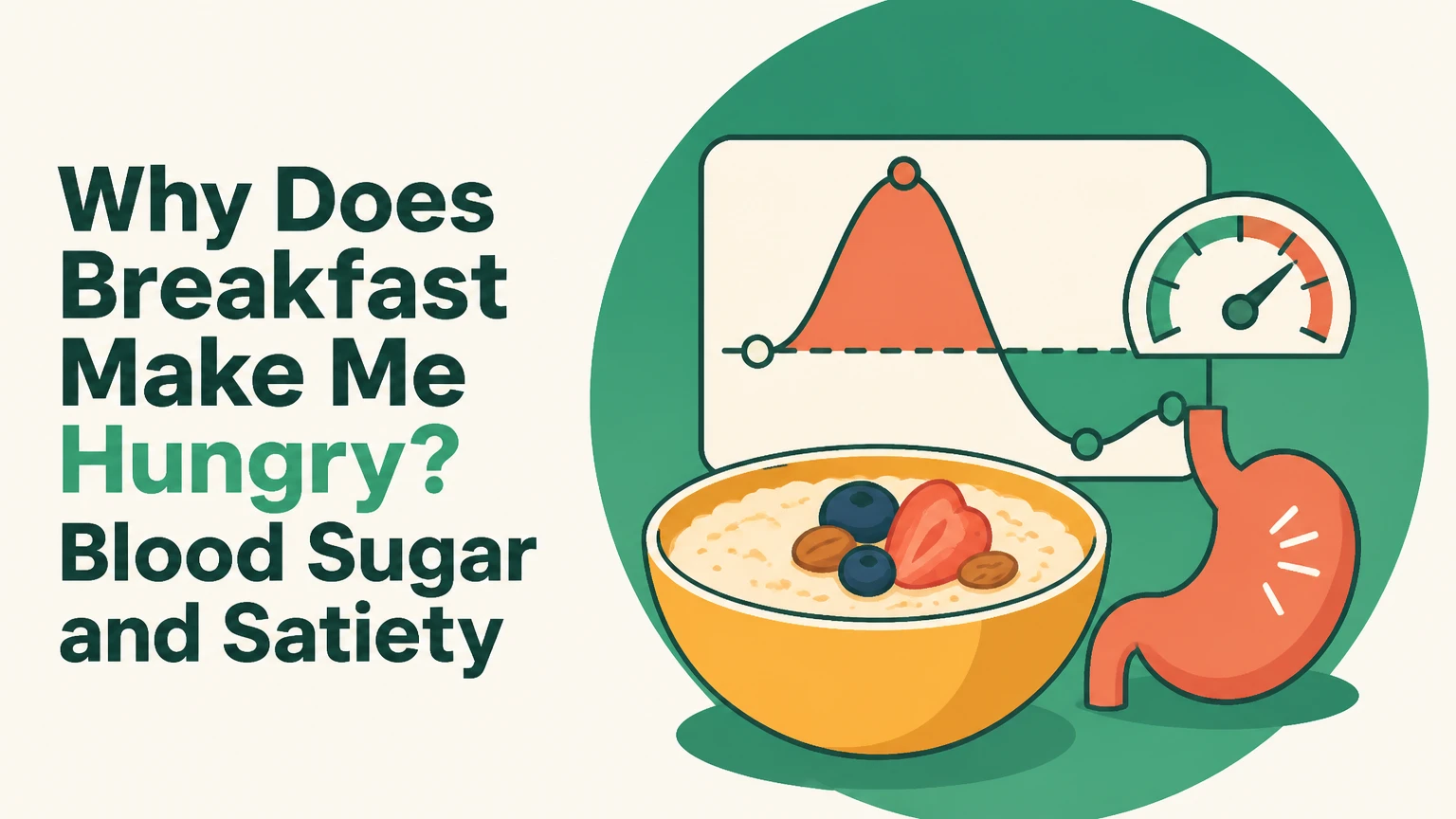
Breakfast can make you hungry when the meal digests quickly, contains too little protein or fiber, provides more energy than expected without much chewing, or follows poor sleep and high morning appetite signals. Breakfast itself does not inherently cause hunger. The usual explanation is a mismatch between meal composition, portion, activity, and the time your body normally expects to eat.
Key Facts at a Glance
- A high-carbohydrate breakfast can leave some people hungry within 90-180 minutes, especially when it contains refined grains, added sugar, or liquid calories.
- Morning cortisol affects glucose regulation, but cortisol alone does not prove that breakfast caused reactive hypoglycemia.
- Protein, fiber, fat, and food structure usually slow digestion more reliably than removing all carbohydrates.
- A practical starting point is 20-30 grams of protein and approximately 5-10 grams of fiber at breakfast.
- Hunger, cravings, shakiness, sweating, and confusion are different symptoms and should not be treated as interchangeable.
- Persistent post-meal symptoms require medical assessment, particularly for people taking insulin or sulfonylurea diabetes medication.
What Does Post-Breakfast Hunger Mean?
Post-breakfast hunger means wanting or needing food again sooner than expected after the first meal of the day. The phrase “breakfast trap” describes a common personal experience, but it is not a recognized diagnosis, and the sensation does not automatically mean that blood glucose has crashed.
A person may feel hungry at 10:30 a.m. after cereal but remain comfortable until lunch after eggs, beans, and whole-grain toast. The difference can come from protein, fiber, meal volume, chewing, total calories, sleep, exercise, and learned eating routines.
Hunger is also different from appetite. Hunger is a physiological drive to obtain energy, whereas appetite includes desire, habit, reward, smell, stress, and food availability. A sweet breakfast can increase the desire for more sweet food without causing clinically low blood glucose.
Why Does Breakfast Sometimes Trigger Hunger So Quickly?
A rapidly digested breakfast can raise blood glucose and insulin quickly, then provide limited sustained satiety. If the meal contains little protein or fiber, the stomach empties sooner and the brain receives fewer ongoing signals associated with fullness.
The effect becomes stronger when breakfast is small, liquid, or mostly refined carbohydrate. A 300-calorie pastry and sweet coffee may provide less satiety than a 450-calorie meal containing Greek yogurt, berries, oats, and seeds because calories alone do not determine fullness.
How Do Blood Sugar and Morning Hormones Affect Appetite?
Morning hormones influence glucose availability, but the simplified claim that cortisol always causes an insulin “over-response” is inaccurate. The body normally releases cortisol and other hormones near waking, while the liver releases glucose; the size of the response varies with sleep, stress, illness, exercise, and circadian timing.
The dawn phenomenon describes higher glucose in the early morning, particularly in people with diabetes. Morning insulin sensitivity can also differ from afternoon sensitivity. Those facts do not mean that every person eating toast experiences a glucose level below baseline two hours later.
What Is Reactive Hypoglycemia?
Reactive hypoglycemia is a low blood glucose episode occurring after a meal, often within about four hours, accompanied by symptoms that improve when glucose rises. A proper diagnosis generally requires documented low glucose during symptoms, compatible symptoms, and relief after glucose correction, a framework known as Whipple’s triad.
Symptoms may include shakiness, sweating, palpitations, weakness, dizziness, irritability, blurred vision, and confusion. Hunger alone is insufficient evidence. The Endocrine Society’s clinical guideline on adult hypoglycemic disorders, published in 2009, recommends investigating documented hypoglycemia rather than diagnosing it from nonspecific symptoms.
| Experience after breakfast | More likely interpretation | Useful next action |
|---|---|---|
| Hunger at 3-4 hours without other symptoms | Normal appetite or insufficient meal size | Review calories, protein, fiber, and activity |
| Sweet cravings at 1-2 hours | Reward response or rapidly digested meal | Replace refined carbohydrate with structured food |
| Shaking, sweating, and confusion | Possible hypoglycemia | Check glucose if possible and seek clinical advice |
| Sleepiness after a large meal | Meal size, digestion, or glucose response | Reduce portion and add protein and fiber |
| Thirst and frequent urination | Possible high blood glucose or another condition | Arrange medical evaluation |
Do Ghrelin and GLP-1 Explain the Whole Effect?
Ghrelin promotes appetite, while GLP-1 contributes to satiety and slows gastric emptying. Food intake affects both hormones, but a person cannot reliably infer a ghrelin spike or GLP-1 suppression from hunger alone.
Protein, fiber, and meal volume can support satiety through several pathways, including gastric distension, slower digestion, and gut hormone signaling. Exact hormonal responses differ by person and food form, so claims that one breakfast “suppresses ghrelin long-term” overstate current evidence.
Which Breakfast Foods Cause Earlier Hunger?
Refined grains, sweetened drinks, pastries, and low-protein breakfasts are the most common patterns associated with early hunger. The issue is not that carbohydrates are inherently problematic. The issue is that a meal built almost entirely from rapidly digested carbohydrate often lacks the components that extend fullness.
| Breakfast pattern | Typical example | Protein and fiber profile | Typical hunger pattern |
|---|---|---|---|
| Refined carbohydrate | Bagel with jam, sweet coffee | 8-12 g protein, 2-5 g fiber | Hunger often returns in 1.5-3 hours |
| Sweet cereal | 2 cups cereal with low-protein milk | 8-15 g protein, 3-6 g fiber | Appetite may return before lunch |
| Plain oatmeal | Oats, banana, maple syrup | 8-12 g protein, 6-10 g fiber | Better fiber, limited protein |
| Smoothie | Fruit, juice, low-protein liquid base | 3-15 g protein, variable fiber | Easy to consume quickly |
| Mixed meal | Eggs, beans, vegetables, toast | 20-30 g protein, 7-12 g fiber | Often supports 3-5 hours of fullness |
| Yogurt bowl | Greek yogurt, berries, chia, nuts | 20-35 g protein, 7-12 g fiber | Often supports sustained appetite control |
Why Does Oatmeal Make Me Hungry?
Oatmeal can make you hungry when the portion is mostly oats and fruit, the meal contains little protein, or added syrup increases its sweetness without extending fullness. Oats provide beta-glucan fiber, but a bowl made from 40 grams of oats may still contain only about 5 grams of protein.
Improve the meal rather than automatically removing oats. Use milk or fortified soy milk, add Greek yogurt or protein powder, include chia or ground flax, and measure sweeteners. A practical bowl might contain 40 grams of oats, 170 grams of Greek yogurt, 75 grams of berries, and 10 grams of chia seeds.
Are Smoothies Less Filling Than Solid Breakfasts?
Smoothies can be less filling when they are consumed quickly and contain juice, several servings of fruit, or little protein. Blending does not remove all fiber, but liquid meals require less chewing and can make large quantities of carbohydrate easy to consume.
A more filling smoothie includes 25-30 grams of protein, a modest fruit portion, vegetables, and a fiber-rich ingredient such as chia. Whole fruit remains useful, especially when replacing juice, but a smoothie is not automatically unhealthy or automatically equivalent to a solid meal.
How Much Protein and Fiber Should Breakfast Contain?
A practical breakfast target is 20-30 grams of protein and 5-10 grams of fiber, adjusted for body size, total diet, medical needs, and personal appetite. These are useful planning ranges, not universal thresholds that “block” hunger or guarantee four to six hours of fullness.
Examples include two large eggs plus 150 grams of cottage cheese, 200 grams of Greek yogurt with seeds, or tofu combined with beans. Fiber should increase gradually with adequate fluids, because a sudden large dose can cause bloating.
| Meal example | Approximate protein | Approximate fiber | Typical preparation time |
|---|---|---|---|
| Greek yogurt, berries, chia, pumpkin seeds | 25-32 g | 8-11 g | 3-5 minutes |
| Two eggs, whole-grain toast, avocado | 18-23 g | 7-9 g | 8-12 minutes |
| Tofu and bean scramble with spinach | 22-30 g | 9-13 g | 12-18 minutes |
| Oats with soy milk, whey, and walnuts | 25-32 g | 8-11 g | 6-8 minutes |
| Cottage cheese, apple, and peanut butter | 25-32 g | 6-8 g | 3 minutes |
Protein usually has a stronger satiety effect per calorie than refined carbohydrate, but “more protein” is not a complete solution. A breakfast of only protein powder may still be unsatisfying because it lacks texture, fiber, and enough energy for an active morning.
Does the Second-Meal Effect Matter?
The second-meal effect means that an earlier meal can influence glucose handling at the next meal. A breakfast containing fiber, protein, and minimally processed carbohydrate may produce a different lunch glucose response than a breakfast made from rapidly digested foods or no breakfast.
The effect is real in controlled research, but the exact 25-50% reduction sometimes quoted online is not a dependable personal guarantee. Outcomes depend on carbohydrate amount, insulin sensitivity, exercise, meal timing, and whether the person has diabetes.
Should You Eat Breakfast or Skip It?
Skipping breakfast is neither inherently beneficial nor inherently harmful. Delaying the first meal can work for someone who is not hungry early and can eat a balanced lunch, but it can worsen concentration, overeating, or glucose management for another person.
Randomized trials do not support a universal rule that breakfast causes weight loss or that breakfast omission causes weight gain. The American Heart Association’s 2017 scientific statement on meal timing found that evidence for breakfast and weight change remains mixed, with observational studies and controlled trials often pointing in different directions.
| Strategy | Best fit | Main advantage | Main limitation |
|---|---|---|---|
| Eat within 1-2 hours of waking | Morning exercisers, hungry workers | Supports early energy intake | Poor meal composition may trigger early hunger |
| Delay food until 10 a.m.-noon | Naturally low morning appetite | Reduces forced eating | May cause overeating or poor concentration |
| Small protein-based breakfast | Sensitive appetite, early meetings | Provides food without a large meal | May not supply enough energy for training |
| Full mixed breakfast | Long gap until lunch | Combines energy and satiety | Requires planning and preparation |
People using insulin or sulfonylureas should not change breakfast timing without medical guidance. Pregnancy, adolescence, a history of eating disorders, and high-volume athletic training also require more individualized advice.
What Other Factors Make Morning Hunger Worse?
Poor sleep, stress, early exercise, shift work, and medication timing can make breakfast hunger stronger. Food composition is important, but it is not the only variable.
A 2013 study by St-Onge and colleagues in Obesity found that sleep restriction altered food reward and appetite-related responses, while a 2022 consensus statement from the American Academy of Sleep Medicine and Sleep Research Society recommends that adults regularly obtain at least seven hours of sleep. These findings support checking sleep before blaming breakfast alone.
How Does Exercise Change the Answer?
Morning training raises energy needs and may make a carbohydrate-containing breakfast appropriate. A desk worker may feel satisfied with yogurt, seeds, and berries, while a cyclist training for two hours may need oats, banana, and additional protein.
Exercise can also create delayed hunger. A person who eats a small breakfast after a hard workout may feel hungry at 9:30 a.m. because the meal did not replace energy used during training. That is a fueling mismatch, not necessarily reactive hypoglycemia.
Can Coffee Make You Feel Hungrier?
Coffee does not reliably cause post-breakfast hunger, although caffeine can affect appetite, stomach comfort, sleep, and glucose responses differently between individuals. The common claim that black coffee universally amplifies cortisol enough to cause an insulin crash is not established.
Test coffee separately from breakfast. Keep the meal constant for several days, consume the same caffeine dose, and record hunger, shakiness, stomach symptoms, and sleep. Avoiding caffeine on an empty stomach may help people with reflux or anxiety, but it is not a universal metabolic requirement.
How Can You Build a Breakfast That Lasts Until Lunch?
Build breakfast around protein, a high-fiber carbohydrate or vegetable, and enough energy for the morning. The most useful test is whether the meal supports normal function for roughly three to five hours without urgent cravings or physical symptoms.
Use this five-step process:
- Choose a protein anchor. Select eggs, Greek yogurt, cottage cheese, tofu, beans, fish, or a measured protein powder serving.
- Add a fiber source. Use oats, beans, vegetables, berries, chia, flax, or whole-grain bread.
- Include measured fat when useful. Nuts, seeds, avocado, or olive oil can improve flavor and energy density.
- Replace liquid sugar. Choose whole fruit over juice and use unsweetened milk or yogurt in smoothies.
- Match portions to the morning. Add carbohydrate for training and reduce total volume for a sedentary morning if appetite is low.
You will know the adjustment worked when hunger returns gradually rather than urgently, concentration remains stable, and the next meal feels manageable. The common mistake is changing several variables at once, which makes it impossible to identify the cause.
A Two-Week Troubleshooting Protocol
Record breakfast time, ingredients, approximate portion, caffeine, sleep duration, exercise, hunger time, and symptoms for seven days. Repeat the same breakfast pattern for at least two mornings before judging it, because one unusually stressful or active day can distort the result.
During week two, change one factor. Add 15-20 grams of protein to a low-protein meal, replace juice with whole fruit, or add 5 grams of fiber. If symptoms include confusion, faintness, or repeated shaking, use a glucose meter if clinically appropriate and contact a healthcare professional rather than relying on food experiments.
How Much Do Filling Breakfasts Cost?
Typical US grocery costs range from about $1.50 for eggs and toast to $4.00 for a Greek yogurt bowl with seeds and berries. Prices vary by city, package size, brand, season, and whether ingredients are purchased in bulk.
| Breakfast | Typical US cost per serving | Preparation time | Approximate protein |
|---|---|---|---|
| Peanut butter toast and milk | $1.25-$2.25 | 3-5 minutes | 14-20 g |
| Eggs, toast, and frozen spinach | $1.50-$3.00 | 8-12 minutes | 20-26 g |
| Greek yogurt and seed bowl | $2.50-$4.50 | 3-5 minutes | 25-32 g |
| Tofu and bean scramble | $2.00-$4.00 | 12-18 minutes | 22-30 g |
| Protein smoothie with berries | $2.50-$5.00 | 5-7 minutes | 25-35 g |
Cost does not predict satiety. Dried beans, eggs, oats, milk, frozen berries, and store-brand yogurt can produce filling meals at lower cost than packaged protein products.
When Is Morning Hunger a Medical Problem?
Morning hunger deserves medical evaluation when it is persistent, extreme, or accompanied by thirst, frequent urination, unexplained weight change, fainting, confusion, vomiting, or documented abnormal glucose. Diabetes, thyroid disease, medication effects, malabsorption, and sleep disorders can all alter appetite or energy regulation.
People taking insulin, sulfonylureas, or other glucose-lowering drugs face a different risk profile. A clinician may review medication timing, glucose records, kidney function, diet, and exercise rather than simply recommending a higher-protein breakfast.
Urgent care is appropriate for severe confusion, loss of consciousness, seizure, or inability to swallow. Treating an assumed “sugar crash” with repeated sweets can obscure the underlying problem and create additional glucose swings.
Expert Rules That Prevent Common Breakfast Errors
Practitioner rule 1: Diagnose the meal before diagnosing hormones. Record the actual ingredients and portions first. “Oatmeal” could mean a small bowl with syrup or a balanced meal with milk, seeds, and yogurt.
Practitioner rule 2: Add protein before deleting carbohydrates. Removing all carbohydrate may reduce short-term hunger for some people, but it can impair training, increase cravings, and reduce dietary fiber. The better first change is usually composition.
Practitioner rule 3: Separate hunger from hypoglycemia. Hunger two hours after cereal is common; hunger with sweating, tremor, palpitations, and measured low glucose requires a different response.
Practitioner rule 4: Test consistency, not novelty. A breakfast cannot be evaluated fairly when its ingredients, caffeine, sleep, and exercise change every day.
Breakfast does not have to be large, low-carbohydrate, or eaten immediately after waking. It needs to fit the person’s appetite, health status, activity, schedule, and total daily nutrition.
FAQ
Why Am I Hungry After Eating Eggs?
Eggs may not provide enough total energy, fiber, or volume to last until lunch. Two eggs contain roughly 12-14 grams of protein, so adding beans, whole-grain toast, vegetables, fruit, or yogurt may improve fullness. Hunger after eggs does not indicate that eggs failed or that blood glucose necessarily dropped.
Does Eating Breakfast Increase Appetite for the Rest of the Day?
Eating breakfast can increase total daily intake when it is added to existing meals rather than replacing later food. It can also reduce later overeating for people who become excessively hungry after fasting. Appetite outcomes depend on breakfast size, composition, eating schedule, sleep, and individual energy needs.
How Long Should Breakfast Keep Me Full?
A mixed breakfast commonly supports about three to five hours of comfortable fullness, but the range changes with portion size, body size, exercise, medication, and lunch timing. Feeling hungry after four hours is normal. Urgent hunger after 60-90 minutes suggests reviewing meal composition or another contributing factor.
Can Fruit at Breakfast Cause Hunger?
Fruit does not inherently cause hunger. Whole fruit supplies water and fiber, but a fruit-only breakfast may contain too little protein and energy for a long morning. Pairing an apple, berries, or a banana with yogurt, nuts, eggs, cottage cheese, or beans usually creates a more complete meal.
Why Am I Hungry After Fasting Until Breakfast?
Fasting can increase appetite because the body has gone longer without energy, and a small breakfast may not adequately replace that gap. Some people also eat quickly or choose highly rewarding foods after fasting. A balanced meal with protein, fiber, and sufficient calories can reduce the rebound effect.
Does Hunger After Breakfast Mean I Should Stop Eating Breakfast?
No. Hunger after breakfast means the meal, timing, activity, sleep, or health context deserves review, not that breakfast is universally harmful. Test a balanced meal for one to two weeks, or delay eating if you naturally lack morning appetite and can maintain stable energy and appropriate nutrition.
The Bottom Line
Why does breakfast make me hungry? Usually because the meal digests quickly, contains too little protein or fiber, is too small for your activity level, or interacts with poor sleep, caffeine, stress, or learned appetite timing. The “breakfast trap” describes a pattern, not a formal diagnosis, and hunger alone does not prove reactive hypoglycemia.
Start with a meal containing approximately 20-30 grams of protein, 5-10 grams of fiber, and an appropriate carbohydrate portion. Track hunger and symptoms for two weeks, then seek medical evaluation for documented low glucose or warning symptoms.