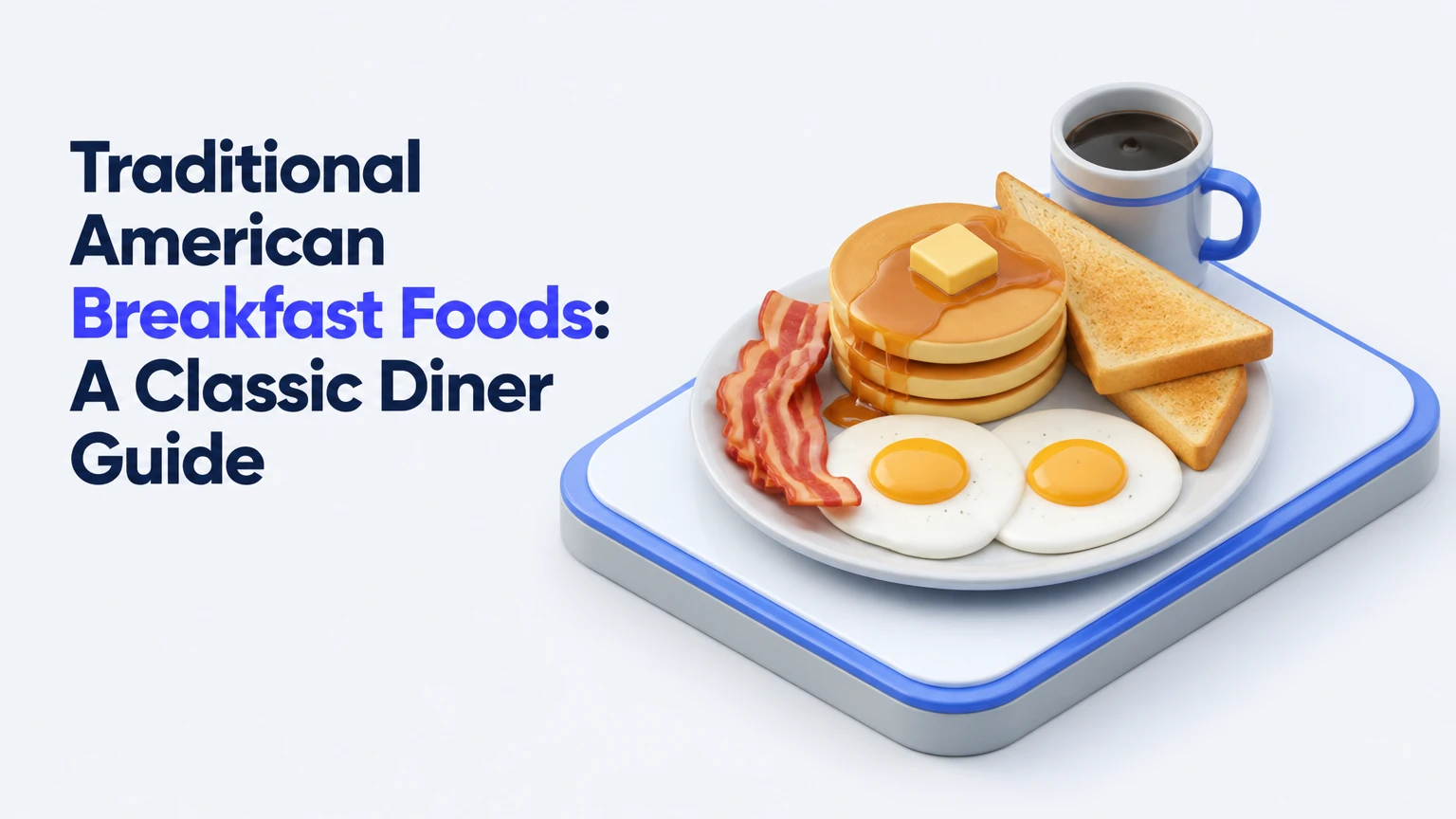
Traditional American breakfast foods are hot, filling morning dishes built around eggs, breakfast meats, potatoes, griddle cakes, breads, and regional accompaniments. A classic plate may combine two eggs, bacon or sausage, hash browns or home fries, and toast, while Southern, New England, and Western traditions use distinctly different ingredients.
Key Facts at a Glance
- A classic American diner breakfast usually combines eggs, cured meat, a potato dish, and toast.
- Typical home preparation takes 25-30 minutes when potatoes and proteins cook at the same time.
- A full restaurant plate commonly contains approximately 700-1,300 calories, depending on meat, butter, syrup, and portion size.
- Hash browns use shredded potatoes, while home fries use diced or sliced potatoes.
- American breakfast traditions vary by region, so no single plate represents every household or state.
- USDA MyPlate guidance recommends making half the plate fruits and vegetables, a useful way to moderate a traditionally meat-and-starch-heavy meal.
What Are Traditional American Breakfast Foods?
Traditional American breakfast foods are cooked morning dishes associated with diners, family kitchens, farm breakfasts, hotels, and regional American cooking. The core pattern is modular: a diner or home cook selects an egg preparation, a savory protein, a starch, and a bread or fruit side.
The familiar combination developed from several influences rather than one founding recipe. Farm households valued eggs, pork, potatoes, and preserved foods because those ingredients stored well and supplied substantial energy. Industrial food production, rail travel, hotel dining, and the spread of 24-hour diners later standardized the plate of eggs, bacon, potatoes, and toast.
The phrase “traditional American breakfast” therefore describes a cultural pattern, not a legally fixed menu. A New York diner, a Southern café, a Hawaiian plate-lunch restaurant, and a New Mexico kitchen may all serve recognizably American breakfasts with different ingredients.
How Does the Classic Breakfast Plate Work?
The classic breakfast plate balances soft, savory, crisp, salty, and sweet elements. Eggs provide a tender protein anchor; bacon, sausage, or ham adds salt and browned flavor; potatoes contribute crisp starch; and toast, pancakes, or fruit supplies contrast.
A useful home portion for one adult is two eggs, 2-3 ounces of cooked meat, 4-6 ounces of potatoes, and one slice of toast or a small griddle serving. That composition is substantial without requiring every category at once.
The traditional plate is also designed for short-order service. Potatoes and meat begin first, bread or pancakes follow, and eggs finish last because eggs lose quality quickly when held. That sequence matters more than sophisticated equipment.
Which Foods Belong on a Traditional American Breakfast Plate?
Traditional American breakfast foods fall into five practical categories: eggs, breakfast meats, potatoes, griddle or bread items, and accompaniments. The following table shows the common choices and the cooking details that distinguish them.
| Category | Common foods | Typical portion | Defining preparation |
|---|---|---|---|
| Eggs | Fried, scrambled, poached, boiled | 2 large eggs | Skillet, water bath, or saucepan |
| Meat | Bacon, pork sausage, ham steak | 2-3 oz cooked | Rendered, browned, or seared |
| Potatoes | Hash browns, home fries, tater tots | 4-6 oz | Shredded or diced, then griddled |
| Griddle foods | Pancakes, waffles, French toast | 2 pancakes or 1 waffle | Batter cooked on a griddle or iron |
| Bread | Toast, biscuit, English muffin | 1 serving | Toasted, baked, or split and buttered |
| Sides | Grits, fruit, tomatoes, avocado | 1/2-1 cup | Served warm, fresh, or seasoned |
Eggs: The Main Protein Anchor
Eggs are the most adaptable part of an American breakfast because one ingredient can produce very different textures. Scrambled eggs should remain softly set, fried eggs can retain a liquid or firm yolk, and poached eggs provide a delicate finish for English muffins, grits, or sautéed greens.
| Egg style | Cooking method | Typical time | Best texture |
|---|---|---|---|
| Sunny-side up | Fry without flipping | 3-4 minutes | Set white, liquid yolk |
| Over-easy | Flip briefly | 3-5 minutes | Set white, liquid yolk |
| Over-medium | Flip longer | 4-6 minutes | Jammy or partly set yolk |
| Over-hard | Flip until firm | 5-7 minutes | Fully cooked yolk |
| Soft scramble | Low heat, frequent stirring | 3-5 minutes | Moist, custardy curds |
| Poached | Simmering water, no shell | 3-4 minutes | Firm white, liquid center |
Large eggs generally weigh about 50 grams in the shell. For food safety, the U.S. Food and Drug Administration advises cooking eggs until both the yolk and white are firm, particularly for children, older adults, pregnant people, and anyone with weakened immunity.
Soft eggs remain common in restaurants, but a runny yolk is a texture preference rather than a guarantee of safety. Use pasteurized eggs when serving vulnerable diners and keep cooked eggs above 140°F during hot holding.
Breakfast Meats: Bacon, Sausage, and Ham
Bacon is cured pork belly, usually smoked and sliced into strips. Pork breakfast sausage is ground meat seasoned with ingredients such as sage, black pepper, thyme, fennel, or red pepper. Maple flavor appears in some commercial sausage, but it is not universal.
Ham steak is a cured ham slice that needs reheating and browning rather than the long cooking used for a fresh pork cut. Canadian bacon, which is usually lean cured pork loin, differs from American belly bacon in both texture and fat content.
| Meat | Cooked portion | Typical pan time | Main characteristic |
|---|---|---|---|
| Belly bacon | 2-3 oz | 8-12 minutes | Crisp, smoky, fatty |
| Pork sausage patty | 2 oz | 8-10 minutes | Sage-forward, browned |
| Sausage link | 2-3 oz | 10-14 minutes | Juicy, cylindrical |
| Ham steak | 3 oz | 4-7 minutes | Lean, salty, seared |
| Canadian bacon | 2-3 oz | 2-4 minutes | Lean, mild, round slices |
| Turkey sausage | 2 oz | 7-10 minutes | Leaner, less fatty |
Cook ground pork and poultry to 160°F, and reheat fully cooked ham to 140°F unless the package gives a different instruction. A meat thermometer is more reliable than surface color, particularly with smoked or pre-cooked products.
What Is the Difference Between Hash Browns and Home Fries?
Hash browns use shredded potatoes pressed into a thin layer, while home fries use diced or sliced potatoes cooked as separate pieces. Hash browns prioritize a continuous crisp crust; home fries offer browned edges with a softer, seasoned interior.
Raw shredded potatoes contain enough water to steam themselves when crowded. Rinse briefly if desired, then wring the shreds very dry in a clean towel. Spread them in a thin layer over a 375-425°F cooking surface, leave them undisturbed for 4-6 minutes, and flip only after the underside forms a cohesive crust.
Home fries are more forgiving. Parboil 1/2-inch potato cubes for 5-7 minutes, drain thoroughly, and pan-fry them with onions or peppers for 10-15 minutes. Pre-cooked potatoes reduce the risk of a burned exterior and hard center.
| Potato dish | Potato cut | Cooking time | Best serving context |
|---|---|---|---|
| Shredded hash browns | 1/8-inch shreds | 12-18 minutes | Classic diner plate |
| Home fries | 1/2-inch cubes | 15-20 minutes | Family skillet breakfast |
| Country potatoes | 3/4-inch chunks | 20-25 minutes | Cast-iron or oven meal |
| Tater tots | Frozen formed pieces | 18-25 minutes | Quick, crisp side |
| Breakfast potatoes | Cubes with peppers | 18-25 minutes | Brunch or buffet |
Pancakes, Waffles, and French Toast
Pancakes are soft, leavened batter cakes cooked on a flat griddle. Waffles use a similar batter but cook between patterned plates, producing crisp ridges and pockets for butter or syrup. French toast uses sliced bread dipped in seasoned egg-and-milk custard.
Pancakes need a medium-hot surface, usually about 350°F. Flip when bubbles rise and the edges look dry, generally after 2-3 minutes. Waffles usually require 3-6 minutes, depending on the iron and batter moisture. French toast takes about 2-4 minutes per side.
Real maple syrup and pancake syrup are different products. Pure maple syrup is concentrated maple sap, while pancake syrup commonly uses corn syrup and artificial or natural flavoring. Both supply sweetness, but pure maple syrup has a more pronounced flavor and usually costs more.
Biscuits, Gravy, Grits, and Toast
Biscuits and sausage gravy are strongly associated with the American South and Appalachia. A biscuit is a chemically leavened quick bread made with flour, fat, and usually buttermilk; sausage gravy uses browned sausage, flour, milk, and black pepper.
Grits are ground corn cooked in water or milk until creamy. They are more common in the South than in the standard Northern diner plate. Toast, English muffins, and cornbread provide simpler bread-based alternatives.
English muffins are yeast-leavened, griddled breads with an open crumb. Their nooks and crannies hold butter, jam, poached egg, or breakfast sandwich fillings more effectively than ordinary sliced bread.
How Do Regional American Breakfasts Differ?
Regional American breakfast foods differ according to local crops, immigrant traditions, preserved meats, climate, and restaurant history. The standard eggs-bacon-potatoes plate is widespread, but regional dishes often replace one or more components with cornmeal, seafood, beans, tortillas, fruit, or cured pork.
| Region | Representative foods | Distinctive ingredient | Typical setting |
|---|---|---|---|
| Southern Appalachia | Biscuits, sausage gravy, grits | Buttermilk, pork sausage | Café or family kitchen |
| New England | Corned beef hash, baked beans | Salt beef, beans | Diner or hotel breakfast |
| Midwest | Eggs, sausage, potatoes, pancakes | Pork, dairy, wheat | Family restaurant |
| Southwest | Huevos rancheros, breakfast burrito | Tortillas, beans, chile | Café or taqueria |
| Pacific Northwest | Salmon, eggs, sourdough | Salmon, berries, mushrooms | Brunch restaurant |
| Hawaii | Eggs, rice, Portuguese sausage | Rice, linguiça-style sausage | Local plate restaurant |
Huevos rancheros typically pairs fried eggs with tortillas, beans, salsa, and sometimes rice. A breakfast burrito may contain eggs, potatoes, cheese, beans, bacon, or chorizo in a flour tortilla. Those dishes remain part of the American breakfast landscape even though they do not resemble a mid-century diner platter.
How Much Does a Traditional Breakfast Cost and Weigh?
A typical homemade American breakfast costs approximately $3-$8 per person, while a diner plate commonly costs $10-$18 before tax and tip. Upscale brunch pricing often reaches $18-$30 because of larger portions, specialty coffee, premium meats, service, and restaurant overhead.
Calories vary too widely for one fixed number. A modest plate of two eggs, toast, fruit, and turkey sausage may contain 450-650 calories, while eggs with bacon, hash browns, pancakes, butter, and syrup can exceed 1,200 calories.
| Meal configuration | Typical calories | Typical home cost | Typical restaurant price |
|---|---|---|---|
| Eggs, toast, fruit | 450-650 | $3-$5 | $10-$15 |
| Eggs, bacon, hash browns, toast | 700-1,000 | $4-$7 | $12-$18 |
| Pancakes, bacon, eggs | 850-1,200 | $4-$8 | $13-$22 |
| Biscuits, sausage gravy, eggs | 900-1,300 | $4-$8 | $12-$20 |
| Breakfast burrito with potatoes | 700-1,100 | $4-$9 | $10-$18 |
Restaurant figures are typical U.S. ranges, not national price standards. Location, labor costs, portion size, and ingredient quality can change the final bill substantially.
How Can You Cook the Full Breakfast at Home?
A coordinated American breakfast takes 25-30 minutes and requires one skillet, one potato pan or griddle, a toaster, and a saucepan if making gravy or grits. The main success factor is sequencing: start the slowest food first and cook eggs during the final minutes.
Before You Start
| Requirement | Practical specification |
|---|---|
| Time | 25-30 minutes |
| Difficulty | Moderate, because several foods finish together |
| Equipment | 10-inch skillet, nonstick pan or griddle, toaster, spatula |
| Ingredients | 2 eggs, 2-3 oz meat, 4-6 oz potatoes, 1 bread serving |
| Holding oven | 170-200°F, optional for brief holding |
| Servings | Quantities listed for 1 person |
Step 1: Prepare the Ingredients
Shred or dice the potatoes, dry them thoroughly, whisk the eggs, and portion the meat before turning on the heat. Set out plates, butter, salt, pepper, and syrup so the finished food does not wait while you search for condiments.
You will know preparation is complete when the potatoes are dry, the egg mixture is ready, and every ingredient has a designated pan. The common mistake is beginning to cook while still chopping, which creates cold toast and overdone eggs.
Step 2: Start the Meat and Potatoes
Place bacon in a cold skillet, then cook over medium heat so the fat renders gradually. Start hash browns or parboiled home fries in a second lightly oiled pan, using enough space for one thin layer.
Turn sausage patties once they develop a browned surface and reach 160°F internally. You will know the potatoes are ready to turn when the underside is deep golden and releases from the pan. Crowding traps steam, so cook in batches when necessary.
Step 3: Cook the Griddle Food or Toast
Cook pancakes or waffles after the meat begins browning, or toast the bread during the final 3-4 minutes. Pancakes are ready to flip when bubbles appear and remain open near the center; waffles are ready when steam decreases and the surface is browned.
Hold pancakes on a rack or a 200°F oven-safe sheet for no more than 10 minutes. A sealed stack softens its own crust through trapped steam.
Step 4: Finish the Eggs
Cook fried or scrambled eggs during the last 3-5 minutes. Use medium-low heat for scrambled eggs and a covered skillet for fried eggs when you want the top white to set without flipping.
Eggs should look slightly moist when removed because residual heat continues cooking them. The common mistake is using high heat to save time, which produces firm edges and rubbery curds before the center sets.
Step 5: Plate and Serve
Place potatoes and meat on the plate first, add toast or griddle food, and finish with eggs and condiments. Serve immediately rather than allowing the entire plate to sit in a warm oven.
Keep hot food at 140°F or above if holding it, and refrigerate leftovers within two hours, or within one hour when ambient temperatures exceed 90°F. The best plate is assembled in under one minute.
Which American Breakfast Style Fits Different Diners?
The standard diner plate is the best choice for a savory, customizable meal. Pancakes or waffles suit a sweet breakfast, while biscuits and gravy or grits deliver the richest Southern profile. A breakfast burrito offers portability and combines several components in one portion.
| Preference | Recommended meal | Why it fits | Main limitation |
|---|---|---|---|
| Savory and balanced | Eggs, potatoes, fruit, toast | Mixes protein, starch, and freshness | Requires several components |
| Sweet and indulgent | Pancakes, syrup, bacon | Strong sweet-salty contrast | High added sugar potential |
| Southern comfort | Biscuits, gravy, grits | Rich texture and peppery flavor | Heavy and relatively low in produce |
| Portable | Breakfast burrito | Wraps eggs, potatoes, and fillings | Tortilla adds substantial starch |
| Lower meat intake | Eggs, beans, fruit, whole-grain toast | Keeps protein without pork | Less smoky flavor |
| Fast weekday meal | English muffin, egg, fruit | Three components, quick assembly | Smaller portion |
A traditional plate is not automatically nutritionally balanced. The American Heart Association recommends limiting saturated fat and sodium, so adding fruit or vegetables and reducing processed meat improves the meal without removing its identity.
What Is a Better Lower-Sodium Version?
Replace bacon or ham with unsalted beans, mushrooms, fresh tomato, or a smaller portion of sausage, and season potatoes with paprika, black pepper, garlic, and herbs before adding salt. Use one whole egg plus additional egg whites if reducing cholesterol or calories is appropriate for the individual.
A lower-sodium plate can contain two eggs, sautéed spinach, home fries cooked with peppers, and whole-grain toast. This arrangement preserves the hot, savory breakfast format while reducing dependence on cured meat and salty gravy.
What Works for Vegetarian or Dairy-Free Diners?
Vegetarian substitutions include eggs with black beans, plant-based sausage, mushrooms, tomatoes, or avocado. Dairy-free diners can use oil instead of butter, unsweetened plant milk in pancakes, and dairy-free bread after checking labels for milk ingredients.
People with celiac disease need certified gluten-free bread, sausage, gravy, and griddle surfaces that have not contacted wheat batter. Oats, sauces, and processed meats can also create hidden gluten exposure.
What Commonly Goes Wrong?
Soggy potatoes result from excess moisture, crowding, or insufficient pan heat. Dry eggs usually come from high heat or prolonged holding, while cold starch results from cooking every component independently instead of coordinating the final five minutes.
- Soggy hash browns: Wring shredded potatoes dry, use a thin layer, and avoid pressing repeatedly.
- Burned potatoes with hard centers: Parboil diced potatoes before pan-frying, or lower heat after the crust forms.
- Greasy bacon: Drain briefly on a rack or paper towel, and avoid stacking strips while hot.
- Lumpy sausage gravy: Add flour to rendered fat, cook it for about one minute, then whisk in milk gradually.
- Rubbery scrambled eggs: Remove the pan while curds still look moist; residual heat finishes the set.
- Cold toast: Toast bread during the egg stage, not at the beginning of the meal.
- Overly sweet pancakes: Measure syrup separately instead of pouring directly over the stack.
- Uneven breakfast timing: Use a written sequence and keep finished potatoes in a single layer in a 170-200°F oven.
A warm oven helps, but it is not a substitute for immediate service. Eggs, toast, and crisp potatoes all deteriorate when held too long.
How Should Leftover Breakfast Foods Be Stored?
Refrigerate cooked eggs, meat, potatoes, and pancakes in shallow containers within two hours. Use refrigerated leftovers within 3-4 days, following the USDA Food Safety and Inspection Service guideline for many cooked leftovers.
Store crisp potatoes separately from moist eggs or gravy. Reheat potatoes in a skillet or air fryer rather than a microwave when texture matters. Reheat eggs gently at half power in short intervals, because high microwave heat creates tough edges.
Freeze pancakes and waffles for up to about two months for best quality. Cool them completely, separate them with parchment, and reheat directly in a toaster or oven. Do not refreeze food that has already been thawed and reheated.
Frequently Asked Questions
Is an American breakfast the same as an English breakfast?
No. A full English breakfast commonly includes eggs, bacon, sausage, baked beans, grilled tomato, mushrooms, and toast or fried bread. A traditional American breakfast more often uses hash browns, pancakes, waffles, biscuits, or grits, although bacon and eggs appear in both meals.
Why are potatoes so common at breakfast?
Potatoes are inexpensive, widely available, filling, and compatible with a flat-top griddle. Cooked potatoes also provide an efficient way for diners to serve a substantial starch side alongside eggs and meat without requiring another complex dish.
Are pancakes more traditional than waffles?
Neither has universal priority. Pancakes are more common on ordinary diner menus because they require only a griddle, while waffles need a dedicated iron. Waffles are especially useful when crisp edges and syrup-holding pockets are the desired texture.
Can a traditional American breakfast be healthy?
Yes, portion size and composition determine the result. Two eggs, fruit, vegetables, a modest potato serving, and whole-grain toast create a more balanced meal than combining processed meat, buttered starch, pancakes, and unrestricted syrup.
What is the fastest traditional breakfast to make?
Eggs, toast, and pre-cooked breakfast potatoes can reach the table in 10-15 minutes. Frozen waffles or pre-cooked turkey sausage shorten the process further, although fresh bacon and raw hash browns usually require 20-30 minutes.
What is the most traditional diner order?
A common diner order is two eggs, bacon or sausage, hash browns or home fries, and toast. Pancakes, waffles, biscuits and gravy, or grits may replace the potato or toast depending on the restaurant and region.
The Bottom Line
Traditional American breakfast foods form a flexible meal system rather than one fixed recipe. Eggs, bacon or sausage, potatoes, toast, pancakes, waffles, biscuits, gravy, grits, and regional dishes all belong to the broader category. For a reliable home version, cook potatoes and meat first, finish bread and eggs last, and add fruit or vegetables when a lighter, more balanced plate is the goal.