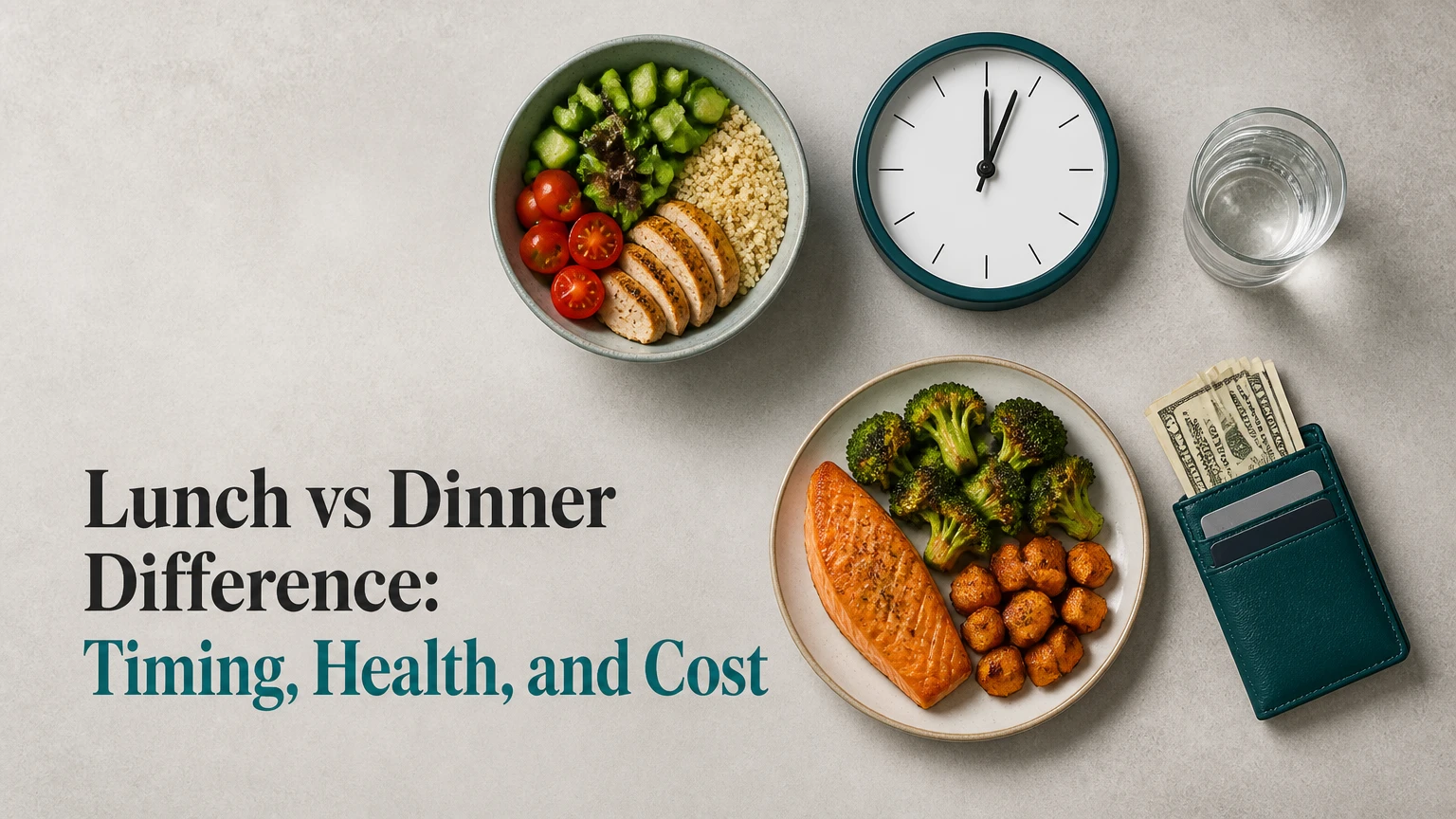
The lunch vs dinner difference is mainly one of timing, social purpose, and meal context: lunch usually occurs around midday, while dinner commonly occurs in the evening. Neither meal is automatically healthier or supposed to be larger. Portion size, food quality, total energy intake, activity, bedtime, and cultural convention determine the practical difference.
Key Facts at a Glance
Lunch typically occurs between 11:30 a.m. and 2:30 p.m.; dinner commonly occurs between 5:30 p.m. and 9:00 p.m.
Dinner is not universally an evening meal: in parts of Britain and in historical usage, “dinner” can mean the main meal eaten at midday.
A large, refined-carbohydrate meal can cause afternoon sleepiness, but ordinary digestion does not “divert massive blood flow” away from the brain.
Eating close to bedtime can worsen reflux or sleep for some people, but a universal three-hour fasting rule is not necessary for everyone.
Lunch is often less expensive at restaurants because of shorter service, lower demand, and lunch specials, not because lunch food is inherently cheaper.
The best meal to make larger depends on training, work hours, appetite, medical needs, and the time between eating and sleep.
What Is the Lunch vs Dinner Difference?
Lunch is the conventional midday meal, and dinner is the conventional main or evening meal. In modern US usage, lunch usually breaks the period between breakfast and the end of the workday, while dinner commonly follows work, school, or evening activities. The names describe social timing more reliably than nutrition.
“Dinner” historically referred to the day’s principal meal, which could occur at noon. “Supper” may mean a lighter evening meal, although many North American speakers use “dinner” and “supper” interchangeably. In France, déjeuner means lunch and dîner means dinner, while Spanish comida can refer to the main midday meal in some contexts.
The distinction therefore has two layers:
- Clock time: lunch is generally earlier; dinner is generally later.
- Role: lunch often supports the remaining workday, while dinner often creates time for family, hospitality, or leisure.
| Attribute | Lunch | Dinner |
|---|---|---|
| Typical clock time | 11:30 a.m.-2:30 p.m. | 5:30-9:00 p.m. |
| Common duration | 20-45 minutes | 45-150 minutes |
| Typical setting | Workplace, school, café, home | Home, restaurant, family table |
| Primary social role | Midday refueling and pause | Evening meal and social transition |
| Historical meaning | A lighter midday meal in many regions | The principal meal, sometimes at noon |
| Common menu format | Sandwich, salad, bowl, soup | Entrée, side dishes, shared courses |
The labels are flexible. A person working nights may eat a “dinner” at 10 a.m., while a family may call its 1 p.m. Sunday meal dinner because it is the day’s main occasion.
Does Lunch or Dinner Affect the Body Differently?
Lunch and dinner do not have separate metabolic rules. The body responds primarily to the meal’s energy, macronutrients, timing, and the eater’s activity, rather than to whether the meal is called lunch or dinner.
Human metabolism follows circadian rhythms. Research reviewed by the National Institutes of Health connects food timing with peripheral clocks in organs such as the liver and pancreas, but the practical effect varies by sleep schedule, light exposure, meal composition, and regularity. The body does not stop using dinner calories simply because sleep follows later.
A large dinner may be less comfortable when it occurs immediately before lying down. The American College of Gastroenterology recommends avoiding meals within two to three hours of bedtime for people managing nighttime gastroesophageal reflux disease, or GERD. That is a reflux-management recommendation, not proof that every person must stop eating three hours before sleep.
Afternoon sleepiness also has several causes. The natural circadian dip often occurs in the early afternoon, and a large meal, poor nighttime sleep, dehydration, alcohol, or a high-glycemic drink can intensify it. A lunch containing 35 grams of protein and fewer than 30 grams of carbohydrate is not a universal treatment, because athletes and highly active workers may need substantially more carbohydrate.
Which meal should be larger?
Neither lunch nor dinner must be the largest meal. A sensible default is to distribute food across meals according to hunger and activity, then place more carbohydrate near demanding exercise when performance benefits from it.
The claim that dinner should provide 40-50% of daily calories is not a general nutrition standard. The 2020-2025 US Dietary Guidelines focus on overall dietary patterns, nutrient density, and energy needs rather than assigning a mandatory calorie percentage to dinner. The USDA’s concise instruction, “Make every bite count,” is more defensible than a fixed lunch-to-dinner ratio.
A person who exercises at 6 p.m. may need a substantial lunch, a pre-workout snack, and a recovery dinner. Someone who trains at 6 a.m. may prefer a larger midday meal and a lighter evening meal. People with diabetes, reflux, pregnancy-related nausea, or medication-related appetite changes need individualized guidance from a clinician or registered dietitian.
How Do Lunch and Dinner Compare in Practice?
Lunch is usually shorter, more portable, and more constrained by work or school. Dinner generally allows more cooking time, table service, courses, and conversation, although a weeknight dinner can be a 15-minute reheated meal.
| Practical factor | Lunch, typical | Dinner, typical |
|---|---|---|
| Eating window | 11:30 a.m.-2:30 p.m. | 5:30-9:00 p.m. |
| At-home preparation | 5-30 minutes | 15-90 minutes |
| Restaurant duration | 25-60 minutes | 60-150 minutes |
| Fast-casual price in the US | $10-$20 per person | $12-$25 per person |
| Sit-down price before tax and tip | $18-$45 per person | $30-$90 or more per person |
| Alcohol availability | Less common at work meals | More common at social meals |
| Typical portability | High, including wraps and bowls | Low, except takeaway or packed leftovers |
| Main constraint | Return time and convenience | Bedtime, cost, and total portion |
These are typical US ranges, not universal prices. New York City, London, Singapore, and rural areas can differ sharply, and restaurant lunch specials may use smaller portions, a restricted menu, or lower-cost service periods.
What are the common lunch and dinner formats?
Lunch formats prioritize speed and transportability. Common examples include a packed sandwich, grain bowl, soup in a thermos, cafeteria plate, fast-casual salad, or a 60-minute business lunch.
Dinner formats prioritize flexibility and social time. Common examples include a sheet-pan meal at home, family-style dishes, a bistro meal, a tasting menu, or leftovers assembled with a new sauce. Fine dining is associated with dinner but is increasingly available at lunch, often with a shorter menu or lower fixed price.
| Format | Typical time | Typical cost per person | Best use |
|---|---|---|---|
| Packed lunch | 15-25 minutes to eat | $3-$8 | Work, school, commuting |
| Fast-casual lunch | 20-45 minutes | $10-$20 | Limited midday break |
| Business lunch | 60-90 minutes | $25-$60 | Meetings and relationship-building |
| Weeknight dinner | 20-45 minutes | $4-$15 at home | Family routine |
| Casual restaurant dinner | 60-120 minutes | $30-$70 | Leisure and socializing |
| Tasting-menu dinner | 120-180 minutes | $100-$300 or more | Special occasion |
Restaurant price differences usually reflect demand and operating costs. Evening dining can support longer table occupancy, alcohol sales, additional courses, and higher staffing levels. A lunch menu may offer the same cuisine at a lower price, but the portion and ingredients must be compared directly.
What Should You Eat for Lunch Versus Dinner?
Lunch and dinner can contain the same types of food. The useful distinction is whether the meal must support immediate work, exercise, digestion before sleep, or a long social evening.
| Meal example | Energy, typical | Protein | Fiber | Useful context |
|---|---|---|---|---|
| Chicken, quinoa, vegetables | 500-650 kcal | 35-45 g | 8-12 g | Active midday schedule |
| Bean and vegetable burrito bowl | 550-750 kcal | 20-30 g | 12-18 g | Vegetarian lunch |
| Salmon, potatoes, green beans | 550-750 kcal | 30-40 g | 7-10 g | Dinner several hours before bed |
| Tofu stir-fry with brown rice | 500-700 kcal | 25-35 g | 8-14 g | Plant-based evening meal |
| Turkey sandwich, fruit, yogurt | 450-650 kcal | 25-40 g | 6-10 g | Portable lunch |
| Lentil soup, whole-grain bread, salad | 400-600 kcal | 20-30 g | 12-18 g | High-fiber meal |
The figures are typical estimates and change with oil, sauces, serving sizes, and recipes. A dinner does not need to be low in carbohydrates, and a lunch does not need to be low in fat. The better test is whether the meal produces suitable fullness, stable energy, adequate nutrition, and comfortable digestion.
For a desk-based worker, lunch often works well with vegetables, protein, a moderate serving of whole grains, fruit, and water. For a cyclist completing a long afternoon ride, a larger carbohydrate portion may be appropriate. For someone prone to reflux, a smaller evening meal with less alcohol, fried food, and personal trigger foods may be more useful than simply switching from dinner to supper.
Can lunch and dinner have the same menu?
Lunch and dinner can use the same menu without creating a nutritional problem. The meal should change only when the person’s timing, appetite, activity, or digestion changes.
A leftover salmon bowl can be lunch or dinner. Oatmeal can be dinner for a shift worker. A restaurant may label soup and salad as lunch while serving the same dishes during dinner. Meal names are not nutritional categories.
Is Dinner More Unhealthy Because It Happens Later?
Dinner is not inherently unhealthy because it occurs later. Risk rises when dinner is unusually large, highly energy-dense, alcohol-heavy, or eaten immediately before lying down, especially when late eating also shortens sleep.
Controlled feeding research, including a 2022 study in Cell Metabolism, found that later eating can influence hunger-related signals, energy expenditure, and fat-storage pathways under controlled conditions. Such findings support avoiding habitual meals that conflict with sleep, but they do not show that a 7 p.m. dinner is harmful for everyone.
The strongest practical rule is simple: finish a substantial meal early enough to allow comfortable digestion before bed. A person sleeping at 11 p.m. may tolerate dinner at 7:30 p.m.; another person with GERD may need a larger interval. A night-shift worker should align the largest meals with wakefulness and activity rather than treating conventional clock time as biologically mandatory.
Late dinner becomes a problem when it creates a repeating pattern:
- skipping earlier meals, then overeating at night;
- eating high-fat food and lying down soon afterward;
- using alcohol or dessert to extend an already large meal;
- sleeping fewer hours because cooking or dining runs late;
- mistaking morning bloating from sodium or food volume for fat gain.
The remedy is usually meal distribution, not a ban on dinner.
Which Meal Is Better for Weight Loss?
Neither lunch nor dinner wins automatically for weight loss. A sustainable calorie deficit, sufficient protein, high-fiber foods, sleep, and adherence matter more than the meal label, although shifting excessive calories away from late-night eating can help some people control hunger.
Earlier meal patterns may improve appetite control for some adults, especially when they reduce grazing after dinner. The benefit often comes from fewer eating occasions and better alignment with sleep, not from a special calorie-burning property of lunch.
A practical weight-management structure might include:
- A protein-containing breakfast or first meal.
- A balanced lunch with vegetables, protein, and a measured carbohydrate source.
- A planned afternoon snack if dinner is late.
- A satisfying dinner eaten two or more hours before bed when possible.
- Minimal unplanned eating after dinner.
Skipping lunch to “save calories” can backfire when it produces a very large dinner. Conversely, someone who naturally prefers two meals may succeed with a larger lunch and moderate dinner if total nutrition remains adequate.
Weight-loss advice should not override medical needs. People using insulin or glucose-lowering medication should not radically change meal timing without clinical advice.
How Should Different People Choose Between Lunch and Dinner?
The better primary meal depends on the point in the day when food will be most useful and easiest to control. A worker with a short break benefits from a prepared lunch, while a person with a late exercise session may need dinner for recovery.
Office professional
Make lunch predictable and easy to digest when afternoon concentration matters. A 500-700 kcal meal with 25-40 grams of protein, vegetables, and unsweetened water is a reasonable starting range, but individual energy requirements can be higher.
Use dinner as a social boundary if that improves work-life separation. Keep restaurant lunches for occasions where the time and cost are justified, then use leftovers or batch-cooked food on ordinary evenings.
Athlete
Place carbohydrate around training rather than automatically placing it at dinner. A runner training at 5 p.m. may need rice, potatoes, fruit, or bread at lunch and again in a pre-workout snack, followed by protein and carbohydrate at dinner.
Post-exercise recovery depends on total daily protein, carbohydrate availability, fluid, and the session’s demands. “Slow-digesting protein at night” is not a requirement for muscle recovery if total protein intake and distribution are already adequate.
Budget-conscious household
Use packed lunches and leftovers to reduce convenience spending. A home-prepared lunch often costs approximately $3-$8 per serving, compared with $10-$20 for fast casual dining, while dinner savings depend more on ingredients and portion planning than on the word dinner.
When eating out, compare lunch specials carefully. A $16 lunch that includes a smaller entrée and no drink may not beat a $19 dinner portion that supplies two meals.
Parent or family household
Dinner may be the most realistic shared meal because schedules converge in the evening. Keep the menu modular: one protein, one starch, vegetables, and optional sauces allow different appetites without preparing separate meals.
A family dinner does not need multiple courses. A 25-minute sheet-pan meal can fulfill the same social role as a 90-minute restaurant meal.
Shift worker
Schedule meals around waking, work demands, and sleep. A person sleeping from 8 a.m. to 4 p.m. may eat a first meal at 4:30 p.m., a work meal at midnight, and a smaller meal before sleep, regardless of whether those meals are called breakfast, lunch, or dinner.
Avoid a very large meal immediately before the main sleep period if it causes reflux or discomfort. Consistency is useful, but conventional daytime labels are optional.
What Are the Most Common Meal-Timing Mistakes?
The most common errors are not choosing lunch or dinner incorrectly. They are allowing schedule pressure, oversized portions, and bedtime proximity to determine intake without a plan.
Mistake 1: Treating dinner as the reward for fasting all day
Skipping lunch often creates intense evening hunger and reduces portion control. Add a protein-rich lunch or a planned snack, then reassess dinner hunger after two weeks.
Mistake 2: Blaming every afternoon slump on carbohydrates
Sleep debt, circadian rhythm, dehydration, alcohol, and a meal that is simply too large can all cause drowsiness. Reduce sugary drinks and oversized portions first, rather than imposing an arbitrary carbohydrate limit.
Mistake 3: Assuming a light dinner is always better
A very small dinner can produce bedtime hunger, night snacking, or poor recovery after exercise. Reduce volume or fat when reflux is the issue, but retain enough protein and energy to support the person’s needs.
Mistake 4: Eating at a desk without a real pause
Screen-based eating can make portion awareness and satisfaction harder, although it does not automatically cause overeating. Take at least 15 minutes away from active work when possible, and place the meal on a plate rather than eating continuously from a package.
Mistake 5: Applying a three-hour rule mechanically
A three-hour interval is useful for some people with nighttime reflux, but it is not a universal metabolism rule. Test a two- to three-hour interval, reduce trigger foods, and seek medical advice for persistent symptoms, swallowing difficulty, bleeding, or unexplained weight loss.
Mistake 6: Confusing restaurant category with nutritional quality
A lunch salad can contain more calories than a simple dinner, and a dinner soup can be lighter than a fast-food lunch. Compare serving size, dressing, sauces, protein, fiber, sodium, and drinks.
How Can You Decide Between Lunch and Dinner?
Use five questions to choose the better meal occasion:
- When will the food be used? Choose a larger meal before sustained activity or demanding training.
- How long is the eating window? Choose portable, quickly eaten food for a 30-minute break.
- How close is bedtime? Choose a smaller, familiar meal when only 60-90 minutes remain before sleep.
- What is the social purpose? Choose dinner when evening conversation or hospitality matters most.
- What is the budget? Choose lunch for a restaurant special only after checking portion size, drinks, and leftovers.
This rule handles most ordinary situations better than a fixed calorie percentage. It also separates the decision’s real variables from the labels printed on a menu.
| Situation | Better default | Adjustment |
|---|---|---|
| 30-minute office break | Prepared lunch | Eat protein and fiber before refined snacks |
| 6 p.m. strength training | Moderate lunch plus pre-workout snack | Make dinner a recovery meal |
| Reflux at bedtime | Earlier, smaller dinner | Follow clinician guidance for persistent symptoms |
| Family schedule converges at 7 p.m. | Shared dinner | Prepare lunch from leftovers |
| Restaurant budget is limited | Lunch special | Verify portion, beverage, and service charges |
| Overnight work shift | Meal during active period | Ignore conventional breakfast-lunch labels |
The Bottom Line
The lunch vs dinner difference is primarily a difference in clock time, social role, restaurant format, and distance from sleep. Lunch is usually the more convenient and portable meal, while dinner is usually the more flexible and social meal, but neither is inherently healthier or required to contain a specific share of daily calories.
Choose lunch as the larger meal when daytime activity, work performance, or restaurant value makes that practical. Choose dinner as the larger meal when evening training, family schedules, or appetite patterns support it, provided the meal does not regularly cause reflux, poor sleep, or uncontrolled overeating. The best meal pattern is the one that supplies adequate nutrition and fits the person’s actual day.
FAQ
Is dinner always the evening meal?
No. Dinner historically means the principal meal of the day and can refer to a midday meal in some regions or traditions. In contemporary US usage, dinner usually means the evening meal, while “supper” may describe a lighter evening meal. Local language, family custom, and work schedule determine the label.
Is lunch better than dinner for digestion?
Lunch is not automatically easier to digest. Lunch may feel more comfortable because people remain upright and active afterward, while a large dinner followed by lying down can worsen reflux. Meal size, fat content, individual food tolerance, and the interval before sleep matter more than the name of the meal.
Can dinner be the biggest meal of the day?
Yes, dinner can be the largest meal when total energy intake, nutrition, sleep, and digestion remain satisfactory. A large dinner is less suitable when it causes reflux, nighttime discomfort, or overeating after skipped meals. Athletes and shift workers may need different distributions based on training and wake time.
Is supper different from dinner?
Supper and dinner overlap in modern English, but traditional usage often distinguishes them. Dinner may mean the main meal, while supper may mean a lighter evening meal. The distinction varies by country, region, class history, and household, so a menu labeled supper does not guarantee a smaller or healthier meal.
Can lunch replace dinner?
Lunch can replace dinner if the person eats enough total energy and nutrients across the day and the schedule supports it. Someone who finishes work early may eat one substantial afternoon meal and a lighter evening snack. People taking meal-dependent medication should confirm major schedule changes with a clinician.
What time should dinner end before bed?
Many people tolerate dinner two to three hours before sleep, and that interval is especially useful for people with nighttime reflux. Individual tolerance varies. A smaller meal may be comfortable closer to bedtime, while high-fat food, alcohol, and large portions often require a longer interval. Persistent reflux warrants medical evaluation.