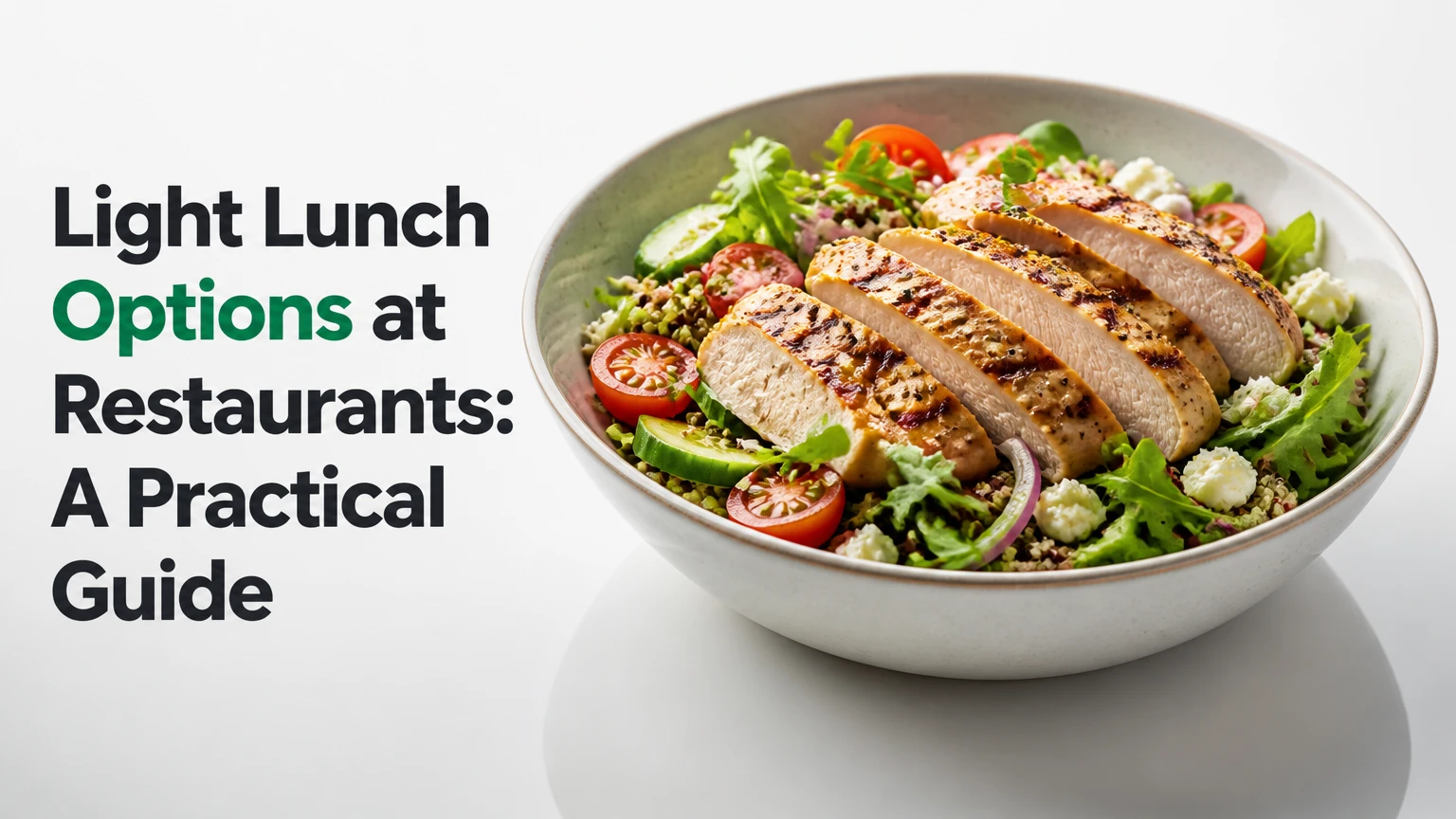
Light lunch options at restaurants usually combine a moderate portion of lean protein, vegetables or fruit, a controlled starch, and sauce served separately. The most reliable choices include grilled chicken salads, broth-based soup with added protein, turkey lettuce wraps, fish tacos with one side, vegetable grain bowls, and small plates ordered with fried sides replaced.
Key Facts at a Glance
A typical light restaurant lunch contains approximately 350-650 calories, depending on dressing, bread, cheese, oil, and portion size.
A satisfying lunch usually includes 20-35 grams of protein and at least one substantial serving of vegetables or fruit.
The U.S. Food and Drug Administration states, “The Daily Value for sodium is less than 2,300 milligrams per day.”
A salad is not automatically light because cheese, bacon, nuts, fried toppings, avocado, and creamy dressing can double its energy content.
Ordering sauce, dressing, butter, and cheese separately gives the diner control over the most variable ingredients.
Typical prices range from $9-$18 at cafés and fast-casual restaurants, and $15-$28 at full-service restaurants.
What Makes a Restaurant Lunch Light?
A light restaurant lunch is moderate in portion size, limited in deep-fried ingredients and heavy sauces, and substantial enough to prevent rapid hunger. The best orders pair vegetables or fruit with protein, then add a measured amount of whole-grain bread, rice, beans, or potatoes when the meal requires more lasting energy.
“Light” does not mean tiny, fat-free, carbohydrate-free, or nutritionally incomplete. A 250-calorie lunch may be too small for a physically active person, while a 650-calorie lunch can be appropriate when it replaces breakfast and dinner is late.
Restaurant nutrition varies because kitchens use oil, butter, mayonnaise, sugar, and salt inconsistently. Typical calorie and nutrient ranges in this guide are practical estimates, not laboratory measurements. A restaurant’s nutrition guide or an itemized allergen statement takes precedence over any estimate.
Which attributes matter most?
| Attribute | Practical light-lunch target | Why it matters | Common restaurant source |
|---|---|---|---|
| Energy | 350-650 calories | Controls portion without requiring extreme restriction | Fried sides, cheese, oil, desserts |
| Protein | 20-35 g | Supports fullness and meal quality | Chicken, fish, turkey, eggs, tofu, beans |
| Fiber | 6-10 g | Slows digestion and improves satiety | Vegetables, beans, fruit, whole grains |
| Sodium | 600-1,000 mg when possible | Leaves room within the 2,300 mg Daily Value | Soup, deli meat, sauces, pickles |
| Added sauce | 1-2 tablespoons | Prevents uncontrolled oil, sugar, and mayonnaise | Ranch, aioli, barbecue sauce |
| Price | $9-$28 typical | Helps match the choice to the restaurant type | Café, chain, bistro, steakhouse |
The most useful practitioner rule is to inspect the meal’s construction rather than its menu label. “Garden,” “power,” “fresh,” and “fit” describe marketing categories, not guaranteed nutrient values.
Which Restaurant Lunches Work Best?
The strongest all-purpose choices are grilled protein salads, broth-based soup with a protein side, turkey or chicken wraps with vegetables, fish tacos with a nonfried side, and grain bowls built around beans or lean meat. Each option becomes heavier when restaurants add fried toppings, large grain portions, cheese, creamy dressing, or butter.
| Restaurant lunch | Typical calories | Protein | Sodium | Typical price | Prep time |
|---|---|---|---|---|---|
| Grilled chicken salad, dressing separate | 400-650 | 30-45 g | 600-1,100 mg | $12-$20 | 8-15 minutes |
| Turkey lettuce wrap with fruit | 300-500 | 20-30 g | 700-1,300 mg | $10-$16 | 5-10 minutes |
| Broth soup and side salad | 300-550 | 12-25 g | 900-1,600 mg | $9-$15 | 3-8 minutes |
| Chicken or fish tacos, two, with beans | 450-700 | 25-40 g | 800-1,400 mg | $12-$19 | 8-14 minutes |
| Tofu or bean grain bowl, half rice | 450-700 | 18-30 g | 600-1,200 mg | $11-$18 | 7-12 minutes |
| Shrimp appetizer and grilled vegetables | 300-550 | 25-40 g | 700-1,300 mg | $14-$24 | 8-15 minutes |
1. Grilled chicken or steak salad
A grilled chicken salad is usually the most dependable restaurant lunch when the dressing and crunchy toppings remain controlled. Choose mixed greens, tomatoes, cucumbers, peppers, onions, or other plainly prepared vegetables, then request grilled chicken, shrimp, salmon, or a 3-5 ounce steak portion.
Steak salads provide iron, zinc, and strong satiety, but restaurant steak may receive a butter finish. Ask whether the kitchen adds butter after grilling. Skip tortilla strips, fried onions, bacon, and cheese when the objective is a genuinely light meal.
A Cobb salad requires special scrutiny. Traditional versions may include bacon, blue cheese, egg, avocado, and a rich dressing, making the salad substantially heavier than its leafy base suggests. Ask for two toppings rather than accepting every listed component.
2. Turkey, chicken, or hummus lettuce wraps
Lettuce wraps reduce bread or tortilla volume, but they do not automatically reduce sodium or total calories. Deli turkey, seasoned chicken, hummus, avocado, and mayonnaise can still produce a dense meal, so request fresh vegetables and one spread rather than several.
Turkey lettuce wraps work well for warm weather, gluten-free dining when cross-contact is controlled, and people who prefer lower starch. They may be inadequate for runners, cyclists, growing teenagers, or anyone facing a long active afternoon. Add fruit, beans, or a small whole-grain side when sustained energy matters.
3. Broth-based soup with a protein side
A cup of chicken noodle, lentil, minestrone, or vegetable soup paired with a side salad is fast and widely available. The main limitation is sodium: restaurant soup can provide much of a day’s sodium allowance in a single cup or bowl.
Choose a cup rather than a bowl, avoid cream-based soups when you want a lighter meal, and add chicken, beans, an egg, or a half sandwich if the soup contains little protein. Tomato soup may be broth-like but can still contain cream, butter, or added sugar, so ask how the kitchen prepares it.
4. Grilled fish tacos or shrimp plates
Grilled fish tacos are lighter than battered fish tacos when the tortillas, crema, cheese, and side are modest. Two tacos with cabbage, pico de gallo, grilled fish, and black beans often provide a better balance than three large tacos with fried fish and mayonnaise-based sauce.
Shrimp cocktails, ceviche, and grilled shrimp appetizers can provide high protein with limited starch. Sodium rises quickly through cocktail sauce, chips, seasoned marinades, and packaged tortilla ingredients. Request lime, pico de gallo, or salsa as the primary flavoring.
5. Vegetable and protein grain bowls
A grain bowl is a flexible light lunch when rice, quinoa, couscous, or noodles occupy about one-quarter to one-third of the container. Use vegetables and protein as the visual majority, and request half the usual grain portion if the restaurant serves large bowls.
Beans, tofu, chicken, salmon, and eggs offer different protein profiles. Tahini, peanut sauce, pesto, and coconut-based sauces are nutrient-dense but calorie-dense, so a side portion is more useful than assuming a vegetarian bowl is automatically low-energy.
How Should You Read a Restaurant Menu?
Read the cooking method, main protein, side, and sauce in that order. Menu terms such as grilled, roasted, broiled, poached, steamed, and raw usually reveal more useful preparation information than labels such as wellness, lite, garden, or chef’s choice.
Step 1: Identify the cooking method
Prefer grilled, broiled, roasted, steamed, poached, or baked items when the kitchen confirms that they are not finished with butter. Treat blackened cautiously because the spice crust may be dry, butter-based, or oil-heavy depending on the restaurant.
“Crispy,” “battered,” “breaded,” “smothered,” “loaded,” “creamy,” and “fried” signal a higher likelihood of added fat, refined starch, or sodium. These words do not make an item forbidden, but they identify the components most worth changing.
Step 2: Find the protein
A meal with vegetables but no meaningful protein often produces short-lived fullness. Target roughly a palm-sized serving of chicken, fish, lean beef, turkey, tofu, eggs, beans, or lentils.
High-protein diners can choose grilled chicken, salmon, shrimp, sirloin, or tofu. Vegetarian diners should combine beans, lentils, tofu, tempeh, eggs, yogurt, or cheese with vegetables rather than ordering only leafy greens.
Step 3: Control the side
Replace fries, onion rings, chips, or creamy potato salad with vegetables, fruit, beans, a broth soup, or a small plain potato. A side substitution frequently changes the meal more than removing a single slice of bread.
Ask whether “vegetables” means steamed produce or vegetables sautéed in oil and butter. Restaurants differ substantially. “Steamed, with no butter added” is more precise than “healthy vegetables.”
Step 4: Isolate the sauce
Request dressing, mayonnaise, aioli, barbecue sauce, gravy, crema, and pesto on the side. Dip the fork into the sauce before each bite, or use one tablespoon at a time.
This method works because sauces have highly variable oil and sugar concentrations. A two-tablespoon serving of creamy dressing may contain more than 150 calories, while a measured vinaigrette portion can remain considerably lower.
Are Salads Healthier Than Sandwiches?
Salads are not automatically healthier than sandwiches because toppings and dressings can exceed the energy of bread. A turkey sandwich on whole-grain bread with mustard, vegetables, and fruit may provide more predictable calories and sodium than a bacon-and-cheese salad with ranch dressing.
| Meal construction | Typical calories | Protein | Main risk | Best adjustment |
|---|---|---|---|---|
| Turkey sandwich, mustard, fruit | 400-600 | 20-32 g | Deli sodium | Request low-sodium turkey if available |
| Chicken Caesar salad | 550-850 | 30-45 g | Parmesan, croutons, creamy dressing | Dressing separate, half croutons |
| Burger patty salad | 500-800 | 30-45 g | Cheese, bacon, burger sauce | Remove cheese and fried toppings |
| Hummus vegetable wrap | 450-700 | 12-22 g | Large tortilla and excess hummus | Add beans or tofu, request half spread |
| Tuna salad sandwich | 500-750 | 20-30 g | Mayonnaise and white bread | Mustard, vegetables, whole-grain bread |
Open-faced sandwiches reduce one slice of bread, but they may be messy and do not address mayonnaise or cheese. A lettuce wrap reduces tortilla or bread, but it can leave a meal low in carbohydrate and fiber. The better choice depends on hunger, activity, sodium limits, and the filling.
What is the best high-protein light lunch?
Grilled chicken salad, shrimp with vegetables, salmon over greens, and a lean steak salad usually deliver the most protein per calorie. A typical 4-ounce cooked chicken serving contributes about 30-35 grams of protein before toppings and dressing.
Protein alone does not make a lunch balanced. Add vegetables for volume and fiber, then choose fruit, beans, or a modest grain serving if the afternoon requires sustained activity.
How Much Sodium and Energy Should You Expect?
A restaurant light lunch commonly falls between 350 and 650 calories, but sodium often ranges from 600 to 1,600 milligrams because restaurants season proteins, soups, breads, pickles, and sauces separately. The FDA’s 2,300-milligram Daily Value provides a useful reference, not a personal prescription.
| Item | Typical sodium | Typical calories | Hidden contributor |
|---|---|---|---|
| Cup chicken noodle soup | 700-1,200 mg | 120-250 | Stock and noodles |
| Deli turkey wrap | 800-1,400 mg | 350-600 | Cured meat and tortilla |
| Grilled chicken salad | 600-1,100 mg | 400-650 | Feta, olives, dressing |
| Fish tacos with salsa | 800-1,400 mg | 450-700 | Tortillas, crema, seasoning |
| Vegetable grain bowl | 600-1,200 mg | 450-700 | Soy sauce, tahini, pickled vegetables |
People managing hypertension, kidney disease, heart failure, or a medically prescribed sodium limit need individualized advice from a clinician or registered dietitian. “Low sodium” cannot be inferred from a salad or vegetarian label.
Which Light Lunch Fits Your Situation?
The right restaurant lunch changes according to appetite, schedule, dietary requirements, and the restaurant’s available cooking equipment. The most reliable approach is to preserve the meal’s protein and vegetables while changing the highest-variance component, usually the sauce, fried side, or oversized starch.
| Situation | Recommended order | Specific modification | Main limitation |
|---|---|---|---|
| Weight-management goal | Chicken salad or fish tacos | Dressing separate, one starch side | Restaurant portions remain uncertain |
| Long active afternoon | Turkey sandwich and fruit | Whole-grain bread, add beans or yogurt | More calories than a lettuce wrap |
| Low-sodium requirement | Plain grilled fish and vegetables | No sauce, no pickles, no soup | Kitchen seasoning may remain unknown |
| Vegetarian lunch | Lentil bowl or tofu salad | Half grain, sauce separate | Protein varies by restaurant |
| Vegan lunch | Bean and vegetable bowl | Verify no dairy, egg, or fish sauce | Cross-contact and hidden sauces |
| Gluten-free need | Salmon, rice, and vegetables | Confirm shared grill and fryer controls | Gluten-free does not mean low calorie |
| Diner meal | Vegetable omelet and fruit | Minimal oil, no home fries | Eggs may receive butter or cheese |
| Barbecue meal | Smoked turkey or pulled chicken | Sauce separate, vinegar slaw | Smokehouse sodium can be high |
What should you order at a diner?
At a diner, order a vegetable omelet with mushrooms, spinach, and tomatoes, request minimal oil and no cheese, and replace home fries with sliced tomatoes or fruit. A grilled chicken salad or turkey sandwich with mustard also works when the kitchen can prepare it without butter.
Breakfast menus provide useful flexibility because eggs, fruit, oatmeal, and vegetables can be combined in moderate portions. Egg whites are not automatically superior; one whole egg adds flavor and nutrients, while extra whites can increase protein without adding much fat.
What works at a barbecue restaurant?
Choose smoked turkey breast, pulled chicken, or a small portion of lean brisket, then request sauce separately. Pair the meat with vinegar slaw, greens prepared without pork fat, or a nonfried vegetable instead of fries, cornbread, or macaroni and cheese.
Barbecue meat is often salty even without sauce because dry rubs, brines, and smoking processes overlap. A smaller meat portion with two vegetables may be more practical than trying to make a large platter light.
What works at a sports bar?
Choose a grilled chicken sandwich, grilled fish, or bunless burger with a side salad or vegetable. Request hot sauce, mustard, salsa, or pickle-free seasoning instead of ranch, blue cheese dressing, honey barbecue sauce, or a creamy aioli.
Sports bars have extensive fryer equipment, so “grilled” still deserves confirmation. Ask whether the protein is cooked on a shared surface with breaded foods if gluten or allergen exposure matters.
What works at a bakery-café?
Order a half turkey or chicken sandwich with mustard and a small salad, soup, or fruit cup. Panera Bread style cafés often provide half portions, but the nutrition value depends on the bread, cheese, dressing, and soup selected.
A half sandwich plus a half salad can be satisfying when both components contain protein. A pastry, sweetened drink, and low-protein salad can produce a lighter-looking meal with less staying power.
What works at a steakhouse?
Choose a 3-6 ounce sirloin or filet with steamed broccoli, asparagus, or Brussels sprouts, and ask whether the kitchen adds a butter finish. Order bread, compound butter, creamed spinach, and sauces selectively rather than accepting them automatically.
A steakhouse lunch is not ideal for the lowest possible cost, but it can provide predictable protein and vegetables. A large ribeye, loaded potato, creamed side, and dessert is a different meal category.
What Are the Most Common Ordering Mistakes?
The most common light-lunch mistakes are trusting health labels, overlooking liquid calories, ignoring sodium, and removing the main carbohydrate without replacing fiber or energy. Correcting one high-impact component usually produces a better meal than making many small, frustrating restrictions.
- Assuming every salad is light. Remove one or two dense toppings, choose grilled protein, and measure the dressing.
- Choosing a “low-calorie platter” without checking quality. Cottage cheese, canned fruit, and a burger patty may provide limited fiber and substantial sodium or saturated fat.
- Eating the bread basket automatically. Two rolls with butter can add roughly 250-500 calories, depending on size and spread.
- Ordering a smoothie as a meal. Fruit juice, syrups, nut butter, and sweetened yogurt can create a 500-900 calorie drink with little chewing.
- Eliminating all starch. A lettuce wrap may be unsatisfying for a physically active diner; fruit, beans, or a small grain portion can improve meal adequacy.
- Forgetting beverages. Sweet tea, regular soda, cocktails, and flavored coffee can add 120-400 calories before food arrives.
A counterintuitive rule matters here: the dressing often deserves more scrutiny than the lettuce, and the beverage can matter more than the side dish. Restaurant menus commonly display the entrée while leaving the largest calorie variability in add-ons.
How Can You Order a Light Lunch Without Nutrition Information?
Use a four-part verbal formula: cooking method, protein portion, vegetable side, and sauce control. For example, say, “I’ll have the grilled chicken with vegetables, dressing on the side, and no butter finish,” then confirm whether the vegetables are sautéed or steamed.
When information is limited, estimate portions using visual references:
- Protein: one palm, approximately 3-5 ounces cooked.
- Starch: one cupped hand, approximately one-half to three-quarters cup.
- Added fat: one thumb, approximately one tablespoon.
- Nonstarchy vegetables: at least two fists.
- Sauce: one small condiment cup, used gradually.
These estimates are more reliable for portion control than menu adjectives. They cannot identify allergens, exact sodium, or hidden cooking fats, so diners with medical restrictions should ask targeted questions and use official nutrition data when available.
What should you say to restaurant staff?
Use specific requests rather than broad terms such as “make it healthy.” Ask for grilled rather than fried, sauce on the side, no butter finish, half the usual rice, and a named replacement such as fruit or steamed vegetables.
Useful questions include:
- “Is the chicken marinated in oil, butter, or a salty brine?”
- “Can the dressing come in a separate cup?”
- “Can I substitute fruit for fries?”
- “Does the soup contain cream or a high-sodium stock?”
- “Are the fries and gluten-free items cooked in the same fryer?”
- “Can you provide the nutrition and allergen information?”
What Are the Best Alternatives for Dietary Needs?
Vegetarian, vegan, gluten-free, and low-sodium diners can find light meals, but the order must address protein, preparation, and cross-contact separately. A meat-free, gluten-free, or plant-based label identifies an exclusion; it does not guarantee moderate calories, sodium, or adequate protein.
For vegetarian diners, choose lentils, beans, tofu, eggs, Greek yogurt, or a modest amount of cheese with vegetables. For vegan diners, verify dairy, egg, fish sauce, chicken stock, honey, and butter in dressings and cooked grains.
For gluten-free diners, rice, potatoes, corn tortillas, grilled proteins, and vegetables may work, but shared fryers and cutting boards can create cross-contact. For low-sodium diners, avoid soup, deli meats, pickles, olives, soy sauce, bottled dressings, and heavily seasoned sauces before trying to modify a finished dish.
People with diabetes may prefer a meal built around protein, nonstarchy vegetables, beans, and a measured whole-grain portion. The American Diabetes Association emphasizes individualized carbohydrate planning, so a blanket “no bread” rule is less useful than controlling the portion and pairing carbohydrate with protein and fiber.
What Is the Best Overall Choice?
The best overall light restaurant lunch is grilled chicken or fish with nonstarchy vegetables, a modest whole-food carbohydrate, and sauce served separately. This structure adapts across diners, cafés, chains, bistros, and fast-casual restaurants while preserving protein, fiber, flavor, and portion control.
Choose a soup-and-salad combination for speed, but add protein and monitor sodium. Choose a turkey wrap for portability, but inspect deli-meat sodium and spread quantity. Choose a steak salad when you want a filling meal, but confirm the steak is not butter-finished and keep cheese and dressing measured.
The best order is the one that matches the next several hours. A sedentary afternoon may suit a salad and fruit, while a physically demanding afternoon may require bread, rice, beans, or potatoes.
Frequently Asked Questions
Are restaurant appetizers good light lunch options?
Appetizers can work well when restaurants serve oversized entrées, but choose grilled shrimp, ceviche, vegetable skewers, broth soup, or a small hummus plate rather than fried baskets. Combine one protein-centered appetizer with vegetables or fruit, and check whether bread, chips, creamy dip, or oil arrives automatically.
Can a burger be part of a light lunch?
A burger can fit when you choose a single patty, skip bacon and cheese, request sauce separately, and replace fries with salad or fruit. Removing the bun reduces some carbohydrate but does not remove the patty’s fat or sodium, so a bunless burger is not automatically lighter.
What is a light lunch under 500 calories?
Typical options include a half turkey sandwich with fruit, grilled chicken salad with vinaigrette, two grilled fish tacos with salsa, or a cup of lentil soup with a small salad. Restaurant estimates vary, and oil, cheese, nuts, croutons, and dressing can move an order above 500 calories.
Is sushi a light restaurant lunch?
Sushi can be light when you choose sashimi, simple nigiri, edamame, seaweed salad, or a modest roll without tempura, spicy mayonnaise, cream cheese, or sweet sauces. Soy sauce can add substantial sodium, so use a small amount or request lower-sodium sauce when available.
Are Mediterranean restaurant meals light?
Mediterranean meals often provide useful vegetables, beans, fish, and olive oil, but large pita portions, hummus, feta, fried falafel, and oil-heavy dips can make the meal energy-dense. Choose grilled fish or chicken, vegetables, a small serving of hummus, and one measured starch.
What drink goes best with a light lunch?
Water, sparkling water, unsweetened tea, and unsweetened coffee add little or no energy and avoid the sugar in soda, sweet tea, juice, and specialty coffee. Alcohol can add 100-250 calories per serving and may arrive with salty or fried accompaniments.
The Bottom Line
The most dependable light lunch options at restaurants are grilled chicken or fish salads, turkey wraps, broth-based soup with added protein, fish tacos, vegetable grain bowls, and small plates paired with vegetables. Order by controlling cooking method, portion, side, and sauce, then adjust the carbohydrate level to your appetite and afternoon activity.