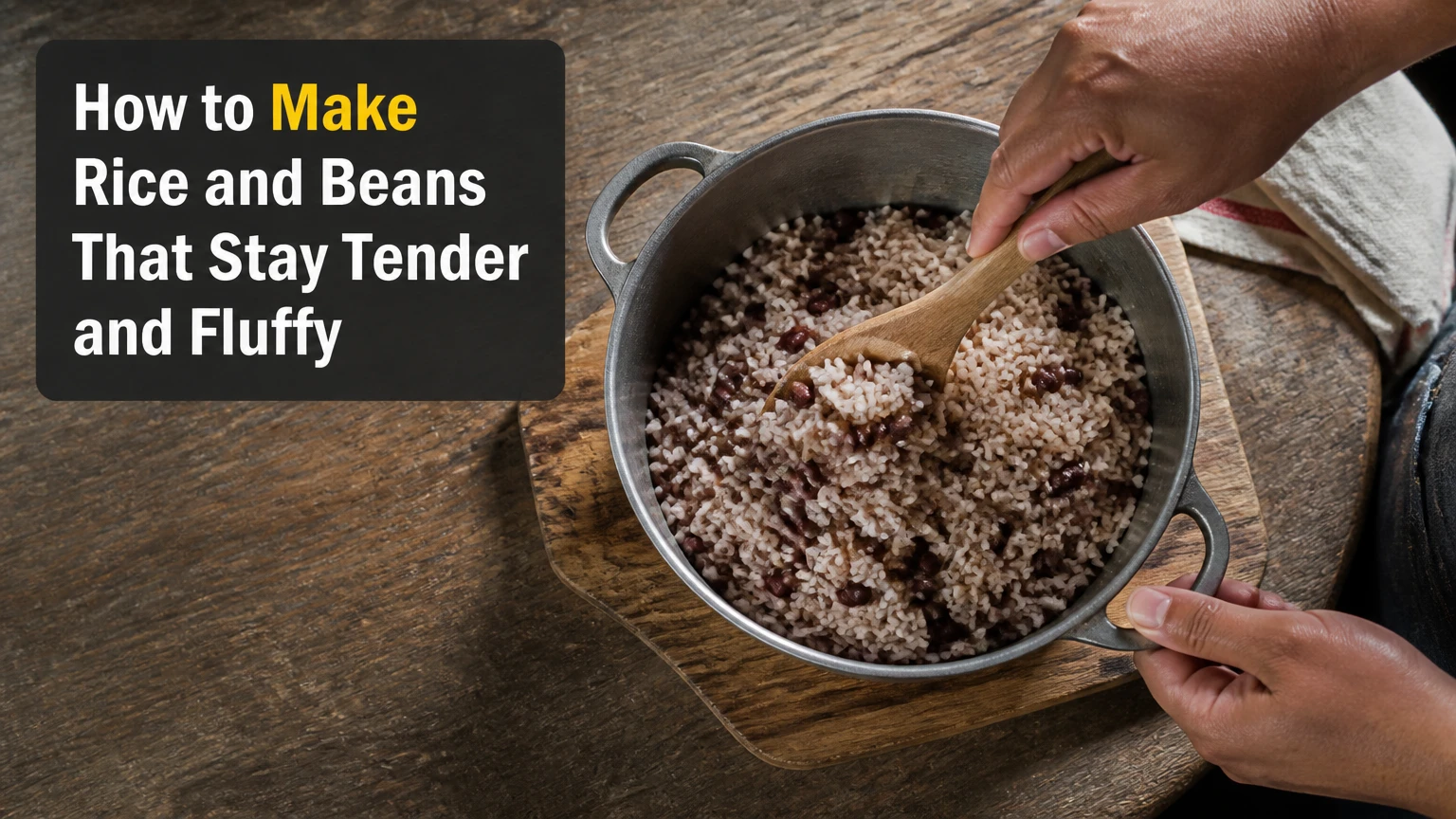
Rice and beans are made by cooking seasoned beans until tender and serving them with separately cooked long-grain rice, or by combining rice with beans and their cooking liquid in one pot. For the most reliable home version, simmer 1 pound of soaked dried beans with aromatics for 1-2 hours, then cook 2 cups of rinsed rice separately for 15-18 minutes.
Key Facts at a Glance
- One cup of dried beans typically yields about 3 cups of cooked beans.
- Soaking dried beans for 8-12 hours reduces cooking time and promotes more even tenderness.
- Acidic ingredients such as tomatoes, vinegar, and lime juice should be added after beans soften.
- Long-grain white rice usually needs about 1.5-2 cups of liquid per cup of rice, depending on the pot and brand.
- Canned beans can produce dinner in about 25-30 minutes when rice cooks separately.
- Rice and beans complement each other’s amino-acid profiles, but total protein and calories depend on serving size and ingredients.
How to Make Rice and Beans
The most dependable method uses seasoned dried beans and separately cooked rice, because each ingredient gets the liquid and cooking time it needs. The full dried-bean process takes about 9-14 hours including soaking, with 25-35 minutes of active work; the canned-bean version takes about 30 minutes. Tender beans, properly seasoned broth, and a tight rice lid determine the result.
Before You Start
| Item | Typical requirement | Practical specification |
|---|---|---|
| Servings | 6-8 | About 1 cup rice and 1/2 cup beans per person |
| Dried beans | 1 pound, about 2 cups | Black, pinto, small red, or kidney beans |
| Rice | 2 cups dry | Long-grain white rice |
| Cooking liquid | 6-8 cups for beans | Water or unsalted stock |
| Active time | 25-35 minutes | Chopping, sautéing, testing, and rice cooking |
| Total time | 9-14 hours | Includes an 8-12-hour soak |
Use a 5- to 6-quart Dutch oven or heavy pot, a medium saucepan with a well-fitting lid, a fine-mesh sieve, a colander, a knife, and a wooden spoon. Keep 1-2 cups of hot water nearby because bean broth can reduce before the centers become tender.
Step 1: Prepare the Beans
Sort 1 pound of dried beans on a tray, remove stones and shriveled beans, and rinse them under cold water. Cover the beans with at least 3 quarts of water and 1 tablespoon of salt, then soak for 8-12 hours; drain and rinse before cooking. You will know the beans are ready for the pot when their skins look hydrated and no debris remains. The common mistake is using an undersized soaking bowl, because beans expand to roughly three times their dry volume.
A salted soak is useful rather than harmful. Harold McGee summarizes the cooking effect as, “Salt makes beans cook more quickly, not more slowly,” in his discussion of bean cookery in On Food and Cooking. The more important limitation is bean age: very old beans may remain firm after hours of cooking even when the method is sound.
For a quick soak, cover the rinsed beans with 3 quarts of water, boil for 2 minutes, remove the pot from heat, cover it, and rest for 1 hour. Drain and rinse. Do not treat soaking water as a fixed recipe ratio, because the beans absorb different amounts according to age, variety, and storage conditions.
What if the beans were not soaked?
Unsoaked beans still work. Add them to the pot with about 8 cups of liquid and expect a stovetop cooking time closer to 2-3 hours, checking the water level every 30 minutes. A pressure cooker can shorten the process, but bean age and variety still control the final texture.
Step 2: Build the Flavor Base
Heat 2 tablespoons of olive oil, neutral oil, lard, or bacon fat in a heavy pot over medium heat. Add 1 diced yellow onion and 1 diced green bell pepper, cook for 5 minutes, then add 4 minced garlic cloves and cook for 30-60 seconds. The flavor base is ready when the onion is translucent and the garlic smells sweet rather than browned. The common mistake is adding garlic at the same time as onion, which can burn before the onion softens.
For a Latin-style pot, add 1 teaspoon ground cumin, 1 teaspoon dried oregano, and 2 bay leaves. For a Louisiana profile, replace cumin and oregano with 1 diced celery rib, 1/2 teaspoon paprika, 1/4 teaspoon thyme, and a small amount of cayenne. The onion, bell pepper, and celery combination is the traditional holy trinity associated with many Louisiana preparations.
Avoid adding tomatoes, vinegar, citrus juice, or wine at this stage. Acid belongs near the end, after the bean skins and centers have softened.
Step 3: Cook the Beans
Add the drained beans and 6 cups of water or stock to the aromatic base. Bring the liquid to a boil, reduce the heat to maintain a gentle simmer, and cook with the lid slightly ajar for 1-2 hours after soaking. Add 1-1 1/2 teaspoons salt during the final 20-30 minutes, then test several beans from different parts of the pot. Beans are finished when the centers are creamy and offer no chalky resistance.
| Bean type | Soaked stovetop time | Typical cooked yield | Best use |
|---|---|---|---|
| Black beans | 60-90 minutes | 5-6 cups per pound | Cuban, Brazilian, Mexican-style dishes |
| Pinto beans | 75-120 minutes | 5-6 cups per pound | Southwestern and smoky preparations |
| Small red beans | 75-120 minutes | 5-6 cups per pound | Creole-style red beans and rice |
| Kidney beans | 90-120 minutes | 5-6 cups per pound | Chili-style or Louisiana preparations |
| Cannellini beans | 60-90 minutes | 5-6 cups per pound | Italian or Mediterranean variations |
Cooking time is a range, not a guarantee. The USDA advises boiling raw kidney beans for at least 30 minutes before slow cooking because raw kidney beans contain high levels of phytohaemagglutinin, a naturally occurring lectin that can cause illness. Do not cook raw kidney beans only in a low-temperature slow cooker.
Taste the broth before the beans finish. It should taste pleasantly seasoned, because bland liquid produces bland beans even after reduction. Add more hot water if the beans are exposed, and add a splash of lime juice, cider vinegar, or 1-2 teaspoons of hot sauce only after tenderness is established.
You will know the beans are properly cooked when one can be pressed easily against the pot wall but remains recognizable in the spoon. The common mistake is boiling aggressively, which splits skins, evaporates liquid too quickly, and turns the outer beans soft before the centers finish.
Step 4: Cook Fluffy Rice
Rinse 2 cups of long-grain white rice in a fine-mesh sieve until the water becomes mostly clear. Combine the rice with 3 1/2 cups water, 1 tablespoon oil or butter, and 1 teaspoon salt in a saucepan; bring it to a boil, stir once, cover tightly, and cook over low heat for 15-18 minutes. Rest the rice off heat for 5-10 minutes before fluffing. The common mistake is lifting the lid repeatedly, which releases steam and leaves the grains undercooked.
Rice liquid ratios vary because brands, pot widths, burner strength, and lids retain different amounts of water. Begin with 1 3/4 cups liquid per cup of rinsed long-grain white rice, then adjust after observing your saucepan. Brown rice generally needs about 2 1/4-2 1/2 cups liquid per cup and 35-45 minutes of simmering.
Fluff with a fork rather than stirring forcefully. If the rice is wet, leave it uncovered for 5 minutes and spread it on a tray if necessary. If the rice is crunchy but the pot is dry, add 2 tablespoons boiling water, cover, and steam for 5-8 minutes.
Should Rice and Beans Cook Together?
Rice and beans should cook together only when the bean liquid, bean texture, and rice variety are planned as one recipe. Separate cooking is more forgiving because dried beans often need 60-120 minutes while white rice needs about 15-18 minutes; combining them too early can produce broken beans and overcooked rice.
One-pot dishes such as Cuban moros y cristianos and Jamaican rice and peas are different preparations, not shortcuts for every rice-and-bean meal. They use measured bean liquor, partially cooked beans, or canned beans so the rice receives a predictable amount of liquid.
For a simple one-pot approach, cook soaked beans until nearly tender, measure 3 1/2 cups of seasoned bean liquid, return it to the pot with 2 cups rinsed rice, cover, and simmer until the rice is done. Reserve extra broth separately. If the beans are still hard when the rice is ready, remove the rice, finish the beans, and combine them at serving.
Which Beans and Rice Work Best?
Black beans with long-grain white rice offer the most versatile combination for a first batch. Black beans hold their shape, season well with cumin and oregano, and produce a dark, savory broth; pinto beans become creamier, while kidney beans require careful boiling before slow cooking.
| Pairing | Liquid character | Rice choice | Flavor direction |
|---|---|---|---|
| Black beans | Dark, earthy broth | Long-grain white | Cuban or Brazilian |
| Pinto beans | Creamy, mild broth | Long-grain white or brown | Southwestern |
| Small red beans | Thick, savory broth | Long-grain white | Louisiana |
| Pigeon peas | Firm, nutty broth | Long-grain or jasmine | Jamaican |
| Cannellini beans | Light, delicate broth | Basmati or long-grain | Mediterranean |
Use jasmine rice when you want a softer, fragrant result, but reduce the liquid according to the package instructions. Basmati produces drier, more separate grains. Brown rice adds chew and fiber but needs a longer cooking time, so it is usually easier to cook separately from dried beans.
What Regional Rice-and-Bean Styles Should You Try?
Regional rice-and-bean dishes differ in cooking liquid, fat, aromatics, and presentation. Gallo pinto mixes cooked rice and beans in a skillet, Cuban moros y cristianos cooks rice in black-bean broth, Louisiana red beans are ladled over rice, and Jamaican rice and peas uses coconut milk, thyme, and allspice.
| Style | Bean or pea | Distinctive ingredients | Finished texture |
|---|---|---|---|
| Gallo pinto | Black beans or small red beans | Lizano sauce, onion, pepper, cilantro | Relatively dry and fried |
| Moros y cristianos | Black beans | Garlic, oregano, cumin, bean broth | Rice stained dark and savory |
| Red beans and rice | Small red beans or kidney beans | Celery, bell pepper, sausage, thyme | Creamy beans over rice |
| Brazilian-style plate | Black beans | Fried garlic, bay leaf, farofa | Beans beside or over rice |
| Jamaican rice and peas | Pigeon peas or kidney beans | Coconut milk, Scotch bonnet, thyme | Fragrant and moist |
Do not call every version by the same regional name. Gallo pinto is generally fried together after the rice and beans are cooked, while Jamaican rice and peas is defined by coconut milk and aromatic herbs. The distinctions matter because each style has a different liquid ratio and finishing method.
Can You Make Rice and Beans With Canned Beans?
Canned beans make rice and beans in about 25-30 minutes, including separately cooked white rice. Drain and rinse three 15-ounce cans of beans, sauté the onion, pepper, and garlic in 2 tablespoons oil, add the beans with 1-1 1/2 cups stock, and simmer for 15-20 minutes. The checkpoint is a thick, seasoned sauce rather than watery beans.
Canned beans are already tender, so prolonged simmering breaks their skins. Add salt only after tasting because canned liquid may contain substantial sodium, and use low-sodium stock if available. A teaspoon of cumin, 1/2 teaspoon oregano, bay leaf, smoked paprika, and a final teaspoon of vinegar can supply depth quickly.
This method is best for weeknights, small households, and cooks who did not plan a soak. It is not ideal when you want beans that hold their shape for a long buffet service, because canned beans soften faster during reheating.
Which Cooking Method Fits Your Schedule?
Dried stovetop beans provide the greatest control and lowest ingredient cost, canned beans provide the fastest dinner, and pressure-cooked dried beans reduce hands-on waiting. The best method depends on whether your priority is a 30-minute meal, traditional texture, or minimal supervision.
| Method | Total time | Typical active time | Approximate bean result | Best situation |
|---|---|---|---|---|
| Soaked stovetop | 9-14 hours | 25-35 minutes | Deep flavor, adjustable firmness | Planned batch cooking |
| Quick-soaked stovetop | 3-4 hours | 30-40 minutes | Consistently tender | Same-day dried beans |
| Canned beans | 25-30 minutes | 15-20 minutes | Soft, convenient | Weeknight dinner |
| Electric pressure cooker | 1-2 hours | 15-25 minutes | Fast dried-bean cooking | Time-limited meal prep |
For an electric pressure cooker, cook rinsed unsoaked black beans with water and aromatics at high pressure for about 25-30 minutes, then allow a natural release for 15-20 minutes. Pinto, red, and kidney beans may need 30-40 minutes. Do not pressure-cook dry beans and rice together unless a tested recipe specifies the exact variety, liquid, and release method.
How Much Does a Batch Cost and Yield?
A dried-bean batch feeding six to eight people typically costs about $4-$8 before optional meat, depending on local prices and stock. One pound of dried beans yields approximately 5-6 cups cooked, and 2 cups dry long-grain rice yields roughly 6 cups cooked, providing about eight servings of 3/4 cup rice and 1/2 cup beans.
| Component | Dry quantity | Cooked yield | Typical serving allocation |
|---|---|---|---|
| Dried beans | 1 pound, about 2 cups | 5-6 cups | 1/2-3/4 cup |
| White rice | 2 cups | 5 1/2-6 cups | 3/4-1 cup |
| Aromatics | 1 onion, 1 pepper, 4 garlic cloves | 2-3 cups cooked base | 2-4 tablespoons |
| Stock or water | 6-8 cups for beans | 4-6 cups usable broth | Sauce as needed |
The frequently quoted nutrition estimate of 300-350 calories and 10-12 grams of protein applies only to a particular serving size and recipe. Oil, sausage, bacon, coconut milk, rice quantity, and bean variety change the result, so use the USDA FoodData Central entry for the specific ingredients when nutrition precision matters.
Rice and beans complement amino acids because legumes provide more lysine while grains contribute relatively more methionine. The pairing is nutritionally useful, but a complete diet does not require eating the foods in the same bite or meal; total daily protein and dietary variety matter more.
How Can You Make the Dish Healthier?
Use brown rice, reduce added fat, choose low-sodium stock, and keep vegetables prominent if you want more fiber and fewer calories. A practical balanced plate is 1/2 cup beans, 1/2-3/4 cup rice, 1 cup vegetables, and a small amount of avocado, yogurt, or hot sauce for finishing.
Black beans, pinto beans, lentils, and pigeon peas each provide different textures and cooking times. Lentils usually need no soaking and cook in about 20-30 minutes, but they break down more readily than whole beans. Farro can replace rice, although it requires a separate cooking schedule and produces a chewier dish.
Bone broth is not automatically a major protein upgrade. Check the nutrition label, because many commercial broths contribute modest protein while adding sodium. Beans remain the primary protein and fiber ingredient in the plate.
Common Problems and Reliable Fixes
Why Are the Beans Still Hard?
Hard beans usually result from old storage, acidic ingredients added early, hard water, or insufficient heat. Remove tomatoes, vinegar, and citrus from the pot until the beans are tender, continue simmering in fresh water, and consider 1/4 teaspoon baking soda only for a stubborn batch.
Baking soda can soften skins quickly, but too much produces a soapy flavor and mushy texture. Very hard water can also slow softening because mineral ions interact with bean cell-wall compounds. Filtered water is a reasonable test when the same beans repeatedly fail.
Why Is the Rice Gummy?
Gummy rice usually comes from excess liquid, excessive stirring, or steam escaping through a loose lid. Rinse the grains, measure liquid carefully, keep the lid closed during the simmer, and rest the rice covered for at least 5 minutes before fluffing.
Spread overcooked rice on a shallow tray for several minutes to release surface moisture. Do not rinse cooked rice to fix gumminess, because washing removes flavor and leaves wet grains.
Why Does the Dish Taste Bland?
Bland rice and beans usually lack salt in the bean broth, aromatics, or a finishing acid. Season the beans during cooking, taste the broth before serving, and add 1-2 teaspoons lime juice or cider vinegar after tenderness is complete.
Salt in stages works better than adding a large amount at the end. The broth should taste slightly more seasoned than you want the final beans to taste, because rice and unseasoned toppings dilute the sauce.
Why Did the Bean Skins Split?
Split skins usually indicate a hard boil, overcooking, or rapid temperature changes. Maintain a quiet simmer, add hot rather than cold water, and stop cooking as soon as the centers become creamy.
Some dishes intentionally use broken beans for a thick sauce. For distinct beans, avoid vigorous stirring and use a wide spoon rather than scraping the bottom.
How Should You Store and Reheat Rice and Beans?
Cool rice and beans in shallow containers and refrigerate them within 2 hours, or within 1 hour when the room temperature exceeds 90°F, following USDA food-safety guidance. Use refrigerated leftovers within 3-4 days, reheat them until steaming hot, and freeze portions for about 2-3 months for best quality.
Store rice and beans separately when possible. Rice absorbs bean broth overnight and becomes softer, while separate containers let you reheat rice with a teaspoon of water and beans with additional broth. Thaw frozen portions in the refrigerator or reheat directly in a covered pan with a splash of water.
Never leave cooked rice at room temperature for prolonged periods. Bacillus cereus spores can survive cooking, and improper cooling gives the organism an opportunity to multiply.
Choose the Right Version for Your Kitchen
Choose soaked dried beans when cost, texture, and batch size matter most. Choose canned beans when dinner must be ready in 30 minutes. Choose a pressure cooker when you want dried-bean flavor without spending most of the day monitoring a pot.
- Budget cook: Use dried black or pinto beans, water, onion, garlic, and long-grain rice. The cost per serving is typically lower than canned beans.
- Busy professional: Use three cans of beans, microwaveable or quick-cooked rice, and a 15-minute skillet sauce.
- Meal preparer: Cook a full pound of beans and 2 cups rice, portion them separately, and freeze extra beans in 1 1/2-cup containers.
- Culinary traditionalist: Choose a regional preparation such as moros y cristianos, red beans and rice, or Jamaican rice and peas rather than combining unrelated seasonings.
- Health-focused cook: Use low-sodium broth, moderate rice portions, extra vegetables, and little or no sausage or bacon.
Rice and beans are not a single fixed recipe. The strongest version matches the bean, rice, liquid, and cooking method instead of forcing every variety into one ratio.
Frequently Asked Questions
Do You Need to Soak Beans Before Cooking Rice and Beans?
No, soaking is optional, but an 8-12-hour soak usually shortens stovetop cooking and improves evenness. Unsoaked beans often require 2-3 hours, while soaked beans commonly finish in 1-2 hours. Quick-soaking by boiling for 2 minutes and resting covered for 1 hour provides a practical same-day alternative.
Can You Cook Rice in Leftover Bean Broth?
Yes, provided the broth is strained, seasoned, and measured like any other cooking liquid. Use about 3 1/2 cups broth for 2 cups long-grain white rice, then adjust for the rice brand and saucepan. Excess starch or bean particles can make the rice stick, so strain broth when a clean texture matters.
Are Rice and Beans a Complete Protein?
Rice and beans complement one another’s essential amino acids, with beans supplying more lysine and rice supplying relatively more methionine. The combination is a useful plant-based protein pairing, but its protein quality and quantity still depend on the portion, bean variety, rice amount, and the rest of the diet.
Can You Use Brown Rice With Dried Beans?
Yes, but cook brown rice separately in most home kitchens because brown rice needs roughly 35-45 minutes and 2 1/4-2 1/2 cups liquid per cup. Dried beans may finish earlier or later, and combining both from the beginning makes texture difficult to control without a tested one-pot formula.
How Do You Thicken Bean Sauce Without Flour?
Mash 1/2-1 cup cooked beans against the side of the pot, or blend a small portion with broth and return it to the sauce. Simmer uncovered for 5-15 minutes to reduce liquid. Do not add flour unless you specifically want a roux-thickened preparation, because bean starch provides a more natural texture.
What Should You Serve With Rice and Beans?
Serve rice and beans with sautéed greens, cabbage, roasted plantains, avocado, tomato salad, pickled onions, or a fresh citrus-based salsa. Use acidic garnishes at the table rather than early in bean cooking. A modest portion of smoked sausage or grilled chicken can add flavor without replacing the beans as the main component.
The Bottom Line
The most reliable way to make rice and beans is to cook seasoned dried beans until creamy, prepare long-grain rice separately, and combine them at the table. Use a salted soak, delay acidic ingredients, protect the rice from excess liquid, and finish the beans with lime juice or vinegar. For a fast dinner, canned beans deliver the same basic structure in about 30 minutes.