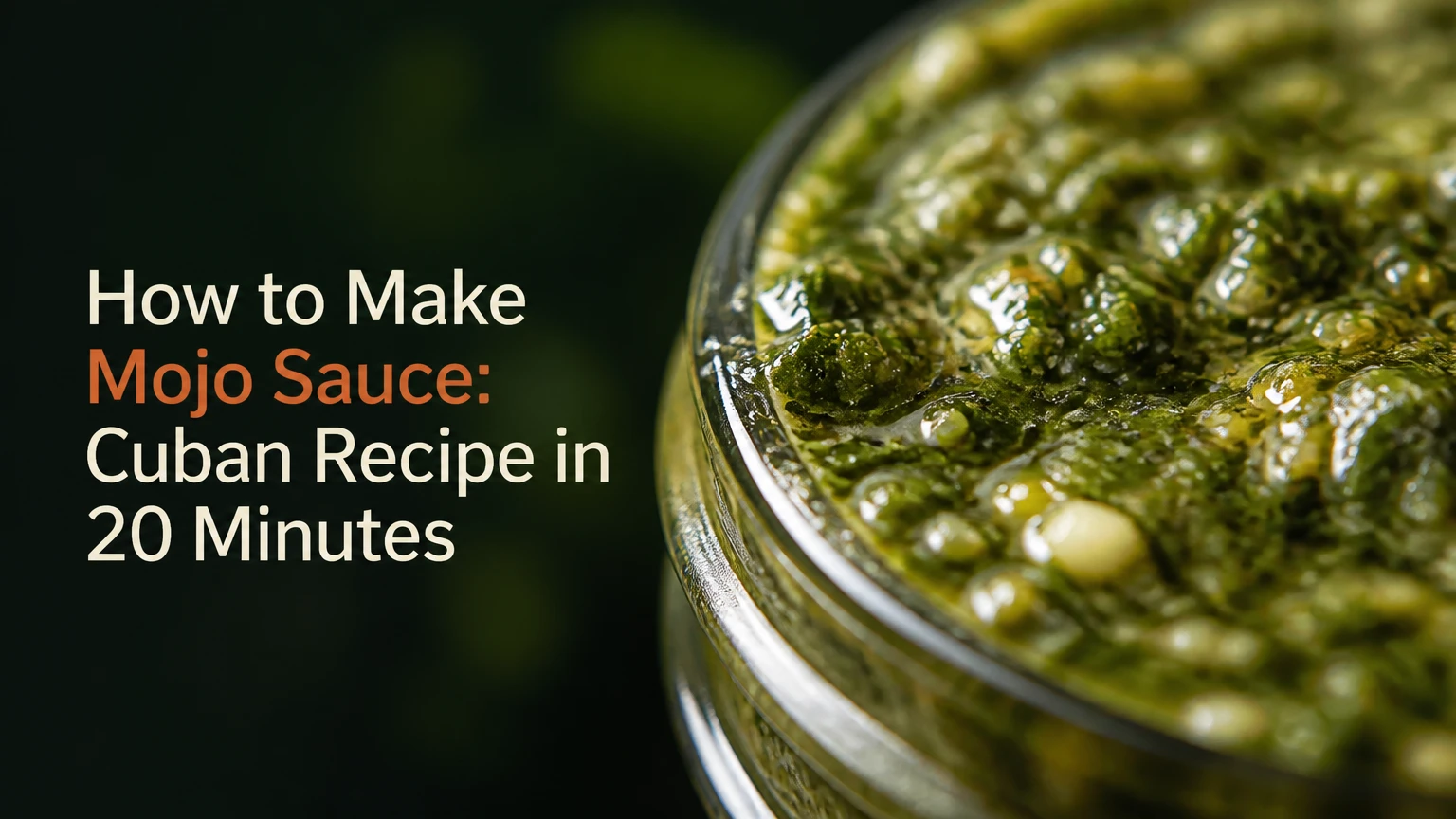
Mojo sauce is a Cuban garlic-and-citrus condiment made by combining bitter orange juice, garlic, olive oil, cumin, oregano, salt, and pepper. To make it, crush the aromatics, mix in the citrus, pour over gently heated oil, and rest the sauce for 10 minutes. The result is enough for about 1.5 cups.
Key Facts
Cuban mojo criollo typically uses 12-15 garlic cloves, 1 cup citrus juice, and 1/2 cup olive oil.
A practical bitter-orange substitute is 2/3 cup orange juice plus 1/3 cup lime juice.
The hot oil should be warm and shimmering, not smoking, to avoid burnt garlic and acrid flavor.
Mojo takes about 20 minutes, including a 10-minute resting period.
One batch provides approximately 1.5 cups, enough for 2-3 pounds of meat or several vegetable servings.
Raw garlic oil mixtures require stricter storage than acidic, cooked preparations.
What Is Mojo Sauce?
Mojo sauce is a family of garlic-based sauces from the Canary Islands, Cuba, and other parts of Latin America. Cuban mojo criollo is usually sharp, savory, and citrusy, while Canary Islands mojo verde uses herbs and green peppers, and mojo picón uses chile, paprika, or dried peppers.
The sauce has two practical roles. It can marinate pork, chicken, seafood, or vegetables before cooking, and it can finish roasted yuca, potatoes, rice, beans, or grilled meat after cooking. Cuban versions often accompany lechón asado, where garlic, sour orange, cumin, and oregano cut through fatty pork.
Acid brightens the mixture, but citrus does not deeply tenderize a thick cut of meat in a few hours. Acid mainly changes the outer surface, and prolonged exposure can make fish or shrimp mushy. For tenderness, cooking temperature, salt, and the cut of meat matter more than the citrus alone.
What Ingredients Do You Need?
The core formula below yields approximately 1.5 cups, or 360 milliliters, of Cuban-style mojo. Use fresh garlic and unsweetened citrus juice because bottled juice can contain preservatives or added sugar that alter the balance.
| Ingredient | Amount | Function | Practical substitute |
|---|---|---|---|
| Bitter orange juice | 1 cup, 240 ml | Acid, citrus aroma, mild bitterness | 2/3 cup orange juice plus 1/3 cup lime juice |
| Garlic | 12-15 medium cloves | Pungency and savory depth | 8-10 large cloves for a milder sauce |
| Olive oil | 1/2 cup, 120 ml | Body and aromatic carrier | Neutral oil for a softer olive flavor |
| Ground cumin | 1 teaspoon | Earthy, warm background note | 1 1/4 teaspoons toasted cumin seeds, ground |
| Dried oregano | 1 teaspoon | Herbal bitterness and aroma | 1 tablespoon fresh oregano, finely chopped |
| Fine salt | 1 teaspoon | Seasoning and garlic abrasion | 3/4 teaspoon kosher salt, then adjust |
| Black pepper | 1/2 teaspoon | Mild heat and aroma | 1/4 teaspoon white pepper |
Bitter orange, also called naranja agria or Seville orange, has more bitterness and acidity than a sweet eating orange. If the substitute tastes too sour, add 1/4 teaspoon of sugar or 1/2 teaspoon of finely grated orange zest. Do not replace the entire citrus volume with lime unless you want a much sharper, greener sauce.
Extra-virgin olive oil works well for a finishing sauce, but a mild olive oil is often better for a marinade or hot-oil infusion. Strong peppery oils can compete with the garlic and sour orange.
Before You Start
| Specification | Typical value |
|---|---|
| Active preparation | 10 minutes |
| Heating and resting | 10 minutes |
| Total time | 20 minutes |
| Yield | 1.5 cups, 360 ml |
| Difficulty | Easy |
| Typical ingredient cost | $4-$7 |
| Marinade capacity | 2-3 pounds of meat |
| Required tools | Mortar and pestle or bowl and fork |
You need a heatproof bowl, small saucepan, measuring cups, measuring spoons, a knife, and a clean jar or bottle. A mortar and pestle creates the most traditional texture, but a bowl and the flat side of a chef’s knife work when no mortar is available.
Peel the garlic before measuring. Clove size varies substantially, so 12 small cloves can contain less garlic than 8 very large cloves. A useful weight target is approximately 45-60 grams of peeled garlic.
How to Make Mojo Sauce
The following method makes Cuban mojo criollo with mellow garlic, balanced acidity, and a loose texture suitable for both marinating and spooning over cooked food. Keep the oil below its smoking point, because scorched garlic cannot be corrected later.
Step 1: Crush the Garlic With the Dry Seasonings
Place the garlic, salt, cumin, oregano, and black pepper in a mortar. Pound and grind for 2-4 minutes until the cloves become a coarse, wet paste.
Salt helps abrade the garlic and draw out moisture. A smooth paste distributes garlic more evenly than sliced cloves, while a coarse paste leaves small aromatic pieces in the finished sauce.
You’ll know it worked when: the garlic has no large dry chunks and the mixture looks moist.
Common mistake: crushing garlic without salt produces slippery pieces that resist grinding. Add the salt at the beginning.
Step 2: Add the Bitter Orange Juice
Transfer the garlic paste to a heatproof bowl. Whisk in the bitter orange juice, then taste a small drop for salt and acidity.
The mixture should taste bright and strongly seasoned before adding oil. The oil will soften the perception of salt and acid, so under-seasoning the citrus base often produces a flat finished sauce.
You’ll know it worked when: the garlic paste is suspended through the juice rather than clumped at the bottom.
Common mistake: using cold orange juice straight from a sweet juice carton can make the sauce taste sugary. Use unsweetened juice and add lime for acidity.
Step 3: Warm the Olive Oil Carefully
Pour the olive oil into a small saucepan over medium-low heat. Warm it until it reaches approximately 160-175°F, or 70-80°C, and appears fluid with a faint shimmer.
A kitchen thermometer provides the clearest check. Without one, remove the oil when it feels hot and moves quickly across the pan, but before smoke appears. Smoking oil is too hot for this preparation.
You’ll know it worked when: the oil is hot enough to make a gentle sizzle when a drop meets the citrus mixture.
Common mistake: heating oil until it smokes creates burnt, bitter garlic when the oil is poured over the paste. Remove smoking oil from the heat and cool it for 2-3 minutes.
Step 4: Pour the Oil Over the Garlic Mixture
Slowly pour the warm oil into the heatproof bowl while whisking. The mixture should sizzle briefly, then become more cohesive as the oil disperses through the citrus and garlic.
Pouring gradually gives the water-based citrus phase time to surround small droplets of oil. The result will be a loose emulsion, not mayonnaise, so a little separation after resting is normal.
You’ll know it worked when: the sauce looks slightly cloudy and the raw garlic aroma has softened.
Common mistake: pouring all the oil at once can leave a floating oil layer. Whisk for 30-60 seconds, or shake the cooled sauce in a sealed jar before serving.
Step 5: Rest, Taste, and Adjust
Leave the mojo at room temperature for 10 minutes, then taste it with a clean spoon. Add salt in 1/8-teaspoon increments, lime juice by the teaspoon, or orange zest in small pinches.
Resting allows the oil to carry garlic, cumin, and oregano aromas throughout the sauce. The flavor will usually become more integrated after 30 minutes, although the raw garlic edge will remain stronger than in a longer cooked preparation.
You’ll know it worked when: the sauce tastes acidic first, followed by garlic, cumin, and a rounded olive-oil finish.
Common mistake: adjusting immediately after pouring the oil can lead to oversalting because the flavors have not dispersed.
Should You Use Raw or Warmed Oil?
Use the warm-oil method for mellow garlic and a rounded flavor; use the cold method for maximum pungency and a fresher citrus profile. Both methods produce authentic-style mojo, but they suit different foods and storage practices.
For the raw method, whisk the garlic paste, citrus, seasonings, and cold oil together, then rest for 15-30 minutes. For a warmer, softer result, use the flash-infusion method above. Heating the oil does not make the sauce shelf-stable, and raw garlic in oil still requires refrigeration.
| Method | Preparation time | Flavor profile | Best application | Texture |
|---|---|---|---|---|
| Cold whisked | 5-10 minutes | Sharp garlic, bright citrus | Fish, salads, quick dipping | More separated |
| Warm-oil infusion | 20 minutes total | Mellow garlic, rounded spice | Pork, chicken, yuca | Slightly cohesive |
| Roasted-garlic | 45-60 minutes | Sweet, soft garlic | Bread, vegetables, shrimp | Thick and smooth |
| Blender-assisted | 5-8 minutes | Strong, evenly dispersed | Large batches, marinades | Most uniform |
A mortar produces a more rustic sauce and limits heat from mechanical processing. A blender makes a smoother mixture, but high-speed blending can warm the oil and introduce a bitter edge in some extra-virgin olive oils.
The practical rule is simple: blend the citrus, garlic, herbs, and spices first, then add oil slowly at low speed or whisk it in by hand. This limits unnecessary mechanical agitation.
Which Mojo Style Should You Make?
Cuban mojo criollo is the best starting point for pork, yuca, and rice because bitter orange, garlic, cumin, and oregano create a savory citrus profile. Mojo verde is more herbaceous, while mojo picón is hotter and thicker.
| Style | Defining ingredients | Typical yield | Best pairings |
|---|---|---|---|
| Mojo criollo | Sour orange, garlic, cumin, oregano, oil | 1.5 cups | Pork, yuca, chicken, rice |
| Mojo verde | Cilantro or parsley, green pepper, cumin, vinegar, garlic | 1 cup | Potatoes, fish, goat cheese |
| Mojo picón | Dried chile, garlic, cumin, vinegar, paprika, breadcrumbs | 1 cup | Beef, potatoes, roasted meats |
| Mojo de ajo | Slow-cooked garlic, lime, oil, salt | 1 cup | Shrimp, fish, chicken |
Mojo Verde
Blend 1 packed cup of cilantro, 1 small green pepper, 2 garlic cloves, 2 tablespoons white wine vinegar, 1/2 teaspoon cumin, 1/2 teaspoon salt, and 1/2 cup olive oil. Add 1-2 tablespoons water if the sauce is too thick.
Mojo verde belongs to the Canary Islands tradition and is commonly paired with papas arrugadas, or wrinkled potatoes. Parsley creates a milder result than cilantro, while jalapeño adds heat without the vegetal flavor of green bell pepper.
Mojo Picón
For a red, spicy sauce, combine 3 garlic cloves, 1 teaspoon smoked paprika, 1/2 teaspoon cumin, 1 dried chile or 1/4 teaspoon cayenne, 2 tablespoons red wine vinegar, 1/2 teaspoon salt, 2 tablespoons breadcrumbs, and 1/2 cup oil.
Breadcrumbs thicken mojo picón and help it cling to potatoes or grilled meat. Add the oil gradually because the bread absorbs liquid quickly.
How Should You Use Mojo as a Marinade?
Use approximately 1/2 cup of mojo per pound of food, place the food in a covered container, and refrigerate during marination. Pork can tolerate 4-12 hours, chicken usually needs 2-8 hours, and fish or shrimp generally need 15-30 minutes.
| Food | Mojo amount | Maximum practical marinating time | Cooking use |
|---|---|---|---|
| Pork shoulder or loin | 1/2 cup per pound | 12 hours | Roast or grill |
| Chicken thighs | 1/3 cup per pound | 8 hours | Grill or roast |
| Firm fish | 1/4 cup per pound | 30 minutes | Grill or broil |
| Shrimp | 1/4 cup per pound | 20 minutes | Sauté or grill |
| Mushrooms or zucchini | 1/4 cup per pound | 60 minutes | Roast or grill |
Reserve a clean portion before it touches raw meat if you want mojo for dipping. Never serve used marinade as a finishing sauce unless you boil it first, because raw meat can transfer pathogens into the liquid.
Mojo works especially well when added twice. Marinate pork or chicken with a modest amount, cook the food thoroughly, and spoon fresh sauce over the finished dish after slicing.
How Should You Store Mojo Safely?
Refrigerate mojo in a clean, covered container at 40°F or below and use it within 3-4 days for the most conservative home-storage practice. Freeze it in 1-2 tablespoon portions for up to 3 months, then thaw it in the refrigerator.
The National Center for Home Food Preservation warns that garlic-in-oil mixtures can support botulism toxin formation when handled improperly. The University of California Division of Agriculture and Natural Resources recommends refrigerating homemade garlic-in-oil mixtures and using them within four days.
Acid helps reduce risk, but an acidic sauce is not automatically shelf-stable. Do not keep homemade mojo at room temperature overnight, store it in a sealed jar in a pantry, or assume hot oil makes raw garlic safe indefinitely.
| Storage method | Timeframe | Container | Quality result |
|---|---|---|---|
| Refrigerator, fresh mojo | 3-4 days | Covered glass jar | Brightest flavor |
| Refrigerator, strained sauce | 3-4 days | Sterilized covered jar | Less garlic sediment |
| Freezer | Up to 3 months | Ice-cube tray or freezer container | Slightly softer aroma |
| Room temperature | Do not store | None | Unsafe for prolonged storage |
A thin layer of oil on top does not preserve the sauce safely. Label the container with the preparation date, and discard mojo if it develops gas, mold, an unusual odor, or a texture that changes unexpectedly.
Why Does Mojo Taste Bitter or Harsh?
Bitter mojo usually results from scorched garlic, overprocessed extra-virgin olive oil, excessive lime, or old garlic with green sprouts. Each cause needs a different correction, so adding sugar blindly can hide the symptom without fixing the flavor.
- Burnt garlic: Make a fresh batch. Acrid garlic cannot be removed by dilution.
- Too much lime: Add orange juice one tablespoon at a time, then add oil to restore balance.
- Bitter olive oil: Stir in a mild olive oil rather than continuing to blend.
- Raw garlic too aggressive: Rest the sauce for 30 minutes, or warm a new oil portion and combine it gradually.
- Too salty: Increase the citrus and oil proportionally, then use the sauce over unsalted food.
- Sauce separates: Shake it in a jar or whisk in 1 teaspoon of mustard for a nontraditional but stable emulsion.
One practitioner rule is worth remembering: garlic quantity controls intensity, while garlic preparation controls texture. Sliced garlic tastes intermittent and sharp; a crushed paste distributes heat through every spoonful.
What Variations Work for Different Diets?
For a lower-fat sauce, replace one-quarter of the oil with unsalted chicken stock or vegetable broth after the sauce cools. The result is thinner and less stable, so make only what you will use within two days.
For roasted-garlic mojo, roast a foil-wrapped head of garlic at 375°F for approximately 40 minutes, squeeze out 8-10 cloves, and blend them with 1/2 cup orange juice, 1/4 cup lime juice, 1/2 cup oil, 1 teaspoon cumin, and salt. Roasted garlic creates sweetness but loses the sharp raw-garlic character associated with Cuban mojo.
For spicy mojo, add one minced jalapeño, 1/4 teaspoon cayenne, or one seeded Fresno chile. Add fresh chile after the oil cools slightly to preserve its grassy aroma.
For vegan and gluten-free cooking, the base recipe already meets both requirements. Mojo picón may contain breadcrumbs, so use gluten-free breadcrumbs or omit them when adapting that style.
What Does Mojo Cost and How Much Does It Make?
A typical homemade batch costs $4-$7 in the United States, depending mainly on the price of olive oil, fresh citrus, and bitter oranges. The recipe yields about 1.5 cups, or 24 tablespoons, making the estimated cost approximately $0.17-$0.29 per tablespoon.
| Batch size | Citrus | Garlic | Oil | Approximate yield |
|---|---|---|---|---|
| Small | 1/2 cup | 6-8 cloves | 1/4 cup | 3/4 cup |
| Standard | 1 cup | 12-15 cloves | 1/2 cup | 1.5 cups |
| Large | 2 cups | 24-30 cloves | 1 cup | 3 cups |
| Marinade-only | 3/4 cup | 8-10 cloves | 1/4 cup | 1 cup |
For a small dinner, halve the recipe rather than storing leftover raw garlic sauce for a week. For a pork shoulder, the standard batch provides enough marinade for 2-3 pounds while leaving several tablespoons for cooked-food finishing if you reserve it first.
Frequently Asked Questions
Can I Make Mojo Sauce Without Bitter Oranges?
Yes. Combine two parts sweet orange juice with one part lime juice, such as 2/3 cup orange juice and 1/3 cup lime juice for a 1-cup replacement. Add a small pinch of sugar or orange zest if the mixture tastes sharply sour rather than rounded. Lemon can replace lime, but it produces a more floral, less Cuban-style profile.
Is Mojo Sauce the Same as Chimichurri?
No. Mojo usually centers on garlic, citrus or vinegar, cumin, oregano, and oil, while Argentine chimichurri commonly centers on parsley, garlic, vinegar, chili, and oregano. Mojo is often thinner and more citrus-forward. The sauces can overlap as grilled-meat accompaniments, but they have different regional flavor structures.
Can I Use Mojo on Fish?
Yes, but use less time and less sauce than for pork. Coat firm fish with approximately 1/4 cup per pound and refrigerate for 15-30 minutes before grilling or broiling. Longer acidic marination can soften the surface excessively, especially with delicate fillets, scallops, or shrimp.
Can I Make Mojo With Canola Oil?
Yes. Canola, grapeseed, or avocado oil creates a milder sauce and tolerates warming well, but the finished mojo will have less olive-fruit character. A useful compromise is half mild olive oil and half neutral oil, particularly when the sauce will be used as a long marinade.
Why Is My Mojo Watery?
Mojo is naturally a loose sauce because citrus juice is its main liquid. For a thicker texture, reduce the citrus by 2 tablespoons, emulsify the oil gradually, or add 1 teaspoon breadcrumbs for a mojo picón-style finish. Do not add flour, which creates a pasty texture and dulls the acidity.
Can I Reuse Mojo Marinade?
Do not reuse uncooked marinade as a dipping sauce. Set aside a clean portion before adding raw meat, or bring used marinade to a full boil and maintain the boil for at least one minute before using it as a cooked sauce. Fresh reserved mojo gives better flavor and avoids cross-contamination.
The Bottom Line
To make mojo sauce, crush 12-15 garlic cloves with salt, cumin, oregano, and pepper, mix the paste with 1 cup bitter orange juice, then whisk in 1/2 cup gently warmed olive oil. Rest the sauce for 10 minutes, refrigerate leftovers promptly, and use Cuban mojo criollo with pork, chicken, yuca, potatoes, fish, or grilled vegetables.