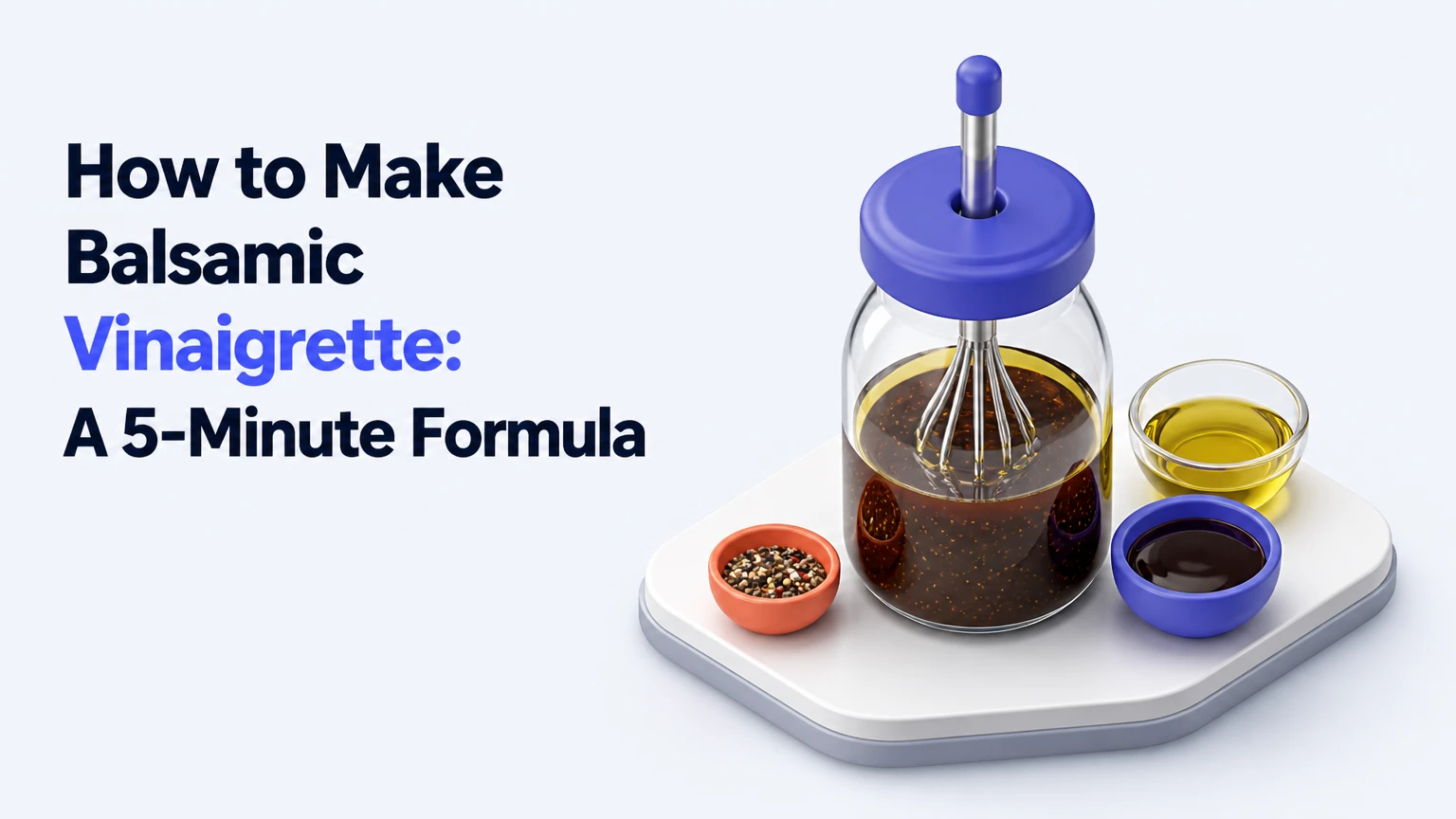
Balsamic vinaigrette is made by whisking balsamic vinegar, Dijon mustard, salt, pepper, and optional honey or garlic, then gradually incorporating extra virgin olive oil. Use 1 part vinegar to 2 parts oil for a bright everyday dressing, or 1 part vinegar to 3 parts oil for a milder, richer version. The finished dressing takes about 5 minutes.
Key Facts at a Glance
A practical everyday ratio is 1 part balsamic vinegar to 2 parts oil.
A 3:1 oil-to-vinegar ratio produces a softer, less acidic dressing.
Dijon mustard improves stability, while honey or maple syrup balances sharp vinegar.
A jar method takes about 30-60 seconds of shaking after the ingredients are added.
Homemade balsamic vinaigrette usually keeps 5-7 days with fresh garlic and up to 2 weeks without fresh aromatics.
Refrigerated extra virgin olive oil may cloud or solidify, so warm the sealed jar before shaking.
What You Need Before You Start
Balsamic vinaigrette requires a bowl and whisk or a leakproof jar, plus seven common ingredients. The most important decision is the vinegar-to-oil ratio, because the ratio controls acidity more strongly than the amount of mustard or sweetener.
| Ingredient | Base quantity | Practical function | Substitution |
|---|---|---|---|
| Balsamic vinegar | 1/4 cup | Acid, fruitiness, color | 3 tbsp red wine vinegar plus 1 tbsp grape juice |
| Extra virgin olive oil | 1/2 cup | Body, richness, carrier for aromas | Avocado oil or mild olive oil |
| Dijon mustard | 1 tsp | Emulsifying aid and seasoning | 1 tsp yellow mustard |
| Honey or maple syrup | 1 tsp | Rounds acidity | 1 tsp sugar or date syrup |
| Garlic | 1 small clove | Savory aroma | 1/4 tsp garlic powder |
| Fine salt | 1/4 tsp | Balances and amplifies flavor | 1/2 tsp kosher salt |
| Black pepper | 1/8 tsp | Pungent finish | White pepper or red pepper flakes |
Choose the Right Vinegar and Oil
Use commercial balsamic vinegar for everyday salad dressing, and reserve expensive Aceto Balsamico Tradizionale for finishing small portions. Traditional balsamic vinegar from Modena or Reggio Emilia is concentrated, aged, and costly; its nuanced sweetness can disappear when diluted with a large volume of oil.
Extra virgin olive oil gives the dressing peppery, grassy, or fruity notes. A strongly bitter, early-harvest oil can overpower mild greens, while a mild olive oil works better with strawberries, pears, or delicate butter lettuce. Taste both ingredients separately before mixing.
Julia Child gives the classic rule in The Way to Cook (1989): “The usual proportion is 3 parts oil to 1 part vinegar.” That ratio remains useful, but balsamic vinegar is often sweeter and less sharply acidic than wine vinegar, so a 2:1 ratio can taste more balanced in modern salads.
How to Make Balsamic Vinaigrette
Make balsamic vinaigrette by dissolving the salt and blending the vinegar, mustard, sweetener, garlic, and pepper before adding oil. Gradual whisking creates smaller oil droplets and a thicker temporary emulsion, while vigorous shaking offers the fastest method for an everyday dressing.
Step 1: Combine the Acid and Seasonings
Add 1/4 cup balsamic vinegar, 1 teaspoon Dijon mustard, 1 teaspoon honey or maple syrup, 1/4 teaspoon fine salt, 1/8 teaspoon black pepper, and 1 finely minced garlic clove to a bowl or 12-ounce jar.
Whisk the acid mixture for 20-30 seconds, or close the jar and shake briefly. The salt should dissolve, and the mustard should disperse without visible clumps.
You will know it worked when: the liquid looks uniform and the garlic is evenly suspended.
Common mistake: adding oil before the salt dissolves leaves the finished dressing unevenly seasoned. Salt dissolves more easily in the water-based vinegar than in oil.
Step 2: Add the Olive Oil
For the whisk method, drizzle 1/2 cup olive oil into the vinegar mixture in a thin stream while whisking continuously. The addition should take about 45-60 seconds.
For the jar method, add the full 1/2 cup oil, tighten the lid, and shake vigorously for 30-60 seconds. A jar should have enough empty space for the liquid to move freely; a completely full jar will not mix efficiently.
You will know it worked when: the dressing becomes slightly thicker, darker, and temporarily uniform instead of showing a clear oil layer.
Common mistake: pouring oil rapidly into a bowl while whisking slowly produces large droplets that reunite quickly.
Step 3: Taste on the Food You Will Serve
Dip a lettuce leaf into the dressing rather than tasting only from a spoon. Lettuce dilutes the dressing and reveals whether the salt, acidity, sweetness, and oil are balanced for the final dish.
Adjust in small increments. Add 1 teaspoon oil when the vinegar dominates, 1/2 teaspoon honey when the dressing tastes harsh, or a pinch of salt when the flavor seems flat. Shake or whisk for 10 seconds after every adjustment.
You will know it worked when: the dressing tastes slightly more intense than you want on its own, because salad greens and other ingredients reduce perceived flavor.
Step 4: Dress the Salad at the Correct Time
Use approximately 1 tablespoon of vinaigrette for every 2 cups of loosely packed greens. Start with less dressing, toss for 10 seconds, and add more only if dry leaves remain.
Dense ingredients such as beans, grains, roasted vegetables, and pasta can absorb more dressing than tender greens. For a salad serving four people, begin with 3 tablespoons, reserve the rest, and adjust at the table.
You will know it worked when: leaves look lightly glossy rather than wet or pooled with liquid at the bottom of the bowl.
Common mistake: salting and dressing delicate greens 20 or 30 minutes early causes them to wilt before serving.
Which Ratio Produces the Best Flavor?
The best balsamic vinaigrette ratio depends on the food being dressed. A 2:1 oil-to-vinegar formula gives the brightest everyday flavor, while a 3:1 formula is gentler for delicate greens and a 1:1 formula suits roasted vegetables, grain bowls, and people limiting oil.
| Oil-to-vinegar ratio | Oil for 1/4 cup vinegar | Flavor profile | Best application |
|---|---|---|---|
| 1:1 | 1/4 cup | Sharp, concentrated | Roasted vegetables and lentils |
| 2:1 | 1/2 cup | Bright and balanced | Mixed green salad |
| 3:1 | 3/4 cup | Mellow and rich | Butter lettuce and Caprese |
| 4:1 | 1 cup | Mild, oil-forward | Bitter radicchio or large salads |
The 2:1 ratio is the most useful starting point because balsamic vinegar already contributes sweetness and fruitiness. Increase the oil when using young, acidic vinegar or bitter greens. Reduce the oil when the dressing must cut through cheese, roasted vegetables, or fatty proteins.
Water is another way to reduce oil without intensifying acidity. Whisk 1-2 tablespoons of water into the finished dressing, then retaste the salt. Water reduces concentration, but it also shortens storage quality, so use diluted dressing within 2-3 days.
Why Does Balsamic Vinaigrette Separate?
Balsamic vinaigrette separates because oil is hydrophobic and vinegar is water-based, so the two liquids naturally form separate phases after mixing. Whisking or shaking breaks oil into droplets, while mustard, honey, and garlic slow droplet coalescence without creating a permanent emulsion.
Mustard contains compounds that interact with both water and fat. Honey adds viscosity and helps suspend droplets, but honey is primarily a sweetener rather than a powerful emulsifier. A dressing can therefore separate even when it contains mustard.
A separated vinaigrette is not automatically spoiled. Separation is a physical change, so shaking for 10-15 seconds usually restores the usable texture. A sour or rancid odor, mold, gas production, or unusual sliminess indicates spoilage instead.
Whisk, Jar, or Blender?
The jar method is fastest and easiest for storage, the whisk method gives the cook the best control, and a blender produces the thickest texture. Choose the tool according to the quantity and desired stability.
| Method | Mixing time | Texture | Best batch size | Main limitation |
|---|---|---|---|---|
| Bowl and whisk | 1-2 minutes | Lightly emulsified | 1/2-2 cups | Requires gradual oil addition |
| Mason jar | 30-60 seconds | Medium, temporary emulsion | 1/2-4 cups | Must shake before serving |
| Immersion blender | 30-45 seconds | Thickest texture | 1-4 cups | More cleanup |
| Standard blender | 45-60 seconds | Smooth and creamy | 2-8 cups | Small batches may not circulate |
A blender is useful when adding yogurt, mayonnaise, roasted garlic, or fruit puree. It is unnecessary for a simple four-serving dressing, where a jar creates less waste and doubles as the storage container.
How Should You Adjust the Flavor?
Adjust balsamic vinaigrette according to the dominant defect: add oil for excess acidity, salt for flatness, sweetener for harshness, and vinegar for heaviness. Make changes in teaspoon-sized increments because balsamic vinegar and olive oil vary substantially in strength.
| Problem | Likely cause | First adjustment | Maximum starting change |
|---|---|---|---|
| Too sour | Young or acidic vinegar | Add olive oil | 1 tbsp |
| Too sweet | Sweet balsamic or excess honey | Add vinegar and salt | 1 tsp vinegar |
| Too oily | Excess oil or mild vinegar | Add balsamic vinegar | 1 tsp |
| Flat | Insufficient salt or pepper | Add fine salt | 1/16 tsp |
| Bitter | Strong olive oil or charred garlic | Add honey and mild oil | 1/2 tsp honey |
| Too salty | Excess seasoning | Add oil and vinegar | 1 tbsp oil plus 1 tsp vinegar |
Do not correct every sharp dressing with sugar. Salt can reduce the perception of bitterness and bring out fruit notes, while additional oil changes both flavor concentration and mouthfeel. A small amount of water can soften intensity when the dressing is otherwise balanced.
What Variations Can You Make?
Balsamic vinaigrette can be adapted with creamy ingredients, herbs, fruit, or reduced oil, but each addition changes storage life and application. Fresh garlic and herbs shorten the practical refrigerator window, while dairy-based versions require stricter refrigeration and smaller batches.
Vegan Balsamic Vinaigrette
Use maple syrup instead of honey. The base formula remains 1/4 cup vinegar, 1/2 cup olive oil, 1 teaspoon Dijon mustard, 1 teaspoon maple syrup, salt, pepper, and optional garlic.
Check the Dijon label if strict vegan preparation matters, because some brands may contain processing aids or honey-flavored formulations. The dressing works with roasted squash, chickpeas, arugula, and grain salads.
Creamy Balsamic Dressing
Blend the base dressing with 2 tablespoons Greek yogurt, mayonnaise, or sour cream. Reduce the oil to 1/3 cup if a thicker dip is preferred.
Creamy balsamic dressing is better for romaine, cabbage, raw vegetables, and chicken salads than for fragile spring greens. Store it in the refrigerator and use it within 3-5 days.
Herbed Balsamic Vinaigrette
Add 1 tablespoon chopped basil, parsley, oregano, or thyme after emulsifying. Dried herbs can be added earlier because they do not wilt and require time to hydrate.
Basil and parsley provide a fresh finish but darken during storage. Thyme and oregano tolerate stronger balsamic vinegar and pair well with tomatoes, white beans, eggplant, and grilled mushrooms.
Fruit Balsamic Dressing
Add 1-2 tablespoons strawberry puree, orange juice, pear puree, or pomegranate juice, then reduce the vinegar slightly if the mixture becomes too acidic. Fruit adds water and sugar, so the dressing will separate faster.
Fruit versions suit spinach, arugula, walnuts, goat cheese, pears, and berries. Keep fruit-based dressing refrigerated and use it within 2-3 days.
Can You Use Balsamic Glaze Instead of Vinegar?
Balsamic glaze is a reduced, sweetened balsamic product, while balsamic vinegar is a pourable acidic liquid. Balsamic glaze can replace part of the vinegar, but using it as a one-for-one substitute usually creates a dressing that is too sweet and thick.
| Product | Typical texture | Typical role | Recommended amount |
|---|---|---|---|
| Commercial balsamic vinegar | Thin liquid | Main acid | 1/4 cup |
| Balsamic glaze | Syrupy | Finishing drizzle | 1-2 tsp |
| Balsamic reduction | Thick syrup | Concentrated flavor | 1-2 tsp |
| Aceto Balsamico Tradizionale | Dense, complex liquid | Premium finishing acid | 1-2 tbsp |
For a glaze-based dressing, use 2 tablespoons balsamic vinegar, 2 teaspoons glaze, and 1/2 cup oil. This preserves acidity while adding a glossy sweetness that works with strawberries, grilled peaches, roasted carrots, or pork.
Balsamic glaze is not a good choice for a neutral everyday green salad when the goal is a clean, sharp dressing. The sugar can dominate and make leaves taste heavy.
How Much Dressing Should You Make?
One cup of balsamic vinaigrette provides approximately 16 tablespoons, enough for 8-16 salad servings depending on the amount used. Prepare 1/2 cup for a family salad, 1 cup for meal preparation, and 1 1/2 cups for a gathering of approximately 12 people.
| Servings | Vinegar | Oil at 2:1 ratio | Approximate yield |
|---|---|---|---|
| 2 | 2 tbsp | 1/4 cup | 6 tbsp |
| 4 | 1/4 cup | 1/2 cup | 3/4 cup |
| 8 | 1/2 cup | 1 cup | 1 1/2 cups |
| 12 | 3/4 cup | 1 1/2 cups | 2 1/4 cups |
The table excludes the volume of mustard, sweetener, garlic, and seasonings, so the final yield will be slightly larger. For meal preparation, store dressing separately from greens and add it immediately before eating.
Typical ingredient cost ranges from $0.25 to $1.50 per serving. Premium vinegar and extra virgin olive oil create most of the price difference, while mustard, salt, and dried herbs have little effect on the total.
How Long Does Homemade Vinaigrette Last?
Plain balsamic vinaigrette without fresh garlic, herbs, dairy, or fruit commonly keeps 10-14 days in a clean, airtight container in the refrigerator. Versions containing fresh aromatics are best used within 5-7 days, while creamy or fruit-based dressings generally last 2-5 days.
The United States Department of Agriculture recommends keeping perishable foods refrigerated at 40°F or below. Store the dressing in a clean jar, avoid dipping used utensils into it, and discard it if mold, fermentation, gas, or an unpleasant odor develops.
Extra virgin olive oil may turn cloudy or partially solidify below typical refrigerator temperatures. Leave the sealed jar at room temperature for 10-15 minutes, or place it in warm tap water for several minutes. Do not microwave a sealed jar.
Common Mistakes and How to Fix Them
Most balsamic vinaigrette failures come from incorrect ratios, undissolved seasoning, weak tasting adjustments, or poor storage. Each problem has a specific recovery method, and most separated dressings can be repaired rather than discarded.
- The dressing separates immediately. Add 1 teaspoon Dijon mustard to a clean bowl and whisk the broken dressing into it one teaspoon at a time. The new mustard phase gives oil droplets a better surface to disperse through.
- The dressing tastes aggressively sour. Add 1 tablespoon oil, whisk, and taste on lettuce. If acidity remains dominant, add 1/2 teaspoon honey rather than several tablespoons of oil.
- The dressing tastes oily and dull. Add 1 teaspoon balsamic vinegar and a pinch of salt. A mild vinegar may require more acid, but add it gradually to avoid swinging from flat to harsh.
- Garlic becomes overpowering. Remove large garlic pieces if possible, then dilute the dressing with 2-3 tablespoons oil. Garlic flavor intensifies during storage, so use less than seems necessary for a batch kept overnight.
- The dressing is too thick. Whisk in 1 teaspoon water at a time. This is useful for creamy or glaze-based versions, but diluted dressing should be consumed within several days.
- The salad becomes soggy. Use less dressing, dry greens thoroughly, and toss immediately before serving. Wet leaves cannot hold a stable coating, so excess surface water causes dressing to pool in the bowl.
Where Should You Use Balsamic Vinaigrette?
Balsamic vinaigrette works best with ingredients that can handle acidity and fruit sweetness, including tomatoes, bitter greens, roasted vegetables, beans, grains, chicken, and soft cheeses. The dressing is less suitable for very delicate greens, sweet desserts, or long marinades for seafood.
Use the classic 2:1 version for mixed greens, tomato and mozzarella, cucumber, and pasta salad. Use a 1:1 version for roasted Brussels sprouts, lentils, farro, grilled mushrooms, and warm vegetables that need concentrated acidity.
For a marinade, combine 1/2 cup balsamic vinaigrette with 1 pound chicken, pork, tofu, or vegetables. Marinate chicken for 30 minutes to 4 hours, pork for 1-8 hours, and vegetables for 15-45 minutes. Excessively long exposure to acidic dressing can make the outer surface of meat or vegetables soft.
Do not reuse marinade that has contacted raw meat unless it is boiled thoroughly. Reserve a clean portion before marinating when the same flavor is needed as a finishing dressing.
Frequently Asked Questions
Can I Make Balsamic Vinaigrette Without Mustard?
Yes, balsamic vinaigrette can be made without mustard by shaking the oil and vinegar vigorously or blending in 1 teaspoon honey. The dressing will separate faster because mustard helps stabilize oil droplets, so shake it immediately before each use. Garlic, tahini, or mayonnaise can provide additional body in different versions.
Is Balsamic Vinaigrette Gluten-Free?
Most balsamic vinegar, olive oil, honey, maple syrup, salt, pepper, and garlic are naturally gluten-free. Dijon mustard is usually gluten-free, but recipes and manufacturing practices vary by brand. Check the product label when preparing food for someone with celiac disease or a medically diagnosed gluten sensitivity.
Can I Use Canola Oil Instead of Olive Oil?
Canola oil can replace olive oil when a neutral flavor is preferred. Canola oil produces a lighter, less peppery dressing that works well with fruit salads, mild greens, and creamy variations. Use the same 2:1 ratio, then add extra black pepper or herbs if the finished vinaigrette tastes flat.
Why Is My Balsamic Dressing Bitter?
Balsamic dressing may taste bitter because of a strongly peppery olive oil, scorched garlic, excessive mustard, or an over-reduced balsamic product. Add a pinch of salt first, then 1/2 teaspoon honey and 1 tablespoon mild oil. If the bitterness comes from burnt garlic, strain the dressing and replace the garlic.
Should Balsamic Vinaigrette Be Refrigerated?
Balsamic vinaigrette should be refrigerated when it contains fresh garlic, herbs, fruit, dairy, or mayonnaise, and refrigeration is also the safest storage choice for plain dressing. Keep the container sealed at 40°F or below, then warm olive-oil-based dressing briefly before shaking if it becomes cloudy or firm.
The Bottom Line
To make balsamic vinaigrette, whisk 1/4 cup balsamic vinegar with 1 teaspoon Dijon, 1 teaspoon honey or maple syrup, salt, pepper, and optional garlic, then add 1/2 cup extra virgin olive oil gradually or shake everything in a jar for 30-60 seconds. Taste on lettuce, adjust in teaspoon-sized increments, and refrigerate the finished dressing.
The 2:1 oil-to-vinegar ratio is the strongest starting point for most salads. Use 3:1 for a mild dressing, 1:1 for roasted vegetables, and smaller batches when using fresh garlic, herbs, dairy, or fruit. With those adjustments, homemade balsamic vinaigrette becomes a flexible dressing, marinade, and vegetable sauce rather than a single fixed recipe.