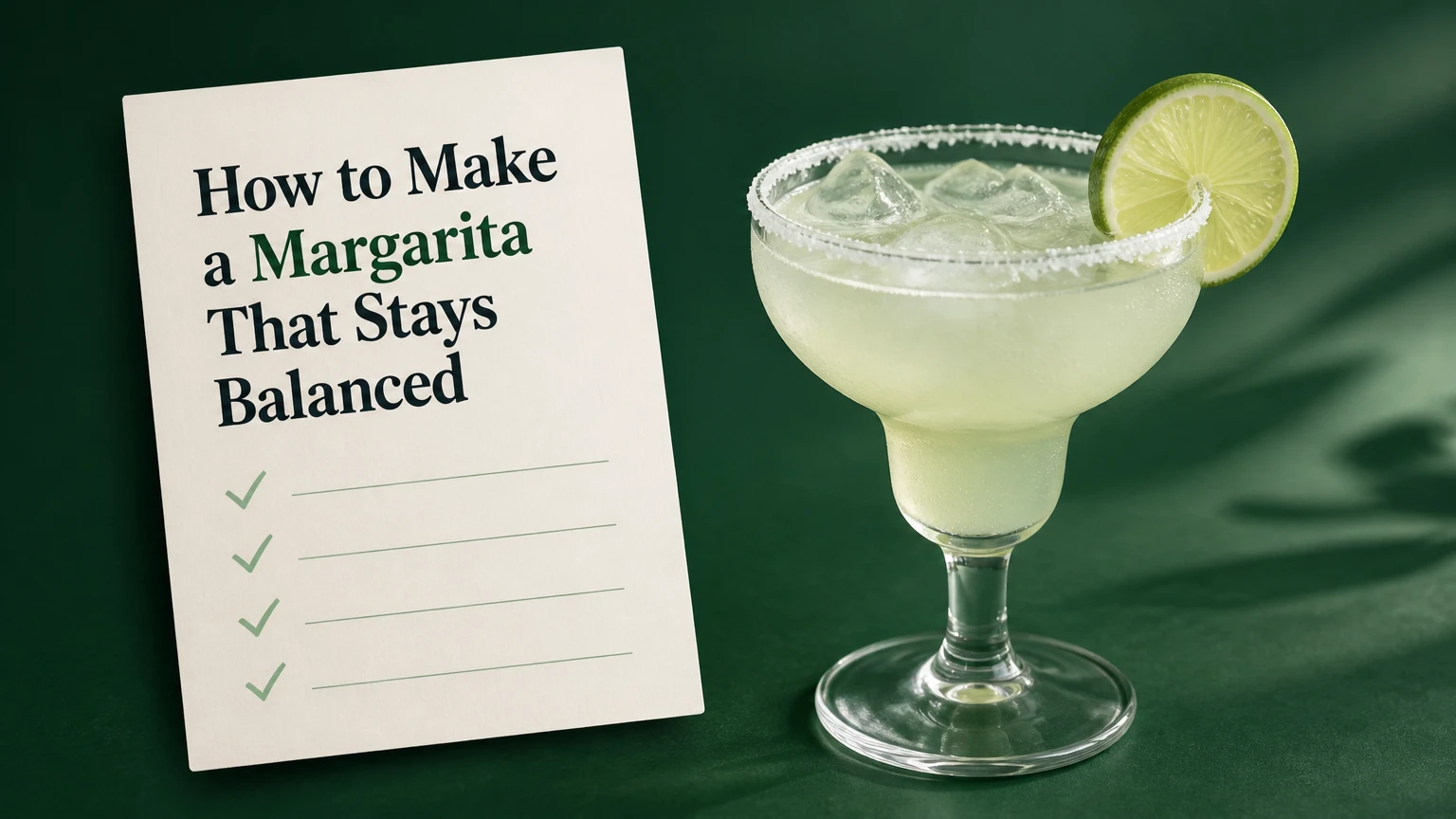
A margarita is made by shaking 2 ounces of blanco tequila, 1 ounce of orange liqueur, and 1 ounce of fresh lime juice with ice for 10-15 seconds, then straining into a salted glass. The best balance comes from fresh lime, 100% agave tequila, controlled dilution, and a small sweetness adjustment only when the lime tastes especially sharp.
Key Facts at a Glance
- A classic margarita uses tequila, orange liqueur, and fresh lime juice as its core ingredients.
- A reliable home-bar ratio is 2 parts tequila, 1 part orange liqueur, and 1 part lime juice.
- One margarita takes about 3-5 minutes to prepare and requires no specialized equipment beyond a shaker and jigger.
- A shaken margarita usually contains about 3.5-4.5 ounces before ice dilution and lands near 15-20% ABV in the glass.
- Fresh lime juice tastes brighter than bottled lime juice because it retains more volatile citrus aroma.
- A standard 2-ounce tequila pour contains approximately 1.33 U.S. standard drinks before accounting for the liqueur.
What Goes in a Margarita?
A classic margarita contains 2 ounces of 100% agave blanco tequila, 1 ounce of orange liqueur, and 1 ounce of freshly squeezed lime juice. Kosher salt or flaky sea salt is optional for the rim, while 0.25 ounce of agave syrup can correct an unusually tart batch of limes.
Each ingredient has a separate job. Tequila supplies earthy, peppery, vegetal flavor and the alcoholic structure. Orange liqueur contributes orange aroma and sweetness, while lime juice provides acidity that makes the drink taste lively rather than heavy. Salt changes perceived flavor by reducing bitterness and making citrus taste more pronounced.
The International Bartenders Association lists the Margarita with tequila, triple sec, and fresh lime juice, using the instruction, “Shake with ice and strain into a chilled cocktail glass.” The organization’s specification uses 50 milliliters tequila, 20 milliliters triple sec, and 15 milliliters fresh lime juice, so published formulas differ from the equal-parts lime version commonly used at home.
Ingredient Specifications
| Ingredient | Recommended amount | Best choice | Practical consequence |
|---|---|---|---|
| Blanco tequila | 2 oz / 60 ml | 100% agave, 38-40% ABV | Clear agave flavor and firm structure |
| Orange liqueur | 1 oz / 30 ml | Cointreau, dry curaçao, or triple sec | Orange aroma and measurable sweetness |
| Fresh lime juice | 1 oz / 30 ml | Juice squeezed immediately before serving | Bright acidity and fresh citrus aroma |
| Agave syrup | 0-0.25 oz / 0-7.5 ml | 1:1 agave syrup | Softens excess acidity without dominating |
| Rim salt | 0.25-0.5 tsp | Kosher salt or flaky sea salt | Enhances citrus and limits bitterness |
| Ice | 150-250 g | Hard, dry cubes | Chills and dilutes the cocktail predictably |
Which Tequila Works Best?
Blanco tequila is the most dependable choice for a classic margarita because its unaged agave character remains distinct beside lime and orange liqueur. Reposado tequila adds vanilla, oak, and baking-spice notes, but those flavors can make a margarita seem sweeter and heavier.
Choose a bottle labeled “100% agave” and avoid assuming that “gold” means aged. In tequila labeling, gold or joven tequila can contain coloring or other permitted additions, while a mixto tequila is made from at least 51% blue agave sugars and other sugars. The Consejo Regulador del Tequila and Mexico’s NOM-006-SCFI-2012 provide the relevant production and labeling framework.
| Tequila style | Typical aging | Flavor in a margarita | Best use |
|---|---|---|---|
| Blanco | 0-59 days in wood, often unaged | Pepper, grass, cooked agave | Classic and Tommy’s margaritas |
| Reposado | 2-12 months | Vanilla, oak, caramel | Cadillac or richer dinner drink |
| Añejo | 1-3 years | Toasted oak, dried fruit, spice | Slow-sipping variation, not a bright classic |
| Mezcal Espadín | Varies by category | Smoke, roasted agave, herbs | Mezcal margarita or split-base drink |
How to Make a Margarita
Make a margarita in five actions: chill the glass, salt the rim if desired, measure the liquids into a shaker, shake with hard ice, and strain over fresh ice or into a chilled glass. The complete process takes 3-5 minutes, has beginner difficulty, and depends most on balancing lime acidity with sweetness.
Before You Start
| Requirement | Typical specification |
|---|---|
| Active time | 3-5 minutes |
| Difficulty | Beginner |
| Yield | 1 cocktail, approximately 4-5 oz after dilution |
| Cost at home | About $2-$6 per drink, depending on tequila |
| Glassware | 8-10 oz rocks glass or 5-7 oz coupe |
| Tools | Jigger, citrus press, shaker, strainer, fine sieve |
| Ice | 150-250 g hard cubes for shaking |
| Prerequisite | Taste the lime before final sweetening |
Step 1: Chill and Salt the Glass
Chill a rocks glass or coupe for several minutes, then run a lime wedge around the outside edge of the rim. Roll only the moistened outer edge through coarse salt and tap away loose crystals.
A partial rim gives the drinker control over each sip and prevents salt from dissolving throughout the cocktail. A full wet interior rim often creates an intensely salty first taste, especially when fine table salt falls into the liquid.
You will know the glass is ready when salt adheres in a narrow, even band. The common mistake is soaking the entire rim, which transfers excess lime juice and salt into the drink.
Step 2: Juice the Lime and Check Its Acidity
Squeeze enough fresh lime for 1 ounce, or 30 milliliters, and taste a drop before mixing. If the juice is intensely sharp, plan to add 0.125-0.25 ounce of agave syrup rather than increasing the orange liqueur.
Lime size and acidity vary significantly, so a fixed recipe cannot guarantee identical sweetness every day. Juice from one average lime may produce roughly 0.75-1.5 ounces, depending on size, ripeness, temperature, and pressure.
You will know the juice is usable when it smells fragrant and tastes sour without a bitter, cooked aftertaste. The mistake is juicing several hours early and leaving the juice uncovered, which reduces aroma through oxidation.
Step 3: Measure the Cocktail
Add 2 ounces tequila, 1 ounce orange liqueur, and 1 ounce lime juice to the shaker. Add 0.25 ounce agave syrup only if the lime is unusually tart or the drinker prefers a softer finish.
Measure with a jigger rather than free-pouring. A half-ounce error changes the tequila-to-acid ratio by 25%, enough to make the same recipe taste noticeably boozy or thin.
The liquid should total 4 ounces before dilution. The mistake is adding ice before measuring, because melting ice changes both volume and concentration before shaking begins.
Step 4: Shake for Chill and Dilution
Fill the shaker with 150-250 grams of hard ice, seal it, and shake vigorously for 10-15 seconds. Use a shorter shake with small or wet ice, and shake toward the longer end with large, dense cubes.
Shaking performs two jobs: it lowers temperature and adds water. A cocktail that contains only spirits, liqueur, and juice tastes too concentrated until approximately 15-25% water dilution enters from the ice, although the exact amount depends on ice, motion, and shaker temperature.
You will know the margarita is ready when the shaker feels very cold and condensation or frost appears on the outside. The mistake is shaking with crushed ice for the entire process, which can over-dilute the drink and send ice fragments into the glass.
Step 5: Strain and Garnish
For a margarita served up, strain through the shaker strainer into the chilled coupe, then pass the drink through a fine-mesh sieve if you want a smooth texture. For a margarita on the rocks, strain over fresh cubes in the prepared rocks glass.
Use fresh serving ice rather than the wet ice from the shaker. Fresh cubes cool the drink without carrying the melted water that accumulated during shaking.
Garnish with a lime wheel or wedge. A dehydrated lime wheel adds aroma and appearance but contributes no fresh juice, so it cannot replace the lime used in the cocktail. The mistake is floating a large amount of fruit pulp in a drink intended to have a clean texture.
What Ratio Makes the Best Margarita?
The best starting ratio for most home margaritas is 2:1:1, meaning 2 ounces tequila, 1 ounce orange liqueur, and 1 ounce lime juice. The 4:3:2 ratio creates a rounder, sweeter drink, while the historic 3:2:1 formula places more emphasis on orange liqueur and produces a sweeter profile.
No single proportion is universally correct because lime acidity, liqueur sweetness, tequila proof, and personal taste vary. Start with the 2:1:1 formula, taste after dilution, and adjust sweetness in increments of 0.125 ounce.
| Ratio | Tequila | Orange liqueur | Lime juice | Result |
|---|---|---|---|---|
| Modern 2:1:1 | 2 oz | 1 oz | 1 oz | Tart, crisp, spirit-forward |
| Balanced 4:3:2 | 2 oz | 1.5 oz | 1 oz | Softer, sweeter, fuller |
| Historic 3:2:1 | 1.5 oz | 1 oz | 0.5 oz | Liqueur-led and relatively sweet |
| Tommy’s style | 2 oz | 0 oz | 1 oz | Agave-led and tequila-focused |
Professional bartender practice favors adjustment after tasting rather than rigid adherence to one ratio. Orange liqueurs also vary: Cointreau is relatively dry and aromatic, while many inexpensive triple secs are sweeter and less concentrated, so equal volumes will not produce equal results.
How Do You Prepare the Glass?
A margarita glass does not need to be a specialized stemmed vessel. A rocks glass holds ice and aroma well, while a coupe presents a cleaner, colder drink; the salt should usually cover only half or three-quarters of the rim.
Run a lime wedge along the exterior rim, then place the glass upside down onto a shallow plate of salt. Coarse kosher salt produces a dry, clean crunch, while flaky sea salt creates larger crystals and a more pronounced texture. Fine iodized salt dissolves quickly and can make the first sip harsh.
| Serving style | Glass | Ice | Straining method | Best result |
|---|---|---|---|---|
| Up | 5-7 oz coupe | None | Hawthorne strainer, optional fine sieve | Clean, cold, concentrated |
| Rocks | 8-10 oz rocks glass | 1 large cube or 150 g fresh cubes | Single strain | Slower dilution and longer drink |
| Half-rim | Rocks or coupe | Any | Standard strain | Controlled salt per sip |
| No salt | Rocks or coupe | Any | Standard strain | More direct tequila and lime flavor |
Which Margarita Style Should You Choose?
Choose a classic margarita for balanced citrus, Tommy’s for pure agave flavor, frozen for texture and heat relief, spicy for rich foods, and mezcal for smoke. Each style changes more than garnish, because the sweetener, dilution, temperature, or base spirit alters the drink’s structure.
Classic Margarita
Use 2 ounces blanco tequila, 1 ounce orange liqueur, and 1 ounce lime juice. Shake with ice and serve up or over fresh ice. The classic is the most versatile option for dinner because orange liqueur bridges tequila and acidic foods without adding a heavy syrup texture.
Tommy’s Margarita
Use 2 ounces tequila, 1 ounce lime juice, and 0.5 ounce agave syrup, omitting orange liqueur. Shake with ice and adjust the syrup between 0.25 and 0.5 ounce according to the lime.
Tommy’s style is not automatically lower-calorie or less alcoholic. It removes liqueur but replaces its sweetness with agave, so the final energy content depends on the syrup quantity and tequila pour.
Cadillac Margarita
Prepare a classic margarita with reposado tequila, then float 0.5 ounce Grand Marnier over the finished drink. The float creates an orange aroma at the surface and a sweeter final sip, but the style is heavier and more expensive than a standard margarita.
Mezcal Margarita
Replace 1 ounce of the tequila with 1 ounce of Espadín mezcal, or replace the full 2-ounce base for a strongly smoky drink. Keep the lime and orange liqueur unchanged at first, then add 0.125 ounce agave only if the smoke and acidity feel severe.
Frozen Margarita
Blend 2 ounces tequila, 1 ounce orange liqueur, 1 ounce lime juice, 0.5 ounce agave syrup, and approximately 1 cup, or 150-200 grams, crushed ice. Add the liquid first, then ice, and blend for 15-25 seconds until no large ice pieces remain.
Frozen drinks need more sweetener because cold temperatures suppress the perception of sweetness. Excessive ice creates a thick but diluted drink, while too little ice produces a watery slush that separates quickly.
| Style | Base formula | Typical preparation | Main strength | Main limitation |
|---|---|---|---|---|
| Classic | 2 oz tequila, 1 oz each liqueur and lime | Shake 10-15 seconds | Bright and balanced | Sensitive to acidic lime |
| Tommy’s | 2 oz tequila, 1 oz lime, 0.25-0.5 oz agave | Shake 10-15 seconds | Clear agave flavor | Lacks orange aroma |
| Cadillac | Classic plus 0.5 oz Grand Marnier | Shake, then float liqueur | Rich orange finish | Higher cost and sweetness |
| Mezcal | 1-2 oz mezcal with classic proportions | Shake 10-15 seconds | Smoky complexity | Smoke can dominate |
| Frozen | Classic liquids plus 150-200 g crushed ice | Blend 15-25 seconds | Cold, soft texture | Flavor dilutes faster |
How Much Time and Money Does It Take?
A single homemade margarita usually takes 3-5 minutes and costs approximately $2-$6 when made with mid-range ingredients. A bar margarita commonly costs $12-$18 in the United States, but location, labor, tequila brand, and venue produce substantial variation.
A typical 750-milliliter tequila bottle contains about 12.7 pours of 2 ounces, while a 750-milliliter orange liqueur bottle contains about 25 pours of 1 ounce. Fresh limes often cost $0.30-$1 each, and one drink may require one or two limes.
The overview’s estimate of 2.5 standard drinks per margarita is not a dependable general rule. Using 2 ounces of 40% ABV tequila supplies 0.8 fluid ounce of pure alcohol, approximately 1.33 U.S. standard drinks under the National Institute on Alcohol Abuse and Alcoholism definition of 0.6 fluid ounce; the orange liqueur adds more alcohol, depending on its proof.
How Do You Batch Margaritas?
Batch eight margaritas by combining 16 ounces tequila, 8 ounces orange liqueur, and 8 ounces fresh lime juice in a sealed container, then refrigerating it for no more than several hours. Add approximately 4-5 ounces cold water before serving to replace the dilution normally created by shaking.
Taste the batch after chilling. Add 1-2 ounces agave syrup only when the combined lime tastes unusually sharp, because sweetness is difficult to remove once added. Pour 5 ounces of batch into each glass over fresh ice, or stir each serving with ice for 10 seconds before straining up.
Do not add ice directly to a stored batch. Melting continues unpredictably, and the final drinks become watery before guests are served. For best aroma, juice the limes within 2-4 hours of service and keep the container covered in the refrigerator.
Common Problems and Precise Fixes
Why Is the Margarita Too Sour?
A margarita is too sour when lime acidity exceeds the sweetness provided by the orange liqueur. Stir in 0.125 ounce agave syrup, taste, and add another 0.125 ounce only if needed.
Do not fix a sour drink by adding more tequila. Extra spirit increases alcohol without restoring balance, and extra orange liqueur can make the drink sweet while muting the fresh lime character.
Why Is the Margarita Too Sweet?
A sweet margarita contains too much liqueur or syrup relative to its lime and tequila. Add 0.25 ounce fresh lime juice, shake briefly with ice, and retaste before making a larger correction.
If the sweetness comes from an inexpensive triple sec, replacing it with a drier orange liqueur is more effective than repeatedly adding acid. A dry liqueur changes the recipe’s balance at the ingredient level.
Why Does It Taste Watery?
A watery margarita usually results from wet ice, crushed ice, excessive shaking, or adding melted shaker ice to the serving glass. Use hard cubes, shake for 10-15 seconds, and strain over fresh ice.
Large cubes do not automatically create less dilution. Ice temperature, surface area, shaker movement, and contact time determine melting, so a large cube handled aggressively can dilute more than several dry smaller cubes.
Why Does It Taste Too Strong?
A strong margarita needs more dilution or a smaller tequila pour. Shake with fresh hard ice for the full 15 seconds, or serve the strained drink over one large cube and allow 60 seconds of melting before retasting.
Do not use a 2-ounce pour when serving a small 5-ounce glass without accounting for ice and dilution. The same recipe tastes more concentrated in a nearly full coupe than in a rocks glass containing substantial fresh ice.
Why Does the Salt Taste Harsh?
Harsh salt usually enters the cocktail because the entire rim was wet or fine salt dissolved into the liquid. Re-make the drink with a half-rim, coarse kosher salt, and a dry interior surface.
Salt should accent the drink, not become its dominant flavor. A pinch of salt in the shaker is a separate technique and requires careful control because it affects every sip.
Why Does Bottled Lime Juice Taste Flat?
Bottled lime juice often tastes flatter or more bitter because processing and storage reduce fresh citrus aroma. Use freshly squeezed lime whenever possible, especially for a drink with only three liquid ingredients.
When fresh limes are unavailable, use refrigerated, unsweetened lime juice as a backup and reduce the amount slightly, starting at 0.75 ounce. Taste before adding syrup, because bottled products differ in acidity and added preservatives.
What Should You Serve With a Margarita?
Margaritas pair best with foods containing salt, char, fat, chili, or fresh herbs because lime acidity refreshes the palate and tequila’s vegetal notes complement grilled ingredients. Serve classic margaritas with tacos, guacamole, ceviche, grilled shrimp, fajitas, or roasted corn.
A sweeter Cadillac or frozen margarita works better with spicy dishes than delicate seafood, because its added sweetness and lower perceived alcohol soften chili heat. A smoky mezcal margarita suits grilled mushrooms, pork, charred peppers, and deeply browned meats.
Avoid pairing a very sweet frozen margarita with sugary desserts. The combined sweetness suppresses lime acidity and makes both the drink and dessert taste heavy.
FAQ
Can You Make a Margarita Without Triple Sec?
Yes, make a Tommy’s margarita with 2 ounces tequila, 1 ounce fresh lime juice, and 0.25-0.5 ounce agave syrup. The result has less orange aroma and a more direct agave profile. Add 1-2 dashes orange bitters when you want citrus complexity without using a full ounce of liqueur.
Is a Margarita Better on the Rocks or Up?
A margarita on the rocks lasts longer because fresh ice continues controlled dilution, while a margarita served up has a cleaner, more concentrated texture. Choose rocks service for slow drinking or warm rooms, and choose up service when the cocktail will be consumed soon after straining.
Can You Use Reposado Tequila in a Margarita?
Reposado tequila works well when you want vanilla, oak, and a rounder flavor, especially in a Cadillac margarita. Use 2 ounces reposado with the same 1 ounce orange liqueur and 1 ounce lime starting point, but reduce agave because barrel aging can make the drink seem sweeter.
How Long Does Fresh Lime Juice Last?
Fresh lime juice is best within several hours, ideally 2-4 hours when refrigerated in a sealed container. It can remain usable for about 24 hours, but its aroma becomes less vivid as oxygen exposure increases. Store it cold, covered, and away from strong-smelling foods.
How Do You Make a Margarita Less Alcoholic?
Reduce tequila from 2 ounces to 1.5 ounces, keep the lime at 1 ounce, and add 0.5-1 ounce chilled water or soda water after shaking. Do not simply increase orange liqueur, because liqueur adds both alcohol and sweetness rather than producing a lighter balanced drink.
What Is the Easiest Margarita for Beginners?
The easiest beginner recipe is the classic 2:1:1 formula because it uses three measured liquids and requires only shaking with ice. Tommy’s style is also forgiving when orange liqueur is unavailable, but its agave syrup should be added gradually because small changes are highly noticeable.
The Bottom Line
To make a margarita, shake 2 ounces 100% agave blanco tequila, 1 ounce orange liqueur, and 1 ounce fresh lime juice with hard ice for 10-15 seconds. Strain into a half-salted coupe or rocks glass, taste for balance, and add up to 0.25 ounce agave syrup only when the lime is especially tart. Fresh juice, accurate measurement, and proper dilution matter more than an expensive garnish.