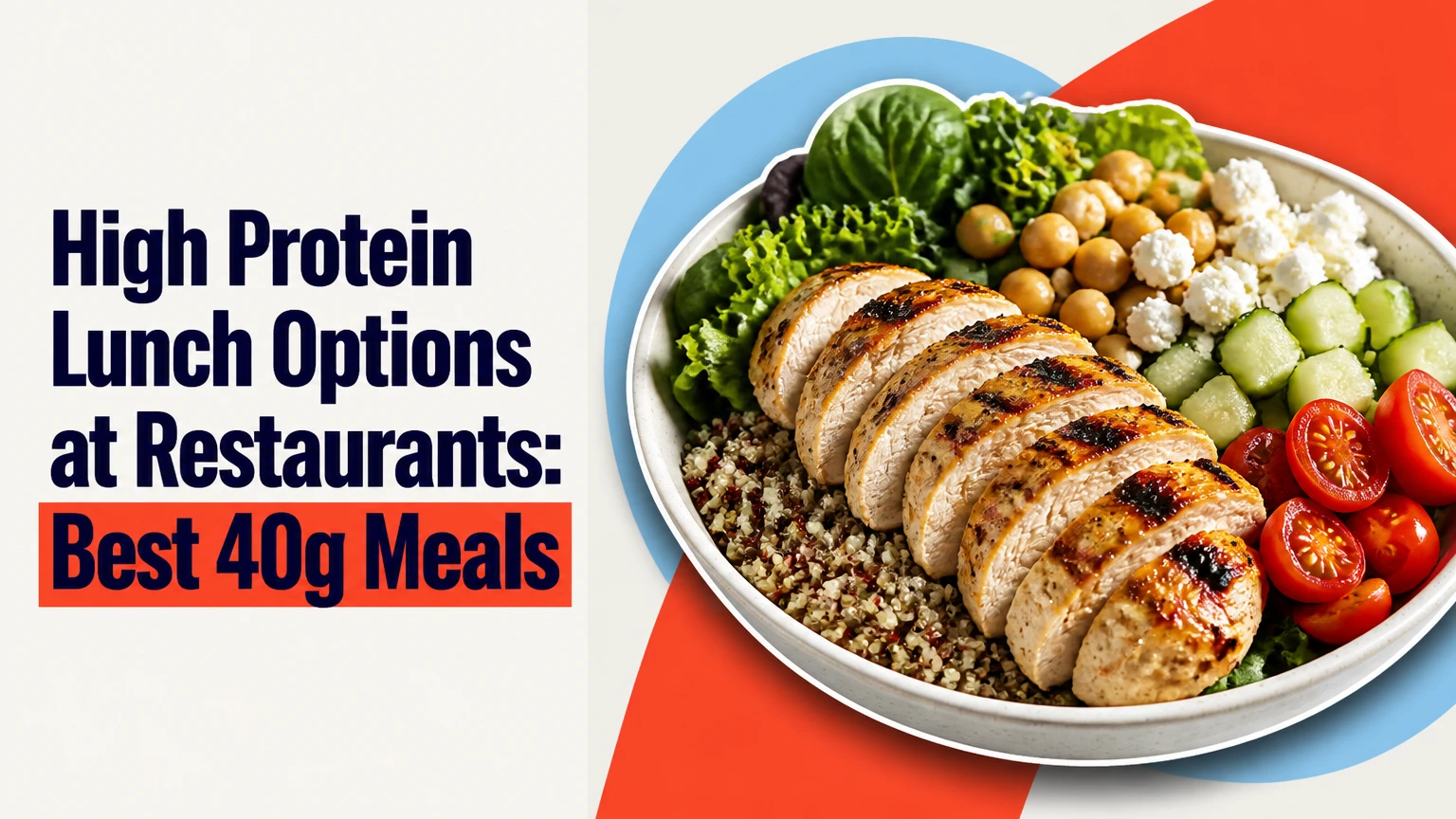
High protein lunch options at restaurants typically provide 30-50 grams of protein through grilled meat, seafood, eggs, tofu, tempeh, legumes, or high-protein dairy. The most reliable orders start with a substantial protein serving, add vegetables or beans, control starch portions, and request calorie-dense sauces separately.
Key Facts at a Glance
A practical restaurant lunch target is 30-50 grams of protein, adjusted for body size, daily intake, and health needs.
A double portion of chicken, fish, lean beef, tofu, or tempeh usually changes a meal more than removing a small amount of rice or bread.
Restaurant salads can exceed 700 calories when cheese, nuts, fried toppings, and full dressing portions accumulate.
Typical fast-casual high-protein bowls cost $11-$18, while sit-down protein plates often cost $18-$40 in the United States.
A protein-rich meal can still be high in sodium, saturated fat, or calories, so protein grams alone do not define a nutritious lunch.
Menu nutrition, portion size, cooking method, and sauce serving create more variation than the restaurant category itself.
What Counts as a High-Protein Restaurant Lunch?
A high-protein restaurant lunch is a midday meal that supplies enough protein to make a meaningful contribution to the diner’s daily target, commonly 30-50 grams. The threshold is practical rather than medical: a smaller person may need less, while an athlete with a high daily intake may deliberately choose 50-70 grams.
Protein quantity should be evaluated alongside calories, fiber, sodium, saturated fat, and ingredient quality. A fried chicken meal with 45 grams of protein may support a protein target, but it is a different choice from grilled chicken, beans, vegetables, and a measured dressing.
The International Society of Sports Nutrition stated in its 2017 position stand that “an overall daily protein intake of 1.4-2.0 g/kg/day” is sufficient for most exercising individuals. That daily range does not require every meal to contain the same amount. Lunch is one opportunity to distribute protein across the day.
How Much Protein Should Lunch Provide?
For most adults, 25-40 grams is a useful everyday restaurant target, while 40-60 grams suits larger diners, resistance-training meals, or lunches that replace a low-protein breakfast. A daily protein goal should come first; lunch protein is one allocation within that total.
A 2023 review in the Journal of the International Society of Sports Nutrition described approximately 20-40 grams of high-quality protein per meal as a common practical range for active adults, although needs vary with body mass and meal composition. Protein quality, digestibility, and total daily intake matter more than chasing a single perfect number.
People with chronic kidney disease, certain liver conditions, or medically prescribed protein limits should follow a clinician’s target instead of copying athletic meal recommendations. Restaurant meals also make exact measurement difficult because cooked portions, marinades, and recipes vary.
Why Does Protein Make Restaurant Lunch More Filling?
Protein can increase fullness because digestion stimulates satiety-related signals and usually requires more thermic processing than carbohydrate or fat. The thermic effect of food is commonly estimated at about 20-30% of protein calories, compared with roughly 5-10% for carbohydrate and 0-3% for fat.
Those figures describe energy used during processing, not calories that disappear from a meal. A high-protein lunch can still produce an afternoon energy slump when it contains a large refined-flour base, sugary drink, or heavy fried topping.
Protein also supports muscle maintenance and repair, particularly when combined with resistance training and adequate total energy. The leucine content of dairy, eggs, poultry, seafood, and meat can make smaller portions effective, while plant-based diners can reach comparable totals by combining concentrated sources such as tofu, tempeh, seitan, edamame, and legumes.
Does 30 Grams Maximize Muscle Protein Synthesis?
Thirty grams is a useful benchmark, not a universal switch that turns muscle protein synthesis on. Body size, age, training status, protein quality, and whether the meal includes other ingredients all affect the response.
For a practical lunch decision, use 30 grams as a floor when muscle retention or training recovery matters, then adjust upward if lunch must carry a larger share of the day’s protein. A 150-pound active adult and a 230-pound active adult should not assume the same serving is optimal.
How Do You Order Any High-Protein Lunch?
Use a five-step sequence: identify the main protein, increase its portion if needed, choose a vegetable or legume base, control the starch, and separate sauces. The approach works at build-your-own bowl chains, diners, food halls, Mediterranean restaurants, and many independent cafés.
- Choose the protein first. Look for grilled chicken, turkey, lean beef, salmon, tuna, shrimp, eggs, Greek yogurt, tofu, tempeh, seitan, edamame, or beans.
- Estimate the portion. A cooked 4-ounce serving of chicken or fish commonly provides about 25-35 grams of protein; a 6-ounce serving often provides about 38-50 grams.
- Add a volume base. Choose greens, roasted vegetables, beans, lentils, or a moderate grain portion. Fiber helps the meal remain satisfying.
- Modify the structural carbohydrate. Replace fries or chips with vegetables when calorie control matters, but retain rice, potatoes, or whole-grain bread when training fuel or fullness is the priority.
- Put dressing and sauces on the side. Use two tablespoons first, because a full restaurant ladle can contain several hundred calories.
The success checkpoint is simple: the order should contain a visible protein anchor, at least one high-fiber or produce component, and a sauce quantity you can identify. A common mistake is requesting “light” dressing while accepting double cheese, creamy toppings, and fried garnishes.
Which Restaurant Format Works Best?
Build-your-own bowls usually offer the best balance of protein control, vegetables, and customization, while sit-down plates provide larger whole-food protein portions. Sandwiches, wraps, and salads can work, but their bread, tortilla, cheese, nuts, and dressing often make protein density less predictable.
| Restaurant format | Typical protein | Typical calories | Typical US price | Typical wait |
|---|---|---|---|---|
| Build-your-own bowl | 35-65 g | 500-850 | $11-$18 | 3-10 minutes |
| Grilled fast-food meal | 30-50 g | 300-750 | $7-$ fifteen | 2-8 minutes |
| Salad with double protein | 35-55 g | 450-900 | $12-$20 | 5-12 minutes |
| Sit-down entrée plate | 40-70 g | 600-1,100 | $18-$40 | 15-30 minutes |
| Sushi or sashimi meal | 30-55 g | 400-850 | $15-$35 | 10-25 minutes |
| Vegan bowl with legumes | 25-45 g | 550-950 | $11-$20 | 5-15 minutes |
The table uses typical ranges, not guaranteed menu values. The “$7-$ fifteen” cell should be read as $7-$15.
What Are the Best Fast-Casual Bowls?
Chipotle, CAVA, and Sweetgreen can produce high-protein lunches when the diner orders a double or substantial protein portion and limits calorie-dense extras. Current recipes, regional menus, serving sizes, and nutrition calculators change, so verify the assembled order before paying.
| Restaurant example | Practical order structure | Estimated protein | Main trade-off |
|---|---|---|---|
| Chipotle | Double chicken, black beans, fajita vegetables, lettuce, tomato salsa, light cheese | 45-65 g | Sodium can exceed 1,500 mg |
| CAVA | Grilled chicken, greens, lentils, cucumber-tomato salad, hummus, measured dressing | 35-50 g | Hummus, pita, and dips raise calories |
| Sweetgreen | Double chicken, greens, quinoa, cabbage, vegetables, dressing on side | 40-60 g | Dressings and roasted toppings vary widely |
| Panera | Salad with double chicken, fruit or vegetables, dressing controlled | 40-55 g | Sugary dressings and pecans add energy |
| Salad chain | Double grilled chicken, beans, vegetables, salsa or vinaigrette | 35-55 g | “Healthy” toppings may be fried or cheese-heavy |
A bowl is not automatically leaner than a sandwich. A bowl with rice, beans, cheese, sour cream, avocado, tortilla chips, and dressing can exceed the calories of a grilled sandwich while supplying similar protein.
What Are the Best Fast-Food and Drive-Thru Orders?
Grilled nuggets, blackened chicken, roast beef, grilled chicken sandwiches, and breakfast plates with eggs can provide 30-50 grams of protein quickly. The strongest choices use grilled or blackened preparation, then add fruit, beans, or a salad instead of fries when calorie density or sodium is a concern.
| Chain example | Order direction | Estimated protein | Calories, typical |
|---|---|---|---|
| Chick-fil-A | 12-count grilled nuggets plus fruit cup | 35-40 g | 250-350 |
| Popeyes | Blackened chicken tenders plus green beans or another vegetable side | 35-45 g | 300-500 |
| Panera Bread | Double-chicken salad, dressing on side | 40-55 g | 500-800 |
| Subway | Footlong turkey or chicken salad bowl, extra protein, vegetables | 45-65 g | 450-850 |
| Wendy’s | Grilled-style chicken option where available, or chili plus lean protein side | 25-45 g | 400-750 |
Availability matters. Chick-fil-A lists nutrition for standard portions, but local substitutions and sauces change totals. Popeyes blackened tenders are distinct from battered tenders, and the preparation difference can materially alter calories and fat.
Fast food is useful for time and predictable portions, not necessarily for low sodium. The American Heart Association recommends no more than 2,300 milligrams of sodium daily for most adults, with an ideal limit of 1,500 milligrams for many adults, particularly those with hypertension. One customized meal can approach either threshold.
What Should You Order at Sit-Down Restaurants?
At a sit-down restaurant, choose a grilled, roasted, broiled, or steamed protein and request a vegetable side, salad, or moderate potato portion. Japanese sashimi, Mediterranean chicken skewers, Greek grilled fish, and a 5-8 ounce steak can all meet a 40-60 gram lunch target.
| Cuisine | High-protein order | Estimated protein | Useful modification |
|---|---|---|---|
| Japanese | Sashimi, grilled salmon, or chicken with edamame | 35-55 g | Request sauce separately and moderate rice |
| Mediterranean | Two chicken souvlaki skewers with Greek salad and beans | 40-55 g | Limit pita, oil, and creamy dips |
| Steakhouse | 6-8 ounce sirloin with asparagus or potato | 45-65 g | Skip butter, bacon, and cream sauce |
| Mexican | Fajita chicken or steak with beans, vegetables, and salsa | 40-60 g | Choose corn tortillas or a bowl over chips |
| Diner | Egg-white and whole-egg plate with turkey sausage and Greek yogurt | 30-45 g | Replace hash browns with fruit when appropriate |
Restaurant descriptions can conceal preparation. “Teriyaki,” “crispy,” “loaded,” “smothered,” and “tempura” often indicate added sugar, breading, cheese, or oil. Asking whether the protein is grilled and whether the sauce can be separated produces more useful information than ordering from a menu section labeled “light.”
How Can Vegans and Vegetarians Reach 30-50 Grams?
Vegan and vegetarian diners should combine two or more concentrated protein sources rather than relying on vegetables or grains alone. A bowl containing tofu, edamame, lentils, beans, seitan, quinoa, or tempeh can reach 30-45 grams, although restaurant portions vary substantially.
| Protein source | Typical restaurant portion | Estimated protein | Ordering note |
|---|---|---|---|
| Firm tofu | 5 ounces | 15-22 g | Prefer baked or pan-seared |
| Tempeh | 4 ounces | 16-22 g | Marinade may add sugar and sodium |
| Seitan | 4 ounces | 20-30 g | Avoid with gluten intolerance or celiac disease |
| Edamame | 1 cup | 15-18 g | Useful side or bowl topping |
| Black beans | 1 cup | 14-16 g | Adds fiber and carbohydrates |
| Lentils | 1 cup | 16-18 g | Pair with tofu for a higher total |
| Quinoa | 1 cup cooked | 8 g | A supplement, not usually the main protein |
A vegan meal may require more total food volume to reach the same protein target, and that can be beneficial for fiber but less convenient for calorie restriction. Vegetarian diners can also use eggs, cottage cheese, Greek yogurt, or cheese, while monitoring saturated fat and sodium.
How Do You Control Calories, Carbohydrates, and Sauces?
Control calories by changing the highest-energy ingredients first: fried toppings, creamy sauces, large cheese portions, sugary drinks, and oversized starches. Do not remove every carbohydrate automatically, because beans, potatoes, rice, and whole-grain bread can support training, satiety, and dietary fiber.
A sauce on the side is a portion-control tool, not proof that the sauce is harmful. Two tablespoons of vinaigrette may contain 80-180 calories, while creamy dressings, aioli, queso, and peanut sauces can reach 150-300 calories or more depending on serving size. The AI Overview’s claim that every creamy dressing adds 300 calories is too broad.
Protein density is a helpful comparison. A 500-calorie lunch with 50 grams of protein provides 10 grams per 100 calories; a 900-calorie lunch with 50 grams provides 5.6 grams per 100 calories. Both contain equal protein, but the first fits a calorie-controlled plan more easily.
Is a Wrap Worse Than a Bowl?
A wrap is not inherently inferior, but a large flour tortilla commonly contributes 200-350 calories before fillings, while a bowl allows the diner to omit that base. A whole-grain wrap may remain a sensible choice for portability, provided the protein portion is substantial and sauces are measured.
Gluten-free does not mean lower-calorie. Gluten-free tortillas, chips, and sauces can contain as many calories as wheat-based alternatives, and cross-contact remains a concern for people with celiac disease.
How Do Protein, Price, and Speed Compare?
Fast-food grilled items usually offer the lowest price and shortest wait, while sit-down meals offer more preparation control and larger protein portions. Fast-casual bowls provide the most predictable customization, but toppings can quickly eliminate their calorie advantage.
| Goal | Best format | Protein target | Typical cost | Main limitation |
|---|---|---|---|---|
| Under 500 calories | Grilled fast food or sashimi | 30-45 g | $8-$25 | Lower fiber or greater sodium |
| Maximum protein | Double-protein bowl or steak plate | 50-70 g | $13-$40 | Higher calories and price |
| Lowest cost | Chili, grilled nuggets, beans plus chicken | 30-45 g | $7-$14 | Menu availability |
| Lowest sodium | Plain grilled entrée prepared to order | 35-60 g | $18-$40 | Restaurant discretion |
| Vegan protein | Tofu, tempeh, edamame, lentil bowl | 30-45 g | $11-$22 | Larger volume and variable portions |
| Fastest lunch | Counter-service grilled protein | 30-45 g | $7-$16 | Limited vegetable choices |
Prices are typical US ranges for one entrée before tax, delivery fees, and beverages. Urban restaurants, airport locations, and delivery platforms may cost 20-60% more.
What Are the Most Common Ordering Mistakes?
The most common mistake is evaluating a menu label instead of the assembled meal. “Salad,” “wrap,” “bowl,” “grilled,” and “plant-based” describe formats or ingredients, not final protein, calorie, or sodium totals.
- Choosing a light protein portion: A standard chicken salad may contain only 15-25 grams of protein. Add a second portion or select a larger entrée.
- Treating a salad as automatically low-calorie: Cheese, nuts, avocado, croutons, fried chicken, and dressing can add 400-700 calories.
- Removing all starch: A zero-carb meal may leave active diners hungry, especially after morning training. Keep beans, potatoes, or rice when they serve a clear purpose.
- Ignoring liquid calories: A sweet tea, smoothie, or flavored coffee can add 150-600 calories without improving protein density.
- Assuming “blackened” means low sodium: Blackened seasoning can contain substantial salt, and the preparation may still include butter.
- Trusting an old nutrition screenshot: Chain recipes change. Use the restaurant’s current nutrition calculator when available.
- Trying to flush sodium with water: Water supports hydration, but it does not rapidly remove a high-sodium meal. The safer correction is normal hydration and lower-sodium choices later.
A useful practitioner rule is to modify one variable at a time when ordering unfamiliar food. Start with double protein, then identify the largest calorie source, then adjust the side. Changing every ingredient at once makes the final nutrition estimate harder to audit.
What Are the Best Orders by Situation?
The best restaurant lunch depends on the diner’s limiting factor: calories, time, cost, dietary restriction, or training fuel. No single order wins all categories because a low-cost drive-through meal, a low-sodium sit-down plate, and a vegan recovery bowl solve different problems.
For Fat Loss or Calorie Control
Choose grilled chicken, fish, shrimp, lean beef, or tofu with vegetables and a measured sauce. Aim for roughly 35-50 grams of protein and 400-700 calories, then retain a modest carbohydrate portion if removing it would cause later overeating.
For Muscle Gain or Training Recovery
Choose 40-60 grams of protein with rice, potatoes, beans, or whole-grain bread. A higher-calorie bowl or steak plate may be appropriate after training, especially when the diner has a large daily energy requirement.
For a Desk Lunch With Minimal Afternoon Hunger
Choose 30-45 grams of protein, vegetables or legumes, and a moderate starch portion. Avoid combining a large refined-flour base with a sugary drink, because that pairing increases calories without adding much fiber or protein.
For a Vegan Lunch
Order double tofu or tempeh with edamame and lentils or beans. Add seitan only when gluten is safe, and check whether sauces contain dairy, fish sauce, honey, or egg.
For a Low-Sodium Requirement
Request unseasoned or lightly seasoned grilled protein, no pickles, no processed cheese, sauce separately, and a plain vegetable side. Restaurant food cannot guarantee low sodium without ingredient-level confirmation, so people with hypertension or sodium-sensitive conditions should use the restaurant’s nutrition data or clinician guidance.
How Do You Read an Unfamiliar Restaurant Menu?
Scan the menu in this order: preparation method, protein portion, side composition, sauce, and nutrition disclosure. The fastest reliable choice is usually a plainly named grilled or steamed protein with a vegetable side, not a menu item marketed as “fit,” “fresh,” or “clean.”
Ask four targeted questions:
- Is the protein grilled, fried, breaded, or cooked in butter?
- Can the restaurant provide a double portion or an approximate cooked weight?
- Can dressing, glaze, cheese, and mayonnaise come separately?
- Can fries, chips, or a large starch be replaced with vegetables, beans, fruit, or salad?
Independent restaurants may not provide macros, so use ingredient-based estimates. Four ounces of cooked poultry or fish generally supplies about 25-35 grams, six ounces supplies about 38-50 grams, and a cup of beans supplies about 14-18 grams.
FAQ
Are high-protein restaurant lunches good for weight loss?
High-protein restaurant lunches can support weight loss when total calories remain appropriate for the person’s daily requirement. Choose grilled or roasted protein, vegetables, beans, and controlled sauces, then account for beverages, sides, and cooking oil. Protein alone cannot offset a consistently excessive calorie intake.
What is the cheapest high-protein lunch at a restaurant?
Typical budget choices include grilled chicken nuggets, blackened tenders, chili with an added protein item, a bean-and-chicken bowl, or a grocery-style deli salad with extra chicken. In the United States, these options commonly cost about $7-$14 before tax, although local prices and portion sizes vary.
What restaurant lunch has the most protein?
A double-protein bowl, large steak plate, or extra-protein burrito bowl commonly reaches 50-70 grams. The highest listed protein number may also carry 1,500-2,500 milligrams of sodium and more than 900 calories, so compare protein with the complete nutrition profile.
What can I order if I do not eat chicken?
Choose salmon, tuna, shrimp, lean steak, turkey, eggs, Greek yogurt, tofu, tempeh, seitan, edamame, lentils, or beans. Japanese, Mediterranean, steakhouse, and build-your-own bowl restaurants usually provide the broadest alternatives, while preparation method determines whether the meal remains calorie-efficient.
Can a restaurant salad provide 40 grams of protein?
A restaurant salad can provide 40 grams when it contains a substantial serving of chicken, fish, steak, tofu, or several plant proteins. Greens alone contribute little protein, and toppings such as nuts or cheese raise calories faster than they raise protein. Request double protein and dressing separately.
How can I verify the protein number before ordering?
Use the restaurant’s current nutrition calculator, select every topping and sauce, and compare the assembled total with the menu description. When no data exists, estimate from the cooked protein portion, ask for extra protein, and treat the result as approximate rather than exact.
The Bottom Line
The best high protein lunch options at restaurants begin with a clearly portioned protein source, then add vegetables, beans, or a purposeful starch while keeping sauces measurable. Choose a double-protein bowl for customization, grilled fast food for speed and price, a sit-down grilled entrée for preparation control, or a tofu-and-legume bowl for plant-based eating. Verify current nutrition data, because protein grams do not reveal the meal’s sodium, calories, or saturated fat.