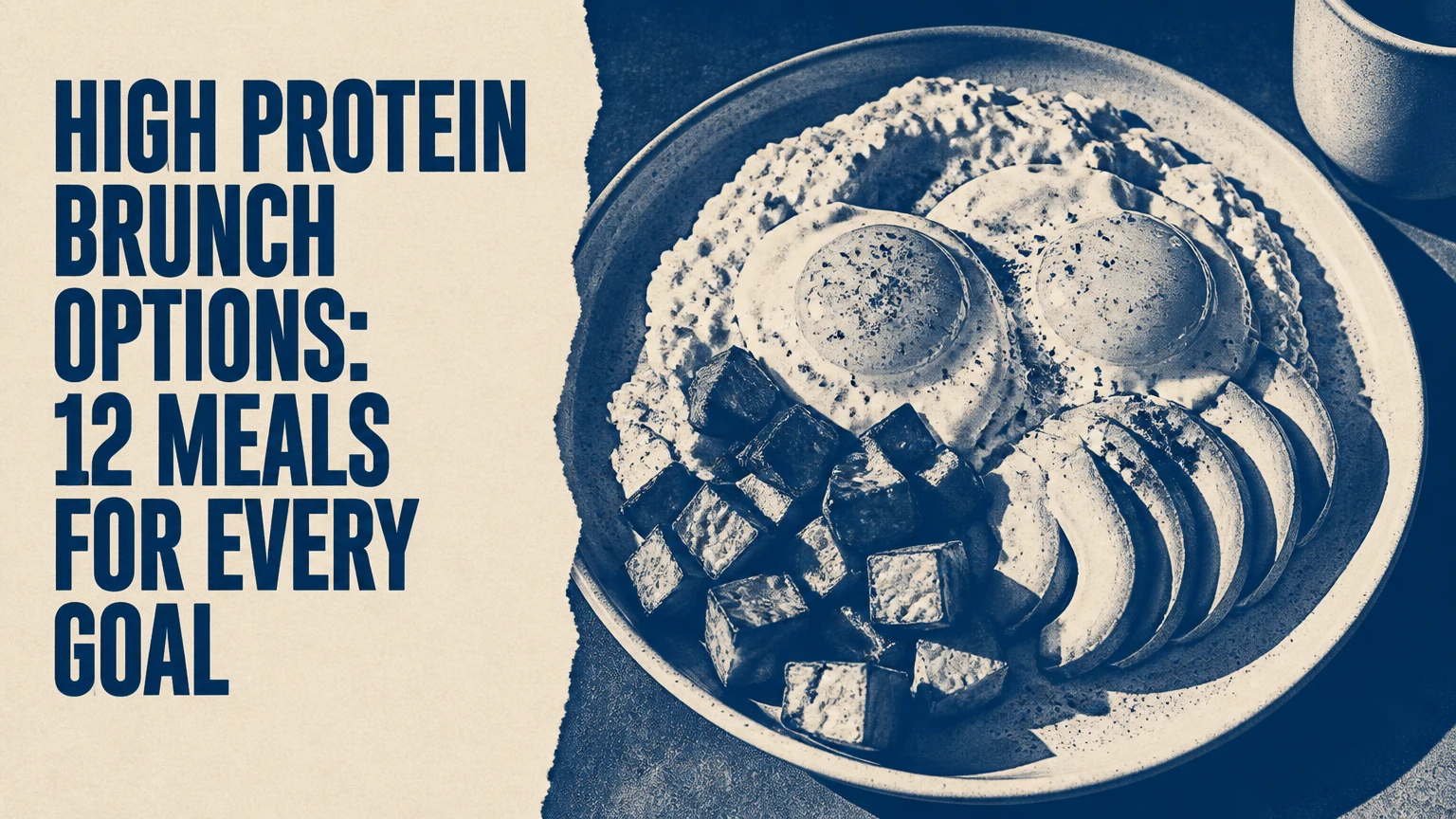
High protein brunch options provide approximately 25-40 grams of protein per serving while pairing that protein with fiber-rich carbohydrates and an appropriate amount of fat. The strongest choices include egg-white scrambles, Greek yogurt bowls, salmon toast, tofu hashes, and protein oatmeal, with portions adjusted for calories, dietary restrictions, and training demands.
Key Facts at a Glance
- A practical high-protein brunch target is 25-40 grams of protein, although individual needs vary with body size, age, training, and total daily intake.
- Two large eggs provide about 12-13 grams of protein, so eggs alone often fall short of a high-protein meal target.
- Protein supplies 4 calories per gram and generally has a higher thermic effect than carbohydrate or fat.
- A balanced plate commonly combines 25-40 grams of protein, 5-10 grams of fiber, and 10-20 grams of fat.
- Plain Greek yogurt, cottage cheese, eggs, tofu, tempeh, fish, and lean meat can all anchor a high-protein brunch.
- Typical home preparation takes 5-15 minutes and costs approximately $2.50-$6 per serving, depending on ingredients and location.
What Counts as a High-Protein Brunch?
A high-protein brunch is a late-morning or early-afternoon meal that deliberately supplies about 25-40 grams of protein. That range is a useful planning benchmark, not a universal medical threshold, because a larger athlete and a smaller sedentary adult have different daily requirements.
Protein quality also matters. Eggs, dairy, fish, poultry, and meat provide all essential amino acids, while soy and several plant combinations can also support a complete amino-acid intake. Plant proteins are not automatically inferior, but some require a larger portion or a varied menu to match the amino-acid density of animal foods.
The Dietary Guidelines for Americans, 2020-2025, places protein foods within a broader eating pattern that includes vegetables, fruits, grains, and dairy or fortified alternatives. A brunch built around protein powder but lacking produce may hit the number while providing less dietary variety.
How Much Protein Should Brunch Provide?
Most adults can use 25-40 grams as a practical brunch range, while people with higher body mass or resistance-training goals may prefer the upper end. The International Society of Sports Nutrition’s 2017 position stand recommends approximately 1.4-2.0 grams of protein per kilogram of body weight per day for most exercising individuals, distributed across meals.
The 3-gram leucine rule needs precision. Leucine is an important trigger for muscle protein synthesis, but no single amount guarantees a response for every person; age, total protein, digestion, exercise, and the protein source change the result. A meal containing 25-40 grams of complete protein often supplies substantial leucine without requiring a separate calculation.
Protein also supports fullness through several mechanisms, including effects on satiety hormones such as peptide YY and GLP-1. Those effects do not cancel out the calories in a high-protein pastry or sweetened coffee.
Why Does Protein Make Brunch More Filling?
Protein can increase meal-related satiety and requires more energy to digest than carbohydrate or fat, but fullness still depends on total calories, fiber, food volume, sleep, and personal appetite. A protein-rich brunch is therefore a useful structure for appetite management, not a guarantee of four to six hours without hunger.
The thermic effect of food is commonly estimated at roughly 20-30% of protein calories, compared with about 5-10% for carbohydrate and 0-3% for fat. These figures describe energy used during digestion and processing; they do not mean that 20-30% of an entire high-protein meal disappears.
Fiber adds bulk and slows digestion. Berries, oats, beans, vegetables, chia seeds, and whole-grain bread can improve the meal’s carbohydrate quality, while avocado, olive oil, nuts, and seeds increase energy density. People pursuing fat loss should measure these additions because healthy fats remain calorie-dense.
The Best High Protein Brunch Options
The best overall choice for most people is an egg-and-white scramble with vegetables and whole-grain toast because it combines high protein, flexible calories, low preparation time, and strong satiety. The best option changes for vegan, dairy-free, no-cook, endurance-training, and calorie-restricted situations.
1. Egg and Egg-White Scramble: Best Overall
An egg and egg-white scramble delivers about 32-38 grams of protein in 10 minutes when prepared with two whole eggs, 150-180 grams of liquid egg whites, spinach, mushrooms, and a modest amount of cheese. The whole eggs contribute flavor and fat, while egg whites raise protein without adding much additional energy.
Use 2 large eggs, ¾ cup liquid egg whites, 1 cup spinach, ½ cup sliced mushrooms, and 15 grams of grated cheddar. Serve with one slice of whole-grain toast if you need carbohydrate for training or a longer morning.
Typical nutrition is 330-430 calories, 32-38 grams of protein, 20-30 grams of carbohydrate with toast, and 4-7 grams of fiber when vegetables are included. The main drawback is that the dish becomes sodium-heavy if cheese, ham, and packaged egg whites are combined.
Choose this if you want a hot, inexpensive, high-protein meal. Skip it if egg allergy, vegan eating, or a no-cook requirement rules out the base ingredients.
2. Smoked Salmon and Cottage Cheese Toast: Best for No-Cook Protein
Smoked salmon and cottage cheese toast provides approximately 35-42 grams of protein in 5 minutes, using 150 grams of low-fat cottage cheese, 75-100 grams of smoked salmon, and two slices of seeded rye or whole-grain bread. Cucumber, dill, lemon, and capers add flavor without requiring cooking.
Cottage cheese supplies casein, a slowly digested dairy protein, while salmon contributes omega-3 fats and vitamin B12. Smoked salmon is not equivalent to fresh salmon nutritionally because smoking and curing can produce a much higher sodium load.
Typical nutrition is 430-560 calories, 35-42 grams of protein, 40-55 grams of carbohydrate, and 8-14 grams of fat. Choose reduced-sodium salmon when available, and avoid leaving the assembled toast at room temperature for extended periods.
Choose this if convenience and savory flavor matter most. Skip it if you need a low-sodium meal, avoid dairy, or require a budget option below approximately $4 per serving.
3. Steak, Eggs, and Sweet Potato Hash: Best for Training Days
A lean steak and egg hash supplies about 40-48 grams of protein from 100-120 grams of cooked sirloin, two eggs, and a vegetable-rich sweet potato skillet. The meal works well after a demanding workout because it combines protein with carbohydrate, potassium-rich produce, and substantial calories.
Use pre-cooked sweet potato to keep preparation near 12 minutes. Add bell pepper, onion, and spinach to increase volume, then cook the steak briefly so a lean cut does not become tough.
Typical nutrition is 520-700 calories, 40-48 grams of protein, 35-55 grams of carbohydrate, 20-30 grams of fat, and 6-9 grams of fiber. The trade-off is energy density: this is not the most efficient choice for someone trying to keep brunch below 400 calories.
Choose this if you need a substantial post-training meal. Skip it if you want a light meal, follow a vegetarian diet, or are limiting red meat.
4. Greek Yogurt Power Parfait: Best No-Cook Budget Option
A Greek yogurt parfait provides about 30-38 grams of protein in 2 minutes when made with 250 grams of plain Greek yogurt, 20 grams of hemp hearts, 15 grams of almonds, and 100 grams of berries. Plain yogurt avoids the added sugar common in flavored versions.
Use nonfat yogurt for a lower-calorie bowl or 2% yogurt for greater creaminess and more fat. Hemp hearts and almonds supply texture, magnesium, and unsaturated fat, but a large handful can add more than 150 calories.
Typical nutrition is 360-500 calories, 30-38 grams of protein, 25-40 grams of carbohydrate, and 7-11 grams of fiber. Honey is optional; berries, cinnamon, and vanilla extract usually provide enough sweetness without turning the bowl into a dessert.
Choose this if you need a portable, inexpensive meal with no cooking. Skip it if dairy causes symptoms or if you dislike cold foods.
5. Chicken Breakfast Burrito: Best Meal-Prep Option
A chicken breakfast burrito delivers approximately 35-45 grams of protein from 100 grams of cooked chicken breast, one egg, black beans, a high-fiber tortilla, and salsa. The burrito can be assembled in batches and reheated, making it more practical than delicate toast for weekday meal preparation.
Combine the chicken with ½ cup black beans, one egg, 30 grams of reduced-fat cheese, salsa, and a medium whole-wheat tortilla. Beans add roughly 7-8 grams of fiber per half cup, which improves the meal’s carbohydrate and satiety profile.
Typical nutrition is 500-650 calories, 35-45 grams of protein, 45-65 grams of carbohydrate, and 10-16 grams of fiber. Wrap burritos individually, refrigerate for up to 3-4 days, and reheat until the center is steaming hot.
Choose this if you need a filling meal that travels well. Skip it if gluten, chicken, or reheated eggs are unsuitable.
6. Protein Oatmeal: Best Sweet Performance Meal
Protein oatmeal, often called proats, supplies 30-40 grams of protein when ½ cup dry oats is combined with one scoop of protein powder and Greek yogurt or milk. The oats provide carbohydrate for activity, while berries and chia seeds add fiber.
Cook 40-50 grams of oats first. Remove the pot from heat, wait about 60 seconds, stir in a splash of cold milk, then whisk in the protein powder. Protein powder does not become nutritionally useless because of heat, but adding it to boiling oats can create clumps and a rubbery texture.
Typical nutrition is 350-500 calories, 30-40 grams of protein, 45-65 grams of carbohydrate, and 8-13 grams of fiber. Whey isolate is usually lower in lactose than whey concentrate, while pea-and-rice blends can improve plant-protein balance.
Choose this if you need a warm, sweet meal before an active day. Skip it if oats or protein powders cause digestive discomfort.
7. Tofu and Tempeh Scramble: Best Vegan Savory Option
A tofu and tempeh scramble provides roughly 30-38 grams of protein from 200 grams of extra-firm tofu, 75 grams of tempeh, and nutritional yeast. Turmeric supplies color, while black salt adds an egg-like sulfur note.
Press tofu briefly, crumble it, and sauté it with peppers, onions, and spinach. Add tempeh near the end so it browns without drying. A calcium-set tofu can contribute more calcium than tofu made with other coagulants, so check the package label.
Typical nutrition is 420-560 calories, 30-38 grams of protein, 25-40 grams of carbohydrate, and 8-12 grams of fiber. Tempeh is fermented soy, but both tofu and tempeh remain unsuitable for people with soy allergy.
Choose this if you eat vegan or want a cholesterol-free meal. Skip it if soy is excluded or if you need a very low-calorie plate.
8. Cottage Cheese Protein Pancakes: Best Weekend Sweet Option
Cottage cheese pancakes provide about 28-35 grams of protein when made with 150 grams cottage cheese, two eggs, 40 grams oats, and optional protein powder. They contain more protein than conventional pancakes but still benefit from fruit rather than a large syrup serving.
Blend the batter until mostly smooth, cook small pancakes over medium heat, and serve with berries. Adding protein powder can dry the pancakes, so reduce the powder or add two tablespoons of milk when the batter becomes stiff.
Typical nutrition is 400-550 calories, 28-35 grams of protein, 35-55 grams of carbohydrate, and 5-9 grams of fiber. This option is less suitable for people who need a dairy-free meal or who find liquid calories and toppings difficult to portion.
Choose this if you want a familiar brunch format with improved protein. Skip it if you need a meal under 300 calories.
How Do the Main Options Compare?
Egg scrambles offer the best protein-to-preparation balance, Greek yogurt is the fastest no-cook choice, tofu and tempeh provide the strongest vegan structure, and steak hash supplies the most calories for demanding training. The table uses typical values because brands, cooked weights, oil, and serving sizes can change nutrition substantially.
| Option | Protein per serving | Calories | Prep time | Typical cost | Best fit |
|---|---|---|---|---|---|
| Egg and egg-white scramble | 32-38 g | 330-430 | 10 minutes | $2.50-$4.00 | General use, calorie control |
| Salmon cottage cheese toast | 35-42 g | 430-560 | 5 minutes | $4.50-$7.00 | No-cook savory meal |
| Steak and egg hash | 40-48 g | 520-700 | 12-20 minutes | $6.00-$10.00 | Post-training appetite |
| Greek yogurt parfait | 30-38 g | 360-500 | 2 minutes | $2.50-$4.50 | Portable budget meal |
| Chicken breakfast burrito | 35-45 g | 500-650 | 15-25 minutes | $3.50-$6.00 | Meal preparation |
| Protein oatmeal | 30-40 g | 350-500 | 7-10 minutes | $2.00-$4.00 | Sweet active-day meal |
| Tofu-tempeh scramble | 30-38 g | 420-560 | 12-15 minutes | $3.50-$6.00 | Vegan eating |
| Cottage cheese pancakes | 28-35 g | 400-550 | 15-20 minutes | $3.00-$5.00 | Weekend brunch |
Which Option Is Best for Weight Loss?
The egg-white scramble is usually the easiest option to keep near 350 calories while reaching 30 or more grams of protein, especially when vegetables replace extra cheese and oil. Greek yogurt also works well, but nuts, seeds, honey, and granola can raise a small bowl above 600 calories.
Weight loss requires a sustained calorie deficit, not a particular brunch food. Protein may help preserve lean mass and manage hunger during calorie restriction, while fiber-rich produce increases meal volume. A steak hash can support weight loss if its serving fits the daily budget, but its large portion makes that harder for some people.
Which Option Is Best for Muscle Gain?
Steak hash, chicken burritos, and salmon toast are useful for muscle gain because they provide 35-48 grams of protein alongside enough carbohydrate and calories to support training. A surplus of calories is not mandatory for every strength goal, but gaining muscle becomes difficult when energy intake remains too low.
A high-protein brunch cannot compensate for inadequate total daily protein or inconsistent resistance training. For many active adults, distributing protein across three or four meals is more practical than consuming nearly all of it at brunch.
How Do You Build a High-Protein Brunch in Five Steps?
Build a high-protein brunch by selecting a measured protein anchor, adding produce or whole grains, choosing a controlled fat portion, checking total calories, and adjusting the meal for timing. The process takes 5-15 minutes when cooked ingredients are prepared in advance.
- Select a protein anchor. Choose 200 grams Greek yogurt, ¾ cup egg whites plus two eggs, 100-120 grams cooked chicken, 200 grams tofu plus tempeh, or one protein shake serving.
- Confirm the protein total. Use package labels or a food database rather than assuming that two eggs meet the target. Two eggs provide only about 12-13 grams.
- Add 5-10 grams of fiber. Use berries and chia, beans and vegetables, or whole-grain toast with a substantial vegetable portion.
- Measure the fat. Add 1 tablespoon olive oil, 30 grams avocado, 15-20 grams nuts, or cheese in a weighed portion.
- Match carbohydrate to activity. Add oats, potatoes, beans, or bread for training and long workdays; reduce the serving when the meal is followed by prolonged sitting.
A successful plate reaches its protein target without relying on oversized portions of calorie-dense toppings. The common failure is adding protein to a meal while ignoring oil, granola, syrup, cheese, and sweetened drinks.
What Should You Order at a Restaurant?
Restaurant brunch becomes high-protein when the order includes a clear protein anchor, a vegetable side, and a controlled starch instead of relying on a large pancake or pastry portion. Ask for eggs with extra egg whites, grilled fish or chicken, plain Greek yogurt, fruit, and whole-grain toast when available.
| Restaurant order | Typical protein | Useful modification | Main limitation |
|---|---|---|---|
| 2 eggs plus egg whites and vegetables | 28-38 g | Request sauce on the side | Oil quantity varies |
| Smoked salmon and eggs | 25-35 g | Replace cream cheese with cottage cheese | Sodium may exceed 1,000 mg |
| Steak and eggs | 35-50 g | Choose lean steak and fruit | Calories can exceed 700 |
| Greek yogurt with berries | 20-30 g | Add nuts, eggs, or a side of cottage cheese | Granola and honey add sugar |
| Chicken or turkey breakfast bowl | 30-45 g | Request beans and salsa | Processed meat may be salty |
Restaurant nutrition is less predictable than home cooking because oil, butter, cheese, and portion sizes are rarely weighed at the table. A useful ordering question is, “Can I add egg whites or a lean protein side and have the dressing or syrup served separately?”
What Are the Main Failure Modes?
The most common high-protein brunch mistakes are underestimating egg protein, allowing toppings to overwhelm calories, ignoring sodium, and treating a protein number as a complete nutrition plan. Each problem has a simple correction that preserves the meal’s structure.
Mistake 1: Counting Two Eggs as a Complete Protein Meal
Two large eggs contain about 12-13 grams of protein, which is nutritious but usually below the 25-40 gram brunch target. Add ½-¾ cup egg whites, cottage cheese, smoked salmon, beans, or a side of Greek yogurt.
Mistake 2: Treating Added Sugar as the Only Problem
Plain yogurt is a sensible base, but unsweetened does not automatically mean low calorie. Granola, nut butter, seeds, coconut, and large fruit portions can raise energy intake quickly. Weigh calorie-dense toppings when weight control is the goal.
Mistake 3: Believing Heat Destroys Protein
Cooking changes protein structure, but it does not erase the amino acids or make protein powder nutritionally worthless. The practical problem with adding powder to boiling oatmeal is clumping, which is fixed by cooling the oats briefly and whisking in liquid.
Mistake 4: Ignoring Sodium in Smoked and Processed Foods
Smoked salmon, turkey bacon, ham, feta, packaged egg whites, and salsa can create a high-sodium meal. Choose fresh salmon or chicken more often, compare labels, and use herbs, citrus, vinegar, and spices for flavor.
Mistake 5: Expecting Protein Alone to Prevent an Energy Crash
A meal can contain 40 grams of protein and still be low in fiber, high in refined carbohydrate, or too small for the person eating it. Add vegetables, legumes, oats, berries, or whole grains according to appetite and activity.
How Should You Adapt Brunch for Special Situations?
Adapt high-protein brunch options by changing the protein anchor, texture, sodium level, or carbohydrate portion rather than abandoning the meal pattern. People with kidney disease, diabetes, food allergies, pregnancy-related needs, or prescribed diets should follow individualized clinical advice.
| Situation | Better starting option | Modification | Avoid or monitor |
|---|---|---|---|
| Vegan diet | Tofu-tempeh scramble | Add beans, fortified soy milk, or a blended protein | Soy allergy and low-B12 patterns |
| Dairy-free diet | Tofu hash or chicken burrito | Use calcium-fortified soy yogurt | Coconut yogurt often contains little protein |
| Gluten-free diet | Egg scramble or yogurt bowl | Use certified gluten-free oats and bread | Cross-contact in restaurant kitchens |
| Lower sodium | Fresh eggs, tofu, oats | Replace smoked fish and deli meat | Processed toppings and sauces |
| Calorie restriction | Egg-white scramble | Limit oil, cheese, nuts, and syrup | Large “healthy” granola portions |
| Endurance training | Protein oatmeal or burrito | Increase oats, potatoes, fruit, or beans | Excess fat immediately before exercise |
| Lactose intolerance | Eggs, tofu, whey isolate | Select lactose-free yogurt or cottage cheese | Regular dairy if symptoms persist |
How Should You Meal-Prep These Options Safely?
Prepare cooked eggs, chicken, tofu, and breakfast burritos for 3-4 refrigerated days at 40°F or below, following the United States Department of Agriculture’s food-safety guidance for leftovers. Cool food in shallow containers, refrigerate promptly, and reheat leftovers to 165°F.
Greek yogurt bowls are best assembled for 1-2 days because berries release water and seeds change texture. Keep smoked salmon refrigerated, observe the package use-by date, and take extra care with storage during pregnancy because ready-to-eat refrigerated smoked seafood carries food-safety considerations.
Which Option Should You Choose?
Choose the egg and egg-white scramble for the best general balance, Greek yogurt parfait for the fastest no-cook meal, tofu-tempeh scramble for vegan eating, chicken burritos for meal prep, and steak hash for the highest-calorie training day. The best decision depends on protein need, preparation time, sodium tolerance, and calorie budget.
- For fat loss: Choose the egg-white scramble with vegetables and one slice of toast.
- For muscle gain: Choose steak hash, chicken burrito, or salmon toast with a carbohydrate side.
- For a two-minute meal: Choose Greek yogurt, berries, and a measured seed portion.
- For vegan eating: Choose tofu and tempeh with vegetables, beans, or fortified soy milk.
- For low sodium: Choose fresh eggs, oats, tofu, fruit, and unprocessed chicken.
- For a portable work meal: Choose a refrigerated chicken burrito or sealed yogurt bowl.
FAQ
Are 30 grams of protein at brunch enough?
Thirty grams is a useful meal target for many adults, particularly when total daily protein is distributed across breakfast, lunch, dinner, and snacks. People who are larger, older, highly active, or pursuing muscle gain may need more total daily protein, while smaller or less active adults may meet their needs with less.
What is the cheapest high-protein brunch?
Protein oatmeal, eggs with egg whites, and plain Greek yogurt are typically among the least expensive options, often costing about $2-$4 per home-cooked serving. Prices vary by region and brand, while smoked salmon, steak, and single-serve protein products usually cost more per gram of protein.
Can I eat high-protein brunch while managing diabetes?
A high-protein brunch can fit a diabetes-focused eating pattern when carbohydrate portions, fiber, beverages, and total calories are considered. Eggs with vegetables, plain Greek yogurt with berries, tofu, and beans may be useful choices, but medication, glucose response, and individualized carbohydrate targets require guidance from a clinician or registered dietitian.
Is a protein shake a good brunch?
A protein shake can be a practical brunch component when combined with fiber and whole foods, such as berries, oats, spinach, or chia seeds. A shake made only with powder and water may provide 20-30 grams of protein but can be less filling than a meal that requires chewing and contains produce.
How can I get high protein without eggs?
Use Greek yogurt, cottage cheese, chicken, salmon, tofu, tempeh, beans, seitan, or a fortified soy product instead of eggs. A dairy-free bowl with tofu, tempeh, beans, and vegetables can reach 30 grams of protein, while seitan should be avoided by people with celiac disease or wheat allergy.
Do high-protein brunches keep you full until dinner?
High-protein brunches can improve fullness, but they do not reliably prevent hunger until dinner because meal size, fiber, sleep, activity, hydration, and individual appetite also matter. A 35-gram protein meal with vegetables and whole grains is more likely to last than a small protein snack or sweetened drink.
The most dependable high protein brunch options begin with a measured 25-40 gram protein anchor, then add fiber, produce, and a portion of fat suited to the day’s calorie and activity needs. Choose eggs for flexibility, yogurt for speed, tofu for vegan meals, burritos for preparation, or steak and salmon when higher calories and stronger flavors fit your plan.