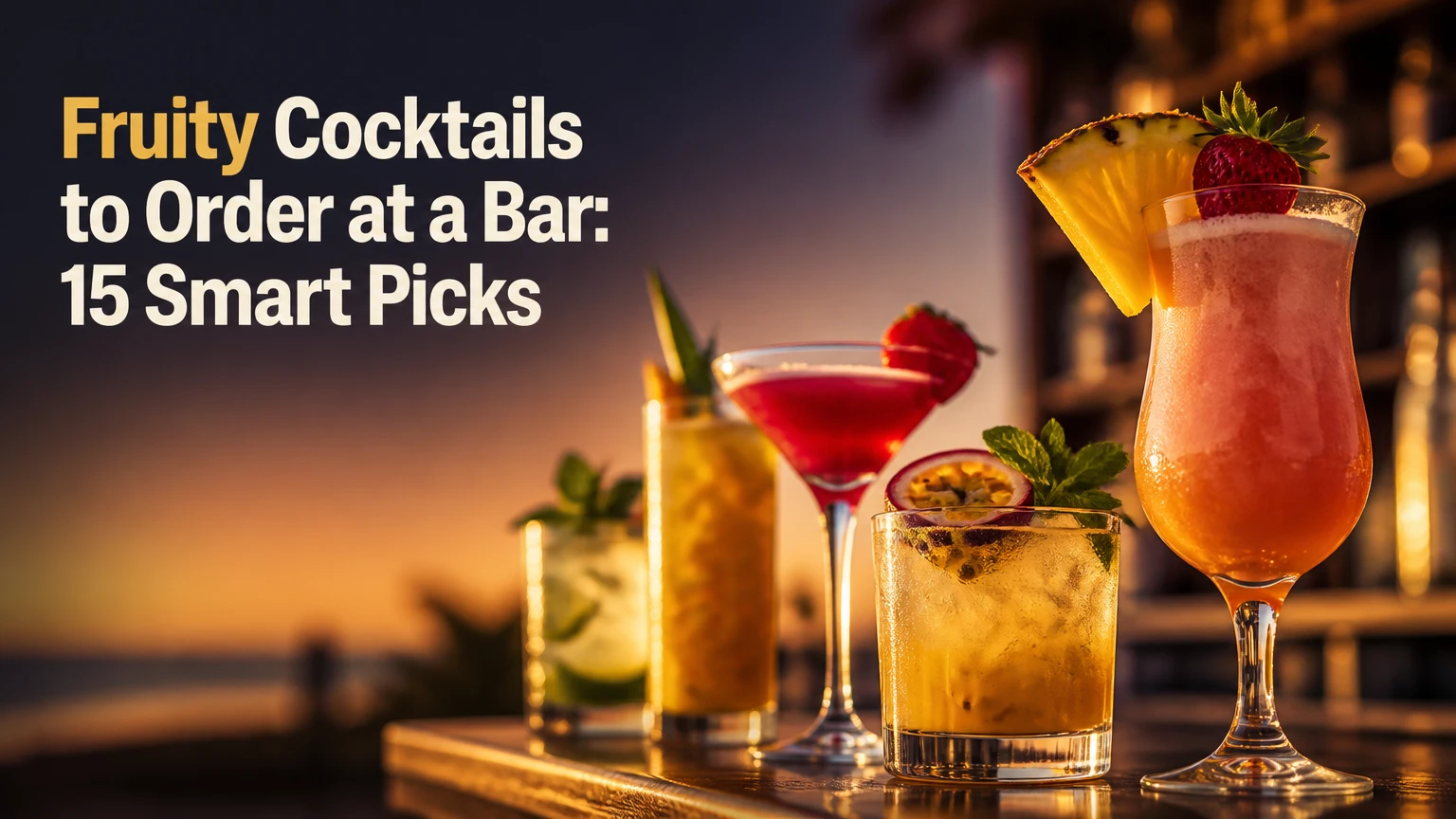
Fruity cocktails to order at a bar include classics such as the Margarita, Mojito, Piña Colada, Cosmopolitan, Bramble, French Martini, and Bellini. The best choice depends on the fruit flavor, base spirit, sweetness, acidity, texture, alcohol strength, and bar style you prefer.
Key Facts at a Glance
A Margarita is usually the strongest tart, citrus-forward choice for tequila drinkers.
A Mojito combines white rum, lime, mint, sugar, and soda for a refreshing long drink.
A Piña Colada is creamy, rich, tropical, and typically sweeter than a Daiquiri.
A French Martini tastes strongly of pineapple and raspberry but remains a spirit-based cocktail.
Fresh citrus and fruit purée usually create a brighter flavor than bottled sour mix.
Typical cocktail-bar prices range from $10-$16 at restaurants and $16-$24 at craft bars.
What Counts as a Fruity Cocktail?
A fruity cocktail uses fruit juice, citrus, purée, muddled fruit, fruit liqueur, wine, or a fruit-based syrup as a noticeable flavor component. Fruit-forward does not automatically mean sugary: a Hemingway Daiquiri can be tart and relatively dry, while a frozen strawberry drink may taste sweet and dense.
Fruit contributes several separate attributes. Citrus supplies acidity and aroma, pineapple adds sweetness and body, berries add color and jammy notes, and passion fruit contributes intense fragrance with sharp acidity. Fruit liqueurs add concentrated flavor, but they also add sugar and alcohol.
A cocktail can be fruity without containing visible fruit pieces. A Cosmopolitan gets its berry character from cranberry juice, while a Bramble gets blackberry flavor from crème de mûre. Conversely, a drink garnished with a single orange wedge is not necessarily fruit-forward if the liquid contains little fruit.
Fruity, Sweet, Tropical, and Fresh Are Different
“Fruity” describes flavor, “sweet” describes sugar balance, “tropical” describes a family of flavors, and “fresh” describes ingredient quality or preparation. A bartender can make a fruity drink that is tart, dry, bitter, sparkling, creamy, or spirit-forward.
That distinction matters when ordering. “Something fruity” gives the bartender a direction, but “something fruity, tart, and not creamy with gin” supplies usable specifications.
How Does Fruit Change a Cocktail?
Fruit changes a cocktail through acidity, sweetness, aroma, dilution, and texture. Fruit does not chemically neutralize ethanol or make a high-proof drink safe; alcohol perception falls mainly because citrus, sugar, dilution, chilling, carbonation, and aromatic intensity alter the drink’s sensory balance.
A shaken drink becomes colder and diluted as ice melts. Citrus acidity sharpens the finish, sugar softens acidity, and volatile fruit aromas reach the nose before the alcohol does. Purée and coconut cream add viscosity, while soda lengthens the drink and lowers the concentration per sip.
Pineapple juice can add a fuller texture, but bromelain does not reliably transform a cocktail’s alcohol effect. Claims that fruit sugar binds taste receptors and removes ethanol burn oversimplify taste physiology. A fruity cocktail can taste easy to drink while still delivering the same alcohol contained in its measured spirit.
The National Institute on Alcohol Abuse and Alcoholism defines a standard U.S. drink as containing 14 grams of pure alcohol, approximately 1.5 fluid ounces of 40% spirits. A cocktail may contain one standard drink, more than one, or less, depending on the pour and recipe.
Which Base Spirit Fits Your Taste?
Vodka offers the least assertive spirit profile, rum supports tropical fruit, tequila pairs with citrus, gin works with berries and stone fruit, and mezcal adds smoke to grapefruit or passion fruit. Base spirit is the fastest way to narrow a bar menu.
| Base spirit | Fruit pairings | Typical cocktail examples | Flavor result |
|---|---|---|---|
| Vodka | Pineapple, raspberry, cranberry | French Martini, Cosmopolitan | Clean, berry-led, neutral |
| White rum | Lime, pineapple, coconut, mint | Mojito, Daiquiri, Piña Colada | Light, tropical, refreshing |
| Tequila | Lime, grapefruit, mango, passion fruit | Margarita, Paloma | Peppery, citrusy, lively |
| Gin | Lemon, blackberry, peach, cucumber | Bramble, Singapore Sling | Herbal, aromatic, tart |
| Mezcal | Grapefruit, orange, passion fruit | Mezcal Paloma | Smoky, earthy, sharp |
| Pisco | Lime, grapefruit, berries | Pisco Sour | Grape-like, tart, silky |
Vodka is useful when you want fruit to dominate. Rum is better when you want a tropical or minty profile. Tequila and mezcal keep fruit from becoming one-dimensional because agave spirits add pepper, earth, or smoke.
What Are the Best Fruity Cocktails to Order at a Bar?
The best overall pick for most drinkers is a fresh-juice Margarita because it is widely available, easy to customize, and naturally balances tequila, lime, orange liqueur, and dilution. The best choice changes with your desired sweetness, texture, spirit, and drinking pace.
1. Margarita: Best for Tart Citrus
A Margarita combines tequila, orange liqueur, lime juice, and often a salted rim. Order it on the rocks with fresh lime if you want a bright, recognizable drink that is fruity without becoming creamy.
Ask for “a classic Margarita, on the rocks, with fresh lime, not too sweet.” A Tommy’s Margarita, made with tequila, lime, and agave rather than orange liqueur, gives a cleaner agave profile. A fruit variation can use mango, strawberry, or passion fruit purée.
The drawback is variability. Some bars use sour mix, oversized glasses, or sweetened fruit concentrate, so the same name can produce very different drinks.
Choose this if: you like tequila and tart citrus.
Skip it if: you dislike lime acidity or agave flavor.
2. Mojito: Best for Refreshment
A Mojito combines white rum, lime, mint, sugar, and soda water. It is a long, sparkling cocktail with lower flavor density than a short shaken drink, making it suitable for warm weather and slower sipping.
Fresh mint should smell herbal when the glass reaches you. The bartender usually presses or lightly muddles the mint rather than pulverizing it, because shredded leaves can create bitterness and an unpleasant texture. Lime wedges contribute juice and aroma.
The drawback is preparation time. A proper Mojito can take 2-4 minutes, and a busy bar may produce a less integrated drink if the mint and sugar are not mixed thoroughly.
Choose this if: you want mint, lime, bubbles, and a lighter texture.
Skip it if: you prefer berry, creamy, or strongly spirit-forward drinks.
3. Piña Colada: Best for Creamy Tropical Flavor
A Piña Colada blends or shakes white rum, pineapple juice, and coconut cream. It tastes rich, sweet, and intensely tropical, with a heavier texture than a Daiquiri or Mojito.
The drink works well at beach bars, resorts, and restaurants equipped for frozen service. Ask whether the bar makes it blended or shaken, because the result differs significantly in dilution and texture. A shaken version is often less icy and easier to taste.
The drawback is sugar and richness. Coconut cream can make the drink filling, and pineapple juice plus sweetened coconut products can produce a dessert-like result.
Choose this if: you want coconut, pineapple, and a soft texture.
Skip it if: you dislike sweet drinks or want a low-calorie option.
4. Cosmopolitan: Best for Crisp Berry Citrus
A Cosmopolitan combines citrus vodka, orange liqueur, cranberry juice, and fresh lime. The drink is usually shaken and served in a chilled stemmed glass, producing a cold, tart, cranberry-colored cocktail.
Request fresh lime and a restrained cranberry pour if you prefer acidity over sweetness. The classic drink is more citrusy and balanced than many oversized restaurant versions, which may contain sweet cranberry cocktail rather than unsweetened cranberry juice.
The drawback is that cranberry juice can vary widely. Some bars use a very sweet cranberry blend, while others use a tart juice that requires more orange liqueur or syrup for balance.
Choose this if: you like tart berries and citrus with vodka.
Skip it if: you want fresh fruit texture or a tropical flavor.
5. French Martini: Best for Pineapple and Raspberry
A French Martini combines vodka, raspberry liqueur, and pineapple juice. Shaking creates a foamy surface and integrates the sweet, aromatic ingredients into a silky short drink.
Pineapple dominates the first sip, while raspberry liqueur supplies color and a jam-like finish. The cocktail usually contains no vermouth despite its name, so it does not taste like a traditional dry Martini.
The drawback is sweetness. Pineapple juice and raspberry liqueur can overwhelm the vodka, and the drink’s smoothness may hide a substantial spirit pour.
Choose this if: you want a smooth pineapple and berry cocktail.
Skip it if: you prefer dry, bitter, or low-sugar drinks.
6. Bramble: Best for Blackberry and Gin
A Bramble combines gin, lemon juice, sugar syrup, crushed ice, and blackberry liqueur. The blackberry component is usually added over the top, creating a layered, jammy fruit character as the ice melts.
The drink is more tart and aromatic than many tropical cocktails. Gin’s botanicals remain noticeable, especially when the bar uses a juniper-forward brand.
The drawback is seed and ice texture. A poorly strained berry variation can feel gritty, while excessive crushed ice can dilute the drink quickly.
Choose this if: you like blackberry, lemon, and botanical gin.
Skip it if: you dislike juniper or want a clear, sparkling drink.
7. Daiquiri: Best for Simple Fresh Fruit
A classic Daiquiri contains rum, lime juice, and sugar, usually shaken and served without fruit purée. Strawberry, banana, and other variations add fruit, but the classic version shows whether the bar can balance a simple sour.
A well-made Daiquiri tastes crisp, cold, and lime-forward rather than syrupy. It is a better test of fresh citrus and shaking technique than a heavily garnished blended drink.
The drawback is limited fruit intensity in the classic version. If you want obvious berry or tropical flavor, ask for a named variation.
Choose this if: you want a clean, tart rum drink.
Skip it if: you expect creamy texture or abundant fruit.
8. Jungle Bird: Best for Bitter Tropical Complexity
A Jungle Bird combines dark rum, pineapple juice, lime, sugar, and Campari. Pineapple provides tropical sweetness, while Campari adds bitterness and a red herbal edge.
This is a strong choice for experienced drinkers who want fruit without losing complexity. The bitter component keeps the drink from tasting like juice, although the balance depends on the bartender’s pineapple and Campari proportions.
The drawback is Campari’s bitterness. Drinkers expecting a Piña Colada may find the finish unexpectedly herbal and bitter.
Choose this if: you like tropical fruit with bitterness.
Skip it if: you want a soft, dessert-like cocktail.
9. Paloma: Best for Grapefruit and Tequila
A Paloma combines tequila with grapefruit soda or fresh grapefruit, lime, and salt. It is usually served tall over ice, making it more refreshing and less concentrated than a Margarita.
Ask for fresh grapefruit and soda when available. A bottled grapefruit soda creates a sweeter, more familiar profile, while fresh grapefruit produces sharper bitterness and a drier finish.
The drawback is recipe inconsistency. Some bars build a Paloma with only tequila and grapefruit soda, while others add lime, agave, or grapefruit liqueur.
Choose this if: you like grapefruit, bubbles, and tequila.
Skip it if: grapefruit bitterness bothers you.
10. French 75: Best for Bubbly Citrus
A French 75 combines gin, lemon juice, sugar, and sparkling wine. The drink is crisp, aromatic, and celebratory, with lemon providing the primary fruit character.
Sparkling wine lengthens the drink and changes its texture, but the cocktail can still contain a full spirit measure. Order it when you want citrus and bubbles rather than a heavy tropical drink.
The drawback is speed. Carbonation and a stemmed glass make the drink less suitable for crowded, rough-service environments where it may warm quickly.
Choose this if: you want lemon, gin, and sparkling wine.
Skip it if: you want pronounced berry or tropical fruit.
How Do You Compare Fruity Bar Drinks?
Compare fruity cocktails by fruit intensity, sweetness, acidity, texture, spirit visibility, and service style. A tall sparkling drink usually feels lighter than a short shaken cocktail, but glass size does not reliably indicate lower alcohol content.
| Cocktail | Main fruit | Sweetness, 1-5 | Typical format | Typical U.S. price |
|---|---|---|---|---|
| Margarita | Lime, orange | 2-3 | Rocks, 4-6 oz | $12-$18 |
| Mojito | Lime | 2-3 | Tall, 10-14 oz | $12-$17 |
| Piña Colada | Pineapple, coconut | 4-5 | Frozen or rocks, 8-12 oz | $13-$20 |
| Cosmopolitan | Cranberry, lime | 3 | Short, 4-5 oz | $13-$18 |
| French Martini | Pineapple, raspberry | 4 | Short, 4-5 oz | $14-$20 |
| Bramble | Blackberry, lemon | 2-3 | Crushed ice, 6-8 oz | $14-$20 |
| Paloma | Grapefruit, lime | 2-3 | Tall, 10-12 oz | $12-$18 |
| French 75 | Lemon | 2 | Flute or coupe, 5-6 oz | $14-$22 |
Price ranges are typical menu figures, not fixed industry standards. Location, tax, venue category, spirit brand, and labor-intensive preparation can move a cocktail outside these bands.
Which Fruity Cocktails Are Least Sweet?
The least sweet choices are usually a Hemingway Daiquiri, classic Daiquiri, fresh Paloma, Bramble, and dry-leaning Margarita. Ask for fresh citrus, minimal syrup, and no sweetened juice when the menu permits modifications.
| Drink | Typical sweetness | Acid level | Best modification |
|---|---|---|---|
| Hemingway Daiquiri | 1-2/5 | 4-5/5 | Ask for no extra syrup |
| Classic Daiquiri | 2-3/5 | 4/5 | Request half syrup |
| Fresh Paloma | 2/5 | 3-4/5 | Use soda and fresh grapefruit |
| Bramble | 2-3/5 | 4/5 | Reduce blackberry liqueur |
| Margarita | 2-3/5 | 4/5 | Request a Tommy’s style |
| Piña Colada | 4-5/5 | 1-2/5 | Ask for less coconut cream |
Sweetness ratings are practical tasting estimates on a five-point scale. Recipes, brands, and bartender adjustments can change the result.
How Should You Order One?
Order a fruity cocktail by naming the base spirit, fruit direction, texture, acidity, and sweetness. A complete request such as “rum, pineapple, shaken, tart, and not creamy” gives the bartender more useful information than “surprise me with something fruity.”
Use one of these scripts:
- Beginner: “What is your easiest fruity cocktail that is not too sweet?”
- Fresh and tart: “Could I have something with fresh citrus and fruit, but dry and refreshing?”
- Tropical: “I like pineapple and coconut, but I do not want a very sweet frozen drink.”
- Spirit-forward: “Can you make a gin drink with berries and lemon, with the gin still noticeable?”
- Low sugar: “Which fruity drink uses soda and fresh citrus rather than syrup or sour mix?”
- No named cocktail: “I like grapefruit, tequila, and bubbles. What would you recommend?”
Before ordering, check whether the venue has a blender, fresh citrus, seasonal purée, or a cocktail menu listing ingredients. At a high-volume bar, a built Paloma or Mimosa is often more reliable than an elaborate purée drink during peak service.
What Should You Ask the Bartender?
Ask four practical questions: “What is the base spirit?”, “Is the fruit fresh or bottled?”, “How sweet is it?”, and “Is it shaken, stirred, built, or blended?” These questions reveal the drink’s flavor, texture, preparation time, and likely alcohol concentration.
A bartender may not be able to provide exact nutrition or ABV because recipes vary. The bartender can usually identify the spirit measure, sweeteners, juice type, and whether the drink contains a liqueur.
Fresh Juice, Purée, Syrup, or Premix?
Fresh citrus usually gives the clearest acidity, fruit purée gives texture and color, fruit liqueur gives concentrated flavor and alcohol, and syrup gives sweetness with less natural acidity. Premixed sour products improve speed and consistency but can taste sweeter and less layered.
| Fruit component | Typical quantity | Primary effect | Common drawback |
|---|---|---|---|
| Fresh lime or lemon | 0.5-1.0 oz | Acidity and aroma | Quality declines after cutting |
| Fruit juice | 1-4 oz | Volume and recognizable flavor | Bottled juice may taste flat |
| Fruit purée | 0.5-1.5 oz | Body, color, intense fruit | Seeds and seasonal variation |
| Fruit liqueur | 0.25-0.75 oz | Concentrated fruit and alcohol | Adds sugar quickly |
| Flavored syrup | 0.25-0.75 oz | Sweetness and aroma | Can taste artificial |
| Sour mix | 1-3 oz | Speed and acid-sugar balance | Often lacks fresh citrus character |
A fresh cocktail is not automatically healthier. The drink’s total alcohol, sugar, and serving size matter more than whether the garnish is fresh. The Dietary Guidelines for Americans, 2020-2025, states that “drinking less is better for health than drinking more,” which applies equally to fruit-forward cocktails.
How Much Do Fruity Cocktails Cost and How Long Do They Take?
A fruity cocktail typically costs $10-$14 at a casual bar, $12-$18 at a restaurant or lounge, and $16-$24 or more at a craft cocktail bar. Built drinks may arrive in under two minutes, while shaken, muddled, and frozen drinks commonly take 2-6 minutes during normal service.
| Venue type | Typical price | Typical wait | Common fruit style |
|---|---|---|---|
| Casual bar | $10-$14 | 1-3 minutes | Bottled juice, soda, basic syrups |
| Restaurant lounge | $12-$18 | 2-5 minutes | Fresh citrus, standard purée |
| Craft cocktail bar | $16-$24 | 4-8 minutes | House syrups, clarified juice, premium spirits |
| Resort or nightclub | $15-$25 | 2-6 minutes | Frozen drinks, large-format builds |
| Brunch service | $9-$16 | 1-4 minutes | Mimosa, Bellini, spritz variations |
The bill may increase through premium tequila, a top-shelf vodka, an additional spirit, or a large-format garnish. Ask for the price before requesting a premium substitution.
Which Drink Fits Your Situation?
Choose a Paloma, Mojito, or Mimosa for a long, refreshing drink; choose a Daiquiri, Bramble, or Margarita for tartness; and choose a Piña Colada or French Martini when fruit and sweetness should dominate. The venue and occasion should influence preparation style.
- At brunch: Choose a Mimosa, Bellini, or fruit-forward spritz. These are quick to build and usually lower in concentration than short shaken cocktails, although the sparkling wine pour still matters.
- At a busy dive bar: Choose a Cape Codder, Paloma, rum punch, or vodka soda with cranberry. These drinks use common ingredients and require little specialized equipment.
- At a craft cocktail bar: Choose a Bramble, Jungle Bird, clarified milk punch, or seasonal fruit sour. Ask what fruit is fresh that day.
- At a beach or resort bar: Choose a Piña Colada, frozen Daiquiri, or Miami Vice. Confirm whether the drink uses a blender and whether the pour contains one or two spirit measures.
- For a date or formal dinner: Choose a French 75, Bellini, or balanced Margarita. These provide fruit aroma without the visual bulk of a frozen drink.
- For a designated driver: Order a passion-fruit spritz without alcohol, a cucumber-lime soda, or a zero-proof sour with fresh citrus.
What Mistakes Should You Avoid?
The most common mistake is confusing a large glass with a low-alcohol drink. Ice, soda, juice, and crushed fruit increase volume, but only dilution changes concentration, and the total spirit measure still determines how much alcohol the cocktail contains.
Other frequent errors include:
- Ordering “fruity” without a sweetness preference: Say “tart,” “dry,” or “not too sweet” if sugar bothers you.
- Choosing a frozen drink at a blender-free bar: Select a shaken Daiquiri or rocks Margarita instead.
- Assuming a garnish proves freshness: Ask whether the juice or purée is fresh.
- Adding premium spirit automatically: Premium liquor does not fix an unbalanced sour mix.
- Ignoring allergens: Orgeat may contain almonds, and some creamy drinks contain dairy or coconut products.
- Ordering multiple strong cocktails quickly: A smooth French Martini or Singapore Sling can contain a full spirit measure plus liqueurs.
One practitioner rule matters here: specify one modification, not six. “Fresh lime and less sweet” is easy to execute; a long list of substitutions can make a simple order ambiguous during a busy service.
How Can You Fix a Bad Fruity Cocktail?
Ask for a correction rather than silently adding random ingredients. If a drink is too sweet, request a side of lime or lemon; if it is too strong, ask for soda or additional ice; if it is gritty, request a remake double-strained through fine mesh.
| Problem | Likely cause | Best response |
|---|---|---|
| Too sweet | Syrup, sweet juice, or liqueur | Request fresh lime or soda |
| Too sour | Excess citrus or insufficient sugar | Ask for a small syrup adjustment |
| Too strong | Large spirit pour or low dilution | Request ice and soda, or a remake |
| Watery | Excess melting ice | Ask for a fresh build |
| Gritty | Berry seeds or poor straining | Request a double-strained remake |
| Flat | Old citrus or weak carbonation | Ask for fresh citrus or fresh soda |
Do not request a “stronger” drink simply because a sweet cocktail tastes mild. Flavor intensity and alcohol content are separate variables, and a bartender can increase fruit, acidity, or aroma without increasing the spirit.
Fruity Cocktail Alternatives for Different Preferences
A low-sugar drinker can order vodka or tequila with soda, fresh grapefruit, and lime, avoiding fruit liqueur and sweetened mixers. A drinker who wants alcohol less noticeable may prefer a Piña Colada or French Martini, but smoothness should not be mistaken for low strength.
A connoisseur may prefer a Hemingway Daiquiri, which combines rum, grapefruit, lime, and maraschino liqueur, or a Jungle Bird, which adds Campari’s bitterness to pineapple and dark rum. An adventurous drinker can request mezcal, passion fruit, lime, and grapefruit soda for smoke, acidity, and tropical aroma.
The honest limitation is simple: no fruity cocktail is a reliable way to prevent intoxication or a hangover. Food, water, pace, total alcohol, and individual physiology matter more than the fruit ingredient.
Frequently Asked Questions
What Fruity Cocktail Is Best for Someone Who Dislikes Alcohol?
A Piña Colada, French Martini, or fruit-forward frozen Daiquiri usually masks spirit character most effectively through pineapple, coconut, sugar, and chilling. These drinks can still contain a full spirit measure, so reduced alcohol perception does not mean reduced alcohol content.
Which Fruity Cocktail Has the Lowest Sugar?
A fresh Paloma, classic Daiquiri with restrained syrup, or vodka soda with grapefruit and lime is usually lower in added sugar than a Piña Colada, French Martini, or fruit punch. Ask the bartender to omit fruit liqueur and use soda or fresh citrus instead.
Are Fruity Cocktails Stronger Than Beer?
A fruity cocktail can contain one or more standard drinks, while a typical 12-ounce beer at 5% ABV contains about one U.S. standard drink. A cocktail with 2 ounces of 40% spirits contains more alcohol than one made with a single 1.5-ounce measure.
Can You Order a Fruity Cocktail Without Knowing Its Name?
Yes. Describe the spirit, fruit, sweetness, acidity, and texture you want. “Tequila with grapefruit, bubbles, and a tart finish” gives the bartender enough information to recommend a Paloma or a related house drink without requiring you to recognize menu terminology.
What Fruity Drink Should You Order at a Busy Bar?
Order a Mojito only if the bar has fresh mint and enough staff for muddling. A Paloma, Margarita, Mimosa, Cape Codder, or vodka soda with cranberry is usually faster because the ingredients are commonly stocked and the drink can be built directly over ice.
Is a Fruity Mocktail a Good Alternative?
A fruit-based mocktail is a useful alternative when you want the flavor without alcohol, but ask about syrups because zero-proof drinks can contain substantial sugar. Request fresh citrus, soda water, herbs, and a small amount of purée for a sharper, less sweet result.
The Bottom Line
The best fruity cocktails to order at a bar are the ones that match your preferred fruit, spirit, sweetness, acidity, texture, and setting. Start with a Margarita for tart citrus, a Mojito for refreshment, a Piña Colada for creamy tropical flavor, a Bramble for blackberry and gin, or a Paloma for grapefruit and tequila. State “fresh,” “tart,” or “not too sweet” when those details matter, then ask about the spirit pour before ordering a second drink.