How to Make Baguette: Crisp Crust at Home
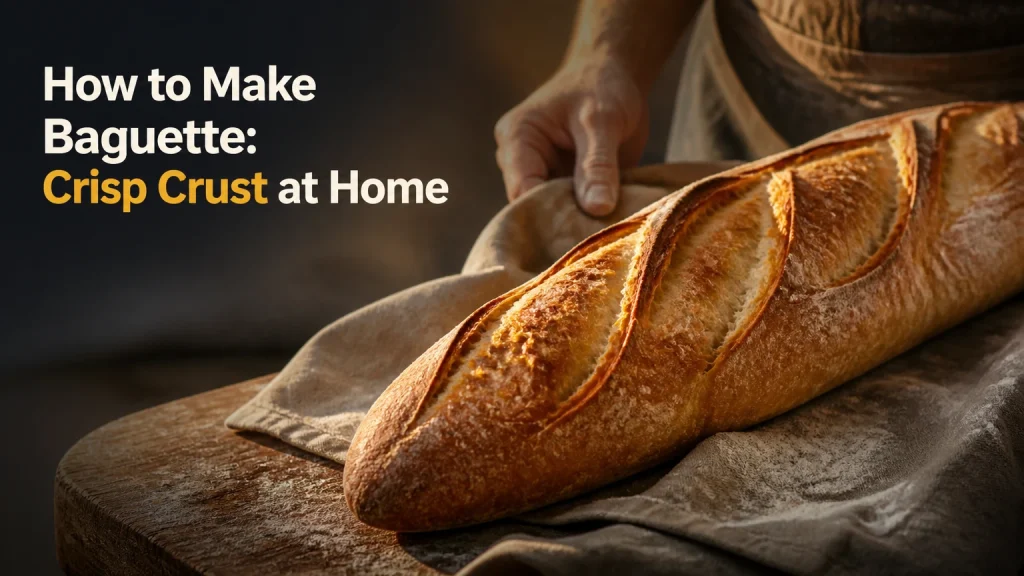
A baguette is made by mixing wheat flour, water, salt, and yeast, fermenting the dough until aerated, shaping it into a narrow cylinder, scoring the surface, and baking it with steam at high heat. This poolish method produces three crisp, open-crumb baguettes in about 12 hours, with 45-60 minutes of active work and a finished […]
Why Is French Bread Different? The Four-Ingredient Answer
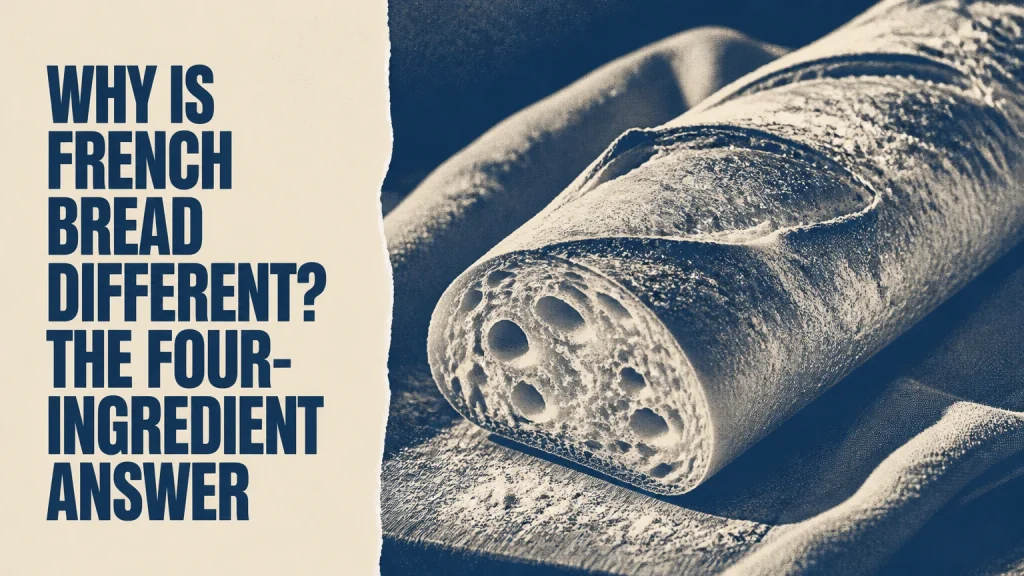
French bread differs because traditional French bread uses a lean formula built around flour, water, salt, and yeast or sourdough, without added fat, sugar, or chemical preservatives. Long fermentation, high hydration, gentle dough handling, shaping, scoring, and steam baking create its thin crisp crust, chewy crumb, irregular holes, and pronounced wheat flavor. Key Facts at […]
How to Caramelize Onions for French Onion Soup, Deeply
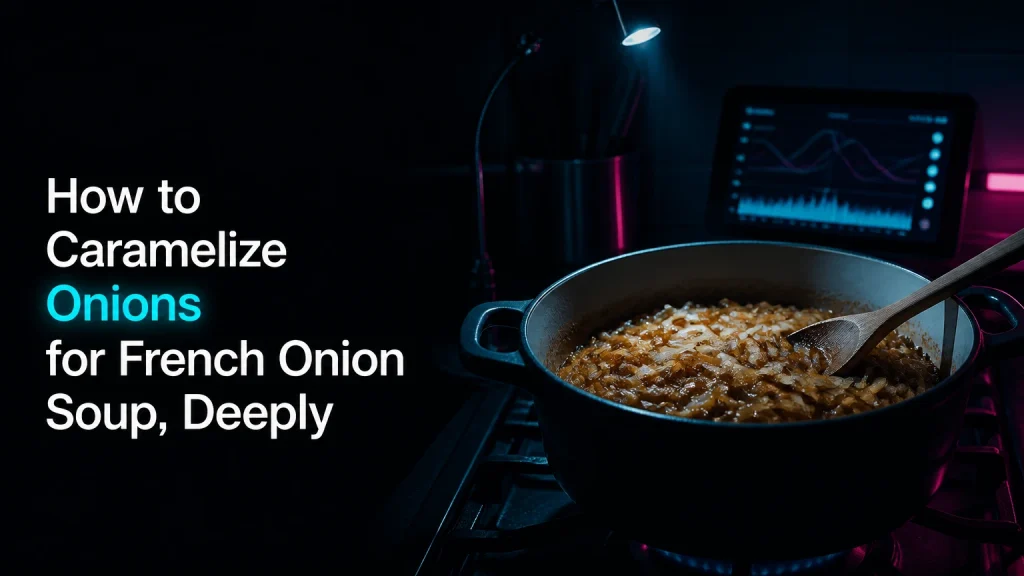
To caramelize onions for French onion soup, cook 3 pounds of thinly sliced yellow onions in a wide, heavy pan with 2 tablespoons of butter, 1 tablespoon of oil, and 1 teaspoon of salt for 45-60 minutes. Stir more often as the onions darken, then deglaze the mahogany fond with 1/2 cup of wine, stock, […]
Why Is French Food so Good? Technique, Terroir, and Balance
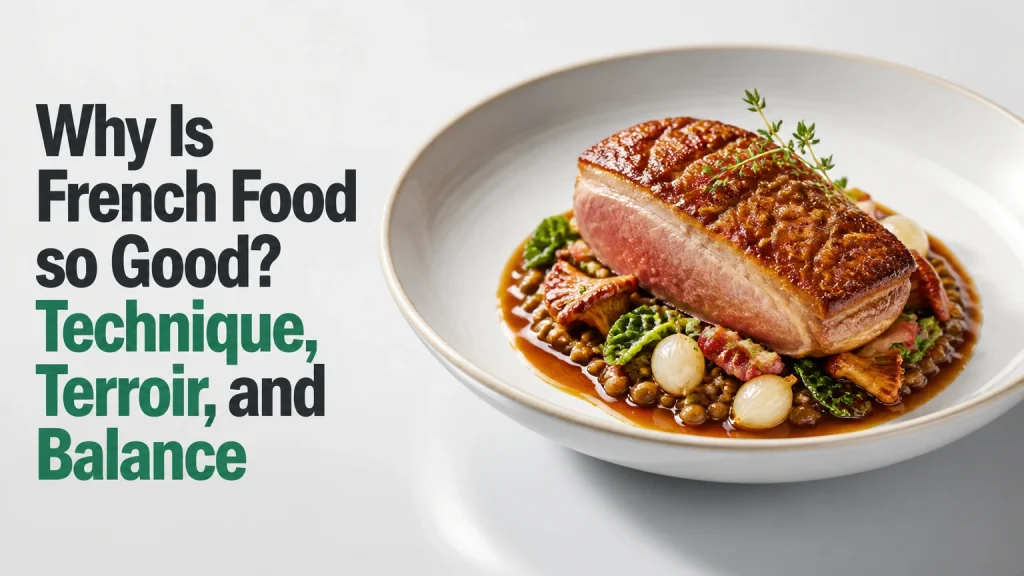
French food tastes so good because French cuisine combines high-quality regional ingredients with repeatable techniques that build flavor in layers. Browning, slow extraction, fermentation, reduction, emulsification, acidity, and careful seasoning create contrast between aroma, texture, richness, and freshness, while French dining culture gives those flavors time and structure. Key Facts at a Glance Why Is […]
How to Make Savory Crepes Without Tearing
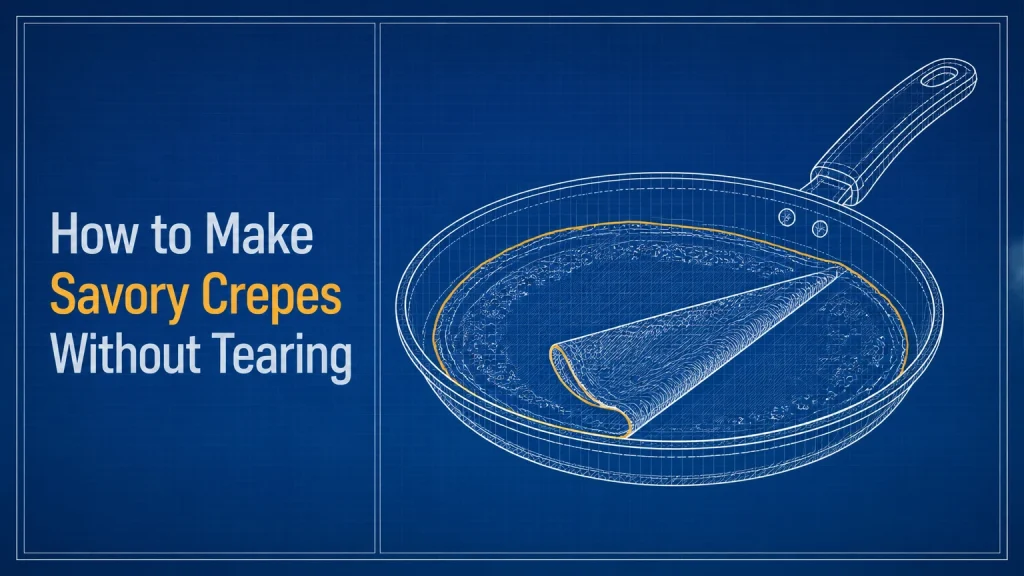
Savory crêpes are thin, lightly crisp pancakes made with a pourable batter and fillings such as cheese, ham, eggs, mushrooms, or vegetables. For the most traditional Breton galettes, mix buckwheat flour, water, and salt, rest the batter, then cook each crêpe in a lightly greased hot pan for about 2 minutes. Key Facts at a […]
How to Make French Bread With a Crisp Crust
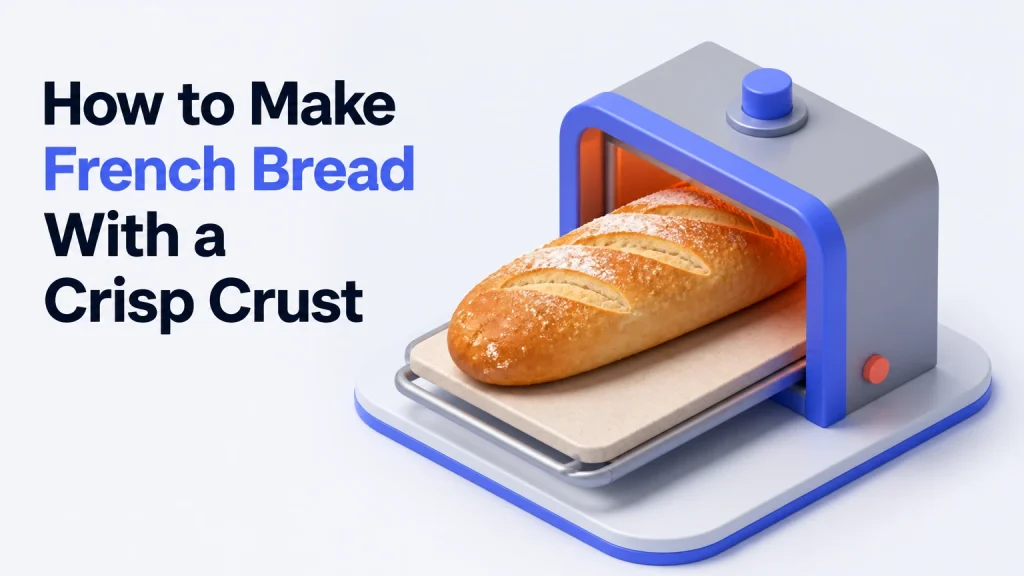
French bread is made from wheat flour, water, salt, and yeast or sourdough, then shaped and baked at high heat with early steam. This reliable poolish method produces two baguettes with a crisp, amber crust and open crumb in about 16-24 hours, including an optional overnight refrigeration period. Key Facts at a Glance What Defines […]
How to Make French Toast With French Bread in 20 Minutes
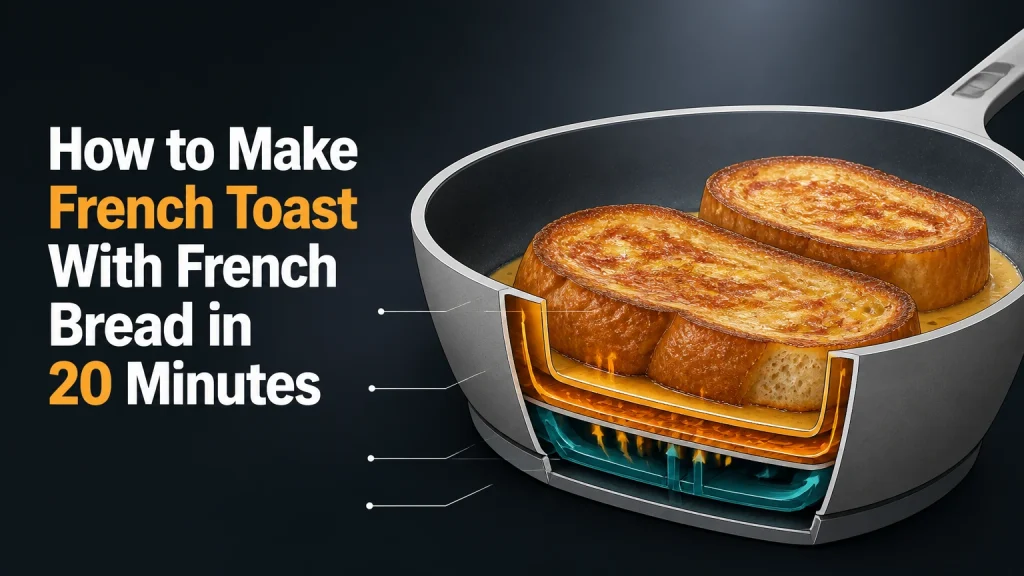
To make French toast with French bread, slice slightly stale baguette or boule into 1-inch pieces, soak each side in an egg-and-milk custard for 15-30 seconds, and cook in butter over medium-low heat for 3-4 minutes per side. The result should have a browned crust, a set custardy center, and a chewy edge without collapsing. […]
How to Make French Onion Soup From Scratch in 2 Hours
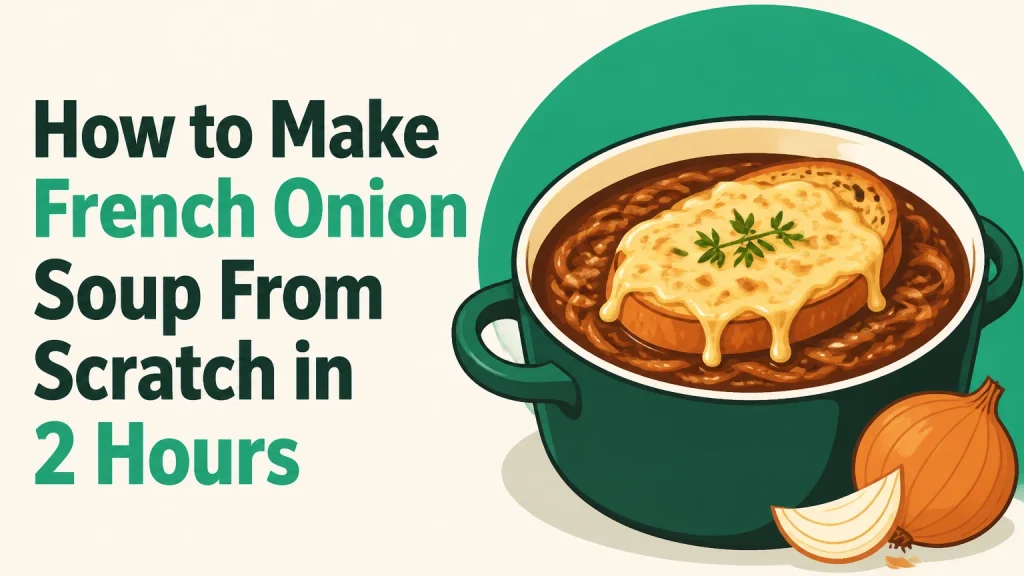
French onion soup from scratch requires slowly caramelizing 3 pounds of sliced onions, deglazing the browned fond with wine or sherry, simmering the onions in rich stock, then broiling toasted baguette and Gruyère until browned. The full process takes about 2 hours, with 50-75 minutes devoted to onion browning. Key Facts at a Glance This […]
How to Make Croissants with Flaky Layers
Croissants are made by fermenting a yeasted dough, enclosing a cold, pliable butter block, rolling and folding the dough, shaping triangles, proofing them fully, and baking until deeply golden. The full process typically takes 18-24 hours, but most of that time is resting and proofing. Temperature control determines whether the layers remain distinct. Key Facts […]
Why Is French Cooking Considered Difficult? The Real Reasons
French cooking is considered difficult because classical French cuisine combines exact knife work, temperature control, layered sauces, long stock preparation, and strict mise en place. The reputation mainly applies to haute cuisine and restaurant technique, not every French dish: a rustic ratatouille is far more forgiving than a clarified consommé or hollandaise. Key Facts at […]