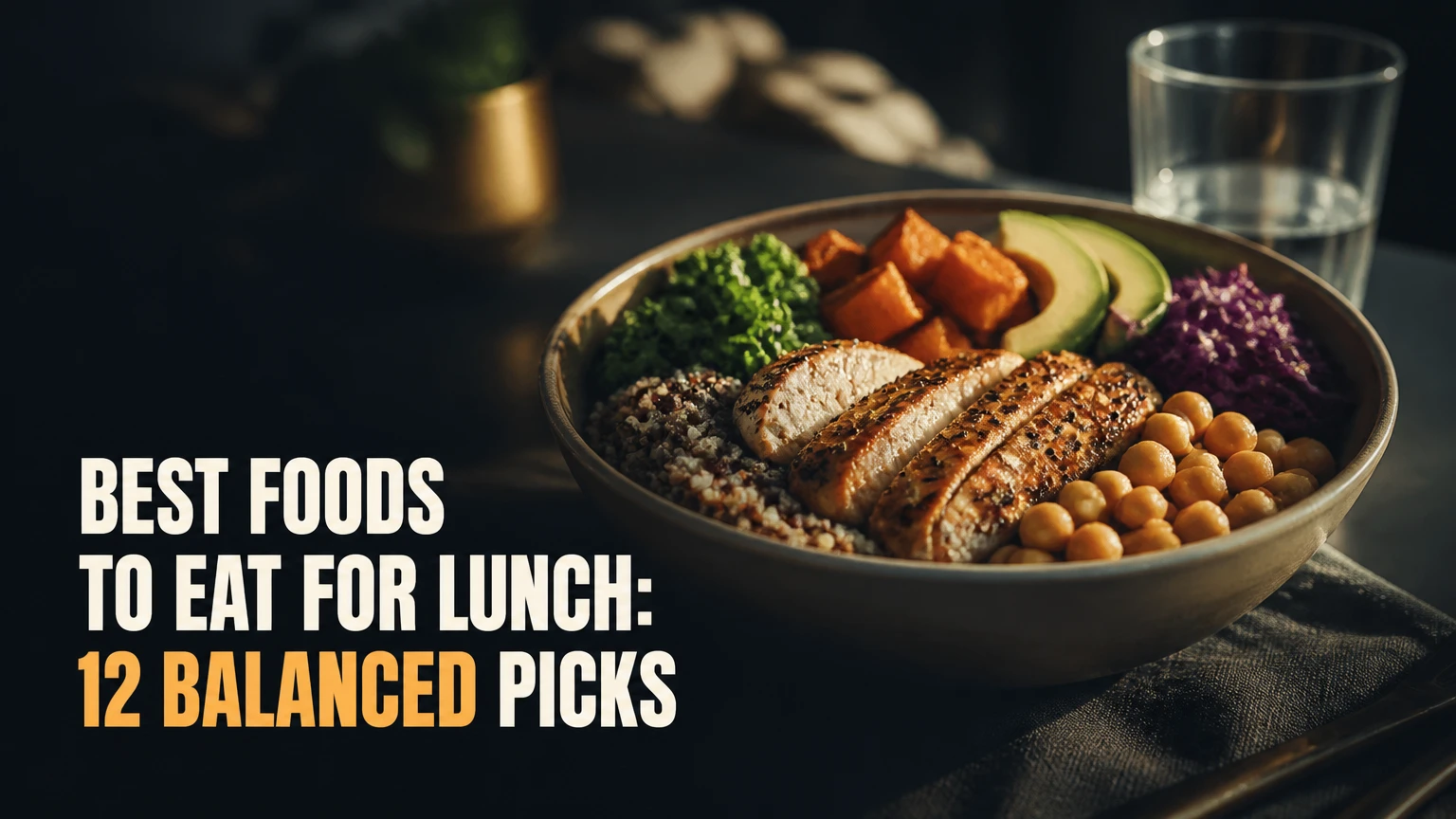
The best foods to eat for lunch combine a meaningful protein source, high-fiber plants, a suitable carbohydrate portion, and a modest amount of unsaturated fat. For most adults, the strongest everyday choices are a chicken grain bowl, lentil-and-egg box, bean-and-tuna salad, tofu rice bowl, or Greek-yogurt wrap, adjusted for calorie needs, activity, budget, and dietary restrictions.
Key Facts at a Glance
A practical lunch usually contains 25-40 grams of protein and 6-12 grams of fiber, although individual needs vary.
The most reliable plate structure is half non-starchy vegetables or fruit, one-quarter protein, and one-quarter whole-food carbohydrate.
A typical homemade balanced lunch costs $2-$6 and takes 5-20 minutes when batch ingredients are ready.
A fixed 500-700 calorie lunch target does not suit everyone; calorie needs depend on body size, activity, age, and total daily intake.
Whole fruit, milk, unsweetened tea, or water usually provides a more filling beverage choice than soda or a sweetened coffee drink.
Prepared lunches containing meat, eggs, dairy, fish, tofu, or cooked grains should generally be refrigerated within 2 hours, or within 1 hour when temperatures exceed 90°F (32°C).
Which Foods Make the Best Lunch?
The best lunch foods deliver protein, fiber, micronutrients, and enough energy for the next several hours without relying mainly on refined starch or added sugar. A lunch does not need a particular cuisine or macro percentage; beans, eggs, fish, chicken, tofu, whole grains, vegetables, fruit, and unsweetened dairy can all form a high-quality meal.
The Harvard T.H. Chan School of Public Health Healthy Eating Plate recommends making half the plate vegetables and fruit, one-quarter whole grains, and one-quarter healthy protein. That structure is more adaptable than a rigid 40% carbohydrate, 30% protein, and 30% fat formula.
A useful lunch has four components:
- Protein: chicken, fish, eggs, Greek yogurt, tofu, tempeh, lentils, beans, or lean meat.
- Plants: vegetables, fruit, legumes, or leafy greens for fiber and potassium.
- Carbohydrate: oats, brown rice, potatoes, corn, whole-grain bread, quinoa, or fruit.
- Unsaturated fat: olive oil, avocado, nuts, seeds, or tahini in measured portions.
Michael Pollan’s short rule, “Eat food. Not too much. Mostly plants,” from Food Rules, captures the general direction, but lunch still requires personalization.
How Much Protein, Fiber, and Energy Should Lunch Provide?
A practical starting point is 25-40 grams of protein, 6-12 grams of fiber, and roughly 400-800 calories, with the lower or higher end chosen according to the person’s total energy requirement. These are planning ranges, not medical prescriptions or universal physiological thresholds.
A sedentary smaller adult may need a 400-550 calorie lunch, while a larger person, endurance athlete, or manual worker may require 650-900 calories. Someone trying to lose weight should usually reduce total daily energy intake without removing protein, vegetables, or essential fats.
| Lunch component | Practical starting range | Examples | Main purpose |
|---|---|---|---|
| Protein | 25-40 g | 120 g chicken, 1 cup lentils plus yogurt, 180 g tofu | Satiety and tissue maintenance |
| Fiber | 6-12 g | 1 cup beans, 2 cups vegetables, whole grains | Digestive function and fullness |
| Whole-food carbohydrate | 25-75 g | ½-1½ cups cooked rice, potato, or quinoa | Brain and exercise fuel |
| Unsaturated fat | 10-20 g | 1 tbsp olive oil, ¼ avocado, 2 tbsp seeds | Flavor and nutrient absorption |
| Energy | 400-800 kcal | Depends on daily needs | Matches total intake |
The Academy of Nutrition and Dietetics notes that protein needs vary by body size, age, health, and activity. People with kidney disease, diabetes treated with medication, pregnancy, or a history of eating disorders should obtain individualized advice rather than applying a generic target.
Our 12 Best Foods to Eat for Lunch
These picks are ranked by nutritional balance, satiety, preparation effort, portability, cost, and adaptability. The first option is the best general-purpose lunch, but the most suitable choice changes with training demands, dietary pattern, and access to refrigeration.
1. Chicken and Whole-Grain Grain Bowl: Best Overall
A chicken grain bowl is the best overall lunch for most adults because it combines approximately 30-40 grams of protein, 6-10 grams of fiber, flexible carbohydrates, and vegetables in one portable meal.
Build one with 120-150 grams of cooked chicken, ½-1 cup of cooked brown rice, quinoa, or farro, at least 1½ cups of vegetables, and 1 tablespoon of olive-oil dressing. Roasted broccoli, peppers, carrots, cabbage, and spinach add different textures and nutrients without requiring a large sauce portion.
The bowl works for weight management when the grain and dressing are measured. It works for training when the grain portion increases and fatty toppings decrease before exercise. Batch-cooked ingredients usually create three to four lunches in about 45 minutes.
Drawback: Chicken can become repetitive, and large grain or dressing portions can push the meal well above its intended calorie range.
Choose this if: You want one repeatable lunch with broad nutritional coverage.
Skip it if: You need a no-refrigeration meal or follow a vegetarian diet.
2. Lentil, Egg, and Vegetable Box: Best Budget Lunch
A lentil, egg, and vegetable box is the best budget lunch, typically providing 25-35 grams of protein and 8-15 grams of fiber for about $2-$4 per serving when prepared at home.
Combine 1 cup cooked lentils, two eggs, 1-2 cups of carrots, cucumber, tomatoes, or cooked greens, and a small potato or slice of whole-grain bread. Lentils supply iron, potassium, and soluble fiber, while eggs add concentrated protein and choline.
This meal stores well for several days when ingredients are cooled promptly and kept refrigerated. Canned lentils reduce preparation time, although rinsing them can lower sodium. For vegan eaters, replace eggs with 150-200 grams of baked tofu or an extra ½ cup of beans.
Drawback: A rapid increase in lentils may cause gas or bloating, particularly when someone is not accustomed to high-fiber meals.
Choose this if: Cost, batch preparation, and fullness matter most.
Skip it if: Legumes consistently trigger symptoms that have not been medically evaluated.
3. Salmon, Potato, and Greens Bowl: Best for Omega-3 Fats
A salmon, potato, and greens bowl provides high-quality protein and marine omega-3 fats, making it a strong option for people who enjoy fish and need a substantial lunch.
Use 100-150 grams of cooked salmon, one medium potato, and 2 cups of greens or other vegetables. Add lemon, yogurt-dill sauce, or 1 teaspoon of olive oil rather than several tablespoons of creamy dressing. Canned salmon offers similar convenience at a lower price.
The American Heart Association recommends eating fish, particularly fatty fish, twice weekly as part of a heart-healthy pattern. Salmon is not mandatory; sardines, trout, and canned mackerel are alternatives with similar omega-3 advantages.
Drawback: Salmon costs more than beans, eggs, or canned tuna, and fish requires reliable refrigeration for packed lunches.
Choose this if: You want a nutrient-dense fish lunch with a satisfying carbohydrate.
Skip it if: You need a shelf-stable lunch or dislike fish.
4. Bean and Tuna Salad: Best No-Cook High-Protein Option
A bean and tuna salad is the best no-cook high-protein option because rinsed canned beans and tuna can become a balanced lunch in under 10 minutes.
Mix one can of tuna, ¾-1 cup of beans, chopped vegetables, lemon juice, and 1 tablespoon of olive oil. Serve the mixture over greens, with whole-grain crackers, or inside a whole-wheat pita. A typical serving supplies about 30-40 grams of protein and 8-12 grams of fiber.
Choose tuna packed in water when reducing calories, or tuna packed in oil when the meal otherwise lacks fat. The U.S. Food and Drug Administration advises choosing fish lower in mercury more often and varying seafood choices rather than eating one species repeatedly.
Drawback: Tuna has a stronger odor in shared offices, and frequent consumption of the same tuna product is less sensible than rotating salmon, beans, chicken, and eggs.
Choose this if: You need speed and minimal cooking.
Skip it if: You require a vegan lunch or work in a setting where odors are problematic.
5. Tofu and Edamame Rice Bowl: Best Plant-Based Protein
A tofu and edamame rice bowl is the best plant-based lunch for protein density, supplying approximately 25-35 grams of protein with 1 cup of edamame, 150-200 grams of tofu, or a combination of both.
Add ½-1 cup cooked rice, 1-2 cups of stir-fried vegetables, and a sauce based on soy sauce, rice vinegar, ginger, and a measured amount of sesame oil. Firm or extra-firm tofu is easier to pack than silken tofu and holds texture after reheating.
Soy foods provide complete protein, meaning they contain all nine essential amino acids in useful proportions. People avoiding gluten can use certified gluten-free tamari and check packaged tofu labels for cross-contact statements.
Drawback: Many prepared tofu bowls contain excessive sodium and oil, especially when restaurant sauces are added without measurement.
Choose this if: You want a vegan or vegetarian lunch with substantial protein.
Skip it if: You dislike soy or need a meal with no reheating and limited refrigeration.
6. Greek Yogurt, Oats, Fruit, and Nuts: Best Cold Breakfast-Style Lunch
Greek yogurt with oats, fruit, and nuts is the best cold lunch for people who prefer a sweet meal and have access to refrigeration.
Use 200-250 grams of plain Greek yogurt, ½ cup oats, one cup of berries or a chopped apple, and 1-2 tablespoons of nuts or seeds. Depending on the yogurt, the meal provides 20-30 grams of protein and 7-10 grams of fiber. Add cinnamon, not sugar, when extra sweetness is unnecessary.
This format is useful for school, commuting, or hot weather because it requires no cooking. Lactose-free Greek yogurt works for lactose intolerance, while fortified soy yogurt is a closer protein substitute than most coconut or almond yogurts.
Drawback: Many flavored yogurts and granolas turn a moderate meal into a high-added-sugar dessert.
Choose this if: You want a fast, cold, mildly sweet lunch.
Skip it if: Dairy or soy is unsuitable and you cannot find a fortified alternative.
7. Hummus, Chicken, and Whole-Grain Wrap: Best Portable Lunch
A hummus, chicken, and whole-grain wrap is the best portable lunch when you need food that can be eaten without utensils.
Fill one medium whole-grain tortilla with 90-120 grams chicken, 2 tablespoons hummus, spinach, shredded cabbage, cucumber, and tomato. Add fruit on the side. The wrap usually supplies 25-35 grams of protein, although a large tortilla and generous hummus portion can increase calories quickly.
Cabbage and carrots hold their texture better than watery lettuce during several hours of transport. Keep the wrap below 40°F (4°C) in an insulated bag with an ice pack when it contains chicken or hummus.
Drawback: Commercial wraps often contain large tortillas, processed meats, and salty sauces, so the label can differ sharply from a homemade version.
Choose this if: Portability and one-handed eating determine success.
Skip it if: You need a low-sodium meal and cannot control the fillings.
8. Chickpea and Quinoa Salad: Best Vegetarian Fiber Choice
A chickpea and quinoa salad is the best vegetarian fiber choice because it combines legumes, whole grains, vegetables, and seeds in a meal that remains satisfying when served cold.
Combine ¾ cup chickpeas, ½ cup cooked quinoa, 1½ cups chopped vegetables, lemon juice, parsley, and 1 tablespoon pumpkin seeds. The combination commonly supplies 15-20 grams of protein and 9-13 grams of fiber, so add feta, yogurt, tofu, or an egg when you need more protein.
Soaking and rinsing dried or canned legumes can improve texture and reduce some digestive discomfort, but no preparation method eliminates all fermentable carbohydrates. Increase portions gradually.
Drawback: This meal may undersupply protein for athletes unless a concentrated protein source is added.
Choose this if: Fiber, plant variety, and a meat-free meal are priorities.
Skip it if: You need 35-40 grams of protein without adding another ingredient.
9. Turkey, Avocado, and Vegetable Sandwich: Best Familiar Choice
A turkey, avocado, and vegetable sandwich is the best familiar lunch for people who want a conventional meal with predictable ingredients.
Use two slices of whole-grain bread, 90-120 grams of turkey, ¼ avocado, tomato, spinach, and mustard. Pair it with an apple or a cup of vegetable soup. The sandwich provides approximately 25-30 grams of protein and 6-9 grams of fiber when the bread contains at least 3 grams of fiber per serving.
Fresh roasted turkey is preferable to highly processed deli meat when sodium and additives are concerns. If deli meat is the only practical option, compare labels and choose a lower-sodium product.
Drawback: Processed meat is not an ideal everyday protein. The World Health Organization’s International Agency for Research on Cancer classifies processed meat as carcinogenic to humans, based on evidence concerning colorectal cancer risk.
Choose this if: Familiarity and preparation speed improve consistency.
Skip it if: You eat little processed meat or need a lower-sodium option.
10. Bean and Vegetable Soup with Cottage Cheese: Best Cold-Weather Lunch
Bean and vegetable soup with cottage cheese is the best cold-weather lunch because it combines hydration, vegetables, legumes, and a convenient protein side.
Choose 1½-2 cups of low-sodium lentil, bean, or vegetable soup and add ¾-1 cup cottage cheese, plain yogurt, or two eggs. Include whole-grain toast if the soup contains little starch. Depending on ingredients, the meal provides 25-35 grams of protein and 8-14 grams of fiber.
Soup is useful for volume, but sodium varies widely between canned products. Compare labels, select reduced-sodium versions, or dilute salty soup with unsalted vegetables and beans.
Drawback: Soup alone often lacks enough protein and may leave active people hungry within two hours.
Choose this if: Warmth, volume, and batch cooking matter.
Skip it if: You cannot refrigerate or reheat food safely.
11. Chicken, Bean, and Sweet Potato Bowl: Best for Training Days
A chicken, bean, and sweet potato bowl is the best training-day lunch when carbohydrate availability matters more than minimizing meal size.
Use 120-150 grams chicken, ½ cup black beans, one medium sweet potato, and 1-2 cups vegetables. This combination can provide 35-45 grams protein, 60-90 grams carbohydrate, and 10-15 grams fiber, depending on portions.
For a workout within two hours, reduce beans, raw vegetables, and added fat if they cause gastrointestinal discomfort. For a workout later in the day, the full version can support glycogen replacement and sustained energy.
Drawback: The fiber and volume may feel heavy shortly before intense running, cycling, or lifting.
Choose this if: You train later and tolerate substantial food.
Skip it if: Your workout begins soon or high-fiber meals upset your stomach.
12. Egg, Potato, and Vegetable Frittata: Best Make-Ahead Egg Lunch
An egg, potato, and vegetable frittata is the best make-ahead egg lunch for a low-cost meal that reheats well and uses leftover vegetables.
Prepare a six-egg frittata with spinach, peppers, onions, and diced potato, then divide it into three servings. Each serving can provide roughly 18-25 grams of protein, so add beans, Greek yogurt, cottage cheese, or whole-grain toast when a higher-protein lunch is needed.
Cooked egg dishes should be cooled and refrigerated promptly. The U.S. Department of Agriculture generally recommends using refrigerated cooked leftovers within three to four days.
Drawback: Eggs alone may not reach a high protein target, and cheese-heavy frittatas can become high in saturated fat and sodium.
Choose this if: You batch-cook and want an inexpensive reheatable meal.
Skip it if: You need a vegan option or cannot store eggs safely.
How Do the Best Lunch Options Compare?
The best lunch format depends on protein density, fiber, portability, preparation time, and the amount of carbohydrate needed for activity. A grain bowl is the most adaptable, a lentil box is the least expensive, a yogurt bowl is the fastest cold option, and a chicken wrap is the easiest to carry.
| Lunch option | Typical calories | Protein | Fiber | Home prep time | Typical cost |
|---|---|---|---|---|---|
| Chicken grain bowl | 550-750 kcal | 30-40 g | 7-11 g | 15-25 min | $3-$6 |
| Lentil egg box | 450-650 kcal | 25-35 g | 8-15 g | 10-20 min | $2-$4 |
| Salmon potato bowl | 500-750 kcal | 28-38 g | 6-9 g | 15-25 min | $5-$9 |
| Bean tuna salad | 400-650 kcal | 30-40 g | 8-12 g | 5-10 min | $3-$6 |
| Tofu edamame bowl | 500-700 kcal | 25-35 g | 7-12 g | 15-25 min | $3-$6 |
| Greek yogurt oats | 400-600 kcal | 20-30 g | 7-10 g | 3-5 min | $2-$5 |
These figures are typical planning estimates, not laboratory measurements. Brands, cooking methods, oil quantities, and serving sizes can change the totals substantially.
Which Lunch Is Best for Weight Loss?
The best lunch for weight loss is a filling meal with sufficient protein and fiber that fits the person’s daily calorie target. Lentil-and-egg boxes, bean-and-tuna salads, and chicken bowls usually provide high satiety per calorie when oil, cheese, grains, and sauces are portioned.
No lunch automatically causes fat loss. A 900-calorie salad can exceed the energy content of a 550-calorie sandwich, while a small protein-free salad may trigger later snacking. Portion control matters more than labeling a food “clean,” “low-carb,” or “healthy.”
Which Lunch Is Best Before Exercise?
The best pre-exercise lunch depends on timing: use lower-fat, lower-fiber carbohydrates with lean protein when training begins within two hours, and use a larger mixed meal when training is four or more hours away.
| Time before exercise | Lunch structure | Example | Limit |
|---|---|---|---|
| 3-4 hours | Mixed meal | Chicken, rice, cooked vegetables | Moderate fat and fiber |
| 2-3 hours | Moderate carbohydrate and protein | Turkey sandwich and banana | Smaller portion |
| 60-90 minutes | Easy-to-digest snack meal | Yogurt, oats, and banana | Minimal added fat |
| Under 60 minutes | Small carbohydrate snack | Toast, applesauce, or banana | Avoid a full meal |
Individual tolerance beats theoretical perfection. A meal that causes cramps is unsuitable, regardless of its nutrient profile.
Which Lunch Is Best for Office Focus?
A moderate portion of protein, vegetables, whole-food carbohydrate, and water is usually better for office focus than a very large, greasy, or sugary meal. Salmon grain bowls, chicken salads with beans, and tofu rice bowls can work well when portions prevent post-meal discomfort.
The AI Overview’s claim that heavy meals trigger a specific gut release of serotonin and melatonin is too strong. Post-lunch sleepiness reflects several influences, including circadian rhythm, meal size, sleep debt, alcohol, blood glucose response, and individual tolerance. No single orexin mechanism explains every afternoon energy dip.
How Should You Assemble a Balanced Lunch?
Assemble lunch by choosing one protein, one high-fiber carbohydrate, two servings of vegetables or fruit, and one measured fat source. The process takes two minutes when cooked staples are available and prevents the common mistake of adding toppings without deciding what the meal needs.
Use this sequence:
- Select 25-40 grams of protein, such as chicken, tofu, fish, eggs, yogurt, beans, or lentils.
- Add 1-2 cups of vegetables or one cup of vegetables plus fruit.
- Add ½-1½ cups of cooked carbohydrate, adjusting upward for physical activity.
- Add 1-2 teaspoons of oil, ¼ avocado, or 1-2 tablespoons of seeds.
- Season with herbs, citrus, vinegar, spices, or a measured sauce.
- Pack water and refrigerate perishable food with an ice pack.
Eating vegetables before carbohydrates may modestly reduce post-meal glucose in some studies, but the effect does not make food order a substitute for total meal composition. Fiber, protein, portion size, and carbohydrate quality remain more important.
What Are Common Lunch Mistakes?
The most common lunch mistakes are omitting protein, underestimating calorie-dense toppings, drinking added sugar, and storing perishable food at unsafe temperatures. Correcting the meal structure usually works better than banning a particular ingredient.
- Salad without a substantial protein: Add chicken, tuna, tofu, beans, eggs, or yogurt.
- Large amounts of “healthy” fat: Measure oil, nuts, avocado, tahini, and cheese rather than combining full portions of each.
- Liquid sugar beside lunch: Replace soda or sweet tea with water, sparkling water, or unsweetened tea.
- Refined starch as the entire meal: Pair white rice, bread, or noodles with protein and vegetables instead of eating them alone.
- Sudden fiber increases: Raise bean, lentil, bran, and raw-vegetable portions gradually while maintaining hydration.
- Unsafe storage: Keep perishable lunches cold and discard food that has remained at room temperature beyond recommended limits.
Eating at a desk is not automatically harmful, and claims that screens directly prevent stomach acid release are overstated. The practical problem is distracted eating, which can make portion awareness and fullness cues less reliable.
How Can You Fix Sleepiness, Hunger, or Bloating?
Lunch-related symptoms usually improve when portion size, fiber progression, carbohydrate timing, and protein intake are adjusted rather than when an entire food group is removed.
| Symptom | Likely contributors | First adjustment | Reassess |
|---|---|---|---|
| Sleepiness after lunch | Large portion, poor sleep, sugary drink, heavy fat | Reduce meal size and remove sweet drinks | Several workdays |
| Hunger within two hours | Low protein, low fiber, insufficient calories | Add 15-20 g protein or beans | 3-5 lunches |
| Bloating by afternoon | Sudden legumes, raw vegetables, fast eating | Use cooked vegetables and smaller bean portions | 1-2 weeks |
| Heartburn | Large meal, spicy or fatty foods, lying down | Reduce fat and remain upright | Recurrent symptoms need care |
| Thirst after lunch | High sodium, low fluid intake | Choose lower-sodium foods and water | Same day |
Persistent abdominal pain, diarrhea, unexplained weight change, repeated hypoglycemia symptoms, or severe reflux warrants medical evaluation. A lunch adjustment should not conceal an untreated condition.
How Do Dietary Restrictions Change the Best Choice?
Dietary restrictions change the protein source and food-safety details, but they do not eliminate the need for protein, plants, carbohydrates, and appropriate fat. A gluten-free eater can use potatoes, rice, quinoa, or certified gluten-free oats, while a dairy-free eater can use tofu, fortified soy yogurt, beans, or fish.
| Dietary need | Strong lunch choices | Check carefully |
|---|---|---|
| Vegetarian | Lentil egg box, tofu bowl, frittata | Protein quantity and iron sources |
| Vegan | Tofu edamame bowl, bean quinoa salad | Vitamin B12-fortified foods or supplements |
| Gluten-free | Salmon potato bowl, rice bowl, bean salad | Soy sauce, wraps, oats, cross-contact |
| Dairy-free | Chicken bowl, tuna salad, tofu bowl | Yogurt sauces, cheese, packaged dressings |
| Lower sodium | Homemade lentils, eggs, plain chicken | Deli meat, canned soup, sauces |
| Lactose-free | Lactose-free Greek yogurt, eggs, fish | Regular yogurt, cottage cheese |
People with diabetes should consider carbohydrate quantity, medication timing, and glucose response with a registered dietitian or clinician. A generic “low-glycemic” label does not guarantee an appropriate meal.
Which Lunch Should You Pick?
Choose the chicken grain bowl for the most adaptable everyday meal, the lentil-and-egg box for low cost, the bean-and-tuna salad for speed, the tofu-edamame bowl for plant-based protein, and the chicken wrap for portability. Active people generally need more carbohydrate, while sedentary diners may prefer a smaller grain portion and more vegetables.
| Situation | Best pick | Portion adjustment |
|---|---|---|
| Desk work and afternoon meetings | Salmon greens bowl or chicken bowl | Moderate grain, measured dressing |
| Weight-loss calorie target | Lentil egg box or bean tuna salad | Prioritize vegetables, limit oils |
| Training later today | Chicken bean sweet-potato bowl | Increase potato, rice, or fruit |
| No cooking available | Tuna bean salad or Greek yogurt oats | Choose low-sodium packaged foods |
| Tight grocery budget | Lentils, eggs, potatoes, frozen vegetables | Batch-cook three to four portions |
| Vegan meal | Tofu edamame bowl or bean quinoa salad | Add fortified foods when appropriate |
The best lunch is the one that meets nutritional needs, fits the schedule, tastes acceptable, and can be repeated safely. A theoretically perfect meal that is too expensive, inconvenient, or unpleasant will not outperform a simpler lunch eaten consistently.
Frequently Asked Questions
Is rice a good food to eat for lunch?
Rice is a good lunch carbohydrate when paired with protein, vegetables, and a suitable portion of fat. Brown rice provides more fiber than white rice, but white rice can be useful before exercise because some people digest it more easily. Portion size and the rest of the meal determine the overall result.
Are sandwiches healthy for lunch?
Sandwiches can be healthy when whole-grain bread, a substantial protein, vegetables, and a measured spread form the foundation. Turkey, chicken, tuna, egg, tofu, and hummus work well. Large refined-flour rolls, processed meats, cheese, and mayonnaise can turn the same format into a high-sodium, low-fiber meal.
What should I eat for lunch if I am not hungry in the morning?
If breakfast is small or absent, lunch may need more energy, protein, and carbohydrate than the minimum portion. A chicken bowl, yogurt-oat bowl, or lentil box can provide a complete meal. Skipping lunch after skipping breakfast may increase late-day hunger, but appetite varies and does not require forced eating.
Can I eat leftovers for lunch?
Leftovers are practical lunch choices when they are refrigerated promptly, stored in shallow containers, and reheated thoroughly. The USDA recommends using most refrigerated cooked leftovers within three to four days. Reheat soups, rice dishes, meat, and egg dishes until steaming hot, and discard food with uncertain storage history.
What is the best lunch when I have no refrigerator?
Shelf-stable tuna or salmon packets, whole-grain crackers, roasted chickpeas, nut butter, whole fruit, and unopened bean pouches can form a temporary lunch without refrigeration. Fresh meat, eggs, dairy, cooked rice, and cut vegetables require temperature control. An insulated bag and ice pack expand safe options substantially.
How can I make a healthy lunch taste better?
Improve flavor with acid, herbs, spices, texture, and measured sauces instead of relying on large amounts of oil or salt. Lemon, vinegar, salsa, mustard, garlic, toasted seeds, pickled onions, and fresh herbs can change a bowl or wrap without adding the calories of unrestricted creamy dressing.
The Bottom Line
The best foods to eat for lunch are protein-rich, fiber-containing, minimally processed foods assembled in portions that match your energy needs. Start with a chicken grain bowl, lentil-and-egg box, bean-and-tuna salad, tofu-edamame bowl, or portable wrap, then adjust the carbohydrate, fat, sodium, and preparation method for your health goal and schedule.