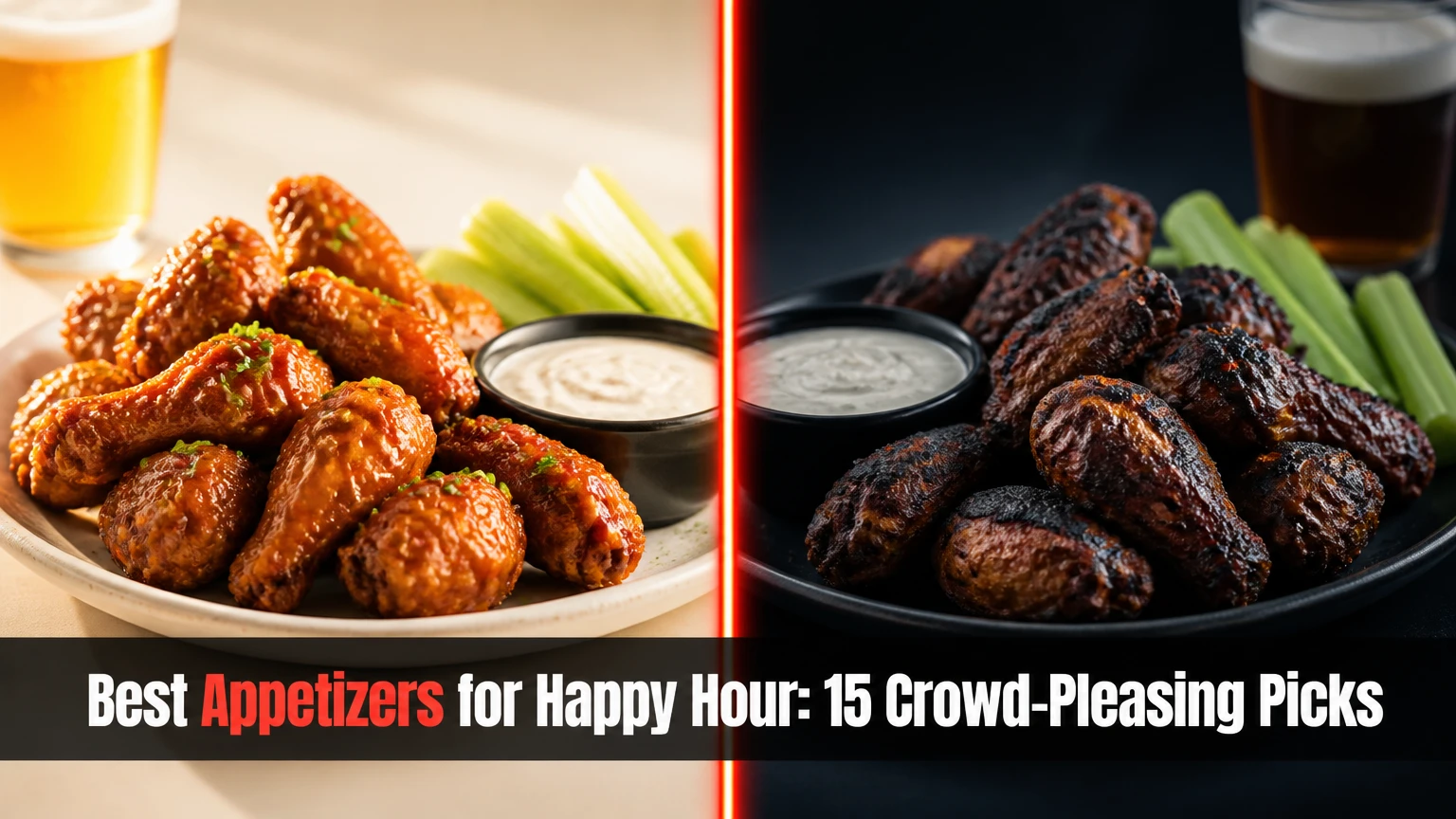
The best appetizers for happy hour are buffalo wings, loaded nachos, spinach-artichoke dip, sliders, crispy calamari, and vegetable-forward skewers because they combine bold flavor, easy sharing, fast service, and reliable drink pairings. The right choice depends on group size, budget, dietary needs, holding time, and whether guests are seated or eating while standing.
Key Facts at a Glance
Plan 4-6 appetizer pieces per person for a 60-90 minute gathering with drinks.
Plan 8-12 pieces per person when appetizers replace dinner.
Fried foods have their best texture within 5-10 minutes of cooking.
A typical restaurant happy hour appetizer costs $5-$12, but city, venue, and portion size change the range.
Two dips, one substantial protein, and one fresh item create a balanced mixed-group spread.
Raw seafood requires continuous refrigeration and is a poor choice for long, warm, or outdoor service.
What Are the Best Appetizers for Happy Hour?
The best overall happy hour appetizer is a small spread of buffalo wings, loaded nachos, a warm dip, and one fresh or vegetable-based dish. That combination covers crunch, richness, acidity, protein, vegetarian needs, and different drink styles without forcing every guest to eat the same flavor.
Happy hour food, also called bar food, bar bites, or small plates, is designed for quick eating and sharing. Salty and savory foods make beer, sparkling wine, margaritas, and highballs taste more refreshing, while acidic toppings such as pickled onions, lime, and slaw prevent rich dishes from becoming tiring.
Restaurant menus favor items that use existing ingredients and finish quickly during the 3:00-6:00 PM afternoon lull or a late-night window. That operational logic explains the popularity of fries, wings, sliders, quesadillas, pretzel bites, dips, and flatbreads. Home hosts can borrow the same principle by choosing one batch-cooked item, one assembled item, and one chilled item.
How We Chose the Rankings
The rankings use six practical criteria: flavor intensity, shareability, eating convenience, preparation speed, holding quality, and dietary flexibility. A dish ranks higher when it remains appealing after several minutes, can be eaten with one hand, and works with more than one beverage category.
Restaurant food cost is not the same as consumer value. A low-cost dip may be profitable for a venue but poor value if it contains little food and requires repeated chip purchases. For home hosting, ingredient cost, cleanup, oven space, and advance preparation matter more than commercial margin.
1. Buffalo Wings: Best Overall
Buffalo wings are the best all-purpose happy hour appetizer because crisp skin, tender meat, hot sauce, and cooling dip satisfy both beer drinkers and cocktail drinkers. A practical serving is 6-8 wing pieces per person when other food is available.
Key specifications
| Attribute | Typical value | Practical effect |
|---|---|---|
| Portion | 6-8 pieces per person | Works as an appetizer with other dishes |
| Cooking time | 25-40 minutes baked, 8-12 minutes fried | Fried wings finish faster; baked wings simplify home service |
| Holding window | 5-10 minutes for peak crispness | Sauce immediately before serving |
| Pairings | Lager, pale ale, ranch water, margarita | Salt and acid tolerate bold beverages |
Wings offer a useful texture contrast when the sauce is applied lightly instead of drowning the crust. Serve buffalo sauce, barbecue sauce, and lemon-pepper seasoning separately when guests have different heat preferences.
The drawback is mess. Wings are poor for a networking reception, a formal office event, or any setting where guests must keep one hand clean. Wings also require careful poultry handling: USDA guidance places raw chicken at 40°F or below during storage and recommends cooking poultry to 165°F internally.
Choose this if: the group wants a familiar, filling, strongly flavored dish.
Skip it if: guests need clean, one-bite food or the event lacks napkins and waste containers.
2. Loaded Nachos: Best for Value
Loaded nachos provide the most substantial food per platter and are usually the best budget choice for a casual group. Tortilla chips layered with cheese, beans, meat, salsa, and jalapeños can function as a shared appetizer or a light meal.
Key specifications
| Attribute | Typical value | Practical effect |
|---|---|---|
| Portion | 1 large sheet pan for 6-8 guests | Suitable for family-style sharing |
| Bake temperature | 400-425°F | Melts cheese quickly without prolonged drying |
| Assembly time | 10-15 minutes | Toppings can be prepared earlier |
| Best service window | 10-15 minutes | Serve immediately to protect chip texture |
The key is layered construction. Scatter cheese and toppings across two or three chip layers rather than placing everything on top, where the lower chips remain dry and the upper layer becomes overloaded.
Use black beans, roasted corn, pico de gallo, pickled jalapeños, and avocado for vegetarian nachos. Keep sour cream, guacamole, and watery salsa on the side because moisture turns chips soft. Nachos are not ideal for long cocktail receptions because the first serving becomes difficult to reach and the last chips lose their crunch.
Choose this if: you need a filling platter for six or more people at modest cost.
Skip it if: guests will eat while standing or need gluten-free food without a verified gluten-free chip source.
3. Spinach-Artichoke Dip: Best Make-Ahead Choice
Spinach-artichoke dip is the strongest make-ahead appetizer for a home happy hour because the mixture can be assembled hours earlier and baked shortly before guests arrive. Serve approximately 2-3 tablespoons per person when other appetizers are present.
Key specifications
| Attribute | Typical value | Practical effect |
|---|---|---|
| Batch size | 4 cups | Produces about 16-20 appetizer servings |
| Bake time | 20-25 minutes at 375°F | Fits a short pre-service window |
| Serving temperature | Hot, approximately 140°F or higher | Keeps cheese fluid and spreadable |
| Dippers | 8-10 ounces chips or 12 ounces bread | Prevents an empty platter beside full dip |
The dip succeeds through contrast: creamy cheese, leafy greens, tender artichoke, garlic, and an acidic finish from lemon or pickled peppers. Add toasted baguette, pita, sturdy crackers, and raw vegetables rather than relying on thin chips that break.
The drawback is temperature. A cold dip becomes dense, while an overheated dip separates into oil and cheese. Use a shallow baking dish for even heating, and replace a serving dish that has sat at room temperature for more than two hours, or one hour above 90°F, following FDA food-safety guidance.
Choose this if: you want a warm, vegetarian-friendly dish with advance preparation.
Skip it if: the gathering has no oven, insulated carrier, or plan for keeping hot food safe.
4. Crispy Calamari: Best Seafood Pick
Crispy calamari is the best seafood happy hour appetizer when the kitchen can serve it immediately. The ideal plate combines lightly seasoned coating, tender squid, lemon, and a bright dipping sauce.
Key specifications
| Attribute | Typical value | Practical effect |
|---|---|---|
| Fry temperature | 350-375°F | Sets coating quickly |
| Fry time | 60-120 seconds | Longer cooking toughens squid |
| Portion | 4-6 ounces per person | Enough for tasting, not a full entrée |
| Peak texture | Under 8 minutes | Plate sauce separately |
Calamari benefits from a short fry and immediate salting. Marinara, lemon aioli, and chile-lime sauce offer different flavor directions without hiding the seafood.
The drawback is narrow timing. Calamari becomes rubbery when overcooked and soggy when covered or left on a flat plate. It also creates a cross-contact risk for people with shellfish allergies and may share fryers with wheat or other allergens.
Choose this if: you can serve seafood straight from the fryer.
Skip it if: the food must travel, wait, or remain outdoors in humid weather.
5. Soft Pretzel Bites: Best for Beer
Soft pretzel bites are the cleanest beer-oriented choice because their sturdy shape tolerates standing service, travel, and repeated dipping. Pair them with beer cheese, mustard, or a roasted-garlic dip.
Key specifications
| Attribute | Typical value | Practical effect |
|---|---|---|
| Portion | 5-7 bites per person | Appropriate beside other snacks |
| Reheating | 5-8 minutes at 350°F | Restores warmth without deep frying |
| Holding quality | 20-30 minutes covered loosely | Better than fries or calamari |
| Pairings | Lager, wheat beer, amber ale | Malt complements browned crust |
Pretzel bites are useful for office gatherings because each piece is self-contained and does not require a knife. Offer mustard separately for guests who avoid dairy.
The drawback is low freshness if held too long. Steam softens the crust, and beer cheese can form a skin as it cools. Pretzel bites also provide little protein or produce, so they need a contrasting dish.
Choose this if: guests will stand, talk, and drink beer.
Skip it if: you need a low-sodium or highly nutrient-dense menu.
6. Pulled-Pork Sliders: Best Substantial Handheld
Pulled-pork sliders deliver entrée-like satisfaction in a compact format. Each slider should contain roughly 2 ounces of meat, a small bun, and a restrained amount of sauce or slaw.
Sliders work well when appetizers need to replace dinner. Pickled cabbage, cucumber, or vinegar-based slaw cuts through the pork’s richness and prevents the sandwich from tasting entirely sweet.
The drawback is structural failure. Excess sauce makes buns collapse, while oversized portions become difficult to eat while holding a drink. Assemble in small batches, toast the cut side of the bun, and keep extra meat warm separately.
Choose this if: guests need filling food during a two-hour event.
Skip it if: the menu already contains several rich, bread-based items.
7. Whipped Feta With Hot Honey: Best Vegetarian Upgrade
Whipped feta with hot honey offers a more distinctive alternative to standard queso or cream-cheese dips. Salty feta, olive oil, lemon, herbs, and controlled sweetness pair with toasted bread, cucumbers, and seeded crackers.
The dish takes about 10 minutes to blend and can be prepared several hours ahead. Add honey immediately before service so the surface remains attractive and the sweet heat stays defined.
The drawback is salt and dairy. Feta can overwhelm delicate cocktails, and the dish does not suit dairy-free guests unless replaced with whipped white beans or cashew cream.
Choose this if: you want an elegant cold or room-temperature vegetarian option.
Skip it if: guests prefer familiar mild flavors or require low-sodium food.
8. Chicken Satay: Best for Portion Control
Chicken satay provides a leaner, measured protein option with a predictable one-skewer portion. Peanut sauce, lime, cucumber relish, and herbs create enough contrast to prevent grilled chicken from tasting dry.
Use 2-3 small skewers per person with other food. Grill or broil until the thickest piece reaches 165°F, then rest briefly before serving.
The drawback is allergen management. Peanuts and tree nuts require separate labeling, utensils, and preparation surfaces at mixed events. Wooden skewers also make satay less suitable for small children.
Choose this if: you need portioned protein with less bread and frying.
Skip it if: the group has uncertain nut allergies or limited grill capacity.
9. Crispy Fried Pickles: Best Low-Cost Crunch
Fried pickle chips provide acidity, salt, and crunch at a relatively low ingredient cost. Their sour flavor cuts through cheese, fried food, and sweet cocktails more effectively than another potato-based snack.
Drain and dry pickle slices before breading, then serve with ranch or a dill-forward yogurt sauce. Wet pickles cause coating separation and dangerous oil spatter.
The drawback is a short texture window. Fried pickles soften rapidly under steam, and their sodium content rises when combined with salty batter and dip.
Choose this if: the menu needs an inexpensive, high-impact fried item.
Skip it if: guests are limiting sodium or the kitchen cannot serve them immediately.
10. Hummus With Pita and Vegetables: Best Vegan Base
Hummus is the most flexible vegan foundation for a happy hour spread. Chickpeas, tahini, lemon, garlic, and olive oil provide protein, fiber, creaminess, and acidity without animal products.
Serve about 3 tablespoons per person, with warm pita, carrots, cucumbers, peppers, and gluten-free crackers in separate containers. Add roasted red pepper, olives, or za’atar for variation.
The drawback is repetition. Hummus alone can feel utilitarian beside indulgent foods, and thin pita tears under heavy scooping. Use a thick dip with broad, sturdy vegetables.
Choose this if: vegan, vegetarian, or dairy-free guests need a reliable centerpiece.
Skip it if: the menu already contains several bean-based or sesame-based dishes.
11. Caprese Skewers: Best Fresh Bite
Caprese skewers combine cherry tomatoes, mozzarella, basil, olive oil, and balsamic glaze in a clean, single-serving format. The tomato acidity and herbs refresh the palate after fried or creamy foods.
Prepare 2-3 skewers per person and add the glaze shortly before service. Keep them chilled until guests arrive, especially when mozzarella is exposed to warm room temperatures.
The drawback is limited satiety. Caprese is a palate cleanser, not a meal replacement, and it offers little appeal to guests who dislike raw tomatoes or dairy.
Choose this if: the menu needs color, freshness, and low-mess eating.
Skip it if: guests expect substantial protein or the event lasts several hours.
12. Blistered Shishito Peppers: Best Light Option
Blistered shishito peppers are a fast vegetable appetizer with charred skin, mild heat, and a small chance of a hotter pepper. Toss them with flaky salt, lemon, sesame, or a yogurt dip.
A 6-ounce batch serves approximately four people as a side appetizer. Cook peppers in a hot skillet for 5-7 minutes until blistered but still firm.
The drawback is inconsistency. Most shishitos are mild, but occasional peppers deliver noticeable heat, making them unsuitable for guests who cannot tolerate spice.
Choose this if: you want a low-starch, vegetable-forward option.
Skip it if: guests need predictable flavor or a fork-free event with no shared serving utensil.
13. Mini Quesadillas: Best for Families
Mini quesadillas are dependable, customizable, and easy to portion. Use 4-inch tortillas with 1-1.5 ounces of cheese and a small amount of chicken, mushrooms, or beans per piece.
Cut each quesadilla into wedges and provide salsa, guacamole, and sour cream separately. Griddle them in batches, then hold briefly on a rack rather than stacking them, which traps steam.
The drawback is cheese leakage and declining crispness. Quesadillas also add another wheat-based item if the menu already includes sliders, flatbread, or pretzels.
Choose this if: children or cautious eaters need a familiar option.
Skip it if: the group needs a lighter menu or the event requires strictly gluten-free preparation.
14. Tuna Tartare on Wonton Crisps: Best Gourmet Bite
Tuna tartare offers a refined contrast to conventional bar snacks through chilled fish, sesame, soy, citrus, and crisp wonton. Use sushi-grade sourcing from a reputable supplier and keep the tuna refrigerated until plating.
Prepare only what can be eaten promptly. For a catered event, replace raw tuna with finely diced cooked shrimp, smoked salmon, or avocado when refrigeration and service timing are uncertain.
The drawback is food safety and audience fit. Raw seafood is unsuitable for pregnant guests, people with weakened immunity, and long outdoor events unless a qualified food professional controls the entire cold chain.
Choose this if: the event is seated, short, chilled, and culinary-focused.
Skip it if: guests need broad accessibility or the food will sit unattended.
15. Mushroom Skewers: Best Plant-Based Warm Bite
Grilled mushroom skewers provide umami, chew, and a substantial texture without meat. Marinate briefly with olive oil, garlic, soy or tamari, and lemon, then finish with herbs.
Use two small skewers per person and serve with chimichurri or tahini sauce. Mushrooms should be browned rather than steamed, so avoid crowding the pan or grill.
The drawback is moisture loss. Mushrooms shrink and become leathery when held hot for too long, while soy-based marinades can raise sodium quickly.
Choose this if: you need a warm vegan option with a savory profile.
Skip it if: the group expects crunchy or highly indulgent bar food.
What Makes an Appetizer Work With Drinks?
A successful happy hour appetizer combines salt, acid, texture, and manageable portion size. Carbonated drinks pair especially well with fried foods and pretzels, while citrus cocktails benefit from salty, spicy, or creamy foods that soften perceived acidity.
| Appetizer style | Best drink matches | Balancing element | Main service risk |
|---|---|---|---|
| Buffalo wings | Lager, ranch water, margarita | Celery, ranch, vinegar | Sauce and mess |
| Fried pickles | Pale ale, gin and tonic | Dill, lemon, yogurt | Soggy coating |
| Whipped feta | Sparkling wine, dry rosé | Lemon, cucumber | Excess salt |
| Hummus | Pilsner, sauvignon blanc, iced tea | Lemon, herbs | Dry pita |
| Pulled-pork sliders | Bourbon, amber ale, cola | Pickled slaw | Collapsing buns |
| Caprese skewers | Prosecco, spritz, alcohol-free soda | Basil, balsamic | Warm dairy |
Sweet sauces require restraint. A honey or barbecue glaze works when balanced with vinegar, mustard, chile, or pickles; a dish covered entirely in sugar becomes tiring after a few bites and clashes with sweet cocktails.
Alcohol-free guests need equal attention. Hummus, caprese, quesadillas, pretzels, and mushroom skewers pair with sparkling water, iced tea, ginger beer, or citrus soda without making the food feel like a substitute menu.
How Many Appetizers Do You Need?
Plan 4-6 pieces per person for a 60-90 minute cocktail period when dinner follows, and plan 8-12 pieces per person when appetizers replace a meal. For a group of 10, that means 40-60 pieces as a pre-dinner spread or 80-120 pieces for a full grazing period.
| Occasion | Quantity per person | Menu structure for 10 people |
|---|---|---|
| 45-minute pre-dinner drinks | 3-4 pieces | 2 dishes, 30-40 pieces |
| 60-90 minute happy hour | 4-6 pieces | 4 dishes, 40-60 pieces |
| Two-hour meal replacement | 8-12 pieces | 5-6 dishes, 80-120 pieces |
| Office event with dessert later | 6-8 pieces | 4-5 dishes, 60-80 pieces |
Count substantial items differently from small bites. One slider equals roughly two light pieces, while one tablespoon of dip with a cracker is a single small serving. Include 20% extra for popular items such as wings, sliders, and nachos, but avoid overproducing raw seafood or fried food that cannot hold.
For a balanced 10-person menu, serve 24 wings, one large tray of nachos, 4 cups of dip, 20 pretzel bites, and 20 caprese skewers. That combination covers protein, starch, vegetarian food, freshness, and different eating styles.
Which Appetizers Are Best for a Party?
The best party menu uses two sturdy items, one warm substantial item, one chilled fresh item, and one dietary-inclusive option. For a standing party, choose pretzel bites, sliders, skewers, hummus, and caprese before calamari or saucy wings.
| Situation | Best selections | Avoid | Reason |
|---|---|---|---|
| Office networking | Pretzel bites, caprese, sliders | Bone-in wings, tartare | Clean handling and broad appeal |
| Family gathering | Quesadillas, nachos, hummus | Very spicy skewers | Familiar flavors and customization |
| Date-night tasting | Calamari, whipped feta, tuna crisps | Large nacho tray | More refined portions |
| Outdoor summer party | Caprese, hummus, chicken skewers | Warm dairy dip, raw tuna | Better cold-chain control |
| Vegan-inclusive group | Hummus, mushrooms, shishitos | Cheese-heavy nachos | Clear plant-based choices |
| Late-night crowd | Wings, sliders, quesadillas | Delicate tartare | Filling, recognizable food |
A practical event rule is to label sauces and allergens, not just dishes. Mark peanuts, tree nuts, sesame, dairy, egg, shellfish, and wheat, and use separate tongs for gluten-free items.
Restaurant Versus Home Happy Hour
Restaurant happy hour appetizers prioritize speed, cross-utilization, and margin, while home menus should prioritize advance preparation, oven capacity, and holding quality. A restaurant may flash-fry calamari in two minutes, but a home host serving six dishes should choose fewer items that finish in predictable batches.
Typical restaurant discounts range from 30%-50% off regular menu pricing, with many small plates listed around $5-$12. Prices vary by city and venue, and a discount may apply only during specific weekdays, time windows, or dine-in conditions.
| Format | Typical prep or ticket time | Best menu choices | Main limitation |
|---|---|---|---|
| Restaurant bar service | 5-10 minutes | Wings, fries, calamari | Menu hours and availability vary |
| Home gathering | 30-90 minutes advance prep | Dip, skewers, caprese | Limited oven and refrigerator space |
| Buffet catering | 1-3 hours production | Sliders, hummus, pretzels | Holding temperature and replenishment |
| Standing cocktail event | 10-20 minutes per replenishment | One-bite skewers, crostini | Drips and double-dipping |
Commercial kitchens often par-bake, blanch, bread, or portion ingredients before service. Home cooks should use the same logic without copying industrial timings: chop vegetables, portion sauces, assemble skewers, and prepare dip earlier, then cook only the foods that lose texture when held.
Common Problems and How to Fix Them
Fried food arrives limp. Move fried pieces to a wire rack, never a flat plate, and re-crisp them briefly in a 400°F oven or air fryer. Do not repeatedly refry food because the coating absorbs oil and becomes heavy.
Warm dip forms a skin. Stir the dip, use a smaller preheated serving dish, and replenish from a warm reserve in batches. Do not keep dairy-based dip at room temperature indefinitely.
The menu feels too rich. Add acid and produce rather than another fried item. Lemon, pickled onions, cucumber, cabbage slaw, tomatoes, and fresh herbs reset the palate.
Guests run out of dippers. Prepare 25%-30% more bread, pita, or chips than the dip volume appears to require. A full bowl of dip is unusable if the serving vehicle disappears first.
Handhelds fall apart. Reduce sauce, toast bread, drain wet toppings, and use picks for sliders. Test one assembled piece for 10 minutes before serving the full batch.
A mixed group cannot share one menu. Separate vegetarian, vegan, gluten-free, nut-free, and shellfish items physically, with dedicated utensils and visible labels.
Which One Should You Pick?
Choose buffalo wings for the safest crowd-pleasing protein, loaded nachos for the best value, spinach-artichoke dip for make-ahead convenience, pretzel bites for standing beer service, and hummus or caprese for dietary flexibility. For a menu serving mixed preferences, combine one pick from each of those functions rather than ordering five versions of the same rich food.
A strong four-item order for six people is 18 wings, one medium nacho platter, two cups of hummus with vegetables, and 12 caprese skewers. A more substantial order replaces the caprese with 12 pulled-pork sliders.
No single appetizer is ideal for every setting. Raw tuna is impressive but fragile, calamari is excellent but time-sensitive, and nachos are generous but difficult to eat while standing. The best decision matches the food’s physical behavior to the event.
Frequently Asked Questions
Are happy hour appetizers enough for dinner?
Happy hour appetizers can replace dinner when the menu includes 8-12 pieces per person and at least one substantial protein or carbohydrate. Wings, sliders, quesadillas, and loaded nachos provide more satiety than caprese, shishito peppers, or a small dip. For a full meal, include fresh food and a filling centerpiece.
What are the healthiest happy hour appetizers?
The healthiest choices usually include grilled chicken skewers, hummus with vegetables, edamame, caprese skewers, shishito peppers, and shrimp cocktail. Preparation still matters: fried coatings, creamy sauces, processed meats, and heavy cheese can raise calories and sodium substantially even when the base ingredient is lean.
What are the best gluten-free happy hour foods?
Common gluten-free choices include wings without wheat-containing sauce, guacamole with verified corn tortilla chips, hummus with vegetables, caprese skewers, edamame, and grilled mushroom skewers. Confirm shared fryers, soy sauce ingredients, spice blends, and cross-contact before serving anyone with celiac disease.
How far ahead can happy hour appetizers be prepared?
Dips, sauces, skewers, chopped vegetables, and slider fillings can usually be prepared 4-24 hours ahead when refrigerated properly. Keep fried coatings, toasted bread, dressed greens, and cut avocado close to service because moisture and oxidation reduce quality. Raw seafood should be prepared as near to serving as possible.
What is the easiest appetizer for a large group?
Hummus with vegetables, spinach-artichoke dip, pretzel bites, and sheet-pan nachos are among the easiest large-group choices because they scale in batches and require limited individual assembly. A large group still needs replenishment planning, separate utensils, and temperature control for hot or perishable foods.
What should I serve at a late-night happy hour?
Late-night happy hour benefits from filling, salty foods such as wings, sliders, quesadillas, pretzel bites, and loaded nachos. Add pickles, slaw, salsa, or fresh vegetables to offset richness. Avoid fragile raw seafood and dishes that require precise temperature control when service staff or guests may be distracted.
The Bottom Line
The best appetizers for happy hour balance bold flavor with practical service. Start with one substantial item, one crisp or fried item, one dip, and one fresh or vegetable-based choice, then adjust portions for the event length and whether guests are eating dinner afterward. That structure delivers variety without creating avoidable waste, soggy food, or an unmanageable service line.