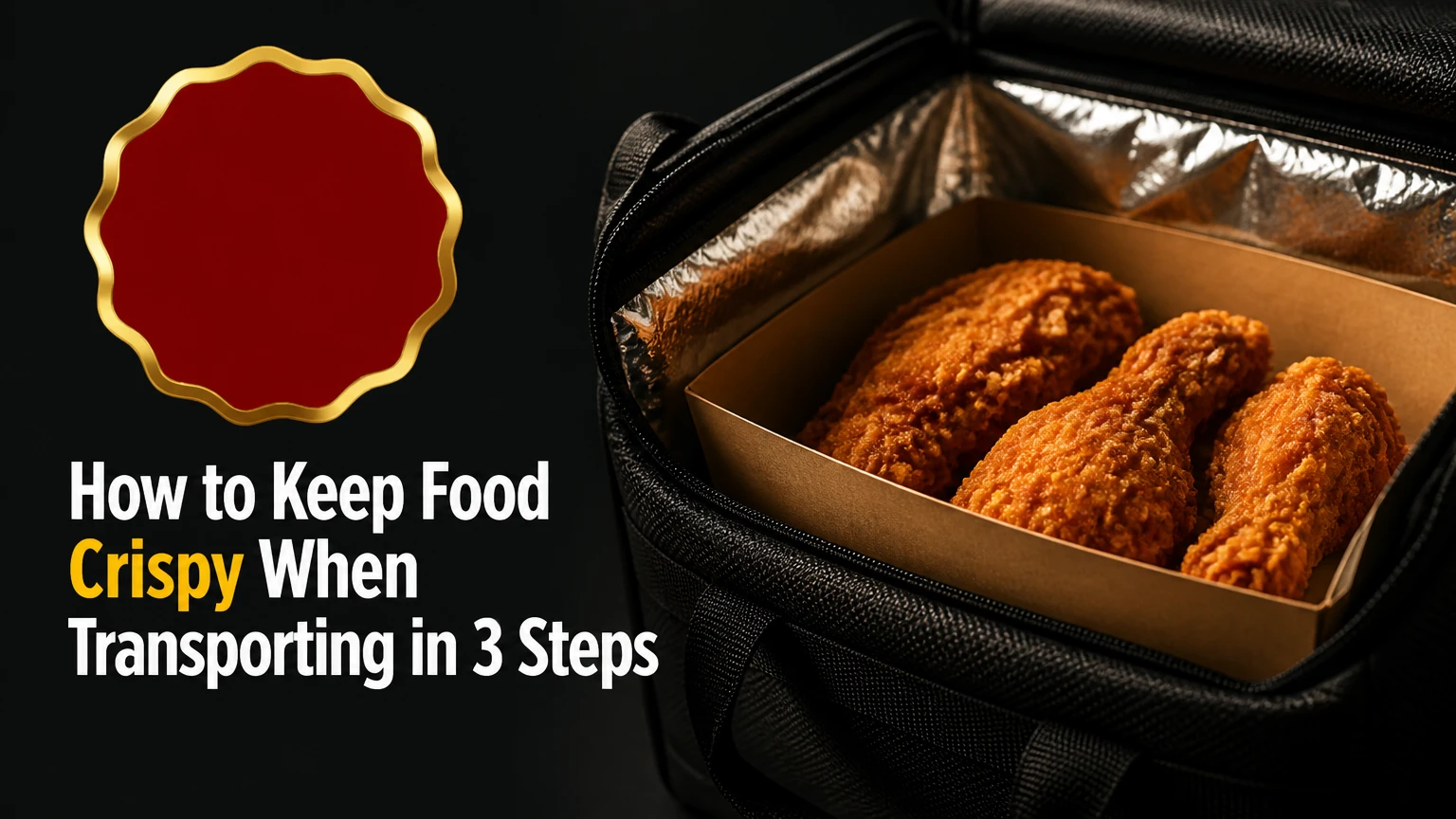
To keep food crispy when transporting, release steam before it condenses, elevate food above grease and moisture, and use a vented container rather than an airtight one. Move fried or baked food to a rack for about 3 minutes, pack it in a single layer, and leave controlled openings for airflow.
Key Facts at a Glance
- Steam is the main cause of crisp-food softening inside closed packaging.
- A 3-minute uncovered rest on a wire rack removes the most intense post-cooking vapor.
- A raised rack or perforated liner prevents food from sitting in grease and condensation.
- Single-layer packing preserves texture better than deep stacking, especially for fries and breaded chicken.
- Vented cardboard usually protects crispness for 15-30 minutes; premium raised liners can extend the useful window to about 30-45 minutes.
- Hot food should remain at or above 140°F for safe hot holding, according to the USDA, but a sealed container can preserve temperature while destroying the crust.
Why Crisp Food Softens During Transport
Fried food becomes soggy when water vapor from the hot interior condenses on the cooler crust. The liquid softens the starch structure, while trapped grease creates a second source of surface limpness when food rests directly on a flat, oily container floor.
Fresh fries, fried chicken, samosas, tempura, roasted potatoes, and breaded cutlets all release moisture after cooking. The first several minutes are especially active because the food continues carrying heat from the fryer or oven. A flat lid placed over hot food catches vapor, and droplets can fall back onto the crust.
Crispness depends on more than temperature. A 160°F chicken wing in a humid, sealed box can feel softer than a 135°F wing packed with airflow, although food safety still requires attention to the USDA hot-holding threshold of 140°F. Texture and safety are related, but they are separate packing objectives.
What controls crispness during delivery?
Four variables determine most transport results: moisture escape, surface drainage, heat loss, and physical compression. Ventilation removes vapor; elevation keeps food away from grease; insulation slows cooling; spacing prevents one piece from steaming another.
The correct balance changes with the food. Thin fries lose heat rapidly and need shallow, ventilated packaging. Fried chicken retains heat longer but releases more internal moisture. Pastries can tolerate less direct heat because condensation softens laminated dough and icing.
Before You Start: Materials, Time, and Cost
A reliable home setup needs a wire cooling rack, a rimmed baking sheet, absorbent paper, and a vented box or loosely tented cover. The typical preparation takes 5-8 minutes after cooking, excluding the cooking time, and costs about $0.50-$3 per transport batch when household materials are available.
Before-start checklist
| Requirement | Typical specification | Why it matters |
|---|---|---|
| Cooling rack | 12 x 16-inch wire rack | Allows vapor to escape below the food |
| Rimmed tray | 13 x 18-inch sheet pan | Catches grease and limits vehicle spills |
| Paper liner | 1-2 sheets, 12 x 16 inches | Absorbs oil without covering the crust |
| Transport box | 2-3 inch deep vented cardboard box | Limits stacking and ceiling condensation |
| Preparation time | 5-8 minutes | Covers draining, resting, packing, and closure |
| Typical household cost | $0.50-$3 per batch | Depends on box, paper, and reusable rack |
Do not place a hot rack directly on a car seat. Use a rimmed tray, a stable insulated base, or a level cargo surface. A moving vehicle turns a texture problem into a spill and burn hazard when the container is too tall or unsecured.
Step-by-Step Method for Crispy Transport
Step 1: Drain and Flash-Cool the Food
Transfer fried food from the oil or oven to a wire rack for 2-5 minutes before packing. Keep pieces separated, allow oil to drain into the tray below, and avoid placing hot food on a flat plate because the underside will collect vapor and grease.
Fries generally need about 2-3 minutes. Thick fried chicken, fish, and filled pastries often need 3-5 minutes because their centers release moisture longer. This short rest is not a refrigeration step; it is a controlled release of residual steam.
You will know Step 1 worked when the surface looks dry rather than glossy with oil, and no visible vapor collects beneath the pieces. The common mistake is packing immediately because the food feels hottest at that moment. Maximum initial heat does not equal maximum delivered crispness.
Step 2: Create an Absorbent, Raised Base
Line the transport container floor with brown paper or a food-safe absorbent liner, then place a perforated tray, wire rack, or raised insert above it. The paper catches grease below the food, while the elevation prevents the crust from touching the wet surface.
Use one paper layer rather than a thick blanket wrapped around the food. Paper underneath helps with oil; paper pressed against a hot crust can retain vapor and soften ridges. Commercial raised liners use channels or grids to separate food from pooled grease.
You will know Step 2 worked when oil can collect below the food without touching it. The common mistake is using paper towels as the only solution inside a deep container. Absorbent paper does not create enough airflow when food sits directly on it.
Step 3: Pack a Single Layer With Air Gaps
Arrange fries, wings, cutlets, or pastries in one layer with approximately 0.25-0.5 inch between pieces. Keep the total food depth below 2-3 inches whenever possible, and use a second vented box instead of building a tall stack.
A single layer reduces contact between hot surfaces and prevents the lower pieces from steaming the upper pieces. If stacking is unavoidable, place a perforated divider between layers and reduce the portion depth. Large chicken pieces can tolerate closer spacing than thin fries because their rigid crust is less easily crushed.
You will know Step 3 worked when each piece has an exposed top and at least one open side. The common mistake is filling a small box to its lid because the food appears to fit. A crowded container creates its own humid microclimate.
Step 4: Close With Controlled Ventilation
Use a vented cardboard lid, leave a loose foil tent, or create four to six holes of about 0.2 inches near the upper sides of a rigid lid. Place openings above the food, not beneath it, so warm vapor can rise and escape while the base remains protected from spills.
Do not seal hot crispy food in airtight plastic. Plastic containers retain heat effectively, but they also retain nearly all released vapor. If plastic is the only available option, leave the lid partially ajar during the first several minutes, keep the container upright, and transfer the food to a rack as soon as practical.
You will know Step 4 worked when the lid remains mostly dry and the crust stays firm after 10-15 minutes. The common mistake is making large openings on every side during a long winter drive. Excessive ventilation accelerates cooling and can push food below the USDA’s 140°F hot-holding threshold.
Which Packaging Keeps Food Crispy?
Vented cardboard is the best low-cost choice for trips of 15-30 minutes, while a raised commercial liner performs better for 30-45-minute delivery windows. A wire rack on a sheet pan provides the most airflow for direct home transport, but it offers less spill protection and heat retention.
| Packaging method | Typical cost | Useful crisp window | Best food or situation |
|---|---|---|---|
| Vented cardboard box | $0.50-$2 per box | 15-30 minutes | Fries, wings, pastries |
| Raised fiber or polypropylene liner | $0.10-$0.50 per liner | 30-45 minutes | Restaurant delivery portions |
| Perforated foil tent | $0.05-$0.25 per portion | 15-30 minutes | Fried fish, burritos, large cutlets |
| Wire rack and sheet pan | $15-$40 reusable setup | 20-40 minutes | Driving to a potluck |
| Vented insulated carrier | $40-$180 reusable setup | 45-120 minutes | Catering and large batches |
Is aluminum foil suitable for crispy food?
Perforated or loosely tented aluminum foil can transport crisp food for about 15-30 minutes, but tightly wrapped solid foil usually causes sogginess. Aluminum reflects heat well, yet an airtight foil package traps the same vapor that damages the crust.
Create a tent with open side channels rather than wrapping the food tightly. Foil works better for a large fried fish fillet or burrito than for fries, because fragile thin pieces need broad upper airflow. Never let foil press against a wet or sauced surface.
How much food fits in one crispy-food box?
A practical single-layer load is about 1-1.5 pounds of fries in a 9 x 9-inch shallow box, or 6-8 medium chicken wings in the same footprint. Exact capacity depends on piece size, but a box should remain below two-thirds full by volume.
| Food | Recommended single-layer load | Minimum spacing | Preferred container depth |
|---|---|---|---|
| French fries | 1-1.5 pounds per 9 x 9-inch box | 0.25 inch | 2-3 inches |
| Chicken wings | 6-8 pieces per 9 x 9-inch box | 0.5 inch | 3 inches |
| Fried chicken pieces | 4-6 pieces per 12 x 9-inch box | 0.5 inch | 3-4 inches |
| Samosas | 8-12 pieces per 12 x 9-inch box | 0.25 inch | 2-3 inches |
| Pastries | 4-6 pieces per 12 x 9-inch box | 0.5 inch | 2-3 inches |
How Long Will Food Stay Crispy During Transport?
Most fried food remains acceptably crisp for 15-30 minutes in a shallow vented container, while carefully packaged commercial portions may remain crisp for 30-45 minutes. Beyond 60 minutes, plan to re-crisp the food because moisture migration continues even when packaging and ventilation are well designed.
| Travel time | Recommended method | Main adjustment | Expected texture |
|---|---|---|---|
| 0-15 minutes | Vented box or rack | Keep food shallow | Usually crisp |
| 15-30 minutes | Vented box with raised liner | Use one layer and side vents | Crisp to lightly softened |
| 30-45 minutes | Insulated vented carrier | Separate portions and sauces | Moderately crisp |
| 45-90 minutes | Carrier plus planned reheating | Hold safely and reheat on arrival | Crisp after recovery |
| 90-120 minutes | Cold transport or active hot holding | Follow food-safety controls | Do not expect unreheated crust |
Heat packs require caution. A commercial food-grade hot pack can raise temperature without adding moisture, but a wet towel, boiling-water bottle, or steam tray puts additional humidity into the container. For crispy food, dry heat is preferable.
Food-Specific Transport Methods
How do you keep fries crispy in transit?
Keep fries in a shallow, vented box with a raised or perforated base, and never close them in a deep plastic tub. Salt fries immediately before serving when possible, because salt draws moisture toward the surface and can soften the crust during a long ride.
Thicker fries and double-fried fries generally tolerate transport better than thin fast-food fries. Pack sauces separately, leave the lid vented, and avoid placing fries beside steam-producing foods such as soup, steamed vegetables, or covered rice.
How should you transport fried chicken?
Rest fried chicken on a rack for 3-5 minutes, then place pieces in a single layer inside a vented pulp or cardboard box. Leave the skin exposed to airflow, and avoid wrapping each piece tightly in foil because trapped vapor softens the breading.
Large bone-in pieces retain heat longer than wings, but they also release moisture from the meat. For trips longer than 30 minutes, use a raised liner and plan to reheat the chicken at the destination rather than sealing it in a fully insulated box.
How do you transport pizza without a soggy crust?
Use a pizza box with ventilation openings and place the pizza on a corrugated insert or perforated pan rather than directly on a solid, grease-covered surface. Do not stack hot pizzas, and keep the box on a level surface so cheese oil does not pool under the slices.
Pizza crust softens from both steam and toppings. Wet vegetables, extra sauce, and covered containers increase moisture load, so place high-moisture toppings sparingly when the pizza must travel more than 30 minutes.
How should pastries and fried dough be packed?
Cool pastries on a rack for 5-10 minutes, then use a shallow bakery box with a dry paper base and modest ventilation. Do not place warm laminated pastries in plastic bags, because trapped vapor quickly softens the layers.
Cream fillings, glazes, and fruit toppings need separate handling. Refrigerated fillings may require cold transport, while the crisp shell travels best in a ventilated compartment and receives its filling or glaze close to serving time.
What Should You Avoid?
Airtight plastic, deep stacking, solid foil, wet liners, and shared packaging with cold or saucy foods are the main causes of transport texture failure. Each mistake either traps vapor, creates direct moisture contact, compresses the crust, or introduces humidity from another item.
Common mistakes and fixes
- Packing directly from the fryer: Rest the food on a rack for 2-5 minutes before closure.
- Using a flat absorbent base: Add a raised insert so grease drains below the food.
- Closing a hot box completely: Open or perforate the upper sides to release vapor.
- Mixing crisp food with sauce: Use a leak-resistant sauce cup outside the crisp compartment.
- Overfilling the container: Divide the batch into shallow boxes with single layers.
- Pointing vehicle air conditioning at the food: Keep the container stable and avoid direct cold airflow, which cools the crust unevenly.
A counterintuitive rule matters here: preserving heat can reduce perceived quality when insulation also preserves humidity. A vented box that loses 10°F more during a short trip may produce a better crust than a sealed container that remains hotter but saturated with vapor.
How Do You Transport Crispy Food for One to Three Hours?
For journeys longer than 45 minutes, transport crisp food in a vented insulated carrier, divide it into shallow portions, and plan a final oven or air-fryer refresh. Do not rely on a closed cooler to preserve crispness for three hours because the carrier can hold both humidity and unsafe temperatures.
Use a dry, food-grade heat source only when active hot holding is necessary. The FDA Food Code uses 135°F as a hot-holding benchmark for many food-service operations, while the USDA advises keeping hot food at 140°F or above for home food safety. Follow the stricter applicable standard and local rules.
For a potluck, transport the crisp component separately from gravy, salsa, dressing, and steamed sides. For commercial catering, use labeled containers, a temperature log, and a reheating plan. Texture planning cannot replace temperature control.
How Do You Re-Crisp Food After Transport?
Re-crisp fried food in a preheated 375-400°F oven or air fryer for 3-8 minutes, using a rack or perforated tray so hot air reaches the underside. Reheating works by evaporating surface moisture and warming the crust, but it cannot restore breading that has absorbed large amounts of sauce.
| Food | Recovery equipment | Temperature | Typical time |
|---|---|---|---|
| French fries | Air fryer | 375°F | 2-4 minutes |
| Chicken wings | Oven rack | 400°F | 5-8 minutes |
| Fried cutlets | Dry skillet | Medium heat | 60-90 seconds per side |
| Samosas | Oven rack | 375°F | 5-7 minutes |
| Pizza slices | Oven or skillet | 375-400°F | 4-6 minutes |
Avoid microwaving when crispness is the goal. Microwave energy heats internal water rapidly and creates steam inside the crust, which usually makes breading rubbery rather than crisp.
Check thick meat for safe doneness after reheating. A thermometer is more reliable than appearance, particularly when chicken has cooled during a long journey. Discard perishable food left in the temperature danger zone for more than two hours, or one hour when ambient temperatures exceed 90°F, following USDA guidance.
Best Setup by Situation
Home cook driving 15-30 minutes
Use a wire rack over a rimmed sheet pan, then transfer the food to a shallow vented cardboard box if spill protection matters. This setup costs about $15-$40 for reusable equipment and provides the strongest airflow for fries, wings, and cutlets.
Potluck host transporting several dishes
Separate crispy foods from wet dishes and use multiple shallow boxes instead of one deep container. Keep sauces in sealed cups, place the boxes on a level floor, and reheat the crisp items for 3-8 minutes before serving when an oven is available.
Restaurant delivering within 30-45 minutes
Use a raised fiber or polypropylene liner inside a vented pulp box, and keep cold drinks in a separate delivery bag. Record packing time, because a customer receiving a sealed fried meal after 45 minutes is more likely to experience condensation than a customer receiving the same meal after 15 minutes.
Caterer traveling 60-120 minutes
Use a vented insulated carrier with dry heat only when required for temperature control, divide food into shallow pans, and schedule a final re-crisping stage. A carrier designed for soup or braised food is often unsuitable for fried food unless its ventilation and dry-air behavior can be controlled.
The Bottom Line
How to keep food crispy when transporting comes down to controlled steam release, elevation, shallow packing, and separation from wet foods. Rest hot food on a rack for 2-5 minutes, use a single layer in a vented container, and match the packaging to the travel window. For trips over 45-60 minutes, plan to re-crisp rather than expecting the original crust to survive unchanged.
FAQ
Can I put crispy food in a paper bag?
A paper bag works for very short trips, usually 10-15 minutes, if the top remains open and the food is not densely packed. A shallow vented box is better because it supports the food, limits crushing, and allows a raised liner to separate the crust from grease.
Should I salt fries before transporting them?
Salt fries immediately before serving when the journey exceeds about 15 minutes. Salt attracts surface moisture, so pre-salting can accelerate softening, especially with thin fries. If seasoning must travel, use a dry seasoning blend sparingly and keep wet condiments separate.
Can crispy food go in an insulated delivery bag?
Crispy food can go in an insulated delivery bag for roughly 30-45 minutes when the inner container is vented and the food is elevated. An insulated bag should slow heat loss, not function as an airtight chamber. Keep soups and cold drinks in separate compartments.
Why do fries become soggy even when the box has holes?
Fries can become soggy despite ventilation when the portion is too deep, the holes are blocked, or the fries sit on a grease-soaked liner. Reduce the load, create air gaps, replace the liner, and raise the fries above the container floor.
Is a cooling rack necessary for transporting fried food?
A cooling rack is not mandatory, but elevation is highly valuable. A perforated liner or slotted tray can perform the same function by allowing grease and vapor to move below the food. A flat plate is the least effective option because it traps moisture under the crust.
Can I keep fried food crispy overnight?
Transport packaging cannot preserve fried-food crispness overnight. Refrigeration slows microbial growth but softens the crust, so refrigerate leftovers within safe limits and reheat them on a rack in an oven or air fryer the next day. Never leave perishable fried food at room temperature overnight.