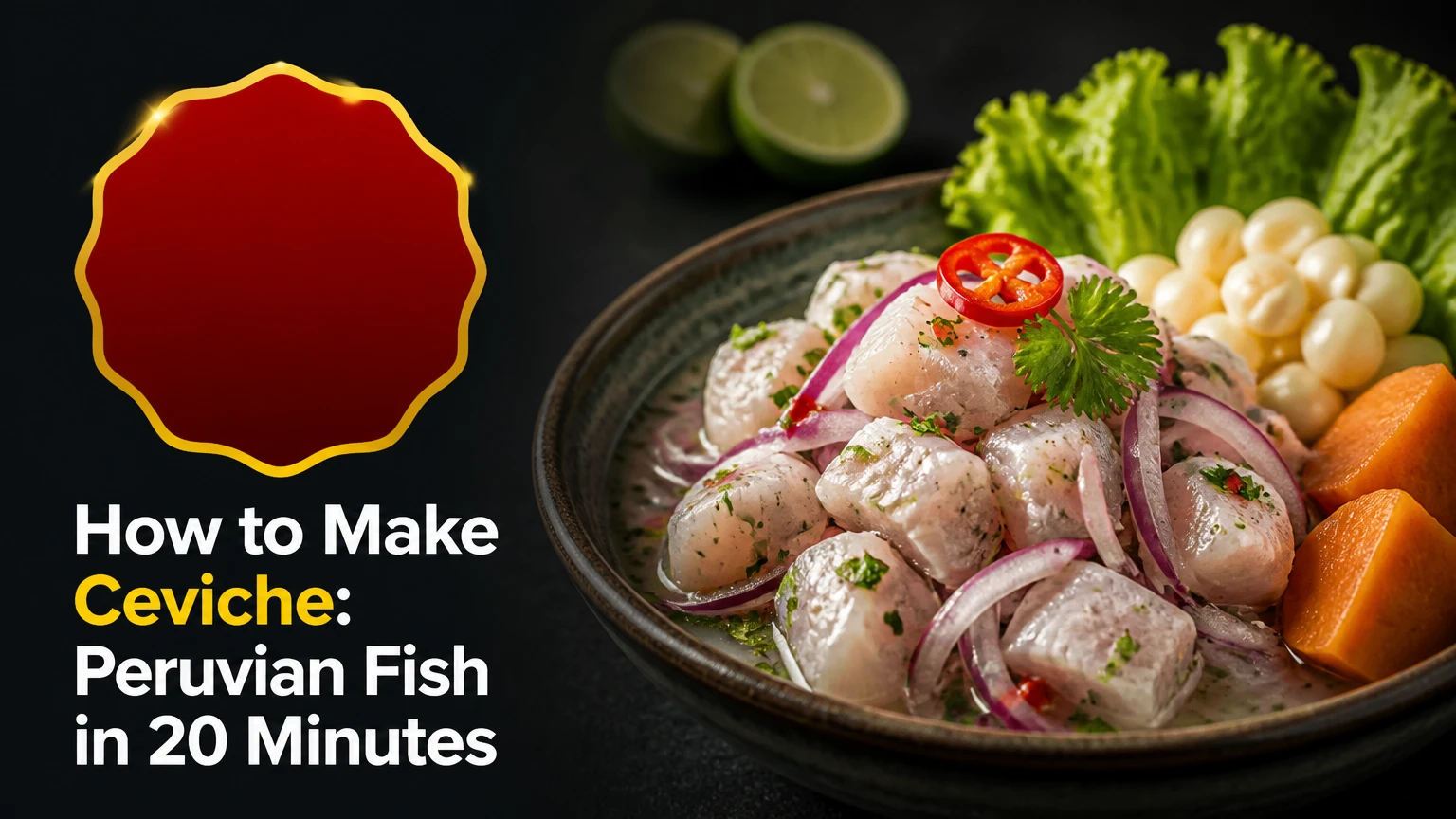
Ceviche is made by briefly curing very fresh, parasite-controlled fish in cold fresh lime juice, then seasoning it with salt, red onion, chili, and cilantro. For classic Peruvian ceviche, cut 450 g of lean white fish into 2 cm cubes, salt it, add lime juice, cure it for 2-5 minutes, and serve immediately.
Key Facts
Classic Peruvian ceviche uses lean white fish, fresh lime juice, red onion, chili, cilantro, and salt.
A 450 g batch needs approximately 4.5-6.8 g of fine salt and 120-180 ml of lime juice.
A 2-5 minute cure leaves the center tender and lightly translucent; 20-30 minutes produces a firmer, opaque texture.
Citrus denatures fish proteins, but lime juice does not reliably eliminate every parasite or pathogen.
Raw ceviche should use seafood sold for raw consumption with documented parasite-control handling, or fish frozen under an appropriate FDA Food Code schedule.
Refrigerate ingredients at 4°C or below, assemble cold, and eat ceviche immediately rather than storing it overnight.
What Is Ceviche?
Ceviche is a Latin American seafood dish in which raw or pre-cooked seafood is combined with acidic citrus juice and fresh seasonings. Peruvian ceviche traditionally pairs firm white fish with lime, red onion, ají, cilantro, and salt, while Mexican and Ecuadorian versions often use shrimp, tomato, orange juice, avocado, or cooked seafood.
Lime juice changes the fish through denaturation. Citric acid lowers the mixture’s pH, causing unfolded muscle proteins to aggregate; the flesh becomes more opaque, firmer, and less translucent. That visual change resembles heat cooking, but the food-safety outcome is different because acid does not penetrate or sterilize seafood like sustained heat.
Ceviche is therefore best understood as acid-cured seafood, not heat-cooked seafood. The distinction matters for parasite control, bacterial contamination, pregnancy, immune suppression, and storage.
Before You Start
A classic 450 g batch takes about 15 minutes to prepare and 2-5 minutes to cure. The active work is simple, but seafood temperature, knife consistency, and source quality determine the result more than extra lime juice does.
| Requirement | Typical specification | Why it matters |
|---|---|---|
| Lean fish | 450 g, skinless and boneless | Produces a clean texture and mild flavor |
| Lime juice | 120-180 ml, freshly squeezed | Provides enough liquid for even coating |
| Fine sea salt | 4.5-6.8 g, about 1-1½ teaspoons | Seasons and firms the fish before curing |
| Red onion | 1 medium, about 120 g | Adds sweetness, crunch, and sulfurous heat |
| Chili | 1 ají limo, serrano, or small habanero | Supplies controlled heat |
| Cilantro | 2 tablespoons chopped leaves | Adds herbal aroma |
| Equipment | Sharp knife, chilled bowl, citrus squeezer, strainer | Supports clean cuts and removes seeds |
Use fish with a mild aroma, glossy flesh, and no sticky surface. Suitable choices include sea bass, corvina, halibut, flounder, snapper, and mahi-mahi. A supplier’s “sushi-grade” label can be useful, but the term is not a universal safety standard; ask whether the fish was handled for raw consumption and how parasite risks were controlled.
Which Fish Works Best?
Lean, firm white fish works best because its muscle holds a clean cube while lime juice changes the surface. Sea bass and corvina are classic premium choices, while halibut, flounder, snapper, and mahi-mahi are practical substitutes with slightly different firmness and sweetness.
| Fish or seafood | Texture after 2-5 minutes | Flavor profile | Best use |
|---|---|---|---|
| Corvina | Firm exterior, tender center | Mild and sweet | Traditional Peruvian style |
| Sea bass | Delicate, moderately firm | Clean and lightly rich | Premium classic ceviche |
| Halibut | Dense and firm | Mild, slightly sweet | Beginner-friendly cubes |
| Flounder | Softer, tender | Delicate and mild | Very short cure |
| Mahi-mahi | Firm and resilient | Mild, meaty | Budget-conscious batches |
| Shrimp | Springy after cooking | Sweet and marine | Pre-cooked or Mexican style |
Avoid fish with a strong oily profile, such as mackerel, sardines, and most salmon, when making a classic lime-forward ceviche. Tuna can work in a crudo-style preparation, but its dense, dark flesh creates a different dish and can taste metallic after extended acid exposure.
How to Make Classic Peruvian Ceviche
The classic method has seven actions: chill the equipment, prepare the onion, trim and cube the fish, salt the fish, add aromatics, pour in lime juice, and serve at the chosen cure point. Keep the fish at 4°C or below until assembly, and do not leave the finished dish at room temperature.
Step 1: Chill the Bowl and Keep the Fish Cold
Place the serving bowl, mixing bowl, knife, and plates in the refrigerator for 10-15 minutes. Keep the fish sealed over ice or in the coldest part of the refrigerator while preparing the other ingredients.
Cold fish retains a firmer muscle structure and gives the lime juice more control over the final texture. You will know this step worked when the fish feels cold and firm rather than soft or greasy. The common mistake is leaving diced fish on the counter while preparing onions and herbs.
Step 2: Slice and Soak the Red Onion
Slice one medium red onion into paper-thin half-moons, then soak the slices in ice water for 10 minutes. Drain and pat the onion completely dry before adding it near the end.
The cold soak removes some harsh sulfur compounds while preserving crunch. For a stronger onion flavor, skip the soak and slice the onion immediately before serving. Wet onions dilute the seasoning, so drying them is more important than the soaking method itself.
Step 3: Trim and Cut the Fish Into Uniform Cubes
Remove skin, pin bones, connective tissue, and dark bloodlines from 450 g of fish. Cut the flesh into uniform cubes approximately 2 cm on each side, then return the cubes to the refrigerator.
Uniform pieces cure at a similar rate. Cubes smaller than 1 cm turn opaque quickly and can become crumbly, while pieces larger than 2.5 cm may have a raw center after the exterior has become firm. You will know the cut is correct when most pieces are similar in size and have clean, flat faces.
Step 4: Salt the Fish Before Adding Citrus
Toss the cold fish gently with 4.5-6.8 g of fine sea salt, equivalent to approximately 1-1½ teaspoons depending on crystal size. Let the salted fish rest for one minute before adding the lime juice.
Salt draws a small amount of moisture toward the surface and seasons the fish throughout the brief cure. A kitchen scale is more accurate than a volume spoon because coarse kosher salts occupy more space. The common mistake is salting by eye, then correcting an overly sour dish with too much additional salt.
Step 5: Add Chili and Cilantro
Add one finely minced ají limo, serrano, or small habanero and two tablespoons of chopped cilantro leaves. Remove the chili seeds and inner membranes for less heat, or retain part of them for a hotter result.
Ají limo gives a more traditional Peruvian aroma, while serrano is easier to find and has a greener flavor. Add cilantro leaves rather than large stems, which can taste woody in a short preparation. Keep the herbs cold until mixing so they retain their aroma.
Step 6: Pour Over Fresh Lime Juice
Squeeze 120-180 ml of fresh lime juice and strain out seeds. Pour enough juice over the fish to coat at least three-quarters of the pieces, then fold gently with a nonreactive spoon.
Squeeze limes firmly enough to extract the juice, but do not crush the fruit until the rind and white pith are saturated. Over-squeezing can release bitter, harsh compounds. Fresh lemon can replace some or all of the lime, although lemon produces a less traditional aroma and a slightly different acidity.
Step 7: Cure, Add Onion, and Serve
Cure the fish for 2-5 minutes for classic Peruvian texture, fold in the drained onion during the final minute, and serve immediately with a slotted spoon or a small amount of the marinade.
The exterior should look opaque and firm while the center remains tender. If the fish is fully opaque throughout, the cure has progressed toward a longer Mexican-style texture. Serve with chilled or room-temperature sides, but keep the ceviche itself cold.
How Long Should Ceviche Cure?
Ceviche curing time controls texture, not reliable food safety. A 2-5 minute cure creates a firm exterior with a tender center, 15-30 minutes produces a mostly opaque piece, and more than 45 minutes often makes lean fish dry, chalky, or crumbly.
| Cure time | Appearance | Texture | Recommended style |
|---|---|---|---|
| 0-2 minutes | Mostly translucent | Raw, soft center | Sashimi-like preparation |
| 2-5 minutes | Opaque outer layer | Tender center, firm surface | Peruvian clásico |
| 15-30 minutes | Mostly opaque | Firm and juicy | Mexican-style fish ceviche |
| 30-60 minutes | Fully opaque | Firmer, potentially dry | Small fish cubes or strong marinades |
| Over 60 minutes | Dull and pale | Chalky or crumbly | Usually over-cured |
Acid penetration is influenced by cube size, fish thickness, juice temperature, salt concentration, and the ratio of fish to liquid. Timing should begin when the lime juice contacts the fish, not when the ingredients are placed on the cutting board.
How Safe Is Ceviche?
Ceviche made from raw seafood is not automatically safe because lime juice changes appearance without providing validated sterilization. The safest raw preparation uses seafood intended for raw consumption and verified parasite-control handling, while high-risk diners should choose fully cooked seafood instead.
The FDA Food Code 2022 gives parasite-destruction schedules for many fish: freezing at -20°C (-4°F) for seven days, or freezing at -35°C (-31°F) until solid and holding it there for 15 hours, are among the listed options. Commercial freezing equipment reaches these conditions more reliably than a typical household freezer, so home freezing should not be treated as an equivalent guarantee.
The FDA also identifies exceptions and special handling rules for certain aquacultured fish, tuna species, and molluscan shellfish. Ask the fishmonger for the product’s handling record rather than relying only on the phrase “sushi-grade.”
Keep raw seafood refrigerated at 4°C or below, wash hands and cutting surfaces, and prevent contact with ready-to-eat foods. Pregnant people, young children, older adults, and people with weakened immune systems should avoid raw or lightly cured seafood and choose the poached shrimp variation below.
Which Curing Method Should You Use?
Choose a short Peruvian cure for premium fish and a tender center, a longer Mexican cure for fully opaque small pieces, or pre-cooked seafood when safety and advance preparation matter more than raw texture.
| Method | Seafood | Cure or cooking time | Result |
|---|---|---|---|
| Peruvian clásico | Corvina, sea bass, halibut | 2-5 minutes | Tender center and clean lime flavor |
| Mexican fish | Snapper, tilapia, mahi-mahi | 20-45 minutes | Opaque fish with tomato and cucumber |
| Ecuadorian shrimp | Poached shrimp | 2-24 hours chilled | Soupy, sweet-savory marinade |
| Shellfish style | Octopus, squid, scallops | Cook first, then chill | Firm texture with lower raw-seafood risk |
The short cure preserves the natural sweetness of excellent fish, but it leaves little margin for poor sourcing or imprecise knife work. The longer cure absorbs tomato, cucumber, avocado, and chili flavors, but it can mask delicate fish and reduce moisture.
Mexican-Style Fish Ceviche
For Mexican-style ceviche, cut 450 g of snapper, tilapia, or mahi-mahi into 1 cm cubes and cure it in 150 ml of lime juice for approximately 20-45 minutes. Drain some of the juice, then add diced tomato, cucumber, serrano, cilantro, red onion, and avocado immediately before serving.
The smaller pieces become opaque more quickly. Keep avocado out of the acidic bowl until the final minute because prolonged lime exposure darkens its surface and softens its edges.
Poached Shrimp Ceviche
For a safer make-ahead alternative, poach 450 g of peeled shrimp in simmering water with onion, garlic, and salt until the centers are opaque and the shrimp reach 63°C. Chill them rapidly, then combine them with lime juice, orange juice, tomato, red onion, cilantro, and chili.
Cooked shrimp can be assembled several hours ahead, although the onion and avocado still lose texture over time. Ecuadorian-style versions may include tomato sauce, mustard, toasted corn, or plantain chips.
What Should You Serve With Ceviche?
Serve Peruvian ceviche with boiled sweet potato, large-kernel corn called choclo, toasted corn, lettuce, or cancha. Mexican ceviche pairs naturally with tortilla chips, tostadas, cucumber, and avocado, while Ecuadorian shrimp ceviche is commonly served with plantain chips or toasted corn.
Sweet potato and corn balance lime’s sharpness with starch and sweetness. Use a slotted spoon when plating a short-cured ceviche so the fish does not continue soaking in excess acid before it reaches the table.
Common Mistakes and How to Fix Them
| Problem | Likely cause | Immediate fix | Prevention |
|---|---|---|---|
| Bitter lime flavor | Rind or pith over-squeezed | Add 15-30 ml cold water or unsalted fish stock | Stop squeezing when the lime is mostly flat |
| Mushy fish | Warm fish or cure longer than 45-60 minutes | Drain immediately and add crisp cucumber | Chill ingredients and use a timer |
| Flat flavor | Insufficient salt or weak aromatics | Add salt in 0.5 g increments | Weigh salt and taste the marinade |
| Watery ceviche | Wet onion or excess vegetable liquid | Drain briefly before plating | Pat onions dry and add vegetables late |
| Uneven texture | Inconsistent cube size | Serve the smaller pieces first | Cut 2 cm cubes with a sharp knife |
| Metallic aftertaste | Oily or oxidized fish | Do not serve questionable seafood | Choose mild, fresh white fish |
Bottled lime juice is a poor substitute for fresh juice because pasteurization and storage reduce the volatile citrus aroma. Bottled juice can still acidify fish, but it usually produces a flatter, harsher marinade.
One practitioner rule matters more than most garnish advice: when ceviche tastes too sour, correct the balance before adding more ingredients. A spoonful of cold unsalted fish stock or water softens excessive acidity; a small pinch of sugar can help, but it should not replace proper salting.
Another counterintuitive rule is to add onion late. Red onion benefits from a short contact with the marinade, but hours in lime juice make its layers limp and spread sulfurous flavors through the dish.
Can You Store Ceviche?
Raw fish ceviche is best eaten immediately and should not be stored overnight. If it has remained refrigerated at 4°C or below, discard raw ceviche after approximately two hours for quality and safety, or sooner if it warmed during serving.
A longer cure does not create a shelf-stable product. Acid continues changing fish proteins, so leftovers become progressively drier and more fragile even when refrigerated. Store cooked shrimp ceviche in a sealed container and use it within 24 hours, removing avocado and crisp vegetables when possible.
Do not return partially eaten ceviche to a communal bowl. Serving utensils, room-temperature exposure, and repeated handling increase contamination risk.
Cost and Batch Scaling
Typical home cost varies by fish, region, and whether the seafood has documented raw-consumption handling. Premium corvina or sea bass can cost several times more than frozen mahi-mahi or farmed tilapia, while limes and aromatics usually contribute a smaller portion of the total.
| Batch size | Fish | Lime juice | Fine salt | Typical servings |
|---|---|---|---|---|
| Small | 225 g | 60-90 ml | 2.25-3.4 g | 2 appetizer portions |
| Standard | 450 g | 120-180 ml | 4.5-6.8 g | 4 appetizer portions |
| Large | 900 g | 240-360 ml | 9-13.6 g | 8 appetizer portions |
| Party batch | 1.35 kg | 360-540 ml | 13.5-20.3 g | 12 appetizer portions |
For gatherings, prepare several smaller bowls rather than one large batch. Smaller batches chill faster, cure more evenly, and let you serve each bowl at its best texture instead of allowing the first portion to over-cure while guests eat.
FAQ
Can I Make Ceviche With Frozen Fish?
You can use frozen fish if it was frozen and handled for raw consumption, but ordinary supermarket frozen fish does not automatically meet that standard. Thaw it in the refrigerator, drain it thoroughly, inspect the texture, and follow the supplier’s parasite-control guidance before using a short cure.
Can I Use Lemon Juice Instead of Lime?
Lemon juice can replace lime juice at the same volume, although the aroma and acidity will differ. Meyer lemon produces a sweeter result, while standard lemon creates a sharper, less traditional profile. Combine lemon with a small amount of lime when you want familiar citrus flavor with a Peruvian direction.
Can Pregnant People Eat Ceviche?
Pregnant people should avoid raw or lightly cured ceviche because lime juice does not provide the same validated pathogen control as cooking. A fully cooked shrimp ceviche, prepared from shrimp heated to 63°C and rapidly chilled, is the safer alternative.
Why Does My Ceviche Taste Too Sour?
Ceviche usually tastes excessively sour because the fish-to-juice ratio is too low, the limes are unusually acidic, or the dish lacks salt and starch to balance it. Drain some marinade, add a small amount of cold unsalted stock or water, correct the salt gradually, and serve with sweet potato or corn.
Can I Make Ceviche the Night Before?
Do not make raw fish ceviche the night before. The fish will continue denaturing, lose moisture, and develop a chalky texture. Prepare the onion, chili, cilantro, and garnishes in advance, then cut, salt, cure, and assemble the seafood immediately before serving.
The Bottom Line
To make ceviche well, start with cold lean fish that was handled for raw consumption, cut it into uniform 2 cm cubes, season 450 g with 4.5-6.8 g salt, and use 120-180 ml fresh lime juice. Cure classic Peruvian ceviche for 2-5 minutes, add the onion near the end, and serve immediately. Remember that lime changes texture and color, but it does not replace validated seafood safety controls.