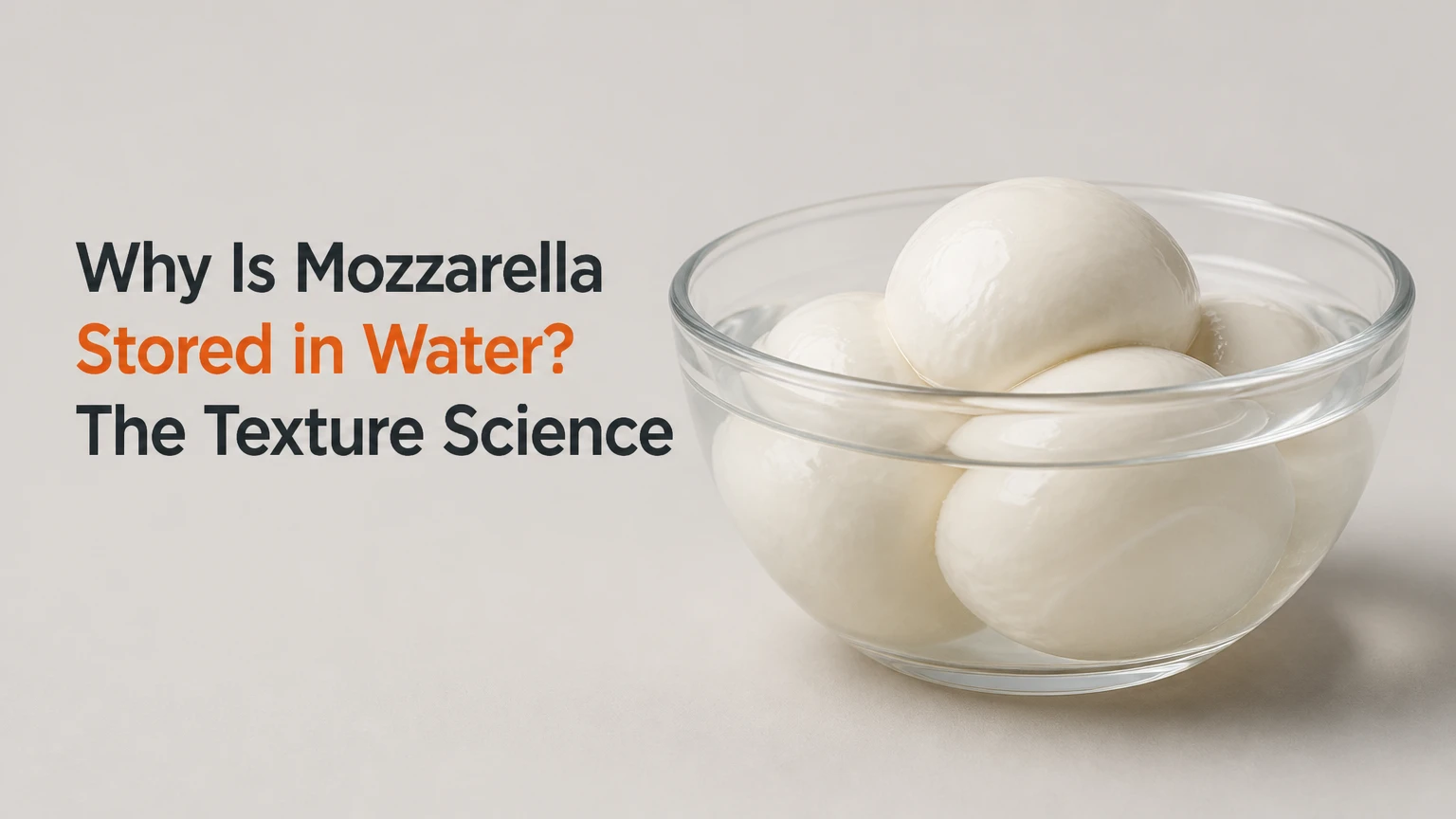
Fresh mozzarella is stored in water, light brine, or whey because the cheese contains enough moisture to dry rapidly in ordinary refrigerator air. The packing liquid slows evaporation, protects the tender protein network from forming a leathery skin, and helps preserve mozzarella’s soft, milky texture. The liquid also limits direct exposure to refrigerator odors when the package remains sealed.
Key Facts at a Glance
- Fresh mozzarella is a high-moisture, unaged pasta filata cheese.
- The packing liquid reduces moisture loss, but it does not make mozzarella shelf-stable.
- Original brine or whey is preferable to plain water because it better preserves salt and flavor.
- Low-moisture block and shredded mozzarella are designed for dry, sealed storage, not liquid packing.
- Opened fresh mozzarella typically keeps for about 2-5 days when refrigerated, depending on the product.
- The FDA recommends keeping a refrigerator at 40°F (4°C) or below; fresh mozzarella requires refrigeration.
Why Is Mozzarella Stored in Water?
Mozzarella is stored in liquid primarily to prevent moisture loss from its exposed surface. Fresh mozzarella often contains roughly 50%-60% moisture, while its stretched-curd protein strands remain soft and flexible; refrigerator air gradually removes water, causing the outside to tighten before the interior does.
The liquid also protects the cheese from direct contact with air. That protection reduces surface drying and helps preserve the smooth, elastic cut. A sealed container provides the strongest odor barrier, while the liquid adds a second layer of protection around the cheese itself.
“Keep your refrigerator at 40°F or below,” advises the U.S. Food and Drug Administration in its refrigerator-storage guidance. Water-packed mozzarella is perishable because its moisture supports quality loss and microbial growth; liquid storage preserves texture, not safety at room temperature.
What happens when fresh mozzarella dries out?
Drying causes fresh mozzarella to develop a firmer outer layer, lose whey, and chew more like a dense rubber than a tender cheese. The surface can become difficult to cut cleanly, while the center may remain moist for a short period.
The change is not the same as beneficial aging. Aged cheeses lose moisture under controlled conditions while enzymes and microorganisms develop flavor and structure. Fresh mozzarella is intended for prompt eating, so uncontrolled dehydration usually produces a quality defect.
How Does the Packing Liquid Protect the Cheese?
Packing liquid protects mozzarella through surface contact, moisture control, salt balance, and reduced exposure to air. The liquid does not create a perfect chemical equilibrium, and the phrase “osmotic equilibrium” is a useful simplification rather than a guarantee that no water or salt moves.
Fresh mozzarella contains water, milk fat, salt, lactose residues, minerals, and soluble milk proteins. The surrounding liquid has its own salt concentration and acidity. If those conditions differ substantially, some diffusion can occur, changing the cheese’s flavor and firmness over time.
Is mozzarella packed in plain water?
Some fresh mozzarella is sold in water, but many products use lightly salted water, whey, or a producer-specific packing solution. The label, ingredient list, and original liquid are more reliable than the cheese’s appearance because two visually identical mozzarella balls can have different salt levels.
Plain water can dilute surface salt and soluble compounds if used for extended storage. It may work as a temporary emergency cover for a few hours, especially when the cheese will be eaten promptly, but it is not an equivalent replacement for the original brine or whey.
What is whey doing in the container?
Whey is the watery portion left after milk proteins form curds. A whey-based liquid can match the cheese’s mineral and flavor environment more closely than fresh tap water, although commercial formulas vary and may include salt, acid, stabilizers, or pasteurized water.
Whey does not automatically make a product safer or longer-lasting. Once a package opens, contamination from hands, utensils, and refrigerator surfaces becomes the practical concern. Keep the cheese submerged, covered, and cold.
How Is Fresh Mozzarella Made and Cooled?
Fresh mozzarella is made by heating and stretching acidified curds until the casein network becomes pliable. Cheesemakers form that stretched curd into balls, braids, knots, or smaller pieces, then cool the shapes in water or another cooling medium before packaging.
Production temperatures vary by dairy, milk composition, and equipment. Hot stretching commonly occurs around 70-85°C, but that range describes a typical processing condition rather than a universal specification for every mozzarella product.
The cooling stage firms the shape and stops further softening. It does not permanently seal all moisture inside the cheese. The final water content depends on curd treatment, stretching, salting, size, cooling, and packaging.
What does pasta filata mean?
Pasta filata means “spun paste” or stretched curd. Heat and mechanical stretching align casein strands, giving mozzarella its characteristic pull and supple bite.
That structure explains why fresh mozzarella reacts poorly to prolonged drying and freezing. The cheese is neither a loose curd nor a hard aged paste. Its protein network contains abundant water and can separate when ice crystals form.
Which Mozzarella Types Need Liquid Storage?
Fresh buffalo mozzarella, fior di latte, bocconcini, ciliegine, and many burrata products need liquid or high-moisture packaging. Low-moisture block, part-skim, and shredded mozzarella generally do not because manufacturers remove more water and often age the cheese for improved grating and melting performance.
| Mozzarella type | Typical moisture range | Common package liquid | Typical US retail price | Typical opened life |
|---|---|---|---|---|
| Mozzarella di bufala | 55%-60% | Whey or light brine | $12-$20/lb | 1-2 days |
| Fior di latte | 50%-55% | Water or light brine | $6-$12/lb | 2-4 days |
| Bocconcini or ciliegine | 50%-55% | Light brine or whey | $7-$13/lb | 3-5 days |
| Low-moisture block | 45%-48% | None | $4-$8/lb | 1-3 weeks |
| Shredded low-moisture | 45%-48% | None | $4-$9/lb | 1-2 weeks |
These are typical retail ranges, not universal product specifications. The United States Code of Federal Regulations, 21 CFR §133.155, defines mozzarella with a maximum moisture limit of 60% for the standardized cheese, while individual fresh products may have different labeling and manufacturing profiles.
Is buffalo mozzarella wetter than cow’s-milk mozzarella?
Buffalo mozzarella is often very moist and creamy, but milk source alone does not determine the final texture. Mozzarella di bufala can feel softer because of its composition, shape, freshness, and packing liquid, while a cow’s-milk product can also be exceptionally wet when made for same-day consumption.
| Product | Milk source | Texture when fresh | Best use | Liquid-handling need |
|---|---|---|---|---|
| Mozzarella di bufala | Water buffalo | Creamy, soft, delicate | Caprese, eating plain | Keep in original liquid |
| Fior di latte | Cow | Milky, elastic, moderately soft | Pizza, salads, sandwiches | Drain before baking |
| Bocconcini | Usually cow | Firm small pieces | Salads, skewers | Keep submerged |
| Burrata | Cow or buffalo | Cream-filled center | Serving immediately | Keep cold and use promptly |
| Low-moisture block | Cow | Firm, sliceable | Pizza, casseroles | Wrap tightly without water |
How Should You Store Leftover Fresh Mozzarella?
Store leftover fresh mozzarella in its original liquid inside a covered container at 40°F (4°C) or below, and use it within the package’s stated period or typically within 2-5 days after opening. Keep clean utensils away from the container, and do not leave the cheese uncovered in the refrigerator.
Step 1: Preserve the original liquid
Transfer the mozzarella and its liquid to a clean, food-safe container if the original tub no longer seals. Keep enough liquid to cover the cheese as completely as practical.
Step 2: Refrigerate promptly
Return the container to the refrigerator within two hours of serving. USDA guidance uses one hour when ambient temperatures exceed 90°F (32°C), such as during outdoor meals or hot kitchen service.
Step 3: Remove only the portion needed
Use clean tongs or a clean fork rather than handling the remaining cheese directly. Drain the portion immediately before slicing or cooking.
Step 4: Check quality before eating
Fresh mozzarella should smell clean and milky, with a moist surface and a coherent shape. Discard it if it develops a strongly sour, rotten, alcoholic, or ammonia-like odor, persistent slime, mold, a swollen package, or an unusual color.
A short rinse cannot make spoiled cheese safe. Rinsing may remove surface brine, but it does not reverse microbial growth or toxins.
Should You Keep Mozzarella in Its Original Liquid?
Yes, keeping mozzarella in its original liquid is usually the best storage choice. The producer formulated that liquid for the product’s salt level and intended eating window, so replacing it with tap water can alter flavor and firmness.
Do not drain the container days before use. Exposed mozzarella loses moisture quickly, especially when placed on a plate or wrapped loosely in plastic film. If only a small amount of liquid remains, use a clean covered container and consume the cheese promptly rather than improvising a long-term brine.
Can you replace the liquid with salt water?
A temporary replacement can use chilled, potable water with a small amount of salt, but home mixtures rarely reproduce the producer’s acidity, mineral balance, and concentration. A practical short-term mixture is about 1 teaspoon of fine salt per 2 cups of water, with the expectation that flavor may change.
Do not assume a homemade brine extends shelf life. The mixture is for moisture coverage, not validated preservation. Replace the liquid only when necessary, keep the cheese refrigerated, and shorten the storage window.
Can Fresh Mozzarella Go on Pizza?
Fresh mozzarella can go on pizza, but draining is necessary because its high moisture can wet the dough and prevent browning. Slice or tear the cheese, place it in a sieve or on towels for 15-30 minutes, and distribute it after excess liquid has drained.
Very wet buffalo mozzarella may need longer drainage, sometimes 30-60 minutes in a refrigerator. Avoid squeezing aggressively because pressure removes the creamy whey and can leave a tough, fragmented topping.
| Pizza cheese format | Typical drainage time | Moisture risk | Best application | Expected result |
|---|---|---|---|---|
| Shredded low-moisture | 0 minutes | Low | Long bake, heavy toppings | Even melt, stronger browning |
| Fior di latte | 15-30 minutes | Moderate | Neapolitan-style pizza | Soft pools, mild browning |
| Buffalo mozzarella | 30-60 minutes | High | Fast, hot bake | Creamy pockets, delicate crust |
| Bocconcini | 20-30 minutes | Moderate | Flatbreads, small pizzas | Distinct bite-sized pieces |
The oven temperature changes the outcome. A 60-90 second bake in a very hot pizza oven can evaporate moisture rapidly, while a 12-18 minute home-oven bake gives wet cheese more time to release liquid into the crust.
Fresh Versus Low-Moisture Mozzarella: Which Should You Buy?
Choose water-packed fresh mozzarella for a soft, milky cheese eaten raw or baked briefly. Choose low-moisture mozzarella for shredding, long oven bakes, sandwiches, casseroles, and recipes where excess liquid would weaken the food.
| Decision factor | Water-packed fresh mozzarella | Low-moisture block mozzarella | Shredded low-moisture mozzarella | Best choice |
|---|---|---|---|---|
| Moisture | 50%-60% typical | 45%-48% typical | 45%-48% typical | Fresh for juiciness |
| Opened storage | 1-5 days typical | 1-3 weeks typical | 1-2 weeks typical | Block for longevity |
| Pizza drainage | 15-60 minutes | None | None | Low-moisture for convenience |
| Raw texture | Soft, milky, tender | Firm, mild | Firm, dry surface | Fresh |
| Shredding | Poor | Easy | Immediate | Low-moisture |
| Retail price | $6-$20/lb typical | $4-$8/lb typical | $4-$9/lb typical | Low-moisture for budget |
| Freezing outcome | Wet, grainy after thawing | Usable after thawing | Usable with texture loss | Low-moisture |
What is the most important trade-off?
Water-packed mozzarella provides superior fresh texture but has a short usable life and releases more liquid during cooking. Low-moisture mozzarella sacrifices some tenderness for predictable melting, easier portioning, and longer opened storage.
Fresh mozzarella is a poor substitute for shredded pizza cheese when the recipe depends on a dry, browned topping. Low-moisture cheese is a poor substitute for buffalo mozzarella when the dish depends on a creamy center and delicate milk flavor.
What Problems Can Happen in the Liquid?
The most common problems are drying after drainage, blandness from dilution, excess surface slime, sour odors, and watery cooked dishes. Each problem has a different cause, so rinsing, salting, draining, or discarding should not be treated as interchangeable fixes.
Why does mozzarella taste bland?
Mozzarella can taste bland when the cheese contains little salt or when plain water has diluted surface salt during storage. Drain the cheese, taste a small piece, and season the finished dish rather than adding large amounts of salt directly to the storage container.
Why is mozzarella slimy?
A slightly slick surface can result from packing liquid, protein softening, or prolonged storage, but persistent slime combined with sour odor, gas, discoloration, or a swollen package indicates spoilage risk. Do not “rescue” questionable cheese by rinsing it.
Why did the cheese become rubbery?
Rubbery mozzarella usually lost surface moisture, experienced excessive heat, or was frozen and thawed. Keeping fresh cheese submerged and cold helps prevent drying, but it cannot restore texture once the stretched protein network has tightened.
Can you freeze mozzarella in water?
Freezing fresh mozzarella in its liquid is generally a poor quality choice because expanding ice crystals disrupt the water-rich protein network. Thawed cheese often becomes grainy and releases watery whey.
Freezing can still be practical when the cheese will be melted into soup, sauce, or a baked dish. Drain it first, wrap it airtight, freeze it for up to about two months for best quality, and thaw it in the refrigerator.
What Are the Best Alternatives to Water-Packed Mozzarella?
Low-moisture block mozzarella is the most practical alternative when long storage, shredding, or controlled melting matters. Provolone, scamorza, and mild young cheese can replace mozzarella in selected cooked dishes, but each changes stretch, saltiness, and flavor.
| Alternative | Typical moisture or format | Best use | Main difference from fresh mozzarella |
|---|---|---|---|
| Low-moisture block mozzarella | 45%-48% moisture | Pizza, gratins | Drier, easier to shred |
| Provolone | Semi-firm aged cheese | Sandwiches, baked pasta | More pronounced flavor |
| Scamorza | Firm stretched-curd cheese | Grilling, roasting | Denser and often smokier |
| Stracciatella | Cream and shredded curd | Toast, salads | Loose, spoonable filling |
| Burrata | Fresh shell with cream center | Immediate serving | More delicate and perishable |
Frequently Asked Questions
Does mozzarella need to be completely submerged?
Mozzarella benefits from being covered by its original liquid, but a sealed container matters as much as full submersion. Any exposed surface dries faster. If the container holds only a small amount of liquid, turn the cheese once rather than adding unseasoned water for extended storage.
How long can mozzarella sit out?
Fresh mozzarella should not remain at room temperature for more than two hours, or more than one hour when the temperature exceeds 90°F (32°C). Some traditional producers recommend serving buffalo mozzarella warmer for flavor, but warming should occur shortly before eating, not during prolonged unrefrigerated storage.
Can I rinse mozzarella before serving?
You can briefly rinse overly salty mozzarella with cold potable water, but rinsing removes surface flavor and does not improve spoiled cheese. Drain the piece immediately afterward. For ordinary fresh mozzarella, tasting first is better than routine rinsing.
Is burrata stored in water for the same reason?
Burrata is packed in liquid to protect its fresh outer mozzarella shell and highly perishable cream-filled interior. Burrata usually has a shorter ideal eating window than firm fresh mozzarella, so follow the package date and use it promptly after opening.
Why does restaurant mozzarella seem drier?
Restaurants often drain or shred fresh mozzarella before service, and pizza kitchens may use low-moisture cheese or a drier fior di latte. A 15-60 minute draining period can remove enough free liquid to improve browning without eliminating the cheese’s soft interior.
Is whey better than brine?
Whey is not universally better than brine. Whey can preserve a familiar dairy flavor, while brine gives the producer tighter control over salinity. The best liquid is the unopened product’s original packing medium, because it was matched to that cheese.
The Bottom Line
Why is mozzarella stored in water? Fresh mozzarella is stored in water, whey, or light brine because its high-moisture stretched-curd structure dries quickly outside liquid. The packing medium preserves tenderness, limits surface skinning, and supports the cheese’s intended flavor, but it does not replace refrigeration or extend safe storage indefinitely.
Keep fresh mozzarella in its original liquid until use, refrigerate it at 40°F (4°C) or below, and drain it before baking. Choose low-moisture block or shredded mozzarella when you need easy shredding, longer storage, or a pizza topping that releases less water.