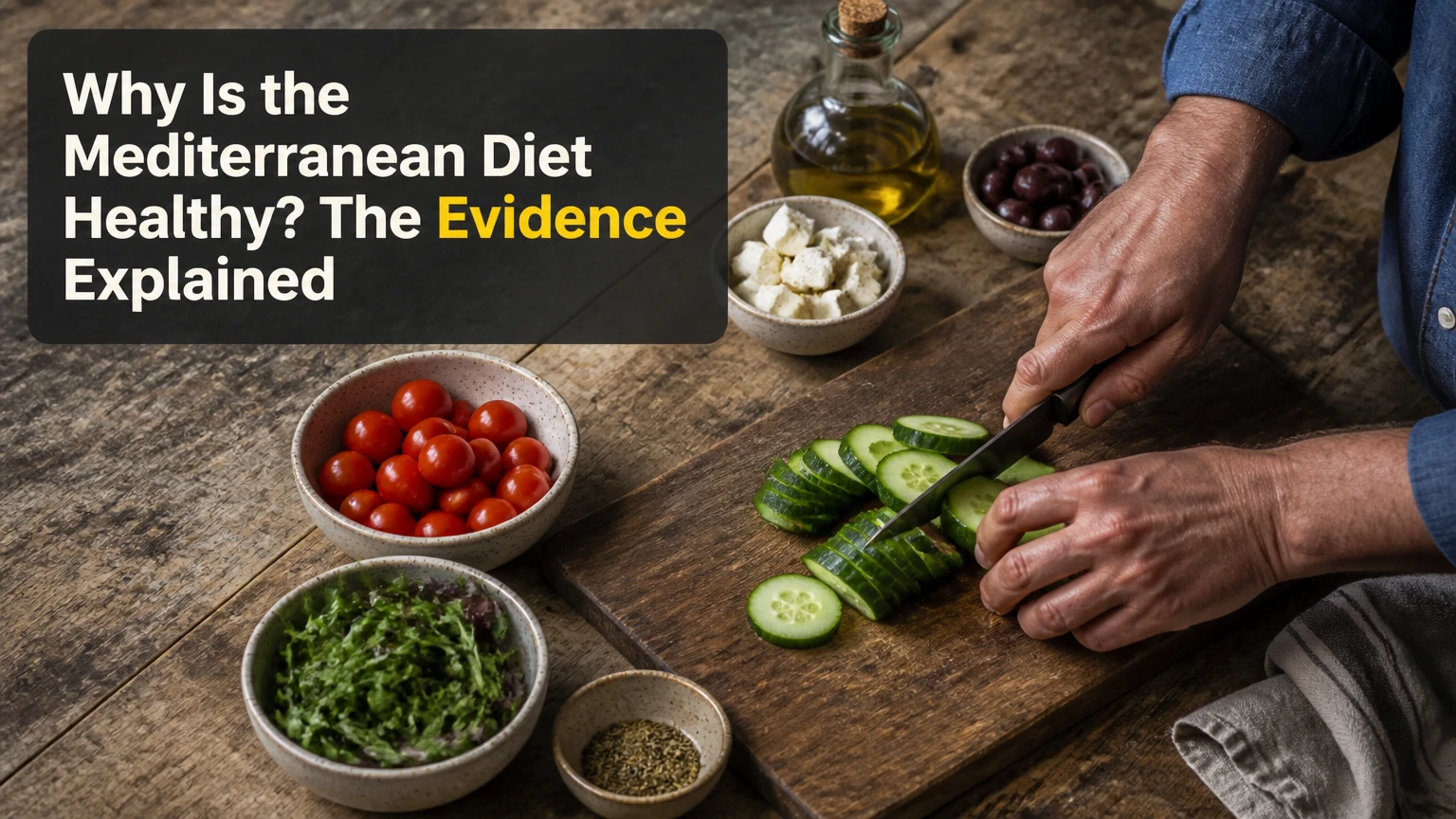
The Mediterranean diet is healthy because it replaces refined carbohydrates, processed meats, excess sodium, and saturated fats with vegetables, fruit, legumes, whole grains, nuts, fish, and extra-virgin olive oil. That combination supplies fiber, unsaturated fats, minerals, and polyphenols while improving overall food quality, blood lipids, blood pressure, and metabolic health.
Key Facts at a Glance
- The Mediterranean diet is a flexible eating pattern, not a fixed menu or calorie prescription.
- Extra-virgin olive oil, nuts, seeds, and fish provide mostly unsaturated fats that can replace butter and processed fats.
- Legumes, whole grains, vegetables, fruit, and nuts increase fiber intake and improve meal satiety.
- Randomized trial evidence, including the PREDIMED trial, supports cardiovascular benefits from Mediterranean-style eating.
- Wine is optional and is not necessary for the health effects of the Mediterranean diet.
- Weight loss occurs when the pattern helps create a sustainable calorie deficit, not because olive oil or Mediterranean foods burn fat independently.
What Is the Mediterranean Diet?
The Mediterranean diet is a plant-forward dietary pattern based on traditional food practices from Mediterranean regions, including parts of Greece, Italy, Spain, southern France, Turkey, North Africa, and the Levant. The pattern has no single official menu because local cuisines differ in grains, legumes, seafood, dairy, herbs, and cooking methods.
The common structure matters more than national labels. Meals emphasize vegetables, beans, lentils, fruit, whole grains, nuts, seeds, herbs, and olive oil. Fish and seafood appear regularly, while poultry, eggs, and yogurt generally appear in moderate amounts. Red meat, processed meat, sugary drinks, refined grains, and heavily processed snacks appear less often.
The American Heart Association describes the Mediterranean diet as “a way of eating based on the traditional cuisine of countries bordering the Mediterranean Sea.” That definition explains why the pattern is broader than Greek salad, hummus, or pasta with olive oil. A person in the United States can follow the same principles with regional beans, oats, leafy greens, canned salmon, and seasonal produce.
What Foods Define the Pattern?
The Mediterranean diet is defined by food frequency and replacement choices, rather than by one required ingredient. Replacing butter with olive oil and replacing processed meat with beans can matter more than buying imported products.
| Food group | Typical role | Practical examples | Main nutritional contribution |
|---|---|---|---|
| Vegetables | Daily, often at two main meals | Tomatoes, greens, peppers, broccoli, eggplant | Fiber, potassium, carotenoids |
| Legumes | Several times weekly | Lentils, chickpeas, black beans, fava beans | Plant protein, fermentable fiber |
| Whole grains | Regularly, portion-controlled | Oats, barley, farro, brown rice, whole-grain bread | Fiber, magnesium, slower digestion |
| Unsaturated fats | Daily, measured | Extra-virgin olive oil, walnuts, almonds, seeds | Monounsaturated and polyunsaturated fats |
| Fish and seafood | Often twice weekly | Sardines, salmon, trout, mussels | Protein, EPA and DHA omega-3 fats |
| Dairy and eggs | Moderate amounts | Plain yogurt, kefir, feta, eggs | Protein, calcium, vitamin B12 |
| Red and processed meat | Infrequently | Beef, lamb, bacon, sausage | Reduced exposure to processed meat and saturated fat |
A Mediterranean pattern does not require expensive berries, imported cheese, fresh fish every week, or specialty grains. Frozen vegetables, canned beans, oats, canned sardines, and ordinary whole-grain bread can meet the same structural goals.
Why Does the Mediterranean Diet Improve Health?
The Mediterranean diet improves health through several connected mechanisms: it raises fiber and micronutrient intake, shifts fat quality toward unsaturated fats, reduces ultra-processed foods, and improves the nutritional density of meals. The strongest explanation is the combined dietary pattern, not a single “superfood” or isolated anti-inflammatory compound.
How Does It Change Cholesterol and Artery Risk?
The Mediterranean diet can improve cardiovascular risk when olive oil, nuts, fish, and legumes replace butter, fatty processed meat, and refined snack foods. Unsaturated fats can reduce LDL cholesterol relative to saturated fats, while fiber and plant sterols can modestly reduce cholesterol absorption.
The PREDIMED randomized trial assigned 7,447 adults at high cardiovascular risk to a Mediterranean diet supplemented with extra-virgin olive oil, a Mediterranean diet supplemented with nuts, or a reduced-fat control diet. The original 2013 New England Journal of Medicine report found fewer major cardiovascular events in both Mediterranean groups, although the trial was later republished after methodological concerns about randomization were identified.
That evidence supports a meaningful association and a likely benefit, but it does not mean olive oil alone prevents heart attacks. The practical rule is substitution: use olive oil in place of butter, choose beans or fish in place of processed meat, and include nuts instead of highly processed snacks.
Does It Reduce Chronic Inflammation?
A Mediterranean dietary pattern can lower some markers associated with inflammation, especially when it replaces a diet high in refined carbohydrates, processed meat, and excess calories. Vegetables, fruit, legumes, nuts, olive oil, herbs, and fish provide polyphenols, carotenoids, vitamin E, and omega-3 fats that interact with vascular and immune pathways.
Inflammation is not one simple laboratory value. C-reactive protein can change with infection, body weight, smoking, sleep, and many medical conditions, so a lower marker does not prove that every organ is protected. The most reliable interpretation is that the diet reduces several upstream dietary pressures on cardiometabolic health.
Extra-virgin olive oil contains phenolic compounds, but claims that oleocanthal alone explains the diet are too narrow. The overall replacement pattern, calorie balance, physical activity, blood pressure, and smoking status usually have larger effects than any single olive oil compound.
Can It Improve Blood Sugar Control?
The Mediterranean diet can improve blood sugar control because legumes, vegetables, nuts, and intact whole grains provide fiber and slower-digested carbohydrate, while unsaturated fats and adequate protein can reduce the glycemic impact of a meal. The pattern is useful for type 2 diabetes prevention and can support treatment, but it does not replace medication.
Fiber delays gastric emptying and carbohydrate absorption, which can reduce post-meal glucose rises. A plate containing lentils, roasted vegetables, and a small portion of barley generally produces a different glucose response from a plate dominated by white bread, sweetened sauce, and dessert.
The Diabetes Prevention Program and later research support weight loss, physical activity, and improved dietary quality as ways to reduce diabetes risk. People using insulin or sulfonylureas should monitor glucose during major dietary changes because lower carbohydrate intake or weight loss can require medication adjustment by a clinician.
What Happens in the Gut?
Mediterranean foods feed the gut microbiome through fermentable fibers and resistant starch from beans, lentils, onions, oats, barley, vegetables, nuts, and cooled potatoes. Gut bacteria ferment some of these compounds into short-chain fatty acids, including acetate, propionate, and butyrate, which influence the intestinal environment and immune signaling.
Human microbiome research is promising but less settled than cardiovascular evidence. Individual gut responses vary according to existing bacteria, medication use, sleep, age, and the amount of fiber added. A person who suddenly increases beans from zero to two cups daily may experience gas before adaptation occurs.
Increase fiber gradually, drink adequate fluid, and spread legumes across meals. For most adults, a gradual path toward roughly 25-38 grams of fiber daily is reasonable, with the exact target depending on age, sex, energy needs, and medical conditions.
What Should You Eat in a Mediterranean Day?
A practical Mediterranean day includes plant foods at every meal, a measured source of unsaturated fat, and protein selected according to preference and health needs. The pattern does not require fixed calorie percentages, but many people can begin with vegetables or fruit at each meal, legumes several times weekly, and fish approximately twice weekly.
| Meal | Mediterranean-style example | Approximate preparation time | Useful substitution |
|---|---|---|---|
| Breakfast | Plain yogurt, oats, walnuts, apple | 5 minutes | Fortified soy yogurt for dairy-free eating |
| Lunch | Lentil soup, whole-grain bread, tomato salad | 10-20 minutes | Canned low-sodium beans for dry lentils |
| Dinner | Baked salmon, barley, broccoli, olive oil | 25-30 minutes | Sardines, trout, or tofu |
| Snack | Orange and 20-30 grams of almonds | 2 minutes | Pumpkin seeds for a nut-free option |
Extra-virgin olive oil is calorie-dense at about 119 calories per tablespoon. Two to four tablespoons daily may fit some traditional patterns, but that amount is not a universal prescription and can prevent weight loss if added on top of existing food.
Which Mediterranean Variation Is Best?
The best Mediterranean variation is the one that preserves the core pattern, fits cultural preferences, and remains affordable enough to follow consistently. Greek, Italian, Levantine, and North African versions can all work without wine, imported products, or animal foods.
| Variation | Core foods | Alcohol requirement | Best practical use |
|---|---|---|---|
| Greek-style | Beans, greens, olive oil, yogurt, fish | None | High-vegetable meals and simple salads |
| Italian-style | Tomatoes, beans, whole grains, vegetables, fish | None | Soups, grain dishes, and pasta with vegetables |
| Levantine | Chickpeas, lentils, tahini, herbs, vegetables | None | Vegetarian or vegan meal planning |
| North African | Beans, couscous, vegetables, spices, fish | None | Batch cooking with legumes and stews |
Red wine is not a required feature. Public-health organizations do not recommend beginning to drink for cardiovascular protection because alcohol also increases risks, including several cancers, liver disease, addiction, and injury.
How Do You Start the Mediterranean Diet?
Most beginners can transition in four practical steps over 2-4 weeks, with the food budget ranging from about $45-$100 per person weekly depending on seafood, location, and convenience purchases. Consistency improves when the first changes replace familiar foods instead of requiring a completely new menu.
Step 1: Replace the Main Added Fat
Use one tablespoon of extra-virgin olive oil for a salad dressing or cooking portion instead of an equivalent amount of butter. Keep the bottle measured rather than free-poured, because two unmeasured tablespoons add approximately 238 calories.
You will know the step worked when butter-based cooking is no longer the default at most meals. A common mistake is treating olive oil as unlimited because it is unsaturated; its fat quality is favorable, but its energy density remains high.
Step 2: Add Legumes and Vegetables
Add one half-cup serving of beans, chickpeas, or lentils to at least three meals during the first week, then build vegetables toward half of the lunch and dinner plate. Use frozen vegetables when fresh produce spoils before it is eaten.
You will know the step worked when legumes replace part of the meat or refined starch rather than simply being added to the existing meal. A common mistake is increasing fiber too quickly, which can cause bloating and reduce adherence.
Step 3: Change the Protein Frequency
Aim for fish or seafood about twice weekly if you eat it, poultry or eggs in moderate portions, and unprocessed red meat less often. Replace sausage, bacon, and deli meat first because processed meat adds sodium and preservatives beyond its protein content.
You will know the step worked when at least two weekly meals use beans, lentils, tofu, or fish instead of red or processed meat. People with fish allergies can use walnuts, chia seeds, or canola oil for plant omega-3 ALA, while recognizing that ALA conversion to EPA and DHA is limited.
Step 4: Upgrade Grains and Drinks
Choose oats, barley, quinoa, brown rice, whole-grain bread, or whole-wheat pasta when practical, and make water the default beverage. Whole grains still contain calories and carbohydrates, so portion size matters for diabetes management and weight loss.
You will know the step worked when sugary drinks and refined snacks are occasional rather than daily. A common mistake is assuming any pasta dish is Mediterranean; a large serving of refined pasta with processed meat does not reproduce the pattern.
Is the Mediterranean Diet Expensive?
The Mediterranean diet can cost less than a highly processed diet when meals rely on dried or canned legumes, oats, seasonal produce, frozen vegetables, and modest portions of seafood. Costs rise when shoppers buy premium olive oil, frequent restaurant meals, imported products, pre-cut produce, and fresh fish at every dinner.
Typical weekly food costs vary too widely by country and household to support one universal figure. In a United States household, a budget-oriented single-person plan may fall near $45-$70 weekly, while a plan with frequent fresh seafood and convenience foods may exceed $100.
| Lower-cost choice | Higher-cost choice | Typical saving mechanism | Nutritional role |
|---|---|---|---|
| Dried lentils | Prepared specialty dips | Batch cooking lowers cost per serving | Plant protein and fiber |
| Canned sardines | Fresh wild salmon | Shelf-stable fish costs less | EPA and DHA omega-3 fats |
| Frozen spinach | Bagged baby greens | Frozen produce reduces waste | Folate, vitamin K, carotenoids |
| Oats and barley | Imported ancient grains | Bulk grains reduce package cost | Whole-grain carbohydrate |
Meal planning also reduces food waste. Cook one pot of beans, one grain, and two vegetables, then combine them with eggs, yogurt, fish, or tofu across several meals.
How Soon Do Health Benefits Appear?
Some Mediterranean diet changes can appear within weeks, while cardiovascular and longevity benefits require sustained adherence over months or years. Hunger, bowel regularity, and blood glucose patterns may change first; LDL cholesterol, blood pressure, and body weight should be assessed with repeated measurements rather than a single day.
| Outcome | Plausible observation period | What determines the result | Appropriate measure |
|---|---|---|---|
| Satiety and bowel pattern | 1-3 weeks | Fiber increase and total calories | Hunger and stool changes |
| Blood pressure | 2-12 weeks | Sodium, weight, potassium, medication | Home blood-pressure average |
| LDL cholesterol | 6-12 weeks | Fat replacement and genetics | Lipid panel |
| Body weight | 1-6 months | Calorie balance and activity | Monthly trend |
| Cardiovascular risk | Years | Long-term adherence and baseline risk | Clinical follow-up |
The Mediterranean diet is not a rapid detox or guaranteed weight-loss program. Weight loss is gradual when the pattern lowers calorie intake through greater satiety and fewer energy-dense processed foods, but generous oil, nuts, cheese, bread, and desserts can maintain or increase total calories.
How Does It Compare With Other Eating Patterns?
The Mediterranean diet generally offers a stronger combination of cardiovascular evidence, flexibility, and long-term adherence than highly restrictive patterns. A ketogenic diet can produce short-term weight loss and has established medical uses for some seizure disorders, but its very low carbohydrate intake makes fruit, legumes, and whole grains difficult to include.
| Criterion | Mediterranean diet | Western dietary pattern | Ketogenic diet |
|---|---|---|---|
| Main carbohydrates | Legumes, fruit, whole grains | Refined grains, sugar, snacks | Usually under 50 grams daily |
| Main fats | Olive oil, nuts, fish | Mixed, often saturated and processed fats | Often butter, oils, meat, or cream |
| Food restrictions | Few categorical bans | No defined structure | Strong carbohydrate restriction |
| Fiber potential | About 25-38 grams daily | Often below recommended intake | Variable, often lower without planning |
| Cardiovascular evidence | Strong observational and trial support | Associated with higher risk when nutrient-poor | Results depend heavily on fat choices |
| Social flexibility | High | High convenience, low structure | Moderate to low |
| Main limitation | Calorie-dense healthy foods | High ultra-processed food exposure | Difficult long-term adherence for many |
The right comparison is not “Mediterranean versus all Western food.” A Western diet rich in vegetables, beans, whole grains, and unsaturated fats can resemble a Mediterranean pattern, while a Mediterranean label can conceal excessive refined pasta, cheese, alcohol, and oil.
What Are the Limitations and Safety Issues?
The Mediterranean diet is not automatically low-calorie, gluten-free, dairy-free, low-sodium, or suitable for every medical condition without modification. People with chronic kidney disease, food allergies, diabetes medication use, inflammatory bowel disease, or significant weight-loss needs may require individualized adjustments.
Common failure modes include:
- Overpouring olive oil: Measure one tablespoon at a time when weight loss is a goal.
- Adding rather than replacing: Add beans while keeping the same meat, bread, cheese, and dessert, then expect weight loss.
- Using processed “Mediterranean” foods: Hummus, feta, olives, and canned soups can produce high sodium totals.
- Relying on white carbohydrates: Choose whole grains or reduce portions when glucose control is a priority.
- Ignoring protein needs: Older adults and athletes may need deliberate portions of fish, yogurt, eggs, tofu, or legumes.
- Increasing fiber abruptly: Add one new high-fiber serving every few days and maintain fluid intake.
People with celiac disease can follow the pattern using quinoa, rice, certified gluten-free oats, potatoes, legumes, vegetables, and fruit. People with nut allergies can use seeds, tahini when sesame is safe, avocado, and olive oil. People with kidney disease should ask a renal dietitian about potassium, phosphorus, protein, and fluid targets before substantially increasing legumes or dairy.
The Bottom Line
Why is the Mediterranean diet healthy? The Mediterranean diet improves health because its food pattern consistently favors plants, legumes, whole grains, fish, nuts, and unsaturated fats while reducing processed meat, refined carbohydrates, excess sodium, and highly processed foods. Its strongest benefits come from replacements and long-term adherence, not wine, imported ingredients, unlimited olive oil, or one isolated nutrient.
Start with measured olive oil, beans several times weekly, vegetables at two meals, whole grains, and fewer processed meats. Then adjust portions and food choices for diabetes, kidney disease, allergies, budget, and personal culture with a qualified clinician when necessary.
Frequently Asked Questions
Can I follow the Mediterranean diet without eating fish?
Yes, a vegetarian or vegan Mediterranean pattern can use lentils, chickpeas, beans, tofu, tempeh, walnuts, chia seeds, and fortified foods instead of fish. Fish supplies EPA and DHA, so people avoiding seafood should discuss algae-derived DHA and EPA supplements with a clinician, especially during pregnancy or when cardiovascular risk is high.
Is the Mediterranean diet good for weight loss?
The Mediterranean diet can support weight loss when it reduces total calorie intake, improves satiety, and replaces processed foods with high-fiber meals. Olive oil, nuts, cheese, bread, and dried fruit remain calorie-dense, so portion control and regular activity determine whether the pattern produces a calorie deficit.
How much olive oil should I use each day?
There is no medically required daily tablespoon target. One to two tablespoons may fit many calorie-controlled diets, while traditional patterns sometimes use more. Measure olive oil when weight loss is important, and use it to replace butter or other fats rather than adding it to the existing diet.
Is the Mediterranean diet suitable for people with diabetes?
Yes, the pattern can support diabetes management because legumes, vegetables, nuts, and whole grains provide fiber and slower-digested carbohydrates. Carbohydrate portions still matter, and people taking insulin or sulfonylureas should monitor glucose and coordinate medication changes with their diabetes clinician.
Do I need to drink red wine for the Mediterranean diet to work?
No. Red wine is optional and not necessary for the diet’s benefits. The cardiovascular advantages associated with Mediterranean eating come from the overall food pattern, physical activity, and lifestyle context. Starting alcohol use for health is not recommended because alcohol raises several other health risks.
Can the Mediterranean diet lower cholesterol without medication?
The pattern can lower LDL cholesterol, particularly when saturated fats and processed meats are replaced with olive oil, nuts, legumes, and fish. Diet effects vary by genetics and baseline LDL level. People with familial hypercholesterolemia or very high LDL should not delay prescribed treatment while trying dietary changes.