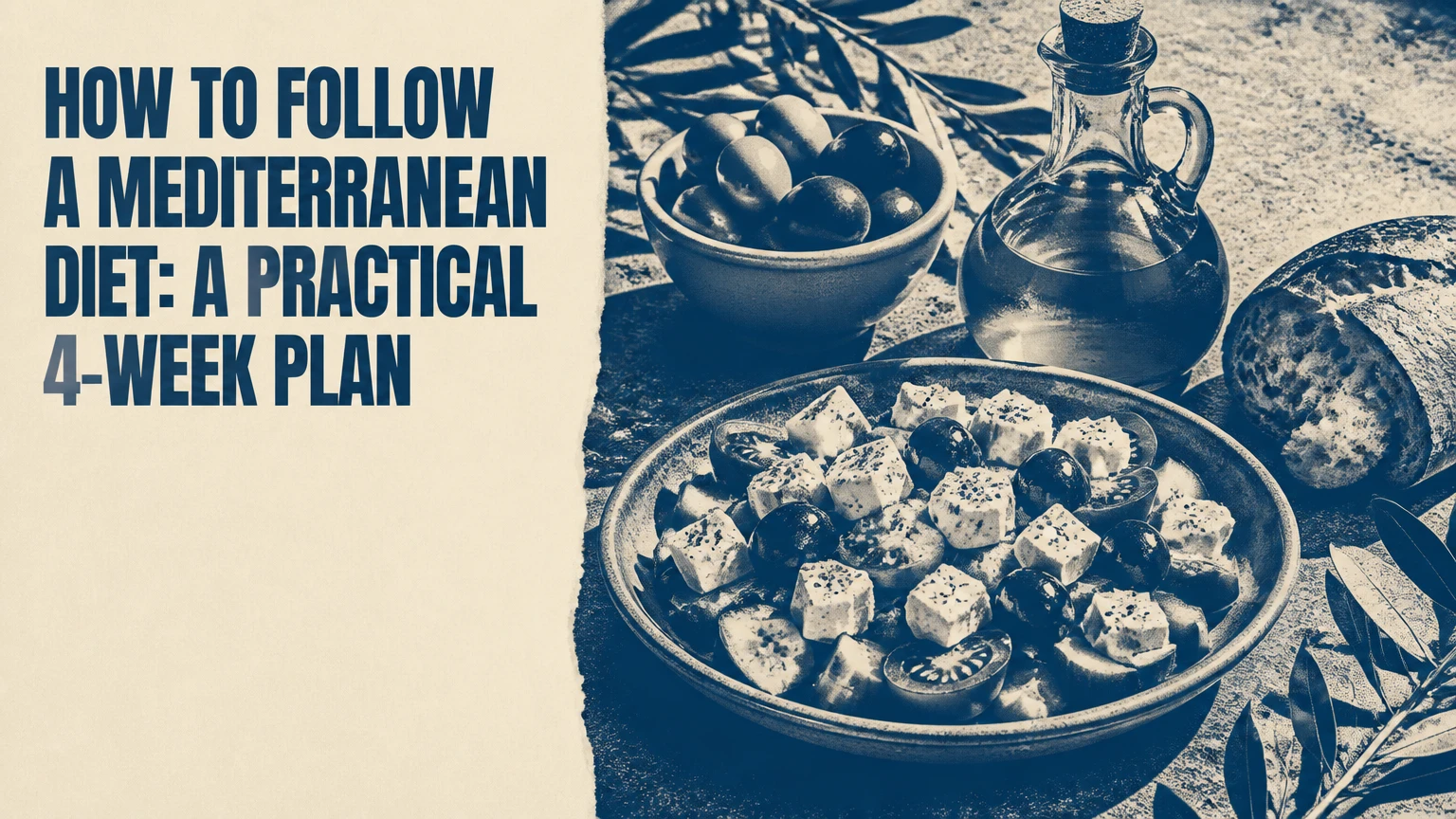
To follow a Mediterranean diet, build most meals around vegetables, fruit, beans, whole grains, nuts, olive oil, and herbs; eat fish regularly; choose moderate portions of yogurt, eggs, poultry, and cheese; and reserve red meat, sweets, and highly processed foods for occasional use. The pattern emphasizes consistency, not rigid calorie or macronutrient targets.
Key Facts at a Glance
- The Mediterranean diet is a food pattern based on traditional eating habits in Greece, southern Italy, Spain, and neighboring coastal regions.
- Extra-virgin olive oil, vegetables, legumes, whole grains, fruit, nuts, and seafood form the core food groups.
- A practical target is vegetables at two meals daily, legumes at least three times weekly, and fish twice weekly.
- The diet does not require eliminating bread, pasta, potatoes, dairy, seed oils, or all animal foods.
- Dietary fiber should approach at least 14 grams per 1,000 calories, increased gradually with adequate fluids.
- Health changes vary; blood pressure, blood lipids, glucose, and body weight depend on total intake, baseline health, medications, and activity.
What Is the Mediterranean Diet?
The Mediterranean diet is a plant-forward eating pattern that uses olive oil as a principal added fat and includes frequent legumes, vegetables, fruit, whole grains, nuts, seeds, and herbs. Fish, yogurt, eggs, poultry, and cheese appear in moderate amounts, while processed meat, red meat, sweets, and refined foods appear less often.
The pattern originated from several regional cuisines rather than one standardized menu. Traditional meals differed between Crete, Sicily, Andalusia, coastal Croatia, and North Africa, so there is no single authentic breakfast or mandatory ingredient. The common structure matters more than importing expensive specialty products.
Michael Pollan summarizes the central principle in In Defense of Food (2008): “Eat food. Not too much. Mostly plants.” The Mediterranean pattern applies that principle through beans, lentils, tomatoes, greens, whole grains, seafood, olive oil, and simple cooking methods.
The diet is not automatically low-calorie. Olive oil contains about 119 calories per tablespoon, and nuts contain roughly 160-200 calories per 28 grams, so generous portions can prevent weight loss. The diet is also not a detox, a prescription for inflammation, or a guarantee of disease prevention.
How Does a Mediterranean Diet Work?
The Mediterranean diet supports health by replacing many refined carbohydrates, processed meats, and saturated-fat-heavy foods with fiber-rich plants, unsaturated fats, seafood, and minimally processed meals. Those substitutions can improve dietary quality, but the result depends on the foods replaced, total energy intake, sodium, sleep, movement, and medical conditions.
Fiber Supports Glucose and Digestion
Beans, lentils, oats, barley, vegetables, berries, and whole-grain bread provide fermentable and non-fermentable fiber. Fiber slows digestion, increases stool bulk, and can reduce the glucose rise from a mixed meal. The U.S. dietary reference value of at least 14 grams per 1,000 calories is a useful floor, not a mandatory Mediterranean prescription.
Increase fiber over 7-14 days rather than moving suddenly from very little to several cups of beans. Add one serving daily, drink fluids consistently, and use canned beans rinsed under water when convenience matters.
Unsaturated Fats Replace Some Saturated Fats
Olive oil, walnuts, almonds, tahini, avocado, and oily fish supply monounsaturated and polyunsaturated fats. Replacing butter, fatty processed meat, or cream with these foods can improve the fat profile of a meal, particularly when the replacement does not increase overall calories.
The diet does not require banning all seed oils. Canola, soybean, sunflower, and other unsaturated oils can fit a healthy pattern, especially when they replace butter or solid animal fat. The stronger rule is to limit deep-fried packaged foods and repeatedly heated commercial frying oils.
Seafood Adds Omega-3 Fatty Acids
Salmon, sardines, trout, herring, and Atlantic mackerel provide EPA and DHA, long-chain omega-3 fats associated with triglyceride reduction and cardiovascular benefits. The American Heart Association recommends two servings of fish per week, especially fatty fish, within an overall healthy diet.
Fish is not a magic arterial cleanser, and supplements are not equivalent to a seafood meal. People taking anticoagulants, managing kidney disease, or choosing high-dose fish oil should ask a clinician about interactions and dosing.
What Evidence Supports the Pattern?
The PREDIMED randomized trial, published in the New England Journal of Medicine in 2013, compared Mediterranean diets supplemented with extra-virgin olive oil or nuts with a reduced-fat control diet among adults at high cardiovascular risk. The original report found fewer major cardiovascular events in the Mediterranean groups, although the study later underwent a correction because of randomization concerns at some sites.
That evidence supports a Mediterranean-style pattern, not a promise that a particular oil brand or meal plan will prevent an individual event. Mayo Clinic and the Harvard T.H. Chan School of Public Health both describe the pattern as rich in vegetables, fruit, whole grains, legumes, nuts, fish, and olive oil, with limited red meat and sweets.
Which Foods Should You Eat?
A Mediterranean diet works best when food frequency and meal composition are planned together. Use vegetables, legumes, whole grains, fruit, nuts, seeds, and olive oil often; choose seafood regularly; and treat sweets, processed meat, and alcohol as optional, limited foods rather than daily staples.
| Food group | Practical frequency | Typical serving | Examples |
|---|---|---|---|
| Non-starchy vegetables | 2-3 meals daily | 1-2 cups raw or 1 cup cooked | Spinach, broccoli, tomatoes, peppers |
| Legumes | 3-5 times weekly | 1/2-1 cup cooked | Lentils, chickpeas, black beans |
| Whole grains | 1-3 servings daily | 1/2 cup cooked or 1 slice bread | Oats, barley, bulgur, whole-wheat pasta |
| Fruit | 1-3 servings daily | 1 medium piece or 1 cup | Apple, orange, berries |
| Nuts and seeds | Most days | 28 grams | Walnuts, almonds, pumpkin seeds |
| Fish and seafood | 2 times weekly | 4 ounces cooked | Sardines, salmon, trout, shrimp |
| Yogurt or cheese | 0-2 servings daily | 3/4 cup yogurt or 28-40 g cheese | Plain yogurt, feta, kefir |
| Poultry and eggs | 0-4 times weekly | 2 eggs or 3-4 ounces poultry | Eggs, chicken, turkey |
| Red or processed meat | Occasional | 3-4 ounces | Beef, lamb, sausage |
| Sweets and sugary drinks | Occasional | Small portion | Pastry, candy, soda |
The table gives a flexible pattern, not a medical prescription. A person with high calorie needs may require larger portions, while someone pursuing weight loss may use a smaller grain or oil portion and increase non-starchy vegetables.
How Should You Build the Plate?
Use a plate with approximately half non-starchy vegetables, one quarter protein-rich food, and one quarter whole grains or starchy vegetables. Add one to two teaspoons of olive oil for cooking or dressing, then adjust the meal for hunger, activity, and medical nutrition needs.
A lentil bowl might contain two cups of roasted vegetables, three-quarters of a cup of lentils, one-half cup of bulgur, two teaspoons of olive oil, lemon, and herbs. A fish dinner could use four ounces of salmon, one-half cup of barley, a large salad, and plain yogurt with fruit.
The plate method is more useful for most beginners than a fixed 45%-55% carbohydrate, 30%-35% fat, and 15%-20% protein formula. Research trials use defined interventions, but traditional Mediterranean eating does not require tracking those percentages.
How to Follow a Mediterranean Diet in Four Weeks
A four-week transition gives you time to change the kitchen environment, meal structure, protein choices, and shopping habits. Most beginners can complete the first setup shop in 45-75 minutes, cook a batch of grains and legumes in 60-90 minutes, and assemble weekday meals in 10-20 minutes.
Before You Start
| Requirement | Typical target | Practical example |
|---|---|---|
| Weekly planning time | 15-20 minutes | Select 3 dinners and 2 lunches |
| Batch-prep time | 60-90 minutes | Cook 3 cups grains and roast vegetables |
| Starter food cost | $55-$110 per adult weekly | Beans, eggs, produce, grains, 2 fish meals |
| Daily assembly time | 10-20 minutes | Combine leftovers, greens, beans, dressing |
| Essential equipment | 4 items | Sheet pan, pot, knife, storage containers |
| First-week objective | 3 changes | Add vegetables, beans, and olive oil |
Step 1: Rebuild the Kitchen
Buy vegetables, fruit, beans, lentils, whole grains, nuts, plain yogurt, eggs, olive oil, and two seafood options before purchasing specialty products. Keep frozen vegetables, canned beans, canned sardines, oats, and brown rice available for low-preparation meals.
Check labels on bread, cereal, pasta sauce, and canned foods. Choose products with whole-grain ingredients, limited added sugar, and manageable sodium. You do not need imported Greek ingredients to follow the pattern.
You will know this step worked when at least five quick meal components are visible in your kitchen. A common mistake is buying fresh produce without a plan, then allowing it to spoil; frozen spinach, frozen broccoli, and canned tomatoes prevent that failure.
Step 2: Add Plants to Existing Meals
Add one vegetable or legume to breakfast, lunch, and dinner before removing familiar foods. Stir spinach into eggs, add chickpeas to salad, replace one-quarter of ground meat with lentils in pasta sauce, or serve fruit with plain yogurt.
Aim for two vegetable servings on the first three days, then increase toward four or more daily servings as tolerated. Keep the skin on edible produce when practical because peeling often removes fiber.
You will know this step worked when half of at least one main meal consists of vegetables. A common mistake is counting tomato sauce or a few lettuce leaves as a full vegetable serving; use measurable portions.
Step 3: Replace the Main Cooking Fat
Use one to two teaspoons of olive oil for a single pan of vegetables or one tablespoon for a salad serving four people. Extra-virgin olive oil is appropriate for dressings and moderate-heat cooking, while refined olive oil and other unsaturated oils are also acceptable cooking choices.
Do not pour directly from a large bottle when calories matter. Measure oil for two weeks, because the difference between one tablespoon and four tablespoons is about 357 calories per day.
You will know this step worked when butter, bacon grease, or creamy dressing is no longer the default fat. A common mistake is assuming unlimited olive oil remains compatible with weight loss.
Step 4: Schedule Legumes and Seafood
Plan three legume meals and two fish meals during week three or four. Use lentil soup, bean salad, chickpea stew, sardines on whole-grain toast, or baked salmon with vegetables.
A standard fish serving is about four ounces cooked. Choose lower-mercury options such as salmon, sardines, trout, shrimp, pollock, and canned light tuna more often; limit high-mercury fish such as shark, swordfish, king mackerel, and marlin, following local food-safety guidance.
You will know this step worked when protein no longer means chicken or red meat at every meal. A common mistake is increasing fish but keeping processed meat several times weekly, which leaves the main substitution incomplete.
Step 5: Reserve Refined Foods and Sweets
Keep white bread, pastries, sugar-sweetened drinks, chips, and processed meat occasional rather than automatic daily foods. You can still eat pasta or bread, but pair them with vegetables, beans, fish, or olive oil instead of eating large portions alone.
A useful starting rule is one small sweet portion one or two times weekly, then adjust for personal goals. This is a behavioral limit, not a universal clinical threshold.
You will know this step worked when most snacks are fruit, nuts, yogurt, vegetables, or leftovers. A common mistake is replacing sweets with oversized “healthy” energy balls, granola, or nut portions that remain calorie-dense.
What Does a Typical Day Look Like?
A typical Mediterranean day includes oats or yogurt with fruit, a bean or fish-based lunch, a vegetable-centered dinner, and snacks chosen from fruit, nuts, or plain dairy. Portion sizes should reflect body size, hunger, activity, diabetes treatment, and weight goals rather than a universal menu.
| Meal | Example menu | Approximate preparation | Useful adjustment |
|---|---|---|---|
| Breakfast | Oats, berries, walnuts, plain yogurt | 5 minutes | Add eggs for higher protein |
| Lunch | Chickpea salad, whole-grain pita, cucumber | 10 minutes | Use tuna instead of chickpeas |
| Snack | Apple and 28 g almonds | 2 minutes | Use yogurt if reducing fat |
| Dinner | 4 oz salmon, 1/2 cup barley, broccoli | 25 minutes | Use lentils for vegetarian meals |
| Dessert | Orange or plain yogurt with cinnamon | 2 minutes | Add a small sweet once weekly |
For muscle maintenance, distribute protein across meals rather than concentrating it at dinner. The Mediterranean pattern can support higher protein needs through Greek yogurt, eggs, fish, poultry, tofu, tempeh, lentils, beans, and protein-fortified foods.
For diabetes, pair carbohydrate foods with fiber and protein, monitor glucose according to the care plan, and avoid making medication changes without a clinician. A dietitian can tailor carbohydrate portions and timing to insulin or sulfonylurea treatment.
How Much Does It Cost and How Long Does Preparation Take?
A typical Mediterranean-style grocery plan costs about $55-$110 per adult per week in the United States, depending on region, seafood frequency, organic purchasing, and the use of convenience foods. Beans, lentils, oats, frozen vegetables, eggs, canned fish, and seasonal produce reduce cost more effectively than buying premium imported products.
| Budget strategy | Typical cost | Time saved | Best use |
|---|---|---|---|
| Dried beans and lentils | $1-$3 per pound | 0 minutes | Batch cooking |
| Canned legumes | $1-$2 per 15-ounce can | 30-60 minutes | Fast lunches |
| Frozen vegetables | $1.50-$4 per bag | 10-20 minutes | Weeknight dinners |
| Canned sardines or light tuna | $1.50-$4 per serving | 15-25 minutes | No-cook meals |
| Fresh salmon | $8-$18 per pound | 10-15 minutes | Weekly fish dinner |
| Prewashed greens | $3-$6 per container | 5-10 minutes | Lunch assembly |
Typical batch preparation takes 60-90 minutes weekly. Cook grains, wash greens, roast two trays of vegetables, portion nuts, and prepare a lemon-olive-oil dressing. Food safety still matters: refrigerate cooked foods within two hours, keep leftovers at 40°F or below, and use most cooked meals within three to four days.
Is the Mediterranean Diet Good for Weight Loss?
The Mediterranean diet can support weight loss when it lowers total calorie intake through higher-fiber foods, adequate protein, fewer liquid calories, and controlled portions of oils, nuts, refined grains, and sweets. The label alone does not cause weight loss, and large servings of olive oil, cheese, bread, or nuts can create a calorie surplus.
Use these adjustments when weight is the main goal:
- Measure olive oil for 14 days, using one to two tablespoons daily as a starting range.
- Fill at least half the plate with non-starchy vegetables.
- Choose one primary starch per meal, such as bread, rice, pasta, or potatoes.
- Include 20-35 grams of protein at meals when appropriate for your body and care plan.
- Weigh weekly under similar conditions instead of reacting to one day’s fluctuation.
A realistic rate for many adults is about 0.5-2 pounds weekly when a sustainable calorie deficit exists, although water shifts can obscure progress during the first month. Blood pressure and glucose may change sooner than body composition, while lipid results commonly require several weeks and depend on baseline treatment.
The diet is not ideal for rapid, highly restrictive weight loss. It works better for people who value food variety, repeatable meals, and gradual changes.
How Does It Compare With Low-Carb and Low-Fat Diets?
The Mediterranean diet is usually the better default for long-term flexibility and cardiovascular food quality, while a low-carbohydrate plan may suit someone who prefers fewer grains and can maintain adequate fiber; a low-fat plan may fit specific clinical guidance but often requires careful attention to food quality.
| Criterion | Mediterranean pattern | Low-carbohydrate pattern | Low-fat pattern |
|---|---|---|---|
| Main fat sources | Olive oil, nuts, fish | Olive oil, meat, dairy, nuts | Reduced oils, lean proteins |
| Typical carbohydrate emphasis | Whole grains, beans, fruit | Vegetables, selected legumes | Grains, fruit, low-fat products |
| Fish frequency | About 2 servings weekly | 1-3 servings weekly | Variable, often 1-2 servings |
| Plant-fiber sources | Beans, oats, barley, vegetables | Non-starchy vegetables, seeds | Grains, beans, fruit |
| Weight-loss mechanism | Portion control and food quality | Carbohydrate reduction and appetite changes | Lower fat density and portions |
| Main risk | Overeating oils and nuts | Low fiber or high saturated fat | Refined low-fat products |
| Best fit | Flexible long-term eating | Carb-responsive preference | Clinically directed fat reduction |
Neither low-carb nor low-fat automatically means healthy. Compare actual foods, fiber, saturated fat, sodium, and adherence rather than diet names.
How Can You Adapt the Diet?
The Mediterranean pattern adapts easily because its core foods include legumes, vegetables, grains, nuts, and flexible protein sources. Replace ingredients by function, not by trying to reproduce a specific regional recipe.
- Vegetarian: Use lentils, chickpeas, beans, tofu, tempeh, eggs, Greek yogurt, and fortified dairy alternatives. Monitor vitamin B12, iron, iodine, calcium, and omega-3 intake.
- Vegan: Use legumes or soy foods at each main meal and choose B12-fortified foods or a clinician-approved supplement.
- Gluten-free: Replace wheat bread, couscous, and regular pasta with certified gluten-free oats, quinoa, buckwheat, brown rice, potatoes, or corn.
- Dairy-free: Use calcium-fortified unsweetened soy milk, tahini, beans, leafy greens, and fish with edible bones such as sardines.
- Low-carb: Reduce grains and large potato portions while retaining vegetables, legumes in individualized amounts, olive oil, fish, nuts, and seeds.
- Low-sodium: Choose no-salt-added beans, rinse canned foods, limit feta and olives, and season with lemon, garlic, vinegar, paprika, and herbs.
Alcohol is not required. People who do not drink should not start for Mediterranean diet benefits, and alcohol may be unsafe with pregnancy, liver disease, certain medications, or a history of alcohol use disorder.
What Are Common Mistakes?
The most common Mediterranean diet mistakes involve portions, substitutions, and false restrictions rather than a lack of exotic ingredients. Correcting one high-impact mistake at a time usually improves adherence more than redesigning every meal.
Treating Olive Oil as Unlimited
Olive oil is nutritious but calorie-dense. Measure one tablespoon, use a spray only if it permits even coverage, and dilute dressings with lemon juice or vinegar.
Removing All Seed Oils
Removing seed oils is unnecessary for most people. Replace heavily fried packaged foods, not every unsaturated oil, because canola or soybean oil can fit a heart-healthy pattern.
Eating Mediterranean-Style Restaurant Foods Daily
Large portions of creamy hummus, pita, fried falafel, feta, oil-rich dips, and dessert can exceed energy needs. Order grilled fish or beans, vegetables, one starch, and sauce on the side.
Increasing Fiber Too Quickly
Sudden large servings of beans can cause bloating. Start with one-quarter to one-half cup, rinse canned beans, choose lentils, and increase portions over one to two weeks.
Ignoring Sodium
Feta, olives, canned soup, cured fish, jarred sauces, and restaurant food can make sodium intake high despite otherwise healthy ingredients. Compare labels and use rinsed, no-salt-added options.
Assuming Every Whole-Grain Product Is Equivalent
“Multigrain” does not guarantee whole grain. Look for “100% whole grain” or a whole-grain ingredient listed first, then compare fiber and added sugar per serving.
When Should You Seek Medical Guidance?
People with kidney disease, insulin-treated diabetes, advanced liver disease, eating-disorder recovery, food allergies, pregnancy, or medication-sensitive conditions should personalize the diet with a physician or registered dietitian. The pattern is generally health-supportive, but healthy ingredients can still affect potassium, carbohydrate timing, sodium, vitamin K, or medication response.
Warfarin users should keep vitamin K-rich greens consistent rather than eliminating them without medical advice. People with fish allergies need plant omega-3 sources and individualized guidance. Children and older adults may require higher energy or protein density than a generic plate method provides.
Frequently Asked Questions
Can I eat bread and pasta on a Mediterranean diet?
Yes. Choose whole-grain bread, whole-wheat pasta, barley, bulgur, or another minimally processed grain, and pair the starch with vegetables, beans, fish, or olive oil. A practical portion is one slice of bread or one-half to one cup of cooked pasta, adjusted for hunger, activity, glucose control, and total meal composition.
How often can I eat red meat?
Many Mediterranean-style plans reserve red meat for occasional meals, such as once weekly or less, and limit processed meat more strictly. Use beans, lentils, fish, eggs, poultry, or tofu more often. The exact frequency matters less than the replacement food, portion size, cooking method, and overall dietary pattern.
Can I follow this diet without eating fish?
Yes. Replace seafood with lentils, beans, tofu, tempeh, walnuts, chia seeds, ground flaxseed, and fortified foods. Fish supplies EPA and DHA, so people avoiding seafood should discuss algae-based DHA and EPA or other options with a clinician, especially during pregnancy or when treating a medical condition.
Do I need to buy extra-virgin olive oil from Greece or Italy?
No. Origin does not determine whether an oil fits the diet. Choose a reputable extra-virgin olive oil with a harvest or best-before date, store it away from heat and light, and use canola or other unsaturated oils when they are more affordable or better suited to cooking.
How quickly will I see results?
Meal quality and digestion can change within days, while body weight, blood pressure, glucose, and cholesterol may require several weeks or longer. A four-week trial is long enough to assess adherence, hunger, bowel comfort, and meal practicality, but laboratory and medication decisions require clinical monitoring.
The Bottom Line
To follow a Mediterranean diet, make plants and legumes the daily foundation, use olive oil and other unsaturated fats in measured portions, eat fish about twice weekly when appropriate, choose whole grains, and keep sweets, processed meat, and refined foods occasional. Start with the four-week plan, measure calorie-dense foods temporarily, and adapt portions to your health goal. The most important habit is a repeatable meal structure, not perfect regional authenticity.