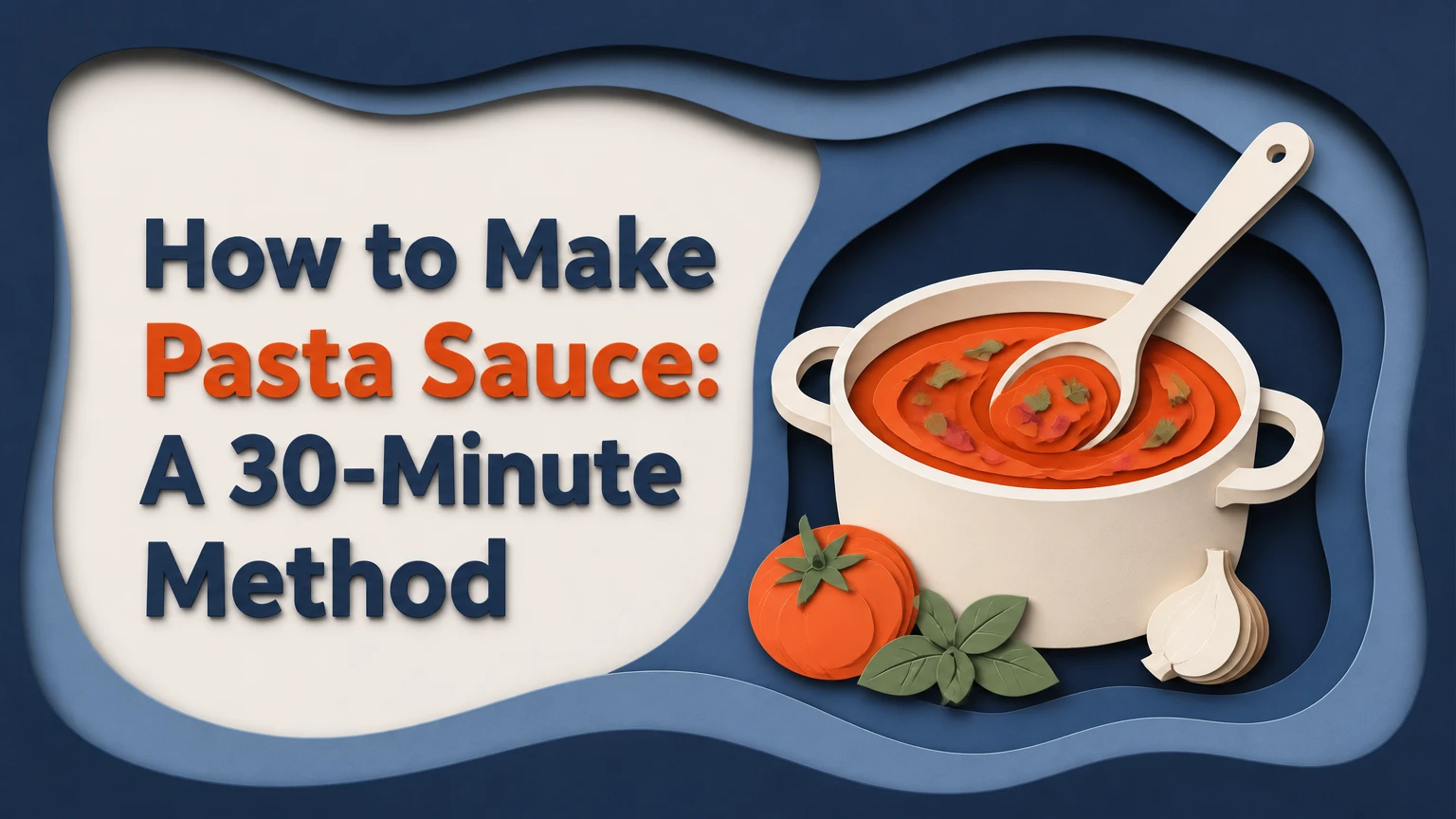
Pasta sauce is made by cooking flavorful ingredients, balancing salt, fat, acid, and water, then tossing the sauce with undercooked pasta and starchy cooking water. For a dependable 30-minute tomato sauce, gently infuse garlic in olive oil, simmer crushed tomatoes for 20-25 minutes, and finish the pasta in the sauce until it clings.
Key Facts at a Glance
A 28-ounce can of crushed or hand-crushed whole tomatoes makes about 4 servings of sauce.
A typical tomato sauce takes 25-35 minutes and costs approximately $4-$8 for four portions.
Finishing pasta in the sauce creates a better coating than spooning sauce over drained noodles.
Reserve at least 1 cup of pasta water before draining, even if you expect to use only a few tablespoons.
Dry pasta usually needs 75-100 grams per person; fresh pasta generally needs 100-125 grams.
Refrigerate cooked sauce within 2 hours and use it within 3-4 days, following USDA storage guidance.
What Makes Pasta Sauce Work?
Pasta sauce works when water, fat, seasoning, and dissolved starch form a cohesive coating around the pasta. Tomato solids provide body and acidity, olive oil carries aromatic compounds, and pasta water contributes starch that helps the liquid cling instead of collecting beneath the noodles.
A sauce can be thick in the pan and still eat watery if the pasta is not finished in it. The final toss matters because pasta releases surface starch while it absorbs sauce. A small amount of cooking water then loosens the mixture enough for movement while its starch helps connect the watery and fatty phases.
The best texture is usually slightly looser than the final plate requires. Pasta continues absorbing liquid for several minutes after cooking, especially with ridged shapes such as rigatoni and penne. Sauce that looks perfect before plating may become dry after standing.
Salt has two jobs. Salted cooking water seasons the pasta internally, while salt added to sauce controls the final flavor. The USDA does not prescribe one universal pasta-water salinity, so use a practical kitchen range of 8-12 grams of salt per liter of water and adjust for salty cheese, olives, anchovies, or cured meat.
How Do You Make Pasta Sauce?
The most reliable pasta sauce method takes seven active steps and about 30 minutes: prepare the ingredients, infuse aromatics, add tomatoes, reduce the sauce, cook pasta, combine both in a pan, and adjust the finished texture. Temperature control and the final pasta toss determine whether the result tastes integrated or greasy.
Before You Start
| Requirement | Typical amount for 4 servings | Practical specification |
|---|---|---|
| Dry pasta | 300-400 g | Spaghetti, linguine, penne, or rigatoni |
| Tomatoes | 1 can, 28 oz or 794 g | Whole peeled, crushed by hand, or passata |
| Olive oil | 3 tbsp, 45 ml | Extra-virgin for finishing, regular olive oil for cooking |
| Garlic | 3-4 cloves | Thinly sliced or finely minced |
| Pasta water | 1 cup, 240 ml reserved | Use 2-4 tbsp initially |
| Salt | 8-12 g per liter water | Reduce if using Pecorino or anchovies |
| Equipment | 1 pot and 1 wide skillet | A 10-12 inch skillet gives pasta room to toss |
| Time and cost | 25-35 minutes, $4-$8 | Typical United States grocery range for four portions |
Step 1: Prepare the Aromatics
Add 3 tablespoons of olive oil and 3-4 sliced garlic cloves to a cold, wide skillet. Set the burner to medium-low and heat for 2-3 minutes, stirring once or twice, until the garlic smells fragrant and turns pale gold.
You will know it worked when the oil smells distinctly garlicky and the slices remain light rather than brown. Garlic continues cooking from residual heat, so remove the skillet briefly if the edges color quickly. Burned garlic cannot be repaired with extra tomato.
Common mistake: Starting with high heat. High heat browns minced garlic before the oil absorbs its flavor, producing bitterness instead of a rounded aroma.
Step 2: Add Heat and Tomatoes
Stir in 1/2 teaspoon of red pepper flakes for moderate warmth, then cook them in the oil for 20-30 seconds. Add the tomatoes, 1 teaspoon of kosher salt, and 1/4 teaspoon of black pepper if desired.
Use hand-crushed whole peeled tomatoes for a textured sauce, passata for a smooth sauce, or diced tomatoes for a chunkier result. A 28-ounce can contains enough tomato for roughly 300-400 grams of pasta, depending on how heavily you sauce each portion.
Common mistake: Adding dried herbs before the tomatoes. Dried oregano or chili can scorch in exposed oil; add them with the tomatoes or dilute them with a spoonful of liquid.
Step 3: Simmer the Tomato Sauce
Bring the tomatoes to a gentle bubble, then reduce the heat to low and simmer uncovered for 20-25 minutes. Stir every 5 minutes and scrape the bottom of the skillet, especially when using a wide pan that evaporates water quickly.
The sauce is ready when it has lost its raw canned aroma, looks thicker at the edges, and leaves a temporary trail when a spoon moves through it. Oil appearing on the surface can indicate reduction, but oil separation alone is not a required doneness test. Taste instead.
A standard stovetop tomato sauce usually reduces by about 20-30% in volume over this period, though the result changes with pan width, tomato variety, and burner strength. Add 2-4 tablespoons of water if the sauce becomes pasty before the pasta is ready.
Step 4: Cook the Pasta
Boil the pasta in a separate pot until it is about 2 minutes short of the package’s stated time. Stir during the first minute to prevent sticking, then test a strand or piece before draining.
Pasta should have a firm center because it finishes cooking in the sauce. Reserve at least 1 cup of cooking water immediately before draining. Do not rinse the pasta, and do not add oil to the cooking water, because both actions reduce the starchy surface that helps sauce adhere.
The pasta water does not need to be violently cloudy to work. Water from a large pot with a low pasta-to-water ratio may contain less starch, so reserve more and rely on vigorous tossing to develop the coating.
Step 5: Finish the Pasta in the Sauce
Transfer the drained pasta directly into the skillet. Add 1/4 cup of reserved pasta water and toss over medium-high heat for 60-90 seconds, using tongs for long noodles or a broad spoon for short shapes.
You will know the emulsion is working when the sauce becomes glossy, coats the pasta evenly, and leaves little liquid in the bottom of the pan. Add another tablespoon of pasta water only when the mixture looks tight. Too much water at once makes the sauce thin and forces another reduction.
Turn off the heat before adding 2 tablespoons of grated Parmigiano-Reggiano, torn basil, or a drizzle of olive oil. High heat is useful for combining tomato sauce and pasta, but it can make cheese clump and fresh herbs lose their aroma.
Step 6: Balance the Flavor
Taste one sauced piece of pasta, not the sauce alone. Add salt if the flavor tastes flat, a teaspoon of olive oil if the finish feels harsh, or 1-2 teaspoons of pasta water if the sauce feels dry.
Acid should sharpen the dish without dominating it. If the tomatoes taste dull rather than sour, a small amount of red wine vinegar or lemon juice can add brightness, but use no more than 1/2 teaspoon at a time. If the sauce tastes sharply acidic, continue simmering before reaching for sugar or baking soda.
Step 7: Plate and Serve Immediately
Twist long pasta into warmed bowls or spoon short pasta into shallow plates. Finish with basil, grated cheese, black pepper, or a measured drizzle of olive oil.
Pasta sauce continues thickening as it cools. Serve within 2-3 minutes of tossing for the loosest, glossiest texture. If the plated pasta sits for 10 minutes, loosen each portion with 1 tablespoon of hot water rather than adding raw oil.
Which Pasta Sauce Style Should You Make?
The best pasta sauce style depends on time, ingredients, dietary needs, and the pasta shape available. Marinara is the most adaptable starting point, aglio e olio is the fastest pantry sauce, ragù rewards long cooking, and emulsified cheese sauces require the tightest temperature control.
| Sauce style | Core ingredients | Typical time | Best pasta pairing | Main technique |
|---|---|---|---|---|
| Marinara | Tomato, garlic, olive oil, basil | 25-35 min | Spaghetti, penne | Reduction and final toss |
| Aglio e olio | Olive oil, garlic, chili, pasta water | 15-20 min | Spaghetti, linguine | Oil-water emulsion |
| Alfredo | Butter, Parmigiano-Reggiano, pasta water | 10-15 min | Fettuccine, tagliatelle | Low-temperature cheese emulsion |
| Carbonara | Egg, Pecorino Romano, guanciale | 15-20 min | Spaghetti, rigatoni | Residual-heat emulsion |
| Cacio e pepe | Pecorino Romano, pepper, pasta water | 15-20 min | Tonnarelli, spaghetti | Cheese and starch suspension |
| Pesto | Basil, nuts, garlic, cheese, olive oil | 10-15 min | Trofie, linguine, fusilli | Cold blending and dilution |
| Ragù Bolognese | Meat, soffritto, wine, tomato, milk | 2.5-4 hr | Tagliatelle, lasagna | Slow reduction and tenderizing |
| Alle vongole | Clams, garlic, wine, olive oil | 25-35 min | Linguine, spaghetti | Shellfish steaming and reduction |
When Is Marinara the Best Choice?
Marinara is the best choice when you want a versatile red sauce in under 35 minutes. Its tomato acidity balances cheese, meat, and fried ingredients, while its smooth or textured consistency works with both long and short dried pasta.
Use pomodoro when you prefer a smoother, thicker tomato sauce with fewer aromatics. Use fra diavolo when red pepper is central to the dish. Use ragù when the sauce must carry a meal with substantial protein and you can spare several hours.
What Is Different About Alfredo and Cheese Sauces?
Traditional Roman-style Alfredo relies on butter, finely grated Parmigiano-Reggiano, and pasta water, while many American versions use heavy cream, garlic, and sometimes cream cheese. Both can work, but the cream version is more forgiving during reheating and has a heavier mouthfeel.
Béchamel uses a cooked butter-flour roux and milk, making it suitable for lasagna and baked pasta. Four-cheese sauce depends on the melting behavior of each cheese, so mozzarella, Fontina, Gorgonzola, and Parmesan should be added over low or residual heat rather than boiled.
Which Sauce Is Fastest and Cheapest?
Aglio e olio is usually the fastest and least expensive sauce because it uses pantry ingredients and takes about 15-20 minutes. A typical four-serving batch costs approximately $2-$5 when olive oil, garlic, chili, and pasta are already available.
Pesto costs more because pine nuts, basil, and hard cheese are expensive relative to canned tomatoes. Ragù costs the most per batch and requires the longest cooking time, although its dense texture makes it practical for freezing in small portions.
How Should You Match Pasta and Sauce?
Pasta shape should match sauce thickness, surface area, and the size of the ingredients in the pan. Thin sauces cling to long strands, thick meat sauces fit ridged tubes, and chunky vegetables need shapes with hollows or folds that catch pieces.
| Pasta shape | Sauce texture | Recommended examples | Why it works |
|---|---|---|---|
| Spaghetti | Light to medium | Marinara, carbonara, aglio e olio | Long surface carries fluid emulsions |
| Linguine | Light seafood | Alle vongole, lemon cream | Flat strands hold oil and shellfish juices |
| Penne rigate | Medium to thick | Arrabbiata, marinara, sausage ragù | Ridges and tubes trap sauce |
| Rigatoni | Thick and chunky | Bolognese, four-cheese | Large tube supports meat and vegetables |
| Tagliatelle | Dense and silky | Ragù, mushroom cream | Broad surface matches rich sauces |
| Fusilli | Thick or textured | Pesto, vegetable sauce | Spirals hold nuts, herbs, and small pieces |
| Ravioli | Light finishing sauce | Brown butter, sage, tomato | Heavy sauce can hide filled-pasta flavor |
Fresh pasta cooks faster and releases starch differently from dried pasta. Start checking fresh noodles after 2-4 minutes, and use less sauce because delicate sheets and ribbons can become overwhelmed. Filled pasta generally needs a gentle sauce that does not bury the filling.
How Do You Scale Pasta Sauce?
For four servings, use 300-400 grams of dry pasta and approximately 600-800 grams of finished sauce. Scale ingredients proportionally, but reduce liquids less aggressively in a small pan and increase pan width rather than simply turning up the heat for a large batch.
| Servings | Dry pasta | Canned tomatoes | Olive oil | Reserved water |
|---|---|---|---|---|
| 1 | 75-100 g | 200 g | 2 tsp | 1/4 cup |
| 2 | 150-200 g | 400 g | 1 1/2 tbsp | 1/2 cup |
| 4 | 300-400 g | 794 g | 3 tbsp | 1 cup |
| 8 | 600-800 g | 1.6 kg | 6 tbsp | 2 cups |
A single-serving pan reduces quickly, so check it after 12-15 minutes rather than automatically simmering for 25 minutes. An eight-serving batch may need 30-40 minutes in a wide Dutch oven, but pasta should still be combined in batches if the skillet cannot hold it comfortably.
Can You Make Pasta Sauce Without Common Ingredients?
Pasta sauce can be made without dairy, meat, fresh tomatoes, or gluten-containing pasta by changing the sauce’s source of body. Tomato paste, blended beans, nuts, vegetables, olive oil, and pasta water can replace some functions of cream, cheese, or meat without pretending they produce identical flavors.
- Dairy-free: Use olive oil, toasted breadcrumbs, or cashew cream. Nutritional yeast adds savory notes but does not melt like Parmesan.
- Vegan: Replace anchovies and meat with mushrooms, lentils, olives, capers, or miso. Check that the pasta contains no egg.
- Gluten-free: Use rice, corn, chickpea, or lentil pasta. These pastas can release more surface starch, so add cooking water gradually.
- No canned tomatoes: Cook 900 grams of ripe fresh tomatoes for four servings, allowing 35-45 minutes for adequate water loss.
- No garlic: Use shallot, scallion, fennel, or garlic-infused oil. Garlic-infused oil gives aroma without solid garlic pieces.
- Low sodium: Salt the sauce late, use unsalted stock, and reduce Pecorino, olives, anchovies, and cured meat.
How Do You Store and Reheat Pasta Sauce?
Tomato, ragù, and vegetable sauces store better than freshly emulsified Alfredo, carbonara, and cacio e pepe. Cool sauce in a shallow container, refrigerate it promptly, and reheat it gently with a small amount of water rather than boiling it repeatedly.
| Sauce | Refrigerator | Freezer | Reheating method |
|---|---|---|---|
| Marinara | 3-4 days | 2-3 months | Simmer gently, add water |
| Bolognese ragù | 3-4 days | 2-3 months | Thaw, heat to steaming, stir |
| Pesto | 3-5 days | 1-2 months | Thaw cold, dilute with pasta water |
| Alfredo | 1-2 days | Not recommended | Low heat, whisk with water |
| Carbonara | Same day preferred | Not recommended | Make fresh instead |
| Béchamel | 3-4 days | 1-2 months | Low heat, whisk in milk |
The USDA recommends refrigerating perishable cooked food within 2 hours, or within 1 hour when ambient temperature exceeds 90°F (32°C). Reheat leftovers to 165°F (74°C), the USDA’s recommended safe internal temperature, while recognizing that egg-and-cheese sauces may lose their intended texture before they reach a boil.
What Are the Most Common Pasta Sauce Problems?
Most pasta sauce failures come from incorrect heat, excessive liquid, poor timing, or insufficient finishing in the pan. Each problem has a specific recovery method, and adding random ingredients usually makes the balance harder to restore.
Why Is the Sauce Watery?
Watery sauce usually results from under-reduction, too much pasta water, a narrow cooking window, or pasta that was not tossed with the sauce. Simmer the sauce uncovered for 3-8 minutes, then add pasta and only 1 tablespoon of cooking water at a time.
Do not add flour directly to tomato sauce. Flour creates a dull, pasty texture and masks acidity rather than concentrating flavor.
Why Is the Sauce Greasy?
Greasy sauce indicates that fat has not dispersed through enough water and starch. Add 1 tablespoon of warm pasta water, toss vigorously over moderate heat, and repeat once; a small amount of starchy liquid can reconnect the phases.
Oil separation in a tomato sauce is not automatically a failure. A sauce can contain visible oil and still coat pasta well, but a glossy pool left at the bottom of the plate signals that the final emulsion needs more tossing or dilution.
Why Did the Cheese Sauce Become Grainy?
Grainy cheese sauce usually results from excessive heat, coarse grating, aged cheese added too quickly, or pre-shredded cheese containing anti-caking agents. Remove the pan from heat, add finely grated cheese gradually, and loosen with warm, not boiling, pasta water.
Boiling water can tighten egg proteins or shock a cheese emulsion. Warm starchy water around 140-170°F (60-77°C) is easier to control when repairing a delicate sauce.
How Do You Fix Sour Tomato Sauce?
Fix sour tomato sauce by first simmering it longer and checking whether the tomatoes are balanced with enough salt and fat. If the sauce remains sharply acidic, add 1/4 teaspoon sugar or a tiny pinch of baking soda, tasting after each addition.
Baking soda neutralizes acidity chemically, but too much creates a flat, soapy flavor. A peeled carrot may add sweetness during simmering, but it does not absorb acid; remove it before serving and treat the method as flavor adjustment, not acid removal.
Why Did Garlic Turn Bitter?
Garlic turns bitter when its edges brown or blacken before the tomato or other liquid is added. Discard heavily burned garlic and restart with lower heat, because tomato, sugar, or extra oil cannot remove the bitter compounds.
Thinly sliced garlic is easier to monitor than fine mince. Add chili flakes after the garlic becomes fragrant, not at the beginning of a high-heat fry.
Which Style Fits Your Situation?
Choose marinara for a first attempt, aglio e olio for a nearly empty pantry, ragù for batch cooking, carbonara for a technical challenge, and pesto for a no-simmer meal. The right choice depends more on available time and temperature control than on the sauce’s reputation.
- Absolute beginner: Make marinara with canned tomatoes, garlic, olive oil, and basil. The 25-35 minute method gives clear checkpoints and tolerates small seasoning errors.
- Busy cook: Make aglio e olio or a 15-minute passata sauce. Both avoid long reduction and use ingredients that store well.
- Meal prepper: Make ragù or a double batch of marinara. Freeze sauce in 1-2 cup portions so one serving can thaw quickly.
- Vegetarian or vegan cook: Use tomato sauce, pesto made without cheese, or mushroom-walnut ragù. Add toasted breadcrumbs for savory texture.
- Culinary enthusiast: Try carbonara or cacio e pepe. Both require precise heat control because the sauce thickens through residual heat rather than prolonged simmering.
Expert Rules for Better Results
Experienced cooks make pasta sauce more reliable by controlling variables that recipes often leave vague. Three rules matter especially: use a wide pan, finish pasta before it is fully tender, and season the sauce in stages.
- Use pan width to control reduction. A 12-inch skillet evaporates water faster than a small saucepan, so reduce the cooking time or add liquid when necessary. Heat intensity alone cannot reproduce the same concentration.
- Keep a reserve of pasta water. Pasta water is a functional ingredient, not kitchen waste. It adjusts viscosity, carries starch, and helps emulsify fat without adding another thickener.
- Taste after combining. Pasta dilutes sauce and absorbs salt. A tomato sauce that tastes perfectly seasoned before the pasta enters may taste under-seasoned at the table.
- Grate hard cheese finely. Fine shreds disperse quickly at low temperature; thick shards remain cool in the center and encourage clumping.
- Use sugar only for balance. Sugar can hide excessive acidity but cannot repair watery tomatoes, burned garlic, or insufficient reduction.
Frequently Asked Questions
Can I make pasta sauce with tomato paste alone?
Yes, but tomato paste needs dilution and cooking. Fry 2-3 tablespoons of paste in 1 tablespoon of olive oil for 1-2 minutes, add 1-1 1/2 cups of water or stock, and simmer for 10-15 minutes. The result is concentrated and savory, but less fresh than sauce made with crushed tomatoes.
Should I add cream to tomato pasta sauce?
Add cream when you want a softer, richer sauce with reduced acidity, not when a tomato sauce merely tastes undercooked. Stir 1/4-1/2 cup of heavy cream into four servings after reducing the tomatoes, then avoid a hard boil so the mixture remains smooth.
Can I make pasta sauce ahead of time?
Tomato, vegetable, and meat sauces are well suited to advance preparation. Cook them one to three days ahead, chill them promptly, and reheat gently before combining with freshly cooked pasta. Prepare carbonara, cacio e pepe, and classic Alfredo immediately before serving because their emulsions deteriorate quickly.
How much sauce should I use per serving?
Use approximately 150-200 grams of tomato sauce for 75-100 grams of dry pasta. Start with less for delicate fresh pasta and add more after tossing. Excess sauce can overwhelm the pasta’s texture, while a tablespoon of reserved water can correct a slightly tight coating.
Is homemade pasta sauce healthier than jarred sauce?
Homemade sauce gives you direct control over sodium, added sugar, oil, cheese, and portion size, but health depends on the ingredients and serving. A jarred sauce can be nutritionally reasonable; compare labels for sodium, added sugar, saturated fat, and serving size rather than assuming homemade is always superior.
Can I freeze pasta sauce with meat or vegetables?
Freeze tomato, meat, and vegetable sauces in airtight containers or flat freezer bags for about 2-3 months for best quality. Freeze the sauce separately from pasta, label the date and portion size, and thaw in the refrigerator or reheat gently from frozen with a little water.
The Bottom Line
To make pasta sauce successfully, build flavor in stages, reduce the sauce until it tastes concentrated, cook pasta slightly short of tender, and finish both together with reserved pasta water. Start with marinara for the most forgiving result, then adapt the same principles to pesto, ragù, Alfredo, carbonara, or seafood sauce. The final pan toss is where separate ingredients become a finished pasta dish.