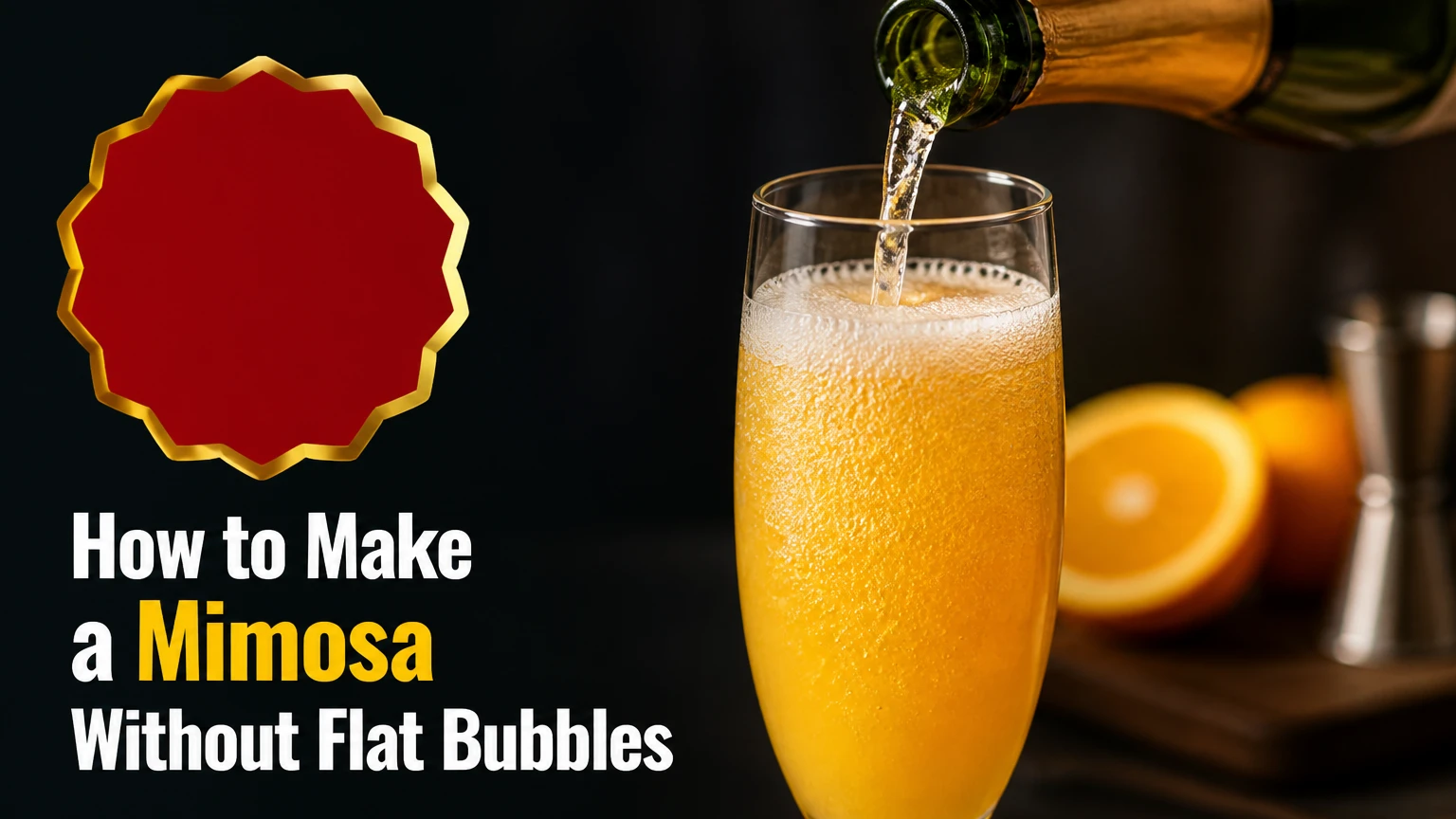
A mimosa is made by pouring chilled sparkling wine into a flute or tulip glass, then adding chilled orange juice in a 2:1 wine-to-juice ratio. Use brut Prosecco, Cava, or another dry sparkling wine, avoid ice and vigorous stirring, and serve the drink immediately while its carbonation is strongest.
Key Facts at a Glance
- A standard mimosa uses 4 ounces of sparkling wine and 2 ounces of orange juice.
- A 2:1 ratio tastes drier and crisper than the traditional 1:1 ratio.
- Brut sparkling wine balances orange juice better than sweet Asti or demi-sec wine.
- Chill both ingredients before pouring, but avoid ice because it dilutes flavor and carbonation.
- Pour sparkling wine first, add juice slowly, and skip vigorous stirring.
- One 750-milliliter bottle makes about 6 servings at 4 ounces of wine each.
Before You Start
| Requirement | Practical specification |
|---|---|
| Total preparation time | 2 minutes per glass |
| Difficulty | Beginner |
| Cost per serving | About $1.50-$7, depending on wine and juice |
| Sparkling wine | 4 ounces, chilled brut Prosecco, Cava, Champagne, or American sparkling wine |
| Citrus juice | 2 ounces, chilled orange juice |
| Glassware | One 6-10-ounce flute or tulip glass |
| Optional garnish | 1 orange wheel, strawberry slice, or expressed orange peel |
| Optional tools | Citrus press and fine-mesh strainer for fresh juice |
Refrigerate the wine and juice for at least 3 hours. A freezer-chilled glass can help, but 10 minutes is usually enough; longer exposure may freeze residual moisture onto the glass and create an uneven pour.
The most important success factor is temperature consistency. Warm juice introduced into cold sparkling wine causes rapid carbon dioxide release, which creates foam and leaves a flatter drink.
What Is a Mimosa?
A mimosa is a two-ingredient sparkling wine cocktail made with sparkling wine and citrus juice, usually orange juice. The drink is associated with brunch because its low-effort preparation, moderate sweetness, and relatively low pour size work well with morning meals and buffet service.
A typical 6-ounce mimosa contains 4 ounces of 12% ABV sparkling wine and 2 ounces of orange juice. That equals about 0.8 U.S. standard drinks before accounting for juice volume, because the National Institute on Alcohol Abuse and Alcoholism defines one standard drink as 5 ounces of wine at 12% ABV.
The drink’s balance comes from contrast. Sparkling wine contributes acidity, bubbles, and dryness, while orange juice contributes sugar, citrus aroma, and body. A dry wine cuts the juice’s sweetness, but an aggressively acidic wine can make sour juice taste sharper.
Which Mimosa Ratio Should You Use?
Use a 2:1 ratio for the most balanced mimosa, with 4 ounces of sparkling wine and 2 ounces of orange juice. Use a 1:1 ratio when serving guests who prefer a sweeter, softer drink or when the wine has unusually high acidity.
| Style | Sparkling wine | Juice | Approximate total | Best use |
|---|---|---|---|---|
| Dry brunch mimosa | 4.5 oz | 1.5 oz | 6 oz | Brut Cava and tart Valencia juice |
| Balanced standard | 4 oz | 2 oz | 6 oz | Most brunch menus |
| Traditional equal parts | 3 oz | 3 oz | 6 oz | Sweeter casual service |
| Light mimosa | 5 oz | 1 oz | 6 oz | Lower-sugar flavor profile |
| Large brunch pour | 5 oz | 2 oz | 7 oz | Tulip glass and immediate service |
The juice’s sweetness changes the correct ratio. Commercial orange juice often contains about 9-12 grams of sugar per 8-ounce serving, while freshly squeezed juice varies by fruit maturity, so the same wine can taste dry with tart juice and sweet with ripe juice.
A practitioner rule of thumb is to begin with 2:1, taste before making a full batch, and adjust the entire pitcher only after checking one serving. Sweetness is easier to add than remove.
Step 1: Chill the Ingredients and Glass
Chill sparkling wine and orange juice to about 4-7°C before pouring, then cool the glass for approximately 10 minutes if convenient. Sparkling wine is often served colder than ideal for still wine because lower temperature helps retain dissolved carbon dioxide during pouring.
The 3-5°C range commonly recommended for maximum bubble retention is practical for a mimosa, but it is not the universal best serving temperature for every sparkling wine. The Comité Champagne recommends serving Champagne at approximately 8-10°C, where aroma is more expressive; a mimosa with sweet juice can reasonably be served colder because the juice softens aromatic detail.
You will know it worked when: the bottle feels fully cold, the juice has no warm layer, and the glass has no visible frost or ice.
Common mistake: chilling only the wine. Warm juice can trigger a foam surge even when the bottle is cold.
Step 2: Measure the Wine and Juice
Measure 4 ounces of sparkling wine and 2 ounces of orange juice for one balanced mimosa. Measuring matters because an unmeasured home pour can easily reach 6-8 ounces of wine, raising alcohol intake while leaving the drink out of balance.
For a group, use these quantities:
| Servings | Sparkling wine needed | Orange juice needed | Bottles to buy |
|---|---|---|---|
| 6 | 24 oz | 12 oz | 1 bottle, 750 mL |
| 12 | 48 oz | 24 oz | 2 bottles |
| 20 | 80 oz | 40 oz | 3 bottles |
| 30 | 120 oz | 60 oz | 4 bottles |
A 750-milliliter bottle contains 25.4 U.S. fluid ounces. Six 4-ounce pours use 24 ounces, leaving a small service margin, while five generous 5-ounce pours use nearly the entire bottle.
You will know it worked when: every glass can receive the intended wine quantity without forcing a top-up from a second bottle.
Common mistake: calculating by bottle count alone. A 1:1 recipe uses more juice per guest and may require a larger juice supply than expected.
Step 3: Pour the Sparkling Wine First
Pour 4 ounces of sparkling wine into the tilted glass first, directing the stream down the inside wall. Fill the glass to about two-thirds of its capacity, pause for the mousse to settle, and leave room for the juice and final foam.
Sparkling wine should go first because the glass remains easier to control when the carbonated liquid enters before the denser juice. A slow pour preserves bubbles and reduces overflow, especially with narrow flutes.
You will know it worked when: the wine reaches roughly two-thirds of the glass, the foam has fallen below the rim, and the bubbles rise in a steady stream.
Common mistake: filling the glass to the rim before adding juice. The final 1-2 ounces need headspace.
Step 4: Add Chilled Orange Juice Slowly
Add 2 ounces of chilled orange juice in a thin stream, aiming toward the center of the wine. Stop if foam rises rapidly, wait 5-10 seconds, then continue until the measured amount is incorporated.
The juice usually mixes with the wine through the turbulence of pouring. Heavy-pulp juice creates more nucleation sites, which are physical surfaces that allow dissolved carbon dioxide to form bubbles rapidly; that can improve initial aroma release but also increases overflow and shortens perceived fizz.
You will know it worked when: the color is uniform from top to bottom and the drink has a stable foam cap below the rim.
Common mistake: pouring juice quickly from a height. The impact agitates the wine and drives carbon dioxide out before the drink reaches the guest.
Step 5: Mix Gently, Garnish, and Serve
Skip stirring unless the juice settles visibly at the bottom; if mixing is necessary, use one slow lift from the bottom with a bar spoon. Add an orange wheel, strawberry slice, or narrow strip of orange peel, then serve immediately.
A spoon moved repeatedly through the glass increases bubble loss. A garnish should add aroma without dropping pulp, seeds, or excess water into the drink.
You will know it worked when: the mimosa remains effervescent after 30-60 seconds and the first sip has both citrus sweetness and wine acidity.
Common mistake: adding ice to compensate for warm ingredients. Ice lowers temperature but dilutes the cocktail and provides additional surfaces where carbonation escapes.
Which Sparkling Wine Works Best?
Brut Cava is the strongest value choice for a balanced mimosa because its dry profile and firm acidity counter orange juice without requiring Champagne pricing. Prosecco is fruitier and often softer, Champagne is more complex but easier to overwhelm, and American sparkling wine offers a broad range of acidity and price.
| Sparkling wine | Typical retail price | Flavor and structure | Best ratio | Best situation |
|---|---|---|---|---|
| Prosecco DOC Brut | $12-$22 | Pear, apple, soft acidity | 2:1 | Sweet, approachable brunch |
| Cava Brut | $12-$25 | Dry, citrus, toast, firm acidity | 2:1 or 3:1 | Best value and food pairing |
| Champagne Brut | $35-$80+ | Bready, complex, high acidity | 3:1 | Small celebration |
| American Brut | $15-$35 | Apple, lemon, variable acidity | 2:1 | Flexible everyday service |
| Sparkling cider | $4-$10 | Sweet apple, no wine alcohol | 1:1 | Alcohol-free service |
Choose bottles labeled Brut or Extra Brut when pairing with sweet orange juice. Avoid Asti, Moscato d’Asti, sweet Spumante, Demi-Sec, and Doux styles unless the juice is tart and you deliberately want a dessert-like drink.
“Brut” does not mean no sugar. It indicates a dry sparkling-wine category, and residual sugar limits vary by regional labeling rules. The useful practical test is the finished drink: dry wine plus sweet juice generally produces better balance than sweet wine plus sweet juice.
Which Juice Should You Choose?
Pulp-free, chilled orange juice produces the cleanest texture and the longest-lasting visual effervescence, while fresh-squeezed juice provides stronger aroma and a more variable flavor. Strain fresh juice if you need a polished pour or want to reduce foam.
| Juice | Typical acidity impression | Pulp level | Recommended wine | Result |
|---|---|---|---|---|
| Valencia orange | Medium, rounded | Low to medium | Brut Cava | Balanced and bright |
| Navel orange | Medium-low | Low | Brut Prosecco | Soft and approachable |
| Blood orange | Medium-high | Medium | American Brut | Tart, red-orange, aromatic |
| Grapefruit | High, bitter | Low | Extra Dry Prosecco | Dry, sharp, adult flavor |
| Pineapple | Medium, sweet | Very low | Brut sparkling wine | Tropical and fuller-bodied |
| Cranberry | High, tart | Low | Prosecco or Cava | Pink, acidic, less sweet |
Avoid juice with a strong cooked or metallic flavor. “Not from concentrate” describes processing, not guaranteed quality, so taste the juice before opening the wine for guests.
Fresh juice is best used the same morning because oxidation gradually dulls its aroma. Store it covered and refrigerated, and strain it immediately if seeds or thick pulp are present.
How Do Mimosa Variations Change the Drink?
Mimosa variations change either the citrus base, the sweetness, or the alcohol level. Add orange liqueur before the juice for a Grand Mimosa, use grapefruit for a Megmosa, and use sparkling cider when the drink must contain no alcohol.
| Variation | Added ingredient | Typical quantity | Flavor change | Service note |
|---|---|---|---|---|
| Grand Mimosa | Grand Marnier or Cointreau | 0.5 oz | Richer orange, more alcohol | Use 3.5 oz wine |
| Megmosa | Grapefruit juice | 2 oz | Tart and gently bitter | Choose softer wine |
| Soleil Mimosa | Pineapple juice | 2 oz | Tropical and sweet | Use 3:1 wine ratio |
| Blushing Mimosa | Cranberry juice or grenadine | 0.5-2 oz | Pink color, tartness | Grenadine is much sweeter |
| Blood Orange Mimosa | Blood orange juice | 2 oz | Berry-like citrus | Strain heavy pulp |
| Alcohol-free mimosa | Sparkling cider or alcohol-free wine | 3-4 oz | Apple or wine-like fruit | Confirm the label and ABV |
A Grand Mimosa is not simply a stronger mimosa because the liqueur also adds sugar and orange-oil aroma. Keep the liqueur to 0.5 ounce per serving unless the drink replaces most of the juice.
For a pregnancy-safe or family gathering, use sparkling cider or a clearly labeled 0.0% alcohol-free sparkling wine. Products labeled “dealcoholized” can retain small amounts of alcohol, so check the producer’s stated ABV rather than assuming zero.
How Do You Keep Bubbles in a Mimosa?
Keep bubbles in a mimosa by chilling both liquids, using a narrow flute or tulip glass, pouring slowly, and serving immediately. Carbonation declines faster in a wide coupe because its larger exposed surface area allows dissolved carbon dioxide to escape more quickly.
A tulip glass is often the best compromise. Its narrower rim retains bubbles better than a coupe, while its wider bowl releases more citrus aroma than a very narrow flute.
Do not batch mimosas hours before service. If batching is unavoidable, combine cold juice with cold wine immediately before guests drink, use a sealed pitcher, and prepare batches no larger than 6 servings.
An opened sparkling-wine bottle should be closed with a purpose-built Champagne stopper and refrigerated. A regular cork may eject, fail to reseal, or provide insufficient pressure retention. Even with a stopper, the wine is best used within 24 hours.
Common Mistakes and How to Fix Them
| Problem | Likely cause | Immediate fix | Prevention |
|---|---|---|---|
| Foam overflows | Warm juice, rapid pour, heavy pulp | Pause 10 seconds and wipe rim | Chill juice and leave headspace |
| Drink tastes flat | Stirring, warm glass, wide coupe | Serve a fresh pour | Use a flute or tulip glass |
| Mimosa tastes syrupy | Sweet wine plus sweet juice | Add dry wine and a splash of tart juice | Choose Brut or Extra Brut |
| Drink tastes too sour | Extra Brut wine or tart juice | Add 0.5 oz sweeter juice | Start with Brut Cava or Prosecco |
| Juice separates | Dense pulp or no mixing | Make one gentle lift | Strain juice and pour slowly |
| Flavor tastes dull | Oxidized juice or old wine | Replace the affected ingredient | Use juice the same day |
A common counterintuitive mistake is choosing premium Champagne to fix poor juice. Champagne’s yeast, toast, and mineral notes can disappear beneath sweet or oxidized orange juice, so better juice and a balanced Cava often improve the result more than a more expensive bottle.
Another practitioner rule is to taste the wine alone before opening every bottle for service. A corked, overly oxidative, or unusually sour bottle will affect every glass, and orange juice cannot reliably conceal a major wine fault.
How Much Does a Mimosa Cost?
A typical homemade mimosa costs about $1.50-$7 per serving, depending on whether the recipe uses supermarket Prosecco and carton juice or Champagne and fresh-squeezed organic oranges. One standard 6-ounce serving uses roughly one-sixth of a 750-milliliter bottle at a 2:1 ratio.
| Service level | Wine cost | Juice cost | Approximate serving cost | Suitable use |
|---|---|---|---|---|
| Budget | $12 per bottle | $3 per carton | $2.50 | Large casual brunch |
| Mid-range | $20 per bottle | $5 fresh juice | $3.85 | Weekend hosting |
| Premium | $45 per bottle | $10 fresh juice | $9.20 | Small celebration |
| Alcohol-free | $8 cider bottle | $4 juice | $2.00 | Family or inclusive event |
These are typical retail estimates, not fixed prices. Local taxes, bottle size, seasonal citrus prices, and venue markups can change the final figure.
How Do You Set Up a Mimosa Bar?
For a mimosa bar serving 12 guests, provide two 750-milliliter bottles of Brut sparkling wine, 24 ounces of chilled orange juice, 12 ounces of grapefruit or cranberry juice, and garnishes in separate bowls. Keep wine in an ice bucket, but do not put ice into individual drinks.
Use three labeled juice carafes at most. More choices slow service and make replenishment difficult, while orange, grapefruit, and cranberry cover sweet, bitter, and tart preferences.
For 20 guests, buy three bottles and at least 40 ounces of total juice for 2:1 pours. Plan one bottle for every six standard servings, plus one additional bottle if the gathering lasts more than two hours or includes heavy drinking.
Place a measuring jigger beside the bottles if you want consistent portions. A self-serve bar without portion guidance can turn a 2:1 recipe into a mostly sparkling-wine pour.
What Is a Good Mimosa for Different Situations?
The best mimosa depends on the drinker’s sweetness preference, the food being served, and whether the host needs speed or complexity. Brut Cava with Valencia orange juice suits most brunches, while grapefruit, blood orange, or alcohol-free cider addresses more specific menus and guests.
- For a large brunch: Use Brut Prosecco, pulp-free orange juice, and 2:1 proportions.
- For rich foods: Use dry Cava and tart orange or grapefruit juice to cut through eggs, cheese, and cured meats.
- For a special occasion: Use Champagne only when guests will appreciate its complexity and the juice is fresh and restrained.
- For a low-sugar drink: Use Extra Brut or Brut sparkling wine with 1 ounce of juice per 5 ounces of wine.
- For children or non-drinkers: Use sparkling cider with orange juice, clearly separating it from alcoholic bottles.
- For a warm outdoor event: Keep unopened bottles and juice in separate ice baths, then pour small servings frequently.
Frequently Asked Questions
Can You Use Champagne for a Mimosa?
Yes, Champagne works in a mimosa, but its complexity is often wasted when the recipe contains equal parts sweet orange juice. Use 3 ounces of Brut Champagne with 1 ounce of fresh, strained juice, and reserve premium bottles for small gatherings where guests can taste the wine’s texture and aroma.
Is Fresh-Squeezed Orange Juice Better Than Carton Juice?
Fresh-squeezed orange juice usually offers brighter aroma and more variation, while quality carton juice provides consistent sweetness and easier service. Fresh juice should be strained when heavy pulp causes overflow, and it should be refrigerated and used the same day for the cleanest flavor.
Can You Make Mimosas Ahead of Time?
You can prepare the juice and glassware ahead of time, but combine sparkling wine and juice immediately before serving. A fully mixed mimosa loses carbonation quickly, especially in a pitcher, so make batches of no more than six servings and pour them within a few minutes.
How Long Does an Opened Sparkling Wine Bottle Last?
An opened sparkling wine bottle is best used within 24 hours when refrigerated with a Champagne stopper. Without a pressure-retaining stopper, the wine may lose noticeable carbonation within several hours, making it better suited to cooking or a fresh cocktail than to later mimosa service.
Can You Use Sparkling Water Instead of Wine?
Yes, sparkling water creates a nonalcoholic citrus spritz rather than a traditional mimosa. Use 4 ounces of chilled sparkling water with 2 ounces of orange juice, and add a small amount of simple syrup only if the juice is unusually tart.
What Should You Serve With Mimosas?
Mimosas pair well with salty and savory brunch foods, including eggs, smoked salmon, ham, soft cheeses, and breakfast potatoes. The drink’s acidity cuts through fat, while orange sweetness complements fruit, pastries, and lightly spiced dishes without requiring a separate syrup.
The Bottom Line
To make a mimosa, chill a dry sparkling wine and orange juice, pour 4 ounces of wine into a glass, add 2 ounces of juice slowly, and serve without ice or vigorous stirring. The 2:1 ratio gives the most reliable balance, while Cava, Prosecco, and fresh strained juice offer practical choices across budgets. Use this method for how to make a mimosa that stays cold, bright, and effervescent from the first sip.