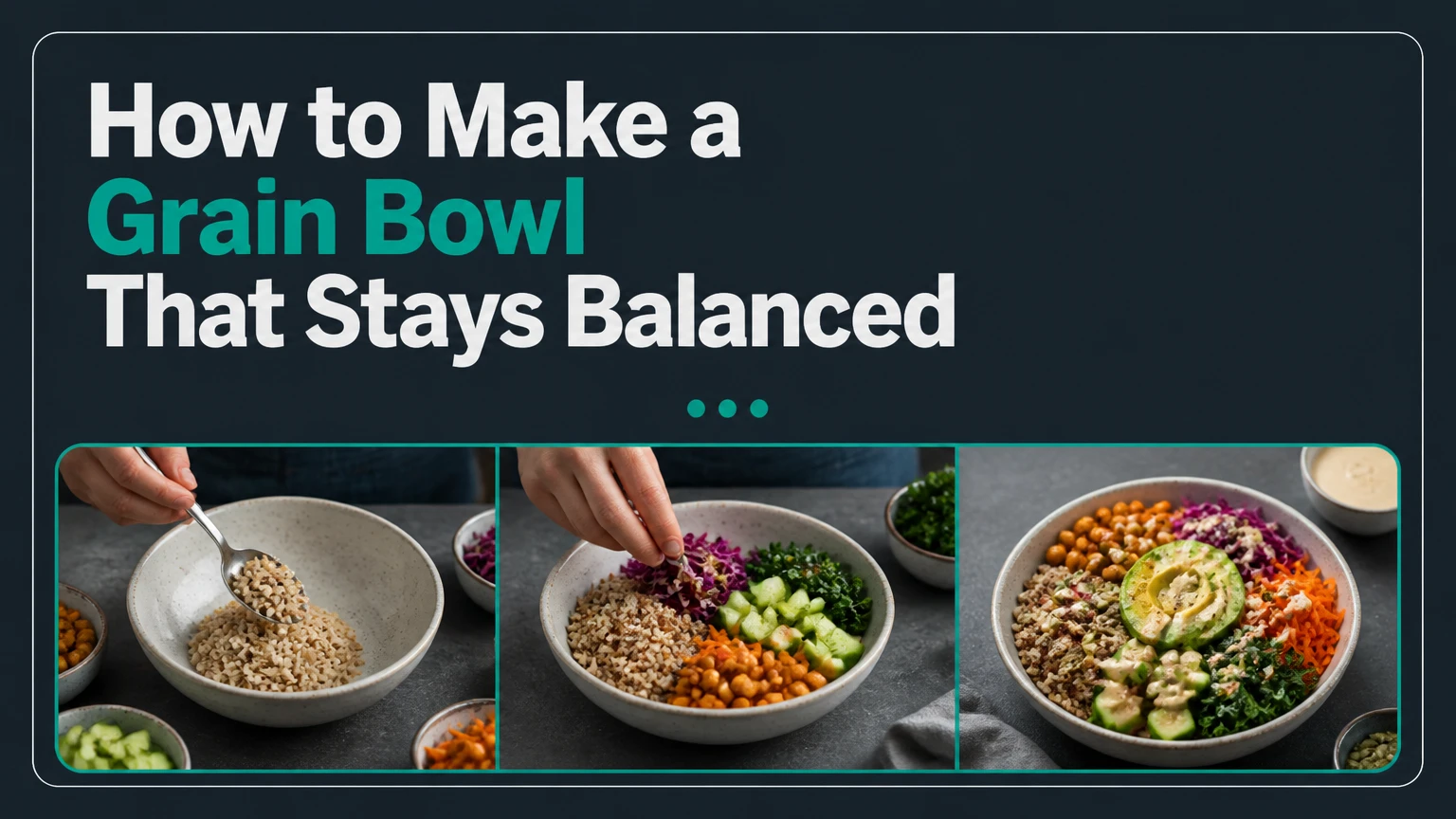
A grain bowl is made by layering one-half to one cup of cooked grains with four to six ounces of protein, one to one-and-a-half cups of vegetables, one to two tablespoons of flavorful accents, and two to three tablespoons of sauce. Cook and season each component separately, then combine warm, cool, creamy, crunchy, and acidic elements just before eating.
Key Facts at a Glance
- A balanced grain bowl typically contains cooked grains, protein, vegetables, fat-rich accents, and a sauce.
- Quinoa cooks in about 15 minutes, while brown rice and wild rice commonly take 40-50 minutes.
- A practical serving uses 1/2-1 cup cooked grains, 4-6 ounces protein, and 1-1 1/2 cups vegetables.
- Keeping dressing separate preserves texture for meal-prepped bowls stored for up to four days.
- The most reliable flavor strategy is seasoning every component before assembly.
- Whole-grain bowls are not automatically low-calorie because oil, cheese, nuts, avocado, and dressing are energy-dense.
What Is a Grain Bowl?
A grain bowl is a composed meal built around cooked grains rather than salad greens. The grain provides chew, starch, and structure, while protein, vegetables, fats, and dressing add satiety, micronutrients, contrast, and moisture.
Unlike a tossed green salad, a grain bowl remains divided into recognizable components. That arrangement matters because roasted vegetables, raw greens, pickles, creamy sauces, and toasted seeds retain different temperatures and textures until each bite is mixed.
Michael Pollan summarizes a plant-forward eating pattern in In Defense of Food with the phrase, “Eat food. Not too much. Mostly plants.” A grain bowl can apply that principle, but the bowl still needs proportion. A large grain mound covered with oily sauce is not balanced merely because it contains vegetables.
What Makes a Bowl Taste Complete?
A complete bowl usually combines five sensory roles:
- Chewy: farro, brown rice, barley, or wild rice.
- Tender: beans, roasted squash, chicken, tofu, or salmon.
- Crunchy: pepitas, almonds, cabbage, or cucumbers.
- Creamy: tahini, yogurt, avocado, or hummus.
- Bright: lemon juice, vinegar, herbs, kimchi, or pickled onions.
The strongest bowls also contrast temperature. Warm grains and roasted vegetables pair well with cool cucumber, greens, yogurt sauce, or pickles. The contrast prevents a dense meal from tasting flat.
How to Make a Grain Bowl: The 5-Part Formula
Build each grain bowl from 25% grain, 25% protein, 40% vegetables, and 10% fats or finishing accents by visual volume. Those percentages are practical assembly targets, not medical nutrition prescriptions, because calorie needs and ingredient densities vary substantially.
| Component | Typical amount per bowl | Examples | Main function |
|---|---|---|---|
| Cooked grain | 1/2-1 cup | Quinoa, farro, rice, barley | Starch, chew, structure |
| Protein | 4-6 oz or 1/2-1 cup | Chicken, tofu, beans, salmon | Satiety, protein |
| Vegetables | 1-1 1/2 cups | Broccoli, kale, carrots, cabbage | Volume, fiber, color |
| Fat or accent | 1-2 tbsp | Seeds, nuts, feta, avocado | Richness, crunch |
| Sauce | 2-3 tbsp | Tahini, vinaigrette, peanut sauce | Moisture, acidity, cohesion |
For a standard 600-800 calorie bowl, the upper end of the grain, fat, and sauce ranges can push calories higher, especially when the bowl includes avocado, oil-roasted vegetables, cheese, and nuts together. USDA MyPlate guidance recommends making at least half of grain intake whole grains, so use whole-grain rice, intact farro, barley, or whole-grain blends when that fits your dietary needs.
Before You Start
Time: 25-45 minutes for a cooked-from-scratch bowl, or 5-10 minutes with prepared components.
Difficulty: Basic stovetop and knife skills.
Typical cost: $3-$5.50 per homemade serving.
Tools: Medium saucepan with lid, sheet pan, chef’s knife, cutting board, mixing bowl, measuring spoons, and a storage container.
Basic ingredients: 1/2 cup dry grain, 4-6 ounces protein, 1-1 1/2 cups vegetables, 1-2 tablespoons accent, and 2-3 tablespoons dressing.
The factor that most determines success is moisture management. A bowl with properly cooked grains can still fail if wet vegetables, undrained beans, or excess dressing collect at the bottom.
Step 1: Choose and Cook the Grain
Choose a grain according to the bowl’s intended texture, cooking time, and dietary restrictions. Simmer the grain in salted water or low-sodium stock, then drain or rest it according to the grain’s cooking method.
| Grain | Typical dry-to-liquid ratio | Cook time | Texture and dietary detail |
|---|---|---|---|
| Quinoa | 1:2 | 15 minutes | Fluffy, nutty, naturally gluten-free |
| Farro | 1:2.5, or pasta method | 25-40 minutes | Chewy, dense, contains gluten |
| Brown rice | 1:2-2.5 | 40-50 minutes | Tender, neutral, naturally gluten-free |
| Wild rice | 1:3-4 | 40-50 minutes | Firm, earthy, naturally gluten-free |
| Pearl barley | 1:3 | 25-35 minutes | Chewy, creamy, contains gluten |
| Bulgur | 1:1-1.5 | 10-15 minutes | Fast, tender, contains gluten |
Rinse quinoa under cool water for about 30 seconds to remove surface saponins that can taste bitter. For brown rice and wild rice, use the package method because varieties differ in bran structure and water absorption. Spread finished grains on a plate or sheet pan for five minutes if steam has made them wet.
Season cooked grains while warm with approximately 1/8 teaspoon salt per serving, one teaspoon olive oil, and one teaspoon lemon juice or vinegar. The acid should be noticeable but not sour. You will know the grain worked when individual pieces remain distinct and the base tastes seasoned before toppings arrive.
Common mistake: Cooking every grain with a strict two-to-one water ratio. Farro, barley, and wild rice often cook more reliably in excess water, followed by draining.
Step 2: Prepare Warm and Cool Vegetables
Use at least two vegetable textures, such as one cup of roasted or charred produce plus one-half cup of raw, leafy, or pickled produce. Roast dense vegetables at 425°F for 20-30 minutes with one to two teaspoons oil per serving, turning once halfway through.
| Vegetable type | Preparation | Typical time | Best pairing |
|---|---|---|---|
| Sweet potato, carrot | 1-inch cubes, roast at 425°F | 25-30 min | Tahini, black beans |
| Broccoli or broccolini | Florets, roast or char | 15-20 min | Lemon, feta, tofu |
| Mushrooms | Thick slices, roast or sauté | 12-18 min | Farro, miso, egg |
| Kale | Massage with 1 tsp lemon juice | 2 min | Quinoa, chickpeas |
| Cabbage | Thin slice, raw or charred | 5-15 min | Peanut sauce, chicken |
| Cucumber or radish | Slice and serve raw | 5 min | Salmon, yogurt sauce |
| Red onion | Thin slice and pickle | 20 min minimum | Lentils, roasted squash |
Dry vegetables before roasting. Surface water creates steam, which softens edges instead of browning them. Salt leafy greens after massaging them, but salt cucumbers immediately before serving because early salting draws out water.
You will know the vegetables worked when roasted pieces have browned edges, raw vegetables remain crisp, and no liquid pools beneath the grain. The common mistake is treating all vegetables alike. Broccoli benefits from high heat, while delicate greens need little or no cooking.
Step 3: Add and Season the Protein
Add 4-6 ounces of cooked animal protein or approximately 1/2-1 cup of beans, lentils, tofu, tempeh, or edamame. Season the protein with a complementary profile rather than repeating the dressing exactly.
Chicken works with cumin, paprika, garlic, and lemon. Tofu absorbs soy sauce, ginger, sesame, and rice vinegar. Salmon pairs with dill, mustard, cucumber, and yogurt. Chickpeas and black beans suit cumin, coriander, smoked paprika, lime, and cilantro.
| Protein | Serving target | Preparation time | Pairing direction |
|---|---|---|---|
| Chicken breast | 4-6 oz cooked | 12-18 min | Lemon-tahini or herb vinaigrette |
| Salmon fillet | 4-6 oz cooked | 10-14 min | Yogurt-dill or miso-ginger |
| Firm tofu | 1/2-1 cup | 15-20 min | Peanut or sesame dressing |
| Chickpeas | 3/4 cup drained | 5-10 min | Tahini, herbs, pickles |
| Black beans | 3/4 cup drained | 5-10 min | Lime, avocado, salsa |
| Eggs | 2 large | 9-12 min | Mustard vinaigrette, greens |
Drain canned beans and rinse them unless the liquid is part of a recipe. Pat tofu dry before searing, and let cooked meat rest for five minutes before slicing so its juices do not flood the bowl.
The protein is ready when it has a distinct seasoning layer and a safe cooked texture. For food safety, USDA guidance recommends 165°F for poultry, 145°F for fish, and reheating leftovers to 165°F. The common mistake is adding unseasoned protein and expecting sauce to repair it.
Step 4: Make a Sauce That Balances the Bowl
Use two to three tablespoons of sauce per serving, with acid, fat, salt, and a small amount of sweetness or heat balanced to taste. A sauce prevents grains and legumes from feeling dry, but too much dressing makes the bowl heavy and damages leftovers.
| Sauce | Per-serving formula | Flavor profile | Best with |
|---|---|---|---|
| Lemon-tahini | 1 tbsp tahini, 1 tbsp lemon, 1 tbsp water | Creamy, nutty, sharp | Chickpeas, carrots |
| Herb vinaigrette | 2 tsp olive oil, 1 tsp vinegar, herbs | Acidic, fresh | Chicken, farro |
| Miso-ginger | 1 tsp miso, 1 tsp soy, 2 tsp water, ginger | Salty, savory | Tofu, mushrooms |
| Peanut-lime | 1 tbsp peanut butter, lime, water, chili | Rich, spicy, acidic | Cabbage, rice |
| Yogurt-dill | 2 tbsp yogurt, lemon, dill, water | Cool, tangy | Salmon, cucumber |
Add water one teaspoon at a time when tahini or nut butter becomes thick. This is an emulsion problem, not a shortage of oil. Taste the sauce with a grain or bean, because a dressing that tastes strong alone may become correctly seasoned after it meets bland starch.
You will know the sauce worked when it coats a spoon but still drizzles easily. The common mistake is using only oil and salt. Dense grains need acid, while creamy ingredients need dilution and brightness.
Step 5: Assemble the Grain Bowl
Place the warm grain in the bottom of a wide bowl, then arrange protein, warm vegetables, cool vegetables, and accents in separate sections. Drizzle sauce immediately before serving, and finish with herbs, seeds, pickles, or citrus zest.
A practical assembly order is:
- Add 1/2-1 cup cooked grain.
- Place 4-6 ounces protein beside the warm vegetables.
- Add 1-1 1/2 cups mixed vegetables.
- Scatter 1-2 tablespoons seeds, nuts, feta, or avocado.
- Drizzle 2-3 tablespoons dressing.
- Add a final acidic or fresh accent.
Distinct sections preserve contrast and help portion control. Mix the bowl at the table if you want every bite coated, or leave it layered when serving guests.
You will know the bowl is complete when the base is moist but not wet, the protein is seasoned, and every forkful can reach at least two contrasting components. The common mistake is adding sauce before arranging the toppings, which creates slippery vegetables and uneven seasoning.
Which Grain Is Best for a Bowl?
Quinoa is the best fast and gluten-free grain, farro is the best chewy meal-prep grain, brown rice is the most accessible neutral base, and wild rice is best when a firm, distinctive texture matters. No single grain wins every use case because cooking time, gluten status, cost, and sauce compatibility differ.
| Use case | Best grain | Typical time | Why it fits |
|---|---|---|---|
| Fast weeknight bowl | Quinoa | 15 min | Quick cooking and light texture |
| Four-day meal prep | Farro | 25-40 min | Resists softening under dressing |
| Budget family bowl | Brown rice | 40-50 min | Widely available and inexpensive |
| Gluten-free savory bowl | Quinoa or wild rice | 15-50 min | No wheat gluten |
| Rich mushroom bowl | Wild rice | 40-50 min | Firm texture matches umami toppings |
| Mediterranean bowl | Farro | 25-40 min | Chew complements feta and herbs |
Can You Use Alternatives to Grains?
You can replace grains with potatoes, whole-grain pasta, cauliflower rice, or shredded cabbage, but each alternative changes the bowl’s texture and nutritional structure. Potatoes provide starch without the same whole-grain profile, cauliflower rice lowers carbohydrate density, and cabbage increases crunch while offering less energy.
Use 1 cup roasted potatoes for a hearty bowl, 1 cup cooked whole-grain pasta for a pantry substitution, or 1-1 1/2 cups sautéed cauliflower rice for a lighter base. A bowl without a grain is still a composed bowl, but call the substitution accurately when planning portions.
How Do You Make a Grain Bowl in Five Minutes?
A five-minute grain bowl requires pre-cooked grains, ready-to-eat protein, washed vegetables, and prepared dressing. Microwave one pouch of cooked quinoa or rice, add 3/4 cup canned beans or sliced rotisserie chicken, then finish with greens, pickled onions, seeds, and bottled vinaigrette.
Keep these components ready:
- One 8-10 ounce cooked-grain pouch
- One 3/4-cup serving of rinsed beans
- Two handfuls of pre-washed greens
- One cup of raw vegetables
- Two tablespoons dressing
- One tablespoon seeds or crumbled cheese
This version is practical rather than culinary. Pre-cooked grains can cost approximately $2-$4 per serving, compared with roughly $0.30-$0.80 for bulk dry grains, depending on brand and location.
How Do You Meal-Prep Grain Bowls Without Soggy Greens?
Store cooked grains, protein, roasted vegetables, raw vegetables, accents, and sauce in separate compartments or containers, and refrigerate assembled components for up to four days when handled safely. Add dressing and delicate greens only at serving time.
| Component | Storage method | Typical refrigerator limit | Serving instruction |
|---|---|---|---|
| Cooked grains | Shallow airtight container | 3-4 days | Reheat or serve cold |
| Cooked chicken or fish | Separate sealed container | 3-4 days | Reheat poultry thoroughly |
| Roasted vegetables | Airtight container | 3-4 days | Reheat uncovered if possible |
| Washed greens | Towel-lined container | 3-4 days | Add after reheating |
| Sauce | Small sealed jar | 4-7 days | Shake and drizzle |
| Seeds and nuts | Dry container | 1-2 weeks | Add at the end |
Cool cooked food promptly in shallow containers rather than leaving a deep pot at room temperature. USDA food-safety guidance places the general refrigerator limit for cooked leftovers at three to four days.
For the best texture, reheat grains, protein, and roasted vegetables separately, then add cool cabbage, cucumber, herbs, and dressing. Fish is less forgiving than chicken during reheating, so serve salmon cold or warm it gently.
What Are the Most Common Grain Bowl Mistakes?
The most common failures are excess moisture, insufficient seasoning, mismatched textures, and uncontrolled high-calorie accents. Each problem has a specific recovery method rather than requiring a complete remake.
Mushy Grains
Spread wet grains on a sheet pan for five to ten minutes to release steam. If the grains are severely overcooked, repurpose them as a warm pilaf and add crunchy cabbage, toasted seeds, or roasted vegetables to restore contrast.
Bland Flavor
Season the grain, vegetables, and protein separately, then adjust the sauce with acid and salt. One teaspoon lemon juice, lime juice, or vinegar per serving often restores definition more effectively than another tablespoon of oil.
Watery Vegetables
Drain beans, pat tofu dry, salt cucumbers late, and roast wet vegetables at high heat in a single layer. Crowding a sheet pan traps steam and prevents browning.
Heavy or Oily Bowls
Measure oil, nuts, cheese, avocado, and dressing instead of adding each freely. Keep two rich elements and choose a sharp, herbaceous sauce to prevent the bowl from becoming dense.
Soggy Leftovers
Store sauce separately and keep crunchy accents dry. Reheat only the grain, protein, and roasted vegetables, then add greens and pickles after heating.
Repeated Flavors
Give the protein and dressing different jobs. For example, season tofu with soy, ginger, and sesame, then use a lemon-herb dressing for acidity and freshness.
How Should You Adapt a Grain Bowl for Different Diets?
Adapt the grain bowl by changing the base, protein, sauce, or accents while preserving the same texture and portion structure. Vegan bowls need a deliberate protein source, gluten-free bowls require careful grain and sauce checks, and high-protein bowls should not rely on grains alone.
Vegan Bowl
Use quinoa, tofu, tempeh, chickpeas, lentils, or edamame. Choose tahini, peanut, miso, or avocado-based sauces, and replace feta with toasted seeds or nutritional yeast.
Gluten-Free Bowl
Choose quinoa, rice, wild rice, millet, or certified gluten-free oats. Check soy sauce, miso, spice blends, and packaged dressings because wheat-derived ingredients can appear in otherwise gluten-free combinations.
High-Protein Bowl
Use 5-6 ounces chicken, fish, or tempeh, or combine beans with tofu or edamame. Keep the grain near 1/2 cup cooked and add Greek yogurt, cottage cheese, hemp hearts, or an egg when appropriate.
Low-Cost Bowl
Use brown rice, lentils, cabbage, carrots, frozen broccoli, canned beans, and a homemade vinaigrette. A typical batch-cooked serving can cost about $3 when dry grains and legumes are purchased in larger packages.
How Much Time and Money Does a Grain Bowl Take?
A cooked-from-scratch grain bowl typically takes 25-45 minutes and costs $3-$5.50 per serving, while a convenience version takes 5-10 minutes and may cost $5-$9. Costs vary with salmon, packaged grains, organic produce, local prices, and whether pantry staples are already available.
| Bowl style | Active time | Total time | Typical cost per serving |
|---|---|---|---|
| Quinoa and chickpea | 15-20 min | 20-25 min | $3-$4 |
| Brown rice and chicken | 20-25 min | 45-55 min | $4-$6 |
| Farro and tofu | 20-25 min | 35-45 min | $3-$5 |
| Salmon and wild rice | 20-25 min | 50-60 min | $7-$10 |
| Convenience bowl | 5-10 min | 5-10 min | $5-$9 |
Batch cooking changes the economics more than any single ingredient. Cooking four grain servings at once reduces repeated stove time, while a single sheet pan can roast enough vegetables for several lunches.
Expert Rules for Better Bowls
Cook grains for the final texture, not merely the package time. Grains continue steaming after the heat turns off, so removing them slightly early and resting them covered can prevent softness, particularly with brown rice and quinoa.
Put acid in more than one layer. Lemon in the grain and vinegar in the sauce create different flavor positions. Acid only on top can make the surface taste bright while the center remains dull.
Use one dominant creamy ingredient. Tahini, avocado, yogurt, hummus, cheese, and nut butter can each supply richness. Combining several without reducing oil or sauce usually produces a heavy bowl.
Reserve crunch for the final minute. Seeds, nuts, fried onions, and cabbage lose their purpose when buried under hot food and dressing. Add them after reheating and immediately before eating.
FAQ
Can I Make a Grain Bowl With Cold Ingredients?
Yes, a grain bowl can be served cold with chilled quinoa, rice, farro, beans, raw vegetables, herbs, and vinaigrette. Cold bowls work particularly well for lunch because they avoid reheating fish or delicate greens. Let refrigerated grains loosen at room temperature for 10-15 minutes, then refresh them with lemon juice and a small amount of oil.
Are Grain Bowls Healthy for Weight Loss?
A grain bowl can support weight loss when its total calories match the person’s needs, but the label “grain bowl” does not guarantee a low-calorie meal. Measure calorie-dense ingredients such as oil, nuts, cheese, avocado, and dressing, and use vegetables to increase volume without letting every component become an unrestricted topping.
What Is the Best Protein for a Grain Bowl?
The best protein depends on dietary preference, cooking time, and the sauce. Chickpeas and tofu are economical plant options, chicken is neutral and versatile, salmon adds rich flavor and omega-3 fats, and eggs provide a fast pantry-friendly choice. Use approximately 4-6 ounces of cooked animal protein or 1/2-1 cup plant protein.
Can I Freeze a Grain Bowl?
Freeze cooked grains, beans, and sturdy roasted vegetables separately for up to about three months for best quality, but do not freeze raw greens, cucumber, pickles, avocado, or yogurt sauce. Thaw frozen components in the refrigerator, reheat them thoroughly, and add fresh toppings after heating.
How Do I Make a Grain Bowl Less Dry?
Add two to three tablespoons of sauce, then loosen thick tahini or nut-based dressings with water, lemon juice, or vinegar. Warm grains absorb moisture quickly, so reserving a spoonful of dressing for the final mix is more effective than adding a large amount at the beginning.
The Bottom Line
To make a grain bowl, cook and season a suitable grain, add a distinct protein, combine warm and cool vegetables, finish with a measured rich accent, and apply an acidic sauce immediately before serving. The most reliable formula uses 1/2-1 cup grains, 4-6 ounces protein, 1-1 1/2 cups vegetables, and 2-3 tablespoons dressing. With separate seasoning and controlled moisture, how to make a grain bowl becomes a repeatable method rather than a fixed recipe.