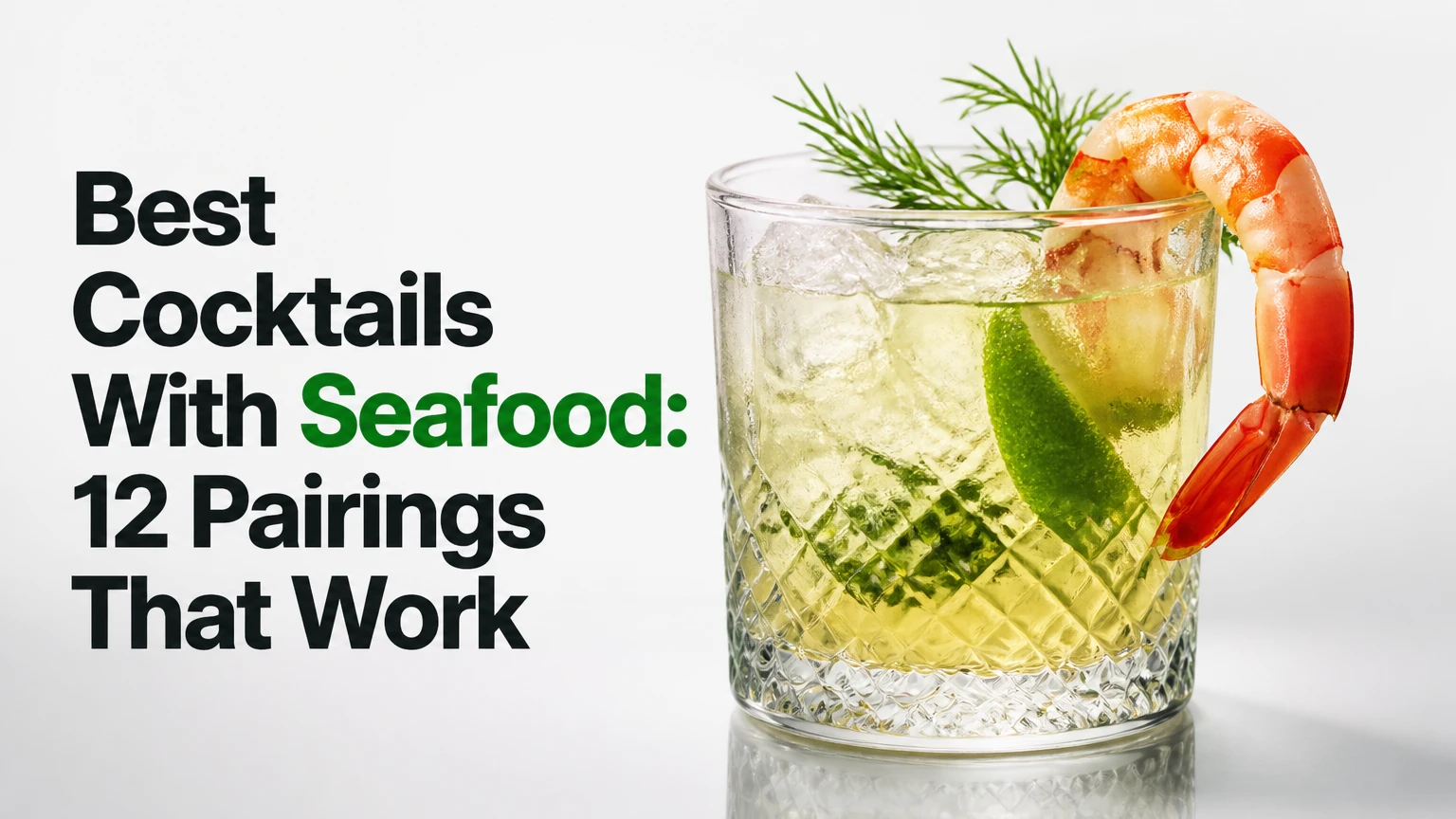
The best cocktails with seafood balance salinity, fat, sweetness, acidity, spice, and texture without hiding the food. Choose a dry, cold, saline drink for oysters; a bright sparkling cocktail for lobster or fried seafood; and a bitter, citrus-forward or spirituous drink for fatty fish such as salmon, tuna, or mackerel.
Key Facts at a Glance
Dry Martinis and Gin and Tonics pair most reliably with raw oysters, clams, and crudo.
French 75s and Tom Collins cocktails suit sweet lobster, crab, shrimp, and butter-based sauces.
Margaritas and Palomas cut fried batter, rich crab cakes, and spicy seafood through lime or grapefruit acidity.
Negronis work best with grilled, smoked, or oily fish, not delicate poached white fish.
Typical restaurant pricing ranges from $10-$18 for standard cocktails and $22-$35 for premium pairings.
A finished seafood cocktail pairing is usually best between 1°C and 4°C, but high-proof drinks should not be served so cold that aroma disappears.
How We Chose the Best Cocktails With Seafood
The strongest pairings were judged by five criteria: acidity, sweetness, carbonation, botanical or savory compatibility, and alcohol weight. A cocktail earns a higher position when it works across several preparations, remains recognizable beside food, and can be adjusted without specialized equipment.
Pairing is not a contest between “fish drinks” and “meat drinks.” A raw oyster, a fried oyster, and an oyster Rockefeller have different needs. The oyster provides salinity and delicate texture; frying adds oil; butter and cheese add fat and umami.
A useful professional rule is to match the drink to the dominant preparation rather than the animal alone. Lemon, vinegar, tomato, chili, herbs, smoke, and browned butter can change the ideal cocktail more than the difference between shrimp and crab.
What Makes a Cocktail Work With Seafood?
A seafood cocktail pairing works when the drink manages the dish’s dominant sensation. Acidity reduces the perception of fat, carbonation refreshes after oily bites, bitterness handles richness, and restrained sweetness supports naturally sweet shellfish. Saline ingredients can connect with oysters, but too much salt makes both drink and food taste harsh.
Alcohol level matters because ethanol amplifies heat and bitterness. A typical 10%-20% ABV finished drink is comfortable across a long meal, while a 25% or stronger undiluted drink can overwhelm raw scallop or mild cod. The exception is intensely flavored grilled octopus or smoked mackerel, which can tolerate a stronger pour.
The Five-Step Pairing Method
- Name the seafood’s dominant trait. Classify it as briny, sweet, fatty, delicate, smoky, or spicy.
- Identify the preparation. Raw, poached, steamed, grilled, smoked, battered, and fried preparations create different textures.
- Account for the sauce. Butter requires more acidity; chili requires cooling or fruit; tomato sauce can accept savory spirits.
- Choose one balancing mechanism. Use citrus for fat, bubbles for fried food, bitterness for oil, or salinity for shellfish.
- Control sugar and proof. Keep the drink drier than the dish unless the seafood has pronounced chili or tropical fruit flavors.
The most common error is selecting a cocktail by seafood name alone. A buttery lobster roll needs a sharper drink than plain steamed lobster, while shrimp aguachile may need less citrus in the glass because the dish already contains lime.
Which Cocktails Pair Best With Each Seafood?
The best cocktail depends on seafood category, cooking method, and sauce. The table below provides a fast decision framework before the detailed recommendations.
| Seafood or dish | Dominant challenge | Best cocktail style | Typical serving |
|---|---|---|---|
| Raw oysters | Salinity and delicate texture | Dry Martini or Gin and Tonic | 90-150 ml |
| Salmon with butter | Fat and richness | Whiskey Sour or White Negroni | 120-180 ml |
| Tuna tartare | Fat, umami, and soy | Paloma or dry highball | 150-250 ml |
| Steamed lobster | Sweet meat and butter | French 75 or Tom Collins | 120-180 ml |
| Shrimp cocktail | Sweetness and tomato sauce | Bloody Mary | 180-250 ml |
| Fish and chips | Fried oil and batter | Margarita or Aperol Spritz | 150-250 ml |
| Grilled octopus | Char, smoke, and chew | Negroni or Mezcal Paloma | 90-180 ml |
| Crab cakes | Sweet meat and fried crust | Daiquiri or Margarita | 120-180 ml |
1. Dry Martini: Best for Oysters and Crudo
A dry Martini is the best spirit-forward choice for oysters, clams, scallop crudo, and clean white-fish preparations because its low sugar, cold temperature, and herbal dryness preserve briny flavors. Use gin for botanical lift or vodka when the seafood is exceptionally delicate.
Typical build: Stir 60 ml gin or vodka with 10-15 ml dry vermouth and strain into a chilled Nick and Nora glass. Add a lemon twist for oysters or one olive for a mildly saline variation.
A dirty Martini can match oyster liquor, caviar, and seaweed-seasoned dishes, but olive brine should remain controlled. Start with 5 ml per drink. Larger amounts can make an already salty meal taste metallic and can drown subtle cucumber, melon, or mineral notes in raw seafood.
Choose gin with oysters when juniper and citrus will complement mignonette. Choose vodka with scallop or fluke crudo when spirit aroma would distract from the food.
Drawback: A classic Martini is high in alcohol relative to a spritz and can overwhelm mild fish if served warm or made with an aggressively aromatic gin.
Choose this if: the seafood is raw, cold, briny, and lightly seasoned.
Skip it if: the dish contains sweet fruit, heavy chili, or a creamy sauce.
2. Gin and Tonic: Best for Shellfish Platters
A dry Gin and Tonic is the most accessible all-purpose pairing for oysters, boiled shrimp, crab legs, and chilled shellfish because tonic carbonation refreshes the palate while gin contributes citrus and herbal notes. Use a tonic with moderate bitterness and low sweetness.
Typical build: Combine 45 ml London dry gin with 120-150 ml chilled tonic over ice in a highball or wine glass. Add a lime wheel, grapefruit peel, or cucumber ribbon according to the seafood garnish.
Tonic selection changes the pairing. A strongly quinine-bitter tonic can dominate sweet crab, while a highly sweet tonic can make oysters taste metallic. The finished drink should taste crisp rather than syrupy.
For a seafood tower, use a restrained garnish. Rosemary, pepper, and multiple fruit slices add aroma that can compete with delicate shellfish. One citrus peel is usually enough.
Drawback: Carbonation fades quickly, and an oversized glass with excessive ice can dilute the drink before the meal is finished.
Choose this if: you need a simple drink for several shellfish types.
Skip it if: the meal centers on buttery sauces or strongly smoked seafood.
3. French 75: Best for Lobster and Crab
A French 75 pairs with lobster, crab, shrimp, and scallops because lemon supplies acidity, sparkling wine supplies lift, and gin contributes enough botanical structure for butter-rich dishes. The cocktail feels lighter than a Martini while retaining a dry finish.
Typical build: Shake 30 ml gin, 15 ml fresh lemon juice, and 10-15 ml simple syrup with ice. Strain into a flute or small wine glass and top with 75-90 ml brut sparkling wine.
Brut Champagne or a similarly dry sparkling wine works better than demi-sec wine when the seafood is naturally sweet. A sweeter version can work with chili-lime crab or fruit-based sauces, but it is less reliable with plain lobster.
The French 75 is especially effective when lobster is served with drawn butter, brioche, or mayonnaise. Lemon cuts the fat, and bubbles reduce the heaviness of the meal. Keep the syrup modest because sweetness rises as the drink warms.
Drawback: The cocktail loses its textural advantage when prepared too far in advance, and its sparkling-wine component increases cost.
Choose this if: the meal is celebratory and the seafood is sweet or buttered.
Skip it if: the dish is intensely smoky, tomato-heavy, or very spicy.
4. Tom Collins: Best for Buttered Seafood
A Tom Collins is a practical pairing for lobster rolls, crab, shrimp, scallops, and fried seafood because lemon and soda water lighten rich sauces while gin echoes fresh herbs. The drink is longer and lower in intensity than a French 75.
Typical build: Shake 45 ml gin, 30 ml lemon juice, and 15 ml simple syrup. Strain over fresh ice in a Collins glass and top with 60-90 ml soda water.
Reduce the syrup to 7.5-10 ml for shellfish with sweet dressings or brioche. Add a cucumber slice for chilled shrimp, or use a lemon wheel with grilled scallops. The drink’s length makes it useful at lunch, where a short, strong cocktail can feel too heavy.
Drawback: Excess soda can make the drink taste thin, and sweet bottled lemon juice produces a flat, candy-like result.
Choose this if: butter, mayonnaise, or a creamy dressing dominates the plate.
Skip it if: the seafood already contains a large amount of lemon or vinegar.
5. Margarita: Best for Fried Fish and Crab Cakes
A classic Margarita is one of the best cocktails with seafood when lime acidity must cut through fried batter, crema, mayonnaise, or rich crab cakes. Blanco tequila provides clean pepper and vegetal notes without the oak weight of aged spirits.
Typical build: Shake 50 ml blanco tequila, 25 ml fresh lime juice, and 15 ml orange liqueur. Serve over ice with a half salt rim.
A half rim gives the drink structure without adding salt to every sip. Use less syrup or orange liqueur when pairing with sweet crab, and increase dilution for a long meal. A Margarita works with fish tacos because lime, cilantro, cabbage, and tequila occupy a compatible flavor family.
The drink is less successful with oysters, plain poached fish, and delicate scallops. Lime and tequila can dominate mineral flavors, especially when the cocktail is served short and strong.
Drawback: Salt, lime, and tequila can intensify a heavily seasoned dish rather than refresh it.
Choose this if: the seafood is fried, grilled, chili-seasoned, or served in tacos.
Skip it if: the dish is raw, mild, and delicately flavored.
6. Paloma: Best for Tuna, Ceviche, and Spicy Seafood
A Paloma suits tuna belly, ceviche, aguachile, grilled shrimp, and fish tacos because grapefruit bitterness and lime acidity oppose oily textures while tequila supports chili, herbs, and char. The drink’s carbonation keeps the pairing energetic without the density of a stirred cocktail.
Typical build: Combine 50 ml blanco tequila, 20 ml lime juice, 10 ml agave syrup, and 90-120 ml grapefruit soda over ice. Add a small pinch of salt or a restrained salted rim.
Fresh grapefruit juice creates a drier, more food-friendly drink than sweet grapefruit soda, although soda is faster for casual service. Mezcal can replace part of the tequila for grilled octopus or blackened fish, but a full mezcal pour may overwhelm raw tuna.
Drawback: Grapefruit bitterness can clash with very bitter greens, and some grapefruit products interact with medicines. Guests taking medication should check its grapefruit warning.
Choose this if: the seafood contains chili, citrus, smoke, or rich tuna.
Skip it if: the plate is built around subtle raw shellfish and clean mineral flavors.
7. Whiskey Sour: Best for Grilled Salmon
A Whiskey Sour works with grilled salmon, smoked trout, blackened fish, and seared tuna because lemon counters oil while bourbon or rye connects with browned, charred flavors. Rye produces a drier, spicier result; bourbon gives more vanilla and perceived sweetness.
Typical build: Shake 50 ml bourbon or rye, 25 ml lemon juice, and 15 ml simple syrup with ice. Optional egg white adds texture, but omit it when the dish already contains cream or mayonnaise.
The cocktail should be leaner than a dessert-style sour. Use 10 ml syrup for salmon with maple glaze or honey, and 15-20 ml for unglazed grilled fish. A large cube or thorough shaking provides dilution that lowers the perceived alcohol.
Drawback: Bourbon’s oak and vanilla can make poached white fish taste dull or sweet.
Choose this if: the seafood has grill marks, smoke, maple, or a browned crust.
Skip it if: the dish is raw, steamed, or dressed with delicate cucumber and herbs.
8. Negroni: Best for Oily or Charred Fish
A Negroni is appropriate for mackerel, sardines, smoked salmon, grilled octopus, and strongly seasoned tuna because bitter Campari, sweet vermouth, and gin have enough intensity to meet oily or charred flavors. It is a structural pairing, not a delicate one.
Typical build: Stir 30 ml gin, 30 ml Campari, and 30 ml sweet vermouth with ice. Strain over one large cube and express an orange peel.
A White Negroni made with gin, Suze or another gentian aperitif, and dry vermouth is often better with salmon or white fish because it has less dark caramel and fruit character. Reduce the bitter component for guests unaccustomed to Campari.
Drawback: A full-strength Negroni is too intense for steamed cod, raw scallop, oysters, or lightly seasoned crab.
Choose this if: smoke, oil, char, or umami dominates the plate.
Skip it if: the seafood is sweet, fragile, or served cold with minimal seasoning.
9. Bloody Mary: Best for Shrimp Cocktail
A Bloody Mary matches shrimp cocktail because tomato, lemon, horseradish, Worcestershire sauce, celery, and pepper echo the dish’s cocktail sauce. The savory drink can also work with crab, oysters paired with tomato mignonette, and brunch seafood plates.
Typical build: Combine 45 ml vodka with 120-150 ml tomato juice, 10 ml lemon juice, 2-3 dashes Worcestershire sauce, and hot sauce to taste. Add celery salt sparingly because shrimp cocktail sauce already contains salt.
Vodka keeps the drink neutral, but aquavit or gin can add caraway or botanical notes to herb-heavy seafood. The Bloody Mary is best with chilled shellfish and assertive sauces, not plain steamed fish.
Drawback: Tomato, Worcestershire, and celery salt can overwhelm delicate seafood and create a high-sodium pairing.
Choose this if: the dish contains cocktail sauce, tomato, horseradish, or brunch-style seasoning.
Skip it if: the seafood is dressed only with lemon or served with a refined butter sauce.
10. Aperol Spritz: Best for Calamari and Light Fried Seafood
An Aperol Spritz is a useful low-intensity pairing for calamari, fried smelt, fish and chips, and light shellfish appetizers because sparkling wine and soda reduce the perception of grease while Aperol contributes mild bitterness and orange. The lower alcohol level supports longer meals.
Typical build: Combine 60 ml Aperol, 90 ml Prosecco, and 30 ml soda water over ice. Use a large wine glass and an orange slice.
A drier Prosecco prevents the drink from becoming cloying beside fried batter. The Spritz is a better match for lightly seasoned calamari than for heavily spiced fried fish, where a Margarita or Paloma provides stronger acidity.
Drawback: Aperol’s sweetness and orange flavor can taste soft beside vinegar-heavy sauces or intensely salty chips.
Choose this if: the fried seafood is light, social, and served as a starter.
Skip it if: the plate needs strong lime, chili, or smoky flavors.
11. Mignonette Spritz: Best for Oysters
A Mignonette Spritz uses vinegar, shallot, and sparkling wine to connect directly with oyster accompaniments while keeping the drink crisp. The result is more food-specific than a standard Spritz and works best when oysters are the central course.
Typical build: Stir 15 ml red wine vinegar shrub or mignonette syrup with 75-90 ml brut sparkling wine and 30 ml soda water. Add a small cucumber or lemon garnish.
The vinegar must be balanced with enough dilution and sparkling wine. Too much mignonette makes the drink taste like a salad dressing and can exaggerate oyster salinity.
Drawback: The pairing is narrow and can taste overly acidic with fried, buttered, or tomato-based seafood.
Choose this if: oysters and mignonette are the focus.
Skip it if: the menu includes several rich cooked dishes.
12. Daiquiri: Best for Crab Cakes and Sweet Shrimp
A classic Daiquiri pairs with crab cakes, coconut shrimp, ceviche, and sweet shrimp because lime creates contrast while rum contributes mild sugarcane and tropical notes. A dry white rum keeps the drink cleaner than a dark, oak-aged rum.
Typical build: Shake 60 ml white rum, 25 ml fresh lime juice, and 15 ml simple syrup. Strain into a chilled coupe.
Reduce the syrup to 10 ml for naturally sweet crab or coconut-coated shrimp. A Daiquiri is particularly effective when the dish includes fruit salsa, cilantro, or chili, but it is too sharp for some plain raw white fish.
Drawback: The short format delivers concentrated acidity and alcohol, so it requires accurate dilution and a cold glass.
Choose this if: the seafood is sweet, tropical, lightly spicy, or paired with fruit.
Skip it if: the dish is heavily salty or already saturated with lime.
Comparison Table: Cocktail Style by Seafood Need
| Cocktail | Best seafood match | Finished ABV, typical | Sugar level | Restaurant price, typical |
|---|---|---|---|---|
| Dry Martini | Oysters and crudo | 25%-32% | 0-2 g | $14-$22 |
| Gin and Tonic | Mixed shellfish | 8%-12% | 6-14 g | $12-$18 |
| French 75 | Lobster and crab | 12%-16% | 8-14 g | $16-$26 |
| Margarita | Fried fish and crab cakes | 14%-20% | 8-16 g | $13-$19 |
| Paloma | Tuna and spicy seafood | 10%-16% | 6-15 g | $13-$20 |
| Whiskey Sour | Grilled salmon | 16%-22% | 10-16 g | $14-$21 |
| Negroni | Mackerel and octopus | 24%-28% | 7-12 g | $15-$24 |
| Aperol Spritz | Calamari and fried starters | 8%-11% | 10-16 g | $12-$18 |
These are typical service ranges, not universal specifications. Actual ABV changes with spirit proof, ice dilution, pour size, and mixer volume. Restaurant prices vary by city, venue, spirit brand, and tax.
How Should You Adjust a Cocktail for Seafood?
Adjust the drink after tasting the seafood with its sauce, not before. A useful correction is 5 ml at a time: reduce syrup for sweet shellfish, add 5-10 ml citrus for fried food, add soda for excessive alcohol, or remove salt when the dish contains brine, soy, or capers.
Practical Adjustment Rules
| Problem at the table | Likely cause | Corrective action | Suitable example |
|---|---|---|---|
| Fish tastes metallic | Drink is too sweet or salty | Cut syrup by 5 ml and remove salt rim | Margarita |
| Seafood tastes flat | Cocktail lacks acidity | Add 5-10 ml fresh citrus | Tom Collins |
| Drink dominates the dish | Spirit or bitterness is too strong | Increase dilution or choose a highball | Negroni to Americano |
| Fried food feels heavy | Insufficient lift | Add soda or sparkling wine | Whiskey Sour to Collins |
| Pairing tastes bitter | Aperitif overwhelms mild fish | Use a drier, lighter drink | Aperol Spritz |
| Oysters taste harsh | Too much brine or vinegar | Use lemon and reduce saline ingredients | Dirty Martini |
What Should You Avoid?
Avoid ultra-sweet tiki drinks with delicate raw fish, because high sugar can emphasize metallic or iodine-like flavors. Piña Coladas and heavy Mai Tais can work with coconut shrimp or spicy tropical seafood, but they are poor default choices for oysters, scallops, or poached cod.
Avoid heavily oaked bourbon and smoky Scotch with poached white fish. Wood, peat, and high alcohol can obscure mineral and herbal details that make mild seafood appealing. A lighter rye highball or a citrus-forward tequila drink is usually more adaptable.
Avoid serving cocktails warm. As ice melts, dilution changes, while rising temperature makes alcohol and sugar feel more prominent. Smaller 120-180 ml servings help guests finish a drink while its acidity, bubbles, and temperature remain balanced.
Planning Costs, Timing, and Serving Temperature
Typical home preparation takes 2-3 minutes for a built drink and 4-6 minutes for a shaken cocktail. A custom infusion, such as kombu-infused gin, usually takes 1-2 hours for a light savory note, while fruit or herb infusions may require 12-48 hours depending on the ingredient.
| Service situation | Cocktail choices | Preparation time | Typical cost per drink |
|---|---|---|---|
| Casual home dinner | Gin and Tonic, Paloma | 2-4 minutes | $3-$8 |
| Dinner party for 6 | French 75, Tom Collins | 20-30 minutes setup | $5-$12 |
| Restaurant standard | Margarita, Martini, Spritz | 2-5 minutes | $12-$22 |
| Premium seafood menu | Champagne French 75, infused Martini | 5-10 minutes | $22-$35 |
| Batch service | Daiquiri or Paloma base | 30-45 minutes for 10 drinks | $4-$10 |
Keep mixers refrigerated and chill glassware for short drinks. Do not freeze a cocktail to chase a numerical temperature target, because excessive cold suppresses aroma and can hide imbalance. For a Martini, a very cold glass and controlled dilution matter more than a claimed exact serving temperature.
What Are the Best Nonalcoholic Alternatives?
Nonalcoholic pairings work when they preserve acidity, bitterness, salinity, or carbonation without adding excessive sweetness. A grapefruit and lime soda suits fried fish and ceviche; a cucumber, lemon, and tonic drink suits oysters; tomato, lemon, and celery flavors suit shrimp cocktail.
| Seafood dish | Nonalcoholic drink | Key ingredients | Serving size |
|---|---|---|---|
| Oysters | Cucumber tonic | Cucumber, lemon, dry tonic | 200-250 ml |
| Fried fish | Grapefruit lime soda | Grapefruit, lime, soda, pinch of salt | 250-300 ml |
| Shrimp cocktail | Tomato cooler | Tomato, lemon, celery, black pepper | 180-250 ml |
| Lobster roll | Ginger Collins | Ginger syrup, lemon, soda, mint | 200-250 ml |
| Spicy tuna | Hibiscus Paloma | Hibiscus tea, grapefruit, lime, soda | 200-250 ml |
The same sugar warning applies to alcohol-free drinks. Many zero-proof products and bottled mixers contain enough sugar to make seafood taste flat, so dilute them with soda and add fresh citrus when necessary.
Which Pairing Should You Choose?
For a Seafood Tower
Choose a dry Gin and Tonic or a lightly dirty Martini. The Gin and Tonic handles oysters, shrimp, crab, and lobster simultaneously, while the Martini gives a more saline, formal profile for a mostly raw platter.
For a Butter-Based Lobster Dinner
Choose a French 75 if the meal is celebratory, or a Tom Collins for a lower-cost, longer drink. Both use lemon and dilution to reduce the weight of butter, but the French 75 adds sparkling-wine complexity.
For Fish and Chips
Choose a Margarita for strong lime and salt contrast, or an Aperol Spritz when the fish is lightly seasoned. A Margarita handles thick batter and chili sauces better; an Aperol Spritz works better as a lower-intensity starter.
For Grilled Salmon or Mackerel
Choose a Whiskey Sour for browned, smoky salmon and a Negroni for oily mackerel or smoked fish. Use a White Negroni when a classic Negroni would overpower the seasoning.
For a Spicy Seafood Menu
Choose a Paloma because grapefruit and lime refresh the palate while tequila supports chili and grilled flavors. Reduce the salt rim if the dish contains fish sauce, soy, olives, or capers.
FAQ
Is vodka or gin better with seafood?
Gin is better when botanical, citrus, and herbal notes complement oysters, cucumber, dill, or shellfish. Vodka is better for delicate crudo or highly refined seafood because it contributes less aroma. A vodka Martini gives the food more space, while a Gin and Tonic creates a more noticeable citrus and juniper bridge.
Can you pair red cocktails with fish?
You can pair red cocktails with strongly seasoned or oily seafood, but color is not the deciding factor. A Negroni works with mackerel and grilled octopus because bitterness and alcohol match intensity, while a sweet red fruit cocktail may clash with oysters or mild cod.
What cocktail goes with seafood pasta?
Choose a Tom Collins, French 75, or dry Americano for seafood pasta. Lemon, soda, and moderate bitterness counter cream, olive oil, or shellfish stock without competing with herbs. Avoid very sweet drinks with tomato seafood pasta unless the sauce contains substantial chili or fruit.
Are cocktails better than wine with seafood?
Cocktails are better when acidity, carbonation, bitterness, or spice directly addresses the dish’s preparation. Wine is often easier with delicate seafood because its lower alcohol and simpler structure create less interference. For fried fish, spicy shellfish, or cocktail sauce, a Margarita, Paloma, or Bloody Mary can be more precise.
How many cocktails should you serve at a seafood dinner?
Plan one welcome drink and one optional second cocktail per guest, then offer water throughout the meal. A 750 ml bottle of spirits yields roughly 12 drinks at a 50 ml pour, while a 750 ml bottle of sparkling wine supplies about eight 90 ml French 75 toppings.
What is the safest cocktail choice for a mixed seafood menu?
A moderately dry Gin and Tonic is the safest broad choice for a mixed seafood menu. Use a low-sugar tonic, restrained garnish, and a 45 ml gin pour so the drink can accompany oysters, shrimp, crab, and chilled lobster without imposing one strong flavor.
The Bottom Line
The best cocktails with seafood are chosen by preparation, sauce, and texture rather than seafood category alone. Start with a dry Martini or Gin and Tonic for raw shellfish, a French 75 or Tom Collins for sweet buttered crustaceans, a Margarita or Paloma for fried or spicy dishes, and a Whiskey Sour or Negroni for grilled, smoked, or oily fish.