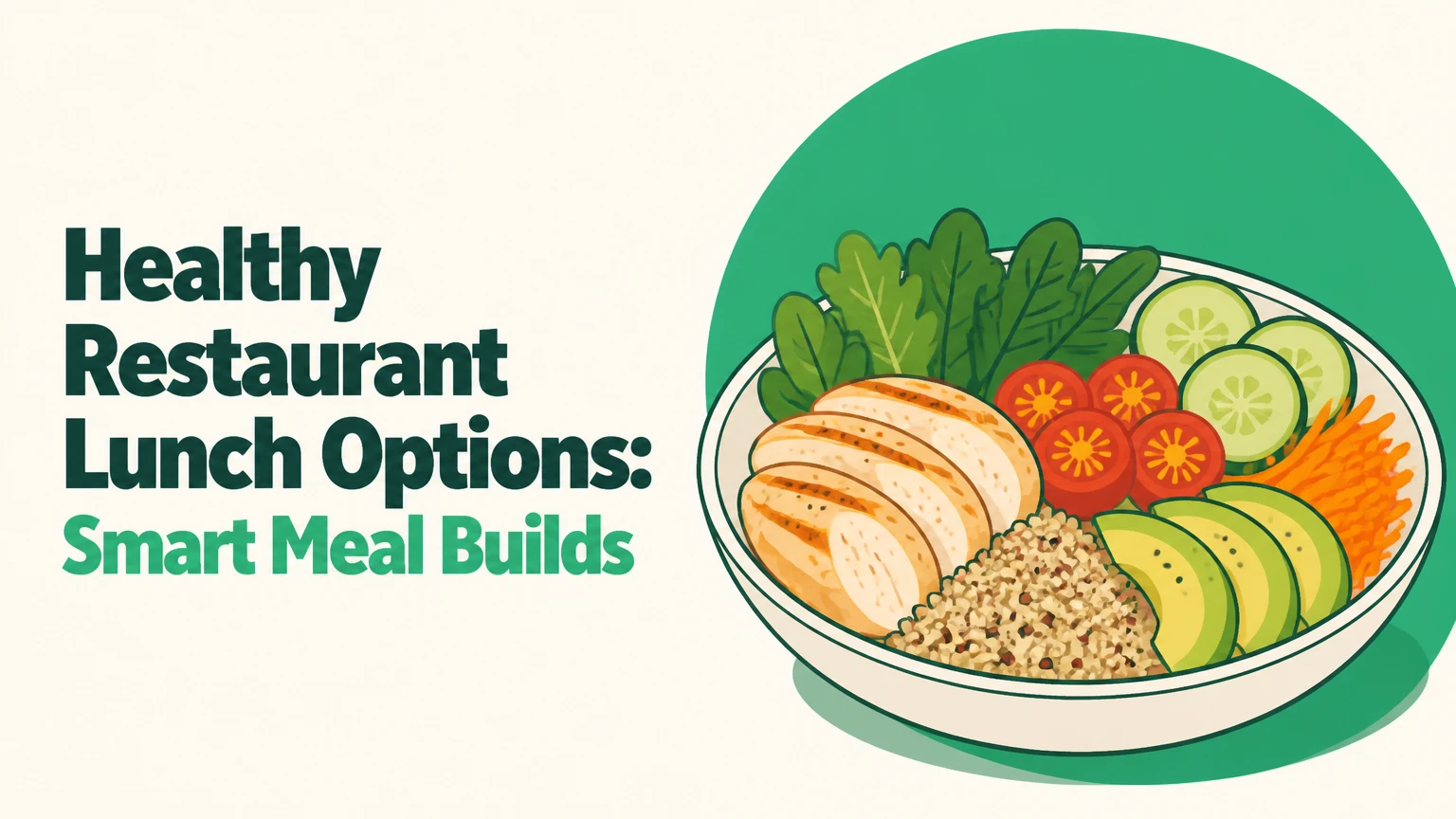
Healthy restaurant lunch options usually combine a palm-sized serving of protein, at least two portions of non-starchy vegetables, a measured high-fiber carbohydrate, and a controlled amount of sauce or added fat. The strongest choices are customizable meals such as grilled chicken grain bowls, sashimi with edamame, Mediterranean plates, and bean-based burrito bowls.
Key Facts at a Glance
- A balanced restaurant lunch commonly provides about 25-40 grams of protein and 8-15 grams of fiber.
- A side salad can become high-calorie when fried toppings, cheese, croutons, and creamy dressing are added.
- Sauces, dressings, cheese, refined grains, and sweetened drinks often contribute more excess energy than the main protein.
- Sodium is the main weakness of many healthy-looking restaurant meals, especially sushi, soups, sauces, deli meats, and seasoned bowls.
- Typical healthy lunch prices range from $8-$15 at fast-casual restaurants and $12-$25 at sit-down restaurants, depending on location.
- Brown rice is not automatically healthier than white rice; portion size, fiber intake, preparation, and overall meal composition determine the practical difference.
What Makes a Restaurant Lunch Healthy?
A healthy restaurant lunch supplies satiety, micronutrients, and usable energy without making calories, sodium, saturated fat, or added sugar unnecessarily high. The meal should contain a substantial protein source, vegetables that occupy roughly half the visual volume, a sensible carbohydrate portion, and a condiment strategy that preserves flavor without turning the meal into a sauce delivery system.
The USDA MyPlate model places fruits and vegetables at half the plate, with grains and protein making up the remaining sections. Harvard T.H. Chan School of Public Health’s Healthy Eating Plate gives a similar practical instruction: “Make half your plate vegetables and fruits.” Restaurant meals rarely follow either model automatically, so customers must assemble the balance through substitutions.
A useful restaurant target is 25-40 grams of protein, 8-15 grams of fiber, and a meal size that matches personal energy needs. Those numbers are practical ranges, not universal prescriptions. A larger lunch may suit a construction worker or endurance athlete, while a smaller meal may suit someone who snacks later or has a lower energy requirement.
How should the plate be built?
Use approximately half non-starchy vegetables, one quarter protein, and one quarter high-fiber carbohydrate, then add a small portion of unsaturated fat. Leafy greens, broccoli, peppers, cabbage, mushrooms, tomatoes, cucumber, and green beans provide volume; chicken, fish, tofu, eggs, beans, or lean beef provide protein; beans, quinoa, oats, potatoes, brown rice, or whole-grain bread provide carbohydrate and fiber.
The visual formula is more reliable than a menu label such as “light,” “clean,” or “low-fat.” A restaurant can call a salad healthy while adding 700 calories of fried chicken, candied nuts, cheese, tortilla strips, and dressing. Conversely, a modest burrito bowl can provide excellent nutrition when it includes beans, vegetables, salsa, a measured grain portion, and grilled protein.
How Do You Order a Healthy Lunch Anywhere?
The fastest method is to choose the protein first, add vegetables, select one measured carbohydrate, control sauces, and verify the cooking method. Most restaurant menus can be screened in under two minutes when the customer searches for preparation words rather than relying on the menu item’s health claims.
Step 1: Identify the protein
Choose grilled, baked, roasted, steamed, poached, or broiled chicken, fish, shellfish, tofu, tempeh, eggs, beans, lentils, or lean beef. Protein improves satiety, but “high protein” does not guarantee a balanced meal because breaded chicken, bacon, processed meat, and large cheese portions can carry substantial sodium and saturated fat.
Step 2: Add vegetables before starch
Order a side salad, steamed vegetables, grilled vegetables, vegetable soup, slaw without a sugary dressing, or a double vegetable serving. If the meal already contains potatoes, rice, noodles, bread, or tortillas, avoid adding several more starch-based sides unless the meal is intended for unusually high energy expenditure.
Step 3: Choose one carbohydrate portion
A typical practical portion is about one cupped hand of cooked rice, quinoa, pasta, beans, or potatoes, or one small tortilla. Beans count as both a carbohydrate and a protein source, but their fiber content makes them particularly useful in vegetarian meals and in burrito bowls.
Step 4: Put sauces and dressings on the side
Use a fork-dip method for vinaigrette or request one to two tablespoons when the restaurant can measure it. Cream sauces, aioli, ranch dressing, teriyaki glaze, mayonnaise-based spreads, and cheese sauces can add hundreds of calories or several hundred milligrams of sodium without increasing meal volume.
Step 5: Check cooking language
“Crispy,” “battered,” “fried,” “smothered,” “creamy,” “loaded,” and “pan-fried” often indicate added oil, breading, cheese, or sauce. “Grilled” still requires scrutiny because restaurants may brush meat or vegetables with oil and finish them with a salty glaze.
Which Restaurant Lunch Options Compare Best?
The best choice depends on the person’s objective. Mediterranean plates generally offer the strongest vegetable and healthy-fat combination, burrito bowls often deliver the most fiber per dollar, Japanese meals provide lean seafood but can be sodium-heavy, and grain bowls offer the easiest portion customization.
The figures below are typical restaurant ranges rather than laboratory measurements. Recipes, serving sizes, regional pricing, and optional toppings can change the result substantially.
| Lunch type | Typical calories | Protein and fiber | Typical price and time |
|---|---|---|---|
| Custom grain bowl | 500-750 kcal | 30-45 g protein, 8-15 g fiber | $10-$16, 5-10 minutes |
| Sashimi or sushi box | 400-700 kcal | 25-40 g protein, 3-8 g fiber | $12-$25, 10-20 minutes |
| Mediterranean grill plate | 550-800 kcal | 30-45 g protein, 6-12 g fiber | $10-$22, 12-20 minutes |
| Mexican burrito bowl | 500-850 kcal | 30-50 g protein, 10-18 g fiber | $8-$16, 5-10 minutes |
| Fast-food grilled meal | 450-800 kcal | 25-40 g protein, 4-10 g fiber | $7-$14, 5-15 minutes |
| Vegetarian lentil or tofu bowl | 450-750 kcal | 20-35 g protein, 10-18 g fiber | $9-$17, 5-15 minutes |
Are grain bowls and salads healthy?
Grain bowls and salads are healthy when the meal includes vegetables, a substantial protein source, a moderate grain or bean portion, and a dressing that is measured rather than freely poured. Grain bowls are often more filling than leaf-only salads because beans, quinoa, potatoes, or brown rice provide carbohydrate and fiber.
A strong build is spinach or kale, grilled chicken or tofu, black beans, roasted vegetables, a half portion of quinoa, and salsa or a light vinaigrette. Avocado, seeds, and nuts add unsaturated fat, but each is energy-dense, so choosing one or two is usually more practical than adding all of them.
The salad trap is structural. Fried toppings and creamy dressings can erase the nutritional advantage of vegetables, while a leaf-only salad with little protein may produce hunger within two hours. For a work lunch, request dressing separately and include at least 25 grams of protein if the next meal is several hours away.
What should you order at a Japanese restaurant?
Choose sashimi, grilled fish, edamame, seaweed salad, miso soup in a smaller portion, or sushi with vegetables and limited tempura. A salmon or tuna meal can provide high-quality protein and, in fatty fish, omega-3 fats, but soy sauce, pickled ingredients, imitation crab, and prepared sauces may raise sodium quickly.
A practical order is sashimi with edamame, cucumber or avocado rolls, and a small rice portion. Naruto rolls replace rice with cucumber, reducing carbohydrate but not necessarily sodium or total calories if mayonnaise-based fillings are used. A teriyaki box is more balanced when the sauce is light or served separately, the rice portion is modest, and vegetables replace fried sides.
Sushi is not automatically a light meal. Six to eight pieces may contain a moderate amount of rice, while specialty rolls with tempura, cream cheese, spicy mayonnaise, and sweet glaze can approach the energy content of a large entrée. Sodium may exceed 1,000 milligrams when soy sauce and seasoned components are combined.
Which Mediterranean or Middle Eastern meals work best?
Order grilled chicken, fish, or kebabs with Greek salad, roasted vegetables, hummus, and a small pita portion. Mediterranean meals can provide vegetables, legumes, olive oil, and lean protein in one order, but oil-heavy dips, oversized pita, rice, and restaurant marinades still require portion awareness.
Chicken shish tawook, grilled shrimp, lentil soup, falafel, and vegetable-based mezze are useful choices. Falafel is nutritious in principle but often deep-fried, so pair a small portion with salad and hummus rather than treating a large falafel platter as a vegetable meal.
Hummus supplies fiber and unsaturated fat, yet two or three restaurant scoops may contain more energy than expected because of oil and serving size. Ask for hummus on the side, choose either pita or rice, and add vegetables before requesting extra dip.
How do you build a healthier Mexican lunch?
Choose a burrito bowl with lettuce, grilled vegetables, beans, salsa, and grilled chicken, fish, tofu, or lean steak. A bowl can be more controllable than a flour tortilla because it separates the protein, beans, rice, toppings, and sauces, allowing the customer to reduce one component without losing the meal’s identity.
Black or pinto beans provide fiber and carbohydrate, while chicken or tofu increases protein. Brown rice is an option, not a requirement. White rice in a smaller portion can fit the same meal pattern when the bowl contains beans and vegetables, especially for someone who prefers its texture or needs easily digested carbohydrate around exercise.
The highest-impact toppings are often sour cream, queso, large cheese portions, chips, and creamy cilantro sauces. Choose salsa, pico de gallo, fajita vegetables, and one measured fat source such as guacamole. Sodium can still be high because beans, seasoning blends, salsa, and meat marinades may all contain salt.
Which Option Fits Your Specific Goal?
The best healthy restaurant lunch options change with schedule, activity, dietary restrictions, budget, and medical needs. A sedentary office worker does not necessarily need a low-carbohydrate lunch, while an athlete may perform poorly after removing all rice, potatoes, or beans.
| Situation | Recommended build | Limit or modify | Why it fits |
|---|---|---|---|
| Sedentary office day | Chicken salad, vegetables, beans, vinaigrette | Large bread, sweet drink, creamy dressing | Moderate energy with protein and fiber |
| Post-workout lunch | Burrito bowl with chicken, beans, rice, vegetables | Chips and queso if energy is limited | Supplies protein and carbohydrate for recovery |
| Low-sodium priority | Plain grilled fish, vegetables, unsalted rice, lemon | Soy sauce, soup, deli meat, packaged sauces | Removes concentrated sodium sources |
| Vegetarian lunch | Tofu or lentil bowl with quinoa and vegetables | Cheese-only meals with refined bread | Combines plant protein and fiber |
| Vegan lunch | Beans, tofu, tempeh, vegetables, whole grain | Hidden dairy sauces and processed meat substitutes | Supports protein without animal products |
| Gluten-free need | Rice bowl, sashimi, grilled meat, potatoes | Regular soy sauce, pita, flour tortilla, breading | Reduces wheat exposure, subject to cross-contact |
| Tight budget | Bean-and-vegetable bowl with one protein | Premium add-ons and delivered sides | Beans provide inexpensive fiber and protein |
| Long afternoon | Salmon bowl with vegetables and beans | Large refined-grain portion | Slower digestion and greater satiety |
What is the best low-sodium restaurant lunch?
The best low-sodium restaurant lunch is plain grilled or baked protein with unsauced vegetables, rice or potato, and lemon, vinegar, or a small amount of oil. Ask the kitchen to omit added salt when possible, because sauces, soups, cured foods, and marinades often contribute more sodium than the visible seasoning.
The American Heart Association recommends no more than 2,300 milligrams of sodium per day for most adults and identifies 1,500 milligrams as an ideal limit for many adults, especially those with high blood pressure. A single restaurant meal can consume a large share of that amount, so sodium-sensitive diners should prioritize simple preparations.
Sushi restaurants require extra care. Use little or no soy sauce, avoid miso soup and heavily seasoned rolls when sodium is restricted, and select sashimi, plain rice, edamame, and cucumber. People with hypertension, kidney disease, or clinician-prescribed sodium limits should follow individualized medical guidance rather than a generic restaurant target.
What are the best vegetarian and vegan choices?
Vegetarian and vegan diners should pair legumes or soy foods with vegetables and a substantial carbohydrate rather than ordering a meal built mainly from cheese, refined bread, or fries. Lentil soup with salad, tofu grain bowls, bean burrito bowls, falafel with vegetables, and tempeh salads are practical restaurant patterns.
Plant-based meals can be high in fiber while still low in protein if the order contains only greens and grains. Add beans, lentils, tofu, tempeh, edamame, or seitan where appropriate. Vegans should confirm that dressings, sauces, rice, beans, and breads contain no dairy, egg, butter, or animal stock.
A useful protein check is whether the meal contains at least one obvious protein-centered ingredient. If the menu lists only vegetables, rice, and sauce, the lunch may be nutritious but less filling and less suitable for a long workday.
How can people with gluten-free needs order safely?
Naturally gluten-free foods include plain rice, potatoes, beans, vegetables, eggs, fish, meat, tofu, and corn tortillas, but restaurant cross-contact can still occur through shared fryers, cutting boards, grills, and sauces. Diners with celiac disease should state the medical requirement clearly and ask about preparation procedures.
Regular soy sauce contains wheat, and teriyaki sauce, marinades, soups, breaded proteins, and spice blends may also contain gluten. Tamari may be gluten-free, but the label and kitchen practice should be verified rather than assumed. A gluten-free menu symbol is useful but does not prove that cross-contact is impossible.
What Does a Healthy Lunch Cost?
A typical healthy restaurant lunch costs $8-$16 at a fast-casual counter and $12-$25 at a sit-down restaurant in the United States. Delivery fees, premium proteins, avocado, beverages, and side dishes can add $3-$12, while local prices vary by city, country, restaurant type, and portion size.
| Budget level | Typical order | Estimated food cost | Preparation time |
|---|---|---|---|
| Economy | Beans, rice, vegetables, salsa | $7-$11 | 5-10 minutes |
| Moderate | Chicken bowl or Mediterranean plate | $10-$17 | 5-20 minutes |
| Premium | Salmon, sashimi, or specialty salad | $15-$28 | 10-25 minutes |
| Sit-down business lunch | Grilled entrée, salad, water | $18-$35 before tip | 20-45 minutes |
Build-your-own restaurants often provide the best control over protein, vegetables, grains, and sauces. They are not always the cheapest after add-ons, however. A base bowl with five premium toppings can cost more than a simpler plated meal with equal protein.
Why Do Healthy Restaurant Lunches Cause Problems?
Healthy-looking meals fail when the preparation, portion, or beverage undermines the main ingredients. The most common problems are hidden fats, concentrated sodium, refined carbohydrates, insufficient protein, and menu descriptions that emphasize ingredients while ignoring cooking methods.
The “healthy” salad is too large
Fix an overloaded salad by removing one fried topping, choosing either cheese or nuts, and requesting dressing separately. Keep the protein and vegetables, because those components usually contribute more satiety and micronutrient value than croutons, tortilla strips, or candied fruit.
The drink adds a second dessert
Sweet tea, lemonade, soda, blended coffee, and fruit drinks can add roughly 100-500 calories depending on size and recipe. Water, sparkling water, unsweetened tea, or black coffee usually keeps the meal’s energy predictable.
The meal is too low in carbohydrate
Low-carbohydrate ordering is not inherently superior for office productivity or weight control. The claim that every sedentary worker should avoid rice or bread to prevent an “insulin spike” is an oversimplification; total energy intake, fiber, meal size, sleep, activity, and individual metabolic health also influence afternoon alertness.
Add beans, potatoes, fruit, whole-grain bread, or rice when the meal is too small, the workday is long, or exercise follows lunch. Remove refined extras first, not every carbohydrate source.
The meal is healthy but still too salty
Sodium accumulates across individually reasonable ingredients. A bowl containing seasoned chicken, beans, salsa, cheese, dressing, and pickled vegetables may be nutritious yet very salty.
Request plain protein, unsalted vegetables where feasible, sauce on the side, and no added cheese. Customers managing blood pressure or kidney conditions should check available nutrition information and follow their clinician’s sodium prescription.
The meal is too small to sustain you
A leaf-only salad, broth-based soup, or six-piece vegetable roll may suit a light snack but fail as lunch. Add a protein serving and a fiber-rich carbohydrate, then reassess hunger after 15-20 minutes rather than automatically adding dessert or chips.
Expert Rules for Better Restaurant Decisions
Rule 1: Optimize the add-ons before obsessing over the base. Replacing a sugary drink, creamy dressing, or chips often changes the meal more than choosing quinoa instead of white rice. The difference between two rice varieties is usually smaller than the difference between one tablespoon and six tablespoons of dressing.
Rule 2: Count components, not health words. “Avocado,” “olive oil,” “salmon,” and “whole grain” are beneficial ingredients, but several energy-dense ingredients can produce an oversized meal when combined. Healthy food quality and total meal quantity are separate decisions.
Rule 3: Use a two-layer sodium audit. First inspect obvious salty foods such as soy sauce, cured meat, soup, cheese, and pickles. Then inspect concentrated hidden sources such as marinades, spice blends, dressings, beans, and prepared grains.
Rule 4: Choose customization when your constraint is specific. A fixed entrée is convenient, but a build-your-own bowl is better for controlling gluten, sodium, dairy, portion size, or carbohydrate. Customization also makes vegetarian and vegan protein additions easier.
FAQ
Is a restaurant salad healthier than a sandwich?
A restaurant salad is healthier than a sandwich only when its protein, dressing, toppings, and portion are favorable. A salad with fried chicken and creamy dressing can exceed the calories and sodium of a grilled chicken sandwich, while a vegetable-heavy salad with beans and vinaigrette may provide more fiber and volume.
What should I order at a fast-food restaurant?
Choose a grilled chicken sandwich or bowl, bean-based side, fruit, plain baked potato, or side salad when available, and select water or unsweetened tea. Remove creamy sauces, large fries, and sugary drinks first. Menu availability varies, so check current nutrition information rather than relying on an item’s “light” label.
Are restaurant soups healthy for lunch?
Restaurant soup can be healthy when it contains vegetables, beans, lentils, or lean protein and is not paired with a large refined-bread side. Cream soups, processed meats, and large portions may increase saturated fat and sodium. Pair a smaller soup with salad or fruit when the soup alone lacks protein and fiber.
How much protein should lunch contain?
A practical restaurant target is approximately 25-40 grams of protein for many adults, but personal needs vary with body size, age, activity, health status, and total daily intake. Chicken, fish, tofu, eggs, beans, lentils, Greek yogurt, and lean beef can supply the main protein component.
Is eating out at lunch compatible with weight loss?
Eating at restaurants can fit weight loss when portion size, beverage calories, sauces, and total daily energy intake are managed. Choose a protein-rich meal with vegetables and fiber, eat slowly, and save half of an oversized entrée before starting. No single cuisine guarantees weight loss or causes weight gain.
What is the healthiest restaurant lunch for afternoon energy?
A balanced lunch with protein, vegetables, fiber-rich carbohydrate, and water generally supports steadier energy better than a very large fried meal or a refined-carbohydrate-only snack. Individual responses differ, so track hunger and alertness after meals. Sleep, hydration, caffeine, and activity can matter as much as the menu choice.
The Bottom Line
The strongest healthy restaurant lunch options are meals that make the protein, vegetables, fiber, and sauce visible. Start with grilled fish, chicken, tofu, beans, eggs, or lentils; add two vegetable portions; choose one sensible serving of rice, potatoes, beans, quinoa, bread, or tortilla; and keep dressings, cheese, glazes, and sweetened drinks controlled.
Choose a Mediterranean plate for vegetables and flexible portions, a burrito bowl for fiber and value, a grain bowl for customization, or Japanese food for lean seafood with careful sodium management. Restaurant labels are imperfect. The most reliable decision comes from reading ingredients, preparation methods, portions, and condiments together.