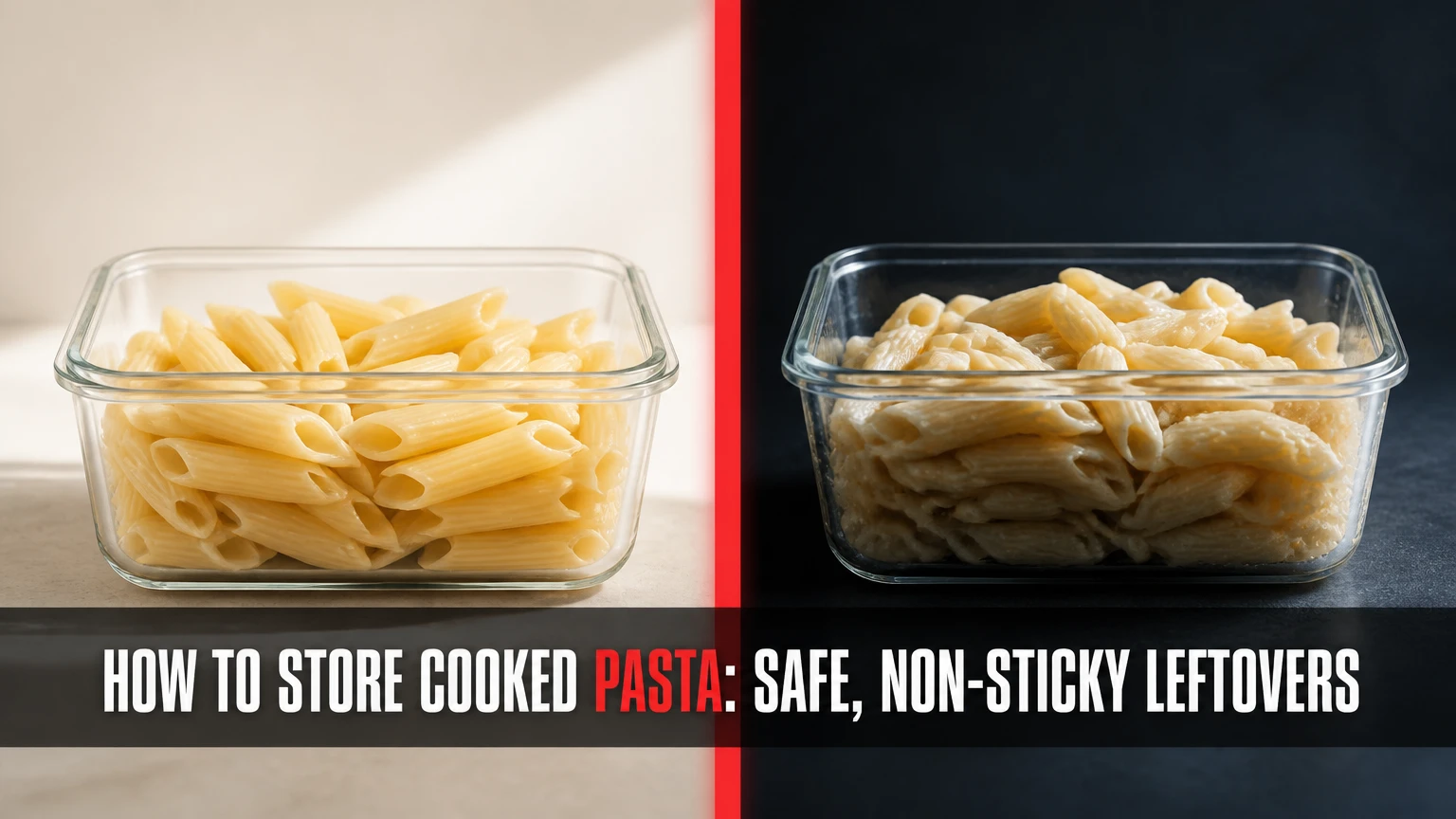
To store cooked pasta, drain it thoroughly, cool it quickly in a shallow container, separate plain noodles with a small amount of oil, and refrigerate it below 40°F within two hours. Eat refrigerated pasta within 3-4 days, or freeze suitable portions for about 2-3 months, then reheat with added moisture.
Key Facts at a Glance
Cooked pasta belongs in a refrigerator at 40°F (4°C) or colder.
Refrigerate pasta within two hours, or within one hour when the surrounding temperature exceeds 90°F (32°C).
USDA guidance gives most cooked leftovers a 3-4-day refrigerated storage window.
Shallow containers cool pasta more safely and quickly than deep, tightly packed containers.
Plain pasta freezes best in sturdy shapes such as penne, rigatoni, and macaroni.
Warm water, steam, or sauce restores flexibility to pasta that sticks during refrigeration.
Why Storage Changes Cooked Pasta Texture
Cooked pasta texture changes because gelatinized starch continues to lose and redistribute water during cooling. Pasta exposed to air becomes dry and leathery, while pasta trapped in excess water or condensation becomes soft; refrigeration also encourages starch retrogradation, which makes noodles firmer and sometimes brittle.
Wheat pasta absorbs water during boiling as starch granules swell. Cooling allows some starch molecules to realign, creating a firmer refrigerated texture. Reheating with steam, hot water, or sauce loosens that structure without fully recreating freshly boiled pasta.
Oil reduces surface-to-surface contact between plain noodles, but oil cannot stop pasta from sticking if the strands are wet, compressed, or chilled in one large mass. Thorough draining and shallow packing matter more than adding a large quantity of oil.
What temperature keeps cooked pasta safe?
A refrigerator at 40°F (4°C) or colder slows bacterial growth in cooked pasta. The range from 40°F to 140°F (4°C to 60°C) is commonly called the food safety danger zone, where bacteria can multiply more rapidly in moist foods.
Bacillus cereus is especially relevant because its spores can survive cooking and later produce toxins if cooked starches remain warm for too long. Reheating may kill some bacteria, but it does not reliably neutralize every toxin. Safety therefore depends on prompt cooling and cold storage, not on reheating alone.
The U.S. Department of Agriculture states, “Refrigerate leftovers within two hours,” with a one-hour limit when food is exposed to temperatures above 90°F (32°C). That rule is more accurate than treating one hour as the universal limit.
How to Store Cooked Pasta Safely
The safest method uses six actions: finish cooking at the desired texture, drain completely, cool in a shallow layer, separate plain noodles, seal portions, and refrigerate promptly. The full process usually takes 10-20 minutes, costs less than $1 in storage materials per batch, and succeeds when pasta reaches a cold refrigerator without sitting at room temperature.
Before you start
| Item | Practical specification | Typical quantity |
|---|---|---|
| Shallow storage container | Food-safe, no more than 2 inches deep | 1 per 2-4 servings |
| Storage portion | 1.5-2 cups cooked pasta | 1 portion |
| Oil for plain pasta | Olive, avocado, or neutral oil | 1-2 teaspoons per pound |
| Refrigerator temperature | 40°F (4°C) or colder | Verify with appliance thermometer |
| Label | Date and sauce type | 1 per container |
Step 1: Cook pasta to the intended final texture
Cook pasta 1-2 minutes less than the package time only when you plan to finish it in hot sauce or boiling water. Pasta intended for a cold salad should be cooked fully but remain firm, because refrigeration will make it feel denser.
Do not undercook delicate fresh pasta, egg noodles, or gluten-free pasta by an arbitrary minute. Those varieties can become crumbly or split during reheating. A better checkpoint is a firm center without a raw flour taste.
You’ll know it worked when: the pasta bends but still offers resistance in the center.
Common mistake: undercooking pasta that will only be microwaved, leaving a hard core after storage.
Step 2: Drain pasta completely
Pour pasta into a colander and shake it for 10-15 seconds. Tubes such as rigatoni and shells can hold water inside, while farfalle and spirals retain moisture in folds and ridges.
Do not let drained pasta sit in a pool beneath the colander. Transfer it immediately to a wide tray, or use a second dry bowl for portioning. Residual boiling water continues softening the surface starch.
You’ll know it worked when: no visible water collects beneath the noodles.
Common mistake: relying on a brief drain for filled shapes, which can leave hot water inside the pasta.
Step 3: Cool pasta rapidly in a shallow layer
Spread plain pasta across a rimmed baking sheet or divide it among shallow containers. Aim for a layer about 2 inches deep or less, because a thinner mass loses heat more quickly than a deep bowl.
Hot pasta does not need to reach room temperature before refrigeration. The Food and Drug Administration Food Code emphasizes rapid cooling, and a household cook can achieve that by using shallow portions and leaving the lid slightly offset briefly if condensation is excessive. Seal the container once the steam subsides, then keep it cold.
You’ll know it worked when: pasta is no longer steaming heavily and the container is moving into a refrigerator within two hours.
Common mistake: leaving a full stockpot on the counter for several hours “to cool,” which extends bacterial growth time.
Step 4: Decide whether to rinse the noodles
Rinse cooked pasta under cold water when you are storing it for a cold pasta salad or need to stop cooking immediately. Skip rinsing when the pasta will become a hot dish and you want its surface starch to help sauce cling.
Cold water removes loose surface starch and lowers the noodle temperature quickly. The trade-off is weaker sauce adhesion, which matters for spaghetti with tomato sauce, buttered noodles, and pasta finished in a skillet.
You’ll know it worked when: rinsed noodles feel cool and separate, while unrinsed noodles remain suitable for sauce finishing.
Common mistake: rinsing every batch, then wondering why the sauce slides off the pasta.
Step 5: Separate plain pasta with a small amount of oil
Toss plain, fully drained pasta with approximately 1-2 teaspoons of oil per pound of cooked pasta. Use just enough to coat surfaces lightly, because excess oil can make sauce slide off during reheating.
Oil is most useful for noodles stored separately for meal prep, especially spaghetti, linguine, and fettuccine. It is less useful for pasta that will be mixed with sauce immediately, where direct sauce storage prevents surface drying and eliminates the need for a separate anti-stick coating.
You’ll know it worked when: noodles separate with light finger pressure rather than forming a compact block.
Common mistake: adding several tablespoons of oil, which creates a greasy surface and weakens sauce contact.
Step 6: Pack, label, and refrigerate
Divide pasta into serving portions and place it in airtight containers or heavy-duty resealable bags. Press excess air from bags, leave enough room for expansion in freezer containers, and write the storage date on every package.
Place pasta in the refrigerator as soon as it is portioned. A refrigerator door is warmer and experiences more temperature fluctuation than an interior shelf, so store leftovers toward the back of the main compartment.
You’ll know it worked when: each container is dated, sealed, portion-sized, and cold within the two-hour safety limit.
Common mistake: storing one large compressed mass, which cools slowly and forces repeated warming during serving.
How Long Does Cooked Pasta Last?
Cooked pasta lasts 3-4 days in a refrigerator at 40°F (4°C) or colder, whether it is plain or mixed with a properly handled sauce. Freezing extends quality storage to about 2-3 months, although frozen pasta remains safe longer when continuously frozen, while texture gradually declines.
The USDA’s 3-4-day leftover recommendation is a conservative household standard. Count storage time from cooking, not from the moment pasta is transferred into a container. Pasta left on a buffet or counter for more than two hours should not be “reset” by refrigeration.
| Storage method | Recommended quality window | Temperature | Best use |
|---|---|---|---|
| Plain pasta, refrigerated | 3-4 days | 40°F or colder | Meal prep and flexible dinners |
| Sauced pasta, refrigerated | 3-4 days | 40°F or colder | Fast reheating and baked dishes |
| Plain pasta, frozen | 2-3 months | 0°F (-18°C) | Batch cooking and waste reduction |
| Pasta salad, refrigerated | 3-4 days | 40°F or colder | Packed lunches and picnics |
Should Pasta and Sauce Be Stored Together?
Store pasta and sauce separately when texture, portion flexibility, or reheating quality matters most. Store them together when convenience matters more and the pasta will be eaten within a day or two, because sauce gradually migrates into the noodles and softens them.
Separate storage works well for families, meal preppers, and pasta dishes with thin sauces. It also allows one container of noodles to pair with marinara, pesto, broth, or a stir-fry sauce. Store sauce in a separate shallow container so it cools at a similar rate.
Combined storage suits baked ziti, lasagna, macaroni and cheese, and thick tomato sauces. Cream sauces may separate after chilling, while oil-based sauces can look greasy, but those texture changes are usually quality issues rather than automatic safety failures.
| Pasta preparation | Refrigerated texture after 24 hours | Reheating method | Storage recommendation |
|---|---|---|---|
| Plain spaghetti | Firm, potentially clumped | Boiling water, 20-30 seconds | Store lightly oiled |
| Penne with marinara | Softened, sauce absorbed | Covered skillet, 3-5 minutes | Together or separate |
| Macaroni and cheese | Thickened sauce | Microwave with 1 tablespoon milk | Store together |
| Pesto linguine | Oil may separate | Skillet over low heat, 2-4 minutes | Store separate when possible |
| Lasagna | Set layers, cohesive filling | Oven at n/a, 350°F for 20-30 minutes | Store together |
Can You Freeze Cooked Pasta?
You can freeze cooked pasta for approximately 2-3 months, with the best results from short, sturdy shapes such as penne, fusilli, rigatoni, and macaroni. Freeze pasta after rapid cooling, coat it lightly with oil, portion it, and remove excess air before sealing.
Flash-freezing in a single layer for 30-60 minutes reduces the formation of one solid block. After the pieces become firm, transfer them to a freezer bag or freezer container. Label the package with the date and shape.
Long strands can be frozen, but spaghetti and angel hair tend to clump and break during thawing. Fresh egg pasta has a softer structure and may become more delicate after freezing. Tomato-based sauces generally freeze more successfully than cream sauces, because dairy emulsions can separate into watery and greasy components.
Do not freeze pasta that has already spent too long at room temperature. Freezing pauses microbial growth but does not make mishandled food safe.
How Should You Reheat Stored Pasta?
Reheat refrigerated pasta with moisture and moderate heat, using boiling water for plain noodles, a covered skillet for sauced pasta, or a covered microwave dish with a splash of water. The best method depends on the pasta’s shape, sauce, and portion size.
| Reheating method | Portion | Time and setting | Best result |
|---|---|---|---|
| Boiling water | 1-2 cups plain pasta | 20-30 seconds | Loosens strands without drying |
| Microwave | 1 cup sauced pasta | 60-90 seconds at high, stir halfway | Fast individual serving |
| Covered skillet | 2 cups sauced pasta | Low-medium heat, 3-5 minutes | Even sauce reheating |
| Oven | 4-6 cups baked pasta | 350°F, 20-30 minutes covered | Casseroles and lasagna |
| Frozen boiling water | 1-2 cups plain pasta | 45-90 seconds | No thawing required |
Boiling water is the most reliable rescue for a clump of plain pasta. Drop the noodles into simmering or boiling water for 20-30 seconds, drain, and finish with sauce.
For microwave reheating, add 1-2 teaspoons of water per cup of pasta and cover the dish loosely. Steam softens the noodles and reduces the dry edges that develop when pasta is heated uncovered.
Frozen pasta can often go directly into boiling water or a simmering sauce. Thawing it overnight increases handling time and may produce a softer result without improving safety.
What Containers and Portions Work Best?
Airtight glass or food-safe plastic containers both work when they seal properly and allow shallow packing. Glass resists tomato staining and handles oven reheating when labeled oven-safe, while plastic weighs less and is convenient for packed lunches.
Use one container for each meal portion when possible. A typical serving is 1.5-2 cups of cooked pasta, though a family dinner may require 4-6 cups in a shallow casserole-style container.
| Container type | Typical cost | Best capacity | Main limitation |
|---|---|---|---|
| Plastic meal-prep box | $1-$4 each | 2-4 cups | Tomato staining and odor retention |
| Glass storage dish | $5-$12 each | 3-8 cups | Heavy and breakable |
| Freezer bag | $0.15-$0.40 each | 2-6 cups | Pasta can compress and break |
| Silicone freezer pouch | $8-$20 each | 2-6 cups | Higher initial cost |
Leave about 1 inch of headspace in rigid freezer containers for expansion. Press air from freezer bags without crushing delicate noodles. Avoid storing pasta in the original cooking pot, because deep metal or ceramic vessels cool slowly and encourage uneven temperatures.
What Changes for Pasta Salad, Fresh Pasta, and Specialty Shapes?
Pasta salad should be rinsed and cooled promptly, then refrigerated in a shallow sealed container. Fresh pasta, egg noodles, and gluten-free pasta need gentler handling because their structure softens or breaks more readily after chilling.
For pasta salad, rinse away loose starch, drain thoroughly, and mix with dressing only after the noodles are cool. Mayonnaise, dairy, meat, seafood, and cut vegetables can introduce separate safety concerns, so keep the finished salad at 40°F or colder during transport.
Fresh filled pasta, including ravioli and tortellini, should be drained carefully and stored with a small amount of sauce or oil to prevent tearing. Reheat it gently in simmering water rather than vigorous boiling.
Gluten-free pasta often becomes softer after refrigeration because its starch blend differs from durum wheat pasta. Store it in sauce when practical, reheat it briefly, and avoid repeated heating cycles.
Common Mistakes and How to Fix Them
Stored pasta problems usually result from excess water, delayed chilling, excessive oil, or dry reheating. The remedy depends on whether the problem affects safety or only texture.
- Pasta is a solid clump: Add the noodles to hot water for 20-30 seconds, or microwave them covered with a teaspoon of water per cup. Separate gently with tongs rather than pulling strands apart while cold.
- Pasta is watery and mushy: Do not try to reverse the texture. Drain it, combine it with eggs and cheese for a baked pasta frittata, or use it in a casserole where additional cooking is controlled.
- Pasta is dry or leathery: Reheat it covered with sauce, broth, or 1-2 teaspoons of water per cup. Dry pasta usually indicates a poor seal or too much exposed air.
- Sauce is greasy or curdled: Warm cream-based pasta gently over low heat and add a tablespoon of water or milk. High heat makes separated emulsions worse.
- Pasta smells sour or feels slimy: Discard it without tasting. Sour odor, slime, mold, or unusual discoloration indicates spoilage, and reheating is not a safe correction.
- Pasta stayed out overnight: Throw it away. Refrigeration after prolonged room-temperature exposure does not reliably remove the risk from bacterial growth or toxins.
Expert storage rules that prevent most failures
- Do not cool pasta by waiting on the counter. Spread pasta thinly and refrigerate it promptly; food safety depends on time and temperature, not on reaching room temperature first.
- Oil is a texture tool, not a safety treatment. A teaspoon can separate plain noodles, but no amount of oil makes pasta safe after extended warm holding.
- Deep containers are the hidden problem. A shallow 2-inch layer cools more evenly than a tightly packed 6-inch bowl, even when both enter the refrigerator at the same time.
Situational Storage Choices
Meal preppers should cook sturdy pasta slightly firm, cool it in individual portions, and store sauce separately when meals will vary across the week. Reheat each portion in boiling water for 20-30 seconds or directly in simmering sauce.
Families should use dated glass or plastic containers and separate pasta from sauce when children need different portions. Individual containers reduce repeated warming, while a large sauced casserole works better for lasagna or baked ziti.
Cooks preparing pasta for a cold salad should rinse it under cold water, drain it aggressively, and chill it before adding dressing. The salad should remain refrigerated during transport and should not sit on a warm table for several hours.
Freezer users should choose penne, rigatoni, fusilli, or macaroni, freeze portions in a single layer, and thaw only what they need. Angel hair, delicate fresh pasta, and cream-heavy dishes are poor candidates when the final texture matters.
Frequently Asked Questions
Can you put cooked pasta in the fridge while it is still warm?
Yes, cooked pasta can go directly into the refrigerator when divided into shallow portions. A large steaming pot should not enter the refrigerator because its depth slows cooling and may warm nearby food. Spread pasta into containers no deeper than about 2 inches, then refrigerate within two hours.
Is it better to store pasta dry or in sauce?
Store pasta separately from sauce when you want firmer noodles, flexible meal combinations, or better texture after more than one day. Store pasta in sauce for baked dishes and immediate convenience. Plain noodles need light oil or rapid reheating to prevent clumping.
Can you leave cooked pasta in water before storing it?
No. Drain cooked pasta before storage because standing water continues hydrating the starch and produces a soft, swollen texture. A brief rinse is appropriate for pasta salad, but rinsed noodles still need thorough draining before packaging.
How can you tell whether refrigerated pasta is still safe?
Safe-looking pasta can still be mishandled, so storage time and temperature matter more than appearance. Discard pasta kept above 40°F for more than two hours, or any pasta with slime, mold, sour odor, or unusual color. Never taste food to test whether it is safe.
Can cooked pasta be reheated twice?
Cooked pasta can be reheated twice only if each cycle is brief and the unused portion returns to refrigeration promptly. Repeated warming degrades texture and increases handling risk. Reheat one serving at a time, rather than heating and cooling the entire container.
How long can pasta stay in a lunch bag?
Cooked pasta should remain in an insulated lunch bag with sufficient ice packs to stay at 40°F or colder. Without reliable cold storage, follow the two-hour limit, or one hour when the surrounding temperature exceeds 90°F. A sealed container alone does not keep pasta safe.
The Bottom Line
The reliable method for how to store cooked pasta is simple: drain it fully, cool it in shallow portions, refrigerate it within two hours, and eat it within 3-4 days. Use light oil for plain noodles, separate sauce when texture matters, and freeze sturdy shapes for roughly 2-3 months. Reheat with steam, hot water, or sauce rather than dry heat.