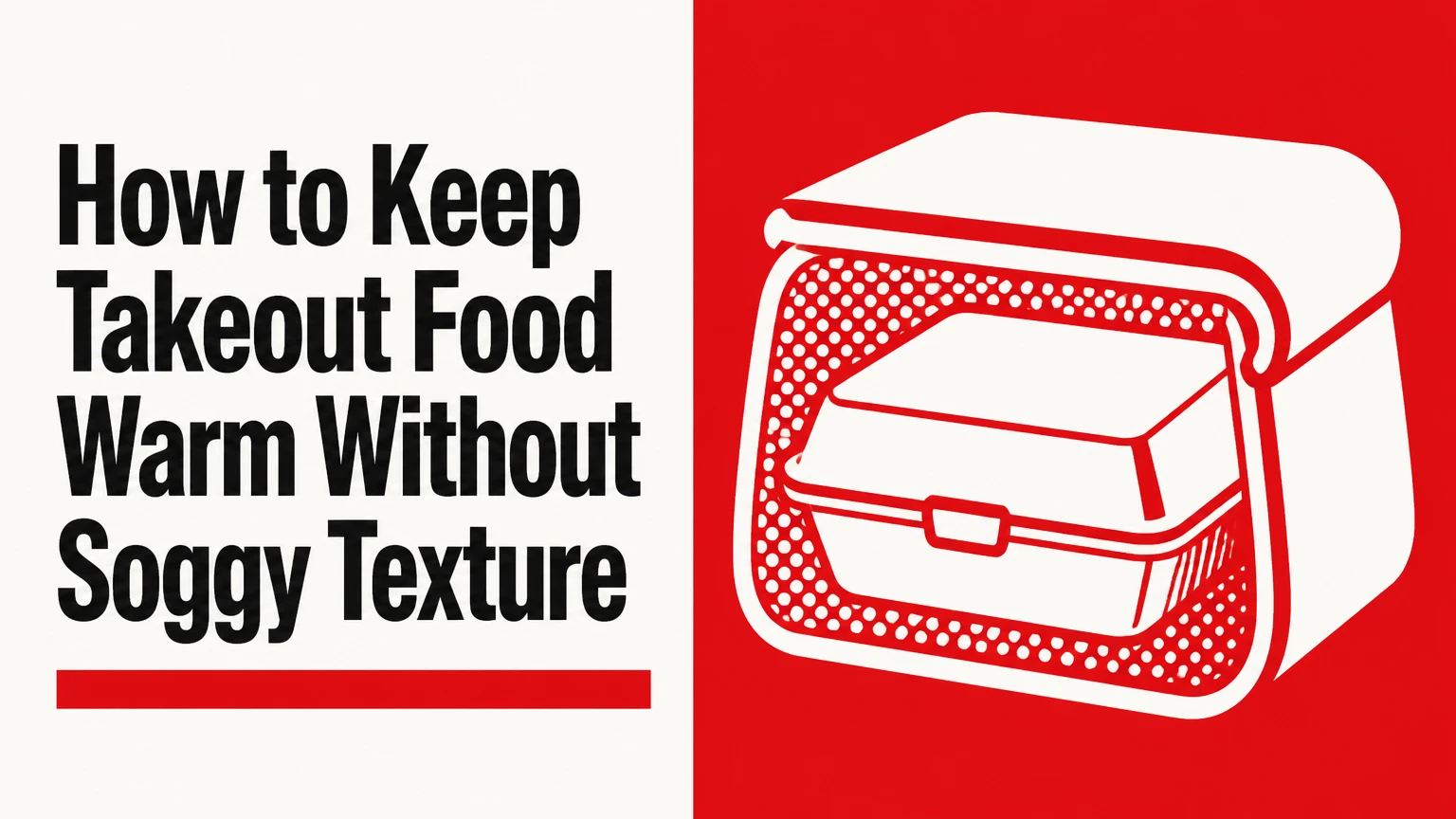
To keep takeout food warm, retain heat with insulated packaging or a low oven, then manage steam according to the dish. Keep hot food at or above 140°F, eat it within two hours at room temperature, and reheat cooled food to 165°F before serving. The most effective method depends on delay length, packaging, and texture.
Key Facts at a Glance
USDA guidance places the food danger zone between 40°F and 140°F.
Takeout held at room temperature should be eaten within two hours, or within one hour when temperatures exceed 90°F.
A food thermometer should read at least 140°F during hot holding.
Reheat cooled leftovers to 165°F, measured at the thickest or coolest part.
Fried foods need ventilation; rice, bread, soups, and curries need moisture retention.
An insulated bag slows cooling during transport but cannot safely warm cold food.
What Is the Best Way to Keep Takeout Food Warm?
The best method is an insulated thermal bag for transport under 60 minutes, a low oven for a one- to two-hour delay, and a chafing dish or bain-marie for a gathering with soups, curries, or other moist foods. Crispy foods need airflow, while dense or saucy foods benefit from covered holding.
The practical objective has two parts: slow heat loss and prevent texture damage. A sealed container reduces conduction and convection, but trapped steam condenses on fried coatings. An uncovered wire rack improves crispness, yet exposed food loses heat faster.
USDA Food Safety and Inspection Service guidance uses the simple rule, “Keep hot food hot and cold food cold.” Temperature matters more than whether the container feels warm. A paper bag can feel hot while the center of a large rice or meat portion has already cooled below the safe holding threshold.
For a short delay, leave suitable packaging closed inside an unheated microwave or turned-off oven. For a longer delay, transfer food into cookware that matches the heating method. Never place a foam container, plastic takeout tub, or coated paper box in a heated oven unless the manufacturer specifically identifies it as oven-safe.
How Does Takeout Food Lose Heat?
Takeout food cools through conduction, convection, radiation, and evaporation. Insulation reduces contact with cold air and surfaces, covering limits evaporation, and ventilation removes steam that would otherwise condense and damage crisp textures.
- Conduction: Heat moves from food into the container, counter, plate, or cold vehicle interior. A towel, insulated bag, or warm serving plate reduces that transfer.
- Convection: Moving air carries heat away. Drafts, air-conditioning vents, and an open delivery bag accelerate cooling.
- Radiation: Hot food emits infrared energy toward cooler surroundings. Aluminum foil can reduce radiant loss, but its benefit is smaller than proper insulation and correct covering.
- Evaporation: Water leaving the food removes heat. Evaporation cools food while also drying bread, rice, and meat.
- Condensation: Steam hits a cooler lid and becomes liquid water. The result is soggy fries, softened fried chicken, and wet pizza crust.
Foil is therefore a moisture-control tool, not a complete warming system. A foil tent around wings allows steam to escape, while tightly wrapped foil around naan retains the humidity that keeps bread flexible.
What Should You Prepare Before the Food Arrives?
Prepare a thermometer, a suitable heating appliance, heat-safe cookware, foil, a wire rack, and a clean insulated bag before collecting the order. The minimum useful setup costs nothing if you already have an oven, microwave, clean towel, and metal baking sheet.
| Item | Typical quantity or setting | Purpose | Important limitation |
|---|---|---|---|
| Instant-read thermometer | 1, reading 32°F-212°F | Measures the food center | Surface temperature can mislead |
| Low oven | 170°F-200°F | Holds covered meals | May continue cooking delicate food |
| Wire rack | 1, raised 1-2 inches | Circulates air around fried food | Exposed food cools faster |
| Aluminum foil | 1 sheet per dish | Tents or seals food | Do not use in a microwave |
| Insulated thermal bag | 1 sized to order | Slows transport cooling | Does not reheat food |
| Warm serving plate | 1 per diner | Reduces immediate heat loss | Do not overheat ceramic |
Keep cold foods, such as sushi, salad, ice cream, and chilled drinks, in a separate bag. Cold items draw heat from hot containers when packed together, and condensation can spread between packages.
Step-by-Step: How to Keep Takeout Food Warm
The following process handles most orders from pickup through serving. It takes about 5-10 minutes to set up, requires low to moderate effort, and succeeds when the food reaches the table above 140°F without unnecessary steam accumulation.
Step 1: Shorten the Transport Time
Collect hot takeout last, drive directly home, and place the order in an insulated bag immediately. Keep the bag closed, position containers upright, and prevent air-conditioning vents from blowing directly onto the food.
A typical insulated bag keeps restaurant food acceptably warm for 30-60 minutes, although the result depends on starting temperature, container size, outside temperature, and the number of containers inside. Dense soups generally retain heat longer than fries or thin sandwiches.
Success checkpoint: The containers are still hot when opened, and no cold drinks share the hot-food compartment.
Common mistake: Running errands after pickup. Delaying the trip increases both temperature loss and food-safety risk.
Step 2: Inspect the Packaging
Separate food by texture and identify which containers can tolerate heat. Transfer meals from foam, unknown plastic, plastic bags, and coated paper into glass, ceramic, stainless steel, or oven-safe aluminum before using an oven.
Microwave-safe and oven-safe are different labels. A plastic container may tolerate microwave heating but deform in a 180°F oven, while aluminum may work in an oven but cannot go into a microwave.
Success checkpoint: Every container in the heating appliance has a clear compatibility rating or has been replaced with heat-safe cookware.
Common mistake: Putting the entire restaurant bag into a heated oven. Paper handles, plastic lids, and grease can scorch or melt.
Step 3: Choose the Holding Method
Use an unheated chamber for a delay of 20-30 minutes, a low oven for 30-120 minutes, or a chafing dish for a planned meal lasting up to about two hours. Select the method by food type rather than convenience alone.
| Delay and situation | Recommended method | Temperature or setup | Best food examples |
|---|---|---|---|
| 0-30 minutes at home | Unheated microwave or oven | Door closed, appliance off | Burgers, rice bowls, curry |
| 30-120 minutes | Low conventional oven | 170°F-200°F, covered as needed | Chicken, roasted meat, pizza |
| 60-240 minutes at a gathering | Chafing dish | Gentle water bath or fuel heat | Chili, soup, curry |
| Up to 60 minutes in transit | Insulated thermal bag | Closed, dry, separated from cold food | Pizza, noodles, boxed meals |
| Immediate serving for crisp food | Wire rack and brief oven | About 200°F for 5-10 minutes | Fries, wings, samosas |
Success checkpoint: The selected method matches both the delay and the dish’s moisture requirements.
Common mistake: Holding every item in the same sealed container. Crisp and moist foods need opposite packaging decisions.
Step 4: Hold Moist Foods Covered
Transfer soups, curries, stews, saucy pasta, rice, and braised meat into a covered heat-safe pot or dish. Add one to two teaspoons of water or broth per serving only when the food is already drying, because excess liquid dilutes sauces and softens rice.
For a bain-marie, place 1-2 inches of water in the lower pan and maintain a gentle simmer or low heat. The food container sits above the water or in the compatible insert, not directly against an uncontrolled burner.
Success checkpoint: The sauce remains fluid, the food does not stick, and the center remains at least 140°F.
Common mistake: Boiling the water aggressively. Strong bubbling overheats the edges, evaporates sauce, and can make meat tough.
Step 5: Vent Crispy Foods
Move fries, fried chicken, wings, tempura, samosas, and onion rings onto a wire rack over a baking sheet. Use a loose foil tent or leave the food uncovered, and heat it briefly at approximately 200°F.
Do not stack fried pieces deeply. A pile traps steam in the center, so the top may remain crisp while the lower layers become soft. Five to ten minutes is usually enough to remove surface moisture, but longer holding continues to dry the coating.
Success checkpoint: The coating feels dry and firm rather than wet, and the interior remains hot.
Common mistake: Sealing fried food in an airtight plastic tub. The trapped steam becomes condensation and destroys crispness.
Step 6: Check the Core Temperature
Insert an instant-read thermometer into the thickest part of meat or the center of a dense container, avoiding the bottom of the dish. Stir soups, sauces, and rice before measuring because hot and cool zones form during holding.
For home hot holding, use 140°F as the conservative target aligned with USDA consumer guidance. The FDA Food Code 2022 uses 135°F or above for hot holding in many retail and food-service settings, so restaurant compliance and home guidance are not identical.
Success checkpoint: The coolest measured portion is at least 140°F.
Common mistake: Touching the outside of a warm box and assuming the food center is safe. Packaging temperature is not an internal reading.
Step 7: Serve on Warm Plates
Warm ceramic plates with hot tap water, dry them, and serve immediately. Alternatively, place oven-safe plates in a low oven for about two minutes, checking that the material is approved for that use.
A cold plate pulls heat from the meal quickly, especially from thin foods such as fries, burgers, crepes, and pizza slices. A warm plate cannot make unsafe food safe, but it reduces the initial temperature drop after serving.
Success checkpoint: The food reaches the table immediately after plating, with sauces still fluid and crisp foods still exposed to air.
Common mistake: Preheating ordinary glass or chilled ceramic abruptly. Thermal shock can crack the plate.
Which Warming Method Fits Each Takeout Order?
A low oven is the most versatile home option, while an insulated bag is the best transport tool and a bain-marie gives the best control for liquid foods. No single method protects temperature, texture, packaging, and energy use equally well.
| Method | Typical cost | Practical holding window | Temperature control | Best use |
|---|---|---|---|---|
| Unheated microwave chamber | $0 | 20-30 minutes | Low, passive retention | One order eaten soon |
| Low conventional oven | Existing appliance | 30-120 minutes | Moderate, 170°F-200°F | Multi-item meals |
| Insulated thermal bag | $10-$40 | 30-60 minutes | Declining temperature | Car or transit |
| Bain-marie | $0-$30 | 60-120 minutes | Gentle, moisture-rich heat | Soup, curry, gravy |
| Chafing dish | $20-$80 | 60-240 minutes | Fuel-dependent | Party buffet |
| Air fryer | Existing appliance | 5-15 minutes | High surface heat | Crisping fried food |
The unheated chamber is passive insulation, not active heating. It works because a closed, draft-free space slows heat loss, but it becomes a poor choice when the meal has already cooled substantially.
The low oven handles varied dishes, but it can dry meat and overcook vegetables. A chafing dish maintains food rather than rapidly warming it, so cold takeout should be reheated separately before transfer.
Is an Insulated Bag Better Than Foil?
An insulated bag is better than foil alone for transport because it limits convective heat loss around the entire order. Foil helps retain radiant heat and moisture around an individual item, but a foil-wrapped container still cools quickly if surrounding air remains cold.
Use a clean towel around a pizza box or foil-wrapped bread inside the bag, leaving a small vent for foods that must stay crisp. Do not pack hot and cold items together, and do not use a damp towel because moisture encourages condensation and can soften paper packaging.
How Should You Keep Specific Takeout Foods Warm?
Food-specific warming works because different meals fail in different ways. Fries lose crispness from condensation, rice loses moisture through evaporation, and soups tolerate covered holding because their high water content distributes heat effectively.
| Takeout food | Container treatment | Holding setup | Typical quality window |
|---|---|---|---|
| Fries or onion rings | Uncovered or loose foil tent | Wire rack at about 200°F | 5-15 minutes |
| Fried chicken or wings | Single layer, vented | Rack, brief low oven | 10-20 minutes |
| Pizza | Box vented or slices on rack | 170°F-200°F oven | 20-45 minutes |
| Rice or naan | Tight foil or covered dish | 170°F-180°F oven | 30-60 minutes |
| Curry, soup, or stew | Covered heat-safe pot | Bain-marie or low burner | 60-120 minutes |
| Burger or sandwich | Wrap loosely, separate fries | Low oven, bread protected | 15-30 minutes |
| Sushi or chilled salad | Keep refrigerated | Separate cold bag | Do not warm |
How Do You Keep Pizza Warm?
Keep pizza in its box for a short delay, vent the lid slightly, and place the box in a turned-off oven for up to 20-30 minutes. For a longer delay, transfer slices to a rack or sheet and warm them at 170°F-200°F, because a sealed box traps steam and softens the crust.
Do not place a cardboard pizza box in an active oven unless its manufacturer explicitly permits that temperature. Grease, printed coatings, and box adhesives can create fire or odor hazards.
How Do You Keep Fries and Fried Chicken Crisp?
Keep fries and fried chicken in a single layer on a wire rack, uncovered or loosely tented, at about 200°F for 5-10 minutes. Air circulation removes surface moisture, while brief heat restores some crispness without drying the interior as severely as prolonged oven holding.
An air fryer can improve the surface faster, usually at 300°F-375°F for 2-5 minutes, but the higher heat can burn thin coatings and dry small pieces. Re-crisp only the portion being served.
How Do You Keep Rice, Naan, and Bread Soft?
Keep rice, naan, tortillas, and bread tightly covered with foil or a lid at 170°F-180°F. Add a teaspoon of water per serving to rice only when needed, and avoid leaving bread uncovered in a dry oven because evaporation makes it tough.
Rice has an additional safety concern. Bacillus cereus spores can survive cooking, and improper cooling allows toxin formation. Holding rice warm is safer than leaving it lukewarm, while rice that will not be eaten promptly should be refrigerated quickly in shallow containers.
How Do You Keep Curry, Soup, and Stew Warm?
Keep curry, soup, and stew covered in a heat-safe pot over low heat or in a bain-marie, stirring every 15-20 minutes. These foods retain heat well because their liquid phase transfers heat throughout the container, but thick sauces can scorch at the bottom.
A chafing dish works well for service lasting several hours only when the food remains above the applicable hot-holding threshold and the fuel is monitored. Quality still declines before the food becomes visibly unsafe, particularly for cream sauces, seafood, and tender vegetables.
How Long Is Takeout Food Safe to Keep Warm?
Takeout food is generally safe for up to two hours outside temperature control, or one hour when the surrounding temperature exceeds 90°F. Food held continuously at or above 140°F remains within conservative home hot-holding guidance, but quality commonly declines after one to two hours.
| Situation | Action | Time limit or target |
|---|---|---|
| Hot food at or above 140°F | Continue holding and monitor | Check every 30-60 minutes |
| Food between 40°F and 140°F | Eat promptly or reheat | Maximum 2 hours |
| Outdoor temperature above 90°F | Eat, refrigerate, or discard | Maximum 1 hour |
| Food cooled below 140°F for under 2 hours | Reheat before eating | 165°F internal |
| Food left in the danger zone beyond limit | Discard | Do not taste-test |
| Food intended for later | Refrigerate in shallow containers | Within the same 2-hour window |
The two-hour rule is not a license to keep food lukewarm for two hours and then hold it indefinitely. Time accumulates across pickup, driving, counter storage, serving, and table time.
For long delays, refrigerate the food rather than trying to preserve marginal warmth. Divide large portions into shallow containers, refrigerate promptly, and reheat only the amount needed.
What Should You Do If Takeout Gets Cold?
If takeout has been below 140°F for less than two hours, reheat the portion to 165°F and serve it immediately. If the food exceeds the applicable time limit in the danger zone, discard it because reheating may not destroy toxins that formed during improper holding.
Microwave reheating should use short intervals with stirring and a covered, vented container. Let the food stand briefly so heat equalizes, then measure the coolest area. A skillet works better for pizza, fried rice, burgers, and sauced noodles because it removes surface moisture and improves browning.
Do not repeatedly warm and cool the entire order. Reheat one serving, refrigerate the rest, and avoid returning partially eaten portions to the original communal container.
Common Mistakes and How to Fix Them
| Failure mode | Why it happens | Immediate fix | Prevention |
|---|---|---|---|
| Fries become soggy | Steam condenses inside a sealed box | Uncover and rack-warm 5-10 minutes | Vent or separate fried food |
| Rice dries out | Dry oven air removes moisture | Add 1 teaspoon water per serving and cover | Hold at 170°F-180°F |
| Meat overcooks | Oven temperature is too high | Lower to 170°F and cover loosely | Use a thermometer |
| Container melts | Packaging is not oven-safe | Transfer to glass, metal, or ceramic | Check labels first |
| Food cools on the plate | Cold ceramic absorbs heat | Warm plates with hot water | Plate immediately |
| Center is unsafe | Outside box feels hot | Stir and measure the center | Check the coolest portion |
| Sauce scorches | Direct burner heat is excessive | Move to a water bath and stir | Use low heat and 1-2 inches of water |
A common practitioner rule is to manage moisture before adding heat. If fried food is soggy, a hotter sealed container rarely solves the problem; ventilation and a short rack-warming period usually produce a better result.
Another rule is to hold only what will be eaten soon. Large portions develop hot and cool zones, while smaller shallow portions heat more evenly and retain better texture.
What Is Takeout Food Warming Not Good For?
Warming cannot restore the original texture of delicate fried coatings, fresh herbs, rare steak, sushi, or mayonnaise-based salads. Low heat can preserve a meal, but it cannot reverse condensation, continued cooking, sauce separation, or quality loss that has already occurred.
Do not warm sushi, raw seafood, chilled salad, ice cream, or cold desserts. Keep those foods refrigerated and separate from hot dishes.
Practical Setups for Common Situations
For a 20-Minute Delay
Leave suitable containers closed in a turned-off microwave or oven, away from drafts. Keep fried foods slightly vented, and do not turn the microwave on with foil or metal packaging inside.
For a Family Dinner
Use a low oven for roasted meats, vegetables, and pizza, while holding curry, soup, or gravy in a bain-marie. Serve fried foods last because their useful crispness window is shorter than that of moist dishes.
For a Dinner Party
Reheat food before placing it in a chafing dish, fill the water pan with 1-2 inches of water, and check the food temperature at least hourly. Replace nearly empty pans rather than repeatedly adding fresh food to an old layer.
For a Long Commute
Ask the restaurant to package sauces separately when possible, place the hot order in an insulated bag, and keep the car climate system from blowing onto the bag. If arrival will exceed two hours, do not rely on insulation alone; refrigerate the meal on arrival and reheat it later.
Frequently Asked Questions
Can I Put Takeout Containers in the Oven?
Only containers labeled oven-safe should go into an active oven. Transfer food from foam, unknown plastic, plastic lids, and coated paper into glass, ceramic, stainless steel, or approved aluminum cookware before heating. Microwave-safe packaging does not automatically tolerate oven temperatures.
Can I Use Aluminum Foil to Keep Takeout Warm?
Aluminum foil can slow radiant heat loss and retain moisture, but foil alone does not maintain a safe internal temperature. Use a loose foil tent for fried food and a tight foil wrap for naan or rice. Never place aluminum foil inside a microwave.
Does Putting Takeout in a Microwave Keep It Warm?
A turned-off microwave can slow cooling for about 20-30 minutes because it blocks drafts and encloses a small air space. The microwave must remain off, and foil or metal containers must be removed before any active reheating.
Should I Refrigerate Takeout if I Will Eat It Later?
Refrigerate takeout if you will not eat it within two hours, or within one hour when the surrounding temperature exceeds 90°F. Divide large portions into shallow containers, chill promptly, and reheat only the serving you plan to eat.
Can a Chafing Dish Reheat Cold Takeout?
A chafing dish is designed primarily to hold already-hot food, not rapidly reheat cold takeout. Reheat the food separately to 165°F, then transfer it to a properly heated chafing dish and monitor the holding temperature.
How Can I Keep Takeout Warm Without an Oven?
Use an insulated thermal bag for transport, wrap suitable containers with a clean dry towel, and keep the bag closed. This approach slows cooling for roughly 30-60 minutes, but it cannot safely warm cold food or replace temperature checks during a long delay.
The Bottom Line
To keep takeout food warm, match the method to the delay and the dish: use an insulated bag for transport, a turned-off chamber for 20-30 minutes, a 170°F-200°F oven for longer home holding, and a bain-marie for soups or curries. Keep hot food at least 140°F, vent fried items, cover moist foods, and refrigerate anything that will miss the safe time limit.