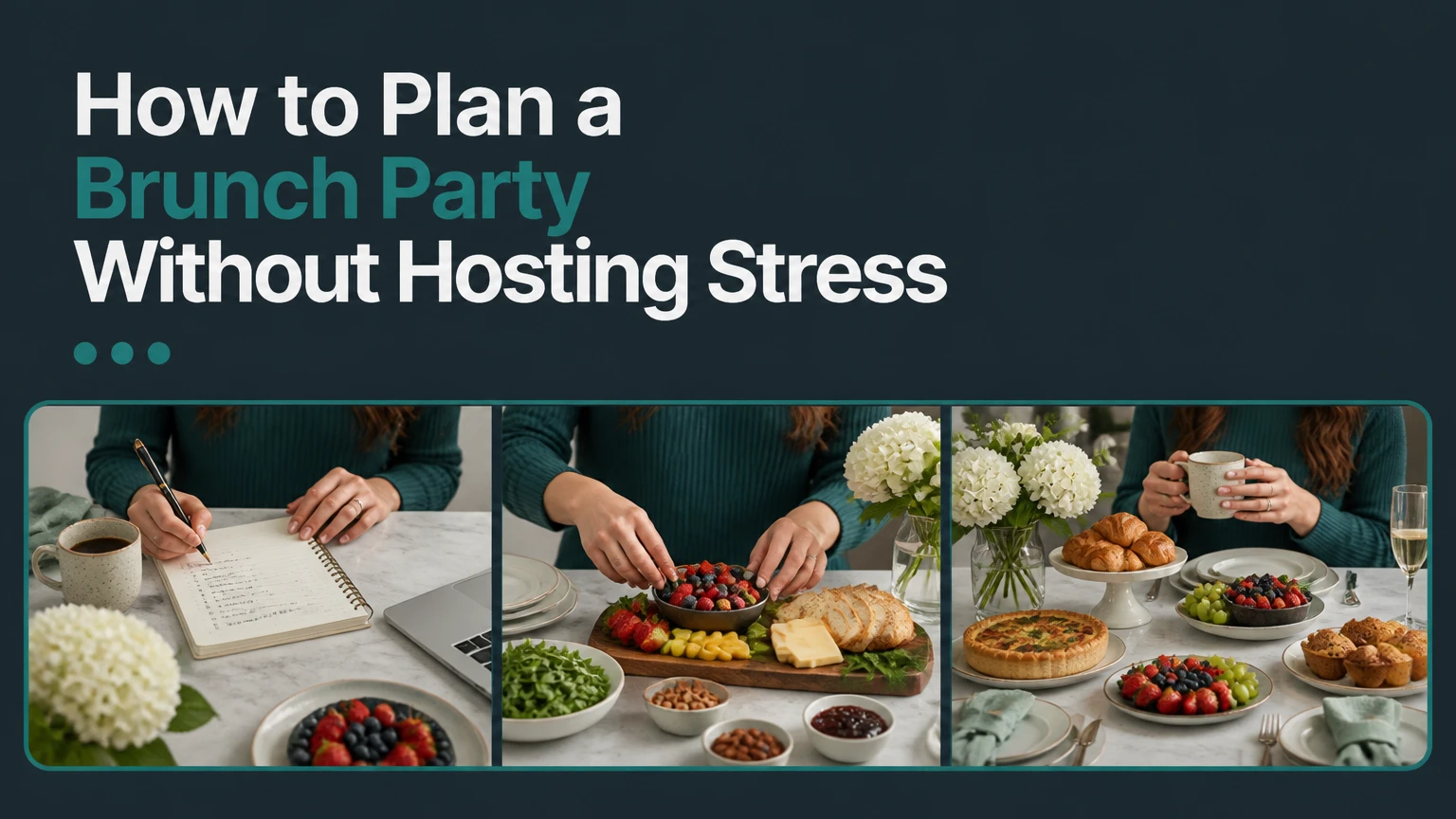
To plan a brunch party, choose the guest experience first, set a realistic budget, build a mostly make-ahead menu, and schedule preparation backward from the event date. A successful brunch party usually runs for 2.5-3 hours, uses buffet or station service, and limits last-minute cooking to one hot centerpiece.
Key Facts at a Glance
A practical brunch-party window is 10:30 AM-1:30 PM, although 10:00 AM-2:00 PM also works.
Plan roughly 1.5-2 pastries, 2 eggs, and 3 pieces of breakfast meat per guest when those foods form the menu.
One 750-milliliter bottle of sparkling wine produces about six 4-ounce mimosas.
A reliable menu is about 70-80% make-ahead food and 20-30% finishing work.
Typical U.S. grocery costs range from $15-$22 per guest for a simple spread and $35-$60 for a more elaborate menu with alcohol.
Perishable food should not remain at room temperature for more than 2 hours, or 1 hour above 90°F, according to the USDA.
What Makes a Brunch Party Work?
A brunch party is a social meal that combines breakfast foods, lunch-style savory dishes, and beverages such as coffee, juice, sparkling wine, or mocktails. Brunch works best when guests can eat in stages rather than waiting for one formal course, because the late-morning schedule encourages conversation, grazing, and staggered arrivals.
A brunch party differs from breakfast through its broader menu and later timing. It differs from lunch through its sweet dishes, egg-centered foods, pastries, and coffee service. The hybrid format gives a host flexibility, but that flexibility can create an unfocused menu unless the meal has one clear anchor.
Choose one central item, such as a baked egg casserole, bagel board, waffle bar, or shakshuka. Add one substantial side, one fresh item, one baked or sweet item, and two beverage choices. That structure prevents a table crowded with six similar carbohydrates.
Choose the Time and Guest Experience
Schedule a brunch party for 10:30 AM-1:30 PM when you want a relaxed three-hour gathering with enough time for cooking and cleanup afterward. Start at 10:00 AM for families with young children, or move to noon when the event should feel closer to lunch.
A 10:30 AM arrival gives the host time to brew coffee and finish hot food without waking unusually early. A 12:00 PM start suits a champagne brunch, birthday gathering, or event with heavier lunch foods. Tell guests whether food begins at arrival or at a stated time, because that single detail affects how much food must be ready immediately.
Step 1: Set the Guest Count, Budget, and Format
Write down the guest count, spending ceiling, available kitchen equipment, and desired level of hosting before selecting recipes. A six-person family-style meal can use one oven and a dining table, while a 30-person backyard buffet needs duplicate serving utensils, insulated drink storage, and food that tolerates delayed eating.
Use the format table to match ambition with infrastructure:
| Brunch format | Best guest count | Typical food cost per guest | Host workload | Main limitation |
|---|---|---|---|---|
| Bagel and pastry spread | 4-20 | $12-$22 | 1-2 hours prep | Less suitable for a hot, substantial meal |
| Family-style sit-down | 4-8 | $20-$40 | 4-6 hours including cooking | Seating and synchronized serving |
| Buffet with baked centerpiece | 8-30 | $18-$45 | 5-8 hours including prep | Requires counter or table space |
| Interactive food station | 8-15 | $22-$50 | 6-9 hours including chopping | Toppings create spills and replenishment |
| Gourmet multi-course brunch | 4-10 | $45-$80 | 8-14 hours | Host may miss conversations |
A useful budget split is 45% for food, 25% for beverages, 10% for disposables or rentals, and 20% for contingency. If the budget is $300 for 12 people, reserve approximately $135 for food, $75 for drinks, $30 for supplies, and $60 for price changes or forgotten ingredients.
The format determines the menu more than the theme does. A pajama brunch can still need a hot buffet, while an elegant gathering can use a simple bagel board if the presentation is deliberate.
Step 2: Choose the Menu Architecture
Build the menu around one protein-rich centerpiece, one starch, one fresh dish, one sweet item, and beverages. For most home brunches, an 80/20 preparation ratio is safer than a 70/30 ratio: approximately 80% should be finished before guests arrive, leaving 20% for reheating, garnishing, and brewing.
A practical menu matrix looks like this:
| Menu role | Reliable choices | Typical portion per guest | Preparation timing |
|---|---|---|---|
| Main protein | Frittata, strata, shakshuka, smoked salmon | 5-7 ounces | Assemble 1 day before |
| Starch | Roasted potatoes, sourdough, bagels, tortillas | 4-6 ounces | Prep 1 day before |
| Fresh item | Fruit salad, green salad, tomatoes, citrus | 4-6 ounces | Cut 2-6 hours before |
| Sweet item | Muffins, pastries, French toast bake, pancakes | 1.5-2 portions | Bake 1 day before when possible |
| Condiments | Hot sauce, jam, butter, salsa, cream cheese | 1-2 tablespoons each | Portion day before |
| Main drink | Coffee, tea, juice, punch, mocktail | 12-16 ounces | Batch or brew day of |
For a 12-person brunch, one 9-by-13-inch egg casserole usually provides 12 moderate portions when served with potatoes, fruit, and bread. Add a second casserole or a larger protein when the dish is the only substantial food.
Dietary balance needs advance planning. Ask about allergies and restrictions on the invitation, then label dishes as vegetarian, vegan, gluten-free, dairy-free, or containing nuts. Do not treat a garnish as a safe substitute: a gluten-free guest needs separate serving utensils and protection from crumbs.
Which Brunch Format Fits Your Space?
Choose a buffet for 12 or more guests, a station for 8-15 guests who enjoy assembling food, and family-style service for four to eight guests with dependable seating. The best format is the one that reduces kitchen traffic and keeps the host out of short-order cooking.
| Format | Table footprint | Cooking pattern | Late-arrival tolerance | Strongest use case |
|---|---|---|---|---|
| Buffet | 6-10 feet | 1-2 batch dishes | High | Baby shower or open-house brunch |
| Waffle or pancake bar | 4-6 feet | One batch plus toppings | Medium | Birthday or informal friend gathering |
| Bagel and lox board | 3-5 feet | Almost no cooking | High | Novice host or daytime reception |
| Family style | 6-8 seats | Synchronized hot dishes | Low | Holiday or intimate celebration |
| Taco or burrito station | 5-8 feet | Warm fillings and cold toppings | Medium | Larger group with varied diets |
A buffet is not automatically easier. A buffet fails when guests must cross the kitchen to find plates, food, and drinks. Arrange the flow as plates and napkins, cold food, hot food, bread and condiments, then cutlery, so hands remain free while people serve themselves.
Step 3: Calculate Food, Drinks, and Supplies
Calculate portions from the actual menu instead of adding the full serving recommendation for every category. Two eggs per guest makes sense when eggs are the main protein, but a smoked-salmon board and egg casserole together need fewer eggs.
| Item | Per-person planning amount | Quantity for 12 guests | Quantity for 30 guests |
|---|---|---|---|
| Eggs as main protein | 2 large eggs | 24 eggs | 60 eggs |
| Breakfast meat | 3 pieces or 2 ounces | 36 pieces or 1.5 pounds | 90 pieces or 3.75 pounds |
| Pastries or sweet portions | 1.5-2 pieces | 18-24 pieces | 45-60 pieces |
| Fruit | 4-6 ounces | 3-4.5 pounds | 7.5-11.25 pounds |
| Bread, bagels, or tortillas | 0.75-1.25 pieces | 9-15 pieces | 23-38 pieces |
| Coffee | 12 ounces | 1.125 gallons | 2.8 gallons |
| Juice or mocktail | 8-12 ounces | 0.75-1.125 gallons | 1.875-2.8 gallons |
| Still water | 16-24 ounces | 1.5-2.25 gallons | 3.75-5.6 gallons |
Provide 10-15% extra for a buffet, especially when guests include teenagers, athletes, or people arriving without breakfast. Reduce quantities by 15-20% when brunch follows another event with food.
For alcohol, a typical planning formula is two drinks in the first hour and one drink per hour afterward, but hosts should also provide attractive alcohol-free drinks and avoid encouraging rapid consumption. A 750-milliliter sparkling-wine bottle gives approximately six 4-ounce mimosas, so 12 guests drinking one mimosa each require two bottles, with a third bottle for refills.
A practical drink setup includes one thermal coffee carafe, one water dispenser, two juice pitchers, tea bags, ice, and a clearly labeled zero-proof option. Keep alcohol separate from the children’s drink station.
Step 4: Send Invitations and Collect Constraints
Send invitations about two weeks before the brunch party, or four weeks ahead for a shower, holiday, or gathering requiring rentals. Include the date, arrival and end times, location, parking information, dress guidance, and whether guests should expect a full meal.
Ask each guest to identify food allergies, dietary restrictions, and accessibility needs. “Vegetarian” does not answer whether eggs and dairy are acceptable, while “gluten-free” does not automatically identify cross-contact risks.
Track responses in a simple list with these columns: guest name, attendance, dietary requirement, beverage preference, and arrival note. This prevents the common failure of remembering a restriction verbally but forgetting it while shopping.
For children, add plain fruit, toast, yogurt, or scrambled eggs without spicy toppings. For older adults and guests with mobility limitations, keep at least 36 inches of clear walking space where possible, use stable chairs, and avoid placing essential food on low surfaces.
Step 5: Shop and Prepare the House
Buy shelf-stable ingredients, alcohol, coffee, napkins, paper goods, flour, sugar, oils, and frozen items one week before the event. Purchase eggs, dairy, herbs, berries, leafy greens, and fresh bread 1-2 days before serving.
Clean for function, not inspection. Clear one refrigerator shelf for prepared dishes, wash the guest bathroom, empty the dishwasher, remove fragile objects from traffic paths, and create a defined place for coats and bags.
Prepare ingredients in batches. Chop onions and peppers, wash fruit, grate cheese, mix cocktail bases without carbonation, and portion condiments into serving bowls. Label containers with the dish name and final cooking instruction, such as “Bake 350°F for 35 minutes.”
What Can Be Made Ahead?
Baked French toast, breakfast strata, muffins, fruit washed but not cut, roasted potatoes, vinaigrette, cocktail syrups, and chopped vegetables can usually be prepared ahead. Avocado, dressed leafy greens, sliced bananas, and carbonated drinks should be finished close to service because texture deteriorates quickly.
The best make-ahead dish is not necessarily the most impressive recipe. A strata that reheats evenly and portions cleanly protects the host’s schedule better than individual eggs cooked to order.
Step 6: Complete the Day-Before Setup
Assemble overnight casseroles, bake stable pastries, prepare sauces, chill beverages, and set the table one day before the event. Place sticky notes on platters identifying the intended food, serving utensil, and refrigerator location.
Keep raw eggs, dairy, seafood, and meat refrigerated at 40°F or below. The USDA recommends refrigerating perishable food within two hours, or within one hour when the ambient temperature exceeds 90°F. The FDA Food Code uses 41°F as a cold-holding benchmark for many temperature-controlled foods in food-service settings, so a home host should not rely on a warm refrigerator or an overloaded cooler.
Set out empty serving dishes in their final positions. This reveals whether the table is too small before food arrives. Put drinks away from the food line when possible, because beverage queues are a major source of congestion.
Step 7: Finish Cooking and Open the Party
Start day-of cooking 2-3 hours before arrival, depending on the menu. Brew coffee 20-30 minutes before guests arrive, reheat the main casserole 45-60 minutes ahead, and place pastries, fruit, and other safe room-temperature foods out 20-30 minutes before service.
Use this final schedule for a 10:30 AM start:
| Time | Host action | Readiness checkpoint |
|---|---|---|
| 7:30 AM | Remove planned casseroles from refrigeration as directed by recipe | Ingredients and pans are staged |
| 8:00 AM | Begin baking or reheating hot centerpiece | Oven temperature is verified |
| 8:45 AM | Roast potatoes or warm bread | Hot food has a serving vessel |
| 9:15 AM | Set coffee, water, juice, and alcohol-free station | Each drink has cups and labels |
| 9:40 AM | Add fruit, pastries, condiments, and utensils | Guests can serve without asking |
| 10:00 AM | Start music and final bathroom check | Kitchen counters are clear |
| 10:20 AM | Brew coffee and transfer to thermal carafe | Coffee is hot and accessible |
| 10:30 AM | Welcome guests and direct them to drinks | Host is not cooking individual orders |
You will know the setup works when a guest can enter, find a drink, identify dietary labels, and reach food without entering the cooking area. The common mistake is finishing every dish at once, which creates one oven bottleneck and leaves no recovery time.
How Do You Keep Brunch Food Warm and Safe?
Keep hot food at 140°F or above when holding it for service, and use a preheated oven, covered slow cooker, insulated carrier, or chafing dish rather than leaving pans on the counter. The USDA’s consumer guidance is simple: “When in doubt, throw it out,” meaning questionable time or temperature history should outweigh the desire to save leftovers.
A 200°F oven can hold a covered casserole briefly, but dry foods may continue cooking. Place bacon on a wire rack over a sheet pan so grease drains and the surface stays less soggy. Hold potatoes in a shallow pan rather than a deep bowl, because trapped steam destroys crispness.
Do not use a slow cooker to reheat a cold casserole quickly. Reheat food in an oven or microwave until fully hot, then transfer it to a slow cooker on the warm setting if the appliance is designed for holding. Replace small buffet portions every 30-60 minutes instead of repeatedly exposing one large dish.
Cold foods require equal attention. Set yogurt, smoked salmon, cream cheese, and cut fruit over ice, and return perishables to refrigeration promptly after the meal.
What Does a Brunch Party Typically Cost?
A typical U.S. home brunch costs $15-$22 per guest for bagels, pastries, fruit, coffee, and juice; $22-$40 for a hot buffet; and $35-$60 when the menu includes sparkling wine, premium seafood, or specialty ingredients. Prices vary by city, season, store, and whether equipment or rentals are included.
| Budget tier | Food examples | Beverage examples | Typical cost per guest |
|---|---|---|---|
| Economical | Eggs, potatoes, toast, seasonal fruit | Coffee, water, juice | $15-$22 |
| Comfortable | Strata, bacon, pastries, salad | Coffee, juice, punch, limited alcohol | $22-$40 |
| Entertaining | Frittata, smoked salmon, bakery pastries | Mimosas, cold brew, mocktails | $35-$60 |
| Premium | Shakshuka, artisan bread, specialty seafood | Champagne, espresso, fresh juices | $60-$90 |
Control cost through menu overlap. Use roasted potatoes in a breakfast bowl and as a side, or use citrus in the fruit salad and the nonalcoholic punch. Avoid buying separate ingredients for every topping because small specialty packages often cost more than the centerpiece.
The cheapest successful brunch is not a sparse brunch. Eggs, potatoes, beans, bread, seasonal fruit, and one flavored sauce provide substantial volume without requiring expensive meat or seafood.
Common Mistakes and How to Fix Them
Cooking Individual Orders
Custom omelets, fried eggs, waffles, and espresso drinks trap the host at the stove. Replace them with a sheet-pan pancake, baked frittata, waffle iron operated by guests, and thermal coffee service.
Serving Too Many Similar Foods
A table with pancakes, muffins, croissants, toast, and bagels lacks a savory anchor. Remove two starches and add eggs, beans, smoked fish, roasted vegetables, or a substantial salad.
Creating a Beverage Queue
Manual cocktails and one small coffee maker produce congestion. Batch the noncarbonated cocktail base, place sparkling wine beside chilled juices, and use a thermal carafe that holds at least 10 cups.
Letting Food Sit Unprotected
A casserole left at room temperature for several hours may become unsafe even if it still looks acceptable. Use smaller replenishment dishes, record when food goes out, and discard perishable items that exceed USDA time limits.
Forgetting Serving Hardware
A beautiful menu fails when there is one spoon for four dishes. Assign one utensil per dish, provide tongs for pastries and meat, and count plates, forks, cups, napkins, and chairs before shopping.
Overloading the Oven
Three dishes requiring 375°F at the same time create a predictable delay. Choose one oven-dependent centerpiece, make the second hot item stovetop or slow-cooker friendly, and serve room-temperature foods around them.
How Should You Adapt the Plan for Different Situations?
A novice host should choose a bagel, pastry, fruit, and yogurt spread with one optional baked item. That menu can be assembled in 60-90 minutes and shifts effort toward coffee quality, labeling, and attractive presentation.
A budget-conscious host should center the meal on a potato-and-egg casserole, seasonal fruit, toast, and a batch punch. Buy store-brand eggs and juice, use frozen berries where appropriate, and skip individual bottled drinks, which create unnecessary cost and waste.
An outdoor host should use covered containers, a shaded service table, coolers with separate raw and ready-to-eat zones, and a weather backup. Wind can scatter napkins and toppings, while direct sun rapidly warms dairy, seafood, and cut fruit. Move perishables indoors or onto ice.
An alcohol-free host should offer a sparkling citrus punch, iced tea, cold brew, and flavored water in equally attractive glassware. Alcohol-free drinks should not be treated as an afterthought, because visible parity makes the beverage station welcoming to children, pregnant guests, drivers, and people who do not drink.
A 30-person host should use buffet service rather than family-style plating. Place duplicate serving spoons for popular dishes, divide food across two stations when possible, and refill from the kitchen instead of placing every portion on the table at once.
How Do You Close the Party and Handle Leftovers?
Begin cleanup while guests are still finishing drinks, but avoid dismantling the entire table before the stated end time. Move empty platters away, consolidate unopened supplies, and refrigerate perishable leftovers within the USDA time limit.
Divide leftovers into shallow containers so they cool quickly, label them with the date, and separate sauces from crisp foods. Keep pancakes, bread, and pastries away from moist fruit, because condensation accelerates staleness.
Send guests home with food only when the storage history is clear. Do not give away a dish that has sat warm for several hours simply to avoid waste.
FAQ
How many guests can one brunch host manage alone?
One host can comfortably manage 6-10 guests with a hot menu, 12-20 guests with buffet service, and up to 30 guests with a mostly purchased or make-ahead spread. Beyond 20 people, duplicate serving utensils, extra refrigeration, and a helper for replenishment reduce service failures.
Should brunch be served buffet-style or plated?
Buffet service is usually better for more than eight guests because people can arrive and eat at different times. Plated service suits four to eight guests when the host wants a formal meal and can synchronize cooking, seating, and dietary substitutions.
How early should brunch invitations be sent?
Send casual brunch invitations two weeks ahead. Send invitations four to six weeks ahead for a baby shower, bridal shower, holiday event, rented venue, or gathering where guests need to arrange travel and gifts.
What is the easiest hot brunch dish for a crowd?
A baked egg casserole, strata, frittata, or shakshuka is easier than individual omelets because one pan produces multiple portions. Choose a dish that can be assembled the day before and reheated without losing its texture.
How much coffee should be prepared for brunch?
Plan 12 ounces per guest, then add 10-20% if coffee is the primary beverage or the party begins before noon. Twelve guests require approximately 1.125 gallons, or about 144 fluid ounces, before accounting for refills and non-coffee drinkers.
How do you plan a brunch party with dietary restrictions?
Collect restrictions with the RSVP, identify the ingredients in each dish, and provide at least one substantial option for every major requirement. Use separate serving utensils, prevent crumb cross-contact, and label dishes clearly rather than relying on verbal explanations.
The Bottom Line
To plan a brunch party successfully, choose the format before the recipes, schedule backward from a defined arrival time, and make one batch dish the menu anchor. Calculate quantities from the actual guest list, keep 80% of the work ahead of time, protect hot and cold foods, and provide a complete alcohol-free beverage option. A brunch party feels relaxed to guests only when the host has removed decisions, queues, and last-minute cooking from the schedule.