A Cuban sandwich, or Cubano, is made by layering mustard, Swiss cheese, sweet ham, thinly sliced mojo pork, dill pickles, and Cuban bread, then pressing the assembled sandwich until the bread crisps and the cheese melts. Allow 4-12 hours to marinate the pork, 3-4 hours to roast it, and 6-8 minutes to press each sandwich.
Key Facts at a Glance
A traditional Cuban sandwich uses Cuban bread, yellow mustard, ham, mojo pork, Swiss cheese, and dill pickles.
Pork shoulder usually needs 3-4 hours at 325°F to become tender enough for thin slicing.
The sandwich presses best at approximately 350°F, with firm pressure for 6-8 minutes.
Dry pickles and cheese placed against both bread surfaces reduce sogginess and improve melting.
Tampa-style Cubanos include Genoa salami; Miami-style versions traditionally omit it.
A 10-inch sandwich typically yields two substantial servings or four smaller portions.
What Is a Cuban Sandwich?
A Cuban sandwich is a hot pressed sandwich built around the contrast between crisp Cuban bread, citrus-garlic pork, cured ham, nutty Swiss cheese, sour dill pickles, and sharp yellow mustard. The sandwich developed in Cuban immigrant communities in Florida, with Tampa and Miami preserving related but distinct traditions.
Cuban bread is a long, narrow loaf traditionally made with lard and baked with a palmetto frond or similar strip placed along the top. That process helps create a characteristic split and a thin crust. The loaf is softer and less chewy than a baguette, which matters because pressing must flatten the sandwich without producing a tough bite.
The origin story is regional rather than perfectly singular. Tampa’s Ybor City tradition includes salami, an influence associated with the area’s Italian immigrant population. Miami’s later convention generally uses ham, roast pork, Swiss, pickles, and mustard without salami. Both styles belong to the same sandwich family.
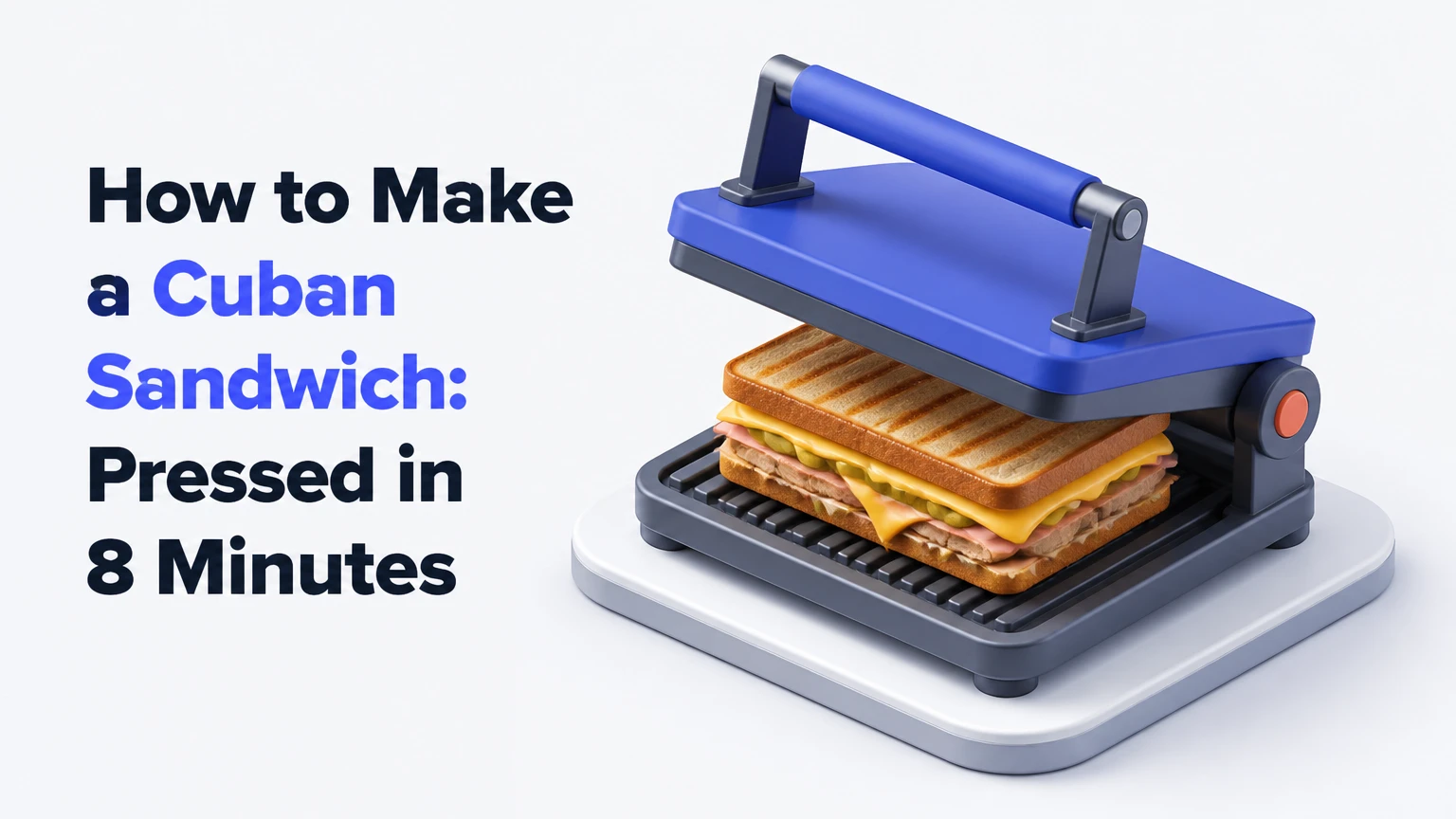
The defining technique is compression. A plancha or panini press heats both sides while applying pressure, causing the Swiss cheese to melt around the meats and creating a compact interior. A skillet and a weighted pan produce a credible home version.
What Ingredients and Equipment Do You Need?
One 10-inch Cuban sandwich needs approximately 3 ounces of roast pork, 2 ounces of ham, 1 ounce of Swiss cheese, 2-3 ounces of bread, 1 tablespoon of mustard, and 1 ounce of sliced pickles. The quantities below make six large sandwiches from one 3-4 pound pork shoulder.
Ingredients for Six Sandwiches
| Ingredient | Quantity | Practical specification |
|---|---|---|
| Boneless pork shoulder | 3-4 pounds | Boston butt, trimmed but not fully lean |
| Sour orange juice | 1 cup | Or ⅔ cup orange juice plus ⅓ cup lime juice |
| Garlic | 8 cloves | Minced or finely grated |
| Dried oregano | 1 teaspoon | Cuban or Mexican oregano both work |
| Ground cumin | 1 teaspoon | Toast briefly for a rounder flavor |
| Olive oil | ¼ cup | Extra-virgin or regular olive oil |
| Yellow mustard | ¾ cup | About 1 tablespoon per sandwich |
| Sweet ham | 12 ounces | Thinly sliced deli ham |
| Swiss cheese | 6 ounces | Twelve thin slices |
| Dill pickles | 6 ounces | Chips or long slices, drained and dried |
| Cuban bread | Three 10-inch sections | Each section is split horizontally |
| Butter or lard | 3 tablespoons | For brushing the exterior |
For the best texture, use a sandwich press with adjustable height or a heavy skillet paired with a second skillet. A digital probe thermometer, roasting pan, foil, paper towels, and a serrated knife make the process more predictable.
Which Bread Works Best?
Cuban bread is the best choice because its thin crust and airy, lard-enriched crumb compress without becoming rubbery. Use a loaf section about 9-10 inches long and 3-4 inches wide. Bread that is too thick creates a dry center before the exterior browns.
| Bread option | Typical size | Pressing result | Best use |
|---|---|---|---|
| Cuban bread | 9-10 inches | Thin, crisp crust and soft compressed crumb | Traditional Cubano |
| Pan de agua | 9-10 inches | Light crust with moderate chew | Closest practical substitute |
| Soft Italian loaf | 8-10 inches | Crisp exterior, slightly denser center | Grocery-store substitute |
| French baguette | 8-10 inches | Hard crust and excessive chew | Use only as a last resort |
| Brioche or challah | 8-10 inches | Sweet, tender crumb | Media Noche variation |
Fresh Cuban bread is ideal, but one-day-old bread often presses more cleanly because the crumb has enough structure to hold the fillings. Avoid heavily crusted sourdough. Its acidity and thick shell dominate the pork and can remain tough after pressing.
How to Make a Cuban Sandwich
The complete method has five stages: marinate the pork, roast and cool it, prepare the fillings, assemble in a moisture-resistant order, and press until the cheese melts. The most important control is pork texture, because roast pork must be tender while remaining firm enough to slice rather than shred.
Before You Start
| Requirement | Typical value |
|---|---|
| Active preparation | 35-45 minutes |
| Marinating time | 4-12 hours |
| Roasting time | 3-4 hours |
| Pressing time | 6-8 minutes per sandwich |
| Total elapsed time | 8-17 hours |
| Difficulty | Moderate |
| Yield | Six 10-inch sandwiches |
| Typical ingredient cost | $25-$35 |
| Required heat | 325°F roast, 350°F press |
Take the pork from the refrigerator about 30 minutes before roasting. Do not leave raw pork at room temperature for several hours. Prepare the marinade, heat the oven, and keep the pickles refrigerated until assembly.
Step 1: Marinate the Pork
Combine 1 cup sour orange juice, 8 minced garlic cloves, 1 teaspoon oregano, 1 teaspoon cumin, 2 teaspoons kosher salt, 1 teaspoon black pepper, and ¼ cup olive oil. Score the pork shoulder in several places, coat it thoroughly, and refrigerate it in a covered container for 4-12 hours.
A 2:1 blend of sweet orange juice and lime juice approximates sour orange when bottled juice is unavailable. Fresh lime adds acidity quickly, so avoid marinating longer than 24 hours; extended exposure can make the outer meat soft and chalky.
The marinade seasons the surface more effectively than the center. For a 3-4 pound shoulder, the roast’s thickness means that salting the meat evenly before marinating remains useful. Use roughly 1 teaspoon kosher salt per pound if the marinade contains little salt, then reduce the added salt accordingly.
Success checkpoint: The pork should smell citrusy and garlicky, with marinade reaching the scored surfaces.
Common mistake: Submerging the pork in a shallow dish without turning it. Rotate the shoulder once halfway through marinating so the exposed side receives equal contact.
Step 2: Roast and Slice the Pork
Heat the oven to 325°F. Place the marinated pork fat-side up in a roasting pan, add ½ cup water or reserved marinade to the pan, cover loosely with foil, and roast for 2½ hours. Remove the foil and continue roasting until the center reaches 185-190°F and a probe enters with moderate resistance.
The USDA Food Safety and Inspection Service recommends cooking pork roasts to 145°F followed by a three-minute rest. A Cuban sandwich requires a higher finishing range because shoulder collagen needs additional heat and time to become tender, but roasting far beyond 195°F often produces meat that falls apart during slicing.
Rest the pork for 30-45 minutes before cutting. For especially clean slices, refrigerate the roast for 2-4 hours after resting, then slice it across the grain into pieces approximately ⅛ inch thick. Warm slices more evenly than thick chunks when pressed.
Success checkpoint: A thin slice bends without breaking, but the roast remains cohesive when lifted.
Common mistake: Treating the shoulder like barbecue and waiting for a fully shreddable texture. Stop earlier, or chill the roast before slicing.
Step 3: Prepare the Fillings and Press
Drain the pickles and pat them dry on both sides with paper towels. Slice the ham and pork thinly, grate or slice the Swiss cheese, and heat a sandwich press to approximately 350°F. If using a skillet, preheat it over medium-low to medium heat for 4-5 minutes.
Dry pickles matter because trapped brine becomes steam between the fillings and bread. That steam softens the crumb before the crust has time to brown. Thin pickle slices also distribute acidity across the sandwich rather than creating one intensely sour pocket.
For the exterior, melt 3 tablespoons of butter or use softened butter for easier brushing. Lard is more traditional and produces a slightly cleaner savory flavor, while butter browns sooner because of its milk solids.
Success checkpoint: The press surface is hot enough that a bread test sizzles gently, not violently, when it touches the plate.
Common mistake: Starting with a cold press. The bread then absorbs fat and warms slowly, producing a greasy sandwich with under-melted cheese.
Step 4: Assemble the Sandwich
Split each bread section horizontally without cutting it into separate small rolls. Spread about 1 tablespoon of yellow mustard across both cut surfaces. Build from bottom to top with one slice of Swiss, ham, roast pork, dry pickles, the second slice of Swiss, and the mustard-coated top half.
Tampa-style sandwiches add 1-2 ounces of thinly sliced Genoa salami between the ham and pork. Miami-style Cubanos omit salami, leaving the citrus pork and mustard more prominent. Keep the total filling height below approximately 2 inches before pressing.
Cheese should touch both bread surfaces because it melts into a barrier and helps bind loose fillings. Placing pickles between meat layers also limits direct contact between wet acid and the bread crumb.
Success checkpoint: The fillings reach within ½ inch of the bread edges and remain level rather than forming a mound in the middle.
Common mistake: Overfilling with roast pork. More than about 4 ounces per 10-inch sandwich delays heating and forces fillings out under pressure.
Step 5: Press the Cubano
Brush the outside of the top and bottom bread surfaces lightly with melted butter or lard. Place the sandwich in a 350°F press, close the lid, and apply firm pressure for 6-8 minutes. Stop when the bread is golden brown, the cheese has melted, and the sandwich has compressed to roughly ½-¾ inch.
A skillet method uses medium-low heat, a sheet of parchment or foil over the sandwich, and a second heavy skillet placed on top. Press for 3-4 minutes on the first side, turn carefully, then cook another 3-4 minutes. A cast-iron pan or a foil-wrapped brick supplies enough weight without requiring a specialized appliance.
The bread should brown gradually. If the crust darkens before the cheese softens, lower the heat to approximately 300-325°F and extend the cooking time by 2-3 minutes. A thick sandwich may need gentle heat rather than more pressure.
Success checkpoint: The crust cracks slightly under a knife, while the interior remains hot, fused, and moist without leaking juices.
Common mistake: Pressing aggressively from the start. Excess force can squeeze out the cheese and pork before the bread structure has softened.
Which Cuban Sandwich Style Should You Make?
Tampa style is the better choice when you want a saltier, more complex sandwich with salami; Miami style is better when citrus pork, mustard, and Swiss cheese should dominate. Media Noche uses sweet egg bread and offers a softer, richer alternative rather than a separate filling formula.
| Style | Bread | Salami | Flavor profile | Best situation |
|---|---|---|---|---|
| Tampa Cubano | Cuban bread | 1-2 ounces | Saltier and more savory | Large meal or classic Ybor City interpretation |
| Miami Cubano | Cuban bread | None | Cleaner pork, ham, and mustard flavor | Minimalist preparation |
| Media Noche | Sweet egg bread | Usually none | Soft, mildly sweet, rich | Late-night meal or brunch |
| Shortcut Cubano | Cuban or soft Italian loaf | Optional | Depends on deli pork and ham | Weeknight preparation |
The Tampa-Miami distinction is sometimes debated because family recipes and restaurant practices vary. Salami is strongly associated with Tampa, while its omission is typical of Miami versions, but either choice can produce a recognizable Cuban sandwich when the core ingredients and pressing method remain intact.
What Are the Best Substitutions?
Use sliced deli roast pork when time matters, Pan de agua when Cuban bread is unavailable, and a skillet with a weighted pan when no press exists. Substitutions should preserve the sandwich’s three functional requirements: a thin-crusted bread, a savory pork filling, and enough heat to melt the cheese.
| Original component | Substitute | Quantity for six sandwiches | Result |
|---|---|---|---|
| Pork shoulder | Deli mojo pork | 18 ounces | Fastest, less roasted flavor |
| Sour orange | Orange plus lime juice | ⅔ cup plus ⅓ cup | Similar acidity and aroma |
| Cuban bread | Pan de agua | Three 10-inch sections | Closest crumb structure |
| Swiss cheese | Emmental or mild provolone | 6 ounces | Different nuttiness or melt |
| Yellow mustard | Dijon mustard | ¾ cup | Sharper, less traditional flavor |
| Dill pickle chips | Dill spears, sliced lengthwise | 6 ounces | Similar acidity, thicker bite |
Pulled pork is a poor substitute when it is wet or barbecue-sauced. It can work if drained, cooled, and pressed into thin layers, but it will produce a looser sandwich and a sweeter flavor. Avoid adding barbecue sauce because mustard, pork marinade, and pickles already supply enough acidity.
A vegetarian version can use roasted mushrooms, pressed tofu, or marinated eggplant with smoked cheese. That preparation is a pressed vegetable sandwich inspired by the Cubano, not a traditional Cuban sandwich, because roast pork and ham define the original construction.
How Long Does Preparation Take, and What Does It Cost?
A typical homemade batch costs $25-$35 for six large Cuban sandwiches before buying a press, or about $4.15-$5.85 per sandwich. The main variables are pork shoulder price, bread availability, deli meat quality, and whether the pantry already contains oil, spices, and mustard.
| Preparation route | Active time | Elapsed time | Typical batch cost | Yield |
|---|---|---|---|---|
| Whole pork shoulder | 35-45 minutes | 8-17 hours | $25-$35 | Six sandwiches |
| Deli roast pork | 20-25 minutes | 30-45 minutes | $30-$42 | Six sandwiches |
| Leftover roast pork | 15-20 minutes | 25-35 minutes | $18-$28 | Four-six sandwiches |
| Party slider batch | 45-60 minutes | 1-2 days | $45-$70 | Twelve-eighteen sliders |
The whole-shoulder approach has the strongest flavor and lowest per-sandwich pork cost, but it requires planning. Deli pork is appropriate for a first attempt because pressing technique, bread quality, and moisture control determine much of the final texture.
For parties, prepare and chill the pork up to three days ahead. Assemble sandwiches no more than four hours before pressing, wrap them tightly, and refrigerate them. Longer storage assembled with pickles increases moisture migration into the bread.
Common Mistakes and How to Fix Them
Most failed Cuban sandwiches have one of four problems: the bread is too thick, the pork is too wet or shredded, the pickles are undrained, or the press is too hot. Each problem changes heat transfer, so adding more cooking time does not always repair the texture.
- The bread burns before the cheese melts. Lower the press from 350°F to 300-325°F and cook 2-3 minutes longer. Thick bread and cold cheese are common causes.
- The interior becomes soggy. Pat pickles dry, drain the pork before slicing, and place Swiss cheese against both cut bread surfaces.
- The sandwich falls apart. Reduce the filling to roughly 6-8 ounces per 10-inch loaf and slice pork no thicker than ⅛ inch.
- The roast pork shreds. Chill the rested roast for 2-4 hours, then cut across the grain with a sharp serrated knife.
- The sandwich tastes overly salty. Use unsalted or lightly seasoned roast pork when ham and Tampa-style salami are both present.
- The bread remains chewy. Replace baguette with Cuban bread, Pan de agua, or a soft Italian loaf with a thin crust.
A counterintuitive practitioner rule is to use less exterior fat than expected. The press supplies enough heat to brown a thin film; excess butter pools in the bread’s cut edges and creates a fried, greasy crust instead of a dry, crisp shell.
Another useful rule is to cool the pork before slicing, even when the finished sandwich will be hot. Firm roast pork produces thin, intact slices that warm rapidly under pressure, while hot pork tends to tear and release liquid.
How Should You Store and Reheat Cuban Sandwiches?
Store pressed Cuban sandwiches in the refrigerator for up to 2 days, wrapped in foil or parchment, and reheat them in a 325°F oven or air fryer until the center reaches 165°F. Do not microwave the sandwich unless speed matters more than crust, because microwave steam softens the bread.
For best reheating, refrigerate the assembled but unpressed sandwich for up to four hours, then press it just before serving. If the sandwich is already pressed, unwrap it before reheating so moisture can escape. Reheat for approximately 8-12 minutes in an oven or 4-6 minutes in an air fryer, checking the center before serving.
Do not freeze a fully assembled Cubano with pickles inside. Pickles and bread change texture after thawing, and the crumb becomes noticeably softer. Freeze sliced roast pork separately for up to 2 months, thaw it overnight, and assemble fresh.
Frequently Asked Questions
Can I make a Cuban sandwich without a panini press?
Yes. Heat a skillet over medium-low heat, place the assembled sandwich inside, cover it with parchment or foil, and weigh it down with a second heavy skillet. Cook 3-4 minutes per side, adjusting the heat so the bread browns only after the Swiss cheese begins to melt.
Is Cuban bread the same as French bread?
No. Cuban bread has a thinner crust, a softer crumb, and traditionally includes lard, while French bread usually has a thicker, chewier crust. Pan de agua is a closer substitute because its light structure compresses more like Cuban bread under a plancha.
Can I use pork loin instead of pork shoulder?
Yes, but pork loin is leaner and less forgiving. Roast a 2-3 pound loin only to 145°F, rest it for 10 minutes, and slice it thinly; the result will be cleaner and less succulent than mojo-marinated shoulder.
Why is salami included in some Cuban sandwiches?
Genoa salami is associated with Tampa’s Ybor City tradition, where Cuban, Spanish, and Italian food cultures overlapped. Miami-style sandwiches generally omit salami, so its presence identifies a Tampa-style interpretation more often than a universal requirement.
What cheese melts best in a Cubano?
Thinly sliced Swiss cheese is the traditional choice because it melts smoothly and balances salty ham and acidic pickles. Emmental provides a similar nutty flavor, while mild provolone melts well but changes the sandwich’s aroma and is less traditional.
Can I assemble the sandwich the night before?
Prepare the pork and slice the fillings the night before, but assemble the bread within four hours of pressing. Keeping pickles and mustard away from the bread overnight limits moisture migration and preserves a crisp final crust.
The Bottom Line
To make a Cuban sandwich successfully, use thin-crusted Cuban bread, citrus-garlic roast pork, ham, Swiss cheese, dry dill pickles, and yellow mustard. Press the sandwich at approximately 350°F for 6-8 minutes, or use a weighted skillet over medium-low heat, and stop when the bread is crisp, the cheese is melted, and the interior has compressed without becoming wet. Tampa style adds Genoa salami; Miami style does not.