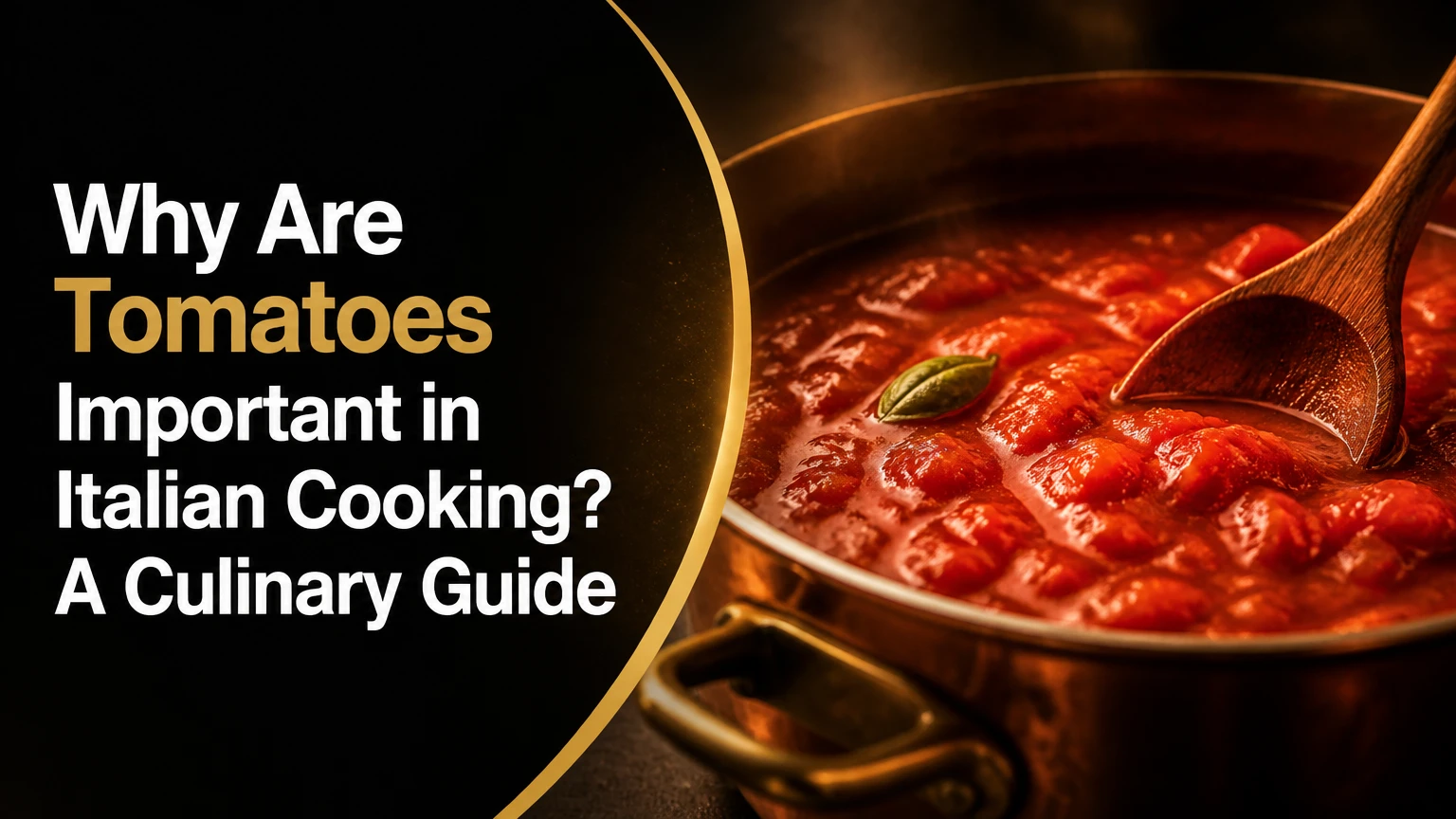
Tomatoes are important in Italian cooking because they combine acidity, sweetness, glutamate-rich savoriness, moisture, color, and flexible texture in one ingredient. Italian cooks use fresh, dried, preserved, puréed, and concentrated tomatoes to balance fat, season pasta and meat, preserve summer produce, and create regional dishes ranging from Neapolitan pizza to Sicilian pasta con le sarde.
Key Facts
Tomatoes originated in the Americas and reached Europe after the Columbian Exchange in the 16th century.
Italian cuisine adopted tomatoes gradually, with especially deep use in southern regions such as Campania, Sicily, Puglia, and Calabria.
Tomato acidity balances olive oil, cured pork, butter, cream, and aged cheeses.
Tomato glutamate contributes savory depth, especially after gentle reduction.
Canned whole tomatoes often outperform out-of-season fresh tomatoes in cooked sauces because preservation occurs near peak ripeness.
San Marzano DOP identifies a protected production designation, not a guarantee that every can will suit every dish.
Why Did the Tomato Become Italian?
The tomato became Italian through adaptation, preservation, and regional cooking rather than instant acceptance. Indigenous peoples in Mesoamerica and South America cultivated tomatoes before Spanish contact; European plants appeared in the 16th century, while Italian cooks gradually incorporated them into sauces, soups, fillings, and preserved foods over subsequent centuries.
Early European attitudes toward tomatoes were mixed. Their botanical relatives, including deadly nightshade, encouraged caution, and tomatoes were initially grown as ornamental plants in parts of Europe. Wealthy households may have eaten them earlier, but widespread culinary use required both cultural acceptance and reliable cooking methods.
The first Italian tomato preparations were not identical to modern red pasta sauce. Italian cooks used tomatoes alongside onions, herbs, oil, vinegar, and meat, then developed regional preservation practices such as passata, dried tomatoes, and bottled sauces. Southern Italy’s warm climate and intense summer harvest made tomatoes particularly valuable as a seasonal crop that could be stored for winter.
The tomato also fitted existing Mediterranean ingredients. Olive oil supplied richness, wheat pasta supplied starch, garlic and onion supplied aromatic depth, and tomatoes supplied moisture and acidity. The combination produced inexpensive food with a strong sensory profile.
When did tomatoes become central to Italian cuisine?
Tomatoes became broadly central in Italian cooking between the 18th and 19th centuries, although the timing varied by region and social class. Earlier Italian cookbooks mention tomatoes, but the modern association among tomatoes, pasta, pizza, and southern Italian food developed through gradual household adoption and urban food culture.
The historical distinction matters. Italian cooking did not begin with tomatoes, and many traditional dishes remain tomato-free. Roman pasta alla carbonara, Genoese pesto, risotto alla milanese, Piedmontese bagna càuda, and many northern butter-based preparations demonstrate that Italian cuisine has several structural foundations.
Tomatoes became important because they solved practical problems as well as flavor problems. Families could preserve a large summer harvest, stretch meat sauces with liquid and solids, season a pot of beans, or create a pasta condiment from inexpensive pantry ingredients.
What Do Tomatoes Contribute to Italian Cooking?
Tomatoes contribute five practical qualities: acidity, sweetness, umami, water, and color. The balance among those qualities changes with variety, ripeness, processing, salt, and cooking time, which explains why a raw tomato, a peeled tomato, and tomato paste behave differently in the same recipe.
How do tomatoes balance rich ingredients?
Tomato acidity cuts through fatty ingredients and prevents dishes from tasting heavy. Citric and malic acids create perceived brightness beside extra virgin olive oil, pork fat from guanciale or pancetta, butter, mozzarella, Pecorino Romano, and Parmigiano-Reggiano.
Acidity does not remove fat chemically. Instead, it changes sensory contrast: a rich bite followed by a sharp, juicy note tastes less cloying and more complete. The effect is strongest when tomato acidity is supported by salt and aromatic ingredients.
Tomato acidity can also become a problem. Underripe fruit, excessive reduction, or a poorly balanced canned product may taste harsh rather than refreshing. In those cases, additional cooking, a little fat, a sweeter onion, or dilution usually works better than automatically adding sugar.
Why do tomatoes make sauces taste savory?
Tomatoes contain free glutamate, an amino acid associated with umami, and cooking reduces water while concentrating the tomato’s savory compounds. Garlic, onion, anchovy, mushrooms, meat, Parmesan, and aged cured pork add other savory compounds that make the finished sauce taste fuller.
Reduction is not the same as caramelization. Tomato sauce generally simmers in a water-rich environment, so its deepest flavor comes from concentration, cell breakdown, salt distribution, and interaction with browned or infused ingredients. Significant caramelization requires hotter, drier conditions than most tomato sauces receive.
Marcella Hazan summarized the appeal of a restrained tomato sauce in Essentials of Classic Italian Cooking: “The simplest of all sauces is made with tomatoes.” Her point was not that tomatoes need no technique, but that a high-quality tomato can carry a dish when the cooking remains controlled.
Why are tomatoes red in so many Italian dishes?
Tomatoes provide a strong red-orange color created largely by carotenoids such as lycopene. Color helps communicate ripeness, concentration, and flavor intensity, although a dark red sauce is not automatically better than a lighter one.
Visual identity also matters culturally. Red tomato sauce became associated with southern Italian home cooking, pizzerias, trattorias, and exported Italian food traditions. The color links dishes that may otherwise differ widely in texture and ingredients.
How Does Sugo di Pomodoro Work?
Sugo di pomodoro works by infusing oil with aromatics, adding tomato and water, reducing the mixture, and combining tomato solids with fat. A basic sauce needs roughly 800 grams of whole peeled tomatoes, 2 tablespoons of olive oil, 1 garlic clove or 50 grams of onion, and 20-40 minutes of simmering.
Step 1: Infuse the olive oil
Warm 2 tablespoons of extra virgin olive oil over low to medium heat. Add one lightly crushed garlic clove or finely diced onion and cook for 3-5 minutes, stopping before the aromatics brown heavily.
The oil extracts fat-soluble aroma compounds from garlic, onion, chili, and herbs. You will know the step worked when the oil smells aromatic but the garlic remains pale to light gold. Burnt garlic creates bitterness that tomato cannot reliably hide.
Step 2: Add the tomatoes
Add 800 grams of whole peeled tomatoes with their juice, then crush them with a spoon or potato masher. Tomato water lowers the pan temperature and protects the aromatics from continued frying.
Whole peeled tomatoes give the cook control over final texture. Remove tough cores or unusually firm pieces before simmering. Avoid treating all canned tomatoes as interchangeable because salt level, acidity, seed content, and calcium chloride treatment differ by brand.
Step 3: Reduce the sauce
Simmer uncovered for 20-40 minutes, depending on the pan width and desired thickness. Stir every 5-10 minutes, and add salt gradually because water loss concentrates seasoning.
A wide skillet reduces faster than a narrow saucepan. The sauce is ready for pasta when a spoon dragged across the pan leaves a visible path for about one second before liquid closes it.
Step 4: Finish the emulsion
Toss the sauce with cooked pasta and 30-60 milliliters of starchy pasta water for 1-2 minutes. Mechanical agitation disperses oil through the tomato liquid, while starch helps the sauce cling to the pasta surface.
The best checkpoint is adhesion, not maximum thickness. A sauce that looks slightly loose in the pan often coats pasta correctly after tossing. Over-reducing before this stage produces a dense sauce that cannot spread evenly.
Which Tomato Form Should You Choose?
The best tomato form depends on the dish, season, desired texture, and cooking time. Whole peeled tomatoes suit sauces that need controlled breakdown, passata suits smooth quick sauces, paste adds concentrated depth, and fresh tomatoes suit raw or fast-cooked preparations.
| Tomato form | Typical texture | Typical cooking time | Best applications | Main limitation |
|---|---|---|---|---|
| Fresh ripe tomato | Juicy, variable, 90-95% water | 0-15 minutes | Caprese, bruschetta, summer pasta | Weak flavor when out of season |
| Pelati, whole peeled | Soft pieces with juice | 20-60 minutes | Marinara, pizza, ragù | Needs crushing and reduction |
| Passata | Smooth strained purée | 10-30 minutes | Smooth pasta sauce, soups, meatballs | Can become flat when overcooked |
| Concentrato, paste | Thick, concentrated solids | 1-5 minutes in a base | Braises, ragù, lentils, quick sauces | Adds depth but little fresh aroma |
| Dried tomato | Chewy, concentrated, salty | 5-20 minutes after soaking | Salads, pesto, fish, stuffed dishes | Salt and sweetness can dominate |
What is the difference between pelati and passata?
Pelati are whole peeled tomatoes packed in juice, while passata is a strained tomato purée with skins and most seeds removed. Pelati preserve more structural variation and allow controlled crushing; passata provides a smooth base that cooks more quickly.
Passata works well when texture must be uniform, such as in a quick weekday sauce or a delicate soup. Pelati work better when a cook wants chunky pieces, a rustic texture, or a sauce that can reduce gradually without becoming completely homogeneous.
Tomato paste, called concentrato di pomodoro, is different from both. It is highly concentrated and usually enters a recipe in small quantities, often 1-2 tablespoons, where it deepens color and savory flavor without supplying enough liquid to form a sauce alone.
Which Italian Tomato Varieties Matter Most?
Italian tomato varieties differ in flesh, seed content, sweetness, acidity, size, and regional identity. Variety names describe useful tendencies, not absolute results, because harvest date, growing conditions, storage, and processing can change the final flavor.
| Variety or group | Typical attributes | Regional association | Best use |
|---|---|---|---|
| San Marzano | Elongated, meaty, relatively low seed proportion | Campania | Pizza, tomato sauce, ragù |
| Cuore di Bue | Large, soft, dense, irregularly shaped | Liguria and northern Italy | Salads, slicing, raw dishes |
| Pachino | Small, sweet, thin-skinned | Sicily | Seafood pasta, salads, fast sauces |
| Datterino | Date-shaped, sweet, low-fiber flesh | Sicily and southern Italy | Pan sauces, roasting, bruschetta |
| Costoluto Fiorentino | Ribbed, aromatic, juicy | Tuscany | Raw serving, panzanella, sauce |
| Pomodorino del Piennolo | Small, firm, long-storing cluster tomato | Campania | Seafood, pasta, winter cooking |
What does San Marzano actually mean?
San Marzano DOP refers to tomatoes grown and processed under the protected designation rules for Pomodoro San Marzano dell’Agro Sarnese-Nocerino DOP, an area in Campania. “San Marzano style” or “grown in Italy” does not mean the product carries that designation.
The DOP mark can support traceability, but it does not guarantee that every can is the best choice. A good non-DOP Italian plum tomato may suit a rustic sauce, while a premium DOP can may be wasted in a heavily seasoned braise.
The common claim that San Marzano tomatoes are always low-acid is too broad. Perceived acidity depends on cultivar, ripeness, processing, juice concentration, and cooking. Choose by flavor and dish, not by the variety name alone.
Is Tomato Equally Important Across Italy?
Tomatoes are most structurally important in southern and central-southern Italian cooking, but tomato use varies by region, season, and dish. Campania connects tomatoes with pizza and sughi, Sicily uses them with seafood and dried ingredients, Puglia combines them with pasta and vegetables, while northern cuisines often rely more heavily on butter, rice, cheese, and meat stock.
| Region | Named preparation | Tomato role | Common companion |
|---|---|---|---|
| Campania | Pizza marinara | Thin acidic sauce | Garlic, oregano, olive oil |
| Sicily | Pasta alla Norma | Cooked sauce and acidity | Eggplant, salted ricotta, basil |
| Puglia | Orecchiette al pomodoro | Coating sauce | Olive oil, basil, hard cheese |
| Lazio | Amatriciana | Fat-balancing sauce | Guanciale, Pecorino Romano |
| Liguria | Panzanella variations | Fresh moisture and acidity | Bread, basil, olive oil |
| Emilia-Romagna | Some ragù styles | Supporting liquid and acidity | Beef, pork, milk, soffritto |
Italian food history therefore cannot be reduced to “Italy equals tomato.” Tomato is a major organizing ingredient, especially in the south, but regional identity also depends on wheat, legumes, cheese, seafood, cured meat, rice, herbs, and cooking fat.
How Do Tomatoes Change Specific Italian Dishes?
Tomatoes change each dish according to their water content, acidity, sweetness, and texture. A pizza needs a restrained sauce, a ragù needs a supporting liquid, a salad needs clean aroma, and a seafood pasta usually benefits from short cooking that preserves freshness.
| Dish | Recommended tomato | Typical quantity | Cooking approach | Why it works |
|---|---|---|---|---|
| Pizza marinara | Crushed pelati or passata | 60-90 g per 30 cm pizza | 60-90 seconds in a hot oven | Acidity survives brief baking |
| Sugo for pasta | Pelati or passata | 100-150 g per serving | 20-40 minutes | Reduction concentrates flavor |
| Ragù | Pelati plus paste | 400-800 g per 500 g meat | 2-4 hours | Tomato supports meat without dominating |
| Caprese | Ripe fresh slicing tomato | 150-200 g per serving | No cooking | Aroma and juiciness remain intact |
| Fish stew | Fresh cherry tomato or pelati | 150-250 g per serving | 10-20 minutes | Acidity offsets oily seafood |
| Minestrone | Passata or chopped tomato | 100-200 g per litre | 20-40 minutes | Adds body, color, and seasoning depth |
A common professional rule is to add tomato according to the dish’s structure, not according to a fixed idea of authenticity. A fish sauce can become muddy after long reduction, while a ragù can taste thin if the tomato component never concentrates.
Fresh Versus Canned Tomatoes: Which Is Better?
Canned tomatoes are usually better for cooked sauces outside the fresh tomato season, while fresh tomatoes are better for raw dishes and quick summer preparations. The decisive factors are ripeness and intended texture, not whether the label says “fresh” or “Italian.”
| Decision factor | Fresh tomato | Canned whole tomato | Passata |
|---|---|---|---|
| Best season | June-September in many temperate markets | Year-round | Year-round |
| Typical usable yield | 75-90% after trimming | 90-100% after crushing | 100% liquid purée |
| Typical sauce time | 10-30 minutes | 20-60 minutes | 10-30 minutes |
| Texture control | High for slicing, variable for sauce | High after crushing | Low, consistently smooth |
| Typical US retail range | $2-$8 per pound | $2-$8 per 28-ounce can | $2-$5 per passata bottle |
| Best reason to buy | Fresh aroma and raw texture | Peak-season preservation | Speed and uniformity |
Industrial tomatoes are commonly harvested when ripe enough for processing and preserved quickly, which can make a canned tomato more flavorful than a fresh tomato picked underripe for long-distance transport. The comparison is practical, not ideological.
Are Tomatoes Healthy in Italian Cooking?
Tomatoes provide vitamin C, potassium, fiber, and carotenoids, while cooking with oil can increase the body’s absorption of lycopene. Nutrition depends on the whole dish, because salt, cured meat, cheese, portion size, and added oil may contribute more energy or sodium than the tomato itself.
Tomato preparation changes nutrient availability. Chopping and heating break plant cell structures, and olive oil supplies fat that helps the body absorb fat-soluble carotenoids. Fresh tomatoes still offer useful vitamin C, but prolonged high heat can reduce some heat-sensitive nutrients.
Tomatoes are not suitable for every diner. Their acidity may aggravate reflux symptoms for some people, and canned products can contain substantial sodium. A low-sodium cook can choose unsalted tomatoes and season the finished dish gradually.
What Are the Most Common Tomato-Sauce Mistakes?
The most common tomato-sauce mistakes are choosing underripe fresh fruit, over-reducing the sauce, confusing tomato paste with sauce, and correcting harsh acidity with excessive sugar. Each error changes water balance or flavor structure, so the recovery should address the cause rather than hide it.
- Using out-of-season fresh tomatoes for a long sauce: Fresh winter tomatoes may be watery and underripe. Use whole canned tomatoes or passata instead.
- Adding sugar before tasting after reduction: Reduction concentrates both sweetness and acidity. Simmer first, then adjust with fat, salt, dilution, or a small amount of sweet aromatic vegetable.
- Using too much tomato paste: Paste is concentrated. Start with 1 tablespoon for four servings and fry it in oil for 1-2 minutes before adding liquid.
- Boiling aggressively: High heat can evaporate water before the tomato solids soften, creating a sharp, uneven sauce. Use a steady simmer.
- Adding dried herbs too early: Long cooking can make delicate herbs dusty or bitter. Add basil near the end and use oregano according to the recipe.
- Buying diced tomatoes for a smooth sauce: Calcium chloride can help diced tomatoes retain shape. Whole peeled tomatoes usually break down more readily.
How can you fix sour tomato sauce?
Fix sour tomato sauce by first checking salt and cooking time, then adding a small amount of olive oil, softened onion, or unsalted stock. If the sauce remains harsh, a tiny pinch of baking soda can neutralize acidity, but excessive soda creates a flat, soapy flavor.
Carrot or onion can soften perceived acidity during a longer simmer, though neither literally absorbs all acid. Sugar is acceptable in some household recipes, but it masks sourness rather than restoring balance and can make a sauce taste confectionery.
How can you fix watery tomato sauce?
Fix watery tomato sauce by simmering it uncovered in a wide pan for 10-20 minutes, then tossing it with pasta rather than adding more raw tomato. Starchy pasta water helps the sauce cling, but it cannot rescue a sauce that contains excessive free water and insufficient reduction.
Do not use flour to thicken a standard Italian tomato sauce. Flour changes the texture and dulls the clean tomato flavor. If the sauce is meant for a lasagna or braise, controlled reduction or a small quantity of tomato paste is usually more appropriate.
What Are the Best Alternatives to Tomatoes?
The best tomato alternatives depend on the function being replaced. Roasted red pepper can replace color and sweetness, vinegar or verjuice can replace acidity, stock can replace moisture, and mushrooms can replace some savory depth, but no single substitute reproduces every tomato property.
| Tomato function | Practical alternative | Quantity starting point | Best situation |
|---|---|---|---|
| Acidity | Red-wine vinegar or lemon | 1 teaspoon per 400 g sauce | Finishing beans or meat |
| Sweetness and color | Roasted red pepper | 150 g per serving | Tomato-free pasta sauce |
| Moisture | Vegetable or chicken stock | 100-200 ml | Soups and braises |
| Umami | Mushrooms or Parmesan rind | 100 g or 1 rind | Ragù-style vegetable dishes |
| Freshness | Zucchini with lemon zest | 150-200 g | Summer pasta |
| Concentration | Red pepper paste | 1-2 teaspoons | Spicy sauces and stews |
Tomato-free Italian cooking is not an imitation of tomato cooking. Pesto, cacio e pepe, aglio e olio, salsa verde, and many butter-based preparations have their own logic and should not be forced into a red-sauce framework.
How Should You Choose Tomatoes for Italian Cooking?
Choose tomatoes by dish, season, texture, and label rather than paying automatically for a famous name. Buy ripe fresh tomatoes for raw preparations, whole peeled tomatoes for most cooked sauces, passata for smooth quick dishes, and paste for concentrated background flavor.
Use this practical selection sequence:
- Identify the final texture: Choose fresh slices for salads, pelati for rustic sauces, and passata for smooth sauces.
- Check the ingredient list: Tomatoes, tomato juice, and salt are usually preferable to unnecessary flavorings.
- Inspect the can or bottle: Avoid swollen, leaking, badly dented, or rusted containers.
- Match salt levels: Unsalted products provide more control for long reductions.
- Compare price by drained weight: A premium label is less useful if the can contains excessive juice and little flesh.
- Taste before correcting: Acidity and salt vary substantially among brands and harvests.
A typical home cook can make an excellent four-serving tomato sauce for approximately $3-$8 using canned tomatoes, olive oil, onion or garlic, herbs, and pasta. Specialty DOP products may cost more, but technique and correct application usually matter more than the certification alone.
Frequently Asked Questions
Why are tomatoes associated with southern Italian food?
Tomatoes became especially associated with southern Italian food because southern regions had suitable growing conditions, strong preservation traditions, and food cultures built around olive oil, wheat, vegetables, seafood, and inexpensive sauces. Campania, Sicily, Puglia, and Calabria developed distinctive tomato preparations, although northern Italy also uses tomatoes in selected regional dishes.
Can you make authentic Italian sauce without San Marzano tomatoes?
Yes, authentic Italian sauce can be made without San Marzano tomatoes. Italian cooks use many local varieties, canned plum tomatoes, passata, cherry tomatoes, and preserved products. San Marzano DOP offers traceability and a characteristic shape and texture, but a ripe, well-balanced alternative may perform better in a particular recipe.
Should tomato sauce contain garlic or onion?
Tomato sauce can contain garlic, onion, both, or neither, depending on the regional recipe and intended flavor. Garlic gives a sharper, faster aroma, while onion contributes sweetness during a longer simmer. Use one dominant aromatic when the tomato flavor should remain clear.
Why do Italians preserve tomatoes?
Italians preserve tomatoes to extend a short summer harvest into colder months and maintain a dependable source of sauce, soup, and seasoning. Traditional methods include passata, bottled tomatoes, dried tomatoes, and hanging small clusters such as Campania’s piennolo tomatoes.
Does Italian pizza always use tomato sauce?
Italian pizza does not always use tomato sauce. Pizza bianca, focaccia, quattro formaggi, and many seasonal pizzas omit tomatoes, while marinara and margherita depend on them. Tomato is central to several famous pizza styles, but it is not a universal requirement.
Why are tomatoes important in Italian cooking today?
Tomatoes remain important in Italian cooking because they offer a rare combination of acidity, sweetness, umami, moisture, color, affordability, and preservation flexibility. Their role is strongest in southern dishes and red sauces, but the broader Italian tradition still includes many tomato-free foods built around cheese, herbs, vegetables, grains, seafood, and cured meat.
Tomatoes are important in Italian cooking because one fruit performs several jobs at once: it seasons, moistens, brightens, concentrates, preserves, and links ingredients across regional traditions. The best result comes from matching the tomato form to the dish, whether that means fresh Pachino for seafood pasta, pelati for sugo, passata for a smooth soup, or a small amount of concentrato for ragù.