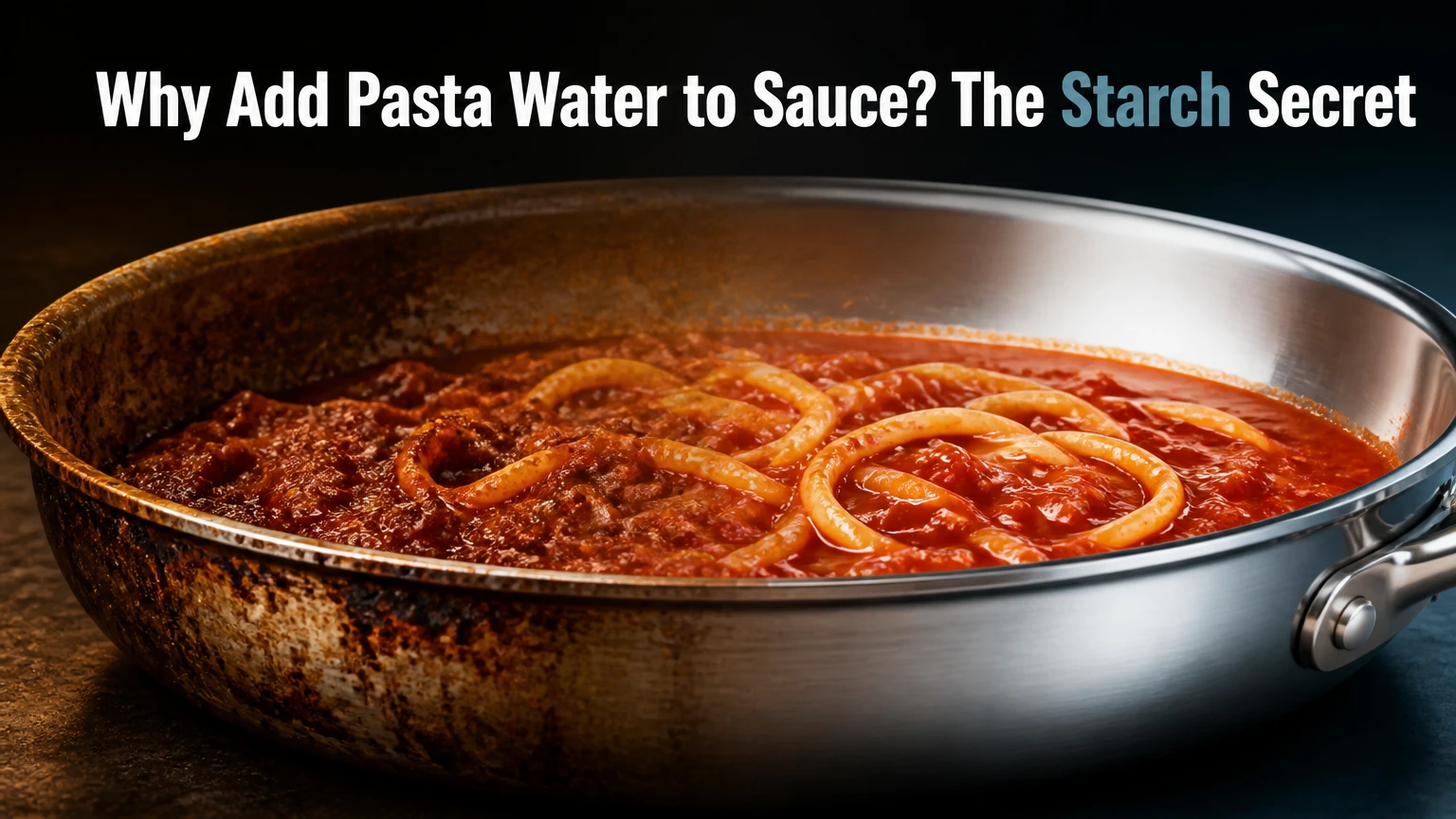
Pasta water helps sauce cling to noodles because dissolved starch thickens the watery phase and stabilizes the mixture of water, oil, butter, cheese, and sauce ingredients. Adding a small amount while tossing pasta over heat creates a glossy, cohesive coating instead of a thin sauce that pools beneath the noodles.
Key facts at a glance
Pasta water contains starch released from cooking noodles, plus salt and dissolved pasta solids.
For 1 pound of dried pasta, begin with ¼ cup of hot pasta water and add more only as needed.
Tossing pasta and sauce over moderate heat matters as much as the water because agitation helps distribute fat and starch.
Pasta water thickens and binds sauce, but it does not automatically make every sauce creamy.
Salt concentration varies with water volume, pasta type, and salt brand, so taste the water before adding it.
Reserve pasta water before draining because it cannot be recovered from the sink.
Why Add Pasta Water to Sauce?
Pasta water gives sauce body, adhesion, and a more stable texture. The dissolved starch absorbs part of the free water, while tossing spreads that thickened liquid around fat droplets and pasta surfaces. The result is a sauce that coats noodles rather than separating into oil, watery liquid, and solids.
Plain water can loosen a sauce, but plain water contains no pasta starch and may dilute seasoning. Cream can thicken through fat and dairy proteins, while pasta water creates a lighter finish that preserves the flavor of olive oil, tomatoes, aged cheese, garlic, or meat.
The technique is especially valuable in dishes where a small amount of fat must become a complete sauce. Aglio e olio, cacio e pepe, carbonara, butter sauces, and pan sauces all depend on controlling the relationship between water, starch, fat, and movement.
What Is Pasta Water?
Pasta water is the hot liquid left after pasta cooks. It contains water-soluble starch from the noodle surface, salt from the cooking water, and small amounts of flour-derived material, depending on the pasta and the amount of water used.
A large pot of water produces a relatively dilute liquid. Cooking the same pasta in less water produces a cloudier, more concentrated liquid, although that water can also become saltier and more flavored. Pasta shape affects release as well: rough, porous, or heavily floured pasta usually contributes more surface material than smooth pasta.
Pasta water is an ingredient, not merely a backup thickener. Its salinity and concentration influence the final sauce, so adding a large quantity without tasting can ruin an otherwise balanced dish.
How Does Pasta Water Make Sauce Creamy?
Pasta water makes sauce appear creamy by increasing viscosity and helping fat disperse through a continuous watery phase. Starch gelatinizes during cooking as granules absorb heat and water, then some starch disperses into the cooking liquid; tossing pasta with that liquid distributes the mixture across the noodles.
The common explanation that starch molecules act like soap, with one end bonding to water and the other bonding to fat, is too simple. Starch primarily thickens the water phase and slows movement between droplets, while agitation breaks fat into smaller droplets. Cheese proteins, butterfat, olive oil, and sauce solids then contribute their own stabilizing effects.
Harold McGee describes starch gelatinization in On Food and Cooking, first published in 1984 and revised in 2004, as the process in which starch granules absorb water and swell when heated. That physical change explains why hot, cloudy cooking water performs better than cold tap water.
Why Does Tossing Matter?
Tossing matters because movement distributes starch, water, fat, and pasta surfaces into one coating. A still pan can contain the right ingredients and still produce oil pools if the mixture is not stirred, whisked, or rapidly tossed.
Pan temperature also controls the outcome. Moderate heat encourages evaporation and mixing, while excessive heat can evaporate water before the sauce emulsifies or cause cheese proteins to tighten into lumps. Remove a cheese-based sauce from intense heat before adding finely grated cheese.
A practical rule is to add a small splash, toss for 15-30 seconds, and assess the coating. Add another tablespoon or two only when the noodles still look dry or the sauce remains separated.
How Much Pasta Water Should You Add?
For 1 pound, or about 454 grams, of pasta, start with ¼ cup, or 60 milliliters, of pasta water and increase toward ½ cup, or 120 milliliters, when the sauce is dense, oily, or cheese-based. The correct quantity depends on sauce volume, pasta shape, pan heat, and water concentration.
| Pasta amount | Starting water | Typical upper range | Typical finishing time |
|---|---|---|---|
| 2 ounces, 1 small serving | 1 tablespoon | 3 tablespoons | 30-60 seconds |
| 8 ounces, 2 servings | 2 tablespoons | ¼ cup | 45-90 seconds |
| 1 pound, 4 servings | ¼ cup | ½ cup | 1-2 minutes |
| 1½ pounds, 6 servings | ⅓ cup | ¾ cup | 1-3 minutes |
| 2 pounds, 8 servings | ½ cup | 1 cup | 2-3 minutes |
Treat those amounts as starting points, not a fixed formula. A thick pecorino sauce may need several small additions, while a loose tomato sauce may need only a spoonful. Adding all the water at once makes correction harder.
Should Pasta Water Be Hot?
Hot pasta water is preferable because hot liquid keeps butter fluid and helps cheese, oil, and sauce ingredients combine during finishing. Cold water can cool the pan and delay emulsification, but 160°F, or 71°C, is not a universal minimum requirement.
Reserve the water immediately before draining, when it is near the pasta pot’s cooking temperature. If the water has cooled briefly in a mug, it remains usable; add it gradually and restore moderate heat rather than treating a precise thermometer reading as mandatory.
How Salty Should Pasta Water Be?
Pasta water should taste clearly seasoned but not aggressively salty. A practical home range is approximately 5-10 grams of salt per liter of water, or about 0.5-1 percent by weight, although the final amount depends on the salt brand and cooking-water volume.
The frequently repeated instruction to use 1 tablespoon of kosher salt per 4 quarts is imprecise. Morton kosher salt, Diamond Crystal kosher salt, and fine table salt occupy different volumes for the same weight, so weighing salt is more reliable.
| Salt type | Typical weight per tablespoon | Effect on measurement |
|---|---|---|
| Diamond Crystal kosher salt | About 8-10 grams | Less salty by volume |
| Morton kosher salt | About 14-16 grams | Saltier by volume |
| Fine table salt | About 17-19 grams | Most concentrated by volume |
| Fine sea salt | About 15-18 grams | Varies by crystal density |
Taste the water before adding it to sauce. A salty cheese such as Pecorino Romano, anchovies, olives, bacon, or guanciale requires more caution because pasta water becomes part of an already seasoned dish.
When Should You Reserve and Add Pasta Water?
Reserve pasta water 1-2 minutes before the noodles reach their package cooking time, then finish the pasta in the sauce. The best workflow is to scoop the water first, transfer undercooked pasta into the sauce, and add liquid while the noodles absorb flavor.
Step 1: Salt and Boil the Pasta
Cook pasta in water that tastes seasoned, using the package’s cooking time as a guide rather than an absolute endpoint. Stir during the first minute to reduce sticking, especially with long strands and fresh pasta.
A lower-water method can create concentrated cooking liquid. For 1 pound of dried pasta, 2-3 quarts is often workable in a wide pot, compared with the traditional 4-6 quarts, but the pasta requires more frequent stirring.
Step 2: Reserve the Cooking Liquid
Scoop 1-2 cups of water before using a colander. A heatproof measuring cup, ladle, mug, spider strainer, or pasta pot with an integrated insert all work.
Reserve more than you expect to need. The water costs nothing, and extra liquid allows controlled adjustments during finishing.
Step 3: Move Pasta Into the Sauce
Transfer pasta when it is slightly firm in the center. Tongs work for spaghetti, linguine, and fettuccine; a spider strainer suits short shapes; a slotted spoon works for small portions.
Do not rinse pasta before finishing a hot sauce. Rinsing removes surface starch that helps the sauce adhere, except when preparing a cold pasta salad or stopping the cooking process for a different reason.
Step 4: Add Water and Agitate
Add ¼ cup of hot pasta water per pound of pasta, then toss or stir over medium heat for 30-60 seconds. The sauce should become more fluid at first, then turn glossy as evaporation and starch concentration increase.
You will know it worked when the noodles look coated from end to end, the pan contains little free liquid, and a dragged spatula leaves a brief trail through the sauce. Add one tablespoon at a time if the pasta looks dry.
Step 5: Finish Off the Heat
Remove the pan from high heat before adding finely grated cheese, especially Pecorino Romano or Parmesan. Finish with butter, olive oil, herbs, or cheese while tossing, then serve immediately.
A sauce that tightens on the plate usually needed slightly more water during finishing. Pasta continues absorbing liquid after plating, so a pan sauce should look a little looser than the desired final texture.
Which Sauces Benefit Most From Pasta Water?
Oil-based and cheese-based sauces gain the most from pasta water because they need help combining fat with water and coating the noodles. Tomato, cream, and meat sauces can also benefit, although they often require smaller additions because their ingredients already provide moisture and body.
| Sauce type | Starting amount per pound | Best finishing heat | Main benefit |
|---|---|---|---|
| Aglio e olio | ¼-½ cup | Medium | Disperses olive oil around garlic and pasta |
| Cacio e pepe | ¼-½ cup | Off heat or very low | Helps grated cheese form a smooth coating |
| Carbonara | 2-6 tablespoons | Off heat | Loosens egg and cheese without scrambling |
| Tomato sauce | 2-4 tablespoons | Medium | Helps sauce cling and softens acidity |
| Brown butter | 2-4 tablespoons | Medium-low | Prevents a greasy finish and carries butter |
| Cream sauce | 1-4 tablespoons | Low | Loosens dairy sauce without extra cream |
| Meat ragù | 1-4 tablespoons | Medium-low | Adjusts thickness and binds rendered fat |
Does Tomato Sauce Need Pasta Water?
Tomato sauce can benefit from 2-4 tablespoons of pasta water per pound, especially when the sauce is thick or the noodles finish cooking in the pan. Pasta water adds salinity and starch, helping tomato solids cling without requiring additional oil.
A watery tomato sauce does not need more pasta water. Reduce the tomato sauce first, then use a small splash during final tossing. Adding liquid to an already loose sauce increases evaporation time and can dull concentrated tomato flavor.
Does Carbonara Need Pasta Water?
Carbonara often needs a small amount of pasta water because the liquid helps combine egg yolks, cheese, rendered pork fat, and pasta. Add it off heat or over very low heat so the eggs thicken into a coating instead of scrambling.
Reserve ½ cup even for a small batch. The exact amount may be only 2 tablespoons, but the sauce can tighten rapidly as Pecorino and egg proteins absorb water. The finishing temperature matters more than a rigid quantity.
Does Cacio e Pepe Need Pasta Water?
Cacio e pepe needs controlled pasta water because Pecorino Romano alone tends to clump when exposed to intense heat. A smooth result comes from finely grated cheese, warm starchy water, gradual incorporation, and low or removed heat.
Cheese quality changes the process. A very dry, finely grated cheese hydrates more readily than coarse shreds. If the cheese forms strings or lumps, stop heating and whisk in a tablespoon of hot water before adding more cheese.
Does Low-Water Pasta Produce Better Sauce?
Low-water pasta can produce more concentrated cooking liquid, but less water is not automatically better. The method works when the pot is wide enough, the pasta is stirred frequently, and the final water is not so salty or cloudy that it overwhelms the sauce.
A typical low-water method uses 2-3 quarts for 1 pound of dried pasta. A traditional pot may use 4-6 quarts. Both methods can produce useful water, because the practical result depends on pasta-to-water ratio, boiling time, noodle surface, and evaporation.
Low-water cooking is particularly useful for a small batch of cacio e pepe or aglio e olio. It is less convenient for crowded pots, delicate fresh pasta, or cooks who cannot stir frequently, because noodles can stick or cook unevenly.
Is Fresh Pasta Water More Starchy?
Fresh pasta water is not always more effective than dried-pasta water. Fresh egg pasta can release flour and proteins, but fresh noodles often cook quickly and may contribute less total starch than a pound of dried semolina pasta cooked for several minutes.
Fresh pasta also carries more flour on its surface when handmade. That flour can thicken water quickly but may produce a pasty texture if used in excess. Begin with 1-2 tablespoons and increase gradually for butter, sage, or light cream sauces.
Does Gluten-Free Pasta Water Work?
Gluten-free pasta water can support a sauce, but its flavor and texture vary by flour blend. Rice and corn pasta often provide neutral starch, while chickpea, lentil, and pea pasta can add earthy flavors and produce a thicker or grainier liquid.
Reserve less at first, usually 2-4 tablespoons per pound. Gluten-free noodles may break if overcooked, so transfer them promptly and finish gently. The cooking water cannot replace gluten’s structural role in a dough, but sauce adhesion does not require gluten.
Pasta Water Versus Cream, Tap Water, and Cornstarch
Pasta water is the best first adjustment when a pasta sauce needs light body and better adhesion without adding dairy. Cream is better when richness is an intended flavor, cornstarch is better for a strong controlled thickener, and plain water is acceptable only when dilution is harmless.
| Finishing method | Typical amount | Texture result | Best use |
|---|---|---|---|
| Pasta water | ¼-½ cup per pound | Glossy, light, moderately thick | Italian oil, cheese, tomato, and butter sauces |
| Heavy cream | ¼-¾ cup per pound | Rich, opaque, high-fat | Cream sauces and dairy-forward dishes |
| Plain water | 1-4 tablespoons | Thin, low-body | Emergency loosening when sauce is already concentrated |
| Cornstarch slurry | 1 teaspoon starch plus 1 tablespoon water | Firm, glossy, highly thick | Gluten-free repairs and gravy-like sauces |
| Stock | ¼-½ cup per pound | Savory, variable body | Meat sauces and reductions |
Pasta water does not make a sauce taste like cream. That limitation is useful in cacio e pepe and aglio e olio, where dairy or extra fat could mask the intended pepper, cheese, garlic, or olive oil profile.
Cornstarch can rescue a sauce, but it may create a gel-like coating that feels separate from the pasta. Use it when the dish already resembles a gravy, or when dietary restrictions rule out wheat-based cooking water.
What Are the Common Mistakes?
The most common mistake is adding too much water too quickly. Sauce becomes easier to control when liquid enters in tablespoons or small splashes, followed by 15-30 seconds of tossing before the next adjustment.
- Draining before reserving: Scoop water before lifting the colander. A mug beside the pot creates a reliable reminder.
- Using aggressively salty water: Taste the water and reduce added salt in the sauce, particularly with Pecorino, anchovies, olives, or cured pork.
- Adding water to a cold plated dish: Emulsification works during active mixing, not as a last-minute puddle on the plate.
- Boiling cheese sauce hard: Remove the pan from high heat, then add cheese and water gradually.
- Adding water to a watery sauce: Reduce the sauce first; pasta water cannot remove excess liquid.
- Rinsing hot pasta: Rinsing strips away surface starch and cools the noodles before finishing.
An expert rule of thumb is to reserve at least twice the amount you expect to use. Running out is more disruptive than storing an unused cup, although cooled pasta water usually develops a gelatinous texture and is not worth saving for another meal.
How Do You Fix Watery Sauce?
Fix watery pasta sauce by tossing the noodles over medium heat for 30-90 seconds, allowing evaporation and starch concentration to increase. If the sauce remains thin after the pasta is coated, remove some liquid with a spoon or continue reducing briefly.
Do not add cheese immediately to disguise excess water. Cheese can clump when the mixture is hot and dilute, especially in cacio e pepe. First concentrate the sauce, then finish with cheese or butter.
How Do You Fix Oily or Broken Sauce?
Fix oily sauce by lowering the heat, adding 1 tablespoon of hot pasta water, and tossing vigorously for 15-30 seconds. Repeat gradually until the oil disperses and the sauce coats the pasta.
If the pan is extremely hot, move it off the burner first. Fresh water cannot overcome rapid evaporation, and continued high heat may leave the sauce more separated than before.
How Do You Fix Clumpy Cheese Sauce?
Fix clumpy cheese sauce by removing the pan from heat and adding hot pasta water one tablespoon at a time while stirring continuously. Finely grated cheese repairs more easily than coarse shreds because smaller particles hydrate and disperse faster.
A cheese sauce may remain grainy if the cheese overheated, the water was added too late, or the cheese contained low moisture. The best prevention is controlled heat and gradual incorporation.
How Much Does the Technique Cost and How Long Does It Take?
Pasta water usually costs nothing because it is a byproduct of boiling pasta, and reserving it adds no separate preparation time. Finishing pasta with sauce typically takes 1-3 additional minutes, depending on the amount of liquid and the desired reduction.
The technique can reduce the need for extra butter, oil, or cream, but it does not replace those ingredients in every recipe. Pasta water supplies water and starch, not the flavor, aroma, or richness of a large amount of fat.
Leftover pasta water is best used immediately while hot. Refrigerated water may become cloudy or gelatinous within hours, and its salt concentration makes it unsuitable for casual reuse in soup or boiling another batch unless its flavor is acceptable.
The Bottom Line
Why add pasta water to sauce? Add it because starch-rich cooking liquid helps water and fat combine, thickens the sauce lightly, and makes the coating cling to pasta. Start with ¼ cup per pound, toss over moderate heat, and adjust in tablespoons according to the pan.
The technique works best when pasta finishes cooking in the sauce. Reserve before draining, avoid aggressive boiling with cheese, and taste for salt before adding more liquid. Pasta water cannot rescue every sauce, but it is the most precise low-cost adjustment for improving texture without masking flavor.
Frequently Asked Questions
Can You Add Pasta Water to Jarred Sauce?
Yes. Add 1-3 tablespoons of hot pasta water per 2 cups of jarred sauce while tossing the cooked noodles in a skillet. The starch helps the sauce adhere and can soften a thick, concentrated texture, but add less if the jarred sauce is already loose or salty.
Should You Add Pasta Water Before or After the Sauce?
Add pasta water after the pasta enters the sauce, because the noodles, sauce, and liquid then finish together. A small splash can loosen sauce beforehand, but the strongest binding effect comes from tossing the pasta directly in the sauce while the water is incorporated.
Can Pasta Water Make Sauce Too Salty?
Pasta water can make sauce too salty when the cooking liquid is highly seasoned or when the sauce already contains cured meat, salty cheese, olives, or anchovies. Taste the water first, add it gradually, and use unsalted water only as a last-resort dilution.
Does Pasta Water Work With Macaroni and Cheese?
Pasta water can loosen macaroni and cheese and help distribute a cheese sauce, especially when the sauce is thick after cooling. Use 1-2 tablespoons per serving, then stir over low heat; large amounts can dilute the dairy flavor and make the dish thin.
Can You Freeze Pasta Water?
Freezing pasta water is possible, but it is rarely useful because the water may turn cloudy or gelatinous and has little storage value. Reserve only what you can use during the same meal, then discard the remainder rather than holding it for several days.
Is Pasta Water Necessary for Every Pasta Dish?
Pasta water is not necessary for every pasta dish. It has limited value when pasta is served cold, when a sauce is already perfectly emulsified, or when the recipe calls for a separately thickened sauce. It is most useful during final tossing, when sauce and noodles need to become one coating.