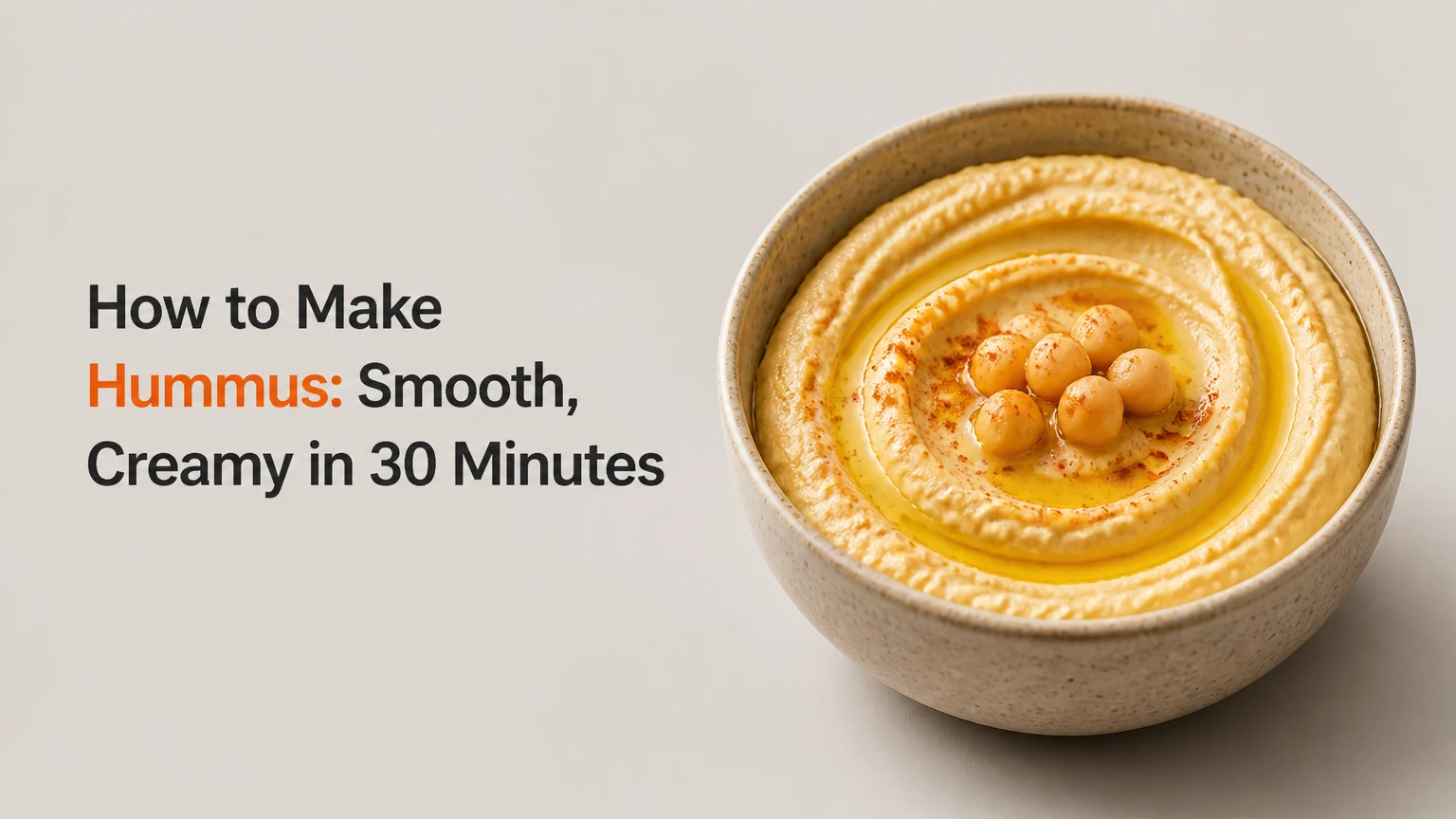
Hummus is a smooth Middle Eastern chickpea spread made by blending cooked chickpeas with tahini, lemon juice, garlic, salt, and water. For creamy results, cook the chickpeas until they collapse easily, whip the tahini with lemon and cold water, then blend the warm beans for 3-5 minutes.
Key Facts at a Glance
A batch made with 1 can of chickpeas yields approximately 1.5-2 cups of hummus.
Soft, hot chickpeas produce smoother hummus than firm or refrigerated chickpeas.
A practical starting ratio is 120 g tahini to 240-300 g cooked chickpeas.
Ice-cold water lightens hummus; adding olive oil during blending can make the texture heavy.
Dried chickpeas provide the best texture, but simmering canned beans with baking soda improves them substantially.
Homemade hummus keeps for about 4 days in a sealed container at 4°C or below.
What Ingredients Do You Need for Hummus?
A basic hummus recipe needs chickpeas, tahini, lemon juice, garlic, salt, and water; olive oil belongs primarily on the surface rather than in the purée. The recipe below makes approximately 2 cups, or 4 servings of 120 g each, with a smooth texture and moderately assertive tahini flavor.
| Ingredient | Quantity | Function | Practical specification |
|---|---|---|---|
| Cooked chickpeas | 480 g, about 2 1/2 cups | Body, starch, protein | Warm and very soft |
| Tahini | 120 g, about 1/2 cup | Sesame flavor and fat | Stirred, pourable, not rancid |
| Lemon juice | 60 ml, 1/4 cup | Acidity and freshness | Freshly squeezed |
| Garlic | 1 small clove | Savory aroma | Grated or finely minced |
| Cold water | 60-120 ml | Hydration and aeration | Added gradually |
| Fine salt | 4-5 g, 3/4 teaspoon | Seasoning | Adjust after blending |
| Ground cumin | 1/4 teaspoon | Optional warmth | Use sparingly |
| Extra-virgin olive oil | 15-30 ml | Finishing garnish | Drizzled after plating |
Chickpeas are also called garbanzo beans. The two names describe the same legume, whether purchased dried, canned, or cooked from frozen. Use unsalted canned chickpeas when possible because salt levels vary widely between brands.
Tahini quality changes the entire batch. Fresh tahini tastes nutty and slightly bitter, but rancid tahini tastes harsh, stale, or paint-like. Stir the jar from the bottom before measuring because sesame solids settle beneath the oil.
How much tahini should you use?
Use 1 part tahini for every 2-2.5 parts cooked chickpeas by weight for balanced hummus. A higher tahini ratio creates a richer, denser spread, while reducing tahini produces a lighter but less sesame-forward dip.
The recipe’s 120 g tahini and 480 g chickpeas create a 1:4 weight ratio, which is moderate because chickpeas contain substantial water. By volume, the result is close to the familiar 1 part tahini to 2 parts cooked chickpeas. Weighing cooked beans avoids confusion caused by different can sizes and draining levels.
Fresh lemon juice should be added gradually. Lemon strength varies, and an overly acidic batch is harder to correct than a mild one. Add 45 ml first, blend, and use the remaining 15 ml only if the hummus needs more brightness.
Why Does Hummus Become Creamy?
Hummus becomes creamy when fully softened chickpea starches, hydrated tahini, and added water form a stable, finely dispersed paste. Cooking breaks down chickpea cell walls, while prolonged blending reduces skins and solids into particles too small to perceive on the tongue.
Chickpea starch thickens as it absorbs water and heat. Firm beans retain intact cell structures, so a food processor leaves tiny skins and granules behind. The finger-smash test is more reliable than a fixed cooking time because chickpea age, soaking conditions, and water hardness change the rate of softening.
Tahini contains sesame oil and finely milled sesame solids. Lemon juice initially makes tahini seize into a thick paste, but whisking or processing in cold water gradually loosens it into a pale, aerated emulsion. This temporary thickening is normal.
Food writer and culinary scientist Harold McGee describes emulsions as mixtures in which “one liquid is dispersed in another,” a useful explanation for why water and sesame oil can create a creamy base when mixed correctly. Hummus is not mayonnaise, but the same dispersed-droplet principle helps explain its fluffy mouthfeel.
Which equipment makes the smoothest hummus?
A food processor with a 700- to 1,000-watt motor usually produces the smoothest hummus for a 2-cup batch. A high-speed blender can also work, but its narrow container may require more water and frequent scraping.
| Equipment | Typical batch | Processing time | Main trade-off |
|---|---|---|---|
| Food processor, 700-1,000 W | 2-6 cups | 3-5 minutes | Best balance of texture and scraping |
| High-speed blender, 1,000-1,500 W | 2-4 cups | 2-4 minutes | Smooth texture, needs tamper or extra liquid |
| Immersion blender | 1-2 cups | 5-8 minutes | Convenient, usually less silky |
| Mortar and pestle | 1/2-1 cup | 15-25 minutes | Traditional control, labor-intensive |
Do not fill a blender with hot chickpeas unless the manufacturer permits hot ingredients. Steam can expand rapidly and force the lid upward. For a blender, cool the beans until warm rather than steaming, leave the vent open if designed for hot liquids, and begin at low speed.
How to Make Hummus Step by Step
The canned-bean method takes about 25-30 minutes, including a short simmer, blending, and plating. The dried-bean method takes 10-14 hours of elapsed time because soaking comes first, but active work remains roughly 20 minutes; chickpea softness determines the final texture more than any other variable.
Before You Start
| Requirement | Canned method | Dried method |
|---|---|---|
| Total elapsed time | 25-30 minutes | 10-14 hours |
| Active preparation | 15-20 minutes | 20-25 minutes |
| Typical U.S. ingredient cost | $3-$5 | $2-$4 |
| Yield | 1.5-2 cups | About 2 cups |
| Main tool | Food processor | Pot and food processor |
| Difficulty | Easy | Easy with advance planning |
For the dried method, use 200 g dried chickpeas, 1 teaspoon baking soda for soaking, and another 1/2 teaspoon to 1 teaspoon for cooking. For the canned method, use two 15-ounce cans, drain them, rinse them, and simmer them with 1/2 teaspoon baking soda.
Step 1: Soak and Cook the Chickpeas
Soak 200 g dried chickpeas in at least 1 litre of water with 1 teaspoon baking soda for 8-12 hours, then drain and rinse them. Cover the beans with fresh water by 5 cm, add 1/2-1 teaspoon baking soda, and simmer for 45-90 minutes until they crush without resistance.
Baking soda raises the cooking water’s alkalinity and helps weaken chickpea skins. Too much creates a soapy flavor, so keep the total quantity near 1-2 teaspoons for 200 g dried beans.
You will know the beans are ready when a chickpea disintegrates between two fingers with almost no pressure. A bean that merely splits is still too firm for ultra-smooth hummus. Skim foam if needed, but do not judge doneness by the disappearance of foam.
For canned chickpeas, simmer the drained beans in fresh water with 1/2 teaspoon baking soda for 10-15 minutes. This extra step softens skins and removes some canned flavor.
Common mistake: stopping when chickpeas are tender enough for salad. Hummus requires beans that are softer than ordinary table-tender chickpeas.
Step 2: Mellow the Garlic in Lemon Juice
Put 1 grated garlic clove, 45-60 ml lemon juice, and the salt in the food processor, then rest the mixture for 5 minutes. The acidic lemon juice reduces the harshest raw-garlic bite before the garlic is dispersed throughout the hummus.
Use half a clove for a mild dip or two small cloves for a sharper Levantine-style profile. Grating distributes garlic more evenly than dropping in a whole clove, which can leave concentrated pieces near the blade.
Common mistake: adding extra raw garlic at the end. Garlic becomes more prominent after refrigeration, so season slightly below your preferred intensity if the hummus will rest overnight.
Step 3: Whip the Tahini Base
Add 120 g stirred tahini to the lemon-garlic mixture and process for 30-60 seconds. With the motor running, add 60 ml ice-cold water in a thin stream, then add more water by the tablespoon until the base turns pale, smooth, and pourable.
Tahini may become dramatically thicker before it loosens. Keep processing while adding water slowly rather than adding oil. Water hydrates sesame solids and creates a lighter emulsion; oil increases richness but does not solve a dense texture.
The base is ready when it falls from a spoon in a thick ribbon and has no visible streaks of separated sesame oil. If it tastes sharply bitter, inspect the tahini before adding sugar or more lemon. Poor-quality or oxidized tahini cannot be fully repaired.
Common mistake: pouring in all the water at once. Sudden dilution can create a thin base that requires excessive chickpeas to rebalance.
Step 4: Blend in the Warm Chickpeas
Drain the chickpeas thoroughly, reserve 120 ml cooking liquid or aquafaba, and add the warm beans to the tahini base. Process continuously for 3-5 minutes, scraping the bowl once, until the hummus looks glossy and no graininess remains.
Add reserved aquafaba or cold water 15 ml at a time. The final hummus should hold a shallow spoon mark but spread without tearing. Warm beans blend more readily because their starch remains hydrated and soft.
Taste after the main blend. Add lemon for acidity, salt for definition, or a small amount of water for looseness. Cumin is optional and should remain in the background rather than dominate the sesame and lemon.
Common mistake: pulsing for 30 seconds and stopping. Short pulses leave skins intact and prevent the emulsion from becoming fully smooth.
Step 5: Rest, Plate, and Garnish
Rest hummus for 10 minutes, then spread it into a shallow bowl and create a circular well with the back of a spoon. Add 1-2 tablespoons extra-virgin olive oil and finish with sumac, paprika, chopped parsley, or a few whole chickpeas.
Hummus thickens as it cools. If serving it cold, blend in 1-2 teaspoons water before plating. If serving it warm, use gentle heat only; direct high heat can dry the surface and split the oil.
Warm pita, raw vegetables, falafel, grilled meat, roasted vegetables, and hard-boiled eggs all pair with hummus. Olive oil is traditionally used as a finish in many serving styles, but it is not required in the purée.
Which Chickpeas Should You Choose?
Dried chickpeas provide the deepest bean flavor and the greatest control over softness, while canned chickpeas provide speed and consistent convenience. For a weekday dip, simmered canned beans deliver excellent results; for a large batch or texture-focused meal, dried beans are worth the planning.
| Factor | Dried chickpeas | Canned chickpeas |
|---|---|---|
| Elapsed time | 10-14 hours | 25-30 minutes with simmering |
| Typical batch cost | $2-$4 | $3-$5 |
| Texture potential | Very smooth | Smooth after baking-soda simmer |
| Flavor control | High, salt added separately | Brand-dependent, sometimes metallic |
| Yield from 200 g dry | About 480-550 g cooked | About 460-500 g from two cans |
| Best use | Planned meals and large batches | Fast lunches and small batches |
Aquafaba from cooked dried beans often contains more starch than liquid from canned beans, although brands vary. Use it when the hummus needs extra body, but taste first because canned aquafaba may contain substantial salt.
Removing every chickpea skin can produce a slightly silkier result, but the labor is rarely justified for a normal home batch. Very soft beans and five minutes of processing usually provide a better time-to-texture trade-off.
Can You Make Hummus Without Tahini?
Hummus can be made without tahini, but the result loses sesame flavor and usually needs more liquid or another fat source. Replace 120 g tahini with 80-100 g sunflower-seed butter for the closest nutty texture, or use 30-45 ml olive oil plus extra aquafaba for a lighter spread.
| Alternative | Quantity for 2 cups | Flavor | Limitation |
|---|---|---|---|
| Sunflower-seed butter | 80-100 g | Nutty, mild | Can taste slightly earthy |
| Cashew butter | 80-100 g | Sweet, creamy | Not sesame-free for traditionalists |
| Olive oil and aquafaba | 30 ml plus 60-90 ml | Bean-forward | Less stable and less rich |
| Greek yogurt | 100-150 g | Tangy, soft | Not dairy-free and not classic hummus |
For sesame allergy, avoid tahini and check labels on canned beans, spices, and prepared toppings for cross-contact warnings. Yogurt changes hummus into a different dip, so use it when tanginess matters more than traditional flavor.
What Hummus Styles and Variations Are Common?
Levantine hummus generally emphasizes chickpeas, tahini, lemon, and garlic, while modern versions add vegetables, spices, or meat toppings. Regional labels overlap, so style names should describe a flavor profile rather than imply one universally fixed recipe.
- Tahini-forward: Increase tahini to 150-180 g for 480 g chickpeas and reduce added water gradually.
- Roasted red pepper: Blend 100-150 g drained roasted pepper with the finished hummus.
- Beet hummus: Add 100 g cooked beet for color and earthy sweetness, then increase lemon by 5-10 ml.
- Jalapeño hummus: Blend one seeded jalapeño with the garlic for moderate heat.
- Herb hummus: Fold in 15 g parsley or cilantro after processing for a fresher finish.
- Spiced lamb hummus: Top with 150-200 g cooked ground lamb seasoned with cumin and allspice.
Greek-style dips often include yogurt or feta, but those additions make a related Mediterranean dip rather than a standard chickpea-tahini hummus. Israeli restaurant portions may be especially smooth and tahini-rich, but recipes differ by cook and region.
How Do You Fix Grainy, Bitter, or Thick Hummus?
Grainy hummus usually contains undercooked chickpeas or insufficient processing; bitter hummus usually contains harsh tahini, excessive garlic, or too much lemon pith. Fix the texture first, then correct seasoning in small increments.
| Problem | Likely cause | Recovery |
|---|---|---|
| Grainy texture | Firm beans or short blending | Simmer beans 10-20 minutes, then reblend |
| Thick paste | Too little water or tahini overload | Add 15 ml cold water at a time |
| Bitter flavor | Rancid tahini or excess garlic | Replace tahini; add lemon only if acidity is low |
| Greasy surface | Oil added during blending | Blend in warm chickpeas or aquafaba |
| Flat flavor | Insufficient salt or lemon | Add 1/8 teaspoon salt or 5 ml lemon |
| Runny hummus | Excess water or aquafaba | Blend in chickpeas by 30 g increments |
If the hummus is grainy after five minutes, do not keep adding oil. Warm the mixture gently, add soft chickpeas, and process again. A high-powered blender may hide some graininess while still producing a heavier mouthfeel than a food processor.
If bitterness persists after replacing garlic and balancing lemon, discard the tahini. Rancid sesame paste is a quality defect, not a seasoning problem.
How Should You Store Homemade Hummus?
Store hummus in a shallow, airtight container in a refrigerator at 4°C or below and use it within 4 days. Keep serving utensils clean, and do not return hummus that has sat at room temperature for several hours to the main container.
Cover the surface tightly to reduce drying and odor absorption. A thin film of olive oil can limit surface exposure, but it does not extend safe storage beyond the normal refrigerated period.
For a party, divide hummus into smaller bowls and replace them from the refrigerator rather than leaving one large bowl out. FoodSafety.gov recommends refrigerating perishable food within 2 hours, or within 1 hour when ambient temperatures exceed 32°C.
Hummus can be frozen for approximately 2-3 months in an airtight container, although thawed texture may become slightly looser or grainier. Thaw overnight in the refrigerator, then reprocess with 1-2 teaspoons cold water and adjust lemon and salt.
How Do You Scale Hummus for a Crowd?
Scale the recipe by cooked chickpea weight, not by can count alone. For every 240 g cooked chickpeas, use approximately 60 g tahini, 30 ml lemon juice, 1/2 small garlic clove, and 30-60 ml water, adjusting the final liquid to texture.
| Servings | Cooked chickpeas | Tahini | Lemon juice | Expected yield |
|---|---|---|---|---|
| 2 | 240 g | 60 g | 30 ml | 1 cup |
| 4-6 | 480 g | 120 g | 60 ml | 2 cups |
| 10-12 | 960 g | 240 g | 120 ml | 4 cups |
| 20-24 | 1,920 g | 480 g | 240 ml | 8 cups |
A party platter usually needs 60-90 g hummus per person when pita, vegetables, falafel, or other dishes are present. For hummus as the main dip, plan closer to 120 g per person.
Process batches no larger than the food processor manufacturer’s liquid and capacity limits. Two 2-cup batches usually blend more evenly than one overfilled 4-cup batch.
What Are the Most Important Hummus Rules?
Three practitioner rules prevent most disappointing batches:
- Prioritize softness over peeling. Overcooked chickpeas create a smoother base with less labor than individually removing skins.
- Add water to tahini before adding beans. The pale, whipped tahini base gives the processor a smoother starting emulsion.
- Season after the texture is correct. Water, cooking liquid, and chickpea brands alter salt and acidity, so final seasoning must follow blending.
Hummus is not a good candidate for cooking the beans until merely fork-tender. That standard works for salads and stews, but hummus needs starches that collapse under finger pressure.
Hummus is also not improved automatically by more olive oil. Oil adds aroma and richness on the plate, while water controls looseness inside the purée. Use each ingredient for its intended job.
Frequently Asked Questions
Can you make hummus in advance?
Yes, hummus can be made 1 day ahead and refrigerated in an airtight container. The texture will firm as it chills, so stir in 1-2 teaspoons cold water before serving. Add fresh olive oil and spices after reshaping the surface.
Why does homemade hummus taste sour?
Excess lemon juice, concentrated bottled lemon juice, or lemon pith can make hummus taste sour or bitter. Correct the batch with additional chickpeas, tahini, and water in small amounts, then add salt only after the acidity is balanced.
Should chickpeas be peeled for hummus?
Peeling chickpeas is optional. It can remove some coarse skin particles, but fully overcooked beans and 3-5 minutes of continuous blending usually provide a smooth texture without the extra labor.
Can you use a blender instead of a food processor?
A blender can make hummus, especially a high-speed model with a tamper, but it often requires more water because the container is narrow. Blend warm rather than steaming-hot beans unless the manufacturer specifically approves hot ingredients.
Is hummus served hot or cold?
Hummus is commonly served cool, room temperature, or gently warm. Room-temperature hummus has a fuller tahini aroma, while refrigerated hummus is firmer; never heat it aggressively because high heat can dry the surface and separate the oil.
The Bottom Line
To make hummus, cook chickpeas until they collapse, whip tahini with lemon juice and cold water, then process the warm beans for 3-5 minutes. Use canned chickpeas for a 30-minute meal or dried chickpeas for maximum texture control, and adjust the finished spread with water, lemon, and salt rather than extra oil.