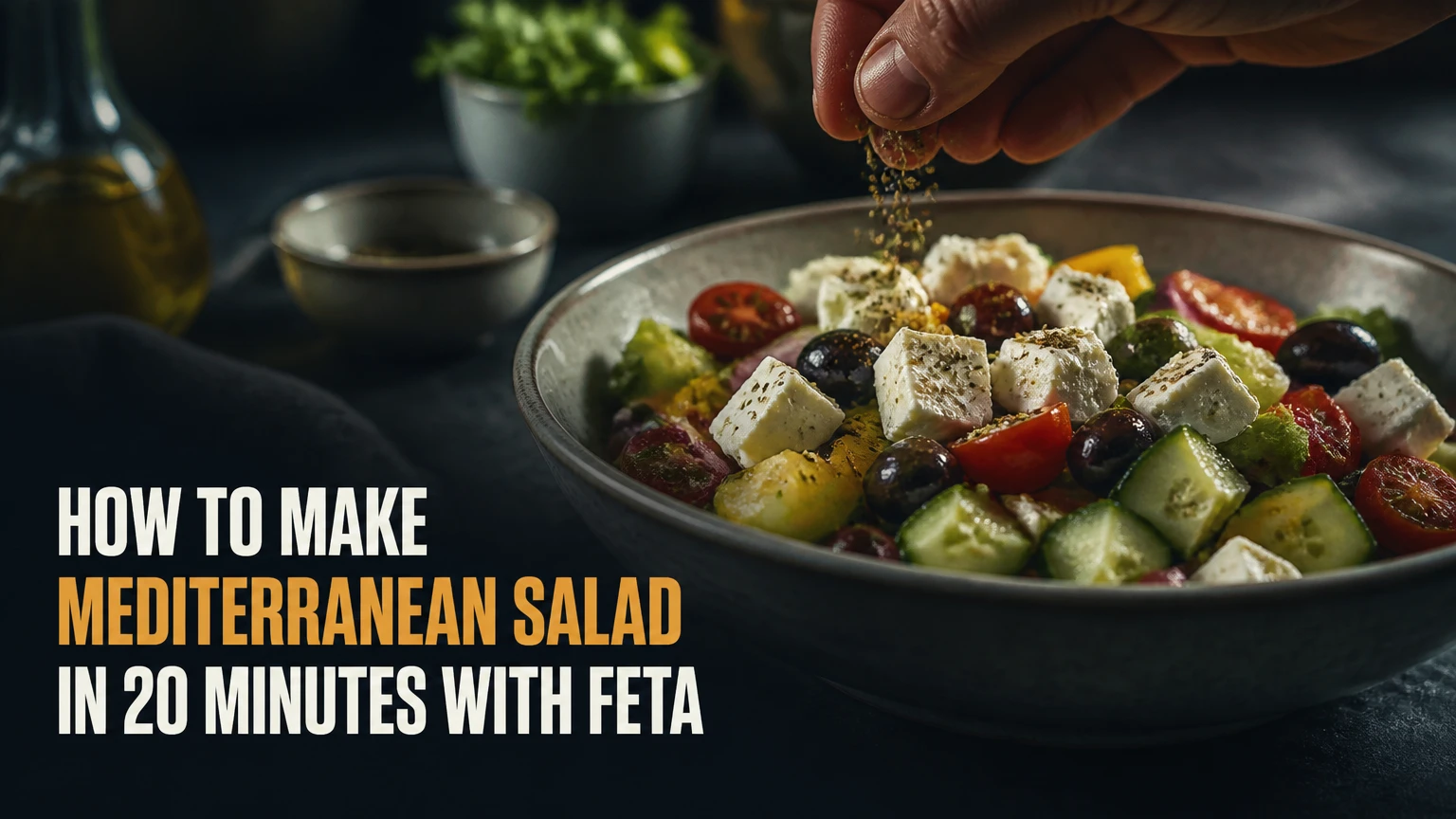
Mediterranean salad combines tomatoes, cucumber, bell pepper, red onion, olives, herbs, feta, and an olive oil dressing in one bowl. To make it, salt the tomatoes briefly, whisk a lemon and red wine vinegar dressing, chop vegetables into bite-sized pieces, toss sturdy ingredients first, then add feta and rest the salad for 10 minutes.
Key Facts at a Glance
- A four-serving Mediterranean salad typically takes 15-20 minutes of active preparation and 10 minutes of resting.
- A practical dressing uses 6 tablespoons extra virgin olive oil, 2 tablespoons acid, garlic, oregano, salt, and pepper.
- Traditional Greek horiatiki contains tomatoes, cucumber, onion, peppers, olives, feta, and oregano, but usually no lettuce.
- Salting tomatoes for 5-10 minutes improves flavor and reduces watery liquid, especially with ripe slicing tomatoes.
- An undressed chopped salad keeps for about 3-4 days when refrigerated in a sealed container.
- Olive oil, feta, and olives provide much of the salad’s energy and sodium, while vegetables provide volume, potassium, and fiber.
What Makes a Salad Mediterranean?
A Mediterranean salad is a vegetable-forward dish built around olive oil, fresh produce, herbs, olives, cheese, legumes, seafood, or lean meat. The name describes a family of preparations rather than one universally fixed recipe, because Greek horiatiki, Lebanese fattoush, Italian chopped salad, and Spanish ensalada mixta use different ingredients and techniques.
The common structure is more useful than a strict ingredient list: fresh or preserved vegetables provide texture, olive oil carries fat-soluble aromas, acid adds contrast, and salty ingredients create depth. Garlic, oregano, mint, parsley, basil, sumac, and capers can shift the regional character without changing the basic method.
Traditional Greek salad is especially distinct. Horiatiki generally uses large-cut vegetables, Kalamata olives, oregano, and a slab of feta instead of lettuce and finely crumbled cheese. A restaurant salad with romaine, grilled chicken, and creamy dressing can be Mediterranean-inspired, but it is not the same preparation.
Which ingredients should you buy?
Choose ripe tomatoes, firm cucumbers, a crisp bell pepper, a small red onion, brined olives, feta preserved in brine, and extra virgin olive oil. Produce quality matters more than expensive garnish because raw vegetables remain exposed and receive little heat-based flavor development.
| Ingredient | Quantity for 4 | Best choice | Practical substitute |
|---|---|---|---|
| Tomatoes | 500-600 g | Ripe vine, Roma, or heirloom | 600 g cherry tomatoes |
| Cucumber | 1 large, 300-350 g | Persian or English cucumber | 2 standard cucumbers, peeled partly |
| Bell pepper | 1 medium | Green for Greek profile | Red or yellow for sweetness |
| Red onion | 1/2 medium, 60-80 g | Thinly sliced | 4 scallions |
| Olives | 80-100 g | Kalamata or mixed brined olives | Green Castelvetrano olives |
| Feta | 120-150 g | Greek-style block in brine | Crumbled feta or 100 g goat cheese |
| Olive oil | 6 tablespoons, 90 ml | Fruity or peppery EVOO | Mild olive oil |
| Acid | 2 tablespoons, 30 ml | Lemon juice plus red wine vinegar | 30 ml red wine vinegar |
Wash produce under cool running water, then dry it thoroughly with towels or a salad spinner. Dry surfaces prevent water from thinning the dressing and help oil cling to vegetables rather than collecting beneath them.
How Much Dressing Does Mediterranean Salad Need?
Use about 30 ml of dressing per four servings, or 1 1/2 tablespoons per person, then adjust after tasting. A reliable starting point is 6 tablespoons olive oil to 2 tablespoons lemon juice or vinegar, which is a 3:1 oil-to-acid ratio, but a strict ratio is not mandatory.
The 3:1 ratio creates a rounded dressing for salty feta and olives. A sharper salad may use 4 tablespoons oil and 2 tablespoons acid, while a mild version may use 8 tablespoons oil and 2 tablespoons acid. Tomato juiciness, cheese salt, and personal preference change the correct balance.
Whisk the acid, garlic, oregano, salt, and pepper first, then stream in the oil. The order disperses salt and dried herbs more evenly. A dressing does not need to remain permanently emulsified because tossing repeatedly redistributes the ingredients.
| Dressing style | Oil | Acid | Flavor profile | Best pairing |
|---|---|---|---|---|
| Greek lemon oregano | 6 tbsp | 2 tbsp lemon | Bright, herbal | Horiatiki and grilled fish |
| Red wine vinaigrette | 6 tbsp | 2 tbsp vinegar | Sharper and savory | Italian chopped salad |
| Lebanese sumac | 5 tbsp | 2 tbsp lemon | Tangy and aromatic | Fattoush with pita |
| Spanish sherry | 5 tbsp | 2 tbsp sherry vinegar | Nutty and dry | Tuna and egg salad |
| Lower-fat dressing | 3 tbsp | 3 tbsp lemon and water | Sharp, light | Bean or chicken salad |
How to Make Mediterranean Salad Step by Step
This four-serving recipe takes approximately 15-20 minutes of active work, plus 10 minutes of resting. The main success factor is moisture control: dry the vegetables, salt very juicy tomatoes, and dress the salad shortly before serving.
Before You Start
| Requirement | Typical amount or value |
|---|---|
| Active preparation | 15-20 minutes |
| Resting time | 10 minutes |
| Difficulty | Beginner |
| Servings | 4 side portions or 2 large meal portions |
| Mixing bowl | 3-4 litre capacity |
| Knife | 15-20 cm chef’s knife |
| Colander | 1 medium |
| Estimated homemade cost | $12-$18 per batch |
Set out a large bowl, small whisk or fork, cutting board, knife, colander, measuring spoons, and clean towels. If the salad will accompany a hot main course, prepare the vegetables first and mix the dressing while the main dish rests.
Step 1: Wash and Dry the Produce
Rinse the tomatoes, cucumber, pepper, herbs, and lemon under cool running water. Dry every item, especially the cucumber and herbs, because wet leaves and vegetable skins dilute seasoning immediately.
You will know this worked when no visible water remains on the cutting board after chopping. The common mistake is washing ingredients and leaving them in a wet bowl, which transfers surface water back onto the salad.
Step 2: Chop the Vegetables Evenly
Cut tomatoes, cucumber, and bell pepper into pieces approximately 1/2 inch, or 1.25 cm, wide. Slice the red onion into thin half-moons, about 2-3 mm thick, so its flavor distributes without overwhelming individual bites.
Remove the tomato cores. Scoop excess seeds from a very watery English cucumber, but keep the skin for color and texture. Uniform pieces help each forkful combine sweet tomato, crisp cucumber, salty olive, and onion.
You will know the chop is suitable when the ingredients stay on a fork without falling apart. The common mistake is mincing everything, which releases too much juice and produces a relish-like texture.
Step 3: Salt the Tomatoes for 5-10 Minutes
Place chopped tomatoes in a colander over a bowl and sprinkle them with approximately 1/4 teaspoon fine sea salt. Let the tomatoes drain for 5-10 minutes, then reserve 1 tablespoon of the collected liquid if you want extra tomato flavor in the dressing.
Tomato salting uses osmosis: salt draws some water from the cut surface while seasoning the flesh. The technique works best for ripe slicing tomatoes. Cherry tomatoes usually need only a light seasoning because their smaller cut surfaces release less liquid.
You will know the tomatoes are ready when their surface looks moist but not flooded and the flesh still holds its shape. The common mistake is salting them 30 minutes or more in advance, which can make them softer than intended.
Step 4: Whisk the Mediterranean Dressing
Whisk 2 tablespoons lemon juice or red wine vinegar with 1 small minced garlic clove, 1 teaspoon dried oregano, 1/2 teaspoon salt, and 1/4 teaspoon black pepper. Slowly whisk in 6 tablespoons extra virgin olive oil until the mixture looks uniform.
Taste a drop with a cucumber piece, not alone from the spoon. Add 1 teaspoon acid if the dressing tastes flat, 1 teaspoon oil if it tastes harsh, or no extra salt until the feta and olives are included.
You will know the dressing is balanced when it tastes slightly more seasoned than the finished salad. The common mistake is salting the dressing heavily before accounting for brined olives and feta.
Step 5: Toss the Sturdy Ingredients
Add the cucumber, drained tomatoes, bell pepper, onion, olives, and chopped parsley or mint to the large bowl. Pour in about three-quarters of the dressing and toss gently with two large spoons.
Reserve the remaining dressing for the final adjustment. Mixing in stages protects the tomatoes and lets you control moisture. Add 1-2 tablespoons of the reserved tomato liquid only if the salad needs more savory acidity.
You will know the base is ready when the vegetables glisten but no pool of dressing sits at the bottom. The common mistake is pouring all the dressing in at once, which makes correction difficult.
Step 6: Add Feta and Rest the Salad
Place 120-150 g feta over the salad as one block for a Greek presentation, or crumble it into large pieces for easier serving. Add the remaining dressing only if the vegetables still taste dry, then rest the bowl for 10 minutes at room temperature.
The short rest allows oregano, garlic, olive oil, and tomato juices to mingle without giving the acid enough time to soften the vegetables excessively. Fold the feta in gently if using crumbles.
You will know the salad is ready when the vegetables taste seasoned throughout and retain their crunch. The common mistake is resting a lettuce-based salad for 10 minutes after dressing, which can wilt delicate leaves.
Which Mediterranean Salad Style Fits Your Meal?
Greek horiatiki is the best choice for a vegetable-dense side that can sit briefly without lettuce. Lebanese fattoush suits meals that need herbs, sumac, and crisp pita, while Italian and Spanish versions work better when protein or cured ingredients must make the dish substantial.
| Style | Core ingredients | Dressing or seasoning | Holding time after dressing | Best use |
|---|---|---|---|---|
| Greek horiatiki | Tomato, cucumber, pepper, onion, olives, feta | EVOO, oregano, lemon or vinegar | 30-60 minutes | Grilled fish, lamb, bread |
| Italian chopped | Romaine, radicchio, tomato, chickpeas, pepperoncini, provolone | Red wine vinaigrette | 15-30 minutes | Hearty lunch or sandwiches |
| Lebanese fattoush | Greens, tomato, cucumber, radish, mint, pita | Lemon, sumac, pomegranate molasses | 5-15 minutes | Mezze and roasted vegetables |
| Spanish ensalada mixta | Lettuce, tomato, onion, olives, tuna, egg | White wine or sherry vinegar | 30 minutes | Cold lunch or tapas-style meal |
| Bean Mediterranean | Cannellini beans, tomato, onion, parsley, olives | Lemon, EVOO, garlic | 1-2 hours | High-fiber meal prep |
Fattoush requires different timing from Greek salad because toasted pita absorbs dressing quickly. Add pita immediately before eating, or store it separately and preserve its crisp texture.
Greek Salad or Italian Chopped Salad: Which Is Better?
Greek salad is better for firm vegetables, fewer ingredients, and a 30-60 minute serving window; Italian chopped salad is better for lettuce, legumes, cured meat, and immediate consumption. Neither style is universally superior because the choice depends on holding time, desired protein, and whether bread is served.
Greek salad normally excludes lettuce and uses a block of feta, while Italian chopped salad often includes romaine, radicchio, chickpeas, pepperoncini, provolone, and sometimes salami. Italian versions provide more chew and protein when chickpeas or meat are included, but their leaves lose texture sooner.
| Decision factor | Greek horiatiki | Italian chopped | Practical winner |
|---|---|---|---|
| Preparation time | 15-20 minutes | 20-25 minutes | Greek |
| Lettuce required | No | Usually yes | Greek for make-ahead |
| Typical protein | 8-12 g with feta | 12-25 g with chickpeas or salami | Italian |
| Crisp holding time | 30-60 minutes | 15-30 minutes | Greek |
| Sodium sources | Feta and olives | Cheese, olives, pepperoncini, salami | Greek with less cheese |
| Best serving temperature | Cool room temperature | Refrigerated | Depends on meal |
How Can You Adapt the Salad for Different Diets?
Add 150-200 g grilled chicken, 200 g drained chickpeas, or 250 g cooked shrimp to turn four side servings into two substantial meals. For a dairy-free version, replace feta with white beans, avocado, toasted almonds, or a smaller quantity of marinated tofu.
For a higher-protein meal, use chicken breast or tuna and keep feta near 30-40 g per portion. For a lower-fat version, replace half the oil with lemon juice and water, but expect a sharper dressing with less coating power.
A vegan Mediterranean salad can use chickpeas, lentils, or white beans in place of feta. A gluten-free version requires no change unless pita, croutons, or grain-based additions are included. A low-sodium version should use unsalted beans, rinse olives, and reduce feta rather than simply removing salt from the dressing.
Is Mediterranean Salad Healthy?
Mediterranean salad can be a nutrient-dense meal or a calorie-heavy side depending on the amount of oil, cheese, olives, meat, and bread added. A typical vegetable-based portion contains approximately 250-450 calories, but the lower end requires moderate oil and feta portions.
The Mediterranean diet pattern has stronger evidence than any single salad recipe. In the 2018 PREDIMED trial report, published in The New England Journal of Medicine, a Mediterranean diet supplemented with extra virgin olive oil or nuts was associated with fewer major cardiovascular events than a reduced-fat comparison diet, although the study had methodological limitations and was later reanalyzed.
Harvard nutrition researcher Walter Willett has described the pattern as “more than a diet; it is a lifestyle,” referring to food choices alongside social meals and physical activity. The salad itself does not reproduce the full dietary pattern.
| Ingredient amount per 4 servings | Approximate batch calories | Main contribution |
|---|---|---|
| 3 tbsp olive oil, 60 g feta | 650-750 | Lower fat version |
| 6 tbsp olive oil, 120 g feta | 950-1,100 | Standard recipe |
| 6 tbsp olive oil, 150 g feta, olives | 1,100-1,250 | Saltier, richer version |
| 6 tbsp olive oil, 200 g chickpeas | 1,400-1,550 | Higher-fiber meal |
| 4 tbsp olive oil, 300 g chicken | 1,300-1,500 | Higher-protein meal |
These figures are typical estimates, not laboratory measurements. Olive oil contains about 119 calories per tablespoon, so changing the oil from 3 to 6 tablespoons affects the batch more than adding an extra handful of vegetables.
How Do You Store Mediterranean Salad for Meal Prep?
Store chopped vegetables, dressing, feta, and crisp toppings separately for up to 3-4 days at 4°C or below. A fully dressed vegetable salad is best within 24 hours, while dressed lettuce or pita may lose acceptable texture within several hours.
For jarred salads, place dressing at the bottom, then add chickpeas or beans, cucumber, olives, onion, tomatoes, and cheese, with greens at the top. Keep the sealed jar refrigerated and shake it into a bowl immediately before eating.
Do not store a jarred salad at room temperature for a workday. Perishable cheese, cooked chicken, seafood, and hard-boiled eggs require consistent refrigeration, and local food-safety guidance may impose shorter limits.
What should be added just before serving?
Add romaine, herbs, toasted pita, nuts, seeds, and avocado immediately before eating. These ingredients either wilt, absorb liquid, lose crispness, or discolor faster than tomatoes and cucumbers.
A practical meal-prep arrangement uses four containers: one for vegetables, one for protein and feta, one small container for dressing, and one paper bag or sealed tub for pita. This takes more refrigerator space than a mixed bowl but produces a much better fourth-day texture.
What Causes a Watery or Bland Salad?
A watery Mediterranean salad usually results from wet produce, overripe tomatoes, excess dressing, or prolonged storage after salting. Drain ripe tomatoes for 5-10 minutes, seed exceptionally watery cucumbers, dry all produce, and add dressing in stages.
A bland salad often has enough ingredients but insufficient salt, acid, or resting time. Taste after adding feta and olives, then adjust with 1 teaspoon lemon juice, a small pinch of salt, or 1 teaspoon olive oil rather than adding large amounts at once.
| Problem | Likely cause | Immediate fix | Prevention |
|---|---|---|---|
| Watery bottom | Juicy tomato and excess dressing | Drain liquid, add fresh cucumber | Salt tomatoes briefly |
| Sharp onion | Thick slices and high sulfur | Ice-water soak for 10 minutes | Slice 2-3 mm thin |
| Flat flavor | Too little acid or salt | Add 1 tsp lemon or vinegar | Taste dressing with vegetables |
| Soggy greens | Dressing added too early | Add fresh dry leaves | Dress immediately before eating |
| Rubbery pita | Pita stored in dressing | Add fresh toasted pita | Store pita separately |
| Mushy tomatoes | Long salting or resting | Fold in fresh tomato | Limit salting to 5-10 minutes |
An ice-water soak reduces onion sharpness while preserving crunch. A brief 10-minute soak is usually preferable to rinsing sliced onion under running water, which can remove more aroma but does not provide the same controlled texture.
How Much Does Homemade Mediterranean Salad Cost?
A four-serving homemade batch typically costs $12-$18 in the United States, or about $3-$4.50 per side serving, depending on season, cheese quality, and olive price. A budget batch using standard tomatoes, canned beans, and domestic feta can cost less than a premium batch built around imported olives and Greek feta.
| Batch type | Typical ingredients | Estimated batch cost | Cost per serving |
|---|---|---|---|
| Budget | Seasonal tomatoes, standard olives, domestic feta | $8-$12 | $2-$3 |
| Standard | Fresh herbs, Kalamata olives, feta in brine | $12-$18 | $3-$4.50 |
| Premium | Heirloom tomatoes, Greek feta, specialty EVOO | $20-$30 | $5-$7.50 |
| Protein meal | Standard salad plus chicken or shrimp | $18-$28 | $4.50-$7 |
| Bean meal | Standard salad plus 2 cans chickpeas | $14-$20 | $3.50-$5 |
Prices vary substantially by city and season. Tomatoes and fresh herbs usually account for the largest seasonal swings, while oil and olives have a higher upfront cost but provide multiple batches.
What Should You Serve With Mediterranean Salad?
Serve Greek salad with grilled fish, chicken souvlaki, lamb, roasted vegetables, or crusty bread. Serve fattoush with hummus, falafel, grilled meats, or mezze, and pair tuna-based Spanish salad with potatoes, green beans, or toasted bread.
A vegetable-dense salad balances rich foods because acid and fresh crunch cut through grilled fat and creamy sauces. A bean or chicken version can function as the main course, especially when paired with whole-grain pita or bulgur.
Avoid pairing a strongly acidic salad with several other sour dishes unless the meal includes a neutral component such as rice, potatoes, bread, or plain yogurt. Flavor contrast makes the salad more useful than simply adding more acidity.
Common Ingredient Substitutions
Use parsley for mint when serving the salad with grilled meat, and use basil when moving toward an Italian flavor profile. Replace Kalamata olives with green olives for a milder, firmer bite, but reduce added salt because brine levels differ between brands.
If feta is unavailable, use goat cheese for similar tang or cubed halloumi for a firmer, saltier option. Halloumi is best grilled before adding because its texture is dense and its salt level can dominate raw vegetables.
Canned chickpeas replace part of the feta when more fiber and plant protein are needed. Rinse and drain them thoroughly, then pat them dry so their canning liquid does not dilute the dressing.
Frequently Asked Questions
Does authentic Greek salad contain lettuce?
Traditional Greek horiatiki generally does not contain lettuce. The classic structure uses tomatoes, cucumber, green pepper, red onion, olives, feta, oregano, and olive oil, although restaurant versions may add lettuce to increase volume or create a softer bed for the ingredients.
Can Mediterranean salad be made the night before?
Mediterranean salad can be prepared the night before if the vegetables, dressing, feta, and crisp toppings are stored separately. A fully dressed chopped vegetable salad may remain edible overnight, but tomatoes soften and the dressing collects at the bottom.
What can replace feta in Mediterranean salad?
White beans, marinated tofu, goat cheese, avocado, toasted almonds, and grilled halloumi can replace feta. White beans are the most useful dairy-free substitute when you want protein and a creamy texture without adding another strongly salty ingredient.
Should cucumber be peeled for Mediterranean salad?
Cucumber does not need to be peeled when the skin is thin and unwaxed, as with Persian or English cucumbers. Peel thick or bitter standard cucumbers in alternating strips, and remove some seeds only when excess moisture threatens the salad’s texture.
Can chicken be added to Mediterranean salad?
Cooked chicken can be added to Mediterranean salad, with approximately 150-200 g for two meal-sized portions. Cool the chicken before mixing, cut it into bite-sized pieces, and keep the finished salad refrigerated rather than leaving it at room temperature.
Is lemon juice or red wine vinegar better?
Lemon juice gives a fresher, softer acidity that suits Greek salad, while red wine vinegar gives a sharper, more savory profile suited to Italian chopped salad. Use either acid at approximately 2 tablespoons per 6 tablespoons olive oil, then adjust after tasting.
The Bottom Line
To make Mediterranean salad, use dry, ripe vegetables, chop them into approximately 1/2-inch pieces, salt juicy tomatoes for 5-10 minutes, and whisk a measured olive oil dressing with lemon or vinegar, garlic, and oregano. Toss the sturdy ingredients first, add feta last, and rest the bowl for 10 minutes. For meal prep, keep dressing, greens, pita, and protein separate until serving. Mediterranean salad is flexible, but moisture control and final seasoning determine whether the result tastes crisp and balanced or watery and flat.