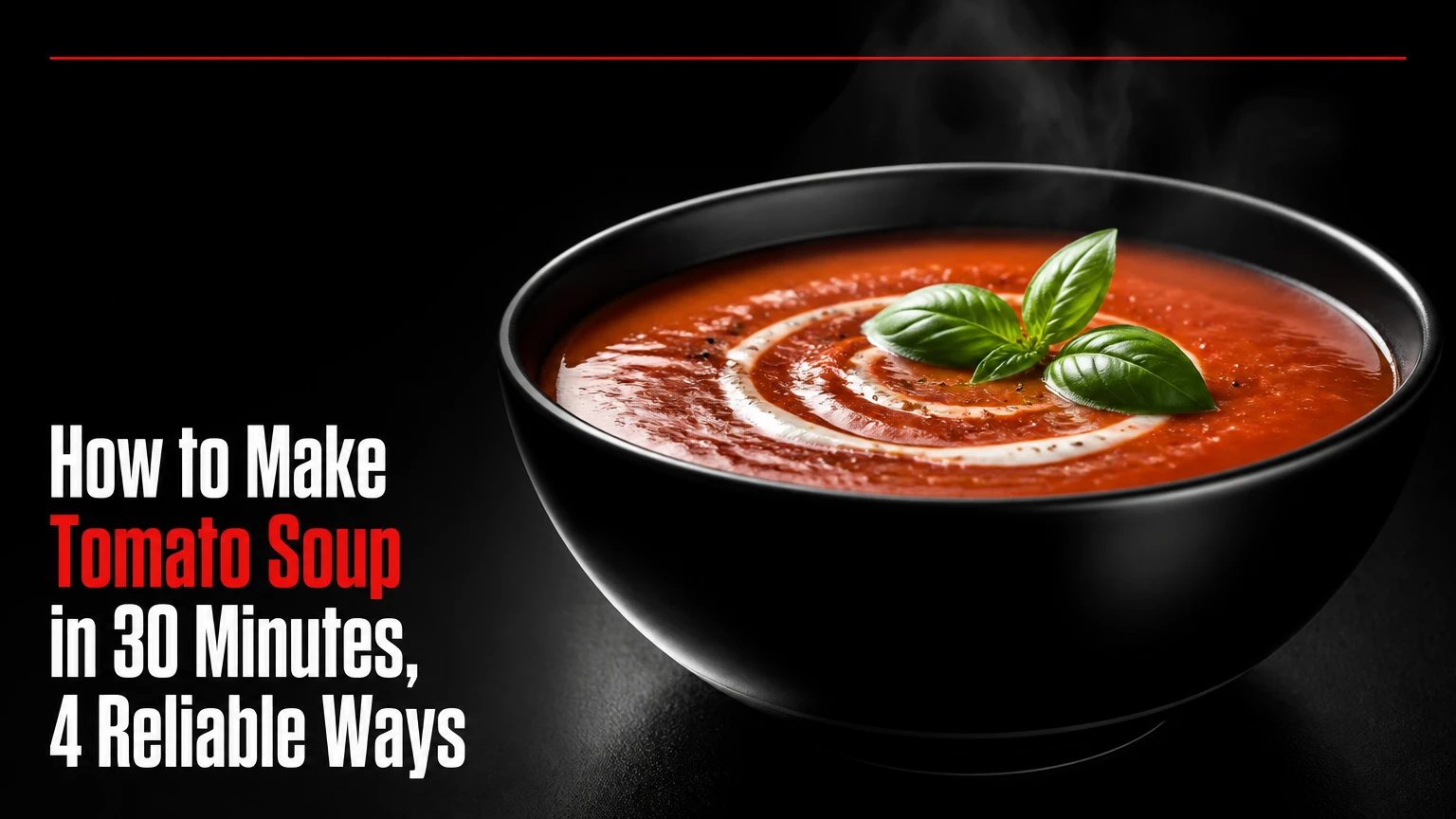
Tomato soup is made by softening onion and garlic in butter and olive oil, simmering tomatoes with stock and herbs, then blending the mixture smooth. This four-serving method takes about 40 minutes total, uses canned or fresh tomatoes, and produces balanced soup when you control stock, acidity, and the final temperature.
Key Facts at a Glance
One kilogram of fresh tomatoes or two 400 g cans produces approximately four servings.
Typical preparation takes 10-15 minutes, followed by 25 minutes of gentle simmering.
Canned whole peeled tomatoes usually provide more consistent flavor than out-of-season fresh tomatoes.
Add cream below a boil, because high heat and tomato acidity can separate dairy proteins.
A thin soup usually needs reduction or more tomato solids, not an immediate cornstarch slurry.
Serve tomato soup at approximately 65-74°C, hot enough to comfort but cool enough to taste clearly.
Before You Start
The most reliable tomato soup depends on tomato quality and liquid control more than on expensive equipment. Use canned tomatoes when fresh tomatoes smell weak or feel watery, and measure the stock before adding it because extra liquid is the most common reason homemade soup tastes diluted.
Ingredients for Four Servings
| Ingredient | Quantity | Best choice or function |
|---|---|---|
| Whole peeled tomatoes | 2 cans, 400 g each | San Marzano-style canned tomatoes, with juices |
| Fresh tomatoes alternative | 1 kg | Ripe Roma, plum, or vine tomatoes |
| Yellow onion | 1 large, about 200 g | Diced into 1 cm pieces |
| Garlic | 4 cloves, about 16 g | Minced immediately before cooking |
| Unsalted butter | 2 tablespoons, 28 g | Rounded dairy flavor |
| Extra-virgin olive oil | 1 tablespoon, 15 ml | Prevents butter scorching and adds fruitiness |
| Low-sodium stock | 500 ml, 2 cups | Vegetable or chicken stock |
| Dried oregano | 1 teaspoon | Savory herbal depth |
| Bay leaf | 1 | Infuses during simmering, then gets removed |
| Fresh basil | 4-5 leaves | Added after cooking for a fresher aroma |
| Fine salt | 1/2 teaspoon initially | Final amount varies by stock and tomatoes |
| Black pepper | 1/4 teaspoon initially | Freshly ground if available |
| Heavy cream | 60 ml, 1/4 cup, optional | Softens acidity and increases richness |
Tomato paste is optional rather than mandatory. Add 1 tablespoon when tomatoes taste pale, but cook the paste in the fat for 60-90 seconds before adding stock so its raw, metallic edge disappears.
Tools, Time, and Cost
| Item | Typical specification | Practical target |
|---|---|---|
| Cooking pot | Heavy-bottomed, 3-4 litre capacity | One Dutch oven or saucepan |
| Blender | Immersion blender or countertop blender | 2-4 minutes blending |
| Preparation time | Washing, chopping, measuring | 10-15 minutes |
| Cooking time | Sautéing, simmering, finishing | 25-30 minutes |
| Total time | Start to serving | 35-45 minutes |
| Yield | Standard bowl portion | 4 servings, about 350 ml each |
| Typical home cost | Canned tomato version | ৳250-৳500, approximately $3-$6 |
| Fresh premium version | Ripe heirloom or imported tomatoes | Often $6-$12, location dependent |
How Does Tomato Soup Get Its Flavor and Texture?
Tomato soup develops flavor in four stages: browned-free sautéed aromatics, concentrated tomato solids, stock reduction, and mechanical blending. Onion supplies sweetness, garlic adds sulfurous aroma, tomato pectin helps suspend solids, and butter or oil carries fat-soluble flavor compounds into the finished liquid.
Tomatoes vary widely in water, sugar, acidity, and skin toughness. Canned tomatoes are harvested ripe and cooked during processing, while supermarket tomatoes may have been picked earlier for transport. That difference explains why canned tomatoes often outperform fresh tomatoes in winter or in regions where ripe plum tomatoes are unavailable.
Stock should support the tomatoes rather than replace them. A practical starting ratio is two parts tomatoes to one part stock by volume, with additional reduction available if the finished soup remains thin. Basil goes in near the end because prolonged boiling dulls its aroma.
Which Tomatoes Work Best?
Whole peeled canned tomatoes are the most dependable choice for a smooth soup, especially when fresh tomatoes are pale, firm, or out of season. Ripe Roma and plum tomatoes work well when they smell sweet, yield slightly under pressure, and have red flesh without green, woody cores.
| Tomato option | Water and flavor pattern | Preparation | Best use |
|---|---|---|---|
| Whole peeled canned | Consistent, concentrated, moderate acidity | Crush by hand | Weeknight smooth soup |
| San Marzano-style canned | Sweet, soft, lower perceived bitterness | Crush and simmer | Rich classic soup |
| Ripe Roma or plum | Less watery than slicing tomatoes | Quarter and cook | Fresh seasonal soup |
| Heirloom tomatoes | Variable water, aromatic, delicate | Roast or reduce longer | Entertaining and roasting |
| Cherry tomatoes | Sweet, high skin-to-flesh ratio | Roast or simmer whole | Small-batch concentrated soup |
| Standard slicing tomatoes | Often watery and mild | Reduce uncovered | Use only when fully ripe |
Do not judge canned tomatoes by the word “San Marzano” alone. Regional certification and brand quality vary, so taste the liquid when practical and adjust salt only after the stock and tomatoes have simmered together.
How to Make Tomato Soup Step by Step
This stovetop tomato soup takes approximately 10 minutes to prepare and 25 minutes to cook. Follow the sequence rather than rushing it, because the onion needs time to soften before garlic and the tomatoes need enough simmering to lose their raw edge.
Step 1: Prepare the Aromatics
Dice one large yellow onion into pieces about 1 cm wide and mince four garlic cloves. Measure the butter, olive oil, stock, oregano, salt, and pepper before heating the pot.
Melt 2 tablespoons of unsalted butter with 1 tablespoon of olive oil in a heavy-bottomed pot over medium heat. Add the onion and cook for 5-7 minutes, stirring every minute, until translucent and soft. Add the garlic and cook for exactly 60-90 seconds.
You will know it worked when: the onion bends easily, looks glossy, and has no browned edges; the garlic smells fragrant but remains pale.
Common mistake: cooking garlic at the beginning with the onion. Garlic burns before the onion softens and can make the whole batch bitter.
Step 2: Add and Concentrate the Tomatoes
Add two 400 g cans of whole peeled tomatoes with their juices, crushing the tomatoes against the side of the pot. For fresh tomatoes, add 1 kg of quartered ripe Roma or plum tomatoes.
Stir in 1 teaspoon dried oregano, 1/2 teaspoon salt, and 1/4 teaspoon black pepper. Cook uncovered for 8-10 minutes, stirring occasionally, until the tomatoes collapse and the mixture looks thicker.
You will know it worked when: the tomato pieces have lost their firm shape and the fat begins to show in small glossy patches around the edges.
Common mistake: adding all the stock before the tomatoes heat through. The extra liquid delays concentration and leaves a flatter flavor.
Step 3: Simmer With Stock and Bay Leaf
Pour in 500 ml of low-sodium vegetable or chicken stock and add one bay leaf. Bring the pot to a boil, then immediately reduce the heat to low.
Cover the pot and simmer gently for 20 minutes. Keep the surface moving with occasional small bubbles, not a forceful boil. Stir once halfway through to prevent solids from catching on the bottom.
You will know it worked when: the soup smells rounded rather than raw, the onion is completely tender, and a spoonful contains no firm tomato pieces.
Common mistake: boiling hard with the lid on. Aggressive boiling can make the soup taste harsh and evaporate liquid unevenly.
Step 4: Add Basil and Remove the Bay Leaf
Turn off the heat and remove the bay leaf. Add 4-5 fresh basil leaves and let them sit in the hot soup for 1-2 minutes.
Basil needs short contact with heat to release aroma without becoming dull and herbal. If you prefer a pronounced basil flavor, reserve one leaf for the bowl and blend the remaining leaves into the pot.
You will know it worked when: basil smells fresh and sweet rather than like cooked grass.
Common mistake: leaving the bay leaf in the blender. A bay leaf can create sharp woody fragments and an unpleasant concentrated flavor.
Step 5: Blend the Soup Safely
An immersion blender is the simplest tool for tomato soup. Submerge the blade fully, blend on low at first, then increase speed and move the blender slowly through the pot for 2-4 minutes.
For a countertop blender, cool the soup for 5-10 minutes, fill the jar no more than halfway, remove the center vent cap, and cover the lid with a folded towel. Blend in batches, starting on low speed, because trapped steam can force the lid upward.
You will know it worked when: the soup looks uniformly orange-red and no tomato skins or onion pieces remain.
Common mistake: sealing a full blender jar with boiling soup. Steam expands rapidly and can cause severe burns. Never blend a full, tightly sealed container of hot liquid.
Step 6: Adjust the Finish Without Boiling
Return blended soup to low heat if necessary. Taste before adding more salt, then adjust with black pepper and, only if needed, a tiny pinch of sugar or 1/16 teaspoon baking soda.
Use baking soda sparingly. Too much creates a flat, alkaline flavor and can make the soup foamy. Sugar adds sweetness but does not remove acidity; it only changes the flavor balance. A better first correction for sharp soup is extra butter, cream, or a longer uncovered reduction.
For cream soup, warm 60 ml heavy cream separately or temper it with a ladle of hot soup. Stir the mixture into the pot over low heat, then turn off the heat before the soup reaches a boil.
You will know it worked when: the soup tastes tomato-forward, with acidity that feels bright rather than abrasive.
Common mistake: pouring cold cream into boiling soup. Heat and acidity can separate dairy proteins into small curds.
Which Version Should You Choose?
The classic stovetop version is best for a smooth 35-45 minute meal, while roasted tomato soup offers deeper sweetness at the cost of extra oven time. Gazpacho is a chilled raw preparation, and pappa al pomodoro uses bread for body rather than relying on blending and reduction.
| Style | Main ingredients | Total time | Texture and flavor |
|---|---|---|---|
| Classic creamy | Tomato, stock, butter, cream | 35-45 minutes | Smooth, rich, softly acidic |
| Rustic pappa al pomodoro | Tomato, stale bread, garlic, olive oil | 40-55 minutes | Thick, spoonable, textured |
| Roasted tomato | Fresh tomato, garlic, olive oil, thyme | 70-90 minutes | Sweet, concentrated, caramelized |
| Gazpacho | Raw tomato, cucumber, pepper, vinegar | 15-25 minutes | Cold, fresh, lightly sharp |
| Vegan blended | Tomato, stock, beans or cashews | 35-45 minutes | Creamy without dairy |
When Should You Use Fresh Tomatoes?
Use fresh tomatoes when they are fully ripe and aromatic, particularly during the local summer season. Roast watery fresh tomatoes at 200°C/400°F for 40-45 minutes with olive oil and garlic before simmering them, because roasting removes water and concentrates natural sugars.
Fresh tomatoes need peeling only when you want an exceptionally refined texture and plan to use a countertop blender or food mill. Immersion blending leaves more visible skin fragments, especially with thick-skinned slicing tomatoes.
How Do You Make a Roasted Tomato Version?
Halve 1 kg ripe tomatoes and place them cut-side up on a sheet pan with six unpeeled garlic cloves, 2 tablespoons olive oil, 1/2 teaspoon salt, and a few thyme sprigs. Roast at 200°C/400°F for 40-45 minutes, until the edges darken and the juices concentrate.
Transfer the roasted tomatoes and garlic to the pot, add 400-500 ml stock, and simmer for 15 minutes before blending. Add 1 teaspoon balsamic vinegar only after tasting, since vinegar can intensify acidity when the tomatoes are already sharp.
How Do You Make Tomato Soup Vegan or Dairy-Free?
Replace butter with 2 additional tablespoons olive oil and replace cream with white beans, cashews, or unsweetened coconut milk. White cannellini beans produce the most neutral creamy texture, while coconut milk adds a noticeable sweet, tropical flavor that does not suit every tomato base.
| Dairy-free thickener | Quantity for four servings | Flavor effect | Extra preparation |
|---|---|---|---|
| Cannellini beans | 150 g drained | Neutral, savory | Rinse and blend |
| Soaked cashews | 75 g | Rich, mildly nutty | Soak 2-4 hours |
| Full-fat coconut milk | 120 ml | Sweet, coconut aroma | Add after blending |
| Boiled potato | 150 g | Mild, starchy | Boil until tender |
| Olive oil | 2-3 extra tablespoons | Fruity, glossy | Blend slowly |
For a low-sodium batch, use no-salt-added canned tomatoes and unsalted stock, then add salt at the table. Tomato soup can taste under-seasoned before blending because the liquid is diluted, so adjust only after the tomatoes, stock, and aromatics are fully combined.
How Do You Make Tomato Soup Thicker and Smoother?
Reduce tomato soup uncovered for 10-15 minutes when the flavor is weak or the texture is watery. For a smoother result, blend longer and pass the soup through a fine-mesh sieve, while tomato paste, beans, bread, or potato provide thicker body without relying on cornstarch.
A cornstarch slurry is useful when time is short, but it changes the soup’s texture more abruptly than reduction. Mix 1 teaspoon cornstarch with 1 tablespoon cold water, stir it into gently simmering soup, and cook for 2 minutes to remove the raw starch taste.
Texture Problems and Precise Fixes
| Problem | Likely cause | Fix | Prevention |
|---|---|---|---|
| Watery soup | Excess stock or watery tomatoes | Reduce uncovered 10-15 minutes | Begin with 500 ml stock |
| Grainy soup | Tomato seeds, skins, or overcooked dairy | Blend, then strain; avoid boiling cream | Use whole peeled canned tomatoes |
| Curdled cream | Cold dairy added to boiling acid | Blend in warm tempered cream off heat | Keep finished soup below a boil |
| Bitter flavor | Burnt garlic or unripe tomato cores | Remove burnt base; add tiny sugar pinch if needed | Add garlic after onion softens |
| Flat flavor | Insufficient salt or no reduction | Adjust salt, pepper, and simmer uncovered | Taste at three stages |
| Excess acidity | Sharp tomato variety or low sweetness | Add fat, reduce, or use a tiny sugar pinch | Choose ripe or canned tomatoes |
Burnt garlic cannot be reliably hidden with sugar or cream. If garlic is visibly dark brown or black, transfer the unburned ingredients to a clean pot, leaving the scorched layer behind; severe bitterness usually requires restarting the aromatic base.
How Should You Store and Reheat Tomato Soup?
Cool tomato soup in a shallow container and refrigerate it within two hours of cooking, then use it within 3-4 days. Freeze dairy-free soup for up to 3 months for best quality, but freeze cream soup before adding dairy when possible because cream can separate after thawing.
| Storage method | Container and temperature | Typical quality window | Reheating method |
|---|---|---|---|
| Refrigerator | Covered container at 4°C or below | 3-4 days | Low stovetop heat |
| Freezer | Airtight container with headspace | Up to 3 months | Thaw overnight |
| Individual portions | 350 ml freezer-safe containers | Up to 3 months | Microwave in intervals |
| Cream-added leftovers | Refrigerated, covered | 2-3 days preferred | Stir gently, never boil |
Leave approximately 2.5 cm of headspace when freezing liquid, because soup expands as it becomes ice. Reheat only the amount you plan to eat, and stir frequently so the bottom does not scorch.
A separated cream soup may become acceptable after gentle whisking or blending, but its texture will rarely return to its original smoothness. For meal preparation, store the tomato base separately and add cream, coconut milk, or olive oil after reheating.
What Should You Serve With Tomato Soup?
Tomato soup pairs best with foods that add crisp texture, mild salt, or enough starch to make the meal filling. Grilled cheese is the classic match, but white beans, toasted bread, rice, and a simple green salad provide more flexible options.
| Pairing | Portion for one bowl | What it contributes | Best soup style |
|---|---|---|---|
| Grilled sourdough and cheddar | 1 sandwich | Crisp starch and savory fat | Creamy classic |
| Gruyère toast | 1 thick slice | Nutty salt and richness | Roasted tomato |
| White beans | 100 g cooked | Protein and soft texture | Vegan tomato soup |
| Garlic croutons | 30 g | Crunch and roasted aroma | Rustic or smooth |
| Cooked rice | 75 g | Starch and extra body | Mild family-style soup |
| Green salad | 1-2 cups | Freshness and contrast | Rich cream soup |
Serve at approximately 65-74°C rather than at a rolling boil. Extremely hot soup dulls flavor perception and increases burn risk, while a brief 5-minute rest after cooking gives the soup time to settle and makes seasoning easier to judge.
Practical Scaling and Equipment Rules
To scale the recipe, keep the tomato-to-stock relationship approximately consistent and increase the pot size enough to prevent splashing. For eight servings, use four 400 g cans of tomatoes, 1 litre stock, two onions, eight garlic cloves, 4 tablespoons butter, and 2 tablespoons olive oil.
The immersion blender wins for convenience and cleanup, but a countertop blender can produce a finer, more restaurant-style texture when used safely in batches. A food mill removes seeds and skins without aggressively aerating the soup, making it useful for delicate fresh tomatoes.
Three practitioner rules prevent most disappointing batches:
- Taste the tomatoes before seasoning heavily. Canned brands differ in salt, acidity, and concentration.
- Reduce before thickening with starch. Reduction intensifies both tomato flavor and body, while starch mainly changes viscosity.
- Add fresh herbs and dairy late. Basil loses aroma during long cooking, and cream becomes unstable near a boil.
Tomato soup is not ideal for every tomato. Very unripe tomatoes, heavily watery slicing tomatoes, and tomatoes with green woody cores often require roasting or extended reduction, and even then they may lack the sweetness needed for a balanced soup.
Frequently Asked Questions
Can You Make Tomato Soup Without Stock?
Yes, replace the 500 ml stock with water, but add more aromatic flavor through extra onion, garlic, olive oil, herbs, or a small amount of tomato paste. Water-based soup usually needs more salt because stock contributes dissolved minerals and seasoning. Simmering uncovered for 5-10 additional minutes helps restore concentration.
Why Does Homemade Tomato Soup Taste Bitter?
Homemade tomato soup tastes bitter most often because garlic burned, tomatoes were unripe, or the soup contains too much dried herb. Remove scorched ingredients when possible, then correct mild bitterness with a tiny sugar pinch or a splash of carrot juice. Do not cover severe burnt flavor with large amounts of cream.
Can You Use Tomato Sauce Instead of Canned Tomatoes?
You can use approximately 800 g tomato sauce, but check its ingredient list before adding salt, sugar, or Italian seasoning. Tomato sauce is already cooked and seasoned, so use only 350-400 ml stock initially, simmer for 15-20 minutes, and adjust the final texture after blending.
Is Tomato Soup Healthy?
Tomato soup can be a nutrient-dense meal when prepared with moderate fat and controlled sodium, but cream, butter, cheese, and salty stock increase calories and sodium quickly. A bean-thickened version adds plant protein and fiber, while a stock-free or no-salt-added version gives you more control over seasoning.
How Can You Make Tomato Soup Less Acidic?
Make tomato soup less sharp by reducing it, adding a small amount of butter or cream, or blending in a mild cooked vegetable such as carrot. Add sugar only in a tiny amount, and use baking soda as a last-resort correction, starting with 1/16 teaspoon for four servings.
Can Tomato Soup Be Frozen With Cream?
Tomato soup can be frozen with cream, but the dairy may separate into a grainy layer after thawing. For the best texture, freeze the tomato base without cream, thaw it in the refrigerator, reheat gently, and stir in warm cream immediately before serving.
The Bottom Line
How to make tomato soup successfully comes down to four controls: use ripe or high-quality canned tomatoes, soften the onion before adding garlic, keep stock measured, and finish without boiling dairy. The standard recipe delivers four servings in about 35-45 minutes, while roasted tomatoes add depth and beans or cashews create a vegan creamy texture.