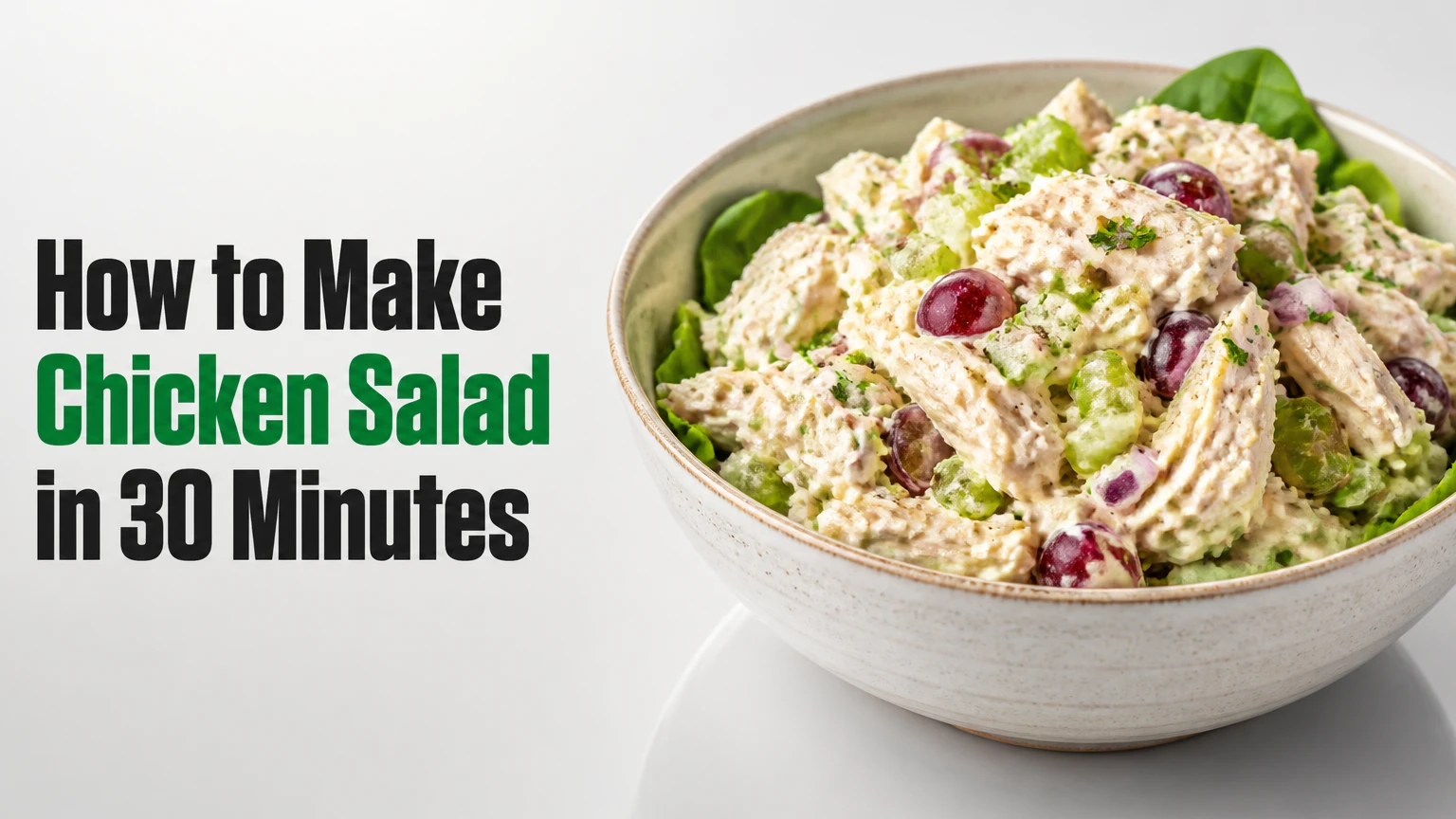
Chicken salad combines cooked chicken, a creamy or tangy dressing, crisp produce, and seasonings into a cold dish for sandwiches, wraps, crackers, or a plated meal. For a dependable classic, cool 3 cups of cooked chicken, mix it with 1/2 cup dressing, fold in celery and scallions, then chill for 30 minutes.
Key Facts at a Glance
- Three cups of cooked chicken yield approximately four 3/4-cup servings.
- A practical starting ratio is 3 parts chicken to 1 part dressing by weight.
- Chicken must reach 165°F in the thickest portion before cooling and mixing.
- Refrigerated chicken salad keeps for 3-4 days at 40°F or below.
- Greek yogurt can replace half or all of the mayonnaise, but the result will be tangier and less rich.
- A 30-minute chill improves flavor, while a 1-hour chill gives the best texture for serving.
What Makes Chicken Salad Work?
Chicken salad works when rich dressing, lean protein, acid, salt, and crisp ingredients are balanced in every bite. Mayonnaise coats chicken fibers and carries fat-soluble aromas, while lemon juice or vinegar cuts richness; celery, onion, apples, or nuts provide contrast against the soft chicken.
The dish is more than chicken mixed with mayonnaise. Chicken breast contributes a mild, firm protein base, whereas thigh meat contributes more fat and a softer texture. A dressing that tastes slightly too sharp on its own usually tastes balanced after it coats unsalted chicken.
Texture depends on particle size. Dice chicken into 1/4-inch pieces for a cohesive sandwich filling, use 1/2-inch pieces for a more substantial entrée, or shred chicken when the meat is slightly dry and needs more dressing contact. Finely chopped celery distributes crunch more evenly than large pieces.
Acid also changes perception rather than merely adding sourness. One tablespoon of lemon juice for 1/2 cup mayonnaise makes a rich dressing taste lighter, while Dijon mustard adds acidity, salt, and a mild mustard aroma. Add acid gradually because apples, pickles, and grapes can contribute additional sweetness and moisture.
Which Chicken Is Best for Chicken Salad?
The best chicken depends on the desired texture and available time: poached breast gives a clean, firm result, roasted thighs provide richer flavor, and rotisserie chicken offers the fastest preparation. Remove skin, bones, and cartilage before measuring the cooked meat.
| Chicken source | Typical preparation time | Texture and flavor | Best use |
|---|---|---|---|
| Boneless breast, poached | 20-25 minutes | Mild, firm, lean | Classic sandwich salad |
| Bone-in breast, roasted | 40-50 minutes | Dense, roasted, juicy | Herb-forward premium salad |
| Boneless thigh, roasted | 25-35 minutes | Rich, tender, savory | Curry or spicy variations |
| Rotisserie chicken | 8-12 minutes | Seasoned, mixed white and dark meat | Fast meal preparation |
| Leftover grilled chicken | 5-10 minutes | Smoky, sometimes firm | Southwest or wrap filling |
Poaching suits chicken salad because gentle heat limits moisture loss. Bring water or stock to a simmer rather than a rolling boil, then cook until the thickest section reaches 165°F. The USDA states, “The USDA recommends cooking poultry to a safe minimum internal temperature of 165 °F,” measured with a food thermometer.
Roasted chicken adds browned flavor but requires closer attention to doneness. Dark meat is more forgiving because connective tissue and fat protect it during cooking. Very lean, overcooked breast meat is not ruined, but shredding it finely and using a looser dressing produces a better result than serving large dry cubes.
How to Make Chicken Salad
Make classic chicken salad in four stages: cook the chicken, cool and cut it, whisk the dressing, and combine the ingredients. The active work takes about 15 minutes with prepared chicken, while poaching from raw takes approximately 20 minutes; cooling and seasoning determine the final quality.
Before You Start
| Item | Typical requirement |
|---|---|
| Yield | 4 servings, about 3/4 cup each |
| Active time | 15 minutes with cooked chicken |
| Total time | 30 minutes with leftovers, 60-70 minutes from raw chicken |
| Difficulty | Beginner |
| Main tools | Saucepan, thermometer, cutting board, chef’s knife, mixing bowl |
| Chicken | 1 pound raw boneless breast, or 3 cups cooked chicken |
| Refrigeration | Airtight container at 40°F or below |
Step 1: Cook the Chicken Gently
Place 1 pound of boneless, skinless chicken breast in a saucepan and cover it with water or low-sodium chicken stock by approximately 1 inch. Add 1 teaspoon kosher salt, half an onion, one smashed garlic clove, and one bay leaf if desired.
Bring the liquid to a gentle simmer, then reduce the heat so only occasional bubbles appear. Cover and cook for 12-18 minutes, depending on thickness, until the center reaches 165°F. Rest the chicken for 5 minutes before cutting.
You will know the chicken is ready when the thermometer reaches 165°F and the center is opaque. The common mistake is boiling vigorously, which contracts muscle fibers and produces stringy meat.
Step 2: Cool and Cut the Chicken
Transfer cooked chicken to a clean plate and cool it until no longer warm, then refrigerate it for faster cooling if necessary. Cut the meat into 1/4-inch to 1/2-inch dice, or pull it into short shreds with two forks.
For safe cooling, divide a large quantity into a shallow container rather than leaving it in a deep pot. The USDA recommends refrigerating perishable foods within two hours, or within one hour when the surrounding temperature exceeds 90°F.
You will know the chicken is ready when the surface feels cool and the meat does not soften the dressing. The common mistake is mixing hot chicken into mayonnaise, which can thin the emulsion and raise food-safety concerns.
Step 3: Whisk the Dressing
Whisk together 1/2 cup mayonnaise, 1 tablespoon lemon juice, 1 teaspoon Dijon mustard, 1/2 teaspoon kosher salt, and 1/4 teaspoon black pepper. Taste the dressing before adding chicken, then adjust the acid or salt in small increments.
The dressing should taste slightly assertive because plain chicken and celery dilute its seasoning. For a lighter version, use 1/4 cup mayonnaise and 1/4 cup plain Greek yogurt. Add 1 teaspoon honey if the yogurt’s tang dominates.
You will know the dressing is ready when it is smooth, thick, and easily coats a spoon. The common mistake is adding all the lemon juice at once, especially when grapes, relish, or apples will add more acidity and moisture later.
Step 4: Add the Crunch
Prepare 1/2 cup finely diced celery and 1/4 cup thinly sliced scallions. Pat the vegetables dry before adding them, because surface water becomes free liquid in the finished salad.
For a sharper flavor, replace scallions with 2 tablespoons minced red onion. For a milder result, soak minced onion in cold water for 5 minutes, then drain and dry it thoroughly.
You will know the vegetables are ready when they remain crisp and do not leave visible water on a paper towel. The common mistake is using wet celery directly from a wash basin or pre-cut container.
Step 5: Fold, Season, and Chill
Fold the cooled chicken and vegetables into the dressing with a rubber spatula. Stop mixing as soon as the pieces are evenly coated, then cover the bowl and refrigerate for 30 minutes before serving.
Taste again after chilling. Cold temperatures mute salt and acid, so the finished salad may need another pinch of salt, 1 teaspoon lemon juice, or 1 tablespoon mayonnaise.
You will know the chicken salad is balanced when every bite contains savory chicken, creamy dressing, crisp texture, and a noticeable but controlled acidic finish. The common mistake is adding extra mayonnaise before the salad has chilled and absorbed the initial dressing.
How Much Dressing Should Chicken Salad Have?
Start with 1/2 cup dressing for 3 cups of cooked chicken, then adjust by tablespoon. The ideal finished mixture is coated and creamy without pooling liquid at the bottom of the bowl; a weight ratio near 3:1 or 4:1 chicken to dressing works reliably.
| Cooked chicken | Starting dressing | Celery | Expected servings |
|---|---|---|---|
| 1 1/2 cups, 8 ounces | 1/4 cup, 2 ounces | 1/4 cup | 2 |
| 3 cups, 16 ounces | 1/2 cup, 4 ounces | 1/2 cup | 4 |
| 4 1/2 cups, 24 ounces | 3/4 cup, 6 ounces | 3/4 cup | 6 |
| 6 cups, 32 ounces | 1 cup, 8 ounces | 1 cup | 8 |
Dressing quantity changes with the cut of chicken. Shredded meat exposes more surface area and usually needs 1-2 extra tablespoons per 3 cups. Large cubes need less dressing at first because excessive coating can make the salad slide out of bread.
Mayonnaise is the traditional binder, but it is not the only functional option. Sour cream adds tang, Greek yogurt adds protein and acidity, mashed avocado adds body without an emulsion, and hummus creates a savory dairy-free spread.
Which Chicken Salad Variation Should You Make?
Classic Southern chicken salad emphasizes mayonnaise, pickle relish, and hard-boiled egg; Waldorf salad adds fruit and walnuts; curry salad uses warm spices; and Southwest salad combines lime, corn, beans, and chili. Each variation keeps the same cooked-chicken foundation but changes the dressing and texture profile.
| Style | Dressing additions | Mix-ins for 3 cups chicken | Flavor result |
|---|---|---|---|
| Southern | 1 tablespoon pickle juice, 1 teaspoon Dijon | 1 egg, 2 tablespoons relish, celery | Tangy, sweet, creamy |
| Waldorf | 1 teaspoon honey, 1 tablespoon lemon juice | 1/2 apple, 1/2 cup grapes, 1/4 cup walnuts | Fruity, crisp, rich |
| Curry | 1 teaspoon curry powder, 1 tablespoon lime juice | 2 tablespoons raisins, 1/4 cup almonds | Warm, sweet, aromatic |
| Southwest | 2 tablespoons lime juice, 1/2 teaspoon cumin | 1/3 cup corn, 1/3 cup beans, peppers | Bright, smoky, spicy |
For Waldorf chicken salad, add apples and grapes immediately before serving if the salad will sit longer than one day. Fruit releases water, so dry it thoroughly and avoid over-dressing the mixture.
For curry chicken salad, toast sliced almonds in a dry skillet for 3-5 minutes over medium-low heat. Toasting drives off moisture and creates a firmer crunch, but nuts should cool before they touch the dressing.
For Southwest chicken salad, use drained canned corn and beans or thoroughly cooled cooked versions. Warm ingredients can thin mayonnaise, while excess canning liquid can make the salad watery.
What Should You Serve With Chicken Salad?
Chicken salad works best with a sturdy, lightly toasted vehicle or a crisp side that contrasts with its creamy texture. Use 3/4 cup filling for a substantial sandwich, 1/2 cup for a small croissant, or 1 cup over greens as a main-course salad.
Sourdough and multigrain bread resist moisture better than soft white bread. Croissants provide richness but can become greasy with a mayonnaise-heavy filling, so use a thicker, well-chilled salad. Lettuce leaves, cucumber rounds, crackers, and toasted pita offer gluten-free serving options.
Suitable side dishes include sliced tomatoes, pickled vegetables, potato chips, carrot sticks, grapes, and a green salad with vinaigrette. Avoid pairing a very sweet Waldorf version with sweetened bread, because the combined sugar overwhelms the chicken.
How Can You Make Chicken Salad for Meal Prep?
Make chicken salad for meal prep by storing the chicken, dressing, and high-moisture additions separately when possible. A sealed container of fully mixed salad is convenient for 1-2 days, while separated components preserve crunch for up to the safe refrigerated period.
Use four containers with approximately 3/4 cup chicken salad each, or pack 1/2 cup chicken salad with bread or greens separately. Keep celery, scallions, nuts, apples, and grapes dry; add nuts immediately before eating.
For a high-protein, lower-fat version, use 1/4 cup mayonnaise plus 1/4 cup Greek yogurt per 3 cups chicken. This reduces fat but creates a sharper flavor and softer texture. A 50/50 blend is usually more satisfying than replacing all mayonnaise with nonfat yogurt.
Chicken salad is not ideal for freezing. Mayonnaise and watery vegetables can separate after thawing, creating a greasy dressing and limp produce. Freeze cooked chicken alone for up to several months, thaw it in the refrigerator, and mix a fresh salad.
How Long Does Chicken Salad Last?
Homemade chicken salad lasts 3-4 days in a refrigerator at 40°F or below, according to USDA Food Safety and Inspection Service guidance for refrigerated leftovers. Discard chicken salad left at room temperature for more than two hours, or more than one hour above 90°F.
| Storage situation | Maximum practical limit | Recommended action |
|---|---|---|
| Refrigerator at 40°F or below | 3-4 days | Keep sealed and use a clean utensil |
| Room temperature below 90°F | 2 hours | Refrigerate before the limit |
| Outdoor temperature above 90°F | 1 hour | Discard if unrefrigerated longer |
| Insulated cooler with ice | Until food stays 40°F or below | Replace melted ice promptly |
| Freezer | Not recommended after mixing | Freeze cooked chicken separately |
Do not rely on smell alone to determine safety. Pathogenic bacteria can grow without producing an obvious odor, discoloration, or slimy surface. Label the container with the preparation date, and place it in the coldest practical refrigerator area rather than the door.
Why Is Chicken Salad Watery, Dry, or Bland?
Watery chicken salad usually contains wet vegetables, fruit, excess pickle liquid, or dressing added to warm chicken. Dry chicken salad usually contains overcooked breast meat or too little dressing, while bland salad lacks sufficient salt, acid, mustard, or aromatic ingredients.
| Problem | Likely cause | Immediate correction |
|---|---|---|
| Watery bottom | Wet celery, grapes, or pickles | Drain, add chicken, then chill |
| Dry, stringy meat | Breast cooked beyond 165°F | Shred finely and add dressing 1 tablespoon at a time |
| Heavy, greasy flavor | Too much mayonnaise | Add lemon juice or Dijon gradually |
| Flat flavor | Insufficient salt or acid | Add 1/8 teaspoon salt or 1 teaspoon lemon |
| Mushy texture | Overmixing or long storage | Fold in fresh celery or toasted nuts |
| Strong onion flavor | Raw onion used in excess | Add more chicken and dressing |
Fix watery salad by draining free liquid first, then folding in 1/4 cup additional chicken or 1 tablespoon toasted nuts. Do not dump flour, breadcrumbs, or dry rice into the mixture, because those ingredients create an unpleasant pasty texture.
Fix dry salad with dressing, not water. Add 1 tablespoon mayonnaise or yogurt at a time, toss gently, and wait 5 minutes before adding more because chicken absorbs dressing gradually.
A practitioner rule is to season in two stages. Salt the dressing before combining, then taste the chilled salad because refrigeration reduces perceived seasoning and the chicken may vary considerably in sodium.
Is Homemade Chicken Salad Better Than Deli Salad?
Homemade chicken salad is usually better for ingredient control, vegetable freshness, and customization, while deli salad wins on convenience and immediate availability. Homemade salad typically costs less per serving, but deli versions may save 20-30 minutes of preparation and cleanup.
| Decision factor | Homemade batch | Deli chicken salad |
|---|---|---|
| Typical cost for 4 servings | $8-$14 | $12-$24 |
| Preparation time | 15-70 minutes | 5 minutes to purchase |
| Sodium control | Adjustable from 1/2 teaspoon salt | Often fixed by recipe |
| Texture after purchase | Crisp when freshly mixed | May be soft after 1-3 days |
| Ingredient flexibility | High, including yogurt or avocado | Limited to available varieties |
| Storage after purchase | Follow package date, usually 3-5 days | Use package date and refrigeration |
Homemade preparation is not automatically healthier. A large mayonnaise portion, buttery croissant, and chips can produce a higher-calorie meal than a moderate deli serving over greens. The advantage is control over dressing, salt, sugar, portion size, and add-ins.
Deli salad is useful when the chicken source is uncertain, the meal must be ready immediately, or only one serving is needed. Check the sell-by date, cold temperature, allergen statement, and whether the salad contains nuts, eggs, dairy, or wheat-based ingredients.
Common Questions About Chicken Salad
Can you make chicken salad without mayonnaise?
Yes, replace mayonnaise with Greek yogurt, mashed avocado, hummus, sour cream, or a dairy-free vegan mayonnaise. Greek yogurt creates the closest creamy texture, but its acidity is stronger, so start with less lemon juice and add 1 teaspoon honey if needed.
How do you make chicken salad with canned chicken?
Drain canned chicken thoroughly, flake it with a fork, and use approximately 2 1/2 cups drained chicken for the base recipe. Canned chicken is softer and often saltier than poached chicken, so reduce added salt by half and add celery, nuts, or scallions for texture.
Should chicken salad be served cold?
Chicken salad should be served chilled or kept below 40°F until serving. A 30-minute refrigeration period improves flavor and firmness, while serving it warm can thin mayonnaise and create a food-safety risk if the mixture remains in the temperature danger zone.
Can you use leftover rotisserie chicken?
Yes, rotisserie chicken is one of the fastest options for chicken salad. Remove the skin and bones, pull the meat into short pieces, and taste before salting because rotisserie seasoning can vary widely. Combine light and dark meat for better moisture and flavor.
How do you keep chicken salad from making bread soggy?
Spread a thin layer of butter, mayonnaise, or cream cheese on the bread before adding chilled chicken salad. Use toasted sourdough, add lettuce as a moisture barrier, and assemble sandwiches immediately before eating rather than storing them overnight.
How many calories are in chicken salad?
Calories vary mainly with mayonnaise, chicken cut, and serving size. A typical 3/4-cup homemade serving made with chicken breast, 1/2 cup mayonnaise per 3 cups chicken, celery, and scallions often falls in the 300-450 calorie range, excluding bread and side dishes; nutrition labels provide the accurate value for each product.
The Bottom Line
To make chicken salad successfully, cook chicken to 165°F, cool it completely, start with about 1/2 cup dressing for 3 cups cooked meat, and add dry, crisp ingredients before chilling. Adjust acid and salt after refrigeration, store the finished salad at 40°F or below, and use it within 3-4 days. Classic chicken salad is the most adaptable starting point, while yogurt, curry, Waldorf, and Southwest versions change the flavor without changing the core method.