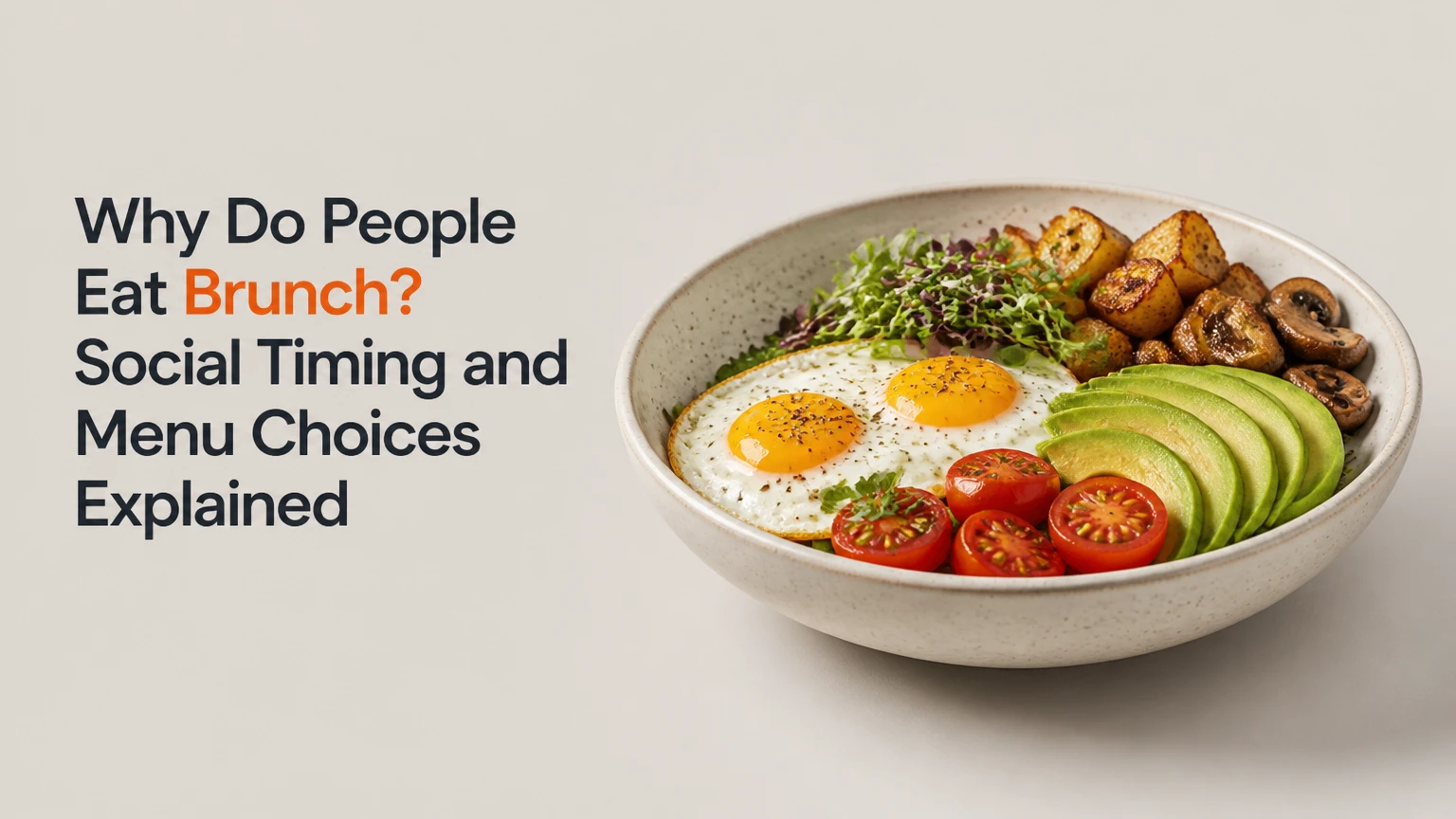
People eat brunch because the meal combines breakfast and lunch at a flexible late-morning time, making room for sleep, socializing, varied food, and relaxed schedules. Brunch also functions as a weekend ritual for families, friends, dates, and celebrations, while its mixed sweet-savory menu and optional daytime drinks create an experience that ordinary breakfast or lunch does not provide.
Key Facts at a Glance
Brunch typically takes place between 10:00 AM and 3:00 PM, but restaurants define their own service hours.
A restaurant brunch commonly lasts 1.5-2.5 hours, compared with roughly 30-60 minutes for a weekday breakfast.
The meal solves a scheduling problem by replacing two eating occasions with one late-morning gathering.
Brunch menus commonly combine eggs, pancakes, pastries, salads, sandwiches, burgers, seafood, and lunch-sized savory dishes.
Typical mid-range restaurant prices are $15-$28 for an entree, while hotel buffets often cost $65-$150 or more per person.
Alcohol is optional. A social brunch can include coffee, tea, juice, sparkling water, or zero-proof cocktails.
What Does Brunch Mean?
Brunch is a meal that combines features of breakfast and lunch, usually eaten from late morning through early afternoon. The word is a blend of “breakfast” and “lunch,” and the meal’s identity comes from timing, menu range, and social pace rather than one fixed recipe.
The Oxford English Dictionary records “brunch” in connection with a 1895 article by British writer Guy Beringer. In “Brunch: A Plea,” published in Hunter’s Weekly, Beringer argued for a later Sunday meal that would accommodate people who did not want an early breakfast. His description is often quoted as follows: “Brunch is cheerful, sociable and inciting.”
The popular claim that brunch began specifically as a hangover cure is too narrow. Beringer did mention the needs of people recovering from Saturday night, but his argument also addressed Sunday travel, domestic convenience, and a gentler alternative to a formal early meal. Modern brunch therefore has both a historical association with leisure and a practical function.
Brunch is not defined by eggs, mimosas, or Sunday dining alone. A dim sum service, a hotel buffet, a family meal at home, and a late restaurant seating can all qualify when the timing and meal structure fit.
Why Do People Eat Brunch Instead of Breakfast?
People choose brunch instead of breakfast when a later start, longer social visit, or broader menu has more value than eating early. Brunch allows late risers to avoid an immediate morning meal, while friends with different schedules can meet during a shared period of free time.
A weekend brunch can replace breakfast and lunch, although it does not always reduce total food spending. A $24 entree plus coffee may cost less than two restaurant meals, but a $45 bottomless package or a $90 hotel buffet can exceed the price of breakfast and lunch prepared at home.
The timing also lowers social pressure. A breakfast meeting often implies punctuality before the workday, while brunch usually permits conversation, lingering, and arrival after ordinary morning routines. That makes the format useful for birthdays, reunions, first dates, wedding-related gatherings, and casual catch-ups.
Brunch also accommodates different appetites. One person can order French toast, another can choose a chicken sandwich, and a third can select a salad or soup without forcing the table into one meal category.
Why Is Brunch Mainly a Weekend Meal?
Brunch is mainly a weekend meal because Saturday and Sunday schedules provide more discretionary time and fewer work-related deadlines. Restaurants can seat customers for 90-150 minutes, and diners can tolerate a slower meal when they do not need to return to school or work.
Weekend brunch also fits household coordination. Parents can manage children’s morning routines, friends can travel across a city, and groups can gather after exercise, religious services, or errands. Some restaurants offer weekday brunch for remote workers, tourists, and shift workers, but weekend demand remains stronger.
Why Has Brunch Become a Social Ritual?
Brunch became a social ritual because the format combines a predictable meeting time with flexible food choices and a relatively low commitment. The meal gives a group a clear activity, but its late start and long duration leave room for conversation, shopping, travel, or afternoon plans.
Food rituals become useful when they create repeatable occasions. A monthly brunch gives friends a calendar anchor. A birthday brunch supplies a celebratory setting without requiring an evening reservation. A family brunch can include grandparents, children, and adults who would not share the same preferred dinner hour.
Brunch also makes hospitality visible. Pastry baskets, shared pancakes, pitchers of juice, coffee refills, and a table full of different entrees encourage participation. These features can matter more than the individual dishes because diners remember the gathering as an event.
The meal’s visual presentation adds another modern layer. Restaurants often design brunch plates with colorful fruit, layered pastries, bright sauces, and elaborate drinks. Social media did not create brunch, but photographs and recommendations help spread specific venues and menu trends.
Which Occasions Fit Brunch Best?
| Occasion | Typical group size | Common start time | Suitable format |
|---|---|---|---|
| Casual friend meetup | 2-6 people | 10:30-11:30 AM | A la carte restaurant |
| Family birthday | 6-14 people | 11:00 AM-12:30 PM | Buffet or reserved dining room |
| First date | 2 people | 10:00-11:00 AM | Quiet cafe with table service |
| Wedding shower | 10-30 people | 11:30 AM-1:00 PM | Prix fixe or catered home meal |
| Post-event gathering | 8-20 people | 12:00-2:00 PM | Dim sum or shared plates |
When Is Brunch Usually Served?
Brunch is usually served from 10:00 AM to 3:00 PM, with the busiest restaurant period commonly occurring between 11:30 AM and 1:30 PM. These times are typical industry patterns, not a universal rule, because restaurants set service windows according to local demand and kitchen capacity.
Early brunch favors diners who want shorter waits and quieter rooms. The first seating may begin at 9:00 or 9:30 AM, especially at cafes and hotel restaurants. Late brunch, often after 1:30 PM, can work for late risers, but popular dishes may sell out and some kitchens may stop taking orders near closing.
A normal restaurant brunch takes about 1.5-2.5 hours when the table includes drinks, shared food, and conversation. A quick counter-service meal may take 30-45 minutes, while a buffet, celebration, or bottomless package can occupy a table for two hours or longer.
What Makes a Brunch Menu Different?
A brunch menu is different because it places breakfast ingredients beside lunch portions and lunch cooking methods. Eggs, bacon, potatoes, pancakes, waffles, toast, and pastries may appear beside burgers, fried chicken, steak, seafood, grain bowls, salads, and sandwiches.
| Menu category | Representative dishes | Typical service time | Common portion role |
|---|---|---|---|
| Sweet breakfast | Pancakes, waffles, French toast | 12-20 minutes | Main course or shared side |
| Egg-based | Eggs Benedict, shakshuka, frittata | 15-25 minutes | Breakfast-style entree |
| Savory lunch | Burger, chicken sandwich, steak | 15-30 minutes | Heavier main course |
| Shared items | Pastry basket, hash browns, fruit | 5-20 minutes | Table starter or side |
| Beverage | Coffee, mimosa, Bloody Mary | 3-10 minutes | Pairing or social add-on |
The menu breadth helps groups with conflicting preferences. A person seeking a sweet meal can sit with someone who wants protein and vegetables, which is harder to accomplish at a narrowly defined breakfast cafe.
Restaurant kitchens also use brunch to repurpose equipment and ingredients across several dishes. Potatoes may become hash, fries, or a side; eggs can support Benedict, omelets, and shakshuka. That flexibility helps operators serve varied demand, although a large menu can increase ticket times during the peak rush.
How Much Does Brunch Cost?
Typical restaurant brunch costs $15-$28 for an individual entree in a mid-range American city, excluding tax, tip, and drinks. Total spending rises to roughly $25-$45 for a standard a la carte meal, $45-$75 for many bottomless packages, and $65-$150 or more for premium hotel buffets.
These figures are typical planning ranges, not fixed national prices. Rent, tourism, labor costs, city, cuisine, portion size, and alcohol rules can move the bill substantially. A coffeehouse brunch in a smaller town may cost less, while a hotel buffet in New York, San Francisco, or a resort market may cost more.
| Brunch format | Typical food price | Typical duration | Main cost driver |
|---|---|---|---|
| Home brunch | $5-$15 per person | 60-120 minutes | Groceries and preparation time |
| Casual a la carte | $15-$28 entree | 60-120 minutes | Labor and table service |
| Bottomless package | $45-$75 total | 90-120 minutes | Drinks and fixed seating time |
| Dim sum meal | $25-$45 per person | 60-120 minutes | Number of shared plates |
| Hotel buffet | $65-$150+ per person | 90-180 minutes | Premium ingredients and venue |
The “brunch tax” is a useful consumer warning, but it does not mean every brunch dish is overpriced. Eggs and flour are inexpensive raw materials, yet hollandaise, pastry work, multiple sauces, table service, rent, staffing, and weekend demand contribute to the final price.
What Does Bottomless Brunch Include?
Bottomless brunch usually includes unlimited refills of selected drinks for a fixed period, often 60, 90, or 120 minutes, alongside a required entree or set menu. Common beverages include mimosas, Bloody Marys, bellinis, beer, or a limited cocktail list.
“Bottomless” does not mean unlimited service without conditions. Restaurants may restrict the package to one drink at a time, require the entire table to participate, stop service after the time limit, prohibit sharing, or refuse service to visibly intoxicated guests. The server should explain the rules before ordering.
A bottomless package is financially sensible only when the diner wants the included drinks and can consume them safely. It is usually poor value for someone who wants coffee, one cocktail, or a short meal.
Is Brunch Healthy or Indulgent?
Brunch can be healthy, indulgent, or nutritionally uneven because the label describes a meal occasion rather than a fixed nutritional profile. A vegetable frittata with fruit and unsweetened tea has a different nutrient balance from fried chicken, waffles, bacon, and several sugary cocktails.
The meal often becomes indulgent through restaurant preparation. Butter, cream, cheese, syrup, refined flour, fried coatings, and large portions can increase saturated fat, sodium, added sugar, and total energy. Alcohol adds calories while providing little satiety, and drinking can impair judgment about food quantity.
The U.S. Dietary Guidelines for Americans, 2020-2025, recommends limiting added sugars to less than 10% of daily calories and saturated fat to less than 10% of daily calories. Those limits apply to the whole day, not to a special meal, but they provide a practical way to evaluate a brunch plate.
A balanced order usually includes a protein source, a fruit or vegetable, and a portion of starch, with sauces and sweet drinks treated as optional additions. People with diabetes, celiac disease, food allergies, hypertension, or alcohol-use concerns should ask specific ingredient and preparation questions rather than rely on menu labels such as “healthy.”
How Can Diners Make Brunch More Balanced?
- Choose eggs, beans, fish, yogurt, or another protein rather than relying only on pastry.
- Add fruit, vegetables, or a side salad when the entree contains refined starch.
- Request sauces, syrup, or dressing on the side to control the portion.
- Select water, coffee, tea, or a zero-proof drink between alcoholic beverages.
- Share a sweet dish instead of ordering a full dessert-sized entree for each person.
A healthy choice is not always the lowest-calorie choice. A smaller meal may leave an active person hungry, while a high-protein plate can provide better satiety even when it contains more calories.
How Does Brunch Compare With Other Meals?
Brunch is preferable to breakfast when the group needs a later start and preferable to lunch when diners want breakfast foods, drinks, or a longer social format. Breakfast is usually earlier and faster, while lunch often begins later and has a narrower separation from the workday.
| Decision factor | Breakfast | Brunch | Lunch |
|---|---|---|---|
| Typical start time | 6:30-9:00 AM | 10:00 AM-3:00 PM | 11:30 AM-2:30 PM |
| Typical duration | 20-60 minutes | 90-150 minutes | 45-90 minutes |
| Menu emphasis | Eggs, cereal, toast | Sweet and savory crossover | Sandwiches, salads, hot entrees |
| Alcohol availability | Rare before 10:00 AM | Common at licensed venues | Common after 12:00 PM |
| Best scheduling use | Workday fuel | Leisure gathering | Midday appointment |
Brunch is less suitable when diners need speed, quiet work space, predictable nutrition, or the lowest possible cost. A local cafe breakfast can be more efficient, and a weekday lunch can offer faster service because the kitchen is not managing a high-volume special menu.
Dim sum provides a different comparison. It offers late-morning social dining, shared portions, tea, and broad choice, but its dishes, ordering system, and cultural context differ from Western brunch. Calling every late-morning meal brunch can hide meaningful distinctions.
How Should You Plan a Restaurant Brunch?
Plan a restaurant brunch by checking the service window, reservation policy, package restrictions, accessibility, and menu before choosing a time. The most reliable strategy is to reserve 4-7 days ahead for peak weekend seating, arrive 10-15 minutes early, and confirm the bill structure before ordering drinks.
Use this sequence:
- Check the menu and hours midweek. Confirm whether brunch is Saturday, Sunday, or both, and verify whether the kitchen closes before the dining room.
- Reserve the table. Ask about deposits, cancellation fees, maximum party size, outdoor seating, high chairs, and whether the full group must arrive before seating.
- Choose the timing. Book before 10:30 AM for a quieter meal or after 1:45 PM to avoid the central rush.
- Confirm drink rules. Ask about package duration, per-person requirements, last call, and whether nonalcoholic substitutions are available.
- Order for the group’s actual appetite. One shared pastry or pancake can satisfy sweet cravings without adding four large entrees.
- Monitor dietary constraints. Ask whether shared fryers, bread, sauces, or garnishes create allergy or gluten exposure.
- Review the bill early. Check entree prices, package supplements, tax, service charges, and automatic gratuity before paying.
The common mistake is treating a brunch reservation like a guaranteed instant meal. A reservation secures a table, not a fixed ticket time. Large groups, complicated orders, and bottomless drinks can keep a table occupied for 120 minutes or more.
Why Do Brunch Restaurants Become Crowded and Expensive?
Brunch restaurants become crowded because demand concentrates into a narrow weekend window, while brunch kitchens often offer labor-intensive dishes to many tables at once. Eggs Benedict, pancakes, fried chicken, cocktails, and customized substitutions require different preparation paths, so a full dining room can produce longer waits than a standard lunch service.
Peak demand also affects pricing. Restaurants have fewer weekly brunch service periods than dinner periods, and operators price popular seating times to cover staffing, ingredients, rent, and slower weekday hours. The result can feel expensive even when the base ingredients are inexpensive.
Noise and service delays are predictable limitations. Brunch is a poor choice for a business negotiation, a sensory-sensitive diner, or anyone with a strict departure time when the venue has a crowded open kitchen, loud music, or communal seating.
Three practitioner rules help:
- Reserve the first or final seating when punctuality matters.
- Order shared starters only after confirming the kitchen can fire them with the entrees.
- Never assume a bottomless package is good value without calculating the supplement against the number of drinks desired.
What Are the Best Alternatives to Restaurant Brunch?
The best alternative depends on whether the diner values price, variety, speed, or atmosphere. Home brunch minimizes spending, dim sum maximizes shared choice, a breakfast cafe improves speed, and a hotel buffet offers immediate variety for large groups.
| Alternative | Typical cost per person | Preparation or wait time | Best use |
|---|---|---|---|
| Home brunch | $5-$15 | 60-120 minutes | Budget gathering |
| Breakfast cafe | $10-$25 | 30-60 minutes | Fast early meal |
| Dim sum restaurant | $25-$45 | 60-120 minutes | Multigenerational group |
| Picnic brunch | $8-$20 | 30-90 minutes | Outdoor social event |
| Hotel buffet | $65-$150+ | 90-180 minutes | Celebration with varied appetites |
A home brunch is not automatically easy. Cooking eggs, pancakes, potatoes, coffee, and drinks at the same time can shift the burden from restaurant staff to the host. A practical home menu uses one make-ahead dish, one cooked protein, fruit, bread, and beverages rather than six dishes requiring simultaneous attention.
Dim sum can be a better value for groups that enjoy sharing savory food, but it may not suit someone seeking pancakes, quiet conversation, or detailed allergen control. A picnic works well in mild weather, while a hotel buffet can reduce ordering delays for children and picky eaters at a much higher price.
Who Benefits Most From Brunch?
Brunch benefits people whose schedules, appetites, and social goals align with a late, flexible meal. Late risers, mixed-age families, celebratory groups, and friends who want conversation often gain more from brunch than diners seeking speed or strict dietary control.
Late Risers and Shift Workers
Brunch allows people who sleep late or work overnight to eat their first substantial meal without calling it an unusually late breakfast. Shift workers may find weekday brunch more relevant than weekend brunch because their personal morning begins after the conventional breakfast period.
Families With Children
Families often value menu variety and flexible arrival times. Buffets can reduce the delay between sitting and eating, but parents should check high-chair access, noise levels, child pricing, and whether the venue permits strollers.
Celebrations and Large Groups
Brunch supports celebrations through reserved tables, shared plates, sparkling drinks, and daytime scheduling. Large groups should confirm the maximum party size, fixed menus, split-bill policy, deposit, and automatic gratuity before inviting guests.
Solo Diners
Solo brunch can be comfortable at a counter, cafe, or bar seat, particularly outside the 11:30 AM-1:30 PM rush. A solo diner should avoid paying for a package designed around shared drinks and instead choose an a la carte meal with a clear price.
People With Dietary or Accessibility Needs
Brunch is workable for dietary restrictions when the kitchen can identify ingredients and prevent cross-contact. Diners should ask about gluten-free preparation, dairy substitutes, nut exposure, elevator access, restroom location, table spacing, and service-animal policies before arrival.
FAQ
Is brunch more expensive than breakfast?
Brunch is often more expensive than a basic breakfast because restaurants serve larger portions, cocktails, labor-intensive dishes, and extended table service. A typical entree costs $15-$28 in a mid-range market, while a home breakfast may cost $5-$10 per person. Hotel buffets and drink packages can raise the difference substantially.
Why are mimosas associated with brunch?
Mimosas are associated with brunch because sparkling wine mixed with orange juice is easy to batch, pairs with sweet and savory foods, and suits a daytime celebration. The drink became culturally linked with leisure dining, but juice does not remove alcohol’s effects or make unlimited consumption safe.
Can brunch be eaten alone?
Brunch can be eaten alone, especially at a counter-service cafe or bar seat. Solo dining avoids group coordination and can reduce the wait outside peak hours. A la carte ordering usually makes more sense than a bottomless package, prix fixe menu, or shared buffet designed for several diners.
Why do some people dislike brunch?
Some people dislike brunch because peak venues can be noisy, crowded, slow, and expensive relative to the ingredients. Diners may also dislike long waits, mandatory drink packages, limited reservations, sweet-heavy menus, or social pressure to drink alcohol before afternoon. A breakfast cafe or home meal addresses many of those objections.
Is brunch only an American tradition?
Brunch is not only an American tradition, although the modern restaurant version is strongly associated with North American weekend culture. Late-morning meals exist in many food traditions, including dim sum in China and Hong Kong, extended family meals in Europe, and hotel buffets worldwide. The label and menu conventions vary by region.
What time should someone eat brunch?
Most people eat brunch between 10:00 AM and 2:00 PM, with 11:30 AM-1:30 PM producing the greatest restaurant demand. Choose 9:00-10:30 AM for faster service, or 1:45-3:00 PM for a later meal. Personal sleep, medication, exercise, and work schedules should determine the actual time.
The Bottom Line
People eat brunch because brunch solves several needs at once: it begins later than breakfast, offers more variety than a traditional morning meal, and creates enough time for social connection. Brunch can be inexpensive at home or cost $65-$150 or more at a premium buffet, so the format matters as much as the label.
The meal is most valuable when diners want flexibility, conversation, and mixed sweet-savory choices. It is less suitable when speed, quiet, strict nutrition, or low cost comes first. Understanding those trade-offs explains why people eat brunch and helps each group choose between a restaurant, dim sum, buffet, cafe breakfast, or home gathering.