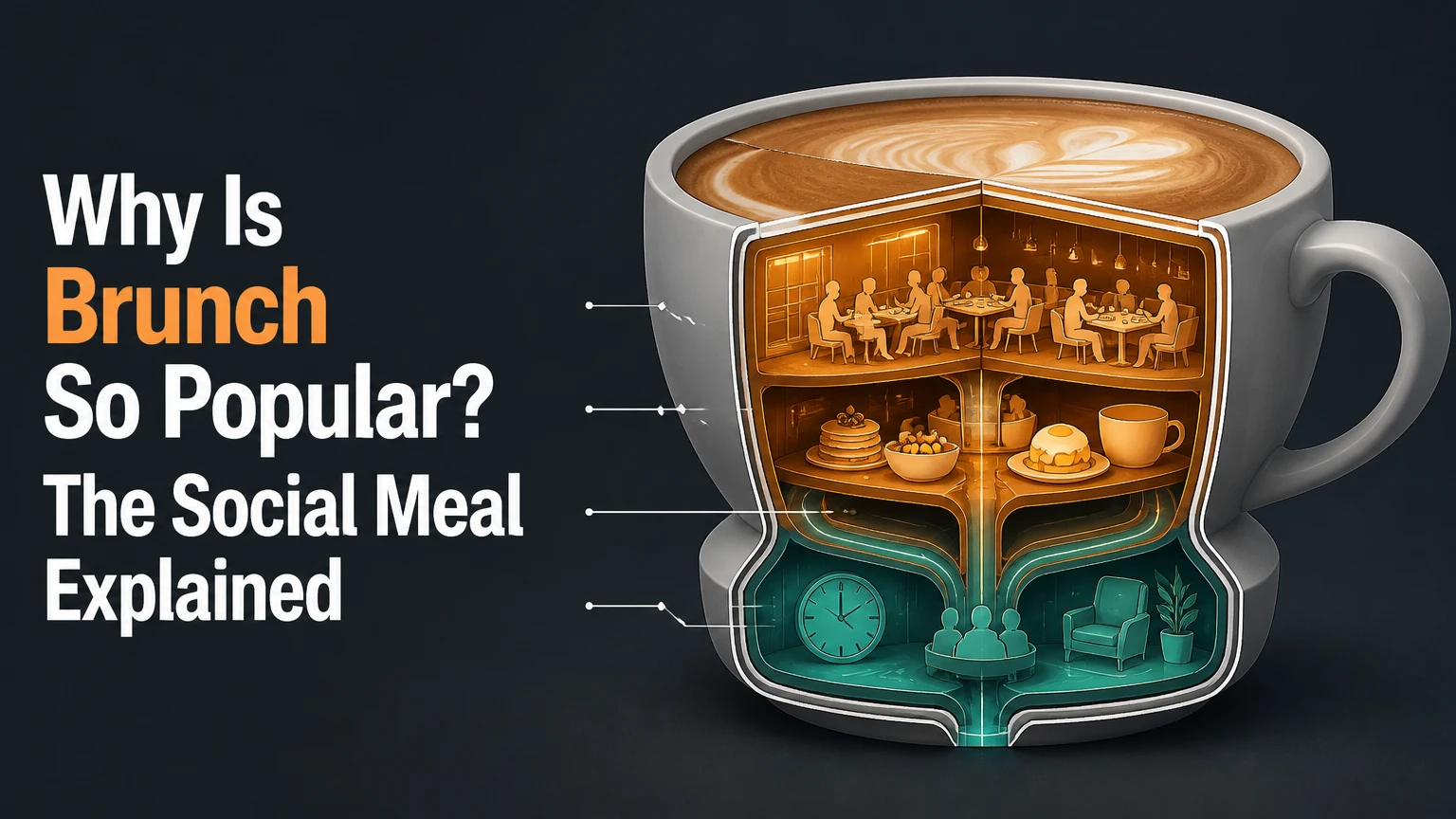
Brunch is popular because it combines flexible timing, familiar comfort food, daytime socializing, and restaurant experiences in one meal. Unlike a rushed weekday breakfast or structured dinner, brunch lets people sleep later, order sweet and savory dishes, drink coffee or cocktails, and spend 90-120 minutes together without the formality of an evening reservation.
Key Facts at a Glance
- Brunch combines breakfast and lunch foods in a late-morning or early-afternoon meal.
- Guy Beringer used the word “brunch” in his 1895 article “Brunch: A Plea” in Hunter’s Weekly.
- Most restaurant brunch services run from about 10:00 AM to 4:00 PM, with the busiest period between 11:00 AM and 2:00 PM.
- A typical café brunch costs $18-$35 per person, while bottomless and luxury hotel formats cost substantially more.
- Brunch encourages longer conversations because diners are less constrained by work schedules than during weekday breakfast.
- The format works for mixed groups because one table can include pancakes, eggs, salads, dumplings, coffee, juice, and cocktails.
Why Is Brunch So Popular?
Brunch is popular because it solves several social and practical problems at once: people can meet after sleeping late, eat across traditional meal categories, and turn a routine meal into an occasion. Restaurants reinforce that appeal with attractive plates, specialty drinks, longer seating, and menus designed for sharing.
The timing matters. Saturday and Sunday brunch generally begins after the conventional breakfast period but before afternoon activities, allowing diners to connect without sacrificing an early morning. A 2023 weekend celebration can therefore combine a birthday meal, a family gathering, and a casual date in the same two-hour window.
Brunch also reduces group friction. A vegetarian can order shakshuka, a child can choose pancakes, a guest who prefers lunch can select fried chicken, and another diner can have a latte instead of alcohol. That range is wider than the menu logic of many traditional breakfast or dinner services.
The experience has a visible identity. Ceramic plates, latte art, outdoor patios, colorful juices, and layered pastries create material that diners can photograph and share. Social media did not invent brunch, but visual presentation made individual restaurants easier to remember and recommend.
What Makes Brunch Different From Breakfast and Lunch?
Brunch differs from breakfast and lunch through timing, menu structure, pace, and social purpose. Breakfast is often eaten before work, lunch usually fits a daytime schedule, and brunch deliberately creates a relaxed transition between morning and afternoon.
| Attribute | Breakfast | Brunch | Lunch |
|---|---|---|---|
| Typical service time | 6:00-10:00 AM | 10:00 AM-4:00 PM | 11:30 AM-2:30 PM |
| Typical duration | 10-30 minutes | 90-120 minutes | 30-60 minutes |
| Common drink | Coffee, tea, juice | Coffee, mimosa, Bloody Mary | Water, soda, beer |
| Menu emphasis | Toast, cereal, eggs | Eggs, pancakes, salads, cocktails | Sandwiches, salads, mains |
| Main social role | Daily fuel | Weekend gathering | Work or daytime meal |
| Restaurant atmosphere | Quiet, functional | Leisurely, celebratory | Efficient, conversational |
Brunch occupies a flexible middle ground. Diners can treat the meal as a late breakfast, an early lunch, or a special event, and the restaurant does not need to enforce one interpretation.
What Is Brunch, and Where Did It Come From?
Brunch is a late-morning meal that combines breakfast and lunch foods, while the modern word is a portmanteau of “breakfast” and “lunch.” British writer Guy Beringer proposed the concept in “Brunch: A Plea,” published in Hunter’s Weekly in 1895.
Beringer imagined a lighter Sunday meal that followed Saturday-night socializing and avoided an early start. His argument linked brunch to convenience, recovery, and hospitality rather than to the luxury positioning associated with some modern hotel buffets.
The concept developed gradually. Hotels and restaurants later adopted Sunday brunch as a way to fill a period between breakfast and dinner, particularly when households treated Sunday as a day for leisure. By the late twentieth century, brunch had become established in many cities as a restaurant category and a domestic entertaining format.
Beringer described brunch as “cheerful, sociable and inciting” in the 1895 article. The quotation matters because it identifies the original appeal clearly: brunch was conceived as a mood and social arrangement, not merely a blended menu.
How Has Brunch Changed Across Cultures?
Brunch has changed by absorbing local foods, service traditions, and dining customs rather than following one universal menu. Cantonese dim sum, Indian late breakfasts, Mexican chilaquiles, Japanese kissaten meals, and Western café plates can all occupy the brunch time slot.
| Regional expression | Typical foods | Beverage tradition | Social pattern |
|---|---|---|---|
| United States café brunch | Eggs Benedict, pancakes, avocado toast | Coffee, juice, mimosas | Weekend restaurant gathering |
| Cantonese dim sum | Har gow, shu mai, cha siu bao | Hot tea | Shared baskets and tea service |
| Mexican brunch | Chilaquiles, huevos rancheros | Café de olla, agua fresca | Late family meal |
| Middle Eastern brunch | Shakshuka, labneh, flatbread | Mint tea, Arabic coffee | Shared mezze-style table |
| British weekend brunch | Full English breakfast, toast, pastries | Tea, coffee | Leisurely home or pub meal |
| Hotel brunch | Seafood, carving stations, pastries | Champagne, coffee, juice | Multi-generational occasion |
Calling brunch a single global tradition hides those differences. The shared feature is the time and social function, not a fixed list of dishes.
How Does a Typical Brunch Work?
A typical restaurant brunch moves through reservation, beverage ordering, menu selection, shared dining, and payment over roughly 90-120 minutes. The most important operational constraint is often the venue’s seating policy, especially for bottomless service during the 11:00 AM-2:00 PM peak.
- Reserve or choose a low-demand arrival time. Book one to two weeks ahead for a group of six or more, or arrive before 10:15 AM or after 2:30 PM at a walk-in venue.
- Check the seating limit. Bottomless restaurants commonly set a 90-minute window, while fast-casual cafés may target about 60 minutes.
- Order drinks with the first food decision. Ask whether coffee refills, juice, cocktails, service charges, and alcohol-free drinks are included.
- Balance sweet and savory orders. For a group of four, two savory mains, one sweet plate, and one shareable side create more variety than four similar entrées.
- Confirm dietary requirements early. Gluten-free, halal, vegan, nut-free, and low-alcohol requests can require kitchen substitutions.
- Settle the bill according to consumption. Separate checks or an itemized split prevent conflict when drink and entrée prices differ substantially.
A brunch table often feels informal, but the restaurant is managing a narrow service window. Late arrivals, complicated substitutions, and delayed drink orders can affect both the diner’s experience and the venue’s table turnover.
When Does Brunch Usually Happen?
Brunch usually happens on Saturday and Sunday between 10:00 AM and 4:00 PM, with the strongest demand from 11:00 AM to 2:00 PM. Weekday brunch is more common in tourist districts, hotels, cafés near flexible workplaces, and cities with late-night economies.
| Arrival time | Typical wait or availability | Best use case | Main trade-off |
|---|---|---|---|
| Before 10:15 AM | 0-20 minutes | Families, early activities | Limited full menu at some venues |
| 10:15-11:00 AM | 10-35 minutes | Quiet social meal | Fewer late-rising guests |
| 11:00 AM-2:00 PM | 30-90 minutes without booking | Celebrations, dates | Highest prices and noise |
| 2:00-3:00 PM | 10-40 minutes | Late lunch, flexible groups | Some dishes may sell out |
| After 3:00 PM | 0-25 minutes | Travelers, shift workers | Reduced menu or closing service |
The timing also matches human schedules. People who work Monday through Friday often have more freedom to sleep, travel, exercise, or attend religious services before eating.
Which Foods and Drinks Make Brunch Appealing?
Brunch menus are appealing because they let diners move between sweet, savory, light, rich, hot, cold, alcoholic, and alcohol-free choices. A single meal can therefore satisfy different appetites without requiring a group to agree on one culinary direction.
Common breakfast-side foods include pancakes, waffles, French toast, pastries, eggs, yogurt, granola, and breakfast potatoes. Lunch-side choices include fried chicken, burgers, salads, grain bowls, seafood, sandwiches, and roasted vegetables.
The beverage program adds a second layer of choice. Coffee gives the meal a familiar morning anchor, while mimosas, Bloody Marys, Prosecco, matcha, cold brew, fresh juice, and sparkling water change the pace and perceived occasion.
| Menu category | Representative items | Typical price | Dietary flexibility |
|---|---|---|---|
| Sweet main | Pancakes, waffles, French toast | $14-$22 | Easy to make vegetarian; harder to make low-sugar |
| Egg plate | Benedict, shakshuka, omelet | $16-$28 | Often adaptable to vegetarian diets |
| Savory lunch plate | Fried chicken, burger, grain bowl | $18-$32 | Vegan and gluten-free options vary |
| Shareable side | Potatoes, pastry basket, fruit | $6-$15 | Fruit and potatoes often suit mixed groups |
| Coffee drink | Latte, cold brew, espresso | $4-$9 | Oat, soy, and almond milk commonly available |
| Cocktail | Mimosa, Bloody Mary, spritz | $10-$18 | Alcohol-free versions require confirmation |
The strongest brunch menus provide contrast rather than sheer volume. A group ordering only rich, fried food may find the meal heavy, while a menu with fruit, greens, eggs, bread, and one indulgent dish gives diners useful balance.
How Much Does Brunch Cost?
A typical café brunch costs $18-$35 per person before tax and tip, bottomless brunch commonly costs $45-$75, and luxury hotel brunch often costs $85-$150 or more. City, alcohol inclusion, service charges, seafood availability, and reservation policies create the largest price differences.
| Brunch format | Typical food price | Typical total before tip | Typical duration |
|---|---|---|---|
| Fast-casual café | $12-$22 | $18-$35 | 45-75 minutes |
| Independent artisanal café | $16-$30 | $25-$45 | 75-120 minutes |
| Bottomless brunch | $25-$45 food package | $45-$75 | 90 minutes |
| Hotel buffet | $60-$110 | $85-$150+ | 120-180 minutes |
| Dim sum brunch | $20-$45 per diner | $25-$60 | 60-120 minutes |
| Home brunch | $8-$25 per diner | $10-$30 | 120-240 minutes |
Restaurant guests should check whether the advertised price excludes tax, gratuity, a mandatory service fee, or a per-person beverage minimum. A $35 fixed menu can exceed $50 after a 20 percent tip, local tax, and a required bottomless upgrade.
Home brunch has a different cost profile. Eggs, potatoes, bread, fruit, coffee, and one prepared centerpiece can feed four people for approximately $40-$80, depending on ingredients and whether hosts purchase smoked salmon, specialty pastries, or sparkling wine.
Which Brunch Format Fits Each Situation?
The best brunch format depends on the group’s priorities: bottomless service suits celebrations, a chef-led café suits food-focused diners, a hotel buffet suits varied family preferences, and dim sum suits people who enjoy communal ordering.
| User situation | Best format | Typical spend | Booking lead time | Reason |
|---|---|---|---|---|
| Birthday or bachelorette group | Bottomless brunch | $45-$75 | 1-3 weeks | Fixed package and festive pacing |
| Food-focused date | Artisanal café | $25-$45 | 2-7 days | Seasonal dishes and specialty coffee |
| Family with children | Hotel buffet | $85-$150+ | 1-4 weeks | Broad selection and spacious seating |
| Tea and shared plates | Dim sum brunch | $25-$60 | 0-7 days | Small portions and communal choice |
| Alcohol-free gathering | Café or hotel buffet | $18-$60 | 0-7 days | Stronger coffee, juice, and mocktail options |
| Budget-conscious hosts | Home brunch | $10-$30 | 1-3 days | Ingredient control and no service markup |
Bottomless brunch is not automatically the best value. It becomes financially sensible only when diners want several included drinks and the package’s time limit does not make the meal feel rushed.
Can Brunch Be Enjoyable Without Alcohol?
Alcohol-free brunch can be equally enjoyable when the venue provides substantial coffee, tea, juice, sparkling drinks, and carefully made zero-proof cocktails. The social value comes from shared time, food variety, and occasion design, not from alcohol consumption.
Useful alternatives include espresso flights, loose-leaf tea, fresh citrus juice, kombucha, shrubs, sparkling water with bitters, and nonalcoholic spritzes. Groups should ask whether a restaurant charges the same fixed price for guests who do not drink, because some bottomless packages bundle alcohol into one mandatory rate.
Alcohol-free service is also safer for drivers, pregnant guests, medication users, religious observers, and people in recovery. A venue that treats those needs as normal usually provides a more inclusive group experience.
Why Do Restaurants Promote Brunch?
Restaurants promote brunch because it fills a high-demand leisure period with premium-priced dishes, beverage add-ons, and longer but predictable reservations. Brunch can also reuse kitchen ingredients across breakfast and lunch menus, although the labor pattern is more complex than the customer experience suggests.
A restaurant may sell eggs, potatoes, bread, greens, pastry, chicken, and seasonal produce through several menu items. That cross-utilization reduces the number of unique ingredients the kitchen must stock, while cocktails and coffee often carry strong margins relative to their ingredient costs.
The format has risks. Sunday demand is concentrated, kitchens face a sharp production peak, and a 90-minute seating limit can create pressure for both servers and guests. Bottomless packages also require careful alcohol control, responsible-service policies, and accurate tracking of package start times.
Brunch is therefore profitable when reservations are reliable and the venue can maintain speed during the peak. A popular dining room alone does not prove that the business model is healthy.
What Makes Brunch Social and Shareable?
Brunch encourages socializing because its late timing, shared dishes, moderate formality, and flexible duration reduce the pressure to leave quickly. Restaurants also design brunch menus around visual contrast and group ordering, which gives diners conversation topics and reasons to stay at the table.
Breakfast before work has a deadline. Dinner often carries expectations about courses, dress, and punctuality. Brunch usually permits a slower arrival, casual clothing, shared plates, and a second coffee without violating the meal’s basic etiquette.
The social ritual can include a birthday toast, a baby shower, a first date, a family reunion, or a weekly gathering of friends. Those occasions create repeat behavior, which explains why brunch remains popular even when a similar meal could cost less at home.
Social media amplifies the ritual through recognizable visual cues. A stack of pancakes, a bright cocktail, or a crowded patio communicates leisure quickly in a photograph, giving venues a low-cost form of customer-generated exposure.
How Can You Recreate Brunch at Home?
A practical home brunch for four people takes 90-150 minutes and costs about $40-$80 when the menu includes eggs, potatoes, fruit, bread, coffee, and one centerpiece. The most reliable plan uses one oven dish, one stovetop item, one cold component, and drinks prepared in batches.
- Choose a four-part menu. Pair baked eggs or a breakfast casserole with potatoes, fruit, and toast or pastries.
- Prepare cold items first. Cut fruit, chill juice, set out yogurt, and make any sauce up to 60 minutes before eating.
- Use the oven for the centerpiece. A 9-by-13-inch egg casserole feeds six to eight people and can bake at 375°F for about 35-45 minutes.
- Cook one fast stovetop item. Sauté potatoes or greens during the casserole’s final 15 minutes.
- Batch the drinks. Brew 32-48 ounces of coffee, or provide 750 milliliters of sparkling water and juice for a nonalcoholic spritz station.
- Serve in waves. Put cold foods out first, bring hot food when guests sit, and replenish small portions rather than overcrowding the table.
The common home-hosting mistake is choosing too many foods that require last-minute cooking. Four dishes with different temperatures and preparation times can create more stress than a restaurant-style menu appears to involve.
What Are the Most Common Brunch Problems?
The most common brunch problems are peak-hour waits, rushed bottomless packages, uneven bill splitting, sold-out dishes, and poor accommodation for dietary or mobility needs. Each problem becomes easier to avoid when diners ask specific questions before ordering.
- Arriving without a reservation: A group of six at 11:30 AM on Sunday may wait 30-90 minutes. Reserve ahead or target an early or late arrival.
- Misjudging bottomless pacing: Rapid drinking before food arrives can ruin the meal. Alternate alcoholic drinks with water and request food timing from the server.
- Splitting the bill evenly: Equal division penalizes low spenders when cocktails and premium entrées differ sharply. Request separate checks before ordering.
- Assuming every menu item remains available: Pastries, oysters, and seasonal specials may sell out by 1:00 PM. Ask which dishes have limited quantities.
- Ignoring access needs: High-top tables, narrow aisles, stairs, and loud music can exclude guests. Confirm table layout and accessibility during booking.
- Treating dietary labels as guarantees: “Vegetarian” may still involve shared cooking surfaces, while gluten-free dishes may carry cross-contact risk. Ask the restaurant for its actual procedure.
A useful practitioner rule is to solve logistics before debating cuisine. A mediocre dish at a calm, accessible table can produce a better group meal than a famous dish obtained after a two-hour wait.
What Is Brunch Not Good For?
Brunch is not ideal for a fast, inexpensive meal, a tightly scheduled business meeting, or a group that wants identical dietary options. Peak-hour restaurant brunch often costs more than a weekday breakfast and takes longer than a conventional lunch.
Noise can also undermine conversation. Music-forward venues and bottomless packages suit celebrations but may frustrate guests who need quiet, young children who need space, or diners sensitive to crowded environments.
Food waste is another limitation of buffet service. Unlimited displays encourage overproduction and over-ordering, while fixed packages can pressure guests to consume more than they want. A smaller à la carte meal is often the more efficient choice.
The Bottom Line
Brunch is popular because it combines late timing, social flexibility, broad menu choice, and a recognizable leisure ritual. Its appeal extends beyond breakfast food: brunch gives people a low-formality way to celebrate, reconnect, explore restaurant culture, and accommodate different appetites at one table.
The best version depends on the situation. Choose a café for food quality, bottomless service for a drinking-oriented celebration, a hotel buffet for maximum variety, dim sum for shared plates, or home brunch for budget and dietary control. The answer to “why is brunch so popular” is therefore both cultural and practical: the format makes free time easier to share.
Frequently Asked Questions
Is brunch more popular on Saturday or Sunday?
Sunday traditionally carries the strongest brunch association, especially for hotel buffets, family meals, and post-church gatherings. Saturday brunch attracts celebrations, tourists, and younger groups. Actual demand varies by city, but restaurants commonly experience their busiest period on both days between 11:00 AM and 2:00 PM.
Why is brunch so expensive compared with breakfast?
Brunch can cost more because restaurants package premium ingredients, cocktails, specialty coffee, longer table occupancy, and weekend labor into the experience. A basic breakfast may take 20 minutes, while brunch often occupies a table for 90-120 minutes and includes higher-cost dishes or a fixed beverage package.
Is brunch a meal or a social event?
Brunch is both a meal and a social event. The food defines the service category, while the extended timing, shared ordering, drinks, and celebratory occasions give it a social function. A quick plate eaten alone is brunch by time and menu, but the full cultural appeal usually involves shared leisure.
What should a first-time brunch diner order?
A first-time brunch diner should choose one familiar main, one contrasting shared side, and a beverage suited to the group’s pace. Eggs with potatoes and fruit provide a reliable baseline, while pancakes, shakshuka, fried chicken, or dim sum can add variety without requiring every diner to take the same risk.
How far ahead should a brunch reservation be made?
A reservation should usually be made one to two weeks ahead for a popular weekend venue, and two to four weeks ahead for a holiday, large group, hotel buffet, or bottomless package. Smaller cafés may accept same-day bookings, but peak tables often disappear before 11:00 AM.
Can brunch be healthy?
Brunch can be healthy when diners combine protein, fruit or vegetables, whole-grain carbohydrates, and a drink without excessive added sugar or alcohol. The format itself is neutral. A vegetable omelet with fruit differs nutritionally from a large pastry, fried entrée, sweet cocktail, and dessert, even though both count as brunch.