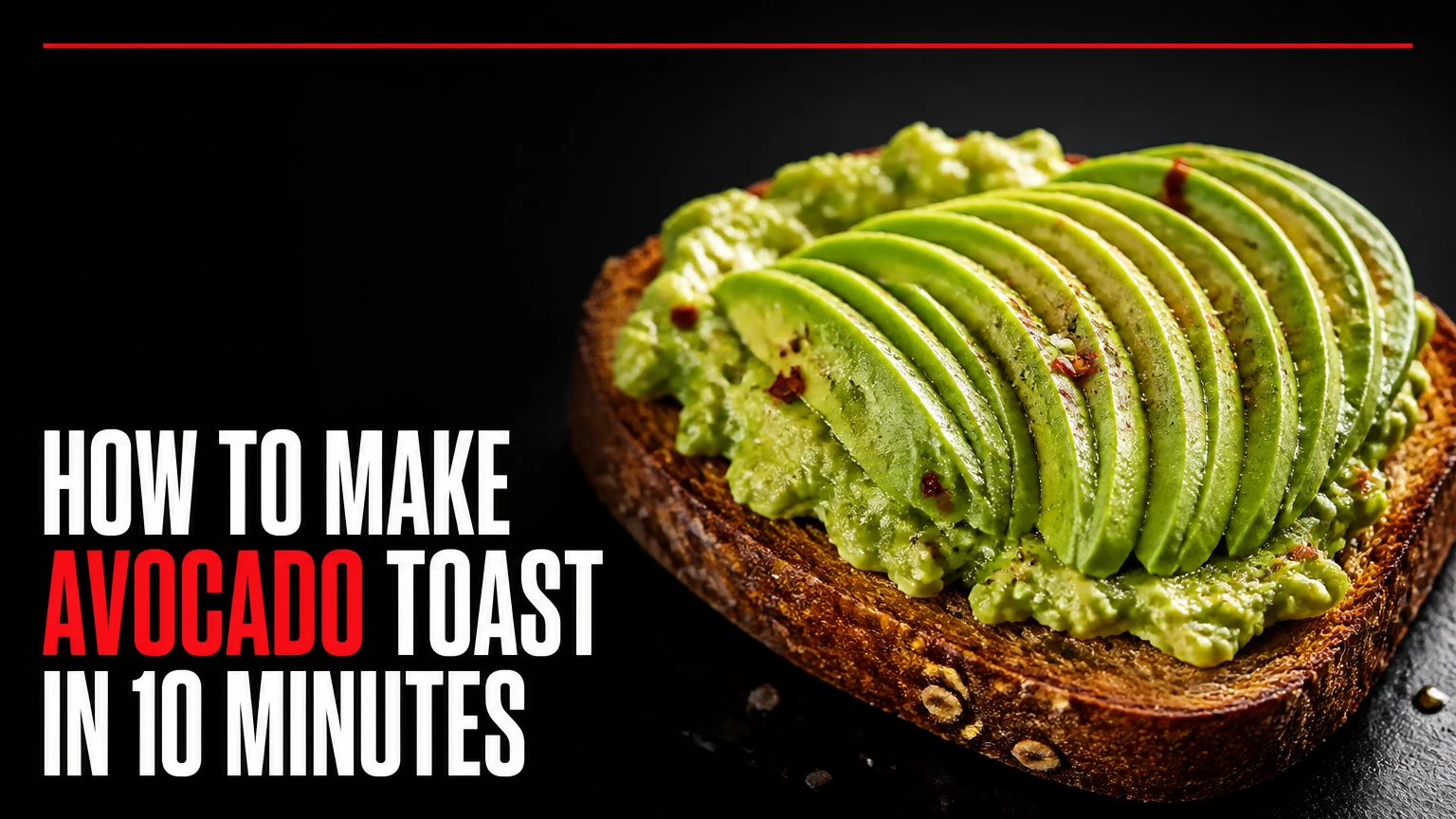
To make avocado toast, toast one sturdy bread slice until crisp, mash half a ripe Hass avocado with lemon juice and salt, then spread it over the warm toast and add toppings. The basic method takes 7-10 minutes, costs about $1.50-$3.50 per serving, and succeeds or fails on avocado ripeness and bread strength.
Key Facts at a Glance
Use about ½ medium avocado, or 70-85 grams, per 1.5-2 centimeter-thick slice of bread.
Toast sourdough or another sturdy bread for 2-4 minutes until the surface is deeply golden and the center remains chewy.
Season the avocado with 1 teaspoon lemon or lime juice and ⅛ teaspoon fine salt per serving.
A ripe avocado yields slightly to gentle palm pressure without leaving a permanent dent.
Assemble avocado toast immediately because mashed avocado browns and toast softens when exposed to moisture.
Homemade avocado toast typically costs $1.50-$3.50 per serving, excluding specialty toppings.
Before You Start
Avocado toast requires one slice of bread, half a ripe avocado, acid, salt, and a fork. Prepare the ingredients before turning on the toaster or skillet so the avocado reaches the bread within a minute of mashing.
| Item | Typical amount | Practical specification |
|---|---|---|
| Sturdy bread | 1 slice, 45-70 g | 1.5-2 cm thick |
| Ripe avocado | ½ medium, 70-85 g flesh | Hass or another buttery variety |
| Lemon or lime juice | 1 teaspoon, 5 ml | Freshly squeezed |
| Fine salt | ⅛ teaspoon, 0.5-0.7 g | Reduce for low-sodium diets |
| Red pepper flakes | ⅛ teaspoon | Optional |
| Olive oil | ½ teaspoon, 2.5 ml | Optional, use after toasting |
Time: 5-6 minutes preparation and 2-4 minutes toasting.
Difficulty: Easy.
Typical cost: $1.50-$3.50 per serving.
Tools: Toaster, toaster oven, or skillet; fork; small bowl; knife; spoon.
A medium avocado usually produces two servings of spread, but avocado size varies considerably. A 200-gram whole avocado may yield only 120-140 grams of usable flesh after removing the skin and pit.
How to Make Avocado Toast
The six-step avocado toast method is simple: select ripe fruit, toast sturdy bread, mash the avocado with acid and salt, spread it while the toast is warm, and finish with a topping. The best texture comes from a crisp exterior paired with avocado that remains slightly chunky.
Step 1: Check the Avocado
Choose an avocado that gives slightly when you press it gently in your palm. A permanent dent, sunken skin, leaking liquid, or sour smell indicates an overripe fruit, while a hard, unyielding avocado needs more ripening.
Cut the avocado lengthwise around the pit, twist the halves apart, and remove the pit with a spoon rather than striking it with a knife. Scoop the flesh into a bowl and inspect it for dark fibers or gray sections.
You’ll know it worked when: the flesh is pale green to yellow-green, creamy, and easy to press with a fork.
Common mistake: judging ripeness by pressing one spot with a fingertip. Concentrated pressure can bruise a good avocado and make it seem overripe.
Step 2: Toast the Bread
Toast one 1.5-2 centimeter-thick slice for 2-4 minutes, adjusting the setting to produce deep golden browning without burning the edges. A skillet over medium heat usually takes 2-3 minutes per side, while a toaster oven at approximately 200°C or 400°F takes about 4-6 minutes.
Bread becomes more rigid as heat removes moisture and browns the surface. The Maillard reaction contributes toasted flavor when amino acids and reducing sugars react at elevated temperatures, but browning alone does not make bread waterproof. Wet toppings can still soften a lightly toasted slice within minutes.
You’ll know it worked when: the crust feels firm, the top resists a fingernail, and the middle still has a little chew.
Common mistake: using pale toast under a thick layer of avocado. Return the bread to heat for 30-60 seconds if the surface bends easily.
Step 3: Mash the Avocado
Add the avocado flesh to a bowl with 1 teaspoon of lemon or lime juice and ⅛ teaspoon fine salt. Mash with a fork for 15-25 seconds, stopping when roughly one-quarter to one-third of the mixture remains in small pieces.
Lemon juice adds acidity and brightness while slowing browning at the surface. Acid does not stop oxidation indefinitely, so the practical solution is to mash close to serving time. Lime produces a sharper flavor; lemon is usually more neutral with whole-grain or sourdough bread.
You’ll know it worked when: the mixture spreads easily but still contains visible pieces about 3-6 millimeters wide.
Common mistake: blending the avocado in a food processor. High-speed blending creates a uniform paste that feels heavy and hides whether the fruit contains watery or fibrous sections.
Step 4: Taste and Adjust the Seasoning
Taste the mashed avocado before spreading it. Add another small pinch of salt if the flavor seems flat, or add ½ teaspoon more lemon juice if the fat feels heavy.
Salt changes perceived flavor rather than merely making food taste salty. Harold McGee describes salt’s effect in On Food and Cooking as helping “suppress bitterness and enhance sweetness,” which explains why a small quantity can make mild avocado taste fuller.
Avoid adding all optional seasonings at once. Too much chili, garlic, vinegar, or pepper can conceal the avocado’s flavor and make later adjustments difficult.
You’ll know it worked when: the avocado tastes rounded, lightly acidic, and savory without a sharp lemon finish.
Common mistake: salting the finished toast heavily with coarse flakes. Fine salt distributes through the mash, while flaky salt works best as a measured finishing accent.
Step 5: Spread the Avocado
Spread the seasoned avocado across the warm toast, covering the surface with a layer approximately 5-8 millimeters thick. Use the back of a spoon or fork and leave a narrow edge free if you want to hold the toast without touching the topping.
One-half medium avocado is enough for a standard 45-70 gram slice. A thicker layer can overpower delicate bread and make the toast difficult to eat, while a thin 2-3 millimeter layer works better for small crostini or appetizer portions.
You’ll know it worked when: the avocado reaches nearly to the corners and the toast remains rigid when lifted.
Common mistake: spreading avocado onto bread that has cooled completely. Warm bread improves contrast, but very hot bread can melt cheese, wilt greens, or make the avocado seem oily.
Step 6: Finish and Serve Immediately
Add red pepper flakes, black pepper, flaky sea salt, or ½ teaspoon extra-virgin olive oil. Serve the toast within 1-2 minutes for the clearest contrast between crisp bread and creamy avocado.
Rub a peeled garlic clove over the hot toast before adding avocado if you want a stronger savory flavor. Garlic adds aroma without introducing water, unlike some bottled sauces that can soften the bread.
You’ll know it worked when: the first bite includes crisp toast, creamy avocado, a small acidic lift, and enough salt to define the flavor.
Common mistake: piling on wet toppings before serving. Drain tomatoes, pickled onions, or salsa for several seconds so their liquid does not soak into the bread.
What Makes Avocado Toast Work?
Avocado toast works because crisp, browned bread supplies structure while avocado supplies fat, moisture, and a soft texture. Acid balances the avocado’s richness, salt increases flavor perception, and immediate assembly limits the time available for oxidation and sogginess.
Toasting changes bread’s surface rather than creating a sealed barrier. Thick sourdough resists moisture longer because its crust and crumb are dense, but even sourdough softens under mashed avocado after roughly 10-20 minutes.
Avocado browning occurs when cut tissue contacts oxygen and polyphenol oxidase catalyzes pigment-forming reactions. Lemon or lime juice lowers surface pH and adds antioxidants, which slows discoloration, but refrigeration and airtight contact reduce exposure more reliably.
Room-temperature avocado usually tastes more aromatic than refrigerator-cold fruit. Food safety still takes priority: cut avocado should be refrigerated at 4°C or 40°F or below, consistent with the U.S. Department of Agriculture’s cold-storage guidance for perishable foods.
Which Bread Works Best?
Sourdough is the strongest default for avocado toast because a thick crust and chewy crumb resist moisture while its acidity complements rich avocado. Whole-grain bread adds fiber and nutty flavor, rye adds earthy acidity, and brioche offers indulgence but weak structural support.
| Bread type | Best thickness | Toasting time | Main advantage | Main limitation |
|---|---|---|---|---|
| Sourdough | 1.5-2 cm | 3-4 minutes | Crisp crust and chewy crumb | Strong sour flavor |
| Whole wheat | 1.5 cm | 2-3 minutes | Nutty flavor and higher fiber | Can soften under wet toppings |
| Rye | 1.5-2 cm | 3-4 minutes | Dense crumb and earthy taste | May need brighter acid |
| Brioche | 1.5 cm | 2-3 minutes | Buttery, lightly sweet flavor | Soft crumb collapses faster |
| Gluten-free loaf | 1.5-2 cm | 3-5 minutes | Suitable without wheat gluten | Some brands crumble when spread |
Use gluten-free bread for a gluten-free serving, but check packaging for shared-equipment warnings if celiac disease makes cross-contact a concern. A sturdy seeded loaf works well with eggs, while sourdough is more adaptable to tomatoes, feta, salmon, and chili.
Which Toppings Pair With Avocado Toast?
The best toppings add one contrasting feature, such as protein, acidity, heat, crunch, or umami. Start with the basic toast, then add one or two toppings so the bread can still support the mixture.
| Style | Add per serving | Total preparation | Typical cost | Dietary fit |
|---|---|---|---|---|
| Minimalist | ⅛ tsp chili flakes, ½ tsp olive oil | 1 minute | $1.50-$2.50 | Vegetarian, vegan |
| Protein | 1 large egg, 1 tbsp pumpkin seeds | 6-8 minutes | $2.25-$3.75 | Vegetarian |
| Mediterranean | 30 g feta, 60 g tomatoes, 1 tsp herbs | 3 minutes | $2.50-$4.00 | Vegetarian |
| Umami | 40 g smoked salmon, 1 tbsp capers | 2 minutes | $4.00-$6.00 | Pescatarian |
| Fresh and spicy | 1 tbsp salsa, 1 tbsp cilantro, lime | 2 minutes | $2.00-$3.25 | Vegan |
| Crunchy | 1 tbsp sesame seeds, 15 g radish | 3 minutes | $1.75-$3.00 | Vegan |
Eggs increase protein and make avocado toast more filling, but they also add cooking time and require careful doneness. Smoked salmon brings salt and umami, so reduce the added salt in the avocado. Feta and capers have the same issue.
Avocado toast is naturally vegetarian and can be vegan when the bread contains no dairy, eggs, or honey. Gluten-free bread makes the meal wheat-free, while low-sodium preparation requires omitting flaky salt and limiting salty toppings such as smoked salmon, feta, and capers.
How Much Does Homemade Avocado Toast Cost?
One homemade serving typically costs $1.50-$3.50, while premium versions with smoked salmon or specialty bread can reach $4.00-$6.00. Café prices commonly range from $10-$18, although local labor, rent, portion size, and toppings create wide regional differences.
| Ingredient tier | Bread cost | Avocado cost | Topping cost | Estimated serving total |
|---|---|---|---|---|
| Budget | $0.30-$0.60 | $0.70-$1.20 | $0.10-$0.30 | $1.10-$2.10 |
| Standard | $0.60-$1.00 | $1.00-$1.75 | $0.25-$0.75 | $1.85-$3.50 |
| Artisan | $1.00-$1.75 | $1.25-$2.00 | $0.50-$1.25 | $2.75-$5.00 |
| Salmon and capers | $0.75-$1.25 | $1.00-$1.75 | $2.00-$3.00 | $3.75-$6.00 |
The avocado usually determines cost more than lemon, salt, or chili flakes. Buying avocados in season, using day-old bakery bread, and choosing eggs instead of smoked salmon lowers the price without changing the core method.
Is Avocado Toast Healthy?
Avocado toast can be a nutrient-dense meal, but its nutritional value depends on portion size, bread, toppings, and cooking fats. Half an avocado supplies mostly unsaturated fat and fiber, while whole-grain bread adds carbohydrate and additional fiber.
A typical serving with ½ avocado and one medium slice of whole-grain bread often falls around 250-350 calories before toppings, but avocado size and bread density can change the result substantially. Use the nutrition label and actual ingredient weights for a reliable total.
Avocado toast is not automatically high-protein. Add an egg, Greek yogurt-based sauce, cottage cheese, tofu, hemp seeds, or pumpkin seeds when protein matters. For lower calories, use ⅓ avocado on a smaller slice, but expect less creamy coverage.
The meal is also not ideal for every purpose. A large avocado portion with brioche and oil can become energy-dense, while avocado alone may leave a high-protein breakfast short on satiety for some people.
How Do You Prevent Soggy Avocado Toast?
Prevent soggy avocado toast by using thick, deeply toasted bread, keeping watery toppings drained, and spreading the avocado immediately before eating. A 1.5-2 centimeter slice with a firm crust performs better than thin sandwich bread under the same amount of mash.
A thin layer of olive oil or butter can add richness, but it is not a guaranteed moisture barrier. The most effective controls are structural: toast the bread thoroughly, avoid excess lemon juice, drain tomatoes and salsa, and serve promptly.
For meal preparation, store the components separately. Keep mashed avocado in an airtight container with plastic wrap pressed directly onto its surface, refrigerate it, and toast the bread only when ready to eat.
Why Did the Avocado Turn Brown?
Mashed avocado turns brown because oxygen reaches cut plant tissue and supports enzymatic oxidation. Lemon or lime juice slows the reaction, while pressing plastic wrap directly onto the surface reduces the oxygen available.
An onion slice in the container is not a dependable browning solution. Onion may add sulfur aromas, but it does not replace direct surface contact protection, acid, cold storage, or prompt consumption.
Brown avocado is often safe if it has been refrigerated correctly and has no sour odor, mold, slime, or unusual fermentation. Scrape away a thin discolored surface layer, then judge the aroma and texture before serving.
Why Is the Avocado Stringy or Watery?
Stringy avocado usually comes from an overripe fruit, a variety with fibrous tissue, or fruit damaged by temperature stress. Remove the most fibrous sections and mash the remaining flesh, but discard avocado with fermentation odors or widespread watery breakdown.
Watery mash can result from excess lime juice, a very large avocado, or salsa mixed into the bowl. Add acid gradually, drain wet toppings, and use a second small piece of avocado if the mixture needs more body.
Can You Make Avocado Toast Ahead?
You can prepare the ingredients ahead, but fully assembled avocado toast loses crispness quickly. Toast the bread and mash the avocado separately, then combine them immediately before eating for the best texture.
| Preparation method | Maximum practical holding time | Storage condition | Expected result |
|---|---|---|---|
| Toast assembled with avocado | 10-20 minutes | Room temperature | Noticeably softer bread |
| Mashed avocado alone | Up to 24 hours | Sealed, refrigerated at 4°C or below | Some surface darkening |
| Cut avocado half | 1 day | Pit removed, tightly covered, refrigerated | Firmness gradually declines |
| Toasted bread alone | 4-8 hours | Dry, room-temperature container | Crispness partly retained |
| Toppings prepared separately | 1-2 days | Refrigerated, drained containers | Best make-ahead option |
Do not leave cut avocado or egg toppings at room temperature for extended periods. USDA guidance uses the two-hour limit for perishable foods, reduced to one hour when ambient temperatures exceed 90°F or 32°C.
Avocado Toast Variations for Different Situations
For a Two-Minute Breakfast
Slice a ripe avocado directly onto hot toast and crush it with a fork. Add salt and bottled lemon juice only if fresh citrus is unavailable, then finish with chili flakes or pepper.
Frozen avocado chunks can work in a hurry, but thaw them in the refrigerator overnight and drain excess liquid. Frozen fruit usually produces a softer, wetter mash than fresh avocado, so use thicker toast and less added acid.
For a High-Protein Breakfast
Use whole-grain toast, ½ avocado, one poached or soft-boiled egg, and 1 tablespoon of pumpkin or hemp seeds. This combination adds protein and texture while retaining the creamy avocado base.
Egg whites reduce fat but can taste mild, so season them separately. Cottage cheese or seasoned tofu provides a vegetarian alternative, while smoked salmon suits pescatarian diets but increases sodium.
For a Brunch Spread
Prepare several toppings separately and toast bread in batches. Offer lemon wedges, chili flakes, flaky salt, sliced radishes, drained tomatoes, feta, eggs, and smoked salmon so guests can build their own portions.
For service to four people, plan on four thick bread slices, two medium avocados, four teaspoons lemon juice, ½ teaspoon fine salt, and approximately 240 grams of optional toppings. Mash the avocado in two batches to reduce surface exposure.
For a Lower-Cost Serving
Choose standard whole-wheat bread, use half an avocado, and add inexpensive texture from sesame seeds, sliced cucumber, black pepper, or a soft-boiled egg. Avoid buying specialty oils and premium flakes solely for this dish.
For a More Indulgent Serving
Use thick naturally fermented sourdough, rub the toast with raw garlic, add ½ teaspoon extra-virgin olive oil, and finish with flaky salt. Keep the avocado seasoning restrained so the bread and oil remain distinguishable.
Expert Rules That Improve the Result
- Toast for load, not color alone. A dark surface can still hide a soft center. Bend the slice gently; if it flexes like fresh sandwich bread, it needs more heat.
- Acid belongs in the mash, not underneath it. Lemon juice mixed evenly seasons every bite, while pouring it over the finished toast creates wet spots and uneven flavor.
- Use toppings to solve a texture problem. Radish and seeds add crunch, egg adds firmness, and drained tomato adds freshness. Toppings should contribute a defined function, not simply increase volume.
- Salt in two stages only when needed. Fine salt in the mash controls the base flavor; a few flakes at the end provide contrast. Using a full pinch of both can oversalt capers, feta, or salmon.
- Ripe fruit matters more than premium garnish. A properly ripened supermarket avocado on sturdy toast usually outperforms an expensive oil paired with hard, watery fruit.
FAQ
Can I Make Avocado Toast Without Lemon?
Yes, avocado toast works without lemon. Replace the acid with ½ teaspoon lime juice, ¼ teaspoon apple cider vinegar, a few drops of hot sauce, or no acidic ingredient at all. Without acid, the flavor is rounder and browning may occur sooner, so mash the avocado immediately before serving.
How Do I Ripen an Avocado Faster?
Place a firm avocado in a paper bag with a banana or apple at room temperature for one to three days. Ethylene from the fruit can accelerate ripening, although temperature and fruit maturity affect the result. Do not refrigerate an unripe avocado if you need it to soften quickly.
Can I Use Guacamole for Avocado Toast?
You can use guacamole, but its added tomato, onion, cilantro, and liquid may soften bread faster than simple avocado mash. Drain excess liquid, use a thick toasted slice, and serve promptly. Guacamole also tends to contain more salt and acid, so taste before adding seasoning.
How Many Avocados Do I Need for Four Servings?
Plan on two medium avocados for four standard slices, assuming each serving uses approximately 70-85 grams of flesh. Buy three if the fruit is small, heavily fibrous, or being used for thick café-style portions with eggs or multiple toppings.
Is Avocado Toast Gluten-Free?
Avocado toast is gluten-free only when made with certified gluten-free bread and gluten-free toppings. Avocado, citrus, eggs, seeds, and plain vegetables are naturally gluten-free, but sauces, flavored seasonings, and shared toasters can create cross-contact concerns for people with celiac disease.
The Bottom Line
To make avocado toast successfully, use ripe avocado, toast sturdy bread until deeply golden, season ½ avocado with 1 teaspoon citrus juice and ⅛ teaspoon salt, then assemble and eat immediately. The 7-10 minute method is inexpensive, adaptable, and most reliable when bread strength and avocado ripeness receive more attention than elaborate toppings.