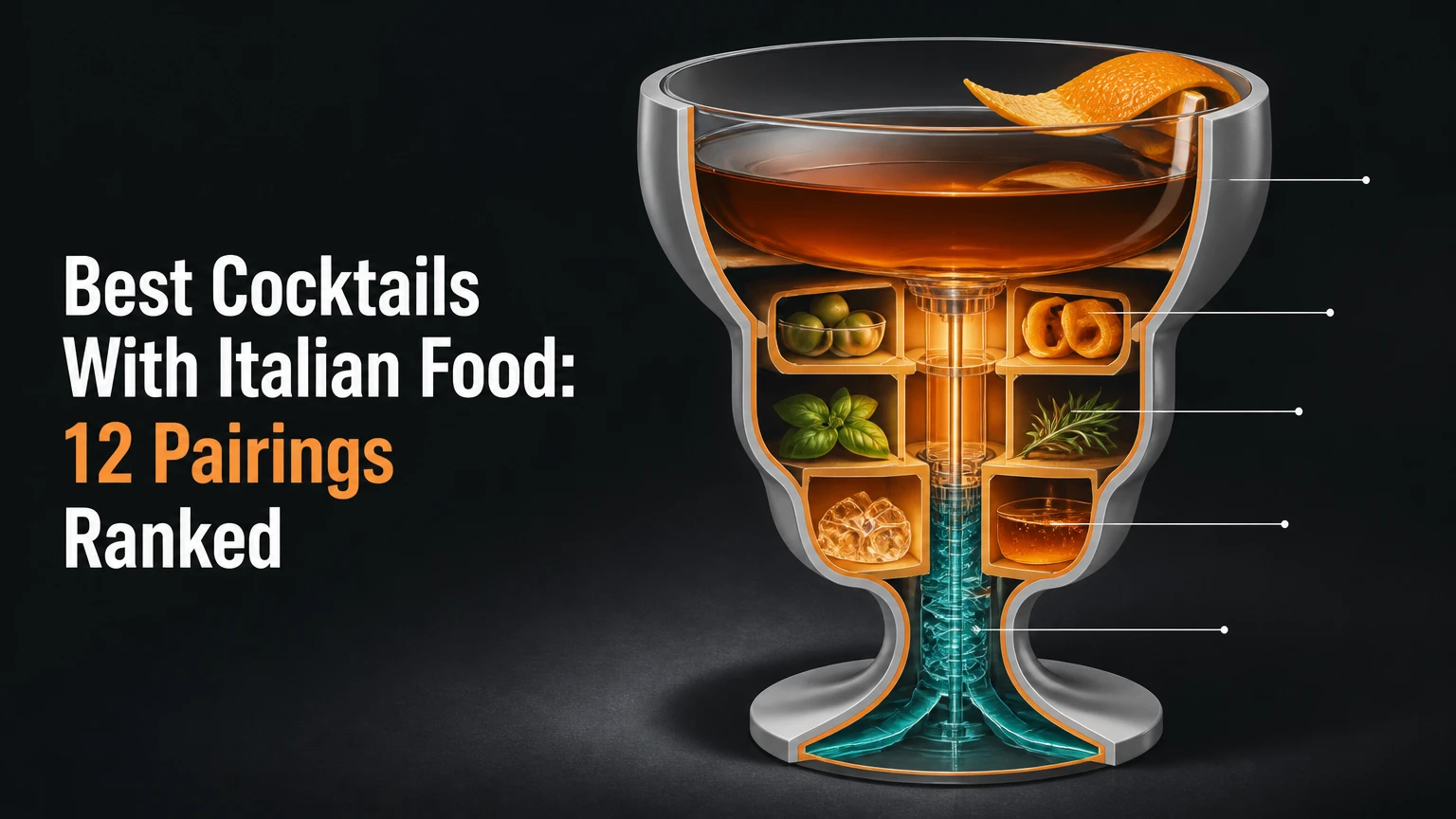
The best cocktails with Italian food are Aperol Spritz for starters and pizza, Americano for long meals, and Negroni Sbagliato for rich pasta or fried dishes. The right choice depends on sauce intensity, fat, acidity, sweetness, and alcohol strength, because a delicate seafood course needs a different drink from lasagna or osso buco.
Key Facts at a Glance
- Aperol Spritz is the most versatile first choice for bruschetta, pizza, prosciutto, and fried appetizers.
- Americano is the lowest-strength bitter option, typically about 5%-8% ABV after soda and ice dilution.
- Negroni Sbagliato pairs with rich pasta while remaining lighter than a classic Negroni.
- Classic Negroni contains equal parts gin, Campari, and sweet vermouth, but its bitterness and alcohol can overpower delicate seafood.
- Brut Prosecco is usually drier than Extra Dry Prosecco, making Brut the safer choice when Aperol tastes too sweet.
- Opened vermouth belongs in the refrigerator and usually tastes best within 4-8 weeks.
What Makes a Cocktail Work With Italian Food?
A cocktail works with Italian food when its acidity, bitterness, sweetness, carbonation, and alcohol level balance the dish rather than compete with it. Sparkling drinks refresh the palate after oil or fried crust, bitter drinks handle grilled meat, and citrus drinks suit butter, cream, and mild seafood when the sauce itself is not highly acidic.
Italian cuisine includes sharply different flavor systems. Pesto brings basil, garlic, pine nut, and olive oil; carbonara brings egg, pecorino, black pepper, and cured pork; puttanesca brings tomato, olive, caper, anchovy, and chili. One universal cocktail cannot complement all three.
How Cocktail Structure Matches Italian Ingredients
Acidity cuts through fat. Lemon, grapefruit, dry sparkling wine, and soda can make mozzarella, cream, butter, and fried foods feel less heavy. Acid does not literally dissolve fat on the tongue, but it changes perceived freshness and increases salivation.
Carbonation resets the palate. Bubbles lift oil and sauce flavors temporarily, which explains why Spritzes work well with fritto misto, arancini, and pizza. Very sweet sparkling cocktails lose that advantage when the food already contains sweet roasted vegetables or balsamic glaze.
Bitterness balances richness. Campari and many amari create a firm counterpoint to sausage, braised beef, ragù, and aged cheese. Bitter drinks need restraint with delicate fish, lemon-forward sauces, and fresh ricotta.
Sweetness softens bitterness and chili. Aperol, orange juice, and elderflower make a drink approachable, but excess sugar can flatten tomato acidity and make a meal taste metallic.
Alcohol amplifies heat. A high-proof Negroni or Boulevardier can intensify chili, black pepper, and raw garlic. Choose a lower-alcohol drink when the dish is spicy or when dinner will last several hours.
Our Top Picks for Italian Dinner Pairings
- Best overall: Aperol Spritz
- Best for a light, herbal menu: Hugo Spritz
- Best for rich pasta with lower intensity: Negroni Sbagliato
- Best low-alcohol bitter drink: Americano
- Best for mild seafood and poultry: Garibaldi
- Best for wine drinkers: Bicicletta
- Best for grilled meat: Negroni
- Best for braised meat: Boulevardier
- Best modern alternative: Italian Paloma
- Best for sparkling-wine lovers: Bellini
- Best after dessert: Amaro and soda
- Best alcohol-free option: Bitter orange spritz**
1. Aperol Spritz: Best Overall
Aperol Spritz is the best all-purpose cocktail with Italian food because its moderate bitterness, orange flavor, carbonation, and relatively low alcohol suit antipasti, pizza, fried foods, and lighter pasta. The standard build uses 3 parts Prosecco, 2 parts Aperol, and 1 part soda water over ice.
A typical restaurant serving contains 2-3 ounces of Prosecco, 1-2 ounces of Aperol, and a small soda top, producing approximately 8%-11% ABV depending on the pour and dilution. The cocktail takes about one minute to build and commonly costs $12-$16 at a United States restaurant bar.
Aperol Spritz works particularly well with margherita pizza, focaccia, prosciutto, burrata, zucchini fritti, and shrimp cocktail. Orange bitterness echoes roasted tomato and cured pork without imposing the herbal force of gin or the higher alcohol of a Negroni.
Drawback: Aperol Spritz can taste too sweet beside sweet sausage, balsamic reduction, glazed vegetables, or dessert. Brut Prosecco gives a drier result than Extra Dry Prosecco, despite the confusing label terminology.
Choose this if: You need one drink for a mixed group and several courses.
Skip it if: The menu centers on delicate raw fish or intensely bitter greens.
2. Hugo Spritz: Best for Fresh Herbs and Summer Dishes
Hugo Spritz is the best choice for herb-heavy Italian dishes because elderflower liqueur, mint, lime, Prosecco, and soda create a floral, cooling profile. A practical build is 4 ounces Prosecco, 1 ounce elderflower liqueur, 1 ounce soda, lime, and mint.
The drink usually lands around 7%-10% ABV and costs $13-$17 at a bar. It complements insalata caprese, grilled zucchini, ricotta, lemony seafood, and dishes with basil or mint. The floral sweetness can soften chili in arrabbiata, although too much elderflower makes the pairing sugary.
Drawback: Elderflower liqueur is less compatible with ragù, beef, anchovy-heavy sauces, and aged cheese than a bitter aperitivo.
Choose this if: The menu is bright, vegetable-led, and served outdoors.
Skip it if: The main course contains powerful roast, smoke, or slow-cooked meat.
3. Negroni Sbagliato: Best for Rich Pasta
Negroni Sbagliato is the best sparkling option for lasagna, sausage ragù, carbonara, and fried antipasti when a classic Negroni would feel too strong. The usual equal-parts formula combines Campari, sweet vermouth, and Prosecco, with the sparkling wine replacing gin.
A 1-ounce-each build typically reaches about 10%-14% ABV before dilution. Its bitterness cuts through pork and cheese, while Prosecco adds lift and a softer finish. The drink takes about one minute to assemble and commonly costs $13-$18 in a cocktail bar.
Negroni Sbagliato has more bitterness than Aperol Spritz and less botanical intensity than Negroni. That middle position makes it effective with baked pasta, mushroom risotto, and mortadella, where a sweet drink can feel cloying.
Drawback: Campari remains bitter, and the vermouth adds sweetness. The drink can clash with very acidic tomato sauces if the Prosecco is also sweet.
Choose this if: You want a bitter, bubbly drink for a substantial meal.
Skip it if: Guests strongly dislike bitter flavors.
4. Americano: Best Low-Alcohol Bitter Choice
Americano is the best low-alcohol bitter cocktail for a long Italian dinner because Campari and sweet vermouth provide structure while soda reduces intensity. Use equal parts Campari and sweet vermouth, then add 2-4 parts chilled soda over ice.
The finished drink commonly falls near 5%-8% ABV, depending on the vermouth quantity and dilution. It takes less than one minute to build and typically costs $11-$15 at a bar. Orange or lemon peel changes the aroma without materially changing the drink’s strength.
Americano pairs with antipasti, grilled vegetables, mushroom dishes, focaccia, and moderately rich pasta. The soda makes it less filling than a Spritz, while its bitterness keeps it from disappearing next to salty olives or Parmesan.
Drawback: The drink has little sweetness control once built, and Campari can dominate mild ricotta, poached fish, or plain pasta.
Choose this if: You want an aperitivo that will not overwhelm a multi-hour meal.
Skip it if: You prefer fruit-forward cocktails with minimal bitterness.
5. Garibaldi: Best for Mild Seafood and Poultry
Garibaldi combines Campari and fresh orange juice, usually at about 1 part Campari to 2 parts juice, making it a strong match for mild seafood, chicken, and brunch-style Italian dishes. Freshly aerated orange juice gives the drink a lighter texture and reduces the perception of Campari’s bitterness.
A common serving uses 2 ounces Campari and 4 ounces orange juice, resulting in approximately 8%-10% ABV. The cocktail costs about $12-$16 and takes 2-3 minutes if the juice is freshly squeezed and blended or whisked for foam.
Garibaldi suits chicken piccata, grilled prawns, fennel salad, fried calamari, and breakfast dishes such as frittata. Orange complements fennel and poultry, while Campari keeps the drink from tasting like ordinary juice.
Drawback: Orange juice can intensify the perception of sweetness beside tomato sauce, balsamic, or sweet roasted peppers.
Choose this if: You want citrus with a bitter backbone.
Skip it if: The meal is built around lemon juice, orange zest, or very acidic tomatoes.
6. Bicicletta: Best for Wine Drinkers
Bicicletta is the best transition from wine to cocktails because it combines dry white wine, Campari, and soda rather than gin or whiskey. A useful ratio is 3 ounces dry white wine, 1 ounce Campari, and 1-2 ounces soda, served over ice with an orange slice.
The drink typically reaches 6%-9% ABV and costs $11-$15 at a bar. Pinot Grigio, Verdicchio, Soave, and other dry Italian whites provide enough acidity to keep Campari from becoming heavy.
Bicicletta works with seafood antipasti, grilled vegetables, spaghetti alle vongole, herb salads, and simple white pizzas. It is more savory and wine-like than a Garibaldi, but less forceful than an Americano.
Drawback: Poor-quality or oxidized white wine makes the drink thin and sour. Use a fresh bottle that you would willingly drink on its own.
Choose this if: Your guests normally order Italian white wine.
Skip it if: The menu contains heavy cream, braised meat, or very sweet ingredients.
7. Negroni: Best for Grilled Meat and Powerful Flavors
Classic Negroni is best with grilled steak, sausage, wild-boar ragù, aged cheese, and other assertive foods because equal parts gin, Campari, and sweet vermouth deliver high bitterness, botanical flavor, and approximately 20%-25% ABV before dilution. The drink should not be the default choice for every Italian main course.
The International Bartenders Association lists the classic formula as 30 milliliters each of gin, Campari, and sweet red vermouth. Stir the ingredients with ice, strain over fresh ice, and garnish with orange peel. A restaurant serving often costs $15-$22 and takes 2-3 minutes.
Negroni’s bitterness handles rendered fat, char, rosemary, juniper, and aged meat. It can accompany bistecca alla Fiorentina or osso buco, but its alcohol can magnify chili, garlic, and black pepper.
Drawback: High alcohol and bitterness overwhelm oysters, delicate white fish, fresh mozzarella, and subtle cream sauces.
Choose this if: You want a slow-sipping drink with a rich, savory entrée.
Skip it if: You plan to drink quickly or pair it with a delicate first course.
8. Boulevardier: Best for Braised Meat
Boulevardier is the strongest match for slow-cooked beef, venison, and wild-boar ragù because bourbon contributes oak, vanilla, caramel, and spice to Campari and sweet vermouth. A common recipe uses 1.5 ounces bourbon, 1 ounce Campari, and 1 ounce sweet vermouth.
The drink usually reaches approximately 24%-30% ABV before dilution and costs $16-$22 at a cocktail bar. Stir it with ice for about 20-30 seconds, then strain over a large cube or serve up with an orange twist.
Boulevardier has more weight than Negroni and can mirror browned meat, roasted mushrooms, and long-cooked sauces. Its whiskey character is less compatible with seafood, pesto, lemon, and fresh tomato.
Drawback: Bourbon sweetness and alcohol can make an already rich meal feel dense.
Choose this if: The entrée contains braised meat or a dark, concentrated sauce.
Skip it if: You want a refreshing aperitivo before a light dinner.
9. Italian Paloma: Best Modern Citrus Alternative
Italian Paloma is a modern cross-cultural pairing that combines tequila, Campari, grapefruit soda, and lime. A practical build uses 1.5 ounces tequila, 0.5 ounce Campari, lime juice, and grapefruit soda over ice.
The cocktail generally reaches 8%-12% ABV and costs $13-$18 at a bar. Grapefruit and lime provide sharper acidity than Aperol Spritz, while tequila adds earthy vegetal notes that work with grilled vegetables, chili, charred prawns, and spicy pizza.
Italian Paloma is not a canonical Italian classic. Its value is functional: it provides bitter citrus structure for guests who find Prosecco-based aperitivi too soft.
Drawback: Grapefruit can taste harsh with delicate fish, bitter greens, and some medications. Guests taking prescription drugs should check whether grapefruit is restricted.
Choose this if: The meal includes chili, char, or grilled seafood.
Skip it if: You need a traditional Italian cocktail or a universally gentle pairing.
10. Bellini: Best for Delicate Starters
Bellini is best with delicate seafood, brunch dishes, and fruit-led antipasti because white peach purée and Prosecco create a soft, aromatic drink. Use about 2 ounces peach purée with 4 ounces chilled Prosecco, adjusting the fruit for sweetness.
The finished cocktail usually contains 7%-10% ABV and costs $14-$20 in restaurants. Its peach aroma suits prosciutto, crab, shrimp, ricotta, and mild cheeses, especially when served before a savory main course.
Drawback: Bellini’s sweetness clashes with tomato-heavy pasta, balsamic glaze, and dessert-like sauces.
Choose this if: You are serving a light first course or brunch.
Skip it if: The menu is salty, spicy, or dominated by aged cheese.
11. Amaro and Soda: Best Digestivo
Amaro and soda is the best after-dinner Italian drink when the meal has ended because it offers herbal bitterness without the sugar or volume of a dessert cocktail. Pour 1.5-2 ounces of amaro over ice, add 2-4 ounces soda, and garnish with lemon or orange.
The final drink commonly reaches 8%-15% ABV, depending on the amaro. Fernet-Branca is intensely bitter and minty; Montenegro is softer and orange-led; Averna is darker and sweeter. The drink takes under one minute to make.
Drawback: Amaro styles vary dramatically, so a bottle selected for a guest’s taste matters more than the category name.
Choose this if: You want a digestivo after tiramisu, panna cotta, or espresso.
Skip it if: Guests dislike herbal or bitter flavors.
12. Bitter Orange Spritz: Best Alcohol-Free Option
A bitter orange spritz is the best nonalcoholic pairing for Italian food when you want aperitivo bitterness and carbonation without alcohol. Combine 2-3 ounces nonalcoholic bitter aperitivo with 4 ounces alcohol-free sparkling wine and 1 ounce soda over ice.
The finished drink usually contains 0.0%-0.5% ABV, depending on the products used, and costs about $4-$8 at home or $8-$14 in a restaurant. Orange peel, rosemary, and a salty snack make the drink feel more integrated with the meal.
Drawback: Many alcohol-free aperitivi contain noticeable sweetener, which can clash with tomato sauce and balsamic.
Choose this if: Guests are driving, pregnant, avoiding alcohol, or pacing themselves.
Skip it if: You expect the depth of gin, vermouth, or amaro.
Which Cocktail Matches Your Italian Dish?
The sauce usually matters more than the pasta shape. Carbonara, pesto, seafood, pizza, and ragù each impose different requirements on sweetness, bitterness, acidity, and alcohol.
| Italian dish or course | Best cocktail | Why it fits | Avoid first |
|---|---|---|---|
| Margherita pizza | Aperol Spritz | 8%-11% ABV, bubbles, orange bitterness | Bellini |
| Prosciutto and burrata | Aperol Spritz | Carbonation offsets salt and dairy | Boulevardier |
| Fritto misto | Negroni Sbagliato | Campari bitterness cuts fried coating | Sweet Bellini |
| Pesto pasta | Hugo Spritz | Mint and elderflower echo fresh herbs | Boulevardier |
| Carbonara | Americano | Soda and bitterness offset pork and cheese | Garibaldi |
| Tomato marinara | Bicicletta | Dry wine keeps the pairing savory | Very sweet Bellini |
| Seafood pasta | Bicicletta | Dry wine profile supports shellfish | Negroni |
| Chicken piccata | Garibaldi | Orange and bitterness complement poultry | Boulevardier |
| Mushroom risotto | Negroni Sbagliato | Sparkle lifts creaminess; bitterness handles umami | Hugo Spritz |
| Lasagna | Negroni Sbagliato | Bubbles and bitterness balance cheese and ragù | Bellini |
| Bistecca alla Fiorentina | Negroni | Gin botanicals and Campari meet char and fat | Hugo Spritz |
| Osso buco | Boulevardier | Bourbon mirrors browned, slow-cooked flavors | Bitter orange spritz |
What Should You Serve With Pizza?
Aperol Spritz is the strongest general pairing for pizza because Prosecco bubbles refresh the mouth while Aperol’s orange bitterness balances cheese, tomato, and salty toppings. For spicy salami or hot peppers, Italian Paloma provides more citrus and less sweetness.
Avoid pairing a high-proof Boulevardier with thin-crust pizza unless the meal includes substantial meat. Alcohol and bourbon sweetness can make melted cheese feel heavier.
What Goes With Carbonara?
Americano is the safest cocktail with carbonara because soda lightens the drink while Campari and vermouth counter the dish’s guanciale, egg, and Pecorino Romano. Negroni Sbagliato is suitable when the carbonara is served as part of a larger meal and the guest wants more bitterness.
Citrus-heavy drinks are less reliable. Lemon can work with a lemon-carbonara variation, but orange juice may exaggerate the dish’s richness.
Full Comparison: Alcohol, Cost, and Service
The following figures are typical United States restaurant and home-bar ranges, not fixed standards. Brand strength, pour size, ice melt, tax, labor, and location change the final result.
| Cocktail | Approximate finished ABV | Typical bar price | Build time | Best service |
|---|---|---|---|---|
| Aperol Spritz | 8%-11% | $12-$16 | 1 minute | Aperitivo, pizza |
| Hugo Spritz | 7%-10% | $13-$17 | 1-2 minutes | Herbs, vegetables |
| Americano | 5%-8% | $11-$15 | Under 1 minute | Long dinner |
| Bicicletta | 6%-9% | $11-$15 | 1 minute | Seafood, wine courses |
| Garibaldi | 8%-10% | $12-$16 | 2-3 minutes | Poultry, seafood |
| Negroni Sbagliato | 10%-14% | $13-$18 | 1 minute | Rich pasta |
| Bellini | 7%-10% | $14-$20 | 2 minutes | Delicate starters |
| Negroni | 20%-25% | $15-$22 | 2-3 minutes | Steak, aged cheese |
| Boulevardier | 24%-30% | $16-$22 | 2-3 minutes | Braised meat |
| Bitter orange spritz | 0.0%-0.5% | $8-$14 | 1 minute | Alcohol-free service |
How to Prepare the Core Italian Cocktails
A Spritz is built directly in a wine glass, while a Negroni is stirred with ice. Correct dilution matters more than hitting an exact number of rotations, because ice size, temperature, glassware, and stirring speed change how quickly water enters the drink.
Build an Aperol Spritz
- Fill a large wine glass with fresh ice.
- Add 3 ounces Prosecco, 2 ounces Aperol, and 1 ounce soda.
- Stir once or twice without flattening the carbonation.
- Add an orange slice and serve immediately.
You will know the drink is balanced when the orange bitterness remains clear and the finish is dry enough to invite another bite. Use Brut Prosecco when the food contains sweet vegetables or glaze.
Stir a Classic Negroni
- Add 1 ounce gin, 1 ounce Campari, and 1 ounce sweet vermouth to a mixing glass.
- Fill the mixing glass with fresh ice.
- Stir for approximately 20-30 seconds, then taste.
- Strain over one large cube or fresh rocks ice.
- Express an orange peel over the surface and place it in the glass.
You will know the drink is ready when it is cold, slightly softened, and clear. A rigid “exactly 30 seconds” rule is unnecessary because dilution depends on the ice and equipment.
Prepare an Americano
- Add 1 ounce Campari and 1 ounce sweet vermouth to an ice-filled highball or rocks glass.
- Add 2-4 ounces chilled soda.
- Stir gently once.
- Garnish with lemon or orange peel.
Do not shake an Americano. Shaking wastes carbonation and produces a less lively drink.
Common Pairing Mistakes and Their Fixes
Choosing by Cocktail Popularity
A famous drink is not automatically a suitable food pairing. Negroni may be excellent with bistecca but overpower a delicate branzino.
Fix: Identify the dominant food trait first: fat, acidity, sweetness, smoke, spice, or delicacy.
Using a Sweet Drink With Sweet Tomato Sauce
Aperol Spritz, Bellini, and Garibaldi can all taste sugary beside sweet tomatoes, roasted peppers, or balsamic glaze.
Fix: Use Brut Prosecco, reduce the fruit component, or switch to Americano or Bicicletta.
Serving Warm or Oxidized Vermouth
Vermouth is fortified wine and changes after opening. Warm, stale vermouth makes Negroni-family drinks taste flat, sour, or dusty.
Fix: Refrigerate the bottle, record the opening date, and replace it after roughly 4-8 weeks when flavor has noticeably declined.
Pairing High Alcohol With Chili
Alcohol spreads capsaicin across the mouth and can increase perceived heat.
Fix: Choose a carbonated, lower-strength drink such as Americano, Aperol Spritz, or a nonalcoholic bitter spritz.
Overdiluting a Spritz
Too much soda or melting ice removes aroma and leaves a watery drink.
Fix: Chill the ingredients beforehand, use dense fresh ice, and serve the cocktail within 5-10 minutes.
Treating All Amari as Interchangeable
Fernet-Branca, Averna, Montenegro, and Cynar differ in bitterness, sweetness, spice, and alcohol.
Fix: Match the bottle to the meal. Use Montenegro with dessert, Cynar with savory snacks, and Fernet-Branca only when guests specifically enjoy intense bitterness.
Substitutions and Alternatives
Campari can be replaced with Aperol for a softer, sweeter drink, Select for a more herbal Venetian profile, or Cappelletti Aperitivo for a wine-based bitter style. Each substitution changes bitterness and alcohol balance, so retain the original dilution until tasting.
Dry vermouth can replace sweet vermouth only in a different drink style. A Negroni made with dry vermouth becomes drier and more savory, but it is no longer the classic equal-parts profile.
For a zero-proof alternative, use a nonalcoholic bitter aperitivo with alcohol-free sparkling wine. Check the label because some “alcohol-free” products contain up to 0.5% ABV.
How Much Should You Buy for a Dinner Party?
For six guests, plan on 12-18 aperitivo drinks if each person has two or three before and during dinner. A 750-milliliter bottle contains approximately 25 ounces, so one bottle of Prosecco makes about six Spritzes when each uses 3 ounces of sparkling wine.
| Six-guest requirement | Quantity | Typical home cost |
|---|---|---|
| Prosecco for 12 Spritzes | 2 bottles, 750 ml each | $24-$50 |
| Aperol for 12 Spritzes | 1 bottle, 750 ml | $20-$35 |
| Soda water | 2 liters | $3-$6 |
| Oranges | 4-6 fruit | $4-$10 |
| Ice | 10-15 pounds | $4-$8 |
| Optional nonalcoholic aperitivo | 1-2 bottles | $20-$40 |
A single-bottle menu is easier to execute. Offer Aperol Spritz before dinner, then switch to coffee or amaro after dessert instead of stocking six different spirits.
How to Choose by Guest and Service Situation
For beginners: Choose Aperol Spritz or Hugo Spritz. Both offer carbonation, moderate alcohol, and recognizable citrus or floral flavors.
For wine drinkers: Choose Bicicletta. Dry white wine preserves a familiar acid structure while Campari adds bitterness.
For bitter-cocktail enthusiasts: Choose Negroni Sbagliato with dinner and Negroni after the main course. The first is lighter and sparkling; the second is stronger and slower.
For whiskey drinkers: Choose Boulevardier only with braised meat, steak, or a dark mushroom dish. Bourbon is too forceful for a light antipasto course.
For a mixed group: Serve Aperol Spritz, Americano, and a bitter orange spritz. These cover moderate, low, and zero alcohol without requiring a large ingredient inventory.
For a formal multi-course meal: Start with a Spritz or Bicicletta, use wine or water during delicate seafood, then offer Negroni or amaro with the final savory course.
Digestivi and Dessert Pairings
Amaro is traditionally more appropriate after a meal than before it, although many contemporary bars serve amaro in aperitivo drinks. Sweeter amari pair with dark chocolate, coffee, and tiramisu, while drier, minty styles suit citrus desserts or espresso.
| Dessert or finish | Recommended drink | Serving size | Reason |
|---|---|---|---|
| Tiramisu | Averna and soda | 1.5-2 oz amaro | Coffee and caramel notes align |
| Panna cotta | Montenegro and soda | 1.5 oz amaro | Orange and spice keep sweetness moderate |
| Cannoli | Amaro and espresso | 1 oz amaro | Bitter coffee offsets ricotta filling |
| Lemon sorbetto | Limoncello, chilled | 1 oz | Mirrors citrus without carbonation |
| Dark chocolate | Fernet-Branca, small pour | 0.75-1 oz | Mint and bitterness handle cocoa intensity |
| Fresh fruit | Grappa, neat or chilled | 0.75-1 oz | Dry spirit avoids adding sugar |
A digestivo is not a medical treatment for overeating. Its bitter flavor may feel cleansing, but alcohol does not accelerate digestion in a dependable clinical sense.
FAQ
Is prosecco or wine better with Italian food?
Wine is usually more adaptable across a full Italian meal because dry red, white, and sparkling styles can match different courses without cocktail sweetness or spirit intensity. Prosecco-based cocktails work best for aperitivo, fried food, pizza, and informal dinners where carbonation provides immediate palate refreshment.
What is the best cocktail with Italian food for someone who dislikes bitter drinks?
Bellini is the gentlest choice for someone who dislikes bitterness because peach and Prosecco dominate the flavor. Hugo Spritz is another approachable option, although elderflower sweetness is more noticeable. Avoid Campari-forward drinks such as Americano, Negroni, and Boulevardier.
Can you drink a Negroni with pasta?
You can drink a Negroni with pasta when the sauce contains sausage, beef, wild boar, mushrooms, or aged cheese. The cocktail is usually too intense for seafood pasta, fresh tomato, pesto, or delicate cream sauces. Serve a small, well-diluted portion rather than a large fast-drinking glass.
What cocktail goes with Italian seafood?
Bicicletta is the most reliable cocktail with Italian seafood because dry white wine, Campari, and soda support shellfish without excessive alcohol. Garibaldi suits mild grilled prawns or poultry-style preparations, while Negroni is generally too bitter and strong for delicate fish.
Should cocktails be served before or during an Italian meal?
Aperitivi such as Aperol Spritz, Americano, Bicicletta, and Hugo Spritz are best served 15-30 minutes before dinner or with the first course. Stronger drinks such as Negroni and Boulevardier suit the main course only when the food is rich, and amari usually fit after dessert.
What is the best cocktail with Italian food overall?
Aperol Spritz remains the best overall cocktail with Italian food because it covers the widest range of starters, pizza, fried dishes, cured meat, and moderate pasta while keeping alcohol and bitterness approachable. Choose Americano for a lower-strength dinner, or Negroni for grilled and braised meat.