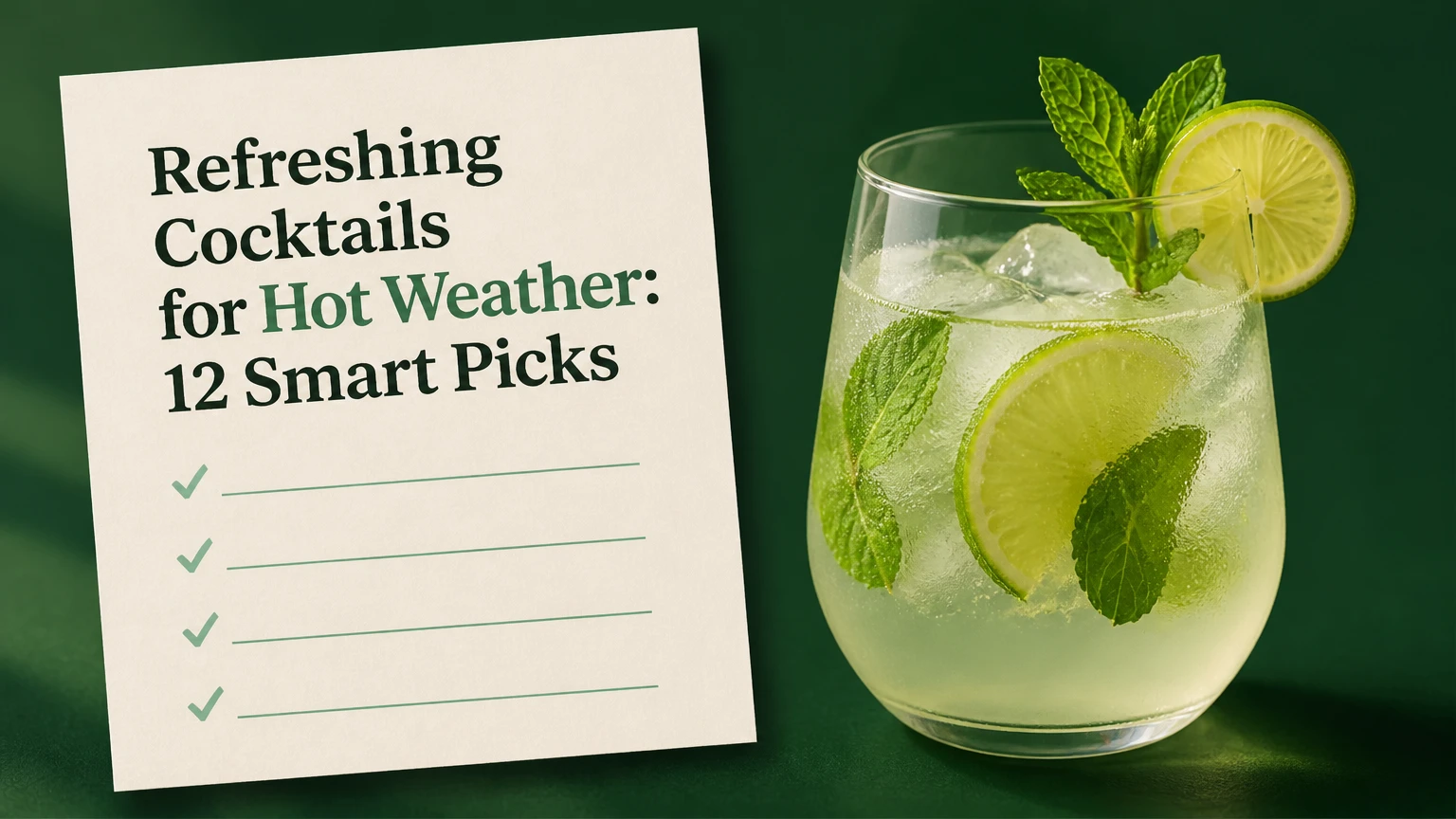
Refreshing cocktails for hot weather are chilled, balanced drinks that use dilution, acidity, carbonation, herbs, or low alcohol to feel clean and bright in warm conditions. The best choices are usually highballs, spritzes, and moderate-strength sours, but no alcoholic cocktail hydrates the body as effectively as water or an electrolyte drink.
Key Facts at a Glance
A typical highball contains 5%-10% alcohol by volume after ice dilution, while a shaken sour often reaches 15%-22%.
Fresh citrus stimulates salivation, but excessive acidity can taste harsher when served warm or without enough dilution.
Mint creates a cooling sensation through menthol-sensitive TRPM8 receptors; mint does not lower core body temperature.
Dense ice, a chilled mixer, and a full glass reduce rapid melting more effectively than stirring a drink repeatedly.
A 12-ounce drink containing 1.5 ounces of 40% spirit contains about one US standard drink, before accounting for additional alcohol.
Alcohol increases heat and dehydration risks, so water and shaded breaks should accompany outdoor drinking.
Which Refreshing Cocktails for Hot Weather Work Best?
The best refreshing cocktails for hot weather are the Paloma, Ranch Water, gin and tonic, Aperol Spritz, classic Daiquiri, and Mojito, with the final choice depending on alcohol strength, sweetness, carbonation, and time spent outdoors. For prolonged sun exposure, a low-ABV spritz or alcohol-free highball is a safer choice than a double-spirit sour.
A refreshing drink needs more than a cold temperature. Acidity makes the mouth water, carbonation adds tactile lift, and dilution softens alcohol while opening aromas. Herbs such as mint can create an apparent cooling effect, while cucumber, watermelon, grapefruit, and soda water supply lighter aromatic and textural profiles.
The important safety correction is that alcohol does not combat dehydration fatigue. Alcohol can increase urination and impair judgment about heat, thirst, and exertion. The National Institute on Alcohol Abuse and Alcoholism warns that “alcohol can increase the risk of dehydration,” particularly when heat and physical activity already increase fluid loss. Treat cocktails as social beverages, not hydration products.
Best Choices by Situation
| Situation | Best cocktail | Typical ABV | Typical prep | Main reason |
|---|---|---|---|---|
| Long outdoor afternoon | Aperol Spritz | 5%-8% | 1-2 minutes | Lower alcohol and high carbonation |
| Poolside lounging | Gin and tonic | 7%-10% | 1 minute | Cold, tall, easy to sip slowly |
| Hot barbecue with food | Paloma | 8%-12% | 2 minutes | Grapefruit, lime, tequila, and soda suit grilled food |
| Very low-sugar preference | Ranch Water | 8%-10% | 1-2 minutes | Tequila, lime, and sparkling water with little sugar |
| Sunset dinner | Classic Daiquiri | 18%-22% | 3 minutes | Concentrated citrus flavor in a measured serving |
| Humid garden gathering | Mojito | 8%-12% | 3-4 minutes | Mint, lime, sugar, and soda create aromatic lift |
| No-alcohol service | Cucumber lime highball | 0% | 2 minutes | Crisp flavor without alcohol-related heat risk |
| Large group | Rosé spritz pitcher | 6%-9% | 10 minutes | Batchable base with soda added per glass |
How Does a Cocktail Feel Refreshing in Heat?
Acid, carbonation, dilution, temperature, and aroma shape perceived refreshment, but only cold liquid and adequate fluid intake directly address thirst. Mint activates cold-sensitive nerve pathways, citrus increases salivation, and bubbles create a sharp tactile sensation that many drinkers interpret as cleansing.
Menthol in mint interacts with TRPM8 receptors, which respond to cooling compounds and cold temperatures. That signal changes sensation rather than body temperature, so a Mojito may feel cooler without providing meaningful physiological cooling.
Citrus juice contributes citric acid and water, while grapefruit and green apple contribute additional tartness and aroma. Sugar balances that acidity, but excess syrup makes a drink heavy and increases the rate at which it becomes cloying as the ice melts.
Carbonation adds acidity-like brightness through dissolved carbon dioxide and carbonic acid. Carbonated water can feel sharper and more refreshing than still water, although the claim that bubbles physically scrub all oils and sugars from the palate is overstated.
Does ice make a cocktail stronger or weaker?
Ice usually makes a cocktail weaker by adding water as it melts, while also lowering its temperature. A shaken Daiquiri may gain roughly 15-25% dilution, and a stirred or built highball continues diluting during service; the exact amount depends on ice size, agitation, glass shape, and serving time.
Large, solid cubes melt more slowly than small hollow pieces because they expose less surface area relative to their volume. Clear ice is not automatically colder, but its density and reduced air content often produce more predictable dilution. Ice quality matters most in drinks served for longer than 10 minutes.
What Are the Main Summer Cocktail Families?
Summer cocktail families differ mainly in alcohol concentration, carbonation, acidity, sweetness, and preparation method. Highballs and spritzes are usually the easiest choices for heat because their mixer volume slows alcohol intake, while sours deliver more flavor with less water and a faster rise in alcohol concentration.
| Cocktail family | Representative drinks | Typical final ABV | Sweetness range | Best service |
|---|---|---|---|---|
| Highballs | Ranch Water, gin and tonic, Paloma | 5%-12% | 0-12 g | Pool, picnic, barbecue |
| Collins drinks | Tom Collins, vodka Collins | 6%-10% | 8-18 g | Lunch and afternoon service |
| Sours and daisies | Daiquiri, Margarita, Gimlet | 15%-22% | 8-20 g | Dinner or short sunset service |
| Spritzes | Aperol Spritz, Hugo Spritz | 5%-9% | 6-14 g | Brunch and pre-dinner drinks |
| Smashes and muddled drinks | Mojito, Basil Smash | 8%-14% | 8-18 g | Garden parties and food service |
| Frozen drinks | Frozen Margarita, Daiquiri | 8%-16% | 12-25 g | Short, immediate service |
A drink’s final ABV changes with the recipe. A 2-ounce pour of 40% spirit topped with 4 ounces of soda is not 40% ABV in the glass; after dilution, the finished drink commonly falls near 10%-14%, depending on ice melt and total volume.
Highballs and Collinses
Highballs combine a measured spirit with a large volume of soda, tonic, ginger beer, or another carbonated mixer. A Collins adds citrus and sugar, while a basic highball may use only spirit and a mixer.
These drinks are practical for heat because they build quickly and remain recognizable as they dilute. Choose a dry tonic for gin, mineral water for Ranch Water, grapefruit soda for a Paloma, or soda water plus lemon and simple syrup for a Tom Collins.
Sours and Daisies
Sours use spirit, citrus, and sweetener, while daisies usually add a liqueur or flavored modifier. The familiar 2:1:1 model is a useful starting point, not a universal rule; a 2-ounce spirit, 1-ounce lime, and 1-ounce syrup recipe can taste too sweet or too strong depending on the spirit and ice.
Fresh citrus gives the cleanest aroma, but strained juice improves texture and prevents pulp from accelerating bitterness. Sours are better for a seated meal or short evening service than for continuous drinking in direct sun.
Spritzes and Aperitifs
Spritzes combine sparkling wine, a bittersweet or floral aperitif, and soda. The classic Aperol Spritz commonly follows a 3:2:1 proportion, such as 3 ounces Prosecco, 2 ounces Aperol, and 1 ounce soda, though smaller total pours reduce alcohol exposure.
Spritzes are not automatically low alcohol. A large wine glass filled with multiple ounces of sparkling wine can contain more alcohol than a modest highball. Measure the wine, keep the aperitif chilled, and add soda immediately before serving.
Muddled and Herbaceous Drinks
Mojitos, smashes, and basil drinks release aromatic oils through gentle pressing, shaking, or hand-slapping. Over-muddling tears leaves, extracts chlorophyll, and can add astringent bitterness.
Press mint leaves two or three times with a muddler, then add rum, lime, syrup, and ice. For basil, clap the leaves between your palms and shake them briefly rather than grinding them into paste.
Which Drinks Should You Serve for Different Summer Menus?
Palomas pair with grilled meats, Daiquiris suit salty seafood, and spritzes work with light appetizers because their bitterness and bubbles reset the palate between bites. Food pairing matters in heat because salty, spicy, and fatty dishes change how drinkers perceive sweetness and acidity.
| Food or occasion | Recommended drink | Pairing adjustment | Avoid |
|---|---|---|---|
| Fish tacos | Ranch Water | Add 1-2 pinches of salt to the glass | Heavy cream liqueurs |
| Grilled chicken | Paloma | Use ruby grapefruit and 0.25 ounce syrup | Very bitter tonic |
| Charcuterie | Aperol Spritz | Add orange and keep the spritz dry | High-sugar fruit punch |
| Spicy noodles | Cucumber Collins | Use extra soda and moderate syrup | High-proof stirred drinks |
| Shellfish | Daiquiri | Use white rum and 0.75 ounce lime | Dark, heavily oaked spirits |
| Fruit dessert | Hugo Spritz | Use elderflower sparingly | Sweet sangria with added juice |
The 12 Best Refreshing Cocktail Picks
- Paloma: Best all-around hot-weather cocktail for grapefruit, tequila, and soda.
- Ranch Water: Best for a dry, low-sugar profile.
- Aperol Spritz: Best for brunch and low-intensity daytime drinking.
- Mojito: Best for fresh mint and a classic cooling sensation.
- Gin and tonic: Best for a one-minute build.
- Classic Daiquiri: Best for a sharp, spirit-forward sunset drink.
- Hugo Spritz: Best for floral, lower-bitterness flavor.
- Tom Collins: Best for lemon drinkers who want a longer cocktail.
- Cucumber vodka highball: Best for a clean, neutral profile.
- Watermelon rum cooler: Best for ripe fruit and casual parties.
- Frozen Margarita: Best for immediate service in extreme heat.
- Alcohol-free citrus spritz: Best for drivers, athletes, and extended outdoor events.
How Do You Build a Highball That Stays Cold and Fizzy?
Build a highball in a chilled glass with cold ingredients, dense ice, and minimal agitation. The reliable sequence is spirit and citrus first, ice second, carbonated mixer last, followed by one gentle lift with a bar spoon.
Step 1: Chill the Glass and Ingredients
Place the glass in a freezer for 10-15 minutes, or fill it with ice and cold water for 2 minutes. Refrigerate the spirit, citrus, tonic, soda, and wine before opening them.
You will know this worked when condensation forms quickly and the first pour remains cold without immediate, aggressive bubbling. A warm mixer releases carbon dioxide rapidly.
Step 2: Measure the Base
Use 1.5 ounces of spirit for a standard drink, or 1 ounce for a lower-strength afternoon version. Add 0.5-1 ounce of fresh lemon or lime juice when the recipe calls for acidity.
Accurate measurement controls both alcohol exposure and balance. Free-pouring often turns a supposedly light highball into a double.
Step 3: Fill With Dense Ice
Fill the glass to the rim with solid cubes. Large cubes suit slow sipping, while standard cubes chill faster but dilute sooner.
The success checkpoint is a stable ice column with no visible liquid gap above it. Empty space allows the drink to warm faster and encourages unnecessary stirring.
Step 4: Add Carbonation Slowly
Tilt the glass and pour 3-5 ounces of cold soda, tonic, or sparkling water down the inside wall. Stop below the rim if the drink contains foam or a large garnish.
A cold, gentle pour preserves more carbonation than pouring directly onto a dry, warm glass. Open carbonated bottles immediately before use.
Step 5: Lift Once and Garnish
Insert a bar spoon to the bottom and lift once, or leave the drink layered if the recipe allows. Add citrus, mint, or cucumber after mixing.
The drink is ready when the flavor is uniform and bubbles remain visible. Repeated churning strips carbonation and increases dilution.
How Can You Keep Summer Cocktails From Becoming Watery?
Use cold, solid ice, chilled ingredients, small service volumes, and insulated glassware to slow dilution. A typical cocktail remains well balanced for 10-20 minutes outdoors, but direct sun, wind, a warm glass, and crushed ice can shorten that window substantially.
A large cube is useful for a Daiquiri or spirit-forward drink, but a tall highball needs enough ice to keep the liquid cold. Too little ice causes the remaining cubes to melt quickly because the drink has more warm glass and air contact.
Pre-batch only the non-carbonated ingredients. Add soda, tonic, or sparkling wine to each glass when served, because storing a carbonated drink in a pitcher produces a flatter result.
Avoid frozen glassware for delicate thin glasses that may crack from thermal shock. A refrigerator-chilled glass is safer for ordinary stemware, while a freezer works well for thick rocks glasses and metal cups.
What Do These Cocktails Cost and How Long Do They Take?
Typical home preparation costs range from $1.50-$5.00 per serving, excluding premium spirits and specialty glassware. Highballs and spritzes take 1-2 minutes, while shaken or muddled drinks usually require 3-5 minutes.
| Drink | Typical ingredient cost | Prep time | Finished volume | Spirit amount |
|---|---|---|---|---|
| Ranch Water | $2.00-$4.00 | 1-2 minutes | 8-10 oz | 1.5 oz tequila |
| Aperol Spritz | $2.50-$5.00 | 1-2 minutes | 7-9 oz | 2 oz sparkling wine |
| Paloma | $2.25-$4.50 | 2 minutes | 9-11 oz | 1.5 oz tequila |
| Mojito | $2.00-$4.50 | 3-4 minutes | 10-12 oz | 1.5 oz rum |
| Daiquiri | $1.75-$4.00 | 3 minutes | 4-5 oz | 2 oz rum |
| Alcohol-free spritz | $1.25-$3.00 | 2 minutes | 8-10 oz | 0 oz |
Premium bar prices commonly range from $12-$22 in the United States, with resort, airport, and major-city venues often higher. Home cost rises most when recipes use fresh berries, branded mixers, imported aperitifs, or individually garnished glasses.
How Do You Make a Ranch Water, Paloma, and Aperol Spritz?
Ranch Water, Paloma, and Aperol Spritz each need less than five ingredients and can be prepared in under two minutes. Ranch Water is the driest, Paloma is the most citrus-fruited, and Aperol Spritz has the lowest typical spirit-free alcohol concentration.
| Recipe | Ingredients | Method | Typical final ABV |
|---|---|---|---|
| Ranch Water | 1.5 oz blanco tequila, 0.75 oz lime, 4-5 oz sparkling water | Build over ice, stir once | 8%-10% |
| Paloma | 1.5 oz tequila, 0.5 oz lime, 4 oz grapefruit soda, pinch of salt | Build over ice, top gently | 8%-12% |
| Aperol Spritz | 3 oz Prosecco, 2 oz Aperol, 1 oz soda | Build in wine glass over ice | 5%-8% |
| Mojito | 1.5 oz white rum, 0.75 oz lime, 0.5 oz syrup, 6 mint leaves, 2 oz soda | Press mint lightly, shake first four, top soda | 8%-12% |
| Daiquiri | 2 oz white rum, 1 oz lime, 0.75 oz simple syrup | Shake with ice, strain | 18%-22% |
| Tom Collins | 1.5 oz gin, 0.75 oz lemon, 0.5 oz syrup, 3 oz soda | Shake first three, strain over ice, top soda | 7%-10% |
A pinch of salt can soften harsh bitterness in a Paloma or Ranch Water, but salt does not transform sparkling water into a reliable electrolyte replacement. For substantial sweating, use a labeled oral rehydration or sports beverage and drink plain water alongside alcohol.
What Are the Best Alcohol-Free Alternatives?
The best alcohol-free alternatives are cucumber lime soda, a grapefruit rosemary spritz, a mint lime cooler, and a chilled tea shrub. These drinks preserve acidity, aroma, dilution, and carbonation without the impairment and added dehydration risk associated with alcohol.
Cucumber Lime Highball
Combine 2 ounces strained cucumber juice, 0.75 ounce lime juice, 0.25 ounce simple syrup, and 4 ounces sparkling water over ice. Add a pinch of salt and a cucumber ribbon. The drink has 0% ABV and costs approximately $1.25-$2.50 at home.
Grapefruit Rosemary Spritz
Pour 2 ounces grapefruit juice, 0.5 ounce lemon juice, 0.25 ounce rosemary syrup, and 3 ounces soda over ice. Rosemary syrup can dominate quickly, so begin with 0.125 ounce if the garnish is fresh.
Mint Lime Cooler
Clap 8 mint leaves, add 0.75 ounce lime juice and 0.5 ounce syrup, then top with 5 ounces chilled soda. The drink provides menthol aroma and carbonation without relying on a high sugar load.
What Common Mistakes Ruin Hot-Weather Cocktails?
Warm mixers, weak ice, excessive sugar, over-muddled herbs, and oversized spirit pours cause most summer cocktail failures. Each problem has a specific correction, and fixing temperature or measurement usually produces a larger improvement than buying a more expensive garnish.
| Problem | Likely cause | Practical fix | Expected result |
|---|---|---|---|
| Flat highball | Warm soda or vigorous stirring | Chill mixer, pour slowly, lift once | More persistent bubbles |
| Watery drink | Small ice or half-filled glass | Use full solid ice and serve promptly | Slower dilution |
| Harsh sourness | Too much citrus or insufficient syrup | Add 0.125 oz syrup or dilute | Softer acid balance |
| Bitter Mojito | Mint ground into paste | Press leaves lightly | Cleaner herbal aroma |
| Heavy sweetness | Fruit soda plus syrup | Remove syrup or use soda | Drier finish |
| Weak cocktail | Spirit under-measured after batching | Calculate total ounces before serving | Consistent strength |
A counterintuitive rule matters here: more ice often means less dilution over the life of the drink. A full glass chills the liquid efficiently, while a few floating cubes melt rapidly because they absorb heat from both the cocktail and the surrounding air.
Another practitioner rule is to taste the undiluted batch before adding carbonation, then taste one finished serving. Carbonation, ice melt, and cold suppress sweetness and aroma differently, so the final drink may need a small acid or syrup adjustment.
How Do You Batch Cocktails for a Crowd?
Batch non-carbonated cocktails 2-24 hours ahead, refrigerate them in a sealed container, and add bubbles only when each serving is poured. A practical batch yields eight drinks from 12 ounces of spirit, 6 ounces of citrus, and 4-6 ounces of syrup before dilution and mixer.
For an eight-serving Paloma batch, combine 12 ounces tequila, 4 ounces lime juice, 16 ounces grapefruit juice or soda-free grapefruit base, and 2-3 ounces syrup. Refrigerate the base, pour 4 ounces into each ice-filled glass, and top each serving with 2-3 ounces sparkling water.
For an Aperol-style pitcher, combine 16 ounces sparkling wine and 8 ounces Aperol immediately before service, then pour 3 ounces per glass and top with soda. Do not prepare a carbonated pitcher several hours ahead because the bubbles will escape.
Keep batches below 40°F or 4°C when possible, use clean containers, and discard citrus-based mixtures left warm for extended periods. A pitcher placed in direct sun can become unsafe and unbalanced even when the recipe began chilled.
How Many Cocktails Should You Serve in Extreme Heat?
Serve one measured cocktail per hour at most during prolonged heat exposure, with water between alcoholic drinks and no alcohol during strenuous exercise or signs of heat illness. Hosts should provide food, shade, water, and alcohol-free options rather than encouraging guests to drink for cooling.
Stop serving alcohol to anyone who becomes confused, unusually drowsy, nauseated, unsteady, or overheated. Heat exhaustion and intoxication can share symptoms, while alcohol can make it harder for a person to recognize worsening illness.
A 1.5-ounce pour of 40% spirit equals approximately one US standard drink under the NIAAA definition. Large-format cocktails, doubles, and strong frozen drinks can contain two or more standard drinks even when the glass looks similar to a single serving.
Frequently Asked Questions
Are cocktails hydrating in hot weather?
Cocktails are not reliable hydration drinks because alcohol can increase fluid loss and impair judgment about thirst and heat. Pair each alcoholic serving with water, and choose an oral rehydration solution or appropriate sports drink after substantial sweating. A Ranch Water contains sparkling water, but its tequila still makes it an alcoholic beverage.
Is vodka or gin better for a summer cocktail?
Gin is better when botanical aroma, tonic, cucumber, or herbs define the drink, while vodka is better for a neutral cucumber, citrus, or fruit highball. Neither spirit is inherently more hydrating or safer in heat. The measured quantity, final ABV, mixer volume, and drinking pace matter more than the base spirit.
Can I make Mojitos ahead of time?
You can batch the rum, lime juice, and syrup several hours ahead, but add mint and soda shortly before serving. Extended contact with crushed mint can create bitterness, and early carbonation will fade in a pitcher. Keep the base refrigerated, then press fresh mint into each glass before topping with soda.
Why does my summer cocktail taste too sweet?
A cocktail tastes too sweet when syrup, fruit juice, soda, and liqueur contribute more sugar than the available acidity and dilution can balance. Reduce syrup by 0.125-0.25 ounce, add 0.125 ounce fresh citrus, or lengthen the drink with chilled soda. Change one variable at a time so the final drink does not become thin.
What is the safest cocktail for a pool party?
An alcohol-free citrus spritz is safest for a pool party, particularly when guests swim, supervise children, drive, or remain outdoors for hours. If serving alcohol, use measured low-ABV spritzes, provide water and food, and avoid double pours. A cold glass cannot offset alcohol-related impairment or heat exposure.
The Bottom Line
The best refreshing cocktails for hot weather are measured, cold, moderately diluted, and balanced with citrus or dry carbonation. Choose Ranch Water or a Paloma for a crisp tequila highball, Aperol Spritz for lower-intensity daytime service, Mojito for mint and lime, Daiquiri for a short sunset drink, and an alcohol-free spritz for extended heat exposure. Pair every alcoholic cocktail with water, shade, food, and a deliberate serving pace.