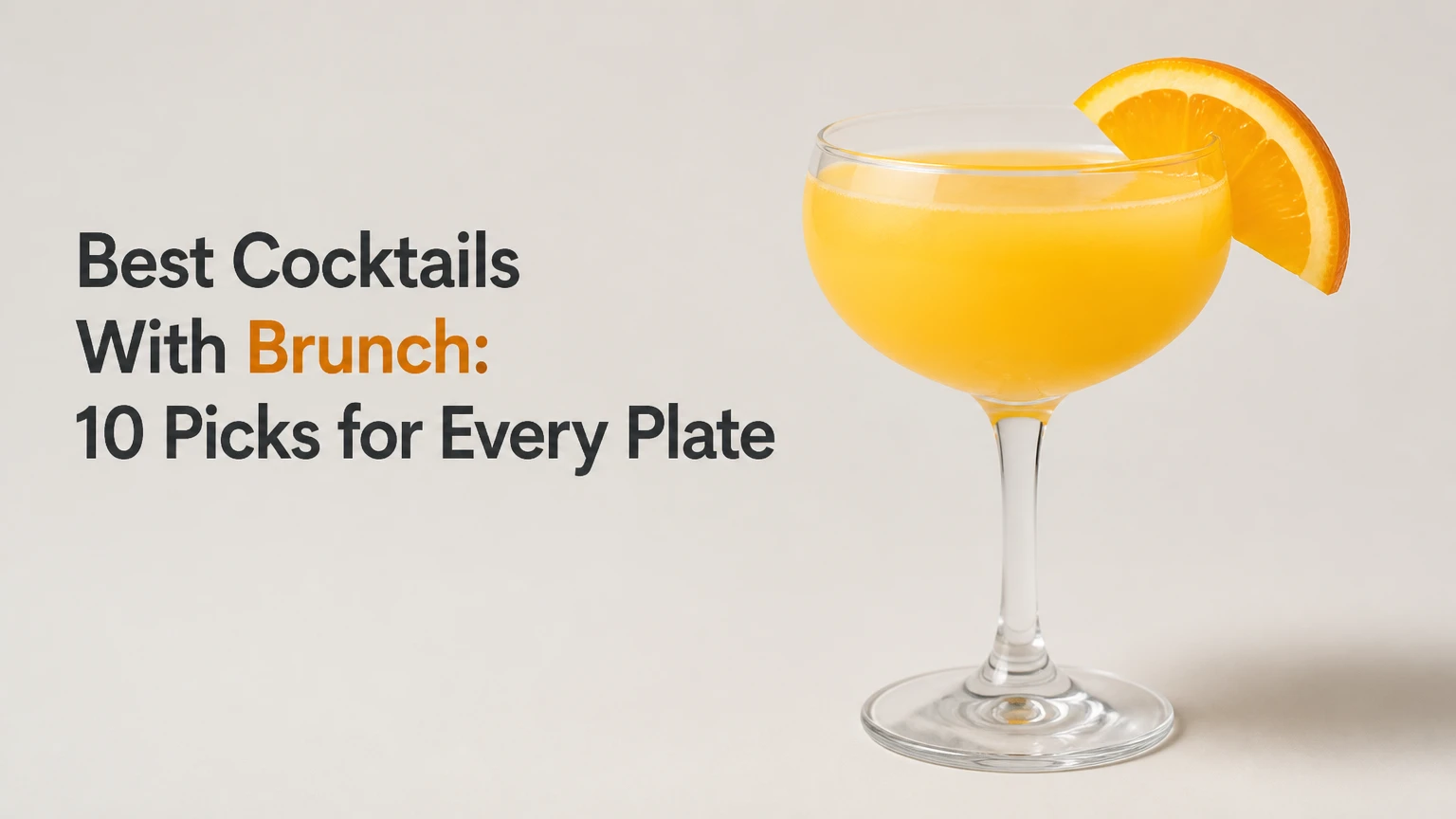
The best cocktails with brunch are the Mimosa for an adaptable all-around choice, the Bloody Mary for savory food, the Aperol Spritz for a lower-strength bitter drink, and the Salty Dog for sweet pastries. The right selection depends on the plate, desired sweetness, alcohol strength, preparation time, and whether the drink must be batched.
Key Facts at a Glance
A dry Mimosa pairs with both savory eggs and moderately sweet brunch dishes.
A Bloody Mary is best with salty, spicy, and protein-rich food, not syrup-heavy French toast.
An Aperol Spritz typically contains less alcohol per serving than a standard Martini or Espresso Martini.
Fresh citrus, properly chilled sparkling wine, and controlled dilution determine most brunch-drink quality.
Alcohol cannot cure a hangover, and drinking more alcohol can prolong recovery.
A Mimosa is easiest to batch, while a Bloody Mary is better mixed in advance and poured to order.
What Makes a Cocktail Work at Brunch?
A successful brunch cocktail has enough acidity, bitterness, carbonation, or savory structure to complement food without overwhelming a daytime meal. Most effective options fall into four groups: sparkling wine drinks, savory tomato drinks, fruit-and-spirit highballs, and coffee-based cocktails.
Brunch food creates specific pairing problems. Eggs, hollandaise, bacon, sausage, and fried potatoes bring fat and salt. Pancakes, waffles, French toast, and pastries bring sugar and starch. Seafood introduces salinity and delicate flavors. A drink should either contrast with those qualities or echo them in a controlled way.
Acidity creates a sharper sensory contrast, while carbonation makes a drink feel lighter. Neither one physically dissolves butter or removes fat from the tongue. The “palate cleansing” effect is a perception of freshness and lift, not a chemical scrubbing process.
Alcohol also requires restraint. The National Institute on Alcohol Abuse and Alcoholism states that “there is no cure for a hangover other than time.” Water, food, rest, and avoiding additional alcohol are safer recovery measures than a “hair of the dog” drink.
The Best Cocktails With Brunch
The Mimosa ranks first for versatility, preparation speed, and broad food compatibility. The Bloody Mary takes the savory category, while the Aperol Spritz is the better choice for guests who want a lighter, less sweet drink. The remaining picks solve narrower needs, including seafood, coffee, long sessions, and low budgets.
Our Top Picks
| Category | Cocktail | Best food match | Typical ABV | Typical home cost |
|---|---|---|---|---|
| Best overall | Mimosa | Eggs, quiche, fruit, pastries | 6%-10% | $2-$5 |
| Best savory | Bloody Mary | Bacon, eggs, potatoes | 8%-12% | $4-$8 |
| Best low-ABV | Aperol Spritz | Pizza-style brunch, quiche, olives | 8%-11% | $4-$7 |
| Best for pastries | Salty Dog | Waffles, French toast, croissants | 10%-14% | $3-$6 |
| Best for seafood | Bloody Caesar | Smoked salmon, oysters, crab eggs Benedict | 8%-12% | $5-$9 |
| Best budget | Screwdriver | Omelets, breakfast burritos | 10%-14% | $2-$4 |
| Best coffee drink | Irish Coffee | Scones, coffee cake, desserts | 10%-15% | $3-$6 |
| Best for long brunches | Pimm’s Cup | Salads, sandwiches, light plates | 5%-8% | $3-$6 |
1. Mimosa: Best Overall
A Mimosa is the best all-purpose brunch cocktail because dry sparkling wine, fresh orange juice, and carbonation accommodate both savory and lightly sweet dishes. Use two parts Brut Cava or dry Prosecco to one part orange juice for a less sugary, more food-friendly drink.
Key specifications
- Build: 4 ounces sparkling wine plus 2 ounces orange juice
- Glass: Chilled flute or small wineglass
- Temperature: About 4-6°C
- Time: 1 minute per drink
- Typical home cost: $2-$5
Pour the wine first, then add the juice slowly to preserve bubbles. Fresh juice adds aroma, but very pulpy juice can create a heavy texture, so strain it when serving a large group. Cava often offers more savory dryness than inexpensive Prosecco, while Champagne adds complexity at a higher cost.
Drawback: A Mimosa becomes cloying when made with sweet sparkling wine and a high juice ratio. It also loses carbonation quickly, which makes it a poor choice for pre-mixing more than 20-30 minutes before service.
Choose this if: You need one drink for a mixed menu.
Skip it if: Your guests dislike orange juice or want a fully dry cocktail.
2. Bloody Mary: Best Savory Cocktail
The Bloody Mary is the best cocktail for salty, spicy brunch plates because tomato juice, lemon, Worcestershire sauce, horseradish, and hot sauce create a liquid savory appetizer. Vodka keeps the classic version neutral, allowing spice, acidity, and garnish to control the profile.
Key specifications
- Build: 2 ounces vodka, 4 ounces tomato juice, 1/2 ounce lemon juice
- Seasoning: 2 dashes Worcestershire, hot sauce, pepper, and horseradish
- Glass: 10-12 ounce highball over ice
- Time: 4-6 minutes
- Typical home cost: $4-$8
The Bloody Mary works with eggs Benedict, breakfast sandwiches, bacon, sausage, and roasted potatoes. Its thick texture and savory seasoning fight against pancakes and syrup, where a bright citrus drink performs better.
A practical bartender’s rule is to season the tomato mixture before adding ice. Cold suppresses salt and spice perception, so a batch that tastes perfectly seasoned at room temperature may seem muted once chilled.
Drawback: Large garnishes can turn the cocktail into an expensive snack and create awkward service. Bottled tomato juice also varies widely in salt content, so taste before adding celery salt.
Choose this if: Your brunch menu is savory and guests enjoy customization.
Skip it if: You are serving mostly pastries, fruit, or delicate seafood.
3. Aperol Spritz: Best Lower-Strength Bitter Drink
The Aperol Spritz is the best choice for guests who want a bright, bitter, sparkling drink with less intensity than a spirit-forward cocktail. The standard build is three parts Prosecco, two parts Aperol, and one part soda water, served over ice.
Key specifications
- Build: 3 ounces Prosecco, 2 ounces Aperol, 1 ounce soda
- Glass: 10-12 ounce wineglass
- Temperature: About 1-3°C over ice
- Time: 2 minutes
- Typical home cost: $4-$7
Aperol contributes orange, rhubarb, and herbal bitterness, while soda reduces concentration and adds lift. The drink pairs with quiche, olives, fried appetizers, arugula salads, and salty snacks. It is less compatible with very sweet brunch because its bitterness can amplify an already discordant flavor contrast.
The lower ABV comes from dilution and the liqueur’s moderate strength, not from a special digestive effect. Alcohol may feel easier to sip in a Spritz, but it still contributes to total alcohol intake.
Drawback: Bitterness divides guests. A first-time drinker may prefer a Mimosa or Bellini, especially if the meal includes syrup or fruit preserves.
Choose this if: You want an effervescent drink with controlled sweetness.
Skip it if: Your guests prefer juice-forward or dessert-like cocktails.
4. Salty Dog: Best for Pastries and French Toast
The Salty Dog combines gin or vodka with grapefruit juice and a salted rim, making it a strong pairing for waffles, French toast, croissants, and other sweet brunch foods. Grapefruit’s bitterness and acidity counter sugar more effectively than additional orange juice.
Key specifications
- Build: 2 ounces gin or vodka, 4 ounces grapefruit juice
- Rim: Fine salt on half or all of the rim
- Glass: 10-12 ounce Collins glass over ice
- Time: 3 minutes
- Typical home cost: $3-$6
Gin gives the drink herbal structure, while vodka produces a cleaner and softer result. Rub the rim with grapefruit rather than soaking it, because excess juice causes salt to slide into the drink and over-season the first few sips.
Fresh grapefruit juice may taste tart, bitter, or floral depending on the variety. Ruby grapefruit generally supplies a rounder flavor than white grapefruit, but both can work when the brunch dish contains maple syrup or powdered sugar.
Drawback: Grapefruit can interact with some medications, including certain statins, calcium-channel blockers, and immunosuppressants. Guests taking medication should check the specific label or ask a pharmacist before drinking grapefruit cocktails.
Choose this if: The menu leans sweet and the guest enjoys bitterness.
Skip it if: Medication restrictions or grapefruit intolerance are concerns.
5. Bloody Caesar: Best for Seafood Brunch
The Bloody Caesar is the best brunch cocktail for seafood because Clamato adds a briny, savory character that matches smoked salmon, crab, shrimp, oysters, and shellfish. The drink follows a Bloody Mary structure but uses clam-and-tomato juice instead of plain tomato juice.
Key specifications
- Build: 2 ounces vodka, 4 ounces Clamato, 1/2 ounce lime juice
- Seasoning: Worcestershire, hot sauce, celery salt, and pepper
- Glass: 10-12 ounce highball over ice
- Time: 4-6 minutes
- Typical home cost: $5-$9
A lime-based Caesar usually tastes sharper and more saline than a lemon-based Bloody Mary. The clam broth makes it more savory, so a small amount of horseradish can add heat without making the drink taste medicinal.
Drawback: Clamato contains seafood ingredients and often substantial sodium, which excludes people with shellfish allergies and may matter for guests limiting salt. Confirm the label before serving to a mixed group.
Choose this if: Seafood is central to the menu.
Skip it if: Guests need vegetarian, vegan, or low-sodium drinks.
6. Bellini: Best for a Soft Fruit Profile
The Bellini is the best sparkling cocktail for guests who prefer peach, floral aromas, and a softer fruit profile than orange juice. The classic formula uses white peach purée and Prosecco, with enough sparkling wine to keep the drink fresh rather than smoothie-like.
Key specifications
- Build: 2 ounces white peach purée, 4 ounces Prosecco
- Glass: Flute or small wineglass
- Temperature: 4-6°C
- Time: 3 minutes with prepared purée
- Typical home cost: $3-$6
Use chilled purée and add the Prosecco slowly. A thick purée can trap bubbles and make the drink feel dense, so blend it smoothly and strain fibrous fruit before service.
The Bellini pairs with ricotta pancakes, fruit salad, prosciutto, and mild cheeses. Its fruit sweetness can compete with maple syrup, so reduce the purée to 1 ounce when the meal already contains jam or syrup.
Drawback: Fresh white peaches are seasonal, and canned peach purée can taste noticeably sweeter and flatter. The drink also has less broad savory compatibility than a dry Mimosa.
Choose this if: Guests want a gentle, peach-led sparkling drink.
Skip it if: You need a dry cocktail for rich or salty food.
7. Screwdriver: Best Budget Option
The Screwdriver is the best inexpensive brunch cocktail because vodka and orange juice require no specialized equipment, glassware, or sparkling wine. A typical ratio is 2 ounces vodka to 4 ounces orange juice over ice.
Key specifications
- Build: 2 ounces vodka, 4 ounces orange juice
- Glass: 10-12 ounce highball
- Time: 1 minute
- Typical home cost: $2-$4
- Typical strength: 10%-14% ABV before additional ice dilution
The Screwdriver works with omelets, breakfast burritos, hash browns, and spicy sausage. Fresh juice improves the drink, but a refrigerated premium juice is practical when serving many guests.
Drawback: Without sparkling wine, the drink feels heavier and flatter than a Mimosa. Excessive juice also raises sweetness and total beverage volume without improving balance.
Choose this if: Cost, simplicity, and speed matter most.
Skip it if: You want bubbles, complexity, or a restaurant-style presentation.
8. Irish Coffee: Best Coffee-Based Choice
Irish Coffee is the best hot brunch cocktail for cool weather and dessert-oriented meals because coffee, Irish whiskey, sugar, and lightly whipped cream create a warm, bitter-sweet contrast. It is more appropriate after the savory course than alongside eggs or seafood.
Key specifications
- Build: 1 1/2 ounces Irish whiskey, 4 ounces hot coffee, 1-2 teaspoons sugar
- Topping: 1 ounce lightly whipped cream
- Glass: 6-8 ounce heatproof glass
- Time: 5 minutes
- Typical home cost: $3-$6
Dissolve sugar in hot coffee before adding whiskey, then float cream over the back of a spoon. The cream should remain distinct enough to sip the coffee through it rather than dissolve immediately.
Drawback: Hot coffee and alcohol can encourage fast consumption while masking alcohol’s flavor. Irish Coffee also clashes with delicate dishes and adds a second stimulant source for guests who already drink substantial caffeine.
Choose this if: Brunch includes scones, coffee cake, or a later dessert course.
Skip it if: The meal is hot, spicy, seafood-focused, or served in warm weather.
9. Pimm’s Cup: Best for a Long, Light Brunch
The Pimm’s Cup is a useful long-brunch option because Pimm’s No. 1, ginger ale or lemonade, cucumber, and fruit create a lower-strength, tall drink. A typical serving contains about 1 1/2 ounces of the liqueur and 4-5 ounces of mixer.
Key specifications
- Build: 1 1/2 ounces Pimm’s No. 1, 4 ounces lemonade or ginger ale
- Garnish: Cucumber, strawberry, orange, or mint
- Glass: 10-12 ounce highball
- Time: 3 minutes
- Typical home cost: $3-$6
The drink fits salads, sandwiches, grilled vegetables, and lighter buffet food. Its fruit and spice notes make it more interesting than a simple highball without reaching Martini strength.
Drawback: Lemonade and ginger ale can make the drink sweeter than expected. Use half soda water when the meal includes fruit, pastries, or sweet sauces.
Choose this if: Guests will sip over several hours with food.
Skip it if: You want a dry, spirit-forward cocktail.
10. Red Snapper: Best Gin-Based Savory Option
The Red Snapper is a gin-based Bloody Mary variation that adds juniper, citrus peel, and botanical bitterness to tomato juice. It suits guests who find vodka-based savory drinks too neutral.
Key specifications
- Build: 2 ounces London dry gin, 4 ounces tomato juice, 1/2 ounce lemon juice
- Seasoning: Worcestershire, horseradish, hot sauce, salt, and pepper
- Glass: 10-12 ounce highball over ice
- Time: 4-6 minutes
- Typical home cost: $5-$10
A London dry gin with moderate juniper gives the cleanest contrast. Floral or heavily contemporary gins can make tomato juice taste medicinal, particularly when combined with celery salt and horseradish.
Drawback: Botanical intensity narrows the audience. A neutral vodka Bloody Mary remains safer for group service.
Choose this if: You enjoy gin and savory flavors.
Skip it if: You are serving guests unfamiliar with gin.
Which Brunch Cocktail Matches Your Plate?
Food pairing works best when the cocktail either contrasts with the dominant taste or reinforces one supporting flavor. A sweet dish generally benefits from bitterness or acidity, while a salty dish can handle fruit, bubbles, or savory spice.
| Brunch dish | Best cocktail | Why it works | Avoid |
|---|---|---|---|
| Eggs Benedict | Mimosa | Citrus and bubbles contrast with hollandaise | Irish Coffee |
| Bacon and potatoes | Bloody Mary | Tomato, spice, and salt match savory weight | Bellini |
| Waffles with maple syrup | Salty Dog | Grapefruit bitterness reduces perceived sweetness | Screwdriver |
| Smoked salmon bagel | Bloody Caesar | Briny tomato profile matches seafood and capers | Bellini |
| Fruit and yogurt | Aperol Spritz | Bitterness offsets fruit sweetness | Sweet Mimosa |
| Ricotta pancakes | Bellini | Peach complements mild dairy and fruit | Bloody Mary |
| Breakfast burrito | Screwdriver | Orange refreshes spice and eggs | Irish Coffee |
| Croissants and jam | Aperol Spritz | Dry bitterness prevents sugar overload | Bellini with sweet purée |
How Do the Main Options Compare?
The Mimosa wins for versatility, the Bloody Mary wins for savory food, and the Aperol Spritz wins for lower-strength sipping. “Best” changes when the decision includes sugar, preparation time, batching, or guest familiarity.
| Cocktail | Primary base | Typical serving | Approximate ABV | Sweetness | Batch suitability |
|---|---|---|---|---|---|
| Mimosa | Sparkling wine and orange juice | 6 oz | 6%-10% | Medium | Add bubbles to order |
| Bloody Mary | Vodka and tomato juice | 10 oz | 8%-12% | Low | Batch base for 24 hours |
| Aperol Spritz | Aperol and Prosecco | 6 oz | 8%-11% | Medium-low | Build per glass |
| Salty Dog | Gin or vodka and grapefruit | 6 oz | 10%-14% | Low-medium | Juice batch, spirit to order |
| Bellini | Prosecco and peach purée | 6 oz | 6%-10% | Medium-high | Add wine to order |
| Screwdriver | Vodka and orange juice | 6 oz | 10%-14% | Medium-high | Batch for up to 2 hours |
| Irish Coffee | Whiskey and coffee | 6 oz | 10%-15% | Medium | Make individually |
| Pimm’s Cup | Pimm’s and mixer | 6 oz | 5%-8% | Medium | Add carbonated mixer to order |
Typical restaurant prices in the United States range from about $9-$14 for a Mimosa, $11-$16 for a Bloody Mary, $12-$17 for an Aperol Spritz, and $14-$19 for an Espresso Martini. Home costs vary with brand, local tax, bottle size, and garnish, so the table’s ranges assume standard supermarket ingredients rather than premium Champagne or specialty syrups.
What Is the Best Low-ABV Brunch Cocktail?
The Pimm’s Cup is the lightest pick in this group at a typical 5%-8% ABV, while a properly diluted Aperol Spritz usually falls near 8%-11%. Lower ABV does not mean alcohol-free, and a large glass or multiple servings can still produce substantial intake.
An Espresso Martini usually contains 15%-20% ABV because vodka and coffee liqueur provide most of the liquid alcohol. Its small coupe serving can make the drink look modest, but the alcohol concentration is higher than a tall Pimm’s Cup or a diluted Spritz.
For a three-hour brunch, serve one drink with food, alternate with water, and avoid treating low ABV as permission for unlimited refills. The CDC defines moderate drinking for adults who choose to drink as up to two drinks in a day for men and up to one for women, although individual risks vary and some people should avoid alcohol entirely.
How Do You Make a Better Bloody Mary?
A balanced Bloody Mary requires measured seasoning, cold ingredients, large ice, and rolling rather than aggressive shaking. For one drink, combine 2 ounces vodka, 4 ounces tomato juice, 1/2 ounce lemon juice, 2 dashes Worcestershire, 1 teaspoon horseradish, hot sauce, and black pepper.
- Prepare the rim. Rub half the rim with lemon and apply celery salt. A half rim gives guests control over salt.
- Mix the liquid. Stir the vodka, tomato juice, lemon, Worcestershire, horseradish, and hot sauce in a mixing glass.
- Add large ice. Use four or five solid cubes instead of crushed ice to limit rapid dilution.
- Roll the drink. Pour the mixture between two tins or glasses four times. Rolling combines ingredients without creating a foamy tomato texture.
- Pour and garnish. Transfer the drink to the prepared glass and use one celery stalk, one lemon wedge, or a small olive skewer.
You will know the drink is ready when the tomato mixture is cold, integrated, and still thick enough to coat the glass lightly. Shaking is not automatically disastrous, but five hard shakes can introduce foam and more dilution than rolling.
For a group, mix the tomato base without vodka and refrigerate it for up to 24 hours. Add vodka per serving, because alcohol can change the batch’s perceived heat and makes precise adjustment harder.
What Mistakes Ruin Brunch Cocktails?
The most common failures are excess sweetness, warm ingredients, uncontrolled dilution, and making carbonated drinks too early. Each problem has a practical correction that does not require expensive bar equipment.
| Failure mode | Result | Correction | Prevention time |
|---|---|---|---|
| Sweet sparkling wine with sweet juice | Cloying Mimosa | Use Brut Cava and a 2:1 wine-to-juice ratio | Chill 2 hours |
| Warm sparkling wine | Flat, broad flavor | Chill wine to 4-6°C | Refrigerate overnight |
| Bottled old citrus juice | Dull aroma and harsh acidity | Squeeze within 4 hours of service | Store sealed and cold |
| Crushed ice in tomato drinks | Watery Bloody Mary | Use large cubes and roll | Prepare 5 minutes before serving |
| Premixed carbonation | Flat Spritz or Bellini | Add bubbles per glass | Build within 2 minutes |
| Overloaded garnish | Unbalanced salt and difficult service | Limit to one or two garnishes | Prep 30 minutes ahead |
A drink should not be judged by garnish size. A celery stalk, citrus wheel, and olive skewer cannot repair an oversweet or diluted base.
What Should You Serve at a Brunch Party?
For eight guests, buy two 750-milliliter bottles of sparkling wine, 1.5 liters of orange juice, and enough ice for roughly 2-3 pounds per person if you are serving Mimosas as the main cocktail. Two bottles provide about twelve 4-ounce wine pours, leaving room for juice and reasonable variation in serving size.
A mixed menu needs only two cocktail families. Serve one sparkling option, such as a Mimosa or Aperol Spritz, and one savory option, such as a Bloody Mary or Caesar. More than three alcoholic choices increase preparation, garnish waste, and the chance that ingredients sit at unsafe temperatures.
Batch the still components, not the bubbles. Keep juices and tomato mix refrigerated, set out measured spirits, and open sparkling wine only when guests are ready. Provide chilled water and a nonalcoholic drink that is as intentional as the alcoholic options.
What Are the Best Nonalcoholic Alternatives?
The best nonalcoholic brunch alternatives are a Virgin Mary for savory food, a citrus spritz for pastries, and a ginger-cucumber cooler for long meals. These drinks preserve acidity, bitterness, spice, or carbonation without adding alcohol.
| Alternative | Build | Food match | Preparation time |
|---|---|---|---|
| Virgin Mary | Tomato juice, lemon, horseradish, hot sauce | Eggs and potatoes | 4 minutes |
| Citrus spritz | Orange, lemon, soda, bitters-free syrup | Pancakes and fruit | 2 minutes |
| Ginger-cucumber cooler | Cucumber, lime, ginger beer, soda | Salads and sandwiches | 4 minutes |
| Peach soda | Peach purée, lemon, soda | Ricotta pancakes | 3 minutes |
Do not assume every bitters product is alcohol-free. Check the label when serving children, pregnant guests, people avoiding alcohol, or anyone taking medication that conflicts with alcohol.
Which Should You Pick?
Choose the Mimosa for a mixed menu
The Mimosa is the safest default when guests will eat eggs, quiche, fruit, and pastries from the same buffet. Choose Brut Cava when dryness and value matter more than prestige.
Choose the Bloody Mary for a savory menu
The Bloody Mary fits bacon, sausage, potatoes, spicy eggs, and breakfast sandwiches. Keep the spice moderate when serving a group, then offer hot sauce and horseradish separately.
Choose the Aperol Spritz for slower sipping
The Aperol Spritz provides bubbles and bitterness without the concentration of an Espresso Martini. It suits guests who want a less sweet drink and a moderate pace.
Choose the Salty Dog for sweet food
The Salty Dog is the strongest recommendation for waffles, French toast, and maple syrup. Use vodka for a clean profile or gin for herbal complexity.
Choose the Pimm’s Cup for a long gathering
The Pimm’s Cup works when brunch extends into the afternoon and the menu remains light. Reduce the lemonade with soda water to control sweetness.
Frequently Asked Questions
Are mimosas better with Champagne or Prosecco?
Mimosas work with Champagne, Prosecco, Cava, or domestic sparkling wine, but Champagne is rarely necessary because orange juice covers some of its finer aromas. Brut Cava usually gives the best value and a dry, food-friendly profile. Choose a sparkling wine labeled Brut rather than Demi-Sec or Doux when using sweet juice.
What is the difference between a Bloody Mary and a Bloody Caesar?
A Bloody Mary uses tomato juice, while a Bloody Caesar uses Clamato, a tomato-and-clam juice blend. The Caesar tastes saltier and more marine, so it pairs especially well with smoked salmon, crab, shrimp, and oysters. Clamato also makes the Caesar unsuitable for guests with shellfish allergies or seafood restrictions.
Can you make brunch cocktails ahead of time?
Still cocktails can usually be prepared ahead, but carbonated drinks should be assembled close to service. Refrigerate Bloody Mary base, citrus juice, and peach purée, then add spirits or sparkling mixers as needed. Prepare Mimosa and Spritz components no more than 20-30 minutes ahead to preserve carbonation.
Is an Espresso Martini suitable for brunch?
An Espresso Martini can suit brunch when served with dessert or after the main meal, but it is stronger and more stimulating than most daytime cocktails. A typical 4-5 ounce serving may contain 15%-20% ABV. It is a poor match for delicate seafood and a risky choice for guests sensitive to caffeine.
Does a Bloody Mary cure a hangover?
A Bloody Mary does not cure a hangover. Alcohol can temporarily change how symptoms feel while delaying recovery, and tomato juice cannot reliably replace the water, sodium, potassium, and other nutrients affected by drinking. Hydration, food, sleep, and time are safer responses. People with severe symptoms should seek medical advice.
What is the best cocktail for brunch if you do not like sweet drinks?
Choose a Bloody Mary, Red Snapper, Aperol Spritz, or a Salty Dog made with unsweetened grapefruit juice. A Brut Cava Mimosa with a low juice ratio also works. Avoid Bellinis, sweet Screwdrivers, and cocktails made with lemonade or syrup when the goal is a dry finish.
The Bottom Line
The best cocktails with brunch are the Mimosa for broad compatibility, the Bloody Mary for savory food, the Aperol Spritz for lower-strength bitterness, and the Salty Dog for sweet pastries. Match the drink to the plate, use dry sparkling wine and fresh citrus, control ice dilution, and remember that no alcoholic cocktail treats a hangover.