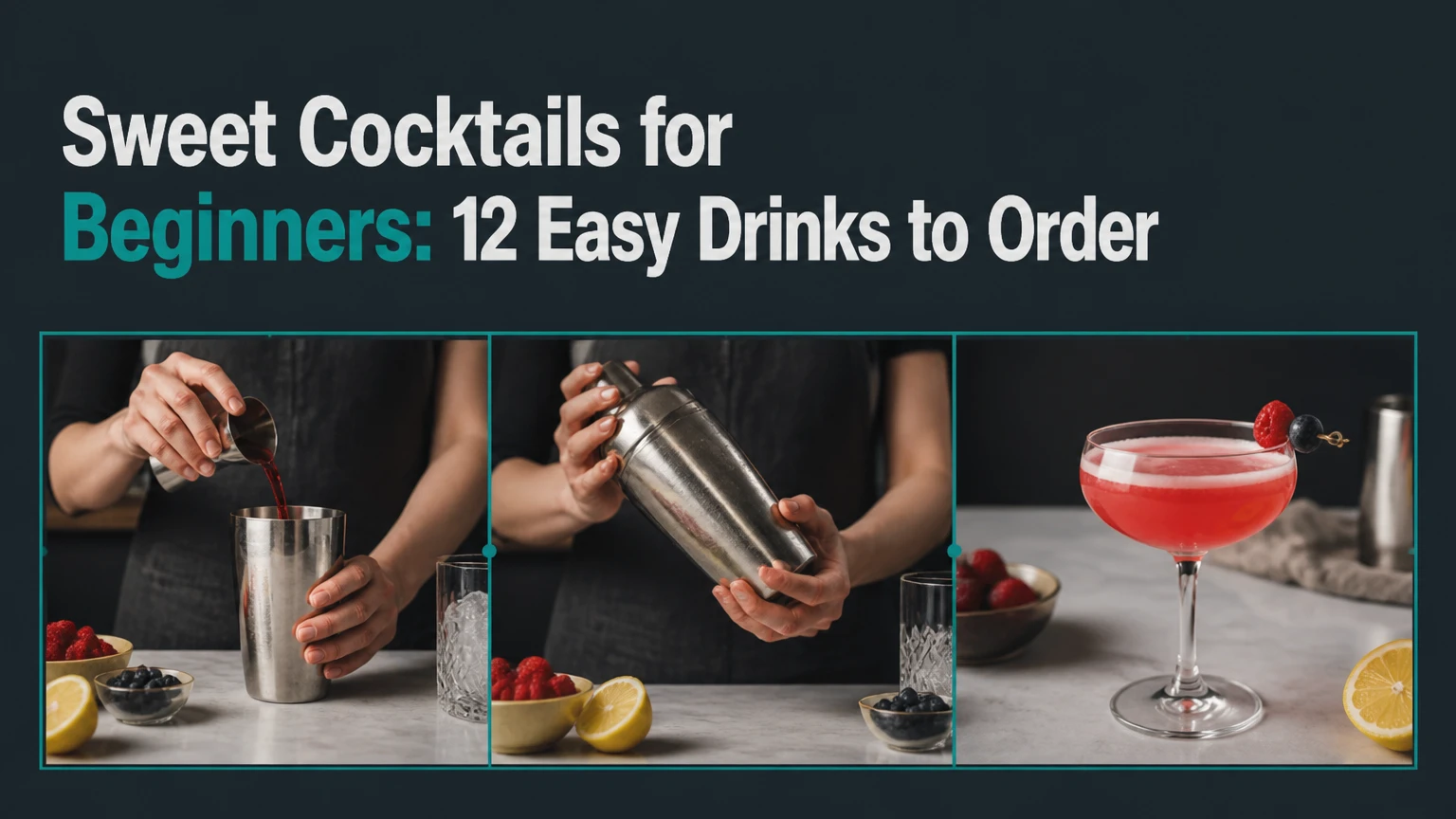
Sweet cocktails for beginners are mixed drinks that use fruit juice, sugar, sweet liqueurs, cream, or flavored soda to soften a spirit’s sharpness. The best first choice depends on your palate: a Piña Colada hides rum most effectively, a Mimosa is lighter for brunch, and an Amaretto Sour offers sweetness with noticeable citrus balance.
Key Facts at a Glance
A sweet cocktail can still contain 1.5-2 ounces of spirits and may equal one or more standard drinks.
Fruit juice, liqueurs, cream, and soda create different kinds of sweetness, from fresh and acidic to rich and dessert-like.
Fresh lemon or lime juice prevents many sweet cocktails from tasting syrupy.
A typical shaken cocktail takes 2-5 minutes and costs about $1.50-$3.50 to make at home after buying the bottles.
Sweet cocktails often taste weaker than they are, so slow pacing matters more than perceived burn.
A balanced beginner drink usually contains spirit, sweetener, acidity, water from ice, and a measured serving size.
What Makes a Cocktail Sweet?
A sweet cocktail contains enough sugar or sweet-tasting ingredients to make fruit, dessert, candy, or soda flavors more prominent than alcohol, bitterness, or acidity. Sweetness may come from simple syrup, fruit juice, coconut cream, coffee liqueur, Irish cream, peach schnapps, ginger beer, or sparkling wine.
Sweetness does not mean low alcohol. A Vodka Cranberry with 1.5 ounces of vodka can contain roughly the same alcohol as a standard pour of wine, even though cranberry juice makes the drink taste easy to consume. A creamy Mudslide may feel gentle while carrying vodka plus two liqueurs.
The classic cocktail structure is spirit, sugar, water, and sometimes bitters or acid. David Embury described the foundation in The Fine Art of Mixing Drinks (1948) as “a combination of three things: spirit, sugar, and water.” Modern fruit cocktails add acidity because lime, lemon, or tart juice keeps sugar from becoming heavy.
How Sweetness, Acidity, and Dilution Work
Sugar reduces the perception of harshness, but sugar does not physically coat the tongue and block alcohol receptors. Ethanol creates heat through sensory nerve stimulation, while sweetness, fruit aroma, cream, dilution, and cold temperature change how the brain interprets that sensation.
Ice adds water as it melts, lowering the drink’s alcohol concentration and integrating the ingredients. Shaking a citrus cocktail for 10-15 seconds commonly produces both chilling and useful dilution. A drink with too little ice warms quickly and can taste concentrated, while excessive syrup produces a sticky finish.
The familiar 2:1:1 ratio, two parts spirit to one part sour and one part sweet, is a starting point rather than a law. Beginner-friendly drinks often use 1.5-2 parts spirit, one part acid or juice, and 0.5-1 part sweetener, with liqueurs replacing some of the base spirit.
Which Sweet Cocktails Are Best for Beginners?
The best first sweet cocktail for someone who dislikes alcohol is a Piña Colada, while a Mimosa suits a lighter brunch drinker and an Amaretto Sour suits someone who wants a clear cocktail identity without whiskey’s bite. A Strawberry Daiquiri offers the most useful introduction to balancing fruit, citrus, sugar, rum, and dilution.
Best First Choices by Palate
| Drink | Main flavors | Typical alcohol base | Beginner suitability |
|---|---|---|---|
| Piña Colada | Pineapple, coconut, vanilla | 1.5-2 oz white rum | Highest masking of rum |
| Strawberry Daiquiri | Strawberry, lime, cane sugar | 2 oz white rum | Fresh, tart, adjustable |
| Mimosa | Orange, bread, light bubbles | 3-4 oz sparkling wine | Lower-intensity brunch option |
| White Russian | Coffee, cream, vanilla | 1.5 oz vodka plus coffee liqueur | Soft, rich, dessert-like |
| Moscow Mule | Ginger, lime, mild sweetness | 1.5-2 oz vodka | Fizzy with a spicy finish |
| Amaretto Sour | Almond, lemon, stone fruit | 1.5-2 oz amaretto | Sweet with noticeable acidity |
| Cosmopolitan | Cranberry, orange, lime | 1.5 oz vodka plus triple sec | Tart, polished, moderately strong |
A useful ordering rule is to choose the flavor family before the spirit. Ask for tropical, creamy, fizzy, citrusy, or berry-forward, then choose a drink within that group.
Which Drinks Taste Least Like Alcohol?
Piña Coladas, Mudslides, and frozen Strawberry Daiquiris usually disguise alcohol most effectively because fruit, coconut, cream, sugar, and dilution dominate the palate. Those same characteristics make them easy to drink quickly, so low perceived burn should never be treated as low strength.
A Moscow Mule masks vodka less completely because ginger beer and lime preserve a sharp, spicy edge. An Aperol Spritz has modest alcohol intensity but includes bitterness, while a Cosmopolitan tastes tart and clean rather than creamy or heavy.
How Do the Main Sweet Cocktail Types Compare?
Fruit-forward cocktails provide the strongest juice and berry flavors, creamy drinks deliver the richest texture, fizzy cocktails feel lightest, and sweet classics retain more citrus or spirit character. No category is automatically weaker because final alcohol content depends on the spirit measure, liqueur volume, and mixer quantity.
| Category | Representative drinks | Typical texture | Typical preparation | Main drawback |
|---|---|---|---|---|
| Fruit-forward | Piña Colada, Daiquiri, Sex on the Beach | Juicy or frozen | 3-6 minutes | Can encourage fast drinking |
| Creamy dessert | White Russian, Mudslide, Grasshopper | Thick and smooth | 2-4 minutes | Heavy and perishable |
| Fizzy | Mimosa, Mule, Aperol Spritz | Light and carbonated | 1-3 minutes | Carbonation can hide alcohol |
| Sweet classics | Amaretto Sour, Cosmopolitan | Shaken and bright | 3-5 minutes | More acidity or spirit flavor |
| Lower-alcohol spritz | Aperol Spritz, wine spritzer | Bubbly and diluted | 2-3 minutes | Bitterness may surprise beginners |
Fruit-Forward Cocktails
A Piña Colada combines rum, pineapple juice, and coconut cream, usually blended or shaken with ice. A Strawberry Daiquiri combines rum, lime, and strawberry, so its sweetness can be increased without removing the refreshing acidity.
Sex on the Beach combines vodka, peach schnapps, orange juice, and cranberry juice. The drink is approachable but often sweeter and larger than a classic shaken cocktail. A Vodka Cranberry with lime is a simpler alternative when you want berry flavor without peach schnapps.
Creamy and Dessert Cocktails
A White Russian combines vodka, coffee liqueur, and cream over ice. A Mudslide adds Irish cream and often chocolate, making it sweeter and heavier than a White Russian. A Grasshopper uses crème de menthe, crème de cacao, and cream for a mint-chocolate profile.
Cream cocktails are poor choices for hot outdoor events, long commutes, or anyone avoiding dairy. They are better served cold, consumed soon after preparation, and kept away from acidic fruit juice, which can destabilize dairy.
Fizzy and Effervescent Cocktails
A Mimosa uses sparkling wine and orange juice, commonly in a roughly 1:1 ratio, although a drier version may use two parts wine to one part juice. An Aperol Spritz typically uses three parts Prosecco, two parts Aperol, and one part soda, following the widely used 3:2:1 structure.
A Moscow Mule combines vodka, lime juice, and ginger beer. Ginger beer is usually sweeter and more intensely spiced than ginger ale, so it contributes flavor as well as sugar. Add the carbonated mixer after shaking the noncarbonated ingredients to preserve the bubbles.
Sweet Twists on Classic Cocktails
An Amaretto Sour uses almond-flavored amaretto, lemon juice, and optional simple syrup. Because amaretto already contains sugar, start with less added syrup than a standard sour and adjust after tasting.
A Cosmopolitan combines vodka, triple sec, cranberry juice, and lime. It is less dessert-like than a Mudslide and more tart than a fruit punch, which makes it useful for beginners who want a sophisticated, clearly citrus-led drink.
How Strong Are Sweet Cocktails?
Sweet cocktails commonly range from about 5% to 20% alcohol by volume, but a full-strength shaken cocktail often contains 1.5-2 ounces of 40% spirit and can equal one or more U.S. standard drinks. The mixer changes concentration and taste, not the alcohol already poured into the glass.
The National Institute on Alcohol Abuse and Alcoholism defines one U.S. standard drink as 14 grams of pure alcohol, equivalent to 1.5 fluid ounces of 40% distilled spirits, 5 fluid ounces of 12% wine, or 12 fluid ounces of 5% beer. A large cocktail may exceed that reference amount.
| Drink style | Typical spirit or wine amount | Estimated ABV range | Typical U.S. standard drinks |
|---|---|---|---|
| Mimosa | 3-4 oz sparkling wine | 5-9% | 0.5-0.8 |
| Aperol Spritz | 3 oz Prosecco plus liqueur and soda | 8-11% | 0.8-1.0 |
| Moscow Mule | 1.5-2 oz vodka | 10-15% | 1.0-1.3 |
| Strawberry Daiquiri | 2 oz rum | 14-20% before dilution | 1.3 |
| White Russian | 1.5 oz vodka plus liqueur | 15-20% before dilution | 1.3-1.6 |
| Piña Colada | 1.5-2 oz rum | 10-16% before dilution | 1.0-1.3 |
These are typical estimates, not laboratory measurements. A bar may use a 2-ounce pour, a larger glass, a higher-proof liqueur, or less mixer, so ask for the spirit measure when strength matters.
How Much Do Sweet Cocktails Cost and How Long Do They Take?
A typical sweet cocktail takes 2-5 minutes to prepare and costs approximately $1.50-$3.50 at home after the initial bottle purchase. Typical bar prices are $10-$14 at a mid-range venue and $16-$22 at a high-end cocktail bar, with location, labor, and ingredients causing substantial variation.
| Setting | Typical price per drink | Preparation or service time | What changes the price |
|---|---|---|---|
| Home, bottled mixer | $1.50-$2.50 | 2-3 minutes | Juice quality and liqueur |
| Home, fresh fruit | $2.00-$3.50 | 4-6 minutes | Produce and garnish |
| Mid-range bar | $10-$14 | 3-8 minutes | Pour size and venue |
| Craft cocktail bar | $16-$22 | 5-12 minutes | House syrup, fresh garnish, labor |
| Brunch service | $8-$14 | 2-5 minutes | Sparkling wine and juice |
A home bar does not require specialized equipment. A shaker, jigger, strainer, ice, citrus press, and two or three versatile bottles can produce a Daiquiri, Mule, Amaretto Sour, and several highballs.
How Do You Make a Beginner Strawberry Daiquiri?
A shaken Strawberry Daiquiri takes about five minutes and requires rum, lime juice, strawberry sweetener, ice, and a chilled glass. The success factor is balance: measure the lime and sweetener separately, then adjust sweetness only after the drink is cold and diluted.
Before You Start
| Requirement | Beginner specification |
|---|---|
| Total time | 5 minutes |
| Difficulty | Easy |
| Home cost | $2.00-$3.50 per serving |
| Spirit | 2 oz white rum |
| Acid | 1 oz fresh lime juice |
| Sweetener | 0.5-0.75 oz strawberry syrup |
| Ice | 1-2 cups solid cubes |
| Tools | Shaker, jigger, strainer, coupe or small glass |
Step 1: Chill the Glass
Fill a coupe or rocks glass with ice and water while mixing. A cold serving glass keeps the drink chilled after straining, which matters because a Daiquiri contains no large serving ice in its traditional presentation.
You will know this step worked when the glass feels cold and develops condensation. The common mistake is skipping the chill, then leaving the finished cocktail warm while searching for a garnish.
Step 2: Measure the Ingredients
Add 2 ounces of white rum, 1 ounce of fresh lime juice, and 0.5-0.75 ounce of strawberry syrup to a shaker. For fresh fruit, muddle 3-4 ripe strawberries with 0.5 ounce of simple syrup before adding the rum and lime.
Use the lower syrup amount when the strawberries are ripe or the rum is naturally soft. Bottled sour mix is a poor substitute because its acidity, sweetness, and artificial flavor vary widely by brand.
Step 3: Add Solid Ice
Fill the shaker about three-quarters full with hard ice cubes. Large, intact cubes melt more slowly before shaking, while small wet cubes can over-dilute the drink and leave it thin.
The shaker should feel tightly packed rather than half empty. Insufficient ice is a frequent professional-kitchen failure because it creates warmer dilution and weaker texture, not stronger flavor.
Step 4: Shake for 10-15 Seconds
Shake vigorously for 10-15 seconds. The outside of a metal shaker should become very cold, and the drink should develop a pale, slightly frothy appearance if fresh strawberries are included.
Longer shaking does not automatically improve the drink. Stop when the shaker is frosted and the ice has made controlled dilution; excessive shaking can create a watery result with delicate fruit.
Step 5: Strain and Taste
Discard the ice water from the serving glass, then double-strain the Daiquiri into the chilled glass if muddled fruit leaves seeds or pulp. Taste before garnishing and add 0.25 ounce syrup only if the lime remains dominant.
The finished drink should taste cold, fruity, tart, and lightly boozy, with no syrup coating the tongue. Garnish with a strawberry or lime wheel, then serve immediately.
How Should You Choose a Sweet Cocktail by Occasion?
Choose a Mimosa or Bellini for brunch, a Moscow Mule or Vodka Cranberry for a casual gathering, a Piña Colada for tropical flavors, and a White Russian or Grasshopper after dinner. The setting determines whether carbonation, cream, glassware, or portability matters more than maximum sweetness.
| Situation | Recommended drink | Why it fits | Avoid when |
|---|---|---|---|
| Brunch | Mimosa | 3-4 oz sparkling wine with orange juice | You dislike bubbles |
| Spicy food | Mango Margarita or Mule | Fruit or ginger offsets heat | You need very low sugar |
| Outdoor summer event | Daiquiri or Paloma variation | Citrus and ice feel refreshing | Cream would warm quickly |
| Dinner date | Cosmopolitan | Tart citrus and neat presentation | You prefer tropical flavors |
| After-dinner dessert | White Russian | Coffee and cream replace dessert | You avoid dairy |
| Long social event | Spritz or wine spritzer | More mixer and lower intensity | You dislike bitterness |
| No dairy available | Amaretto Sour | Almond sweetness with lemon | You dislike nut-like flavors |
What Should You Order at a Bar?
Use a specific request: “A Strawberry Daiquiri, shaken, with fresh lime and moderately sweet,” or “A Moscow Mule with regular ginger beer and a measured 1.5-ounce vodka pour.” Bartenders can adjust sweetness and dilution more reliably when the request identifies the drink and the desired profile.
For less sweetness, ask for half syrup, extra lime, or soda water. For a lower-alcohol drink, ask for a spritz, wine-based cocktail, or half-pour rather than assuming a tall glass contains less spirit.
How Much Sugar and How Many Calories Do Sweet Cocktails Have?
Sweet cocktail sugar and calorie content varies widely, but a typical 8-ounce fruit cocktail may contain approximately 15-35 grams of sugar, while creamy dessert cocktails often reach 20-40 grams and 250-500 calories. These are practical estimates because recipes, brands, serving sizes, and garnishes differ.
Juice contributes natural sugar, liqueurs contribute added sugar, and cream contributes fat as well as calories. A diet mixer reduces sugar from soda but does not reduce the vodka, rum, or liqueur already in the glass.
Lower-sugar choices include a spirit with soda and lime, a dry sparkling-wine spritz, or a Vodka Cranberry with extra soda and a small cranberry pour. Those drinks are less sweet, not alcohol-free, and may taste sharper than a beginner expects.
What Are the Most Common Sweet Cocktail Mistakes?
The most common mistakes are using too little ice, adding sweetener before tasting, treating a tall glass as low alcohol, and mixing acidic juice with dairy. Each error has a specific correction, and most can be prevented by measuring ingredients and chilling the drink properly.
The Drink Tastes Syrupy
Add 0.25-0.5 ounce fresh lime or lemon juice, then shake or stir again with ice. A small splash of soda can also reduce perceived heaviness, but soda does not remove sugar and may make the cocktail taste flatter.
The Drink Still Burns
Confirm the pour first. If the cocktail contains 2 ounces of high-proof spirit, extra syrup only hides the heat; adding 0.5-1 ounce mixer, shaking with fresh ice, or choosing a lower-strength spritz is more effective.
The Drink Is Watery
Use fresh, solid ice and shake for a defined 10-15 seconds. Watery cocktails usually result from wet ice, an underfilled shaker, prolonged shaking, or leaving the drink over melting ice.
The Cream Cocktail Curdles
Do not combine cream with lemon, lime, pineapple, or other acidic fruit juice. Dairy can split when exposed to acid, so discard a curdled drink and rebuild with vodka, coffee liqueur, Irish cream, and fresh cream only.
The Cocktail Tastes Flat
Add acidity, bitterness, or carbonation rather than more sugar. A teaspoon of lime, a few dashes of bitters where appropriate, or a soda top can restore contrast without increasing sweetness.
What Are Good Alternatives to Sweet Cocktails?
Good alternatives include mocktails, alcohol-free spritzes, shandies, wine spritzers, and low-proof aperitif drinks. These options preserve fruit, citrus, ginger, or bubbles while reducing or eliminating the distilled-spirit component.
A zero-proof ginger-lime highball uses ginger beer, lime, and soda. An alcohol-free Mimosa alternative uses orange juice with alcohol-free sparkling wine. A shandy combines beer with lemonade, although its alcohol level varies by product and serving size.
A lower-proof Aperol Spritz is not alcohol-free and still contains wine and liqueur. Anyone avoiding alcohol for pregnancy, medication interactions, recovery, religious reasons, or driving should choose a genuinely alcohol-free beverage and confirm the product label.
How Should Beginners Drink Sweet Cocktails Responsibly?
Beginners should treat sweet cocktails as alcoholic drinks even when juice, cream, or soda removes the burn. Sip slowly, eat beforehand, alternate with water, avoid combining alcohol with sedating medication, and never drive after drinking.
The Centers for Disease Control and Prevention advises adults who drink to follow moderate-drinking limits, while noting that some people should avoid alcohol completely. Sweetness cannot predict impairment, and coffee, cold air, or a shower cannot quickly restore safe driving ability.
A practical rule is to wait at least 30-60 minutes before deciding whether to order another cocktail, because absorption and serving size vary. Ask the bartender about the pour, especially with frozen drinks and large-format cocktails.
FAQ About Sweet Cocktails for Beginners
What is the easiest sweet cocktail to make at home?
A Vodka Cranberry is the easiest because it needs vodka, cranberry juice, ice, and optional lime, with no shaker required. A Mimosa is similarly simple, while a Strawberry Daiquiri teaches more technique because fresh citrus, sweetener, ice, and shaking must be balanced.
Which sweet cocktail is best for someone who hates vodka?
A Piña Colada is usually better because white rum blends with pineapple and coconut, while a Strawberry Daiquiri offers rum with strong lime and berry flavor. A Mudslide is another option if coffee, chocolate, and cream appeal more than tropical fruit.
Can I make sweet cocktails without simple syrup?
Yes. Fruit juice, agave nectar, honey syrup, grenadine, maple syrup, flavored liqueurs, and ripe muddled fruit can provide sweetness. Honey and maple syrup mix more evenly when diluted, while granulated sugar dissolves poorly in a cold drink unless shaken thoroughly.
Is ginger ale interchangeable with ginger beer?
Ginger ale can replace ginger beer, but the result is usually sweeter, lighter, and less spicy. A Moscow Mule made with ginger ale lacks the assertive ginger flavor associated with the original style, so add extra lime or a small amount of ginger syrup if needed.
What glass should a beginner use?
Use a rocks glass for a White Russian or Vodka Cranberry, a highball or Mule mug for a Moscow Mule, a coupe for a strained Daiquiri, and a flute or wine glass for a Mimosa. Glass shape changes temperature and aroma, but it does not change alcohol content.
Can sweet cocktails be made nonalcoholic?
Sweet cocktails can be recreated as mocktails by replacing rum, vodka, or liqueurs with soda, tea, juice, alcohol-free spirits, or flavored syrups. Remove the alcohol entirely for a zero-proof drink, because adding extra mixer to a standard cocktail only dilutes the flavor and strength.
The Bottom Line
Sweet cocktails for beginners work best when the drink matches the drinker’s preferred flavor and the alcohol measure remains visible in the decision. Choose a Piña Colada for maximum tropical masking, a Strawberry Daiquiri for balanced fruit and lime, a Mimosa for a lighter brunch option, or an Amaretto Sour for sweet citrus without cream. Measure the spirit, use plenty of ice, adjust with fresh acidity, and pace the drink slowly.