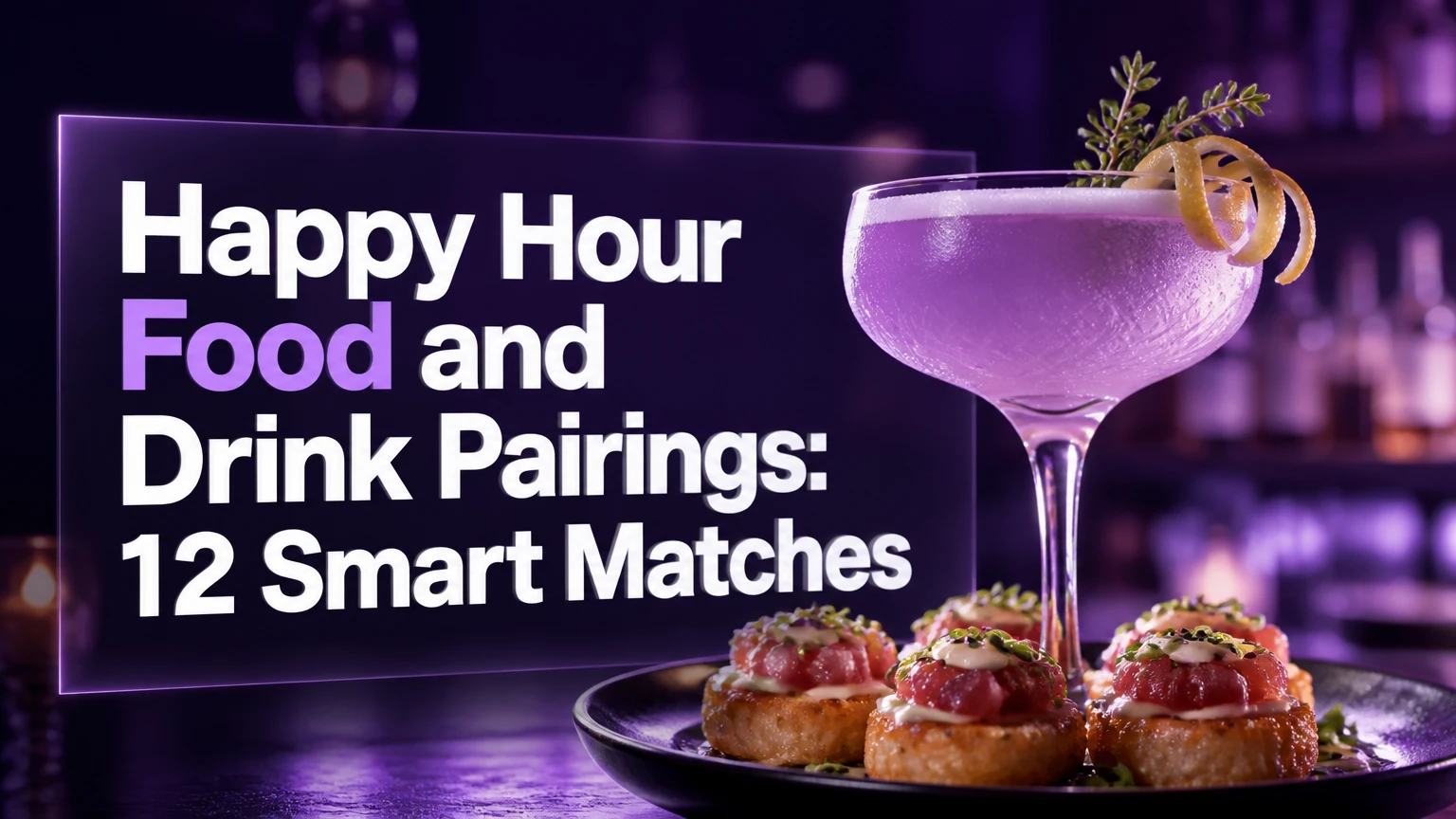
Happy hour food and drink pairings combine a discounted beverage with a small, quickly served dish whose salt, fat, acid, sweetness, bitterness, heat, and texture improve the overall experience. The strongest matches balance intensity rather than simply matching cuisines, while also controlling portion size, preparation time, alcohol strength, and total spend.
Key Facts
A crisp, carbonated drink usually performs best with fried or salty food because acidity and bubbles refresh the palate.
Sweetness and dilution reduce perceived chili heat, while high alcohol can make capsaicin feel hotter.
Typical happy hour bundles cost $9-$14 for beer and snacks, $12-$19 for wine or standard cocktails with food, and $14-$22 for premium combinations.
A practical portion is 4-6 bites per guest when the food is a snack, or 8-12 bites when it replaces dinner.
Restaurants commonly target 4:00-6:00 PM for early service, but happy hour times and legal rules vary by location.
The best menu pairings share ingredients, use batch preparation, and reach the table in about five minutes after the order.
What Makes a Happy Hour Pairing Work?
A happy hour pairing works when the drink and food balance three dimensions: flavor intensity, physical texture, and consumption pace. A light lager with delicate cucumber salad can taste refreshing, but the combination may lack enough contrast to feel satisfying; a pilsner with salty fries has stronger sensory and commercial logic.
Food pairing does not require identical flavors. Complementary matches connect related notes, such as smoky bourbon with grilled beef, while contrasting matches use acid, carbonation, or sweetness to reset the palate after rich food.
The best pairings also fit the occasion. A sports bar needs sturdy food that can be eaten with one hand, a wine lounge can emphasize assembly-only plates, and a home host should avoid dishes that require constant frying.
The Four Main Pairing Forces
| Food characteristic | Helpful drink attribute | Typical example | Main effect |
|---|---|---|---|
| Fried, oily surface | Carbonation and acid | Pilsner with calamari | Refreshes the palate |
| Chili heat | Residual sugar and low-to-moderate alcohol | Off-dry Riesling with wings | Softens perceived burn |
| Meat fat and protein | Tannin, bitterness, or spirit oak | Malbec with sliders | Adds structure and cuts richness |
| Salty, savory snacks | Fruit, bubbles, or moderate sweetness | Dry cider with pretzel bites | Balances salt and lifts aroma |
| Tangy or pickled food | Herbal, citrus, or dry drinks | Gin and tonic with pickles | Extends freshness |
| Creamy cheese or dip | Acid and minerality | Sauvignon Blanc with whipped feta | Prevents a heavy finish |
Salt can make a beverage seem softer, but excessive salt produces thirst without improving flavor. Fat can smooth bitterness and tannin, yet a fatty dish still needs acid or bubbles to avoid a heavy finish. Sugar is useful with chili, but a sweet drink paired with sweet barbecue sauce can become cloying.
How Do You Choose the Right Drink First?
Choose the anchor beverage first, then identify the food’s dominant sensation and decide whether the pairing should complement or contrast it. A drink’s alcohol by volume, acidity, bitterness, sweetness, carbonation, temperature, and dilution matter more than its name alone.
Use the following sequence:
- Record the drink structure. Note whether the beverage is dry or sweet, still or sparkling, bitter or soft, and low or high in alcohol.
- Identify the food’s strongest feature. Separate salt, fat, chili, acid, smoke, sweetness, and crunch rather than describing the dish generally.
- Choose a corrective force. Use acid or bubbles for fat, sweetness for chili, fat for tannin, and herbal freshness for salty foods.
- Check intensity. Delicate seafood can disappear beside an imperial stout, while a bold burger can overwhelm a light white wine.
- Test the finish. Taste food, drink, and food again. The final bite should not taste metallic, excessively hot, or flat.
- Check service reality. Confirm that the dish can be portioned, plated, and delivered without delaying the beverage experience.
A useful practitioner rule is to match weight before matching flavor. A small fried snack usually needs a light or highly refreshing drink; a braised meat slider can support a fuller beverage. The rule has exceptions, especially when sweetness or acidity supplies the contrast.
What Is the Best Food for Beer?
The best beer foods are salty, fried, grilled, or lightly spicy, because carbonation and bitterness refresh the palate while malt supports toasted, browned flavors. Beer styles differ substantially, so a pilsner, IPA, stout, and sour beer should not receive the same default food recommendation.
| Beer style | Food pairing | Portion for one guest | Typical bundle price |
|---|---|---|---|
| American lager, 4%-5% ABV | Fries or pretzel bites | 3 oz fries or 5 bites | $7-$11 |
| Pilsner, 4.5%-5.5% ABV | Calamari with lemon | 4-5 oz | $10-$15 |
| IPA, 6%-7.5% ABV | Buffalo cauliflower or sharp cheddar | 4 oz | $11-$16 |
| Wheat beer, 4%-5.5% ABV | Fish tacos or citrus shrimp | 1-2 tacos | $12-$18 |
| Stout, 5%-8% ABV | Beef slider or mushroom arancini | 1 slider or 2 pieces | $13-$19 |
| Sour ale, 4%-6% ABV | Goat cheese crostini or pickled vegetables | 2 crostini or 3 oz | $11-$17 |
Pilsner with fried seafood is a reliable high-volume match because lemon, carbonation, and moderate bitterness counter oil. IPA with very hot wings is less dependable: hop bitterness and high alcohol can intensify the impression of heat, especially when the sauce contains vinegar and chili.
A stout with a sweet dessert can work when the stout is dry and roasty, but a pastry stout plus frosted cake often creates excessive sweetness. Choose a lightly sweet snack, such as salted chocolate pretzels, when the beer already contains sugar or lactose.
Which Wine Matches Small Plates?
Dry sparkling wine, Sauvignon Blanc, and crisp Pinot Grigio cover many happy hour dishes because their acidity and moderate body support salty, creamy, and seafood-based bites. Rosé handles chilled vegetables, grilled shrimp, and cured meats, while red wine needs richer food or earthy flavors.
| Wine | Best bite | Avoid pairing with | Serving temperature |
|---|---|---|---|
| Brut sparkling wine | Fried oysters or potato chips | Very sweet sauces | 38-45°F |
| Sauvignon Blanc | Goat cheese crostini or ceviche | Heavy chocolate desserts | 45-50°F |
| Pinot Grigio | Shrimp skewers or vegetable fritters | Dense barbecue | 45-50°F |
| Dry rosé | Charcuterie or grilled vegetables | Extremely spicy wings | 45-55°F |
| Off-dry Riesling | Chili-glazed chicken or pork | Very sweet pastries | 45-50°F |
| Malbec | Beef sliders or empanadas | Delicate white fish | 60-65°F |
Sparkling wine is particularly effective with fried snacks because bubbles provide a physical reset between bites. Champagne and other traditional-method sparkling wines can be excellent, but a less expensive Cava or Crémant may fit a value menu better.
Red wine tannin interacts with protein and fat, but the effect depends on concentration and temperature. A high-tannin Cabernet with a tiny salty snack can taste harsh; a moderate Malbec with a beef empanada supplies enough protein and savory flavor to soften the wine.
What Cocktails Pair Best With Happy Hour Food?
Citrus cocktails, spritzes, highballs, and lightly sweetened drinks pair best with small plates because dilution and acidity keep the combination refreshing. High-proof stirred cocktails can work with fatty meat, but they are poor partners for extreme chili, delicate seafood, or very sweet sauces.
| Cocktail | Recommended food | Build or batch note | Typical pair price |
|---|---|---|---|
| Margarita, 18%-22% ABV served | Fish taco or guacamole | Batch tequila, lime, and syrup; add ice | $13-$19 |
| Moscow Mule, 10%-15% ABV served | Ginger chicken or salty fries | Add ginger beer at service | $12-$17 |
| Aperol Spritz, 8%-11% ABV served | Marinated olives or fried zucchini | Assemble sparkling wine last | $11-$16 |
| Whiskey Sour, 15%-20% ABV served | Pork belly or barbecue slider | Batch base; shake with ice | $14-$20 |
| Paloma, 12%-18% ABV served | Carnitas taco or ceviche | Draft or batch with grapefruit soda | $13-$19 |
| Gin and tonic, 10%-15% ABV served | Pickles, shrimp, or cucumber | Use a dry tonic for savory food | $12-$18 |
Margaritas and Palomas suit tacos because lime or grapefruit maintains freshness against pork, fried shells, and avocado. A sugary margarita with sweet corn or fruit salsa can become unbalanced, so use a drier build when the food includes a sweet component.
The alcohol percentage describes the finished drink, not the spirit in the bottle. A 2-ounce pour of 40% tequila contains about 0.8 fluid ounces of pure alcohol before dilution. The National Institute on Alcohol Abuse and Alcoholism defines a United States standard drink as 0.6 fluid ounces of pure alcohol, so a cocktail can contain more than one standard drink even when it tastes light.
Which Pairings Offer the Best Value?
The best value usually comes from a moderate-ABV beverage and a filling, low-cost food with a strong contrast, such as a lager with fries or a house margarita with bean-and-cheese quesadilla pieces. Premium seafood and signature cocktails can provide greater perceived value, but they carry higher ingredient and labor costs.
| Value tier | Beverage price | Food price | Typical combined price | Suitable menu |
|---|---|---|---|---|
| Budget | $4-$6 | $3-$5 | $7-$11 | Lager, house wine, fries |
| Standard | $6-$9 | $5-$8 | $11-$17 | Pilsner, mule, tacos |
| Premium | $9-$14 | $7-$12 | $16-$26 | Signature cocktail, oysters |
| Zero-proof | $4-$7 | $4-$8 | $8-$15 | Shrub, soda, flatbread |
| Late-night | $5-$9 | $4-$9 | $9-$18 | Beer, wings, loaded potatoes |
For a restaurant, a bundle discount of 10%-20% from separate happy hour prices is a typical starting point, but the discount should be calculated from actual portion cost and labor. A $5 drink paired with a $6 snack does not automatically support a $9 bundle if the snack uses expensive seafood or requires a second cook.
A simple pricing check is:
Bundle price = ingredient cost + direct labor allowance + overhead allowance + target contribution margin.
Operators should also track attachment rate, meaning the percentage of beverage orders that include food. A cheap loss-leader drink may be ineffective if guests order no food or if the kitchen cannot handle the resulting demand.
How Much Food Should You Serve?
Serve 4-6 small bites per person for a one-drink social snack, 8-12 bites for a two-hour gathering, and 12-18 bites when happy hour food replaces dinner. Increase the quantity for low-fat foods and reduce it for dense items such as sliders, loaded fries, and cheese-heavy dips.
| Occasion | Food quantity per guest | Drink planning | Suitable foods |
|---|---|---|---|
| One drink, 45 minutes | 4-6 bites | 1 beverage | Olives, fries, crostini |
| Two drinks, 90 minutes | 8-12 bites | 2 beverages | Tacos, wings, arancini |
| Dinner replacement, 2 hours | 12-18 bites | 2-3 beverages | Sliders, skewers, flatbread |
| Cocktail reception, 2 hours | 10-14 passed bites | 2 beverages | Endive, shrimp, mushroom cups |
| Family-friendly event | 6-10 bites | Zero-proof drinks | Quesadilla, vegetables, pretzels |
Count pieces, not vague servings. For six guests, a snack menu might include 36 shrimp, 24 crostini, and 36 vegetable fritters, with one substantial item such as 12 tacos if the event extends beyond an hour.
Food timing affects drink pacing. Serve a salty or protein-rich item before the second alcoholic beverage, keep water available, and avoid presenting a large carbohydrate-heavy platter that makes guests full before they try other dishes.
How Should Restaurants Build a Pairing Menu?
Restaurants should build a pairing menu around four to six combinations that share ingredients, use batchable drinks, and have a measured ticket time below five minutes. A small menu improves ordering speed and reduces duplicate prep, but each pairing must occupy a distinct flavor and price position.
Step 1: Select the Beverage Anchor
Choose one high-volume beer, one house wine, one batched cocktail, and one zero-proof drink before developing the food. Record pour size, alcohol strength, garnish, glassware, and expected service time.
Step 2: Assign a Food Counterpoint
Match each anchor with one dominant counterpoint. Use acid for fried foods, sweetness for chili, protein for tannin, and salt or umami for bitter drinks.
Step 3: Stress-Test Preparation
Measure the elapsed time from order entry to pickup. A dish that takes 12 minutes during a quiet test can create a serious bottleneck when four tables order simultaneously.
Step 4: Cross-Utilize Ingredients
Use the same pickled onions across tacos, sliders, and cheese plates, or use roasted mushrooms in both arancini and crostini. Cross-utilization reduces spoilage, but leftover food must remain within the local health code and documented holding limits.
Step 5: Set Portions and Prices
Weigh the food portion, calculate its recipe cost, and define the bundle discount. Typical happy hour food cost targets are often around 20%-30%, but labor, rent, waste, and local pricing can make a higher percentage financially sensible.
Step 6: Review Sales and Waste
Track units sold, contribution margin, ticket time, food waste, beverage attachment, and repeat orders weekly. Remove a popular item if it consistently delays the kitchen or has poor contribution after labor.
Practitioner insight: The most profitable pairing is not always the item with the lowest food cost. A $4 snack that occupies a fryer for seven minutes may contribute less than a $7 assembled plate that uses inexpensive ingredients and takes 45 seconds to finish.
Beer, Wine, or Cocktails: Which Format Wins?
Beer offers the fastest service and broadest familiarity, wine minimizes kitchen work, and cocktails produce the highest visual and check-average potential but require the most labor. The right format depends on throughput, equipment, staff skill, guest expectations, and the venue’s ability to batch safely.
| Format | Normal service time | Labor per order | Typical waste risk | Best venue |
|---|---|---|---|---|
| Draft beer and fried snack | 2-5 minutes | 1-2 minutes | Low | Sports bar |
| House wine and cheese plate | 2-4 minutes | 2-4 minutes | Medium after opening | Wine bar |
| Batched cocktail and taco | 4-8 minutes | 3-6 minutes | Medium | Gastropub |
| Made-to-order cocktail and sliders | 7-12 minutes | 6-10 minutes | Low liquid waste, high labor | Cocktail lounge |
| Zero-proof spritz and flatbread | 3-7 minutes | 2-5 minutes | Low | Family-friendly venue |
Beer wins when speed and volume are the main objectives. Wine wins when refrigeration and assembly space are available but cooking capacity is limited. Cocktails win when the bar has batching, ice, glassware, and enough staff to avoid a queue.
No format is universally superior. A restaurant with one bartender and a small fryer should not copy a high-volume cocktail bar’s menu.
Which Pairings Work for Special Situations?
Situational pairings should adjust for venue, season, dietary needs, and service hour rather than relying on a universal list. Patio menus favor chilled, acidic foods; winter menus can support roasted ingredients; late-night menus need fast, filling food that remains appealing after several hours of service.
For a Home Host
Choose two make-ahead foods and two drinks, then finish only garnishes and hot components during the gathering. For eight guests, prepare 48 bite-size pieces, 16 small tacos or sliders, 2 quarts of a batched nonalcoholic drink, and enough alcoholic beverage for the expected legal and personal limits of the group.
A practical spread includes hummus with vegetables and pita, baked mushroom bites, citrus shrimp, and a pitcher of Paloma-style soda with optional tequila served separately. Keeping spirits separate allows guests to choose alcohol strength and gives non-drinkers an equivalent option.
For a Sports Bar
Use lager with fries, wings, pretzels, and fried pickles, but separate sauces so food remains crisp during a long game. A 4-5 ounce wing portion is easier to price and eat than an oversized basket that suppresses later orders.
For a Wine Bar
Use assembly-first plates such as marinated olives, tinned fish with toast, cheese, fruit, and charcuterie. Keep hot food limited to one or two items, because wine service and plate assembly already compete for staff attention.
For a Late-Night Menu
Use food that can be held safely and finished quickly, including quesadillas, skewers, fries, and sliders. Avoid fragile fried seafood or delicate raw preparations when staffing, refrigeration, or turnover is limited.
What Are the Best Nonalcoholic Pairings?
Nonalcoholic pairings work best when the drink has bitterness, acidity, bubbles, or herbal aroma instead of relying on sweetness alone. Sparkling water with citrus, hopped seltzer with fries, ginger beer with fried chicken, and an unsweetened iced tea with barbecue provide structure without alcohol.
| Zero-proof drink | Food match | Why it fits | Typical price |
|---|---|---|---|
| Sparkling water with lime | Fried zucchini | Bubbles and acid refresh | $3-$6 |
| Hopped seltzer | Pretzel or fries | Bitter citrus echoes beer | $4-$7 |
| Ginger beer | Chicken skewers | Spice and carbonation lift | $4-$7 |
| Unsweetened iced tea | Pulled-pork slider | Tannin handles savory fat | $3-$6 |
| Hibiscus spritz | Goat cheese crostini | Tart fruit balances cream | $5-$8 |
| Cucumber-mint soda | Vegetable spring rolls | Herbal freshness offsets frying | $4-$7 |
A zero-proof drink should have its own pairing identity, not function as an afterthought. Excessive syrup makes the beverage compete with sweet sauces, while weak carbonation makes fried food feel heavier.
How Do Dietary Restrictions Change the Pairing?
Dietary substitutions should preserve the original pairing force, not merely replace one ingredient. Swap a wheat pretzel for potatoes or corn chips in a gluten-free menu, replace dairy dip with tahini for vegan guests, and use roasted mushrooms or lentil fritters when protein and umami are needed without meat.
| Requirement | Replace | Preserve | Pairing example |
|---|---|---|---|
| Gluten-free | Wheat bread or pretzel | Salt and crunch | Cider with corn tostada |
| Vegan | Cheese, mayo, meat | Fat and umami | Paloma with mushroom taco |
| Dairy-free | Cream dip | Richness and acid | Lager with avocado-lime dip |
| Vegetarian | Beef or chicken | Protein and savory depth | Malbec with lentil slider |
| Seafood-free | Shrimp or fish | Freshness and citrus | Margarita with grilled zucchini |
| Low-spice | Chili sauce | Savory intensity | Pilsner with herb chicken |
Cross-contact requires more than changing the garnish. Restaurants should identify shared fryers, cutting boards, sauces, and beverage garnishes, while home hosts should label common allergens such as shellfish, dairy, wheat, nuts, eggs, and sesame.
Why Does a Pairing Taste Bitter, Flat, or Too Hot?
A pairing tastes bitter when the drink’s bitterness or tannin has no fat, protein, or sweetness to soften it; it tastes flat when the food overwhelms the beverage’s acidity or aroma; and it tastes too hot when chili meets high alcohol without enough sugar, dairy, or dilution.
| Problem | Likely cause | Fast correction | Avoid next time |
|---|---|---|---|
| Beer tastes sharply bitter | IPA with hot chili | Add creamy dip or switch to lager | Pair intense hops with extreme heat |
| Food tastes greasy | Still, low-acid drink | Add lemon, lime, or bubbles | Use heavy cream cocktails |
| Cocktail tastes sour | Acidic drink with pickles | Add a salty, fatty bite | Stack acid without a softening element |
| Chili feels hotter | High-ABV spirit drink | Use water, dairy, or off-dry drink | Serve neat spirits with ghost pepper |
| Food becomes soggy | Sauce added too early | Sauce at pickup or serve separately | Hold fried food under sealed steam |
| Finish tastes sweet | Sweet drink and sweet glaze | Use dry sparkling water or lager | Match sugar with sugar repeatedly |
Practitioner insight: Alcohol does not reliably cool chili heat. Capsaicin is fat-soluble, and high alcohol can increase the burning sensation, so an off-dry, lower-strength drink with water or dairy-based food is safer than a strong tequila or double IPA.
Raw seafood, undercooked meat, and dairy-based dips also introduce food-safety constraints. Keep cold foods cold, hot foods hot, and follow local health-code holding requirements rather than treating happy hour portions as exempt from normal controls.
Twelve Reliable Pairing Ideas
- Pilsner with calamari and lemon: Carbonation and citrus counter the frying oil.
- Lager with sea-salt fries: Malt supports potato flavor while bubbles refresh.
- Dry cider with pretzel bites: Apple acidity balances salt and toasted dough.
- Sauvignon Blanc with goat cheese crostini: High acidity keeps creamy cheese lively.
- Brut sparkling wine with fried oysters: Bubbles and minerality handle richness.
- Off-dry Riesling with buffalo chicken: Residual sugar softens chili and vinegar.
- Moscow Mule with ginger chicken: Ginger echoes the drink while lime prevents heaviness.
- Margarita with fish tacos: Lime connects with cabbage, salsa, and fried fish.
- Paloma with carnitas tacos: Grapefruit cuts pork fat without excessive sweetness.
- Malbec with beef sliders: Fruit and moderate tannin support browned meat.
- Whiskey Sour with pork belly: Acid and citrus reduce the richness of the pork.
- Hopped seltzer with mushroom flatbread: Carbonation and bitterness add beer-like structure without alcohol.
Frequently Asked Questions
What food goes with a margarita?
Margaritas pair especially well with fish tacos, carnitas, ceviche, guacamole, and grilled vegetables because lime acidity cuts fat and echoes common citrus-based garnishes. Choose a drier margarita when the food includes fruit salsa, sweet corn, or a sugary glaze, and avoid very high-proof versions with extreme chili.
Are happy hour pairings suitable for dinner?
Happy hour pairings can replace dinner when the menu includes 12-18 substantial bites per guest, including protein, vegetables, and carbohydrates. Four crostini and one drink usually function as a snack, while tacos, sliders, skewers, and flatbread can form a meal when portions are combined.
What is the cheapest drink and food pairing?
A draft lager with fries, pretzel bites, or popcorn is typically the least expensive alcoholic pairing, with a combined happy hour price around $7-$11 in many U.S. markets. A zero-proof alternative such as sparkling water with seasoned potatoes can cost less and avoids alcohol-related service limits.
Can I pair red wine with fried food?
Red wine can pair with fried food when the dish contains enough protein, mushroom umami, or meat to support the wine’s body and tannin. Malbec with beef empanadas is more balanced than young Cabernet with plain fries, which can make the wine seem drying and aggressive.
How many drinks should I plan per guest?
For a 60-90 minute gathering, plan approximately one drink per guest in the first hour and offer food, water, and zero-proof choices throughout. Actual consumption varies by person, pour size, local law, and event setting, so hosts should never pressure guests to drink or drive after drinking.
The Bottom Line
The strongest happy hour food and drink pairings balance sensory structure with practical service: carbonation or acid for fried foods, sweetness and dilution for moderate spice, protein for tannic drinks, and fresh herbal or citrus notes for salty dishes. Start with the beverage, set portions in pieces, test the finish, and price the bundle against actual labor and ingredient cost. Choose beer for speed, wine for low-cook assembly, cocktails for higher-margin theater, and zero-proof drinks for inclusive service.