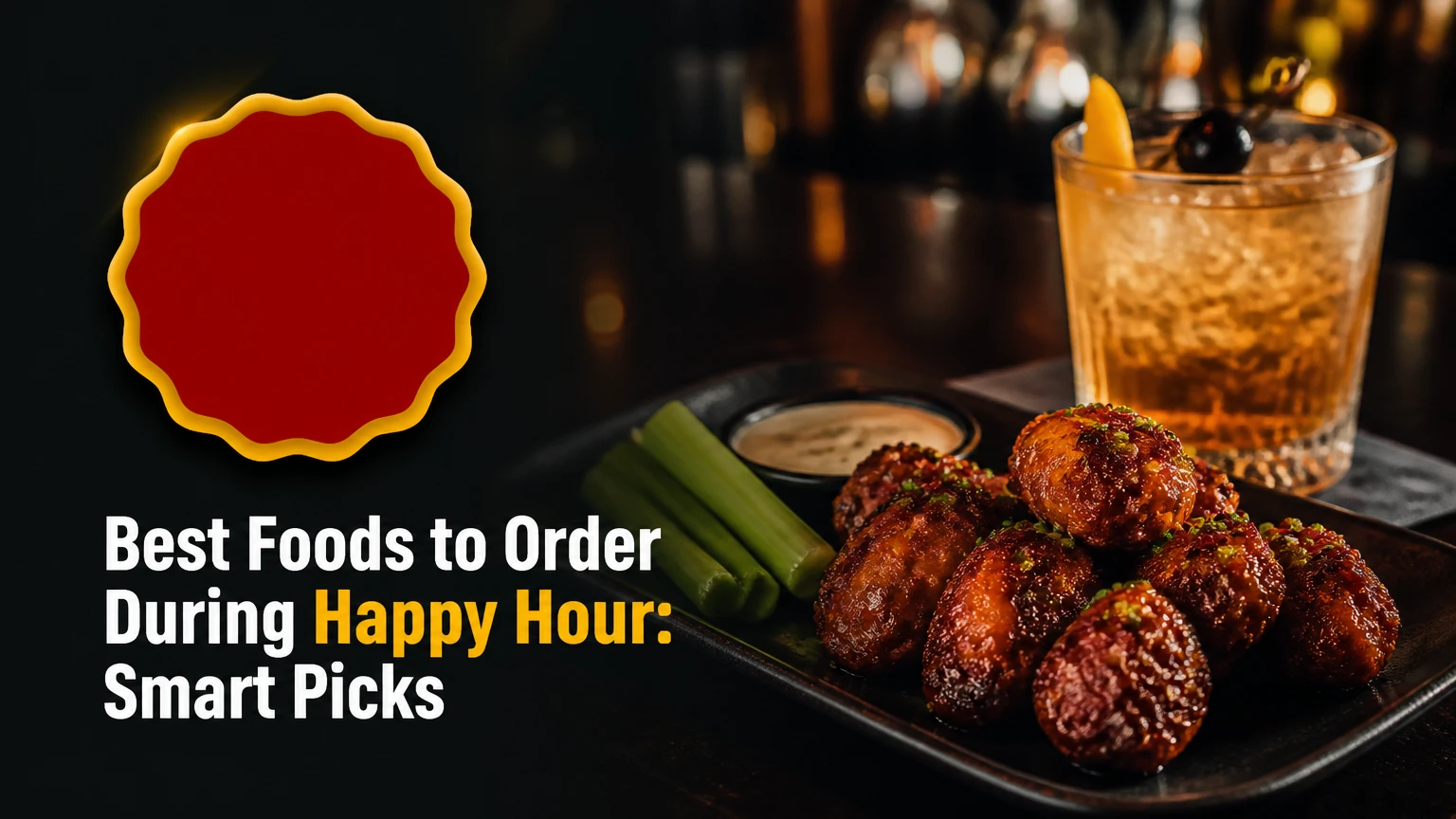
The best foods to order during happy hour are tacos, sliders, flatbread, wings, oysters, and shareable vegetable dishes, chosen according to group size, freshness, portion, and discount. For most diners, tacos or flatbread deliver the strongest balance of price and satisfaction, while oysters and ceviche offer the highest premium value when turnover is reliable.
Key Facts at a Glance
- A typical happy hour food price falls between $5 and $12, although city, venue, and portion size can move that range substantially.
- Tacos, sliders, and flatbread usually provide the most predictable value for groups because portions are countable and easy to divide.
- Oysters, ceviche, and carpaccio can produce the largest dollar discount, but freshness and refrigeration matter more than percentage savings.
- Food slows alcohol absorption but does not prevent intoxication; the National Institute on Alcohol Abuse and Alcoholism states, “Food can slow the absorption of alcohol.”
- A real deal should reduce the regular price by roughly 20%-50% or provide a materially larger portion at the same price.
- Ordering the first food round with the first drink usually prevents the worst delays during the 3:00-6:00 PM rush.
How We Chose the Best Happy Hour Foods
The strongest happy hour foods combine five measurable traits: a typical price of $5-$15, at least two shareable portions, a preparation time under 20 minutes, acceptable quality after 10 minutes on the table, and a meaningful discount from the regular menu. No single dish wins every situation.
Value means more than calories per dollar. A $7 basket of fries may be filling, but a $9 plate of four fish tacos can provide more protein, variety, and dinner utility. Premium items deserve a different test: a $12 oyster plate can be a better bargain than $6 fried cheese if the regular price is $24 and the oysters are properly handled.
Restaurant happy hour is designed around slower service periods, commonly late afternoon and sometimes after 9:00 PM. Venues often use accessible foods to increase beverage orders, but the customer should judge the final bill, portion, and satisfaction rather than the menu’s percentage-off language.
What counts as a real happy hour deal?
A real deal has either a substantial price reduction or a better portion-to-price ratio than the regular menu. Compare the happy hour price with the standard menu, check whether the portion is smaller, and include mandatory drink purchases, service charges, and local taxes before deciding.
| Menu signal | Typical figure | What to verify | Decision |
|---|---|---|---|
| Standard discount | 20%-50% | Regular price and portion | Strong value when both remain comparable |
| Common food price | $5-$12 | Item count and serving size | Suitable for sampling or sharing |
| Premium seafood price | $1-$2 per oyster, market dependent | Oyster size, origin, freshness | Strong deal only with fast turnover |
| Beverage condition | 1 drink per diner at some venues | Dine-in and time restrictions | Add the drink cost to the calculation |
| Weak promotion | $1-$2 below regular price | Main menu price | Usually skip unless portion improves |
1. Tacos: Best Overall for Variety and Value
Tacos are the best overall happy hour food because two to four small portions let diners control cost, protein, and spice while keeping the total commonly between $8 and $14. Fish, carnitas, mushroom, and grilled chicken tacos also pair with beer, margaritas, lager, or sparkling water.
Tacos are easier to evaluate than an oversized platter. A menu offering three tacos for $9 gives a clear unit cost of $3, while a $12 “shareable” plate may contain an uncertain amount of food. Corn tortillas also provide a practical gluten-free option when the kitchen prevents cross-contact and confirms that sauces contain no wheat.
The main limitation is holding time. Tortillas soften under wet fillings, and fried fish loses texture after approximately 10-15 minutes. Ask for sauces, crema, and pico de gallo on the side when the kitchen is busy or when the table will order several rounds.
Choose this if: the table wants variety, a moderate portion, or a meal under $15.
Skip it if: tacos arrive preassembled with soggy fried fillings or the menu gives no count per order.
2. Flatbread: Best for Groups and Dinner Substitution
Flatbread is the best happy hour choice for three to five people because one $10-$16 order commonly yields 6-10 small pieces and combines carbohydrates, cheese, vegetables, and cured meat. Flatbread also tolerates a 10-minute delay better than fries or fried seafood.
The value depends on diameter and topping density. A 10-inch flatbread cut into eight pieces may feed four people only as a shared snack, whereas a 12-inch version with sausage or chicken can supplement dinner. Compare the happy hour version with the standard pizza, because some venues quietly reduce the size from 12 inches to 8 inches.
Flatbread pairs well with wine, beer, and nonalcoholic drinks. It is less suitable for diners seeking a high-protein or low-carbohydrate meal, particularly when the topping list consists mostly of cheese and bread.
Choose this if: the group wants one easy-to-share centerpiece.
Skip it if: the deal is under 10 inches, lacks protein, or costs within $2 of the regular pizza.
3. Sliders: Best for Casual Sharing
Sliders are the best casual group order when a menu offers two or three sandwiches for $8-$12, because each diner can take one without cutting or portion disputes. Beef, pulled pork, fried chicken, and plant-based patties provide distinct flavor profiles without committing to full entrée prices.
Sliders hold their value when fillings are balanced. A two-slider order with 3-ounce patties, a side, and a dipping sauce is more substantial than three tiny 1.5-ounce sandwiches with no accompaniment. Pickles, slaw, and onions improve contrast, while three rich sauces can make a large order feel repetitive.
Buns become soggy faster than flatbread, especially under barbecue sauce or slaw. Request wet toppings separately if the plate will sit while the group orders drinks, and eat fried chicken sliders first.
Choose this if: three or more people want hand-held portions.
Skip it if: the menu lists only sandwich count without patty size or includes no side at a $12-plus price.
4. Wings: Best for Beer and Flexible Portions
Wings are the best beer-oriented happy hour food when six to ten pieces cost $8-$14 and diners can split sauces. Bone-in wings generally provide better texture during a delay, while boneless bites create less mess and easier sharing but often contain more breading.
Sauce flexibility matters more than flavor variety. A table can order half hot and half barbecue, then add ranch or blue cheese if the price remains reasonable. Count the extras: a $9 wing special can become $14 after two paid sauces and a $2 dipping cup.
Wings are poor for formal dates, quick business meetings, or anyone avoiding high-sodium fried food. They also lose crispness under a covered container, so they should be eaten before fries and ordered in a first wave rather than all at closing time.
Choose this if: the table drinks beer and wants a substantial savory snack.
Skip it if: sauces cost extra, the kitchen is backed up, or the wings are pre-sauced and visibly soft.
5. Loaded Fries or Tots: Best Budget Filler
Loaded fries and tater tots are the best budget fillers when a $6-$10 basket includes enough food for two to three snack portions. Potatoes provide reliable satiety, and toppings such as chili, pulled pork, cheese, or green onions can make the dish function as a small meal.
The weakness is ingredient overlap. Fries, sliders, and flatbread together create a table dominated by starch, salt, and melted cheese. A better order pairs potatoes with tacos, a salad, pickled vegetables, or a protein-focused seafood plate.
Order loaded fries only when the table can eat them immediately. Steam softens the base within 5-10 minutes, and cold cheese hardens quickly. Plain fries with sauces on the side usually survive waiting better than fully loaded versions.
Choose this if: the goal is maximum fullness under $10.
Skip it if: the group wants freshness, portability, or food that remains crisp for 15 minutes.
6. Fried Calamari and Shareable Seafood: Best Fried Premium
Fried calamari is the best premium fried option when a regular $14-$20 appetizer falls to $9-$13 and the kitchen cooks it to order. The dish offers more perceived value than mozzarella sticks because seafood carries a higher regular-menu price and works with beer, white wine, and citrus cocktails.
Texture is the deciding factor. Proper calamari should have a crisp coating and tender interior; overcooked rings become rubbery after only a short delay. Ask whether the happy hour portion is the standard appetizer size and whether tentacles are included.
Fried seafood is not a good choice for takeaway or a kitchen nearing its closing rush. A discount cannot repair overcooked protein, so choose it when the restaurant appears busy enough to maintain turnover but not overwhelmed.
Choose this if: the menu shows a genuine $4-$8 reduction and immediate service is likely.
Skip it if: the dish has sat under a heat lamp or the price exceeds $15 without a larger portion.
7. Oysters: Best Dollar Discount for Seafood Lovers
Oysters are the best dollar-value happy hour food when a venue offers $1-$2 oysters that normally cost $2.50-$4 each and serves them on ice. The savings can exceed those of inexpensive fried food, but the deal is worthwhile only when the restaurant has strong turnover and proper cold holding.
Oysters demand more questions than tacos. Ask whether the price applies to all varieties, whether the special runs during a limited window, and whether the oysters are shucked to order. A dozen at $1.50 costs $18 before extras, so oysters are not automatically the lowest-cost choice for a group.
Food safety outweighs the discount. The U.S. Food and Drug Administration warns that raw or undercooked shellfish can expose diners to Vibrio and other pathogens, with higher risk for people with liver disease, diabetes, immune suppression, or certain blood disorders.
Choose this if: you value freshness, the oysters sit on ample ice, and the venue has visible turnover.
Skip it if: you are in a high-risk health group, the shellfish temperature is uncertain, or the savings are minimal.
8. Charcuterie or Cheese Boards: Best for Wine and Conversation
A downsized charcuterie or cheese board is best for a date or wine-focused table when $12-$18 buys at least two cheeses, one cured meat, crackers, and fruit or pickles. The food can remain enjoyable for 20-30 minutes, making it more forgiving than fried dishes.
Board value comes from composition rather than volume. A $15 plate with four ounces of cheese, three ounces of meat, and several accompaniments may feed two light snackers, while a board containing mostly crackers offers weak value. Ask for the number of cheeses and meat weight when the menu is vague.
Charcuterie is not a full dinner for most adults. It also creates problems for vegetarian, halal, kosher, dairy-free, and low-sodium diners unless the kitchen can modify the plate.
Choose this if: the table wants slow grazing with wine.
Skip it if: the board lacks protein detail or costs more than a small entrée.
9. Ceviche or Carpaccio: Best for a Fresh, Premium Bite
Ceviche and beef carpaccio are the best fresh premium choices when a $12-$18 plate offers a clear protein serving, acidic dressing, and preparation close to ordering time. These dishes avoid the heaviness of fried food while still offering a substantial discount against a $18-$26 regular appetizer.
Acid does not make raw seafood risk-free. Ceviche uses citrus to change texture and flavor, but it does not reliably eliminate pathogens. Carpaccio similarly requires high-quality handling, cold storage, and a kitchen that serves the dish quickly.
These items are poor choices when diners need portable food, dislike raw or rare textures, or are ordering for children. They also provide less carbohydrate than flatbread or fries, so pair them with bread, tortilla chips, or a vegetable side if the meal must last.
Choose this if: freshness and culinary quality matter more than maximum volume.
Skip it if: the restaurant cannot explain preparation, storage, or the day’s seafood source.
10. Vegetable Dishes: Best for Balance and Non-Drinkers
Grilled vegetables, hummus, edamame, roasted cauliflower, and vegetable dumplings are the best balancing choices when priced at $6-$12 and served with a meaningful protein or dip. They give a table contrast after wings and fries, while many options pair naturally with tea, soda, sparkling water, and alcohol-free cocktails.
Vegetable dishes vary widely in staying power. Hummus, edamame, and dumplings remain practical for 15-20 minutes, but delicate greens wilt faster and grilled vegetables can become oily when held. A dish with chickpeas, tofu, or yogurt dip offers more satiety than plain roasted vegetables.
Vegetable food is not automatically low-calorie. Fried cauliflower, creamy dips, and large amounts of oil can equal or exceed the energy content of some meat dishes, so judge the preparation rather than the ingredient label.
Choose this if: the table needs freshness, dietary flexibility, or a nonalcoholic pairing.
Skip it if: the portion is mostly garnish and the price approaches a full appetizer.
Which Happy Hour Food Has the Best Value?
Tacos and flatbread usually offer the best overall value, while oysters and premium seafood offer the highest potential dollar savings. Loaded fries provide the lowest cost per calorie, but tacos and sliders tend to provide better variety and protein per dollar.
| Food type | Typical price | Typical portion | Best value condition |
|---|---|---|---|
| Tacos | $8-$14 | 3-4 tacos | At least 3 ounces of protein total |
| Flatbread | $10-$16 | 6-10 pieces | At least 10 inches with protein topping |
| Sliders | $8-$12 | 2-3 sliders | Patties of 2-3 ounces each |
| Wings | $8-$14 | 6-10 pieces | Sauce included and split allowed |
| Oysters | $1-$2 each | 6-12 oysters | Regular price at least $2.50 each |
| Charcuterie | $12-$18 | 2 light portions | Two cheeses, one meat, accompaniments |
| Loaded fries | $6-$10 | 2-3 snack portions | Toppings include protein or beans |
The best value changes with the purpose of the visit. A solo diner may prefer three tacos, a group may prefer flatbread and vegetables, and a seafood enthusiast may gain more from discounted oysters despite the smaller volume.
How Should You Order for a Group?
Order one substantial centerpiece, one protein or premium item, and one fresh contrast for every three to four diners. For four people, a practical first wave is one flatbread, eight wings or four tacos, and one vegetable or hummus dish, with a second wave added after the first plates arrive.
Use the following sequence:
- Check the end time, beverage requirement, dine-in rule, and portion count.
- Order the longest-cooking or freshness-sensitive dish first.
- Add one filling item for every two diners.
- Include one vegetable, pickle, salad, or chilled dish.
- Wait 10 minutes before ordering more unless the group is replacing dinner.
- Ask for sauces separately when fried food may sit.
This approach prevents the common 5:59 PM mistake: ordering five plates at once, receiving everything together, and paying for more food than the table can eat. Kitchen delays are common during the opening rush, so the first food order should accompany the first drink order.
What Should You Order With Beer, Wine, or Cocktails?
Beer pairs best with wings, tacos, pretzels, and fried calamari; wine pairs better with oysters, charcuterie, vegetables, and flatbread; cocktails benefit from salty food with enough protein or fat to slow eating. Pairing improves the experience, but it does not make alcohol safer.
| Drink category | Strong food matches | Avoid when | Practical reason |
|---|---|---|---|
| Lager or pilsner | Wings, tacos, fries | Food must remain crisp 20 minutes | Salt and carbonation suit quick bites |
| IPA | Spicy wings, sliders, loaded tots | Delicate oysters or sweet desserts | Bitterness can overpower mild seafood |
| White wine | Oysters, calamari, ceviche | Very spicy barbecue | Acidity complements seafood |
| Red wine | Sliders, charcuterie, flatbread | Raw oysters | Tannin can clash with briny flavors |
| Margaritas | Fish tacos, guacamole, ceviche | Very salty fries alone | Citrus matches seafood and avocado |
| Nonalcoholic beer | Wings, hummus, vegetable dumplings | None specifically | Similar pairing without alcohol |
Food can slow alcohol absorption, but food cannot cancel alcohol already consumed. NIAAA’s concise guidance, “Food can slow the absorption of alcohol,” should be understood as a delay, not protection from impairment.
Are Happy Hour Foods Good Enough for Dinner?
Happy hour food can replace dinner when the order includes roughly 20-30 grams of protein, a filling carbohydrate, and a vegetable or fiber-rich side. Two to three tacos with beans or vegetables, a protein-topped flatbread, or sliders with edamame is more dinner-like than fries and mozzarella sticks alone.
| Dinner goal | Practical order | Typical cost | Likely limitation |
|---|---|---|---|
| Light dinner for one | 3 tacos plus beans | $11-$18 | Small tortillas may leave hunger |
| Dinner for two | Flatbread plus vegetable dip | $18-$28 | Protein may be modest |
| High-protein option | Wings plus edamame | $16-$24 | Sodium can be high |
| Vegetarian dinner | Hummus, dumplings, and flatbread | $18-$30 | Confirm dairy and protein content |
| Seafood dinner | 6 oysters plus ceviche | $24-$36 | Higher cost and lower carbohydrates |
The practitioner rule is simple: never call a snack platter dinner without counting protein and volume. Three fried appetizers can feel heavy while delivering less balanced nutrition than tacos with beans and salsa.
What Common Happy Hour Mistakes Cost You?
The most expensive mistakes are weak discounts, duplicate starches, hidden conditions, and ordering fragile food too late. Each mistake can add $5-$20 to a table’s bill or reduce the meal’s usable portion.
Mistake 1: Trusting the percentage discount
A menu may advertise a special without showing the regular price. Compare the standard menu, confirm portion size, and calculate the final price after mandatory drinks or premium toppings.
Mistake 2: Ordering only heavy carbohydrates
Fries, flatbread, sliders, and pretzels can fill a table quickly but create monotony and excessive leftovers. Add one chilled seafood, vegetable, pickle, or bean-based item.
Mistake 3: Ordering oysters without checking handling
Ask whether oysters are kept on ice and shucked to order. People at elevated risk from raw shellfish should choose cooked seafood or vegetables instead.
Mistake 4: Waiting until the cutoff
Late orders face the highest kitchen congestion. Send the first wave 20-30 minutes before the end of the window, then order a second round only after assessing consumption.
Mistake 5: Ignoring portion language
“Small plate,” “snack size,” and “two-piece” descriptions can hide a reduced serving. Ask for the item count, protein weight, and whether the happy hour portion matches the regular appetizer.
Mistake 6: Assuming the discount applies everywhere
Some specials apply only at the bar, on weekdays, during a fixed 90-minute period, or with one beverage purchase per person. Verify the rule before ordering, especially at hotels and sports venues.
Which Foods Work for Specific Situations?
The best choice depends on timing, group size, dietary restrictions, and whether happy hour is a snack or a meal. Tacos are the safest general recommendation, but each situation favors a different format.
| Situation | First choice | Backup choice | Reason |
|---|---|---|---|
| Solo diner | 3 tacos | 2 sliders | Countable and filling |
| Group of 4 | Flatbread plus vegetables | 10 wings plus tacos | Easy division and contrast |
| First date | Charcuterie or ceviche | Flatbread | Slow eating with limited mess |
| Tight budget | Loaded tots | Bean tacos | $6-$10 starting price |
| Designated driver | Hummus and dumplings | Vegetable flatbread | Pairs with alcohol-free drinks |
| Gluten-free diner | Corn tacos | Oysters or edamame | Confirm cross-contact procedures |
| Vegetarian diner | Hummus, dumplings, vegetables | Mushroom flatbread | Multiple meat-free components |
| Late-night visit | Sliders or tacos | Wings | More substantial than delicate bites |
| Dinner replacement | Protein flatbread | Tacos plus beans | Better carbohydrate and protein balance |
Late-night menus often favor fried food because it is fast, familiar, and filling. That makes sliders and tacos safer choices for satiety, while oysters and delicate greens are better earlier when the kitchen and cold-storage turnover are easier to assess.
What If the Food Is Late, Small, or Poorly Prepared?
If food is late, small, or overcooked, identify the specific failure and ask for a practical remedy rather than ordering more immediately. A delayed plate may justify a replacement, a missing portion may justify a price adjustment, and a missed cutoff may be negotiable only when the venue is not busy.
- Food is delayed: Ask for the estimated cook time before adding another order.
- Fried food is cold: Request a fresh preparation rather than reheating, which often worsens texture.
- Portion is tiny: Ask whether the plate is a reduced happy hour size before ordering a second.
- A special ended minutes ago: Politely ask whether one quick round can use the advertised price; accept the answer without assuming entitlement.
- A required drink was missed: Request the check calculation before paying, because the system may remove the discount automatically.
- Raw seafood seems warm: Stop eating and notify the manager; do not treat the discount as compensation for a food-safety concern.
Honest limitation: no ordering strategy can guarantee quality at every venue. A busy kitchen, poor refrigeration, or misleading portion description can erase the financial benefit, so a regular-menu dish may be the better decision.
FAQ
What is the healthiest food to order during happy hour?
The healthiest practical choices are grilled vegetables, edamame, hummus, ceviche, oysters, and tacos with grilled protein, provided sauces and fried toppings remain moderate. Preparation matters more than the dish name. A fried cauliflower plate with creamy dip may contain more fat and sodium than grilled chicken tacos with salsa.
How many happy hour dishes should two people order?
Two people should begin with two shareable dishes, or three if both dishes are small. A useful first order is one substantial item, such as flatbread or tacos, plus one fresh or vegetable item. Add a third plate only after checking the actual portion, because happy hour servings vary widely.
Can you order happy hour food without buying alcohol?
Many venues allow happy hour food without alcohol, but rules vary by restaurant, location, and promotion. Some require one beverage per person, while others apply the discount only to bar seating. Ask whether sparkling water, soda, coffee, or a nonalcoholic cocktail satisfies the requirement.
Are late-night happy hour menus worth it?
Late-night happy hour menus are worth using when the discount reaches at least 20% and the food is cooked to order. Sliders, tacos, wings, and flatbread usually perform better late than oysters or delicate salads. Check whether the late-night menu has smaller portions or fewer options.
What food absorbs alcohol the best?
No food absorbs or neutralizes alcohol. Food containing protein, fat, and carbohydrates can slow alcohol absorption compared with drinking on an empty stomach, but impairment still develops and may last longer than expected. Eat before and during drinking, pace beverages, and use a sober transportation plan.
The Bottom Line
The best foods to order during happy hour are tacos for the strongest all-purpose value, flatbread for groups, sliders for casual sharing, wings for beer, oysters for premium savings, and vegetables or hummus for balance. Check the regular price, serving count, freshness, restrictions, and final bill before ordering. A thoughtful combination beats the cheapest single plate.