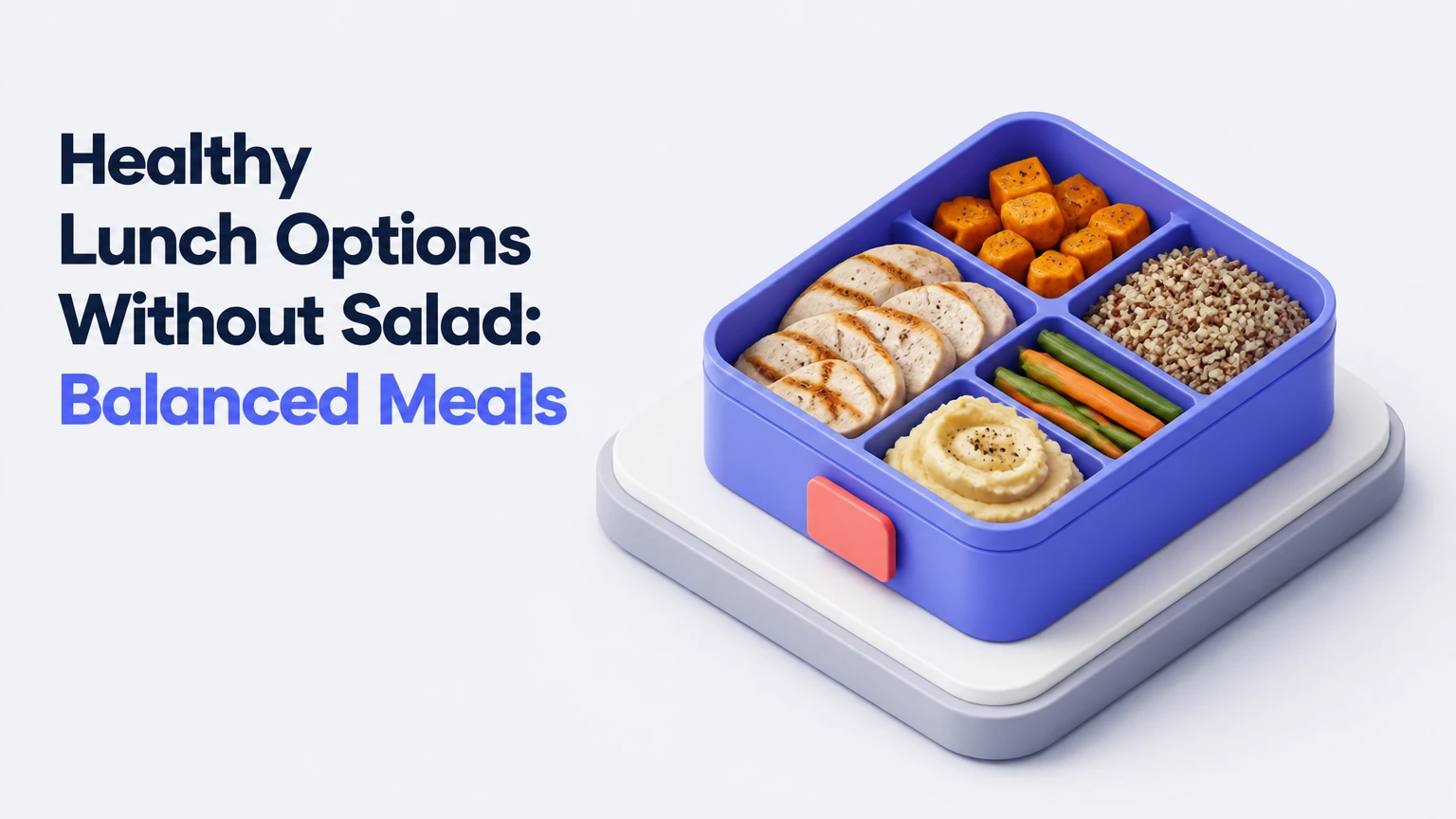
Healthy lunch options without salad combine a protein, a high-fiber carbohydrate, cooked or non-leafy vegetables, and a measured source of unsaturated fat. Practical choices include bean chili, lentil soup, chicken and quinoa bowls, hummus bento boxes, tofu wraps, and chickpea sandwiches. A balanced serving commonly provides about 400-600 calories, 25-40 grams of protein, and 8-15 grams of fiber, depending on individual needs.
Key Facts
A salad-free lunch can include vegetables without using raw leafy greens.
A useful starting structure is one palm-sized protein, one fist-sized high-fiber carbohydrate, one to two servings of cooked vegetables, and one thumb-sized healthy fat.
Typical homemade lunches cost about $2-$5 per serving and take 10-20 minutes when ingredients are prepared.
Protein and fiber usually influence afternoon fullness more reliably than calorie count alone.
Soups, stews, wraps, grain bowls, and bento plates cover warm, cold, portable, vegetarian, vegan, and gluten-free needs.
Refrigerate cooked lunches within two hours, or within one hour when the surrounding temperature exceeds 90°F (32°C).
What Counts as a Healthy Lunch Without Salad?
A healthy lunch without salad is a complete midday meal that does not depend on a raw, leafy-green bowl. The meal can use cooked vegetables, beans, whole grains, potatoes, fruit, eggs, fish, poultry, tofu, or dairy, provided the overall portion supplies adequate protein, fiber, and energy.
“Without salad” describes the format, not a ban on vegetables. Roasted broccoli, tomato-based chili, sautéed mushrooms, cooked spinach, carrots, zucchini, and squash all contribute nutrients without creating a conventional salad.
The USDA MyPlate model advises people to “Make half your plate fruits and vegetables.” A salad-free lunch can follow that principle with roasted, steamed, baked, or blended vegetables. The remaining space can contain protein foods and grains, with oils, avocado, nuts, seeds, or tahini used in smaller amounts.
A practical lunch target is 25-40 grams of protein and 8-15 grams of fiber, although a smaller adult, child, older adult, or highly active person may need a different portion. Calorie targets should support the person’s full-day energy requirement rather than impose a universal limit.
How Do These Lunches Support Steady Energy?
Protein, fiber-rich carbohydrates, and unsaturated fat slow the overall digestion of a meal and can reduce the rapid hunger that follows a low-fiber lunch. The effect depends on portion size, cooking method, total carbohydrate, sleep, activity, medications, and a person’s metabolic health.
Protein foods such as chicken, Greek yogurt, eggs, tofu, tempeh, lentils, and fish generally increase meal satiety. Beans and lentils add both protein and fermentable fiber, while whole grains such as quinoa, farro, barley, and brown rice provide carbohydrate with more fiber than refined grains.
Healthy fats help absorb fat-soluble vitamins and add energy in a compact portion. One tablespoon of tahini, one-quarter avocado, or 1-2 tablespoons of seeds can be enough; several tablespoons of oil or a large handful of nuts can turn a moderate lunch into a high-calorie meal.
The American Diabetes Association emphasizes individualized carbohydrate planning rather than one universal carbohydrate limit. People using insulin or glucose-lowering medication should ask a qualified clinician or dietitian how lunch portions fit their treatment plan.
The 3-2-1 Lunch Formula
Use the 3-2-1 formula as a flexible assembly tool, not a medical prescription:
- Choose one protein base: 100-150 grams cooked chicken, fish, tofu, tempeh, lean meat, or ¾-1 cup beans or lentils.
- Add two fiber pillars: combine a cooked vegetable with a whole grain, bean, potato, fruit, or high-fiber bread.
- Finish with one fat accent: add 1 tablespoon tahini, olive oil, seeds, or nut butter, or about one-quarter avocado.
The method works because it prevents the common lunch pattern of refined starch plus a small amount of protein. Add more vegetables or fruit when hunger and energy needs are higher, and reduce the grain or fat portion when the meal must be lighter.
Which Ingredients Build the Best Balanced Lunch?
The best ingredients depend on the lunch’s temperature, portability, dietary pattern, and required protein. Chicken and fish provide concentrated protein, beans and lentils provide protein plus fiber, and tofu or tempeh provide plant-based protein that works well in warm bowls and wraps.
| Meal component | Typical serving | Main contribution | Useful examples |
|---|---|---|---|
| Lean animal protein | 100-150 g cooked | 25-40 g protein | Chicken, turkey, salmon |
| Plant protein | ¾-1 cup | 12-25 g protein and fiber | Lentils, chickpeas, black beans |
| Soy protein | 120-180 g | 15-30 g protein | Tofu, tempeh, edamame |
| Whole-grain carbohydrate | ½-1 cup cooked | 3-8 g fiber and sustained energy | Quinoa, barley, farro, brown rice |
| Cooked vegetable | 1-2 cups | Volume, potassium, vitamins | Broccoli, carrots, zucchini |
| Fat accent | 1-2 tablespoons | Unsaturated fat and flavor | Tahini, seeds, olive oil |
A useful practitioner rule is to calculate protein before choosing the starch. If the lunch contains only a small amount of chicken, tofu, or beans, increasing rice or bread will add energy without reliably improving fullness.
What Are the Best Warm Lunch Options Without Salad?
Warm bowls, soups, and stews are the strongest choices when comfort, batch cooking, and fullness matter more than portability. A typical warm lunch takes 10-20 minutes to assemble from prepared ingredients, while a batch of soup or chili can provide four to six servings.
1. Chicken, Quinoa, and Roasted Vegetable Bowl
Combine ¾ cup cooked quinoa, 120-150 grams grilled chicken, 1 cup roasted broccoli or sweet potato, and 1 tablespoon lemon tahini. The bowl usually lands near 450-600 calories, depending on the chicken cut, oil, and tahini quantity.
Use half sweet potato and half broccoli when you want more volume with fewer grains. Pack the sauce separately if the bowl will be refrigerated overnight.
2. Tofu, Farro, and Mushroom Bowl
Pair 150 grams baked firm tofu with ¾ cup cooked farro, 1 cup sautéed mushrooms, and zucchini or green beans. Add lemon juice, garlic, and 1 teaspoon sesame oil instead of a large commercial sauce.
Farro contains gluten, so use quinoa, buckwheat, or brown rice for a gluten-free version. Tempeh increases protein but may contain more sodium depending on the brand.
3. Turkey and Three-Bean Chili
Simmer lean ground turkey, black beans, kidney beans, pinto beans, diced tomatoes, onion, and spices. A serving of about 1½-2 cups can provide substantial protein and fiber, but sodium varies widely with canned beans, broth, and prepared seasoning.
Rinse canned beans to reduce some surface sodium, then use no-salt-added tomatoes when available. Serve chili with a small baked potato or ½ cup brown rice rather than a large portion of tortilla chips.
4. Lentil and Vegetable Soup
Cook brown or green lentils with carrots, celery, tomatoes, garlic, and vegetable broth. Add cooked spinach near the end, or use cabbage, zucchini, cauliflower, or frozen vegetables if leafy greens are unappealing.
Lentil soup may need a separate protein accent for a higher-protein lunch. Add plain Greek yogurt, a boiled egg, tofu cubes, or a side of cottage cheese according to dietary preference.
Which Cold Lunches Travel Without Reheating?
Cold wraps, sandwiches, and bento plates travel best when wet ingredients remain separate from bread and dry foods. A cold lunch can be ready in five minutes when eggs, grains, beans, or cooked protein are prepared in advance.
| Cold lunch | Protein source | Fiber source | Typical prep and cost |
|---|---|---|---|
| Turkey avocado wrap | 100-120 g turkey | Whole-wheat tortilla and cucumber | 5 minutes, $3-$6 |
| Chickpea yogurt sandwich | ¾ cup chickpeas and Greek yogurt | Whole-grain bread and celery | 10 minutes, $2-$4 |
| Salmon cottage-cheese box | 100 g salmon and ½ cup cottage cheese | Whole-grain crackers and fruit | 5 minutes, $5-$9 |
| Egg hummus bento | 2 eggs and ¼ cup hummus | Whole-wheat pita and fruit | 5 minutes, $2-$5 |
| Tofu peanut wrap | 120 g baked tofu | High-fiber tortilla and carrots | 8 minutes, $3-$5 |
A turkey wrap becomes less balanced when deli meat supplies most of the meal, because sodium can rise quickly. Choose lower-sodium turkey when possible, add avocado in a measured portion, and include fruit or cooked vegetables for fiber.
Chickpea sandwich filling should use coarsely mashed chickpeas, plain Greek yogurt, mustard, celery, and spices. Mayonnaise is optional, but a large amount can add fat without adding protein or fiber.
How Do You Prevent Portable Lunches from Becoming Soggy?
Prevent sogginess by separating sauces, placing a moisture barrier between fillings and bread, and cooling cooked ingredients before packing. Spread hummus or avocado onto the tortilla first, place dry protein and vegetables in the center, and wrap tightly.
Pack tomatoes, pickles, dressing, and fruit in separate compartments when the lunch will sit for more than four hours. A chilled lunch bag with an ice pack is required for eggs, fish, poultry, dairy, and cut produce.
How Do Vegetarian, Vegan, and Gluten-Free Options Compare?
Vegetarian, vegan, and gluten-free lunches can meet the same protein and fiber targets, but each pattern requires attention to a different nutritional constraint. Vegan meals often need larger legume or soy portions, while gluten-free meals need deliberate whole-grain substitutions.
| Dietary need | Reliable protein | Carbohydrate base | Main check |
|---|---|---|---|
| Vegetarian | Eggs, Greek yogurt, cottage cheese, tofu | Barley, potatoes, whole-grain bread | Watch sodium in dairy and meat substitutes |
| Vegan | Lentils, tofu, tempeh, edamame | Quinoa, brown rice, corn tortilla | Include a dependable vitamin B12 source |
| Gluten-free | Chicken, eggs, beans, tofu | Quinoa, buckwheat, rice, potatoes | Check sauces, broth, and packaged wraps |
| Dairy-free | Fish, poultry, beans, tofu | Oats, rice, whole-grain corn products | Replace yogurt sauces with tahini or hummus |
| Lower-sodium | Fresh chicken, lentils, eggs | Plain grains and potatoes | Limit deli meat, canned soup, and salty sauces |
For vegan lunches, combine tofu or tempeh with beans when protein needs are high, or add edamame to a grain bowl. People following a vegan diet should obtain vitamin B12 through fortified foods or a supplement recommended by a healthcare professional.
For gluten-free lunches, oats require special attention because cross-contact and labeling vary. Use certified gluten-free products when medically necessary, especially for celiac disease.
How Much Do Healthy Salad-Free Lunches Cost and How Long Do They Take?
Typical homemade salad-free lunches cost $2-$6 per serving and take 5-20 minutes when the main ingredients are ready. Batch-cooked beans, grains, eggs, chicken, and frozen vegetables reduce both preparation time and cost, while individual seafood portions and branded protein products increase cost.
| Lunch format | Fresh assembly time | Typical homemade cost | Refrigerated life |
|---|---|---|---|
| Grain bowl | 10-15 minutes | $3-$6 | 3-4 days |
| Wrap or sandwich | 5-10 minutes | $2-$5 | 1-2 days |
| Bean chili | 15 minutes reheating | $2-$4 | 3-4 days |
| Lentil soup | 10 minutes reheating | $2-$4 | 3-4 days |
| Bento box | 5 minutes | $3-$8 | 1 day for best texture |
Costs vary by country, store, and protein choice. In the United States, dry beans, lentils, eggs, oats, brown rice, and frozen vegetables usually provide the lowest-cost foundation; salmon, prepared deli meat, and single-serve convenience packs cost more.
A practical weekly preparation session can cook one grain, one legume dish, one protein, and a tray of vegetables in about 60-90 minutes. Refrigerate only the next several days’ portions and freeze the remainder of soups, chili, or cooked grains.
Which Lunch Type Fits Your Situation?
Grain bowls are usually best for people with access to a microwave and a refrigerator because they combine high customization with reliable fullness. Wraps and sandwiches suit commuters, while soups and chili offer the lowest-cost batch cooking.
| Situation | Best format | Specific meal | Why it fits | Limitation |
|---|---|---|---|---|
| Office with microwave | Grain bowl | Chicken, quinoa, broccoli | Reheats in 2-3 minutes | Sauce can dry out |
| No microwave | Bento box | Eggs, hummus, pita, fruit | Ready cold in 5 minutes | Requires an ice pack |
| Lowest budget | Lentil chili | Lentils, tomatoes, carrots | Often $2-$4 per serving | Protein varies by recipe |
| High protein | Chicken bowl | 150 g chicken and quinoa | Often 35-45 g protein | Less suitable for vegan diets |
| Vegan meal prep | Tofu bean bowl | Tofu, black beans, rice | Protein and fiber together | Texture changes after freezing |
| Gluten-free lunch | Salmon potato box | Salmon, potato, vegetables | No bread or gluten grains | Seafood raises cost |
For weight management, prioritize the meal’s protein and fiber, then measure energy-dense additions such as oil, cheese, tahini, nuts, and avocado. A 600-calorie lunch can fit one person’s plan and exceed another’s needs, so calorie targets should not replace portion awareness.
For diabetes, pair carbohydrate foods with protein, fiber, and fat, and monitor the response recommended by a healthcare professional. A lunch containing beans, vegetables, and a modest grain portion may be more predictable than a large refined-flour sandwich, but individual glucose responses differ.
What Should You Avoid When Building These Lunches?
The most common failures are excessive refined starch, hidden sodium, unmeasured sauces, and too little protein. Each problem has a practical correction that preserves convenience.
- The bread trap: Replace white bread or oversized refined wraps with whole-grain bread, a high-fiber tortilla, a potato, or a measured grain portion.
- The sauce problem: Use 1 tablespoon tahini, yogurt sauce, hummus, salsa, or vinaigrette, then add more only after tasting.
- The protein gap: Add eggs, tofu, beans, chicken, fish, cottage cheese, or Greek yogurt rather than increasing bread or rice.
- The sodium load: Limit deli meat, instant soup, salty cheese, bottled teriyaki, and heavily seasoned frozen meals.
- The low-fat snack lunch: Yogurt, fruit, and a small snack may be inadequate as a meal if protein and total energy remain low.
- The oversized healthy bowl: Brown rice, avocado, nuts, olive oil, and tahini are nutritious, but several large portions can exceed the intended energy range.
A counterintuitive rule matters here: “healthy” ingredients still require portion control when several energy-dense ingredients occupy the same meal. Another practitioner rule is to taste the base before adding dressing, because beans, deli meat, feta, broth, and hummus may already provide substantial salt.
How Should You Store and Reheat Prepared Lunches?
Store prepared lunches in shallow, sealed containers and refrigerate them within two hours of cooking. USDA food-safety guidance recommends using most refrigerated leftovers within three to four days and reheating them thoroughly, with a food thermometer confirming 165°F (74°C) for leftovers.
Cool large pots of soup by dividing them into smaller containers rather than placing one deep, hot pot in the refrigerator. Reheat only the portion you plan to eat, because repeated warming damages texture and increases handling.
Use an insulated lunch bag and ice pack for perishable cold lunches. Discard food that has remained at room temperature beyond the recommended limit, even when its smell and appearance seem normal.
For better texture, store cooked grains and roasted vegetables separately from sauce. Add crunchy seeds, pita, or crackers after reheating, and keep cucumber, tomato, and pickles separate from bread.
What Can You Do If Lunch Leaves You Hungry or Tired?
Persistent hunger after lunch usually means the meal lacks sufficient protein, fiber, volume, or total energy. Afternoon tiredness can also result from poor sleep, dehydration, a large meal, medication effects, or a carbohydrate portion that exceeds personal tolerance.
If hunger returns within two hours, add 10-15 grams of protein or 3-5 grams of fiber. Examples include Greek yogurt, an egg, edamame, extra lentils, fruit with peanut butter, or a larger serving of vegetables.
If energy crashes occur, reduce the refined carbohydrate portion first and test a meal with beans, poultry, tofu, vegetables, and a smaller grain portion. Do not remove all carbohydrate automatically, because active people may need carbohydrate for concentration and exercise.
If symptoms are frequent, severe, or associated with shakiness, confusion, excessive thirst, or unintended weight change, consult a clinician. A lunch guide cannot diagnose hypoglycemia, diabetes, anemia, or other medical conditions.
Frequently Asked Questions
Can a sandwich be healthy without using salad greens?
A sandwich can be healthy without salad greens when it contains whole-grain bread, a substantial protein filling, and a controlled spread. Try chickpeas with Greek yogurt, egg with hummus, turkey with avocado, or tuna with plain yogurt, then add fruit or cooked vegetables on the side.
What is the fastest healthy lunch without cooking?
The fastest option is a five-minute bento box containing two boiled eggs, hummus, whole-wheat pita, fruit, and cucumber or another ready-to-eat vegetable. A no-cook tuna or salmon pouch with whole-grain crackers and cottage cheese also works, but sodium and portion labels require checking.
Are potatoes suitable for a balanced lunch?
Potatoes are suitable because they provide carbohydrate, potassium, and useful volume, especially when baked or boiled with the skin. Pair one medium potato with chicken, eggs, tofu, beans, or fish and a cooked vegetable; avoid turning the meal into a large serving of fries with salty toppings.
What can children eat instead of salad at lunch?
Children can eat bean quesadillas, egg and whole-grain toast, chicken with roasted potatoes, lentil soup, tofu rice bowls, or hummus with pita and fruit. Use smaller portions, cut foods safely, and prioritize familiar textures while gradually offering cooked vegetables without forcing a specific food.
How can I increase protein in a vegetarian lunch?
Increase vegetarian lunch protein with tofu, tempeh, lentils, beans, edamame, eggs, Greek yogurt, cottage cheese, or a combination of these foods. A grain bowl with 150 grams tofu and ½-¾ cup edamame generally supplies more protein than a bowl containing vegetables and rice alone.
Is a 400-calorie lunch enough?
A 400-calorie lunch may suit a smaller person or someone eating substantial snacks, while an active adult may need 500-800 calories. Judge adequacy by total daily needs, hunger, activity, and medical goals, then adjust protein, fiber, and portion size rather than relying on one fixed calorie number.
The Bottom Line
Healthy lunch options without salad can be warm or cold, vegetarian or meat-based, portable or reheatable. Start with a palm-sized protein, add a high-fiber carbohydrate and cooked vegetables, finish with a measured unsaturated-fat accent, and adjust the portion to your energy needs. The most dependable choices are bean chili, lentil soup, chicken quinoa bowls, tofu grain bowls, chickpea sandwiches, and egg or hummus bento boxes. With that structure, healthy lunch options without salad become practical meals rather than restrictive substitutes.